COMMENTS
What's really interesting about this, too, is that by "hiding" things or making them more exclusive, you weed out the slightly-curious prospects and reign in the honestly-interested ones.
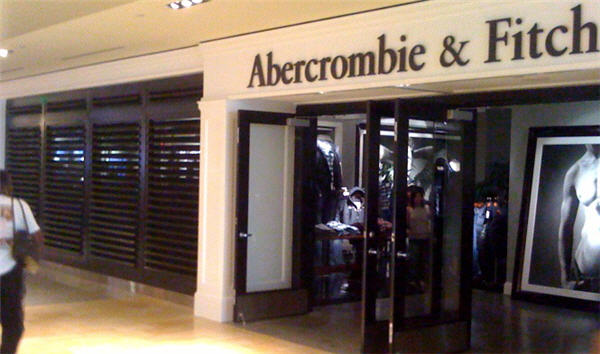
For example, when I walk by an Ambercrombie store, I admittedly slow down and squint to see what I can through the blinds as I pass. Guilty as charged.
But going in the store would actually require that I walk through the cologne that they blast out the front doors - has anyone else notice that?
I'm not that desperate to get inside, and I probably wouldn't buy anything anyway. So the sales people wouldn't have to deal with me, the slightly-curious - or all the shirts I unfold.
Thoughts?
Yes, sometimes , the take away, makes someone want it even more.
But, to market to the elite in a mall? Are you kidding?!
Good sales people and marketers often approach with, "this is the last one available". You answer "I'll take it."
Also, there is the line " this will only fit model's sizes, and you are?" You respond,"that's me".
When you go into the bakery and they don't have that chocolate scone,but pay in advance, they'll have it for you tomorrow,you end up buying 2 dozen. Create value.
Exclusivity comes in a variety of shapes. They stupiest is shaded windows in a mall. How downright nasty to think, if you don't know our brand by our "name" or "Marque", you don't belong in hear. Who shops at the mall anyway? To cover overhead alone, they are getting the everyday man who thought they were just doing their windows over. In this economy, got to appeal to more of the masses.That si twisted to think they know this and want to subliminally plant the message in middle America's head.
That is who is out there wearing their stuff. Do you think they go to Polo Matches in L.I. or the street corner to do business?
I'd really think, I don't want you either.
I think it stems back to childhood You can't have that candy, Mother says. You always found a way.
well now...
Janet
A+F had some of the worst Christmas seasons among retailers. I think they were off by about 25 percent.
(In response to Janet's comment) So hiding the product - whether it is for the elite or not/whether it is in a mall or not - might be subliminally, well, not so awesome if you think the target market (Middle America?) is not smart enough to know better... But it is a good marketing trick. (I don't think marketers do the take-away enough!) And it can be done well, I think. I don't think Ambercrombie does a bad job, actually. Even though the stores are too smelly to pull me in, I can't believe more stores haven't started shading their windows. Victoria's marketing execs must not shop at the mall.
I call this the "Nintendo Wii" marketing technique.
Ha, ha? Wii? Because you can't find them anywhere, but everyone wants one and won't shut up about them...??? I agree. Go Wii! They do teeter on the edge of being annoying, though - consumers were getting pretty frustrated about not being able to find them anywhere around Christmas, weren't they? Can't deny the buzz, though, I guess.
I am not a marketer but I will give you my 2 cents. A&F is not marketing their clothes they are marketing the hot young thing with the six pack abs that is the ONLY thing you can see when you look at their store (see photo above). There is not a teenage girl who walks by that doesn't gawk and every teenage boy is sucking in his gut as he strolls past.
So, by having the windows shielded, they extend the fantasy that maybe that guy, or gorgeous girl, is actually shopping in the store. Not talking reality here folks just straight up fantasy and isn't that what retail marketing is all about?
PS - If you disagree don't flame me...I told you I was not a professional marketer... salesperson.....
I agree with you, and it is a good point! A&F are marketing to hotties! AND I agree they are hiding what (product) and who (hotties) might be in the store, but the main point still stands: people go in the store because they don't know what's in there - be it a ripped up pair of jeans or a hottie in a tube top...
In order to make the item luxurious (and brand conscious), most brands already have a barrier to entry called high pricing (e.g., BMW, Mercedes, etc.) supported with expensive marketing collateral and ads that is consistent with their brand. A+F is trying a new tactic and the jury is still out on how it is doing....I think marketers should test, test, and test tactics to see what the response is from targeted audience.
Good points - taking something away makes it more attractive, especially if you can get a hint of what's inside but no more.
Personally I think it makes a nice change from retailers specifially, and businesses generally, basically shouting "look at me, look at me!" and it certainly gets the attention of the target audience which is marketing's first job.
I hate to say it but those of us who don't "get it" (including me probably) are most likely not the targets A and F are after!
Interesting article about the psychology of marketing. Influencing human behaviour is an important part of marketing strategy and we all have that desire of not wanting to be left out, to a varying degree. Shutting off the immediate visual impact of the shop window might make us think there is something special going on inside we want to be a part of.
That wouldn't work for me, I either know a brand and want to shop there or am attracted by an item in the window. However, I'm sure there are a lot of people who would be intrigued by the shutters and wander in to find out what's behind the bars.
This is simply another facet of differentiation in a crowded market, albeit a creative one.
A&F's exclusivity does not stop at concealing the merchandise. I was told by a teen that their salespeople are intentionally frosty to anyone of parental age, so that the young people who shop there feel they belong. I think it's brilliant (although don't the parents usually shell out the cash?).
Companies like HubSpot, I think, are on the other extreme -- ultra-friendly, open and accessible. Like your videos. I realized this with my own company: that if you sell a product or deal with content that tends to intimidate people (e.g., related to marketing or social media), you have to break it down and present a friendly, "everybody's welcome" vibe. Lots of transparency to build trust. No jargon, no hipper-than-thou attitudes here, make it easy. Even our brand colors communicate this.
Personally, I don't like anything from A+F. It's just not for me. And because I know their brand, this tactic would not work on me. But I can't say this tactic has never worked on me.
Long before A+F put up blinds, Hollister had blinds on the windows. And their storefront advanced further out in your way and had this great, 3 dimensional, feel to it. I've never bought one item of clothing from there, but I always like going in with people because it's more interesting than the other stores (and they have a sweet touch-screen jukebox deal inside to play with).
In a similar way of hiding things to atract quality leads. My firm advises people to keep their prices off of their website. Our largest client is a home design firm. And in one of the toughest markets ever, they don't display pricing. This way, no one can "window shop" them and pass by. And they get a chance to explain, in person, why the prices are higher than automated sites like e-plans. It helps set cost expectations and weed out the people who aren't really serious.
We just did a large research project for a client in the apparel retail world - summary
here. (apologies if that html snippet didn't work OK....)
A&F weren't a subject of the study, but I gathered from competitors what they are doing - making it alluring for older teens and keeping parents out. Loud music, offhand (but stunning) staff, dimmed lights, the smell etc. are intended to repel people, especially parents (and some here) who aren't their target market. To someone's earlier point, for this teen market, even if the parents give the cash, they aren't going with them. (cf Aeropostale which is targeted at the younger teen and whose outlets are intentionally Mom-friendly). Putting the older-teen relevant goods where outsiders can't see them, with a strong hint of sex - semi-naked males etc. - creates an exclusive destination for teens who are old, or precocious enough, to belong (this does not, BTW, include me).
Just to say that hiding the goods (and indeed the whole cliquey environment) is to create allure, and is part of a bigger plan.
Good point. I often think about a membership site where it would be almost secretive that people would want to get in just to find out what's in there. I'll have to work on that idea more...