Inbound Internet Marketing Blog

SEO, Blogging, Social Media, Landing Pages, Lead Generation and Analytics

SUBSCRIBE

The HubSpot Inbound Internet Marketing blog covers all of inbound marketing - SEO, blogging, social media, lead generation, email marketing, lead nurturing & management, and analytics. Join 53,183 others and subscribe now!

Subscribe to RSS feed Add us on Facebook! Follow us on Twitter

Get Free Marketing Info!

Get the world's best marketing resources right to your inbox! Join more than 817,000 inbound marketers!

Subscribe by email

Your email:

Listen to this blog!

Work at HubSpot!

JoinTheHubSpotTeam resized 200

HubSpot's Inbound Internet Marketing Blog

Current Articles | RSS Feed RSS Feed

Why Twitter Hashtags and Trending Topics Are Useless to Marketers


.

In social-media marketing circles, "trending topics" on Twitter are somewhat of a status symbol.

When Twitter's secret algorithm decides that a hashtag, word or phrase (up to three words) is being Tweeted more than usual, they put it on the front-page of Twitter Search, on the Twitter search results page (in the image on the right) and on the home page of some user's accounts.

When your brand achieves trending-topic status, you get an ego-boost, just like when you hit the front page of Digg. But just as with Digg, it's important to look past the feel-good benefits and figure out if there is any real business value to trending-topics.

Why Hashtags Are Useless

Many marketers think of hashtags first when they think about "going viral" on Twitter.

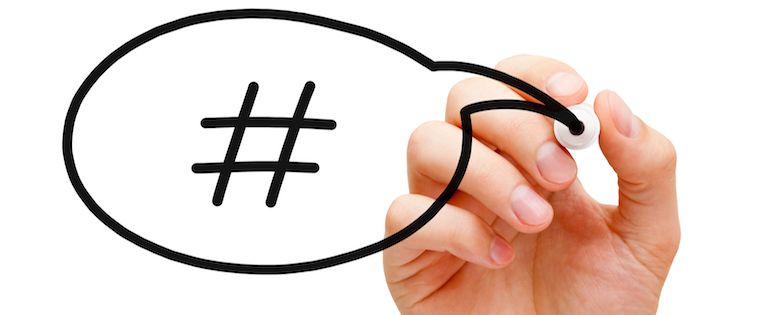
A hashtag is a word or string of characters that starts with a number sign. When a hashtag appears in a tweet, it links that word to its Twitter Search results page.

That's initially pretty appealing from a marketing perspective, but there's a problem: Twitter Search doesn't explain what the hashtag means.

Unless you're already involved in the conversation, the Twitter search results page is usually useless -- so useless that you often see Twitterers asking "What the heck is #suchandsuch? And why is it a trending topic?"


Other Trending Topics? Also Useless.

We've established that for marketing, hashtags are pointless, but hashtags aren't the only thing that can "trend." You could simply take the word you had been previously using as a hashtag and remove the number sign.

Unfortunately, that doesn't fix the above-mentioned problems -- it merely reduces the functionality of the word (no more link to Twitter Search).

Multi-word phrases can be crafted to make a bit more sense, but for the most part, any phrase common enough to trend will probably be opaque to those who aren't already familiar with it.

Don't Trending Topics Attract New Followers?

One benefit some marketers assume trending topics have is that they give the word, phrase or hashtag added exposure because they appear in a number of places.

Let's examine that idea more closely.

Back in October of 2008 I did a little test and started a trending topic (not a hashtag but rather a three-word phrase: "Viral Tweet Test") and monitored the rate of tweets over time using that phrase. When we graph the Tweet velocity, traffic and comments generated by the test against important events in the life of the meme we see that there was essentially no effect when it "trended" (especially when compared to what happened when popular users tweeted it).

In other words, the extra visibility didn't help accelerate the meme.

More recently, we can look at the rate of follower growth experienced by our @hubspot account. When we map the three most recent times the "#hubspot" hashtag became a trending topic, we see that with one exception, there was no accompanying lift in followers.

That one exception was a huge webinar we did with close to 3,000 live attendees, so many of the new followers we got could have been related to the sheer buzz generated by the webinar, not by the hashtag.

When we schedule and promote a webinar, we include a "Tweet this" link on the page that uses the #hubspot hashtag in it. During the webinar we suggest that viewers tweet their questions with the hashtag. This produces the huge wave of tweets required to push #hubspot into the trending topics, but does very little for our follower counts.

The alternative would be to put @hubspot at the end of the "Tweet this link" and ask people to label their tweets with "@hubspot" at the end instead of "#hubspot".

While usernames do not trend and will not appear in the topics list, the sheer volume of tweets would likely drive huge follower increases, which is a more useful asset than the ego-boost that comes with "trending."

So What's the Takeaway?

Beyond the zeitgeist value they provide, hashtags and trending topics are largely useless for marketing via Twitter. You should use @username instead of #hashtag in Twitter-based calls to action whenever you can.

Webinar: Twitter for Marketing and PR


twitter for marketing and pr 


Want to learn more about using Twitter for Marketing and PR?

Download the free webinar for tips and tricks to drive inbound marketing using Twitter.

Posted by Dan Zarrella on Fri, Apr 24, 2009 @ 07:30 AM

COMMENTS

I love this! It's so true, it's all ego and because there is no place to quickly understand what the hashtag is intended for it quickly looses it's meaning! Even a simple example like #followfriday, which the original creator intended for you to recommend an individual and why you should follow them has lost it's meaning! 
 
Ann Evanston 
www.warrior-preneur.com 
The Warrior is Within You!

posted on Friday, April 24, 2009 at 9:07 AM by Ann Evanston


Excellent article- guess we'll have to see if HubSpotters start using @HubSpot in favor of #HubSpot now :)

posted on Friday, April 24, 2009 at 9:14 AM by Walter Elly


I think it will be interesting if Twitter move to define hashtags themselves, with not only listing the trending ones but providing an actual definition aka http://tagal.us/ - its a natural progression for their service to do so.

posted on Friday, April 24, 2009 at 9:20 AM by Paul


Great analysis, probably a lot of truth to this... for now. However, some hashtags have already achieved a sort of cult status, so the meme doesn't extinguish and instead keeps going, serving as a follow guide to people.  
 
The number of savvy users who know what hashtags are/how to use them, what many of them stand for is also likely to increase over time, making things incrementally more valuable from here. Once Twitter fully rolls out the integration of search/trending into the Twitter interface, that should also make a big difference for the value of trending topics. 
 
(Compete.com right now shows only 10M visits/month for Search.twitter.com, 1/10 of those for Twitter.) 
 
I've been saying for a while now that Twitter should either buy/support hashtags.org or duplicate it's functionality, and also incorporate a hashtag directory a la tagal.us right into things.

posted on Friday, April 24, 2009 at 9:39 AM by Alex Schleber


This is news? I thought hashtags were only used to add sarcasm to tweets these days. #insightful #notreally #yawn

posted on Friday, April 24, 2009 at 9:42 AM by Jason Huck


One thing I strongly dislike about the way trending topics work on Twitter is the "echo chamber" effect - if one of the Twitter celebrities says something interesting or funny, it will get retweeted or commented on by thousands (if not tens of thousands) of twits (I mean both definitions :oP). To me, that's the main thing that invalidates the trending topics: without deduplication, they're mostly just noise chattering around something a famous person said.

posted on Friday, April 24, 2009 at 10:12 AM by Nicolas Ward


I agree with Alex that improving the functionality of hashtags would make a difference. I'm thinking a 1-click shortcut that would sync, let's say, #hubspot and @hubspot would be nice. I think hashtags are useful for listening to the buzz about a brand and agree yet again with Alex, that many have achieved cult status, like #karaoke(enter city) by Mashable. IMO, traditional ways of doing marketing isn't going to always cut it with social media. Hashtags may be sloppy but I believe they could be really powerful in due time.

posted on Friday, April 24, 2009 at 10:30 AM by Claudia Yuskoff


Very good article. I think hashtags are using the herd mentally alot, like #followmefriday. I see their value for getting information at a conference or other event or how HubSpot uses them to take questions during webinars. Since most hashtags are made up on the spot by the Tweeter, there can be many that point to the same topic. I would like Twitter to have a system for defining and using them, maybe a directory, and a better definition on using them. But for now, like all things on Twitter, we are defining as we go.

posted on Friday, April 24, 2009 at 10:43 AM by Ron Arden


Excellent analysis Mike. Spam is still Spam. Volume isn't business.

posted on Friday, April 24, 2009 at 11:20 AM by chris baggott


Great analysis. As a new business owner, we have been trying to regularly update our twitter account a few times a day. We have utilized hashtags to see what topics we might want to respond to specifically (we are in the SEO, Copywriting, Marketing industry). 
 
One of our biggest challenges is explaining how it all works to new clients who want us to create and manage a new twitter account for them. If you aren't in the "know" already, most are wondering what hashtags are all about. So when they go into their account, they're lost.

posted on Friday, April 24, 2009 at 12:01 PM by Brian Thomas Clark


" hashtags are pointless," Oh really?  
 
Look, I'm not in love with hastags - I really could care less - but to say they are pointless, that's insane.  
 
1. One reason they are not pointless is that people use them. If you want to talk about the culture of a community hastags matter.  
 
2. If your logic is - "hastags are pointless because I can't leverage them for my own marketing" - you need to reevaluate. Marketing in the future (and today) requires a lot more consideration of the marketed to.  
 
3. Why am I even writing all of this? ...So it's not something you are going to use - I wouldn't necessarily call it pointless.

posted on Friday, April 24, 2009 at 12:35 PM by Christopher Drinkut


I agree Dan, but only from a marketing/promotional standpoint. I do think that call to actions for organization using a hashtag can be invaluable. 
 
However, totally onboard with the promotional uselessness aspect of them.

posted on Friday, April 24, 2009 at 1:05 PM by Stuart Foster


Well, good. I was always overwhelmed by the darn hashtag anyway...

posted on Friday, April 24, 2009 at 4:05 PM by Jennifer Shaw


See this? http://bit.ly/wn9ML 
 
How #etsyday Grew on Twitter 
 
-Mike Lizun 
http://www.twitter.com/mikelizun

posted on Friday, April 24, 2009 at 6:01 PM by Mike Lizun


Hi Mike: 
 
You make very valid points, but to say the hashtag is completely worthless may be an oversimplification. While the hashtag my not boost your following count there is no doubt it increases the visibility of the conversation. People see the hashtag in their twitter streams (regardless whether it's trending or not) and often use twitter search to see what it is everyone is talking about. If they like what they see they may follow, but at the least they are now aware there is a conversation to begin with. 
 
Good stuff though, my friend. I love thinkers.

posted on Friday, April 24, 2009 at 6:33 PM by Brian Adrian


I agree with this to some degree. Hashtags are definitely something for those "in the know." However, for those in the know, checking trending topics can show interesting twemes that may very well be marketers ... and I'd see that and may react to it (most times not). 


At large events -- like SXSW -- the #sxsw tweme is quite useful.

posted on Friday, April 24, 2009 at 8:02 PM by Matthew Snodgrass


In facts, Im struggling about how to get traffic to my website. How to pull traffic to my blog. But today, I saw this article, I would love to try the tactics that mentioned in here...Thanks

posted on Saturday, April 25, 2009 at 11:06 AM by Faithson


I agree with Brian Adrian, Christopher Drinkut and others. There are more reasons to use a # than to build followers. A # is a way of creating a discussion topic with a shortened number of characters. #journchat #gno or #adhd are a few examples. 
 
Perhaps the strongest reason to use a # is from the public relations perspective. When you want to create some buzz on a topic, a # can help you focus tweets to make it into the trending topics more quickly. And to do it with fewer characters allowing more space for the conversation. 
 
When @linkedinexpert @marismith and I created a conversation about LinkedIn Open Networkers (Lions), we wanted #LION to trend, not everyone talking about lions, the animal. And because we used #lion, we had many followers join in an interesting conversation, and created deeper ties among the three of our communities. 
 
Because #lion became a trending topic that day, (along with Steve Jobs stepping down and the premier of American Idol), @linkedinexpert was later featured in a Miami Herald story about LinkedIn. Now that's some powerful bottom line PR metric if I've ever seen one.

posted on Saturday, April 25, 2009 at 3:46 PM by Peggy Dolane


Excellent examples, Peggy and Mike.  
 
Dan, claiming that something is "useless" just because you haven't figured out how to exploit it yet is pretty unimaginative. If hubspot wasn't able to capitalize on the interest you created, then maybe you need to look at your approach differently. You're too focused on what they can't do and miss the potential value that many people are putting to good use. And excessively focusing on follower counts or the value that accrues directly to @hubspot risks missing the point. 
 
jon 
 

posted on Saturday, April 25, 2009 at 11:09 PM by jon


Kinda OT, but you say "When a hashtag appears in a tweet, it links that word to its Twitter Search results page." I use the regular web interface http://twitter.com/home to Twitter and hashtags aren't clickable at all. How to enable clickable hashtags??

posted on Sunday, April 26, 2009 at 8:14 AM by Colin Warwick


I'm a little new to this, but I would think hashtags are useless for marketing simply because of the exclusive grouping. If not already in the conversation,it perplexes those who might fall into it later. The exclusive (somewhat anyway) grouping defeats the purpose of spreading whatever marketing message.

posted on Sunday, April 26, 2009 at 1:20 PM by alharris


I agree with Peggy, Christopher and others.  
Tue that it is hard to find a simple 'index of hashtags'. However I disagree with the main claim that hashtags are useless to marketers because it seems like the argument is driven by the assumption that hashtags suppose to get you more followers. Many of Twitter users are following conversations, not people, to cover a larger pool of discussion and knowledge. It's about the buzz, the trend, the 'web' of conversation that grows rapidly. not the followers.  
 
I do agree there needs to be an easier way to find and index hashtags.

posted on Sunday, April 26, 2009 at 1:21 PM by Alin Wagner-Lahmy


Geesh - take one day off and... 
I have to agree (obviously) with Peggy, Christopher, Mike, Dan, Jill, etc. 
 
First off - not all of us have the luxury of a Twitter account we can point an @reply too. When doing a Tweet In with others, whose @name would we choose? 
 
And while - perhaps - #followfriday has gotten a bit out of hand, I have been involved in some amazing conversations using the #hashtag - as a moderator and participant. During the election, #GNO, and of course the #Lion talk which resulted in an article in the Miami Herald. 
 
So - while I love you guys at hubspot, I have to say on this issue you are dead wrong about efficacy and results. 
 
Just my #humbleopinion

posted on Monday, April 27, 2009 at 7:31 AM by Viveka von Rosen


I completely disagree! For a one word topic (i.e Hubpsot), a hashtag is useless. But for something like Social Media Breakfast, it aggregates that content together. Instead of some writing "Soc Media Brkfs", so writing "SM Breakfast" and some writing SMB, it makes sure everyone is using the same tag.. #SMB13.

posted on Monday, April 27, 2009 at 10:48 PM by Rachel Levy


By the way, there are 2 hashtag directories I know of -- tagalus and What the Hashtag -- both links are on my Twitter app post: http://www.rachel-levy.com/confused-by-all-the-twitter-application/

posted on Monday, April 27, 2009 at 10:53 PM by Rachel Levy


how sad. Just because something doesn't work for the God of Marketing doesn't mean it's useless. It's great for topic aggregation as Rachel Levy said - and it's been invaluable for me to get info from conferences that I wasn't able to attend. People also use hashtags for chats, which I love. About the point that a hashtag doesn't give you the definition of what it is, a little reading into a few tweets/links and most intelligent people can figure it out in context.

posted on Tuesday, April 28, 2009 at 12:41 PM by Charlene Jaszewski


Can trending topics and smarmy hashtags be an ego tool? Sure - mostly for those who like to Tweet about their shoelaces and what kind of cereal they are eating and how many bites it took to finish the bowl. From a business perspective - that's probably not who your marketing is geared to. From a more professional standpoint - several people have noted the convenience of being able to find event information (from many perspectives) by searching on event hashtags. Deduping and a cross reference of hashtag meanings would certainly be useful - but if we can manage around the system stalling mid tweet to show a picture of a whale flying - we can certainly manage around this. At the end of the day - hashtags are a sort of democratic taxonomy. Choose to participate or not.

posted on Tuesday, April 28, 2009 at 2:23 PM by Elizabeth Gooding


This is a great discussion of hashtags, between the post and the comments, which are great ways to track conversations on Twitter. While in the hubspot example of the trending topic tweet that didn't grow followers, it created a conversation on that was trackable through the hashtag.  
 
Twitter is still growing, and users discover new uses every day. Just because people need to learn where to go for Twitter information, doesn't make it irrelevant to the tool.  
 
The bigger question relates to hashtags use by marketers to meet their goals. They need to set appropriate goals for the hashtag usage, which usually revolves around tracking and aggregating chatter around a term, brand or event. There has also been talk about hijacking of brand hashtags by disgruntled consumers. This is an evolving ecosystem where marketing folks are still learning what works.

posted on Tuesday, April 28, 2009 at 4:00 PM by Jeff Cohen


Might I recommend rethinking the initial point of this. You are suggesting that these aren't good for marketing, but anyone with a good marketing strategy knows that a little can be used productively to explain a lot. 
 
That said, if you make a hashtag that isn't descriptive, you will be getting a lot of "What is this?" responses. However, if you are to start a clearly obvious hashtag - you will realise that it receives a lot more buzz. 
 
Generally speaking, you need to apply the basic principles of marketing to this - just as everything else. 
 
If you make a TV commercial that doesn't have a company name/logo; you're going to get people asking what the commercial was about. 
 
If you make a hashtag without proper description in the hashtag's name itself, you'll get people wondering what it means. 
 
Plain and simple.

posted on Thursday, April 30, 2009 at 6:45 PM by Brandon R. Stoner


Disagree on both points. First, I usually know what the hashtag means, and if I don't know what one means, I find out long enough by hanging around a particular community (if I am curious enough about it), or come accross it in a blog post. I mean, how long does it take one to figure out what #followfriday meant, or even RT, for that matter. I figured out those two w/o anyone telling me, if I remember correctly... 
 
Secondly, I use hashtags a lot. They absolutely do increase my followers count, almost each time I use them! No doubt about it, and sometimes significantly. It doesn't surprise me thatyour antecdotal example, your experiment, of "Viral Tweet Test" didn't garner followers. I think it would be kind of absurd to think it would. Why? Because it is not something the average person is interested in, passionate about, or would be searching for on a regular basis in the Twitter Search engine -- nor would they even bother to probably look up if it were trending! If they did, why would they want to follow? I know I wouldn't -- it's not a very interesting term, close to my heart. Sorry, don't mean to offend. 
 
I would think from a marketing stand point you would know that! If you had tweeted one or more of the following hashtags, I'd bet on it your follower count would have increased: #marketing #roi #blogging #blog #BloggingTips #business #HubSpot #WebsiteGrader #MediaKit #google #googlerank #seo #socialmedia #twitter 
 
Why would this increase your followers? BC others would be tweeting about these matters, then going to Twitter Search themselves, and seeing who else is tweeting about the same subject, to follow conversations, get opinions and ideas, see if they can find like minded ideas, and find new friends to follow. I know, I do it all the time! If I find an interesting tweet pertaining to a particular hashtag, I then go to the tweeter's page, read a few of their tweets and often follow them. They invariably follow back. Am I doing it to get more followers? No, no, no! Like minded friends that I network with! But it does add to more followers -- just happens that way -- and builds mutual relationships. And it works both ways. I pick others through hashtags, and they pick me to follow! I almost always follow back, unless they are deranged or spammers, LOL! And usually we are very well matched -- bc we checked each other out through the hashtag Twitter stream first. Often when I tweet and hashtag I'll get five followers after a tweet. I only have about 1,115 followers i think right now and I have been on twitter for six months, but I don't think that's all that horrible, bc as I stated, they are quality matches. And, yes, most of them I am finding right now through hashtags, or directories that include bios w interests in them, I would say, or I am finding a lot of followers through my other followers perhaps -- and sometimes that would be through #followfriday LOL.  
 
Okay, sorry I went on so long, I just wanted to give you a different perspective, and tell you how to do it if you want to be creative! :) Sorry if I appeared to attack -- sometimes my direct nature appears that way to people, and sorry if I offended in any kind of way, please don't unfollow me, LOL, I love you all, and it is an honor to be in your network, I just LOVE your Grader products, they're so helpful! God bless! 
 
krissy knox :) 
follow me on twitter everybody! 
http://www.twitter.com/iamkrissy

posted on Saturday, May 02, 2009 at 12:32 AM by krissy knox


I am sorry but I have to disagree with you.  
 
It is not that hashtags are useless...it just depends on how you want to use them. 
 
I like to use hashtags in twitter search in two ways. 
 
1) When I want to monitor a conversation that is going on. e.g. When American Idol is on.  
 
2) When I want to find content around a specific interest and follow people with that interest.

posted on Saturday, May 02, 2009 at 12:34 PM by Scott Bradley


I disagree, and I can and will prove it. Results to be released in a few months.

posted on Sunday, June 07, 2009 at 2:56 PM by David Fisher


Have you considered that you are not worth following for the average Twitter user? 
 
If perhaps you were giving away a free (lite) iphone app or had a great music video, the results could be different.

posted on Sunday, August 02, 2009 at 11:51 AM by roger


Comments have been closed for this article.