

Every time I think I have this whole marketing thing down to a science, something changes in the blink of an eye. And if you're a marketer like myself, you've probably experienced the same feeling of whiplash as marketing trends continue to shift.
Keeping up with the latest marketing trends isn’t always easy. But, to succeed in the fast-paced marketing world — and maintain a sense of relevance with your audience — it's vital to stay ahead of them.
![Download Now: Free State of Marketing Report [Updated for 2024]](https://no-cache.hubspot.com/cta/default/53/b0f73a5e-16e4-41fd-9511-8564efc560a7.png)
Fortunately, I gathered all the information you need on the latest marketing trends — straight from industry experts and HubSpot's survey of 1,400+ global marketing professionals — and crafted this guide just for you.
Let's take a deep dive into marketing trends for 2024, shall we?
The Marketing Trends of 2024 [Highlights]
- Short-form Video Content (TikTok, Reels, YouTube Shorts, etc.) will continue to rule.
- Creating content reflecting the brand's values will be key to retaining your customers.
- Native advertising/sponsored content is still valuable.
- Influencer marketing is still crucial.
- Leveraging AI will only increase into the new year.
- VR and AR could be making a comeback.
1. Short-form Video Content (TikTok, Reels, YouTube Shorts, etc.) will continue to rule.
Who hasn‘t spent way too much time scrolling through TikTok? I’m not afraid to admit I‘ve bought clothes, pet supplies, and other products after watching a few too many reels, TikToks, and YouTube Shorts. And I’m not alone.
According to a recent survey, 56% of U.S. consumers said they bought something based on an ad they saw on TikTok, and 36% said they were willing to.
“Video creates a deeper connection with your potential customer base, and it is easy for brands to repurpose video content into podcasts and text-based content,” Neil Patel, CMO and Co-Founder of NP Digital says.
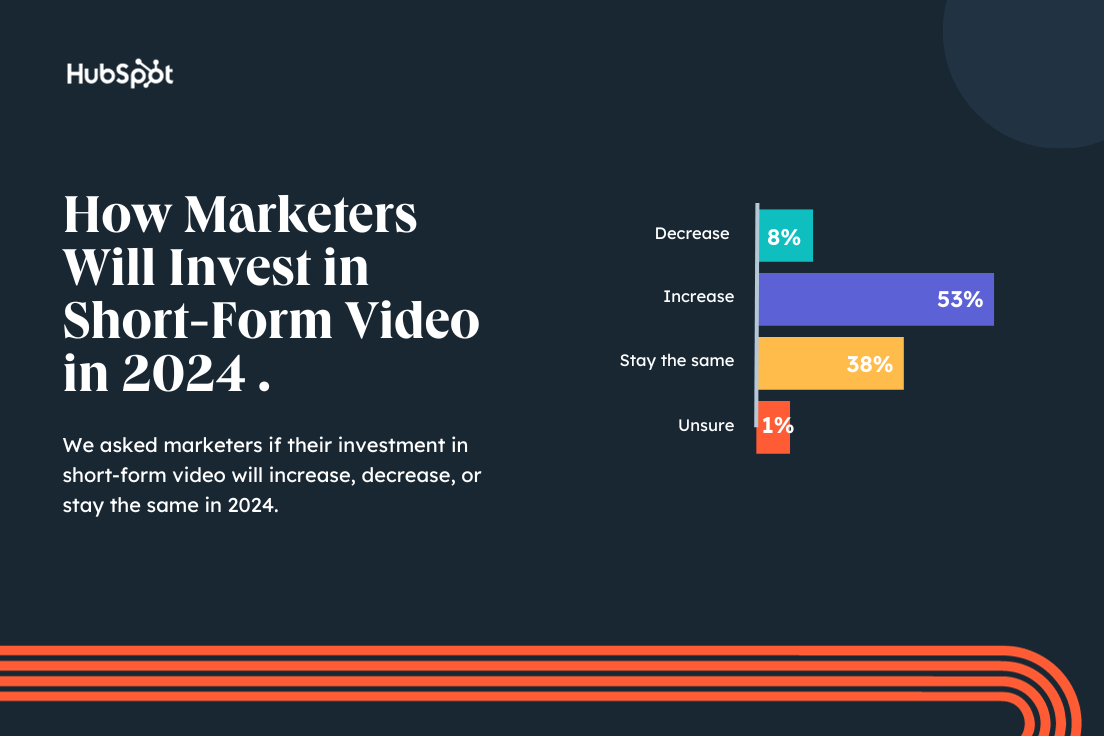
So, it‘s no surprise our survey found that 53% of marketers are leveraging short-form videos like TikToks, Instagram Reels, and YouTube Shorts in 2024, and 38% are continuing to invest the same as in previous years.
Only 8% say they’ll decrease their investment.
Long-form videos can offer depth and large amounts of information about a product, brand, or service to audiences.
However, both B2C and B2B marketers have learned that getting to the point with short-form videos can actually be much more effective.
Not only does it take less bandwidth to create a short-form video, but this type of format aligns well with the fast-paced attention spans of online audiences in a variety of demographics.
This is likely why platforms like TikTok, Reels, and — in previous years — Snapchat have gained quick growth and marketing interest.
“Our company, Jotform, has been ramping up our video efforts on YouTube. We have over 16,000 subscribers and have seen a huge increase in site traffic and signups from investing in video on this platform,” says Aytekin Tank, Founder & CEO of Jotform.
HubSpot uses the information you provide to us to contact you about our relevant content, products, and services. HubSpot will share the information you provide to us with the following partners, who will use your information for similar purposes: Search Engine Journal, Litmus, Rock Content. You can unsubscribe from communications from HubSpot at any time. For more information, check out HubSpot's Privacy Policy. To unsubscribe from Search Engine Journal's communications, see Search Engine Journal's Privacy Policy. To unsubscribe from Litmus's communications, see Litmus's Privacy Policy. To unsubscribe from Rock Content's communications, see Rock Content's Privacy Policy.
The State of Marketing in 2024
HubSpot's Annual Inbound Marketing Trends Report
- Top Marketing Channels
- AI in Marketing
- Managing Privacy
- The Future of Marketing
2. Creating content reflecting the brand's values will be key to retaining your customers.
According to Consumer Goods Technology, 82% of shoppers want a consumer brand's values to align with their own. Furthermore, 75% of shoppers say they've cut ties with a brand over a conflict in values.
To keep on the good side of their target audience, brands will make a point of showcasing their values and stances on topics that are relevant to their audience.
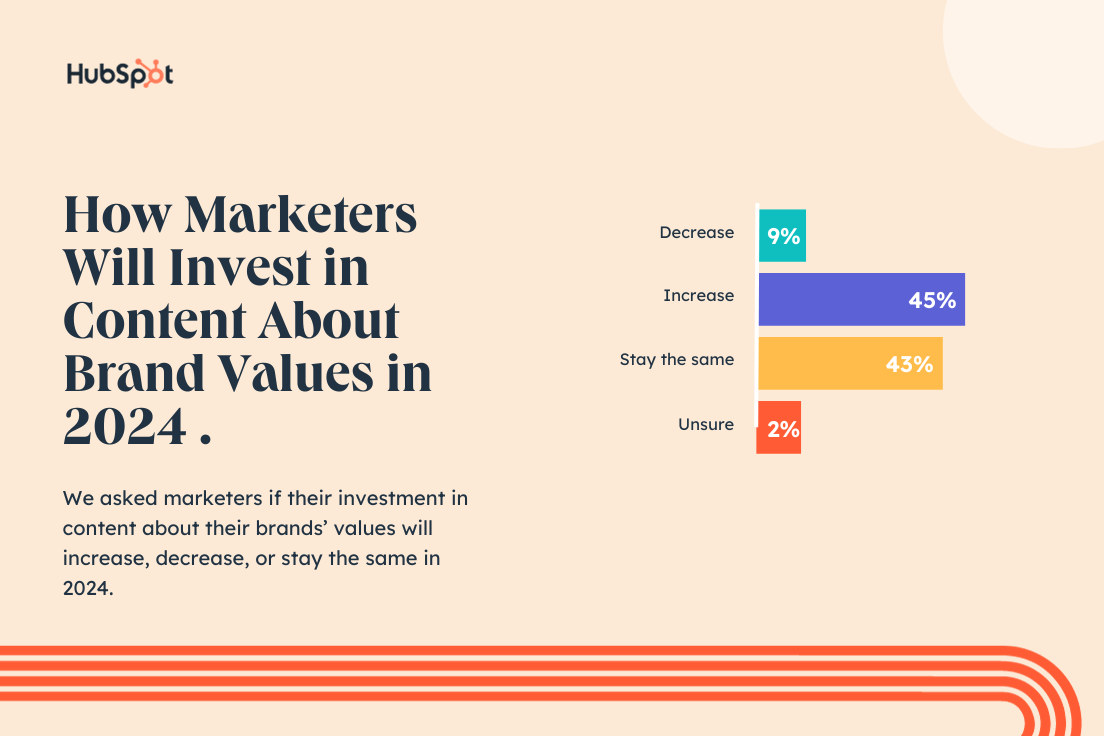
Our survey shows 45% of marketers will increase their investment in creating content that shows their brand's values, and 43% will invest as much as they did in 2023. Only 9% will decrease their investment.
3. Native advertising/sponsored content is still valuable.
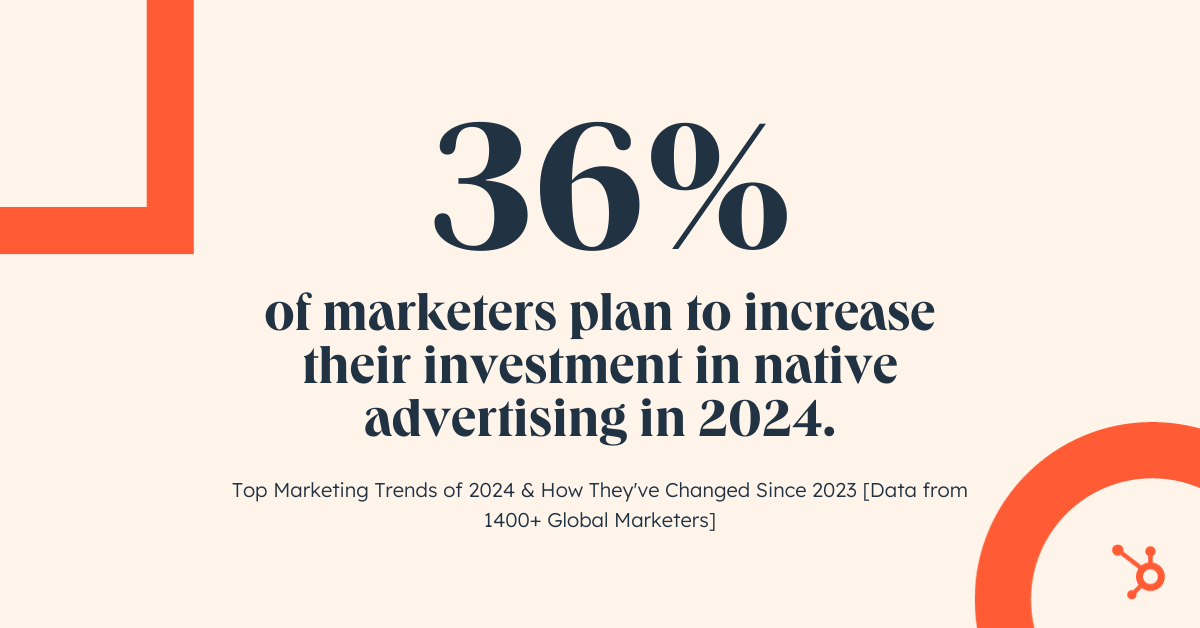
More than a third (36%) of marketers plan to increase their investment in native advertising in 2024, and 56% plan to continue investing the same amount. Only 9% say they'll decrease their investment.
These numbers don't surprise me at all, considering the value of native advertising.
When your brand pays to feature content on a third-party website, you’re investing in native advertising.
Unlike traditional advertising, which is designed to interrupt and stand out, native advertising is designed to blend in and promote your brand to a new audience who might otherwise never learn about you.
Because native ads don’t “feel” like traditional ads, consumers are more likely to consume them — in fact, consumers view native ads over 50% more than banner ads.
Examples of native advertising can be found on social media, through search engine results, content recommendation platforms, or in campaigns.
For example, Instagram is a popular social media network that routinely partners with brands for native advertising.
By taking advantage of the Instagram Story or Shop features, brands are able to share posts that look similar to the average user’s followers' posting style, while subtly advertising a product.
4. Influencer marketing is still crucial.
Influencers were everywhere in 2023. I couldn't scroll through social media without seeing influencers promoting all kinds of products. One of my favorite influencer marketing campaigns in 2023 came from skincare brand La Roche-Posay.
The brand partnered with influencers like Jae Gurley to promote its sunscreen products at the US Open, where attendees would be out in the sun to watch the matches.
I don't see this trend slowing down in 2024, and neither do the marketers in our survey. 84% of marketers in our survey (48%) say they will increase their investment in influencer marketing in 2024, almost as many as last year (89%).
When marketers collaborate with influencers and industry thought leaders in their industry, they can expand brand awareness and gain fans from the influencer's own audience.
Are you worried collaborating with a famous influencer could break the bank? No problem!
Micro-influencers with 10,000 to 100,000 followers are a more affordable solution and often yield more success than if a brand were to work with celebrities or macro-influencers.
Of the marketers who worked with influencers and creators in 2023, 64% worked with micro-influencers, making them the most popular choice for influencer marketers.
5. Leveraging AI will only increase into the new year.
Of course, I'd be a fool to exclude the giant waves artificial intelligence made in 2023 and the changes it will bring in 2024.
In 2023, 48% of marketers we surveyed reported using AI for content creation, such as writing blog articles, website, and social media copy, as well as landing page CTAs and product descriptions.
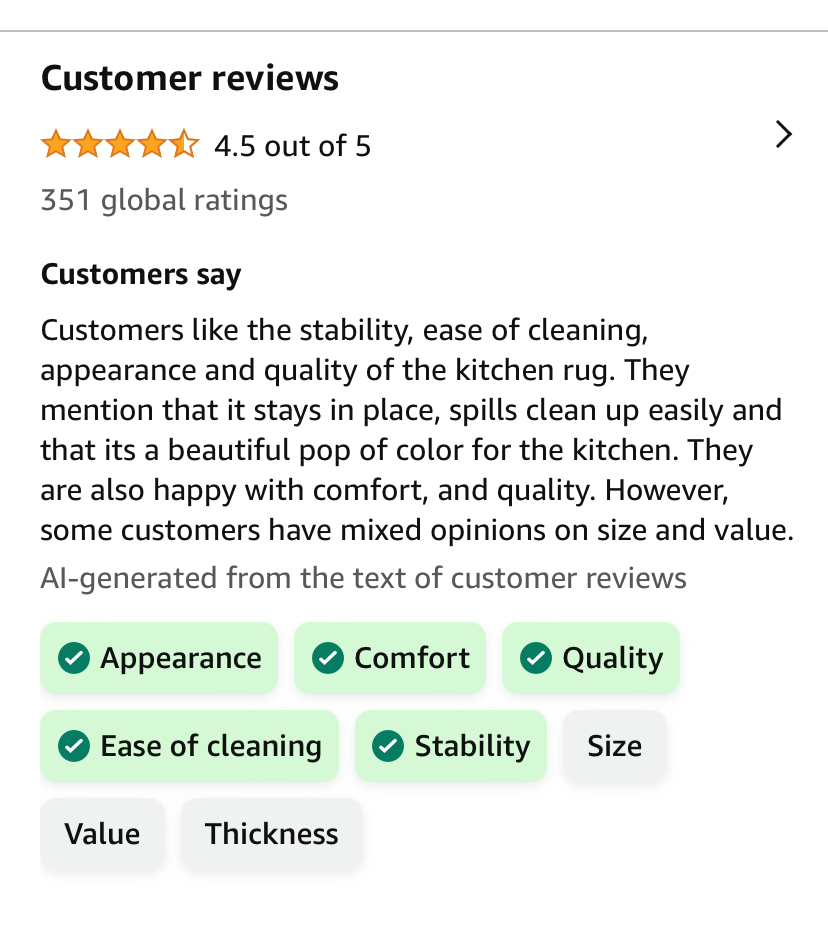
Amazon even started using AI to summarize key points from consumer reviews, definitely saving me from a few questionable purchases.
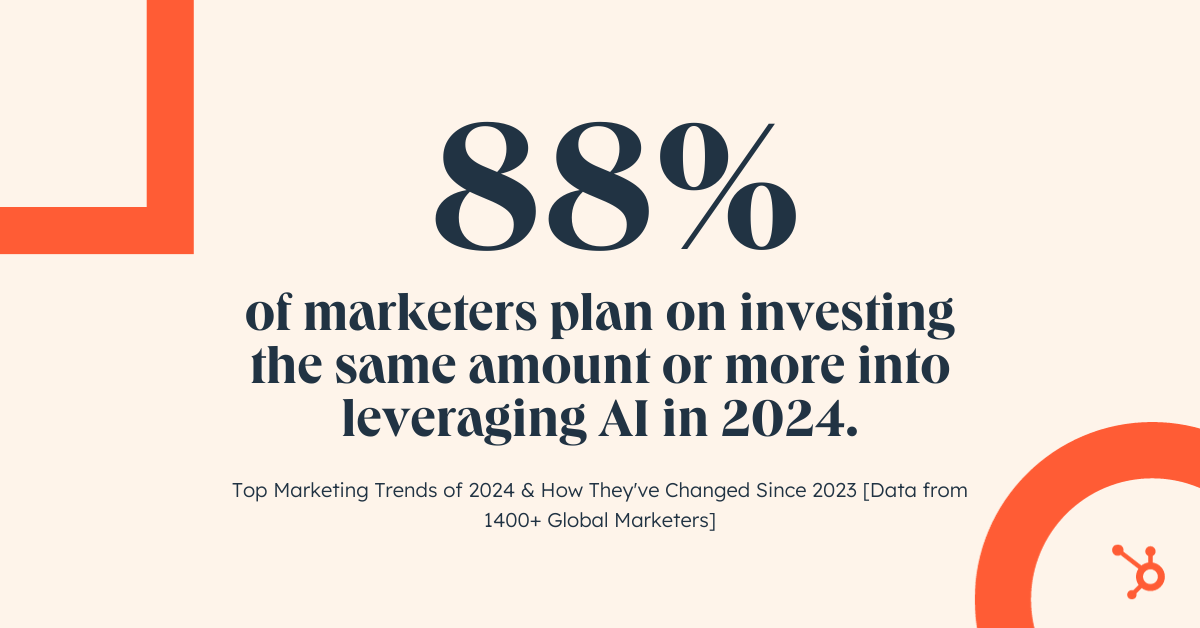
Fast forward to 2024, and 88% of marketers plan on investing the same amount or more into leveraging AI this year, and 15% plan to leverage it for the first time.
AI is especially popular among marketers for its ability to streamline processes and allow marketers time to pursue other tasks or projects.
Though there are concerns surrounding the use of AI, if you want your company to remain competitive in 2024 and keep up with demand, you‘ll likely want to look into leveraging different AI tools if you haven’t already.
I recently tried using AI to create a TikTok video, and it was surprisingly quick and easy. So, I‘d say it’s worth a shot.
6. VR and AR could be making a comeback.
It looks like virtual and augmented reality (VR and AR) could make a comeback in 2024. Back in 2021, 35% of marketers were leveraging AR or VR in their strategies, and of those marketers, almost half planned to increase their investment in 2022.
But by 2023, more than a quarter (27%) of marketers planned to stop using VR and AR altogether.
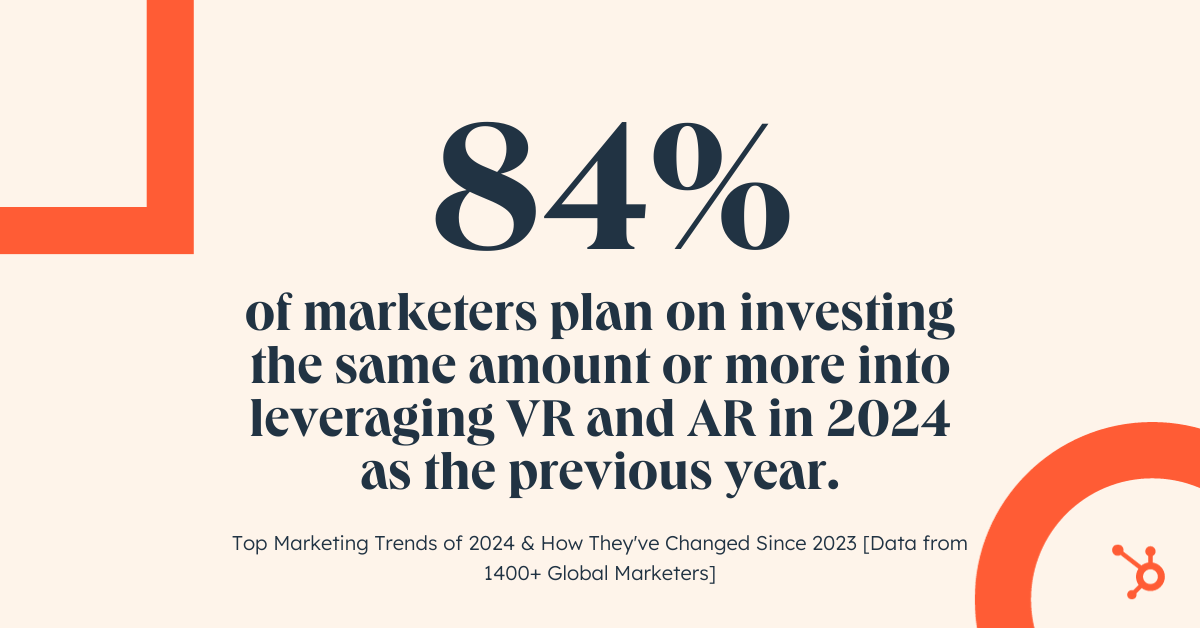
However, only 13% of marketers plan on decreasing their investment in VR and AR in 2024, and 84% plan to invest as much as the previous year or more.
Generally speaking, this is a trend marketers may have been slower to adopt due to pricey equipment and bulky headsets. But, as VR glasses and AR apps became more accessible, the trend is experiencing a turnaround.
Content Marketing Trends
At least 47% of buyers view three to five pieces of content before engaging with a sales rep, and most expect brands to create content to gain their interest. That's why brands worldwide have only grown their investments in content marketing.
But what content strategies are brands investing in? Below are just a few trends you'll want to follow in 2024.
Featured Resources
HubSpot uses the information you provide to us to contact you about our relevant content, products, and services. HubSpot will share the information you provide to us with the following partners, who will use your information for similar purposes: Search Engine Journal, Litmus, Rock Content. You can unsubscribe from communications from HubSpot at any time. For more information, check out HubSpot's Privacy Policy. To unsubscribe from Search Engine Journal's communications, see Search Engine Journal's Privacy Policy. To unsubscribe from Litmus's communications, see Litmus's Privacy Policy. To unsubscribe from Rock Content's communications, see Rock Content's Privacy Policy.
The State of Marketing in 2024
HubSpot's Annual Inbound Marketing Trends Report
- Top Marketing Channels
- AI in Marketing
- Managing Privacy
- The Future of Marketing
7. Podcasts and other audio content are still on the rise.
2023 was an excellent year for podcasts. According to a 2023 report by Edison Research, 42% of Americans ages 12 and older have listened to a podcast in the past month — up 5% from 2020 and 30% from 2013.
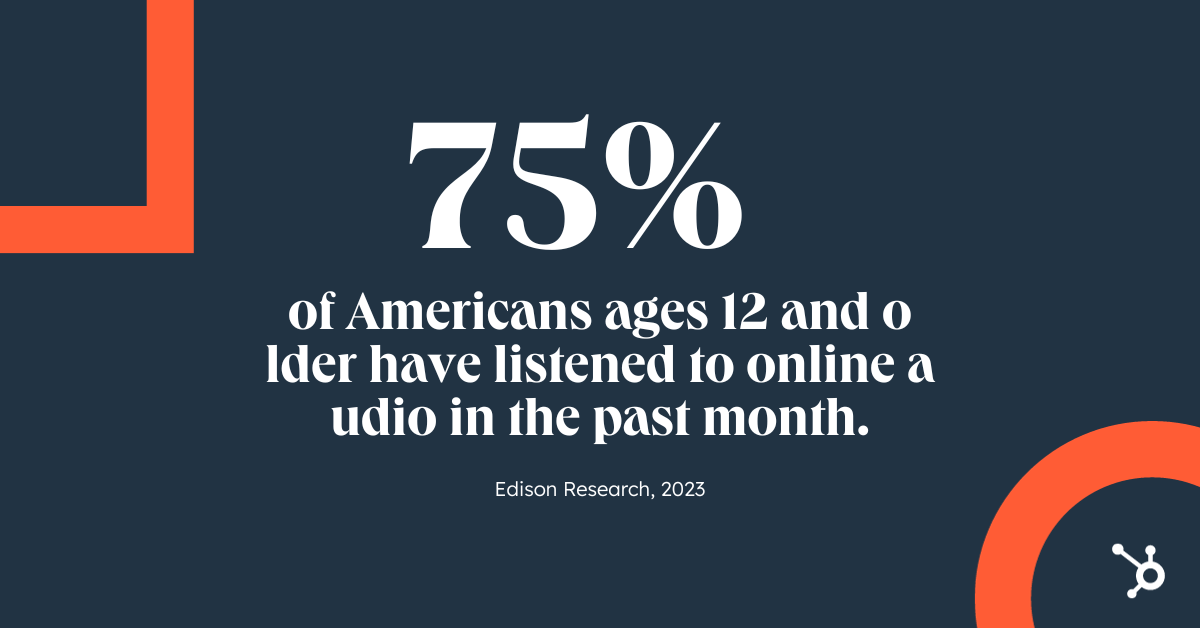
Furthermore, 75% of Americans ages 12 and older have listened to online audio in the past month, while 70% have listened in the past week, according to the same report.
So, of course, marketers are taking note.
In our survey, 82% of marketers plan to either increase or maintain their investment in podcasts and audio content in 2024.
8. Blogging isn't going anywhere.
Yes, the professional blogger is telling you that blogging isn‘t going anywhere, but I promise I’m not being biased. 92% of marketers in our survey plan to maintain or boost their investment in blogging in 2024.
Blogging has been a common marketing strategy since brands started building their websites. But the age of this tactic shouldn‘t be a sign that it’s out-of-date.
In fact, blogging has been used for so long simply because it works. So much so one in three marketers leverage their blog or website.
On top of that, our research suggested that most consumers read 1-4 blog posts a month and have purchased something from a brand after reading the company's blog.
Aside from providing consumer engagement and potential conversion, blogs also offer a crucial benefit to your website or online pages: search discoverability.
Ultimately, sites with robust blogs have more search potential and can implement SEO strategies much easier than sites that don't.
Think about it this way. Suppose a prospective client wants to hire a virtual accountant, and your firm's site has a blog post highlighting tax tips or strategies your accountants use.
In that case, this person might find your post or website via Google search, read your post, explore your website, and then decide that they want to contact you for a consultation or accounting assistance.
If you haven't considered a blog by this point but are intrigued by this data, check out these resources to help you build out your strategy:
9. Case studies will continue to drive leads and brand credibility.
More than a quarter of marketers (26%) leverage case studies as part of their content strategy, according to our survey.
Case studies help establish transparency and trust between brand and consumer. They also offer prospects an incredibly deep and exclusive look into how people or brands benefit from a product, service, or strategy.
Some businesses place them publicly on their web pages to persuade a potential buyer as quickly as possible. Others might gate them as free PDFs that require a lead conversion to be downloaded.
No matter how it's done, marketers will still see the value of case studies in 2024. Our survey found that 87% of marketers will maintain or increase their investment in case studies in the new year.
10. Marketers will continue to leverage infographics.
If a picture paints a thousand words, infographics could paint at least double.
Infographics have the shareability and visual appeal of a nice photo and are packed with helpful data and informative information. This makes them incredibly engaging to web visitors and social media audiences alike.
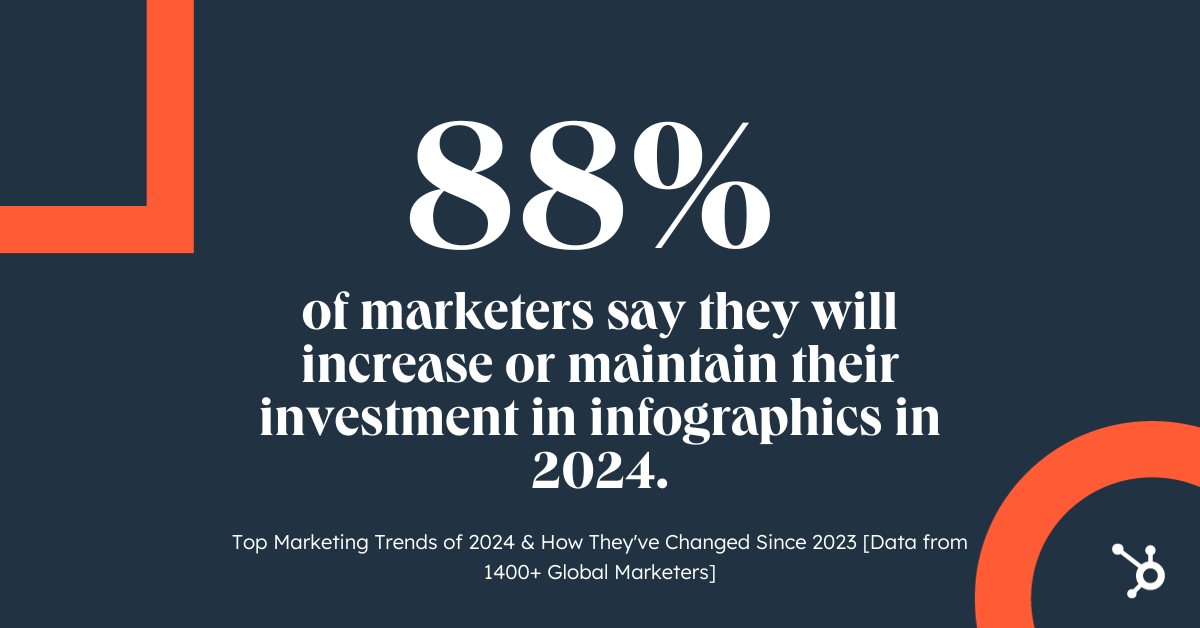
88% of marketers say they will increase or maintain their investment in infographics in 2024.
Credible data can help marketers, bloggers, and content creators tell compelling and persuasive stories. Why else do you think we surveyed hundreds of marketing professionals to create this content?
Featured Resources
- How to Start a Successful Blog [Free eBook]
- The Complete Collection of Content Marketing Templates
- Free Editorial Calendar Templates
Social Media Marketing Trends
In the U.S. alone, 90% of the population actively uses social media.
This is why social media marketing is a popular channel that's become a part of almost every business’s greater marketing strategy.
Social media marketing allows you to authentically connect with your audience on a personal level, humanizing your brand.
11. Selling on social media will be even more normalized.
Many social media platforms are vying to become the next go-to shopping destination. Instagram has Instagram Shopping; Facebook has Facebook Shops; and TikTok is testing new e-commerce and partnership features.
This shift is already impacting consumer shopping habits. For instance, 71% of Gen Z-ers prefer discovering new products on social media. The same is true for 51% of Millennials.
So, it‘s safe to say social media shopping will continue to become the new norm this year. Still don’t believe me? Well, almost half of the marketers in our survey (47%) will increase their investment in social media shopping tools.
40% will keep investing the same as last year.
HubSpot uses the information you provide to us to contact you about our relevant content, products, and services. HubSpot will share the information you provide to us with the following partners, who will use your information for similar purposes: Mention. You can unsubscribe from communications from HubSpot at any time. For more information, check out HubSpot's Privacy Policy. To unsubscribe from Mention's communications, see Mention's Privacy Policy.
The State of Social Media in 2024
Explore the top trends in social media for brands to know and optimize your social strategy.
- AI Content Creation
- Community Building
- Social Media Shopping
- Social Vs. Search Engine
12. TikTok will continue to gain brand interest.
TikTok will experience even more growth in 2024, as 56% of marketers who currently leverage the platform plan to increase their investment this year, the highest of any social media app.
Moreover, almost a quarter of marketers in our survey (24%) say TikTok yields the highest ROI compared to other social media channels.
Brands have been trying to tap into the true power of TikTok since it first began to go viral four years ago. With well over 1 billion global users, TikTok has positioned itself as an app for various audiences and marketers.
Of course, if you think TikTok is just for younger demographics, think again. 50% of Millennials report visiting TikTok in the last three months, along with 38% of Gen X-ers, according to HubSpot's 2022 Consumers Trends Report.
We predict these numbers will continue to rise as TikTok becomes more mainstream.
13. Most marketers will focus on three to five social media platforms.
On average, marketers leverage four social media platforms in their roles. Facebook is the most used social media platform, operated by 57% of marketers, followed by Instagram (55%), YouTube (52%), X (39%), and TikTok (42%).
Managing three to five platforms is realistic.
This range allows brands of all sizes to expand their reach to different audiences while also giving social media marketers a realistic list of platforms to master without stretching their bandwidth during the workweek.
Here are a few questions that can help you determine how many platforms you should be on:
- How many social media marketers are on your team?
- Which social media platforms have audiences that best align with your targets?
- How long will it take to master a strategy on each platform you're targeting?
- Are there platforms that won't benefit your overall marketing strategy right now?
- Are there any platforms you can easily repurpose engaging content between? (such as TikTok and YouTube Shorts)
By asking yourself some of the questions above, you can determine how much time your social team and brand will need to build an effective and engaging strategy on each platform and prioritize which platforms you should focus on.
Featured Resources
- How to Use Twitter for Business (+ Follower Growth Tracking Template)
- 30 Days of Instagram: A Guide for Businesses
- How to Attract Customers With Facebook
Search Engine Optimization Marketing Trends
92% of marketers plan on maintaining or increasing their investment in search engine optimization in 2024, according to our survey.
Are you one of these marketers? Have you figured out how exactly you plan to improve your SEO and organic presence? When you optimize for specific types of consumer behavior and leverage SEO tools like Ahrefs or SEMRush, you'll help your business become more discoverable online.
14. Web teams won't forget about video and image SEO.
SEO doesn't just involve changing the text on a page. It can also include choosing and optimizing suitable videos or images for a page to help it rank in Google images or search engine video carousels.
While optimizing images involves compressing files to increase page speed and adding keyword-optimized alt text to an image, video optimization strategies involve embedding a video with a similar topic or keyword into a blog post.
Currently, 53% of marketers who leverage SEO have a strategy for optimizing videos and images. Of those marketers, 49% say image and video optimization is their most effective SEO tactic.
15. Link-building will help brands grow authority — and search rankings.
When sites with solid rankings begin to link to yours, Google's crawlers note that your site might be credible and also have solid authority in your space. This can then trick your Google ranking to go up.
This, ultimately, is the goal of link-building — or getting other sites to link to yours.
Although writing highly shareable content, reaching out to share it with other websites, or ensuring that your post gets links can be time-consuming and challenging, research shows that this time and effort pays off.
Of the 48% of SEO marketers that use backlinking and link building, 63% say it‘s their brand’s most effective SEO tactic.
16. Historical optimization will help old web pages get new traffic.
Instead of developing new ideas, marketers will take what’s worked in the past and optimize it for the present.
In SEO, keeping your content up to date and full of rich, engaging content will outweigh older work that needs keyword relevancy with old statistics and links.
Not only that, but taking existing content and repurposing it for a new podcast, webinar, or blog post can be an efficient way to keep it relevant in search engines.
While one in four SEO marketers leverage historical optimization in their strategy, 29% say that those marketers use it as an effective SEO strategy.
17. Voice search optimization could become more of a priority.
41% of marketers plan to increase their investments in voice search optimization in 2024, and I predict it could become more of a priority in 2024.
Over a quarter (28%) of marketers say they will stop leveraging voice search optimization in 2023. However, that number has dropped to 14% regarding their 2024 plans.
You may be wondering, “How can I leverage voice search optimization?” The answer is simple: by framing your content around questions.
Think about it: these digital assistants answer short, informational queries such as “Who is the actor in Mission: Impossible?” or “What’s the weather in Boston today?” they’ve also started to process more local, conversational, and customized searches.
These may sound like, “Where’s a nearby coffee shop I can work from today?” “How late is it open?” and “Do they serve iced coffee?”
Aja Frost, Director of Global Growth at HubSpot, says:
“Businesses should look at a topic and say, ‘What questions could users ask about this?’ Then, they should plan sub-topics accordingly and look for opportunities to insert questions as headers.
This will allow voice assistants to easily grab questions and recognize content as solutions.”
Featured Resource
HubSpot uses the information you provide to us to contact you about our relevant content, products, and services. HubSpot will share the information you provide to us with the following partners, who will use your information for similar purposes: Search Engine Journal, Litmus, Rock Content. You can unsubscribe from communications from HubSpot at any time. For more information, check out HubSpot's Privacy Policy. To unsubscribe from Search Engine Journal's communications, see Search Engine Journal's Privacy Policy. To unsubscribe from Litmus's communications, see Litmus's Privacy Policy. To unsubscribe from Rock Content's communications, see Rock Content's Privacy Policy.
The State of Marketing in 2024
HubSpot's Annual Inbound Marketing Trends Report
- Top Marketing Channels
- AI in Marketing
- Managing Privacy
- The Future of Marketing
18. Chatbots will continue to streamline conversational marketing.
As much as I am a marketer, I'm also a consumer. And, like most consumers, I hate waiting. In a report from Tidio, 53% of respondents said waiting too long for replies is the most frustrating part of interacting with a business.
That same report shows 62% would rather speak to chatbot than wait 15 minutes for a response.
So, I think it's safe to say chatbots will be leveraged more in 2024 to keep up with consumer demands. The majority of marketers in our survey (58%) say they will increase their investment in chatbots in 2024.
Bots are powered by a computer program that automates specific tasks, typically by chatting with a user through a conversational interface.
Artificial intelligence makes bots possible, which helps them understand complex requests, personalize responses, and improve interactions over time.
Bots provide the perception and dedication of a 1:1 service experience while working with hundreds of customers — something that no customer service representative or team would ever be able to do.
To the consumers who hate repeating themselves to multiple sales or service representatives, listen up — chatbots are and will continue making your lives easier.
If used correctly, they manage conversations at scale and aggregate data from multiple data sources, from calendars to knowledge bases to blog posts and videos.
Jon Dick, SVP of Marketing at HubSpot, says: “It’s on you to make things as easy as possible."
"Do your buyers want to use live chat? You should give it to them. They’ve had the same problem three times in the last month? You should already know and have a plan to fix it,” Dick concludes.
Featured Resource
- How to Stay Current on Emerging Technology Trends
- 10 Affordable AI Tools for Businesses (+ How to Implement Affordable AI)
- Supercharge Your Clients' Growth With Chatbots
Privacy Marketing Trends
19. Brands will need to give customers more control over their data.
In the marketing world, data is highly valuable — and not just valuable to you as a marketer or business owner.
Whether it's an email address, credit card information, or smartphone location, consumers also view their data as precious and privileged — and it’s your responsibility to take care of it.
Every business operates using data, whether a software company, bank, government agency, or lemonade stand. It’s the lifeblood of marketing, sales, service, and more.
But, when precious information is misused or siphoned into the wrong hands, it leads to a strong distrust in businesses and potentially exploited consumers.
That’s why the General Data Protection Regulation (GDPR) was enacted.
GDPR is an effort by the EU to give greater control to consumers over their data.
Under the GDPR, organizations must ensure that their data is collected legally and safely and that those who collect and manage said data will protect it and respect consumers’ rights.
Following the GDPR guidelines might seem like a burden, but being fined for non-compliance will feel much heavier; fines range from 10 million euros to 4% of a company's annual global revenue.
And — GDPR isn't the only entity enforcing privacy mandates in 2022. In fact, companies like Google and Apple are now taking stands for user data as well.
In 2021, an Apple IOS launch enabled iPhone and iPad users to determine which apps could track their third-party data, which is often used for hyper-targeted ads.
In 2022, Apple finished rolling out another IOS update with additional email privacy protection features for Apple Mail users.
Meanwhile, Google will discontinue using third-party cookies on Chrome while encouraging advertisers to leverage its Privacy Sandbox instead.
Ultimately, brands and governing bodies are increasingly aiming to give users more choices when it comes to releasing their data.
And, while it is great for the consumer, businesses who leverage personal data to run campaigns will need to create alternative strategies and pivot plans in case they lose access to crucial data points.
With all that said, is it really surprise that 87% of marketers in our survey plan to maintain or increase their investment in giving consumers greater control over their data?
Use Marketing Trends to Grow Better
You’re up to speed… for now. And, as long as you’re keeping a thumb on the pulse of marketing trends — and always remain open to change — your business won't fall behind.
But, if you‘re feeling overwhelmed by the idea of keeping up with all these insights, don’t worry.
The HubSpot Blog will be publishing regular Marketing Strategy research pieces with data from hundreds of marketing professionals in the coming months and will continue to update this post as new trends emerge.
Editor's note: This post was originally published in August 2019 and was updated in November 2024 with updated HubSpot Blog trends data.


![The Top Channels Consumers Use to Learn About Products [New Data]](https://blog.hubspot.com/hubfs/finding-products-on-social-media.png)
![The State of Consumer Trends in 2023 [New Data]](https://blog.hubspot.com/hubfs/consumer%20trends%202023-1.png)
![Millennials vs. Gen Z: Why Marketers Need to Know the Difference [New Data]](https://blog.hubspot.com/hubfs/millenials%20vs%20gen%20z%20what%20marketers%20need%20to%20know%20when%20trying%20to%20reach%20each%20generation.jpg)

![Top Shopping Trends of 2023 & How They've Changed [New Data]](https://blog.hubspot.com/hubfs/shopping-trends_3.webp)
![3 Consumer Behavior Predictions for 2023 [State of Consumer Trends Data]](https://blog.hubspot.com/hubfs/consumer%20purchasing%20product%20off%20social%20media%20platforms%20similar%20to%20consumer%20behavior%20predictions.jpg)
![The 4 Biggest Consumer Behavior Shifts of 2023 [According to New Data]](https://blog.hubspot.com/hubfs/two%20customers%20demonstrating%20the%20biggest%20consumer%20behavior%20shifts-1.jpg)