
When I was first asked to create a marketing persona, I thought it was a joke. Making up fake people based on our audience didn’t seem useful to me.

So I actually did the exercise and really sat down to ask myself, “What is a persona?” Then, I saw the value. And now, I’ll never go back.
Most marketers I know treat personas like a one-time exercise, something to check off during a rebrand or campaign kickoff. But in my experience, personas are never “done.” They evolve as your audience does.
So if you’re anything like me when I first started out, read on. I’ll break down what a persona really is, why it’s essential for every marketing strategy, and how to create one that actually drives results.
Table of Contents
- What is a persona?
- Why You Need a Persona
- How to Create a Persona
- What to Include in a Persona
- Best Persona Creation Tools
What is a persona?
A persona is a semi-fictional profile of your ideal customer, built from real data, research, and insights about your audience. It helps you understand not just who your customers are, but why they make the decisions they do, their motivations, challenges, and goals.
Every business has a target audience, but not every customer within that audience wants or needs the same thing. Personas help you segment that audience into smaller, more focused groups so you can speak to each one more effectively.
When I started creating buyer personas, I used to think they were just a checklist of facts: demographics, job titles, pain points. But the real value comes when you start connecting those data points into a story about a real person. What does their day look like? What pressures are they under? What do they actually care about? That’s when your marketing stops feeling generic and starts actually connecting.
For example, one of my early personas was Small Business Sam. He ran a neighborhood coffee shop and handled everything from ordering supplies to posting on Instagram. He cared deeply about his customers but didn’t have time to think about marketing strategy. He just wanted something that worked.
Once I got into his mindset, everything shifted. Our messaging became simpler, more supportive, and a lot more human. Engagement picked up almost instantly because it finally spoke his language. See what I’m getting at here?
Most businesses have more than one type of customer, which means you’ll probably have multiple personas too. And that’s a good thing. It helps you create content and campaigns that actually speak to people, not just “audiences.”
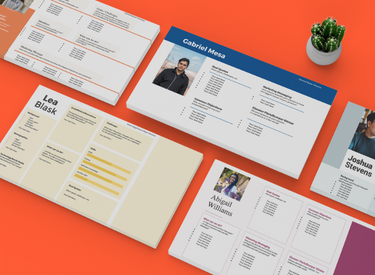
Buyer Persona Templates
Organize your audience segments and make your marketing stronger.
- Learn about personas.
- Conduct persona research.
- Create targeted content.
- Build your own personas.
Download Free
All fields are required.
Why You Need a Persona
You can have the best product in the world, but if you don’t understand who you’re selling to, it’s almost impossible to market it effectively.
A good buyer persona goes beyond describing your audience. It helps you make better business decisions. When you know exactly who you’re talking to, you can tailor your messaging, refine your offers, and focus your time on the strategies that actually move the needle.
In my experience, personas have shaped everything from product positioning to content strategy. They’ve helped me spot gaps in messaging and build stronger campaigns. Once you know your personas well, you stop guessing. Every choice — from what to say, where to say it, and how to say it — becomes clearer.
They can also save you a lot of wasted effort. I’ve seen people spend months on campaigns that looked great on paper but fell flat because they didn’t resonate with their audience. With solid personas, you avoid that. You can map content to real pain points, choose the right channels, and even allocate ad spend more effectively.
Bottom line: A strong persona turns generic marketing into meaningful communication. It helps you speak to the right people in the right way — and that’s how you turn interest into trust, and trust into growth.
How to Create a Persona
Creating a buyer persona might sound intimidating, but once you break it down, it’s actually a really creative process. You’re not just collecting data, you’re building a character who represents a real segment of your audience. And the better you know them, the more effective your marketing will be.
Here’s how I approach it in my own work.
Steps to Creating a Persona
1. Start with what you already know.
Before you dive into new research, start with the data you already have. Look at CRM records, sales notes, reviews, and even social media comments. You’ll be surprised how much insight lives right there.
Some of the best persona-building moments I’ve had came from reading how people describe their own challenges online. The way they talk about their problems (not the way we think they talk) can completely change how you frame your messaging.
2. Talk to real customers (and the people who talk to them).
Data is useful, but real conversations are what bring personas to life. Talk to customers, sales reps, and support teams. Ask open-ended questions that go beyond the obvious.
You want to uncover what motivates people, what frustrates them, and what keeps them from making a decision. These are the details that turn a generic persona into something real and useful. A basic list of questions can include the following:
- What is their profession?
- What does a typical day in their life look like?
- Where do they go for information?
- How do they prefer to obtain goods and services?
- What is important to them when choosing a vendor?
- What do they value most?
- What are their goals?
3. Spot the patterns and pain points.
Once you’ve gathered your notes, start looking for trends. What goals, challenges, or needs keep showing up? What do your best customers have in common?
I like to focus on the recurring themes instead of outliers. If five or six people mention the same frustration, that’s a signal worth paying attention to.
4. Build and validate your personas.
Now it’s time to pull everything together. Give each persona a name, a role, and a short description that captures what they care about most. Summarize their goals, challenges, and how your product or service helps solve their problems. And if you’re wondering what exactly should go into that profile, don’t worry — we’ll get into that in just a second.
Just one quick note before we do: Before finalizing, share your personas with your sales or product teams. In my experience, they’ll instantly tell you if something feels off or missing, and that feedback makes your final version much stronger.
To learn more about these steps and other ways to develop a persona in more detail, check out this post on creating detailed buyer personas, or you can generate your own now with this free tool from HubSpot.
What to Include in a Persona
Descriptive Name
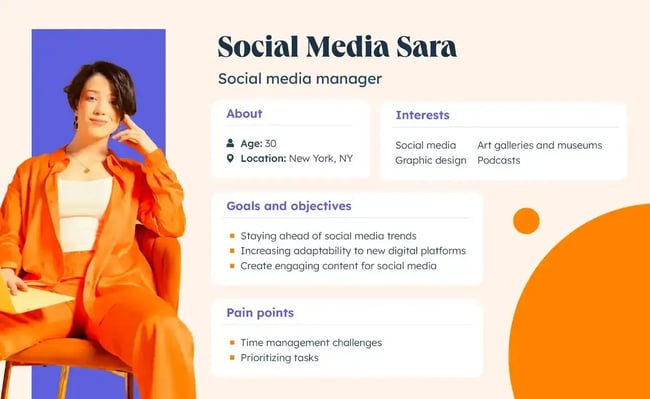
Start by giving your persona a name that makes them feel real. You can use a first and last name or a fun moniker like “Social Media Sara” or “Retail Ryan.” It might sound silly, but naming your persona makes it easier for you and your team to remember and talk about them later.
Occupation
Next, clarify what they do and where they fit in their company. Are they the decision-maker? A manager? A hands-on contributor? Knowing their role helps you tailor your messaging and understand what kinds of challenges they deal with day to day.
Demographics
Include a few key details like age range, education level, and location if it’s relevant. I don’t go overboard here — just enough to give context. The point isn’t to stereotype, it’s to understand their environment and how it influences their decisions.
Interests
What do they care about outside of work? What podcasts do they listen to? Do they even listen to podcasts? What tools or communities do they rely on? This is where you start to get a sense of their mindset and what channels might be best for reaching them.
Goals and Objectives
Define what success looks like for this person. What are they trying to achieve in their role or business? When you know their goals, you can position your product or content as the bridge that helps them get there.
Pain Points
This one’s super important. What obstacles or frustrations keep them from reaching their goals? What slows them down or makes their job harder? The clearer you are here, the easier it becomes to show exactly how you can help.
Best Persona Creation Tools
Once you’re ready to build your personas, a few tools can make the process a lot easier. These are some of the long-standing favorites I’ve used or recommended over the years — and they’re still going strong today.
HubSpot Persona Generator

Get started with HubSpot’s free Persona Generator.
HubSpot’s Persona Generator is my go-to tool for building buyer personas from scratch. It walks you through each section step by step, from basic demographics to goals and challenges, and the result is a clean, professional profile you can share with your team.
If you prefer more flexibility, HubSpot also offers free downloadable persona templates you can customize as you go.
Userforge
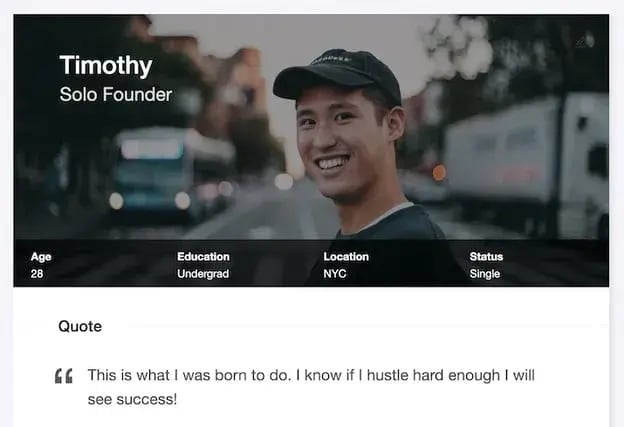
Userforge is great if you like to visualize and collaborate on your personas. It lets you create interactive persona cards with sections for goals, frustrations, values, and motivations. You can easily share and refine them with your team, which makes it especially useful for ongoing updates.
Xtensio
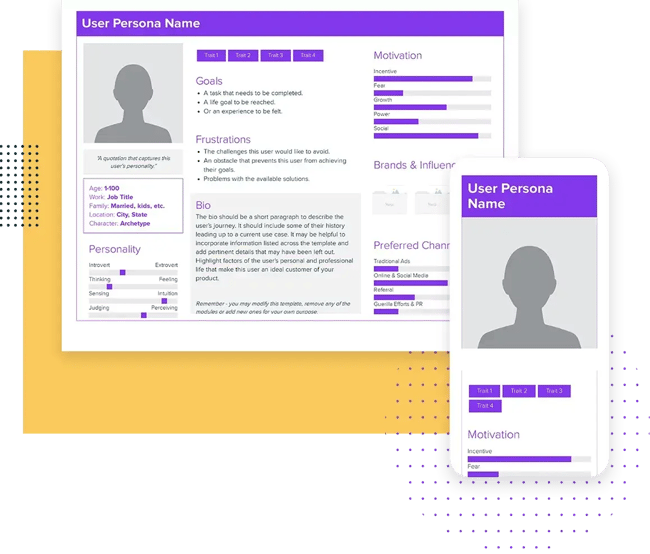
Xtensio offers sleek, customizable templates that go beyond the basics. You can include visuals, brand colors, and other design elements, which makes it a solid pick for agencies or teams that need something client-facing.
Get started with personas.
Like I said, when I first started creating personas, I thought it was just another marketing task to check off. Now, I can’t imagine building a campaign without them.
If you haven’t built one yet, start with a single segment and see what you learn. You’ll be surprised how much easier marketing feels once you know exactly who you’re speaking to. Trust me, it's simpler than you think.
And if you’re ready to try it for yourself, check out HubSpot’s free buyer persona creation tools.
Editor's note: This post was originally published in December 2022 and has been updated for comprehensiveness.
Buyer Persona Templates
Organize your audience segments and make your marketing stronger.
- Learn about personas.
- Conduct persona research.
- Create targeted content.
- Build your own personas.
Download Free
All fields are required.
Buyer Personas

![The definition of a buyer persona [in under 100 words]](https://53.fs1.hubspotusercontent-na1.net/hubfs/53/Copy%20of%20Featured%20Image%20Template%20Backgrounds.webp)

![How to create detailed buyer personas for your business [+ free persona template]](https://53.fs1.hubspotusercontent-na1.net/hubfs/53/what-is-a-buyer-persona-1-20251030-6008905.webp)