

Table of Contents
- Most engaging social media content formats of 2026
- Most Engaging Social Media Content Types in 2026
- Choosing the right social media format for each platform
- Frequently Asked Questions About Social Media Formats
- Want more social media insights?
Top social media content formats of 2026
Before diving into specific examples, it’s important to clarify what a social media format is. A content format refers to how content is delivered, rather than the message or goal behind it.
Understanding which social media formats perform best helps marketers choose the right delivery method for their content and optimize it for each platform. Teams managing multiple platforms can use HubSpot’s Marketing Hub to centralize publishing, monitoring, and performance tracking across social channels.
Here are the most engaging social media content formats.
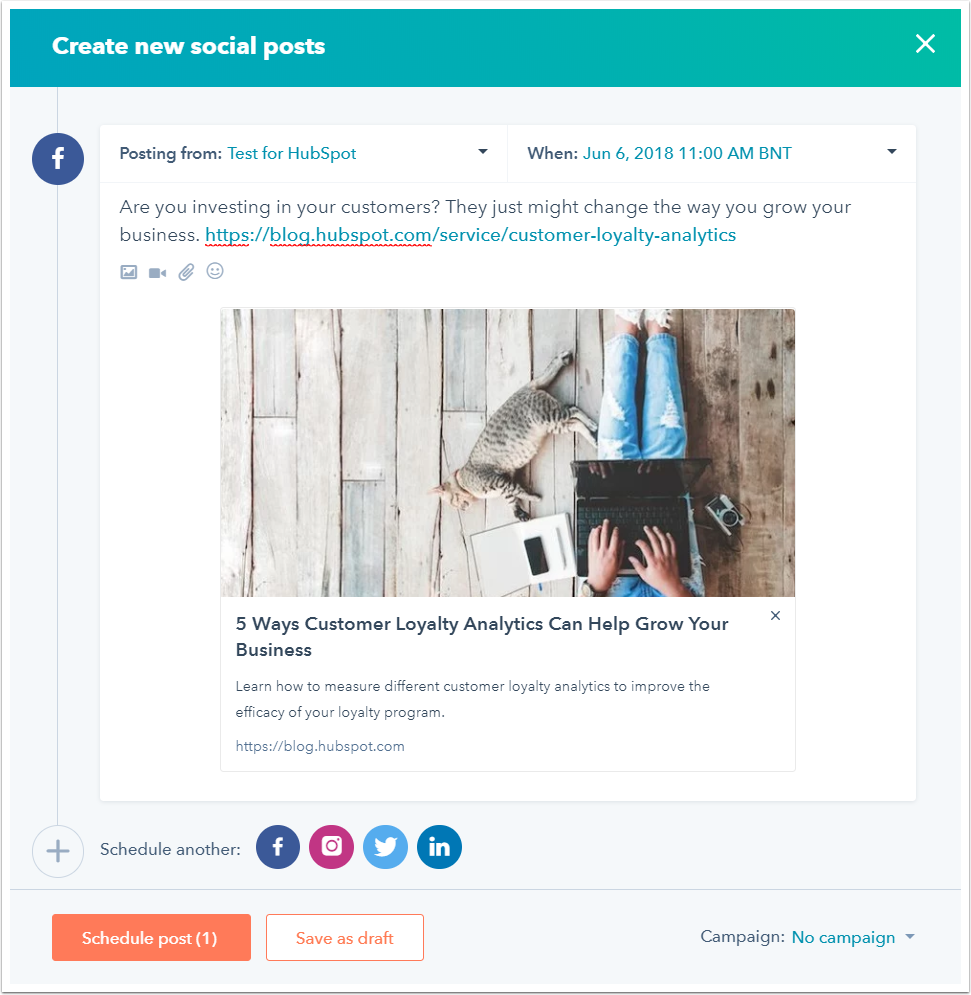
HubSpot's Social Media Management Software
Time-saving tools to help you prioritize your social interactions — so you can connect with the people who matter most.
- Manage campaigns.
- Monitor mentions.
- Attribute value.
- And more!
1. Short-Form Video
Short-form videos are fun to watch, (too) easy to binge, and relatively fast for businesses to create. Short-form video is video content roughly under 90 seconds that delivers quick, engaging messages optimized for mobile viewing on social platforms. These quick, stimulating videos are the most engaging social media content.
According to the 2025 Marketing Trends Report, short-form videos are more important than ever for businesses:
- 21% of social media marketers said that short-form video content has the highest ROI.
- Short-form video content is the #1 priority among social media marketers.
- 17% said that they plan to increase their investment in short-form video.
Short-form videos can be published on TikTok, Instagram, Facebook, YouTube, Pinterest, LinkedIn, and X (previously Twitter).
Furthermore, AI is making social media video production more affordable and efficient. In fact, about a quarter of social media marketers use AI to edit videos, and 27% use it to generate social media videos, according to our most recent State of Social Media data.
The TikTok video below is a great example from Brooki Bakehouse, offering a behind-the-scenes look at what it’s like to run a bakery. This content format is highly relatable and markets the business without the video content feeling like marketing. It’s also a low-budget way to create short-form videos.
Great for: Brand awareness, lead generation, and showcasing customer success.
What I like: I like this short-form video for its ability to communicate value quickly without asking much from the audience upfront. It works especially well on platforms where speed and immediate relevance determine whether content earns attention or gets skipped.
HubSpot Pro Tip: Teams using HubSpot’s Marketing Hub can track how video formats contribute to downstream engagement and conversions across platforms.
2. Long-Form Video
Video content is now so diverse that it’s been split into several different social media content categories. Despite having a lower ROI than short-form videos, long-form video content remains relevant and in demand on social media. A few quick differences from short-form video content:
- Longer = more costly to produce.
- Consumers expect higher production quality.
- Content needs to be highly engaging, as the average viewer lacks the attention span to finish long-form content.
Below is a long-form video example from the coffee accessory company AeroPress. This company knows that its target audience is interested in the lifestyle that accompanies its product, and they create videos that cater to that lifestyle:
Great for: Relationship building, customer retention, and customer education.
What I like: I only watch longer video content when I’m emotionally invested in a brand’s voice, mission, or product. Short-form videos are great top-of-funnel content, while long-form content nurtures existing leads.
Curious how often to share content on social media? Check out this publishing experiment.
3. Live Video
Live video has the third-highest ROI of all social media content types, yet is one of the least-used, according to surveyed marketers. This digital marketing medium packs a punch, and brands that ignore it are missing out on an incredible opportunity to connect.
Live video gained popularity during the pandemic, allowing remote participation in events. Twitch and other popular live-streaming platforms let people interact with their favorite creators in real time.
Marketers can choose a virtual-only live video or live stream an in-person event to offer physical audience members and virtual viewers the same real-time experience. Here’s an example of a live-streamed event from Sephora:
Great for: Customer engagement, solution education, and building trust/credibility.
What I like: I like seeing brands use live video because it can’t be faked: There’s no AI or repurposed content. It feels like a genuine investment in engaging with viewers.
4. Images
When asked about the type of content that they use most, marketers reported that images were used almost as frequently as short-form video. Images are convenient because they can be shared on all social media channels. The image umbrella primarily includes photography, not designed graphics (that’s the next point).
Some easy image post ideas include:
- Product announcements.
- Before and after photos.
- Product photography.
- Behind-the-scenes.
- Office life.
Here’s an example of a simple image post from The Woobles showcasing new products:

Great for: Product awareness, storytelling, and staying top of mind.
What I like: I like images for anchoring a brand visually and reinforcing familiarity over time. They’re easy to recognize at a glance and work well for maintaining a consistent presence across multiple platforms without heavy production.
5. Infographics/Carousels
A carousel post is a multi-slide social media format that lets users swipe through multiple images or graphics in a single post. Infographics are a content type with the shareability and visual appeal of photos, but are filled with helpful data and information. It’s an impactful form of social media content and educational content. Infographics are effective, too: 51% of marketers who regularly use them say they yield high ROI.
Carousels are even more valuable in 2026 than raw infographics. This is reflected in both user behavior and algorithmic preference. If an Instagram follower views the first slide of a carousel without engaging, the platform may resurface the post later by showing a different slide to recapture attention.
Carousels have become extremely popular on certain social media platforms (like Instagram, LinkedIn, and even TikTok). Both infographics and carousels serve the same purpose: to educate and share industry news. Here’s an example from apparel brand Gnara that educates viewers on the history of women’s pants:
Great for: Industry authority, shareability, and customer education.
What I like: I like infographics and carousels because they break information into manageable, scrollable pieces. As a reader, they make it easier to follow along and actually retain the takeaway when structure and clarity matter.
HubSpot Pro Tip: Tools like Breeze’s AI social post generator can help teams quickly draft captions and hooks that match each format’s pacing and platform norms.
6. Text Posts
Text-based content on social media is shared every day, from X “threads” to Meta’s Threads app to thought leadership posts on LinkedIn. The primary goal is to share insight through words. Marketers can pair it with an eye-catching image, but the focal point is the writing itself.
Blogs are popular text-based content where people read longer posts and discover helpful information. But a common mistake is sharing blog links directly on social media. Social platform algorithms don’t favor linking out – they want viewers to stay!
Marketers reported that their blog or website is the #2 area seeing an increased investment this year, and sharing snippets as text-only posts on social media is a great way to repurpose. Break a blog post down into snackable takeaways that are more suitable for social users’ habits.
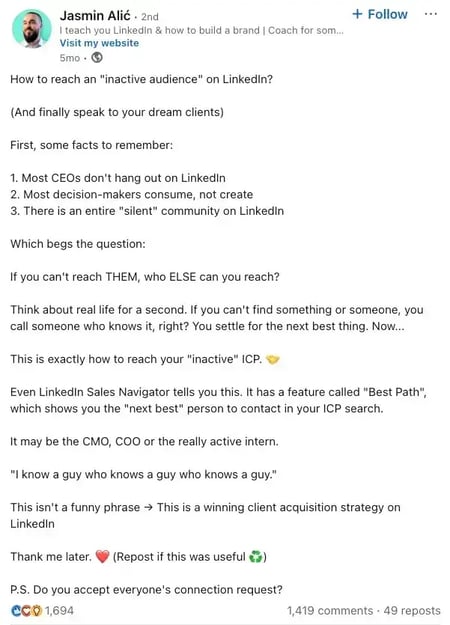
Here’s an example of a highly engaging text post from copywriter Jasmin Alić on LinkedIn:
Great for: Engagement, problem awareness, and product awareness.
What I like: I like text posts for articulating ideas clearly when visuals aren’t necessary to carry the message. They work well for commentary and thought leadership that benefit from precise language rather than heavy production.
7. User-Generated Content (UGC)
User-generated content (UGC) is content your audience creates that features your business/brand, which is not paid for by your business. For example, someone shares a non-sponsored Instagram Reel about how much they like your product or posts a picture wearing your clothing and tags your business.
And for many marketers, it’s their third-highest focus area, behind short-form video and images. UGC pays off, as customers trust reviews from friends and family more than they trust branded ads. And 90% of shoppers say UGC has a greater influence on their purchases than search results or promotional emails.
This type of content is powerful because it helps your audiences see that people use and like a product, vouching for a brand in a real-life way. It naturally funnels in new social media followers.
Here’s an example of user-generated content posted by India @ourwanderlust_life featuring the Stasher Bag. Stasher Bag commented on this post, which is a free way to boost user-generated content in the algorithm and get more exposure.
Great for: Lead generation, brand awareness, and conversions.
What I like: I already own several Stasher Bag products, and seeing people using their product reminds me of its value. UGC brings in new leads while reinforcing the buying decision of past customers
HubSpot Pro Tip: For paid social strategies, HubSpot’s advertising tools support ad management, audience targeting, and conversion tracking across major social platforms.
8. Audio Chat and Live Rooms
Audio content is particularly trendy among Gen Z, the biggest social media demographic. A 2024 Spotify study found that Gen Z enjoys audio content because it creates a feeling of genuine connection (more so than other online content).
Many new social media platforms have native audio features, like X Spaces, LinkedIn Live, and Facebook Live Audio.
Audio chat rooms enable brands to communicate directly with their audiences and foster closer relationships, unlike traditional methods such as seeing a billboard or watching a YouTube video.
And, during a time when customers value connections with brands more than ever, audio chat rooms are a valuable tool.
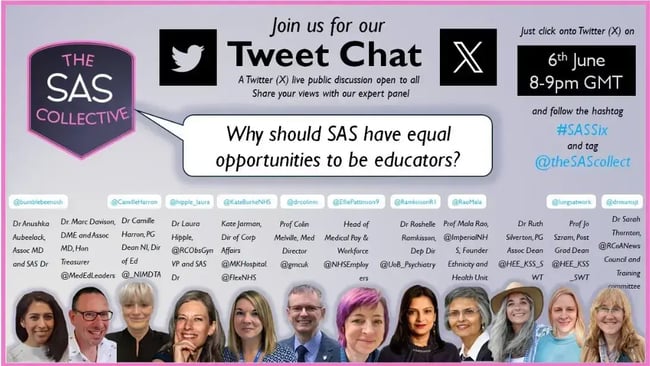
Having multiple social media accounts and sharing different types of content can help brands create a wide funnel. Here’s an example from a chat hosted by The SAS Collective on X:
Great for: Conversions, industry authority, and community building.
What I like: I like audio chats because they create a conversational, low-pressure way to engage. As a listener or participant, it feels easier to join the discussion and stay present when the focus is on real-time exchange rather than polished production.
9. Forums and Private Groups
There’s more to a social media strategy than just gaining followers and making sales. Some brands are facilitating a genuine community around their product. One of the most effective ways to do this is through forums and private groups.
When asked about the biggest benefits of building social media communities, marketers cited increased brand sentiment/loyalty as the top benefit.
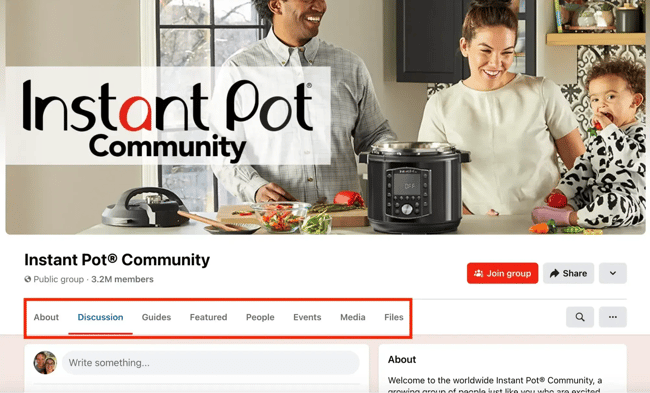
Here’s an example from the pressure cooker company Instant Pot®. This group keeps its audience engaged by creating a place to share recipes, troubleshoot together, and celebrate wins:
Great for: Ongoing audience engagement, community building, peer-to-peer support, and long-term brand loyalty.
What I like: As a participant, private groups feel more approachable and genuine, which makes it easier to engage and stay involved over time.
HubSpot Pro Tip: HubSpot’s AI-powered social inbox insights help teams prioritize the most important social interactions and respond faster to high-intent conversations.
Most Engaging Social Media Content Types in 2026
While social media formats describe how content is delivered, content types define why it’s being shared.
Social media content types define the purpose of a post — educational, promotional, or community-building — while formats describe how content is delivered, such as video, image, or text. Content types reflect what a post is designed to do, regardless of whether it’s shared as a video, image, carousel, or text post.
Understanding these content types helps marketers build more intentional social strategies by aligning each post with a clear goal rather than relying solely on format.
1. Educational Content
Educational content shares knowledge your audience is actively looking for — how-tos, explainers, industry insights, step-by-step guides, and answers to common questions.
It's one of the most versatile content types in any social media strategy because it works across virtually every format: carousels, short-form video, long-form video, text posts, and infographics.
What works best: Content that solves a specific, named problem. The more precisely you identify the question your audience is asking, the more useful — and shareable — the post becomes.
Native formats tend to outperform link-outs, so distill the key takeaway directly into the post rather than sending people elsewhere to find it.
Practical example: A financial services brand posts a carousel on LinkedIn, breaking down five common 401(k) mistakes — each slide covers one mistake with a plain-language fix. No external links, no sales pitch, just useful information formatted for the feed.
HubSpot often shares educational content through YouTube videos, where viewers can learn more about concepts of interest, like this example below:
Great for: Brand authority, audience trust, organic reach, and top-of-funnel awareness.
2. Entertaining and Relatable Content
Entertaining content is designed to stop the scroll — through humor, surprise, cultural relevance, or a moment that makes someone think that's so me. Relatable content sits within this category: it mirrors the audience's experiences, frustrations, or personality back at them in a way that feels genuine rather than manufactured.
What works best: Speed and specificity. The joke or observation needs to land in the first second, and it needs to feel like it was made for this audience, not for everyone. Tapping into trending audio, formats, or cultural moments extends reach, but only when the connection to your brand feels natural rather than forced.

Practical example: A project management software company posts a short-form video riffing on the chaos of a Monday morning meeting — no product mention, just a scenario their target audience lives every day. Comments and shares do the distribution work.
Great for: Brand awareness, audience engagement, follower growth, and staying top of mind.
3. Brand Values and Storytelling Content
This content type communicates what a brand stands for — its commitments, culture, perspective, and the people behind the product. It's less about selling and more about building the kind of familiarity and trust that makes audiences choose one brand over another when the products are otherwise similar.
What works best: Specificity and consistency. Vague statements about values don't resonate; concrete stories do. Behind-the-scenes content, founder perspectives, employee spotlights, and real accounts of how a brand makes decisions all outperform generic mission-statement posts.
Audiences are good at detecting inauthenticity, so this content type rewards brands willing to show process, not just outcomes.
Practical example: An outdoor apparel brand documents the supply chain behind one of its products — where materials are sourced, who makes them, and what standards the manufacturer is held to. No polish required; the transparency is the point.
Great for: Brand trust, long-term loyalty, differentiation, and audience connection.
4. Community and Conversation Content
Community content prioritizes interaction over broadcast. Instead of publishing to an audience, it creates space for the audience to participate through questions, polls, challenges, debates, shared experiences, or dedicated group spaces.
It's a content type built around belonging, and it tends to generate the kind of sustained engagement that one-directional content can't replicate.
What works best: Low barriers to participation. The easier it is for someone to respond — a one-tap poll, a fill-in-the-blank prompt, a question with a genuinely interesting answer — the more engagement you'll see.
Private groups and community spaces on platforms like Facebook, LinkedIn, and Discord take this further by giving audiences a place to connect with each other, not just with the brand.
Practical example: A cooking brand runs a weekly "what did you make this week?" post in its Facebook group. Members post photos, swap tips, and troubleshoot together — the brand facilitates without dominating.
Great for: Brand loyalty, retention, peer-to-peer advocacy, and long-term audience relationships.
5. Shoppable Content
Promotional content is direct about its goal: it drives action. That might mean a product launch, a limited-time offer, a free resource, or a clear call to book, buy, or sign up. It gets a bad reputation when it's overused, but it's an essential content type in any social media strategy — the key is proportion and execution.
What works best: Specificity and proof. Audiences tune out generic promotional posts, but they respond to content that shows outcomes clearly — before-and-after results, customer reviews, product comparisons, or demonstrations that answer the question "why this, why now?"
Shoppable formats on Instagram and TikTok reduce friction by letting audiences act without leaving the app.
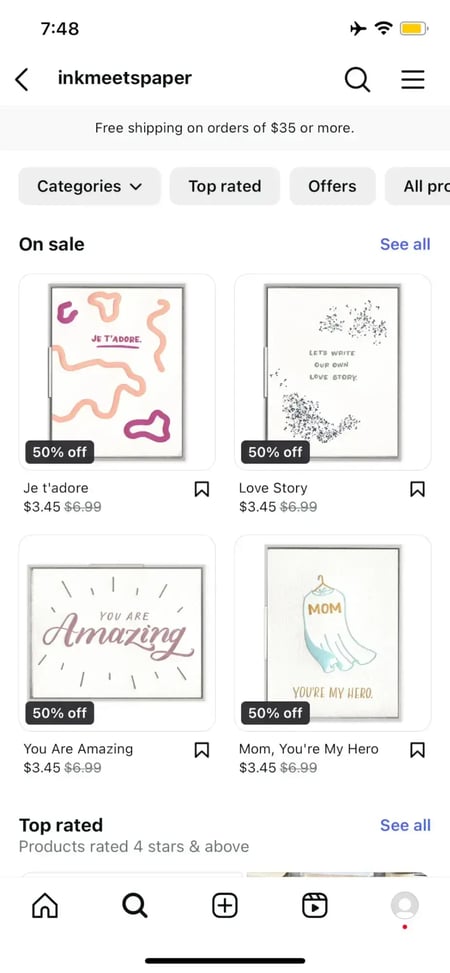
The image below is an Instagram shop for Ink Meets Paper, where people can browse its products, find what interests them, and make a purchase. This is a valuable content type as social shopping is currently on the rise, and consumers are discovering new products and buying products on social media apps more than ever before.
Practical example: A skincare brand posts a short-form video showing a customer's skin before and after eight weeks of product use — real footage, real person, real timeline. A product tag makes it instantly shoppable.
Great for: Conversions, product awareness, lead generation, and revenue attribution.
6. User-Generated and Social Proof Content
User-generated content (UGC) is created by your audience — unpaid reviews, tagged posts, unboxing videos, testimonials — and repurposed by the brand.
Social proof content is the broader category: any content that demonstrates real people choosing, using, and endorsing your product or service. Both content types borrow credibility from sources outside the brand, which is why they consistently outperform polished branded ads in terms of trust and influence.
What works best: Authenticity and amplification. UGC performs best when it looks and feels like something a real person created, not something staged to look like it was.
Brands that actively engage with UGC — commenting, reposting, featuring creators — signal to their community that participation is noticed and valued, which generates more of it.
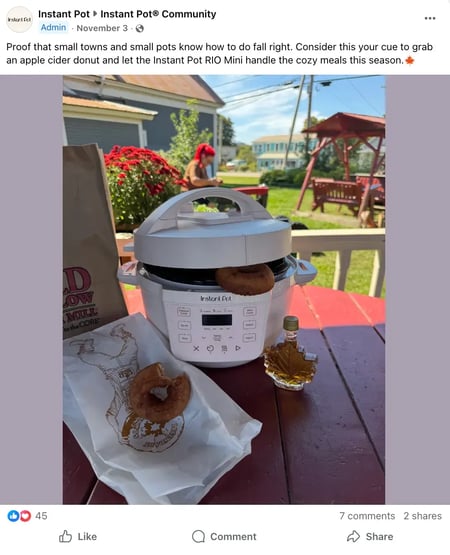
Here’s an example from Instant Pot's Facebook group where members share recipes, troubleshoot together, and celebrate successes:
Practical example: A travel gear brand reposts a customer's hiking video featuring their backpack, credits the creator, and adds a simple caption: "This is why we build what we build." No additional editing, no voiceover — the customer's experience speaks for itself.
Great for: Trust-building, conversions, brand awareness, and community growth.
HubSpot Pro Tip: To streamline content creation, Breeze’s AI social post generator can be used to draft captions and variations tailored to different social platforms.
Psssst… check out these social media marketing resources.
7. Ephemeral and FOMO-Driven Content
Ephemeral content disappears after a set window — Instagram and Facebook Stories being the most common format. The temporary nature isn't just a technical constraint; it's a strategic lever. Time-limited content creates urgency, rewards consistent followers, and generates a sense of access that permanent posts don't.
What works best: Exclusivity and interactivity. Behind-the-scenes glimpses, limited-time offers, polls, and Q&As all perform well in this content type because they reward the audience for showing up. The low-production expectation also makes this one of the easiest content types to publish consistently without significant resources.
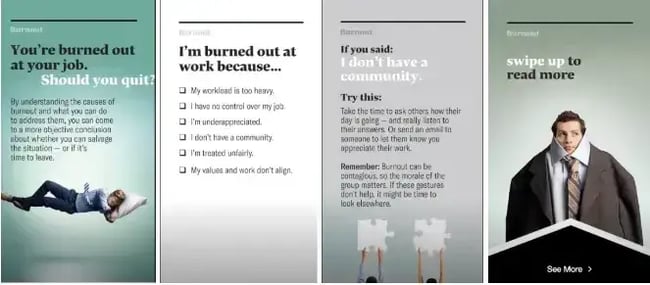
See the Instagram story example below from Harvard Business Review, or browse more ideas from LEGO, NASA, Outback Steakhouse, and more.
Practical example: A restaurant posts a daily Story featuring a staff pick or off-menu special — available that day only. Followers check in regularly because they know something new will be there.
Great for: Audience engagement, repeat visits, lead nurturing, and time-sensitive promotions.
Choosing the right social media format for each platform
Different platforms reward different behaviors, technical specs, and levels of production, which means not every format works equally well everywhere.
Tools like HubSpot Marketing Hub help marketers manage multi-platform strategies by centralizing publishing, performance tracking, and content scheduling across different formats and channels.
The right social media format depends on both the platform and the brand behind the content.
Backed by expert insight from Kevin Heimlich, Founder of The Ad Firm, the tips below outline how marketers can decide which formats to prioritize based on platform dynamics, audience expectations, and measurable business outcomes.
1. Prioritize short-form video on platforms that reward speed and retention.
Short-form video is effective for awareness, consideration, and conversion. They perform best on platforms where feeds are optimized for fast consumption and continuous scrolling.
Use short-form video when the goal is to stop the scroll and deliver value quickly without requiring long-form commitment.
Technical requirements to consider:
- Vertical video (9:16)
- Under 60 seconds
- Captions or on-screen text for sound-off viewing
- Strong hook in the first 3 seconds
Tools to support this format: Short-form video editing tools, native in-app editors, and AI-assisted social post generators that help script and caption videos quickly.
What the expert says: “The highest level of engagement and conversion through social media content is through short-form video, less than 1-minute long. Today's consumers require quick and easy value without requiring long content to read,” Heimlich says.
“Through video, we are seeing an average increase in our conversion rates of 40-50% over static content because video is able to grab our audience's attention prior to scrolling past.”
2. Create native, non-promotional content for AI-driven feeds.
Treat social platforms as destinations, not traffic funnels — value-first content earns distribution.
Educational posts, commentary, and save-worthy content tend to perform better than posts that rely on external links. This approach is especially important on platforms like Instagram, LinkedIn, and X, where outbound links can reduce reach.
Technical requirements to consider:
- Native post formats (no primary external links)
- Clear, scannable text or visuals
- Save- and share-friendly structure
- Platform-specific formatting
Tools to support this format: Social scheduling tools, AI content generators for captions and post copy, and analytics tools that track saves and shares, not just clicks.
What the expert says: “ Algorithms tend to penalize any content that drives users off the platform,” warns Heimlich.
“If there is an external link on the post, it will be hidden unless the engagement is extremely high immediately after posting. Content that is native to the platform – like, does not drive users off the platform –generally gets more exposure.”
3. Replace polished brand ads with behind-the-scenes and real customer stories.
Authenticity outperforms polish — show real people, real processes, and real outcomes. Highly produced, ad-like content is increasingly ignored on social media.
brands should focus on behind-the-scenes content, real people, and authentic customer experiences that feel native to the platform. This approach works well across nearly every major platform, particularly where audiences value transparency and relatability.
Technical requirements to consider:
- Minimal editing and branding
- Natural lighting and casual production
- Real customer images, videos, or testimonials
- Clear visual storytelling
Tools to support this format: User-generated content collection tools, simple video capture tools, and social inbox platforms to surface and engage with community-created content.
What the expert says: Heimlich says, “Brands should discontinue production of heavily produced, highly polished content that resembles traditional advertising. Generally speaking, users ignore this type of content because it is perceived as an inauthentic sales copy rather than useful information.”
4. Use tutorials, comparisons, and before-and-after content to drive conversions.
Conversion-focused content should anticipate objections and show outcomes, not just features. When the goal is measurable business results, brands should focus on content that clearly demonstrates transformation or problem-solving.
Tutorials, before-and-after examples, and product comparisons help answer buyer questions and reduce friction during the decision-making process. This type of content performs especially well on platforms where users research and save content, such as YouTube, Instagram, and LinkedIn.
Technical requirements to consider:
- Clear problem/solution framing
- Visual proof of results
- Structured walkthroughs
- Save-friendly formatting
Tools to support this format: Video hosting platforms, screen recording tools, and analytics tools that track conversions and assisted conversions. Marketing Hub's analytics dashboard enables marketers to track how different content formats contribute to conversions across the customer journey.
What the expert says: “Content that shows obvious before and after results, or how your product solves a problem that your target audience faces every day, generates measurable business results,” Heimlich says.
“And content that compares your product to competing products and solutions that addresses the most common objections your target audience encounters will generate greater conversion rates as it answers the questions your potential buyer asks themselves during the decision-making process.”
It’s a new era for social media. Let this tutorial help you create a plan that will help you reach potential customers and turn them into fans:
Frequently Asked Questions About Social Media Formats
What is a content format on social media?
A content format on social media refers to how content is delivered on a platform, such as video, images, text, audio, or live experiences.
Formats define the technical structure of a post — including layout, length, and interactivity — rather than the message or goal behind it. Selecting the right format helps ensure content aligns with platform algorithms and audience behavior.
What are the formats for social media?
Social media platforms support a wide range of content formats, each designed to serve different engagement goals.
Common formats include short-form and long-form video, images and carousels, text-based posts, live video and audio rooms, ephemeral content like Stories, shoppable posts, and community-driven formats such as forums and private groups.
Most brands use a mix of these formats, adapting them based on platform features, audience expectations, and campaign objectives.
What is the most popular social media format?
Short-form video is the most popular and highest-performing social media format today. HubSpot’s latest marketing research shows that short-form video delivers the highest ROI for social media marketers and remains the top investment priority across platforms.
Its effectiveness is driven by algorithmic preference for video and audience demand for fast, engaging, and easy-to-consume content.
What is the 5-3-2 rule for social media?
The 5-3-2 rule is a content distribution strategy that helps brands balance value and promotion.
Under this framework, five posts share valuable or educational content from other sources, three posts share original, non-promotional brand content, and two posts directly promote products or services.
This approach helps maintain audience trust while still supporting marketing and revenue goals.
Want more social media insights?
Have these social media content ideas inspired you to get creating? As a longtime marketer, I’ve seen the impact of a strong social media presence. I’ve also seen how much investment it takes to see results.
Creating endless social media posts is demanding. Social media users want to be entertained, educated, and informed. It’s a heavy lift for marketers, but the opportunity makes it worthwhile.
Learn more about the state of social media with more of this data, videos, and exclusive industry tips on our Social Media Trends report.
Editor's note: This post was originally published in January 2015 and has been updated for comprehensiveness.
HubSpot's Social Media Management Software
Time-saving tools to help you prioritize your social interactions — so you can connect with the people who matter most.
- Manage campaigns.
- Monitor mentions.
- Attribute value.
- And more!

![The best social media platforms for video content in 2025 [consumer data]](https://53.fs1.hubspotusercontent-na1.net/hubfs/53/img-1-20250516-9399498.webp)

![3 Short-Form Video Trends Marketers Should Watch in 2025 [New Data]](https://53.fs1.hubspotusercontent-na1.net/hubfs/53/ft-short-form-video-trends.webp)
![Are In-Stream Video Ads Worth the Investment? [Benefits & Best Practices for Marketers]](https://53.fs1.hubspotusercontent-na1.net/hubfs/53/in-stream-video-ads-1-20250314-6407067.webp)
![45 Video Marketing Statistics for 2025 [New Data]](https://53.fs1.hubspotusercontent-na1.net/hubfs/53/video-marketing-statistics-1-20250227-6425117.webp)
![Why You Should Leverage Interactive Videos [Data from 500+ Marketers]](https://53.fs1.hubspotusercontent-na1.net/hubfs/53/interactive-video-1-20250216-406926.webp)
![Silent But Mighty: How Soundless Videos Are Winning Social Media [+ 2025 Data]](https://53.fs1.hubspotusercontent-na1.net/hubfs/53/Soundless%20Videos%20We%20Love.png)