
From Google’s Hummingbird update in 2013 to RankBrain, BERT, and today’s Gemini-powered AI Mode, the shift from keyword matching to intent understanding has been building for years. Thanks to it, search engines have gone from our digital librarians to reasoning systems that understand what you typed and why you typed it.
For marketers, understanding semantic search is key to staying relevant and succeeding in the larger AI search puzzle.
In this guide, you’ll learn exactly how semantic search works, how it differs from traditional keyword search, and which semantic SEO tactics you can put into practice today to rank better and stay visible.
Table of Contents
- What Is Semantic Search?
- How Does Semantic Search Work?
- Why Semantic Search Matters for SEO
- From Semantic Search to Answer Engines
- Optimizing for Semantic Search: A Practical Guide
- AI and Semantic Search Trends to Watch
- Getting Smarter with Semantic Search
.png)
Complete SEO Starter Pack
An introductory kit to optimize your website for search.
- Increase your organic traffic.
- Plan your keyword strategy.
- Debunk SEO myths.
- Build a blog strategy.
Download Free
All fields are required.
Form not available
What Is Semantic Search?
Semantic search is a search methodology that aims to understand the intent and contextual meaning of a query, using natural language processing (NLP) and machine learning.
Instead of simply delivering pages that contain the phrase you typed, a semantic search engine tries to determine what you actually want and surface results that match that intent.
It does this by analyzing the relationships between words, considering the user’s context (device, location, search history), and evaluating the meaning of the content on a page.
Google (via Knowledge Graph/BERT), Amazon, chatbots like ChatGPT, and voice assistants like Apple’s Siri are all examples of popular semantic search engines today.
Let’s look at an example of semantic search at work.
Semantic Search Example
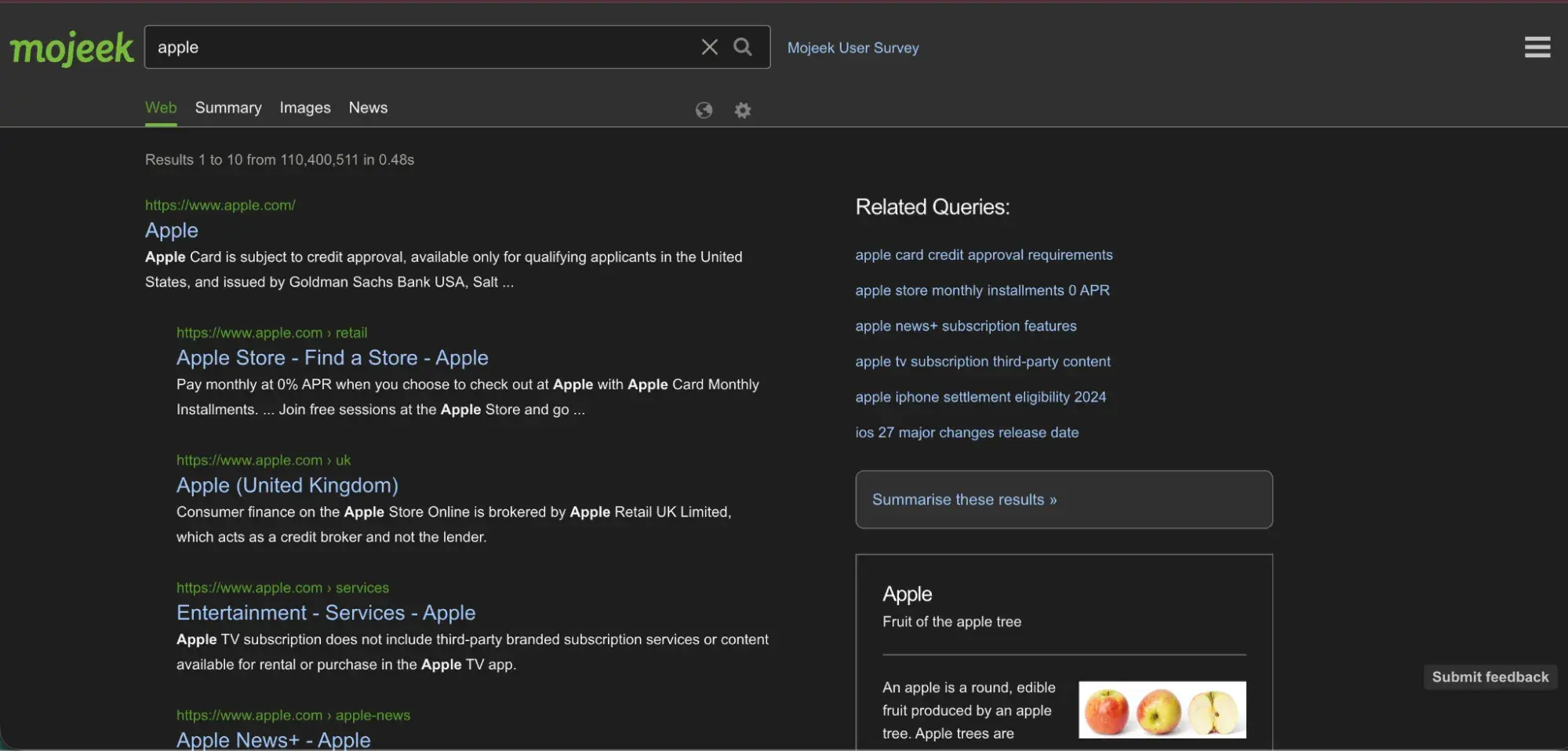
Consider the word “apple.” Type it into a search engine, and you might be looking for the tech company, the fruit, a recipe, or even a stock ticker.
A system based solely on keywords (like search engine Mojeek) may return a generic mix or prioritize popularity.
A semantic search engine (like Google), however, uses contextual signals (such as your recent searches, the other words in the query, and your location) to determine which meaning you intended and to serve the right results.
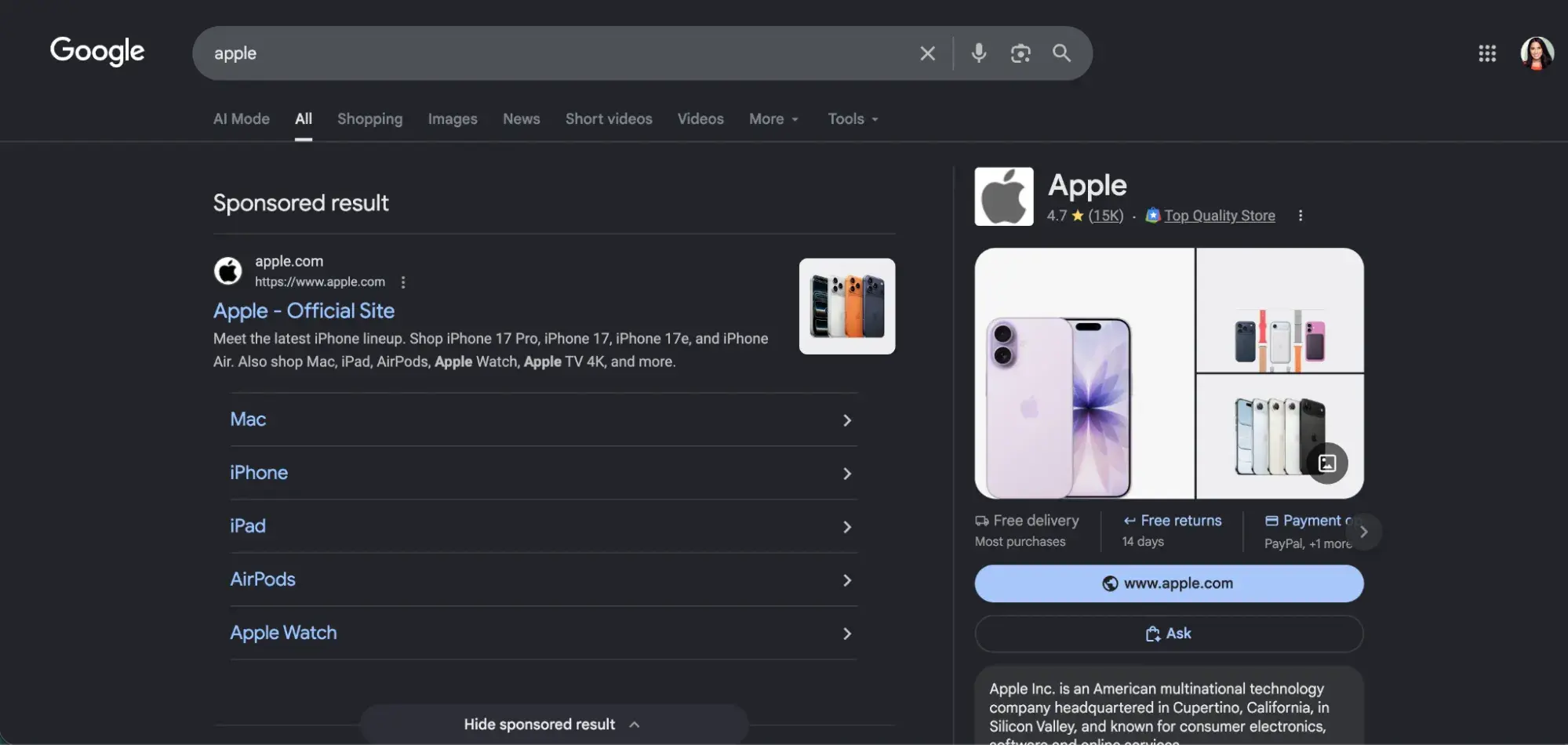
This specification is possible because semantic systems don’t treat words as isolated things. They understand that “apple earnings report” and “apple crumble recipe” share a word, but really nothing else. That’s the true value of semantic search.
Next, we’ll talk about the key parts of what makes this possible.
Core Components of Semantic Search
Search Intent Recognition
Search intent is the why behind a query.
Are they trying to buy something? Learn something? Navigate to a specific page?
Semantic search matches not just words but what the user is trying to accomplish. Google, for instance, classifies intent into four broad categories:
- Informational
- Navigational
- Commercial
- Transactional
To illustrate: “Content marketing” (broad, informational) returns definition-style results, while “How do I get started with content marketing” (specific, how-to intent) returns step-by-step guides.
It’s the same topic area, but entirely different results because search intent drives what Google considers the right answer at that time.
Contextual Understanding
The same query can mean different things depending on the device, location, time of day, or phrasing used. That’s why context is important.
For example, “Order a pizza” searched on mobile produces local delivery results. “Make a pizza” on mobile produces recipe cards. The words differ by one, but the context signals a completely different task.
Context also comes from related terms.
Consider a page about “wedding dresses.” A page that also covers “alterations,” “bridal boutiques,” and “ceremony attire” signals that the content is comprehensive and contextually rich. This makes it a stronger candidate for ranking for related queries in search engines than a page that shows only wedding dresses.
But why is that?
How Does Semantic Search Work?
When you submit a query, a semantic search engine doesn’t just scan a database for matching words. It runs a multi-step process that converts language into meaning.
Here’s how it works, from the moment you hit “search” to the moment results appear. (It can get a bit technical, so I’ll try to simplify it as much as possible.)
The Semantic Search Process
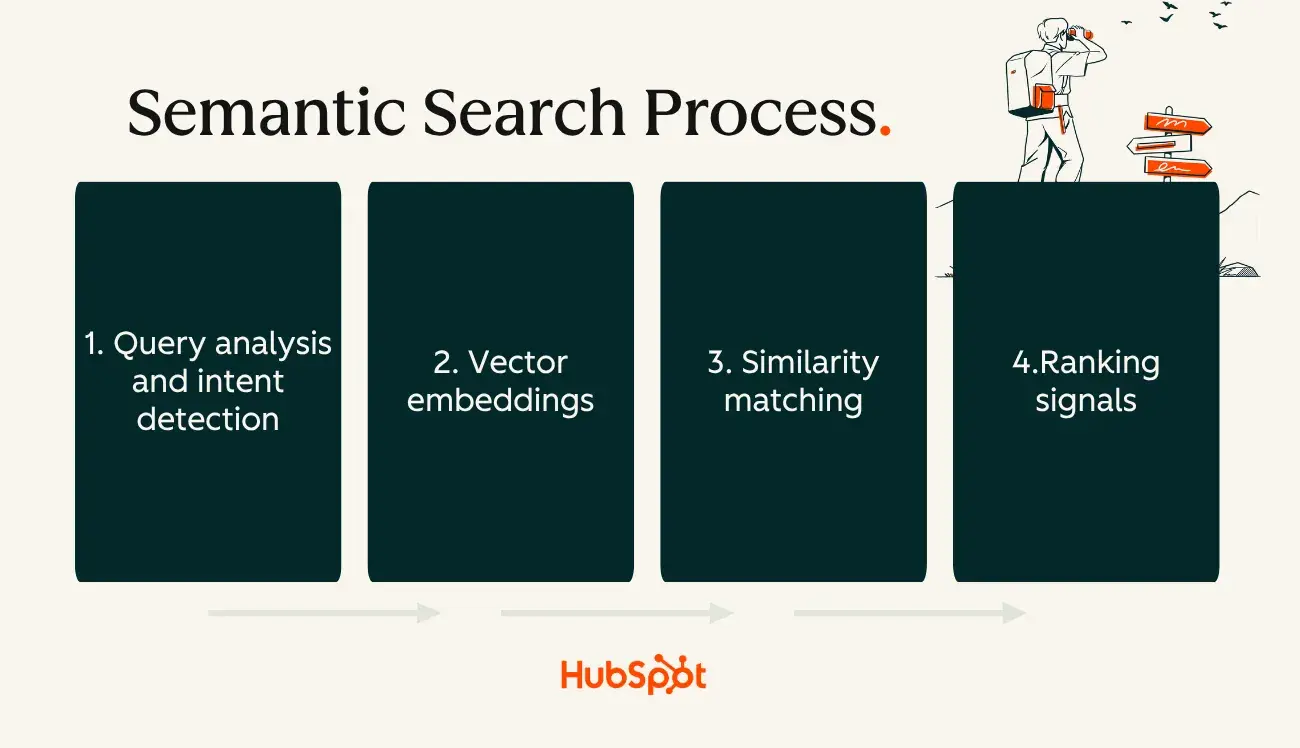
Step 1: Query analysis and intent detection
When a search engine receives your query, it immediately starts classifying it.
What is the intent? What entities (people, places, concepts) are involved? What is the likely context?
This analysis uses NLP to analyze sentence structure, identify named entities, and detect sentiment or specificity.
Step 2: Vector embeddings
From there, the words, phrases, and entire documents are converted into vector embeddings or numerical representations that AI uses to measure how related topics and words are.
Words with similar meanings are given similar numbers and then clustered closer together by the AI.
That means “car,” “vehicle,” “automobile,” and “sedan,” for instance, would all be near one another, while things like “movies” and “theater” would be much farther away. This organization helps search engines understand synonym relationships and conceptual “closeness” without relying on exact string matches.
Step 3: Similarity matching
Next, the semantic search engine compares the vector representation of your query against those of its indexed content. Pages that are “close” to yours surface as strong candidates.
This is why a page optimized around “inbound marketing strategy” might rank for “how to attract customers online,” while something on “direct mail marketing” likely wouldn’t.
Step 4: Ranking signals
Semantic relevance is just one piece of the final puzzle, however.
NLP analysis is combined with traditional signals like page authority, freshness, structured data, user engagement metrics, and entity authority to produce the final results you get from Google, ChatGPT, etc.
In short, the semantic layer determines which pages are even considered, and the ranking signals determine their order.
Semantic Search vs. Keyword Search
Keyword search is fast and definitive. It finds pages that contain the exact words you typed, which works well for navigational queries such as unique brand names. But it breaks down for conversational queries, ambiguous terms (e.g., Apple), or anything else that relies on context to be interpreted correctly.
Here’s a quick comparison:
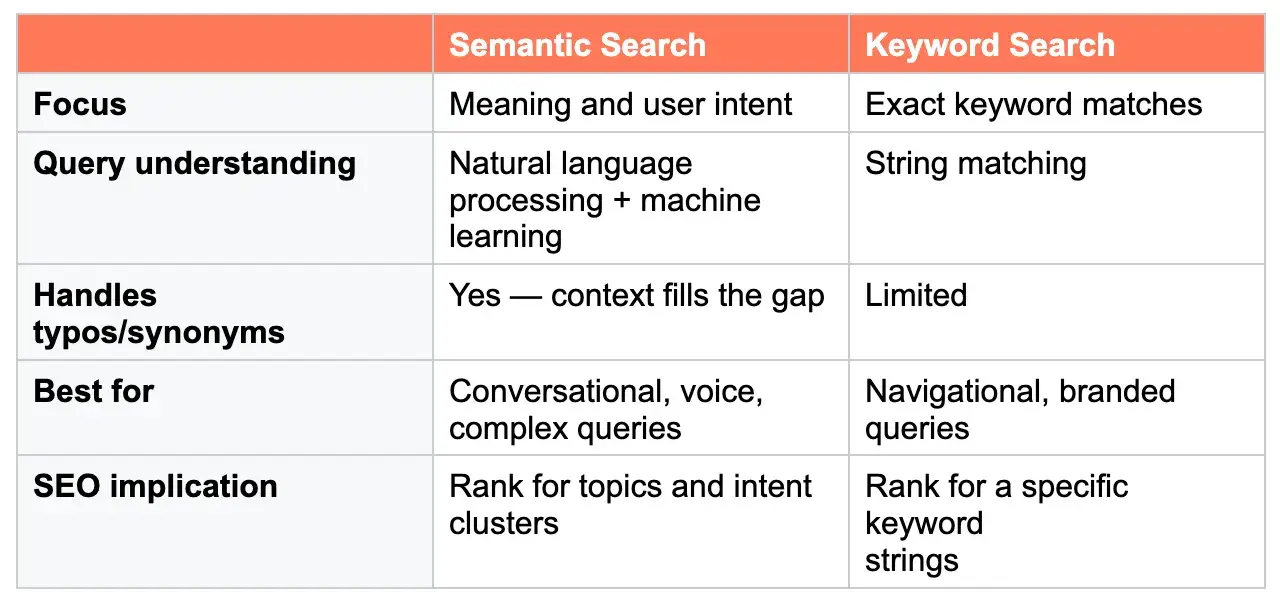
Overall, semantic search is arguably better at understanding what people actually mean, not just the words they type. But research from Microsoft shows the best search results come from combining semantic and keyword search together, rather than relying on either one alone.
For SEO, that means keyword targeting still matters, but it’s now a starting point, not a complete strategy.
How Google Applies Semantic Search
Google has built several systems that operationalize semantic understanding at scale. The three most important for SEO are RankBrain, BERT, and the Knowledge Graph.
RankBrain
RankBrain was Google’s first major application of machine learning. It uses vector space analysis to map unknown queries to familiar ones.
This is huge, considering that about 15% of all daily Google searches are for completely new queries. A purely keyword-based system would fail those queries because it has no prior behavior or data to go on. It’s like me searching for something on Bing, a search engine I never use.
RankBrain enables Google to still reason about unfamiliar questions and surface relevant results, filling gaps that keyword matching can’t cover.
BERT
Before BERT (Bidirectional Encoder Representations from Transformers), Google’s models processed text sequentially (left to right), which meant small words like “not” or “for” could be minimized.
BERT combats this by analyzing words in both directions simultaneously, capturing how context can change meaning. This is critical for long-tail and conversational queries.
The Knowledge Graph
The Knowledge Graph provides Google with a structured map of real-world entities (e.g., people, places, organizations, concepts) and the relationships between them.
When you search for a person or brand, Google doesn’t just find pages that mention them; it retrieves structured facts from this graph. This enables knowledge panels, rich results, and the entity-based understanding that powers modern search.
Complete SEO Starter Pack
An introductory kit to optimize your website for search.
- Increase your organic traffic.
- Plan your keyword strategy.
- Debunk SEO myths.
- Build a blog strategy.
Download Free
All fields are required.
Form not available
Why Semantic Search Matters for SEO
For marketers, semantic search is more than just cool tech. It has direct, measurable implications for how content performs in organic search and if/how it gets in front of your audience. Understanding it helps you know how to create and optimize your content accordingly.
From a user’s perspective, semantic search means getting the right answer faster, even if they can’t articulate exactly what they’re looking for.
But the benefits don’t stop there:
- Broader keyword visibility. Topic clusters are an important part of semantic search success (more on that shortly). A page optimized for a topic cluster can rank for dozens of related queries, and topic-based content architecture outperforms page-by-page keyword optimization. This means more opportunities to build awareness, citations, and even traffic.
- Stronger intent alignment. Aligning with audience intent has long been a best practice of content marketers like myself, but thanks to semantic search, some of the work is done for us. That means a listicle won’t rank for a query that Google has determined deserves a step-by-step guide, even if the keyword match is perfect.
- Better user experience. Overall, better search results mean longer sessions, lower bounce rates, and stronger signals of content quality for brands and a faster, more delightful experience for consumers. Plus, all of this is fed back to search engines, helping evolve how they evaluate and rank your pages.
From Semantic Search to Answer Engines
Semantic search’s ability to interpret intent and context didn’t just improve many search engine results; it powered an entirely new category of platforms.
Answer engines like ChatGPT, Gemini, and Perplexity now deliver direct responses to queries instead of a list of links to sort through. Buyers can ask a complex question and get a synthesized, sourced answer in seconds.
And this shift is happening fast.
ChatGPT has reached 900 million weekly active users as of February 2026 (up from 400 million just a year earlier), and its referral traffic to other websites grew 206% year over year between January 2025 and January 2026.
This is why Answer Engine Optimization (AEO) is essential alongside SEO.
AEO is the practice of improving how often and how accurately your business appears in AI-generated answers. It’s a complement to SEO, not a replacement. Where SEO focuses on ranking in a list of links, AEO focuses on being cited as a source within an AI-generated response.
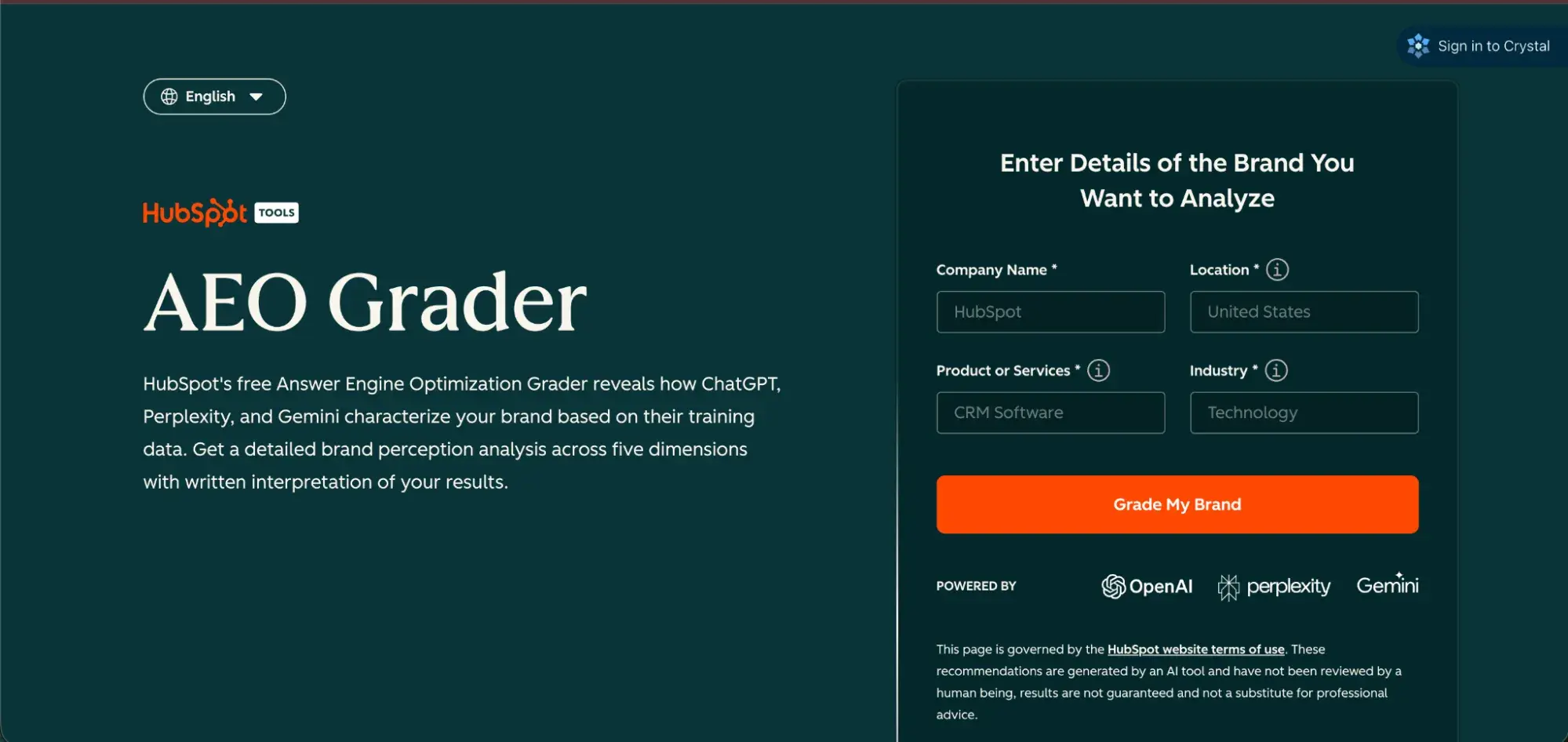
If you’re ready to understand where your brand currently stands in AI-generated answers, HubSpot’s free AI Search Grader is built exactly for this.
It analyzes your brand’s visibility across answer engines like ChatGPT and Perplexity, shows you which queries you’re being cited for, and surfaces clear recommendations for improving your presence. HubSpot AEO goes even further.
Optimizing for Semantic Search: A Practical Guide
Semantic SEO is a shift in how you think about content.
Instead of targeting individual keywords, you’re building topical authority. Instead of optimizing pages, you’re architecting content ecosystems. Here are the core tactics you can put into action.
1. Build topic authority with topic clusters
The most effective structural approach to semantic SEO is the pillar-and-cluster model.
A pillar page covers a broad topic, while cluster pages detail specific subtopics — all interlinked. This architecture creates a web of semantic relationships that signals topical authority to search engines.
For example, a pillar on “email marketing” might link out to clusters on subject line best practices, segmentation, automation workflows, and deliverability. Each cluster reinforces the pillar’s authority on the broader topic, and each internal link is a semantic signal about the relationship between concepts.
How to Get Started: Start with seed keywords to identify the core topic, then map out the subtopic clusters around it.
HubSpot’s Content Hub includes built-in topic cluster tools that help you plan, track, and interlink your content architecture. With it, you can see your semantic relationships visually and identify gaps before they cost you rankings.
2. Match search intent before you publish
Before you write a single word, review the SERP for your target query.
What content type dominates: articles, listicles, how-to guides, product pages? What depth and format does Google consistently reward? What questions appear in People Also Ask?
The answers to these questions tell you what Google has determined satisfies that query’s intent and give you a good idea of what your page or content will need to include.
Intent alignment is a must. If every top result is a listicle with 10+ items, publishing a 600-word essay won’t rank, no matter how beautifully written or genius it is. This is also true for LSI keyword strategy, where related terms that naturally appear across top-ranking results reveal the semantic context Google expects your content to address.
3. Use structured data and clear content signals
Structured data is one of the clearest ways to tell search engines about what your content and website are about.
By adding schema.org vocabulary for articles, FAQs, how-tos, products, and reviews, you’re explicitly defining entities and relationships that semantic systems can use, rather than forcing them to guess.
Alongside schema, strong structural signals include:
- Descriptive headings that clearly signal each section’s topic
- Descriptive anchor text for internal links. (“Entities in SEO” is a better link than “click here”)
- Semantic HTML elements like <article>, <header>, <main>, and <section> that help crawlers parse content structure
- Organized sections with clear logical flow. (Semantic systems reward content that reasons well, not just content that ranks keywords)
Pro Tip: For pages targeting featured snippets or AI Overview citations, answer queries in the first 40–60 words of the relevant section, followed by supporting detail.
AI Overviews appear in 99.9% of informational keyword results, and when your brand is cited in one, organic CTR is 35% higher than for non-cited pages.
Read: How to structure pages for AEO and answer engines: A quick-start guide
4. Write in natural, conversational language
Semantic search was built to understand how people actually speak. So, your content should reflect natural language patterns, including complete sentences, question-and-answer structures, and the vocabulary your audience uses in conversation.
This is especially important for voice search.
According to Search Engine Land, over one billion voice searches are conducted monthly, and 58.6% of U.S. residents have tried voice search. And voice queries are longer, more conversational, and almost always phrased as questions.
Think about it: If I want Alexa to tell me what time the nearest pharmacy closes, I’ll say “Alexa, what time does CVS close?” not “CVS hours” as I would type into a search engine.
That said, a page that answers “What’s the best CRM for a small business?” naturally is far better positioned for voice results than one that repeats “best CRM small business” throughout.
So, write your H3s and H4s as questions. Open each section with a direct answer. Then, write in the language your target audience would use in a conversation, not the phrasing you think a search engine wants to see. The two are now aligned.
Pro Tip: Be comprehensive. Content that thoroughly covers a topic, with related questions, entities, and subtopics, sends stronger semantic relevance signals than thin content stuffed with exact-match keywords.
Complete SEO Starter Pack
An introductory kit to optimize your website for search.
- Increase your organic traffic.
- Plan your keyword strategy.
- Debunk SEO myths.
- Build a blog strategy.
Download Free
All fields are required.
Form not available
AI and Semantic Search Trends to Watch
Semantic search is still evolving. Here are some trends to stay in the loop about:
Conversational search is the default.
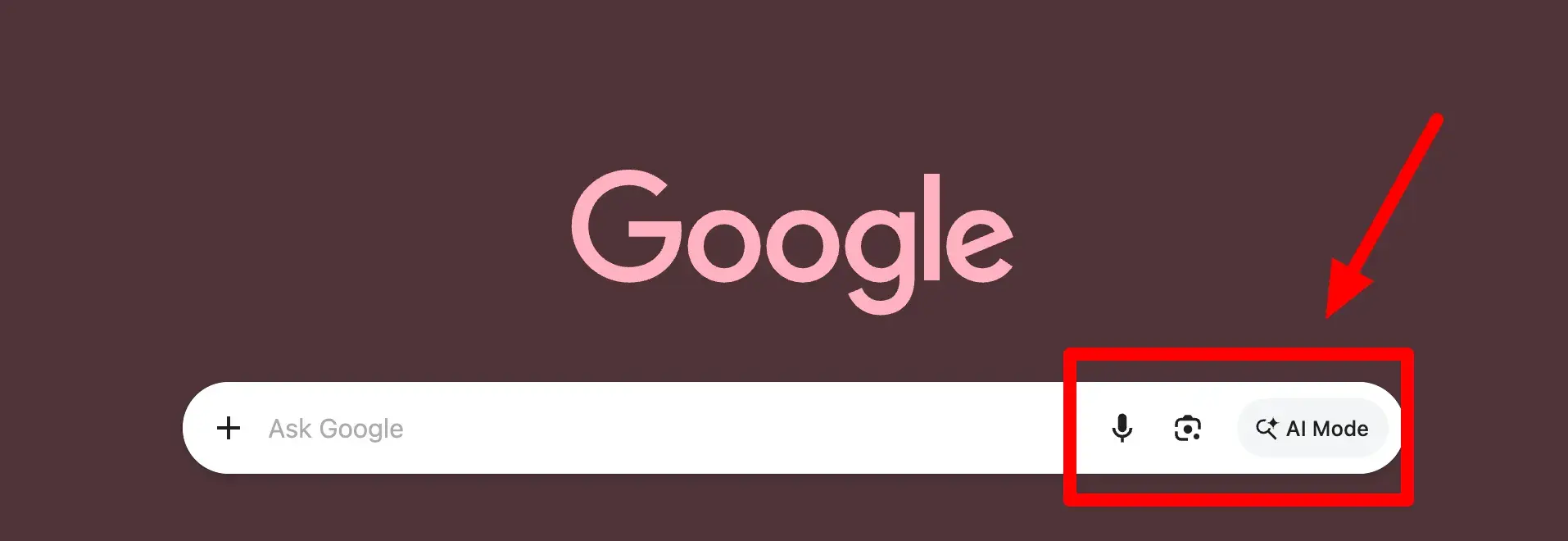
Google’s AI Mode is now available in 200+ countries and designed for back-and-forth, conversational questions — the kind you’d ask a knowledgeable friend.
People using AI Mode type queries that are nearly twice as long as a typical Google search. In fact, they average 7.22 words, compared to 4 words in traditional search, according to Semrush. That means content that tackles complex, multifaceted questions is becoming only more valuable.
Semantic processing is being used at scale.
The mechanics of semantic search (read vector embeddings and similarity matching) are now powering both traditional search ranking and retrieval-augmented generation (RAG) in AI systems like Gemini.
Understanding them helps you understand how and why comprehensive, contextually rich content outperforms thin, keyword-stuffed pages across both channels.
Search is multimodal.
Search is no longer text-only. Google Lens, visual search, and AI systems that process images, video, and audio alongside text mean your content’s multimedia elements are now part of its semantic footprint.
Alt text, video transcripts, and image context are all important to making your content accessible and contribute to how well a page is understood.
Citations are becoming a crucial marketing asset.
As answer engines take on more of the top-of-funnel discovery role, being cited in AI responses is becoming as important as ranking on page one.
Only 22% of marketers are actively tracking AI visibility and traffic, which means there’s a significant competitive advantage available to teams that move now. Tools like HubSpot’s AI Search Grader and HubSpot AEO are designed to surface exactly this kind of visibility data.
Getting Smarter with Semantic Search
I know it seems impossible, but today, search engines are smarter than ever.
They can interpret intent, understand context, map entities and relationships, and even generate direct answers — and it’s all thanks to semantic search.
For SEO and content teams, that shift creates both urgency and opportunity.
Without swift action, content that was built for keyword matching will lose ground to content built for semantic relevance. But teams that start investing in topic authority, intent alignment, and structured content signals now can maintain and gain the visibility and citations they need to compete.
The first step is getting clear on where you stand. Use HubSpot’s SEO Starter Pack to audit your current content approach and build a semantic SEO foundation. Pair it with HubSpot’s free AEO Grader to understand how your brand is showing up in answer engines.
Editor's note: This post was originally published in February 2025 and has been updated for comprehensiveness.
Complete SEO Starter Pack
An introductory kit to optimize your website for search.
- Increase your organic traffic.
- Plan your keyword strategy.
- Debunk SEO myths.
- Build a blog strategy.
Download Free
All fields are required.
Form not available
Keyword Research