From the content to the features, the state of social media is often a reflection of everything going on in the world around us, and while this year is no different, some of the trends and findings are still surprising.
Take brand awareness, for example. It’s now the #1 priority for nearly 60% of social media marketers, more than doubling its share from last year. Some might say this is because of the impact of AI on search. Others might argue it’s because organic reach on social media is harder than ever to achieve. But is either of them wrong?
Whether you’re a team of one or leading an enterprise social function, this report gives you a data-backed view of where social media marketing stands today, how marketing experts like you are navigating the industry, and what the future holds.
Table of Contents
- Key Findings from the State of Social Report
- Where Social Media Marketing Is Headed in 2026
- Top Social Media Platforms: Where Marketers Are Winning
- Social Media Challenges
- Top Social Media Marketing Goals
- The Best Times to Post on Social Media
- How to Use These Insights on Your Social Media Team
- Your Social Media Success Roadmap
The State of Social Media in 2025
Explore the top trends in social media for brands to know and optimize your social strategy.
- AI Content Creation
- Community Building
- Social Media Shopping
- Social Vs. Search Engine
Download Free
All fields are required.
Form not available
Key Findings from the State of Social Report
- 59% of social media teams cite increasing brand awareness as their #1 goal in 2026
- 94% of social media marketers use AI in their workflows in some capacity
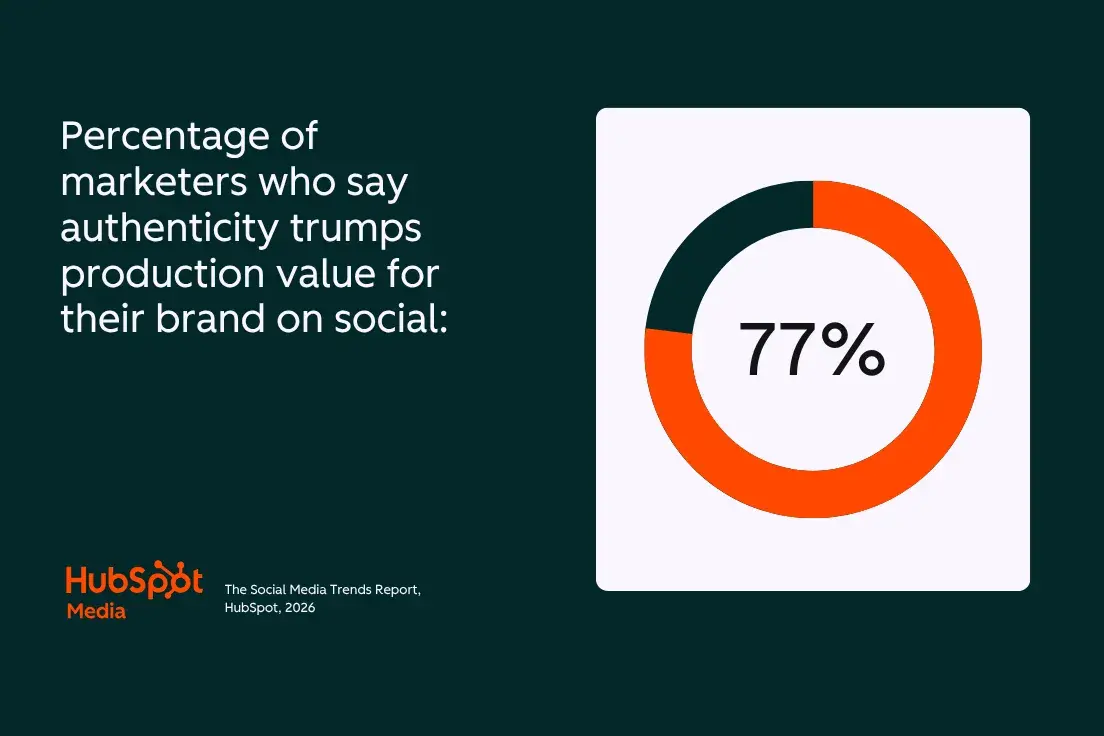
- 77% of marketers say authenticity trumps production value for their brand on social
- 60% of marketers plan to increase influencer investment in 2026
- 48% expect their social media tool stack to grow in the coming year
Where Social Media Marketing Is Headed in 2026
Let’s dig into these key findings and social media trends a bit deeper.
Brand Awareness is Top Priority
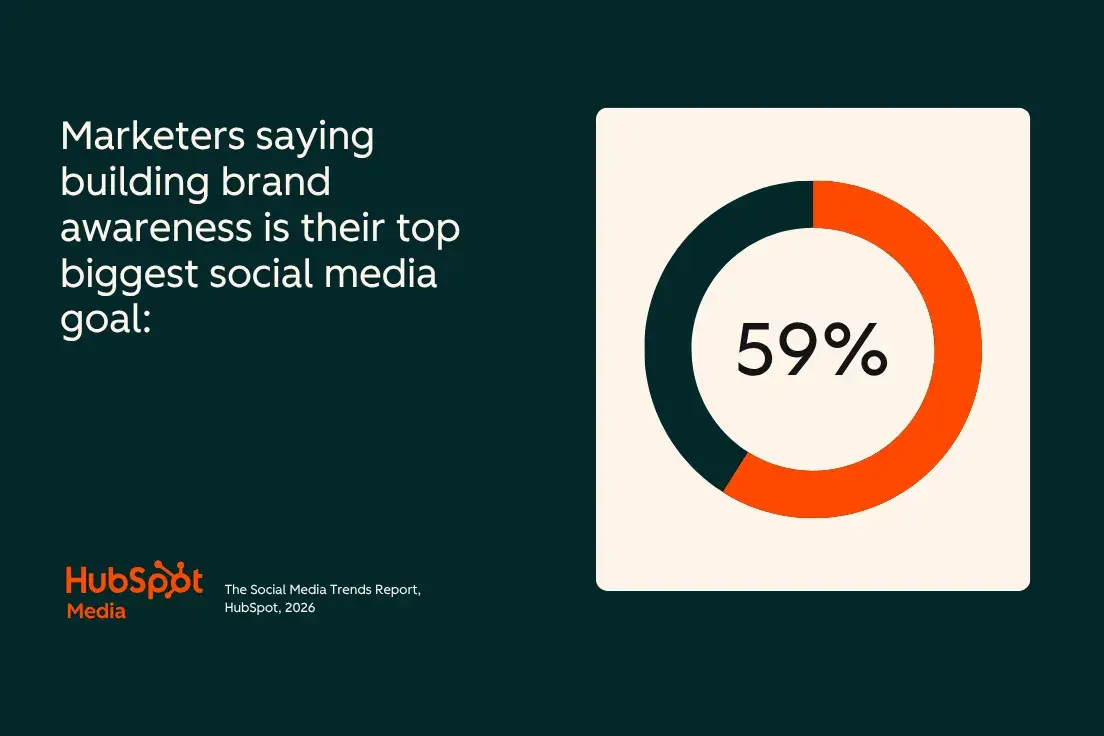
In 2025, brand awareness and customer service/retention were tied for top marketing goal. Today, brand awareness has pulled full steam ahead to 58.99%, more than double what it was last year. But what exactly is driving the brand awareness rush?
“People are more likely to buy from brands they recognize and trust. Social media is one of the best ways to stay visible consistently,” explains Sri Satya Gowri, Digital Marketing Specialist at UXArmy.
A few additional things are happening right now as well.
Organic reach on social media has become harder to achieve and sustain, due to frequent algorithm changes, increased competition, and greater monetization efforts by platforms. This makes brand-building a longer game that requires consistent top-of-funnel investment.
Then there’s AI. “AI tools like ChatGPT and Google’s AI Overviews are stealing traffic that used to go directly to websites,” says Adina Jipa, Co-founder at Socialinsider. “Businesses built on SEO alone are bleeding. The ones surviving are brands people actually recognize and search for by name.”
On that note, awareness plays a role in answer engine optimization (AEO).
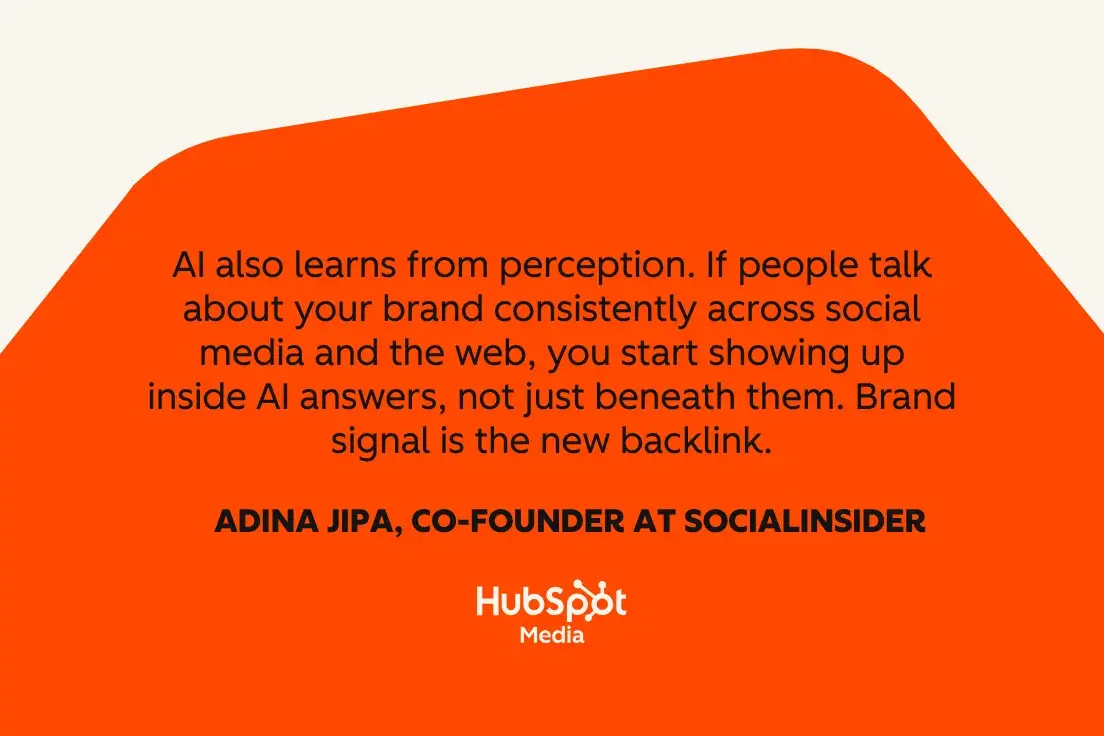
Jipa continues, “Here’s the thing most marketers miss: AI also learns from perception. If people talk about your brand consistently across social media and the web, you start showing up inside AI answers, not just beneath them. Brand signal is the new backlink.”
AI has also made it easier to produce content, which simultaneously makes it harder to make content that people actually remember and engage with.
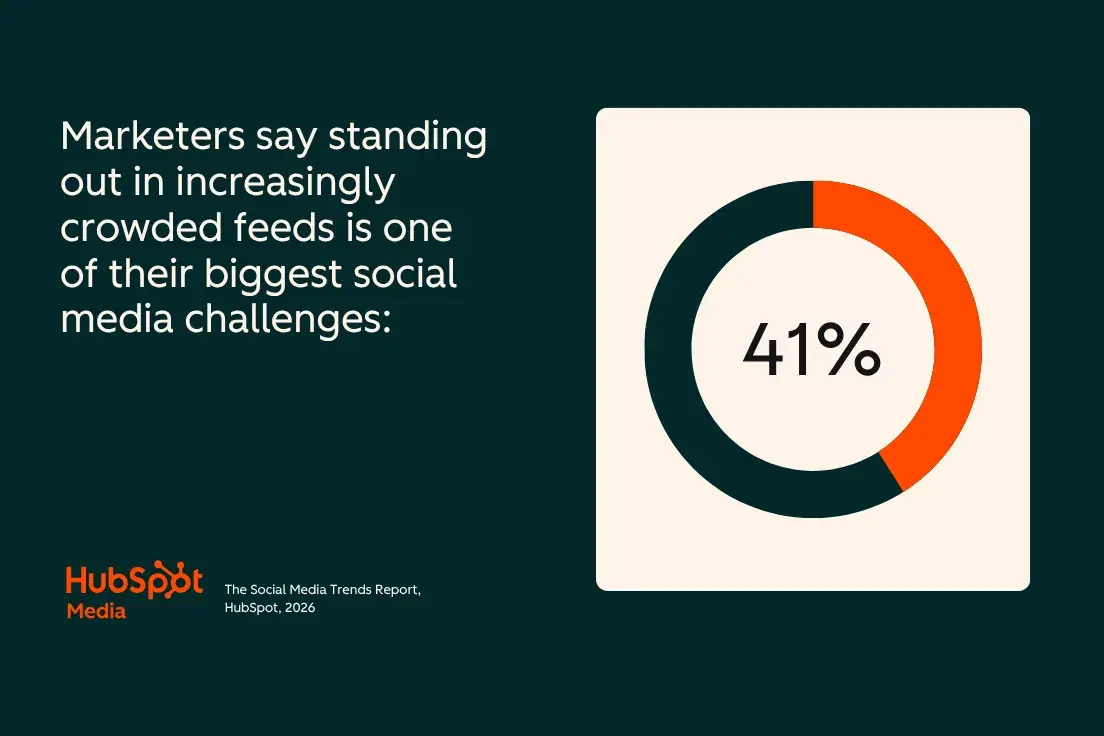
With so many brands focusing on awareness, it’s only natural 41% say it’s harder than ever to stand out organically.
Reflecting on this, Webandcrafts’ Anna Mariya Joseph advises marketers to remember that consistency of perspective beats consistency of posting.
“You can post every day and still be forgettable if you don’t have a clear point of view,” she details. “Pick your angle, repeat it until it feels repetitive to you, and then repeat it some more. Because by the time you’re sick of saying it, your audience is just starting to remember it.
Jipa agrees, saying, “Stop treating social media as a traffic pipe and start treating it as a reputation engine. Clicks matter less now. Recognition matters more. Build something people mention when you’re not in the room. That’s what protects you when the algorithm changes again, and it will.”
HubSpot’s social media tools can help you schedule content to maintain a consistent presence across various platforms. You can also use Breeze AI to brainstorm content ideas and draft copy.
Read: How to Build a Brand Awareness Strategy (and Why It Matters)
Greater Tech Stack Investment
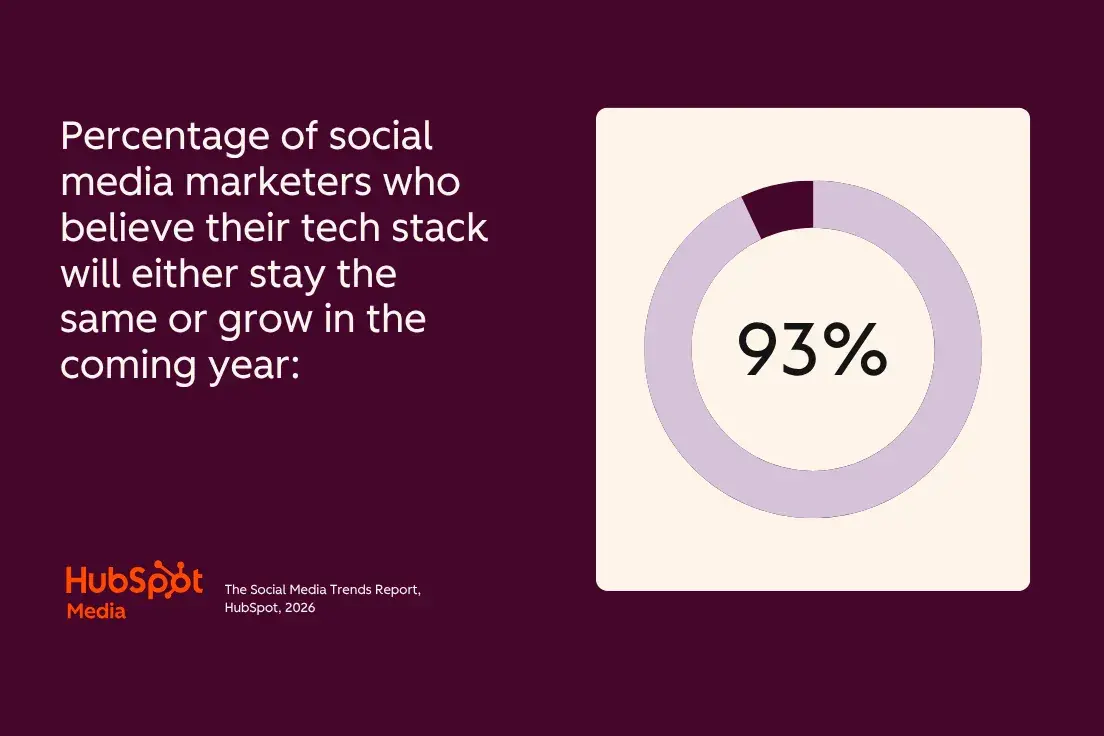
93% of social media marketers believe their tech stack will stay the same or grow (48%) in the coming year, but only 36% say their current stack is very cohesive or fully integrated across workflows.
That gap is one of the most real operational challenges social teams face. Zeroing in on social media tools that you actually need and that work together (like HubSpot and Facebook Ads, for instance) can not only help clean up your data and streamline your processes, but even cut down on your tool costs.
Dash shares that her team isn’t just hoarding software. “We’re investing in tools that handle the ‘busy work,‘ so our team actually has the headspace to focus on the big, creative swings” — and I couldn’t agree with this more.
Tools are valuable, but they are meant to make work easier to complete, not complete it for you. (Looking at you, AI).
With this in mind, Kate Starr, a seasoned B2B content strategist and writer, keeps her tech stack lean with this in mind. “I focus on tools that help me extract genuine insights and stories, rather than generate content from scratch,” she shares.
“With AI making it so easy to produce content at scale, a lot of brands are starting to sound the same. What’s become truly valuable is unique, experience-based content. So the tools I invest in are ones that help me capture that.”
For example, she used Granola during client calls to capture insights in real time, Wispr Flow to extract her own thinking and experiences, and custom AI workflows to identify story angles she might not have considered.
“The goal isn’t to produce more content. It’s to produce content that actually sounds human and valuable for your audience.”
Read: Top social media tools to boost your social strategy
The State of Social Media in 2025
Explore the top trends in social media for brands to know and optimize your social strategy.
- AI Content Creation
- Community Building
- Social Media Shopping
- Social Vs. Search Engine
Download Free
All fields are required.
Form not available
Using AI in Social Media Workflow
As Joseph Giunta, Marketing Manager at EverEx explains, “Teams are under pressure to do more, move faster, and prove impact more clearly,” so they turn to AI tools.
In fact, a massive 94% of social media marketers report using AI in their workflows in some capacity, with the top use cases being: ideation and brainstorming (42.9%), generating captions or short-form text (41.5%), image generation (38.35%), and image editing (34.78%).
These instances make sense, given that 45% of marketers say consistently producing high-quality content is their top challenge. Unfortunately, these were also the use cases where marketers reported AI fell short the most: image generation (40.2%), image editing (29.58%), and video generation (28.7%).
With so much pressure to adopt AI, what AI tools are actually worth it?
“For me, a scheduling platform is a must,” shares Mistry. “Whether it’s built into the app or a third-party tool, it helps keep everything organized, consistent, and aligned with your goals. Without it, you end up posting on the fly instead of planning ahead.”
Automated scheduling through a tool like HubSpot Content Hub is tablestacks, but don’t stop there with AI.
Our survey found that only 13.54% use AI for social listening and trend monitoring. This is arguably the biggest underutilized AI opportunity for social media, and experts agree.
HubSpot Senior Marketing Manager of Community Growth, Gabrielle Herrera, explains, “For us, the biggest investment isn’t in more publishing tools; It’s in social listening and community signal tools that tell us where conversations are happening before we miss them.”
Josh Haynam, CEO at Interact says, “In the long term, it will be those who can measure with effective social listening, and gather market feedback about where people are encountering the brand that will be able to prove the ROI enough to keep building a presence.”
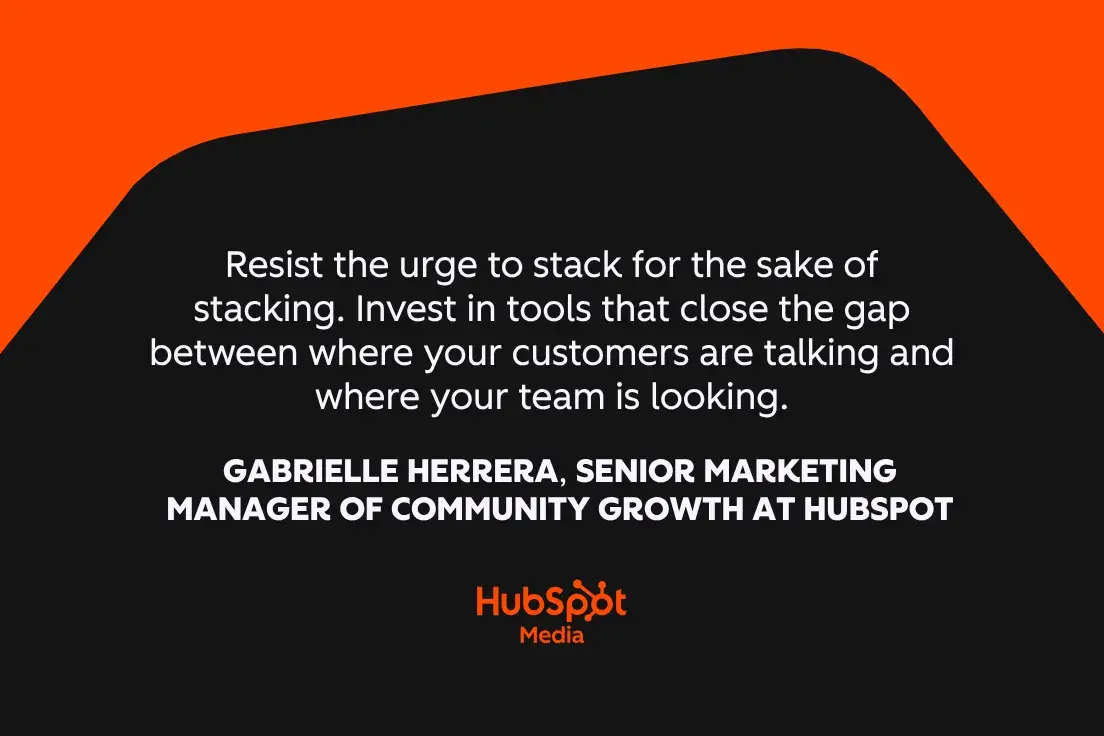
That said, Herrera concludes, “Resist the urge to stack for the sake of stacking. Invest in tools that close the gap between where your customers are talking and where your team is looking.”
Read:
- Top social media tools to boost your social strategy
- I tested the 7 best free social media monitoring tools — here’s how they stack up
- AI tools for social media marketing that are proven to streamline your digital strategy
Authenticity Over High Production
In our survey, 77% of marketers said authenticity trumps production value for their brand on social. In other words, raw, real content outperforms polished brand videos on most platforms. And this isn’t a soft preference; it can be seen across every feed.
The problem here is that this directly clashes with “AI slop,” or the algorithm-friendly but personality-free content that AI tends to generate for marketers and businesses.
AI can generate content fast and sometimes impressively (keyword being sometimes with 16% of marketers citing ‘implementing AI effectively without sacrificing quality or trust’ as a top challenge), but it can’t replicate your brand’s real voice or experience, a creator’s personality, or a moment of cultural relevance.
How do you overcome this?
“AI helps marketers create faster, test more variations, and keep up with channels that reward volume and speed,” reflects Joseph Giunta. “The key is using it to support a strategy, not replace one. The strongest results still come from teams that know their audience, have solid creative direction, and refine outputs instead of publishing them blindly.”
Roberto Murphy, Social Media Strategist at Sure Oak echoes this saying, “AI by itself is not good enough, and humans by themselves are not as productive, and this increases the price, so ultimately, the cyborg version is the way to go. My advice would be to use AI for content creation, but always work on giving it your human touch.”
This is huge to me. Use AI content as a first draft. Dedicate time to fact-checking all of the data and claims it makes and editing to match your voice. Better yet, take the time to add personal anecdotes, original case studies, and examples, among other things.
Learn more in our article, “How to humanize AI content to rank, engage, and get shared.”
Pro tip: Invest in Employee Advocacy
“It’s important to understand how valuable your employees are for brand advocacy,” explained Creative Executive Megan Connor from Colewood Digital.
“Posting on your company account is one thing, but it’s great when employees actively talk about your brand too. Employees can add a bit of personality to your brand and show its human side, sharing personal insights to connect with others and add credibility and visibility to your brand.”
Leah Ryder, VP & Head of Marketing, Outshift by Cisco, also shared how her social team is highlighting the authenticity and unique voices of their employees.
“We use some budget to boost posts of our circle of ‘social ambassadors.’ They congregate in a work chat and on a monthly call to brainstorm ideas, get posting tips, and receive editing help on their individual posts. They get a professional boost, and so does our brand.”
Apulsify LLC is trying a similar strategy.
Preeti Deepa Dash, Assistant Manager of Marketing Operations, shared, “B2B buyers are exhausted by corporate-speak. I’m shifting our budget away from polished brand films and into Employee Advocacy. By empowering our engineers and consultants to share their raw insights, we build a level of ‘earned trust’ that a corporate logo simply cannot achieve in an AI-saturated market.”
The State of Social Media in 2025
Explore the top trends in social media for brands to know and optimize your social strategy.
- AI Content Creation
- Community Building
- Social Media Shopping
- Social Vs. Search Engine
Download Free
All fields are required.
Form not available
Micro-Influencer Marketing Investment Going Strong
In 2026, the job titles of “influencer” and “creator” are more established, and follower numbers are reaching the millions.
This is exciting for them, but as these large influencers scale, the level of engagement and connection consumers respond to (and marketers seek) is harder to come by.
Thankfully, niche influencers are less likely to face these problems, and our survey shows marketers are taking notice.
Last year, marketers reported greater success collaborating with small influencers (those with fewer than 100,000 followers) than with larger ones. That trend continues this year as 60% of marketers plan to increase influencer investment in 2026, and mid-tier (100,000-499,000 followers) delivered the best results with 36.80%.
Marketers recognize that it’s no longer just about a big name. They need content that actually resonates with a real audience that care about what they’re selling.
And this isn’t solely a B2C play.
B2B marketers who’ve historically dismissed creator partnerships as a B2C tactic are increasingly finding that subject-matter experts and industry voices on LinkedIn deliver the kind of trusted, category-specific reach that traditional B2B marketing struggles to produce. So much so, influencer and creator use has grown at 20.78%.
B2B Marketing Advisor Erin Balsa is a great example:
So, whether you’re B2B or B2C, how do you find your influencers?
Social Media Producer at Tory Johnson Productions Shivangi Mistry says her biggest advice is to focus on fit over size.” A smaller creator who actually aligns with your brand will usually perform better than a bigger one who doesn’t. Also, don’t over-control the content; if it doesn’t feel natural to the creator, it won’t land.”
Denise Reid, Founder and Principal Brand Marketing & Content Consultant of Purple Mango Company, agrees, adding, “Know your campaign objectives before you reach out to a single creator. Clarity on goals is what separates brands that see ROI from brands that just see content.”
Check out our articles “How to Identify & Work With the Best Brand Influencers for Your Business” and “My Comprehensive Guide to Micro-Influencer Marketing” for more guidance on how to find the right niche influencers to achieve your goals.
Problems with Proving ROI Persist
When asked how difficult it is to tie social activity to business outcomes, only 37% of marketers say it’s easy. More specifically, 41% of B2B marketers say it’s hard to tie social activity directly to business outcomes, compared to just 31% of B2C marketers.
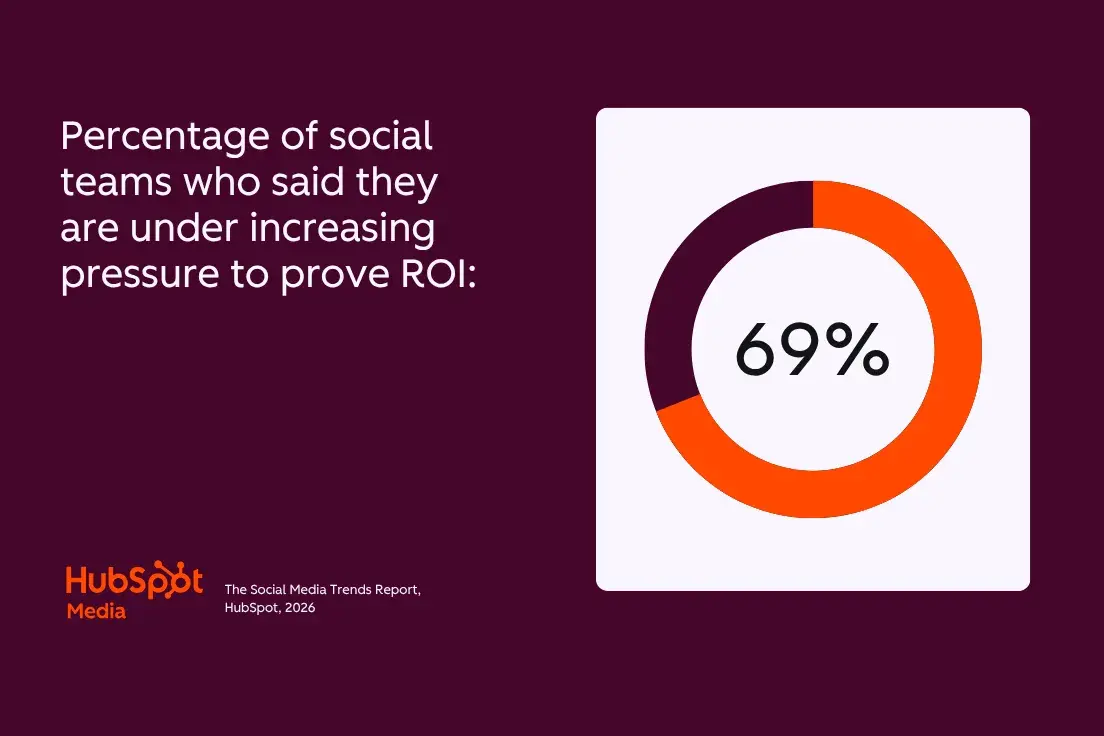
These numbers are concerning, considering 69% of social teams also said they are under increasing pressure to prove ROI, but they’re also par for the course.
In my over-decade-long career, the most consistent challenge I’ve seen marketers face is proving ROI, but what’s standing in their way in 2026?
“Social often influences the pipeline long before it shows up in a conversion report,” says Giunta. “A lot of teams are still using last click thinking for channels that play a much bigger role in awareness, consideration, and trust.”
Our survey supports his thoughts, finding the top barriers to social attribution are:
- Platform limitations on linking to other sites (35.94%): Platforms like Instagram and TikTok make it structurally difficult to drive direct traffic, muddying the conversion path
- Lack of proper tools (27.36%)
- Multi-touch attribution complexity (26.07%)
“The best way to handle it is to define what success actually means for your business, then measure contribution to pipeline instead of expecting every post to tie directly to revenue,” continues Giunta, and his peers agree.
“I’ve stopped trying to tie every single post to a direct sale,” explained Dash. “Instead, I focus on tracking intent-based signals, like how often we’re appearing in social search results and the quality of the conversations happening in our DMs.”
“My best advice for marketers is to stop over-complicating the spreadsheets and start telling a better story with your data. Shift the conversation from ‘how many clicks did this get’ to ‘how much did this content lower our overall customer acquisition cost,’ because building brand authority is what makes every other channel work harder.”
Furthermore, Account Director Safaniya Stevenson from Kanahoma reminds marketers to focus on the metrics stakeholders care about and report in a way they’ll understand.
She says, “The bottom line for this is literally the bottom line...Early and often, we need to take more time to connect the dots between how what we’re doing on social is driving customer behavior and business conversions on any level. And we must do so using language that the finance team and executive suite can understand.”
Read: How to measure social media marketing ROI [with expert advice]
Top Social Media Platforms: Where Marketers Are Winning
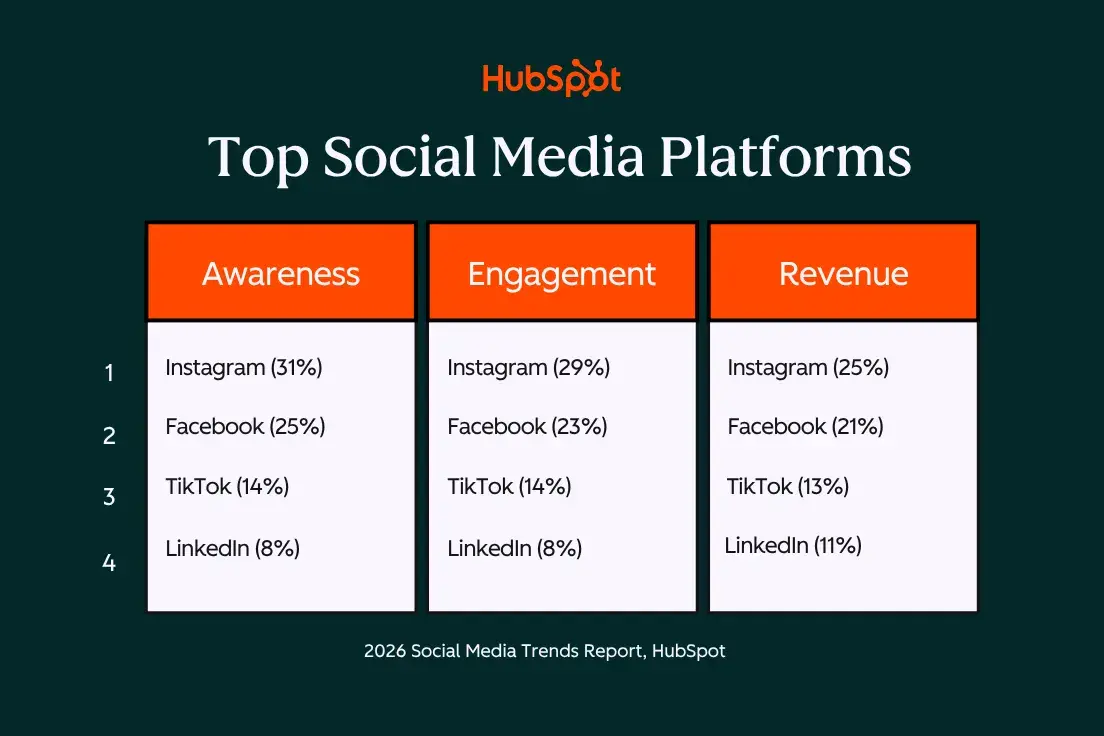
Your brand’s top social media platforms will depend on your audience and goals. However, when it comes to boosting popular metrics such as site traffic, engagement, and audience growth, our survey found that four platforms outperformed the rest:
- Instagram (79.5%)
- Facebook (66%)
- YouTube (59.9%)
- TikTok (56.7%)
We’ll dive into these four in more detail, but before we do, here are some high-level findings worth mentioning.
LinkedIn remains the dominant B2B platform, despite ranking a distant fifth in adoption at 42.08%. LinkedIn isn’t just a professional networking tool anymore; it’s a content and community platform, especially as video adoption kicks up there.
For B2B marketers, LinkedIn’s combination of professional targeting and growing content engagement makes it one of the highest-value investments in the mix.
Emerging platforms like Threads (6.41%), Bluesky (2.40%), and Reddit (10.52%) have small but growing presences. They’re worth monitoring, not necessarily investing in heavily yet, minus Reddit. Reddit is worth watching for community listening and search visibility, given its increasing prominence in AI-generated search results.
1. Instagram: Leading the pack for all major goals
What’s Working: Short-form Video, Broadcast Channels, Stories, Educational Carousel Posts, Shopping, Ads
Instagram leads platform adoption at 79.56%, and with good reason.
Our survey found that Instagram leads across every major performance metric: awareness, engagement, traffic, lead generation, revenue, community growth, and brand sentiment. No other platform even comes close.
Between Shopping, Subscriptions, Broadcast Channels, Ads, Reposts, and Stories (with various interactive stickers) on top of the conventional likes, shares, and comments, Instagram has no shortage of ways to engage your audience, creating a deeper sense of connection with your brand and followers.
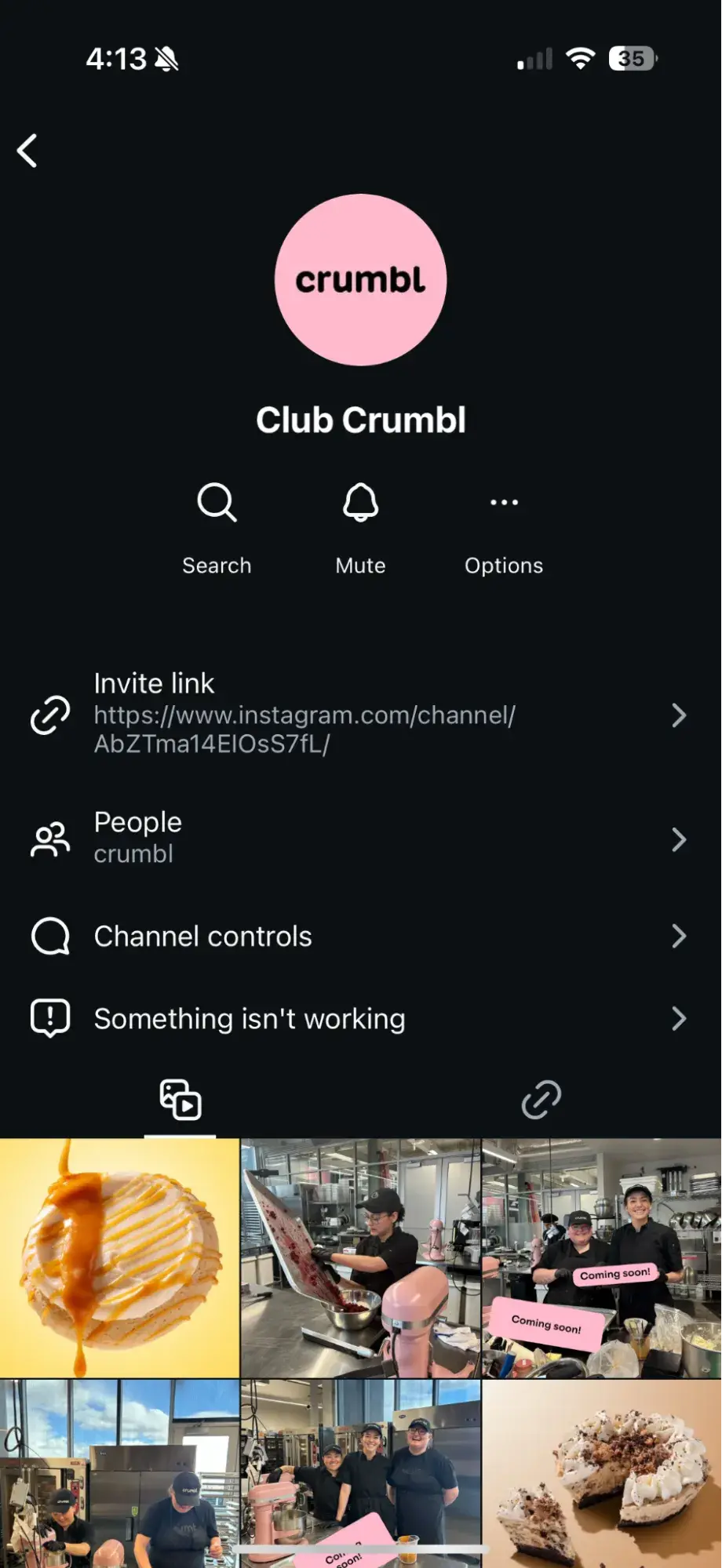
As a marketer and certified sweet tooth, I have to say Crumbl does an impressive job with its Instagram.
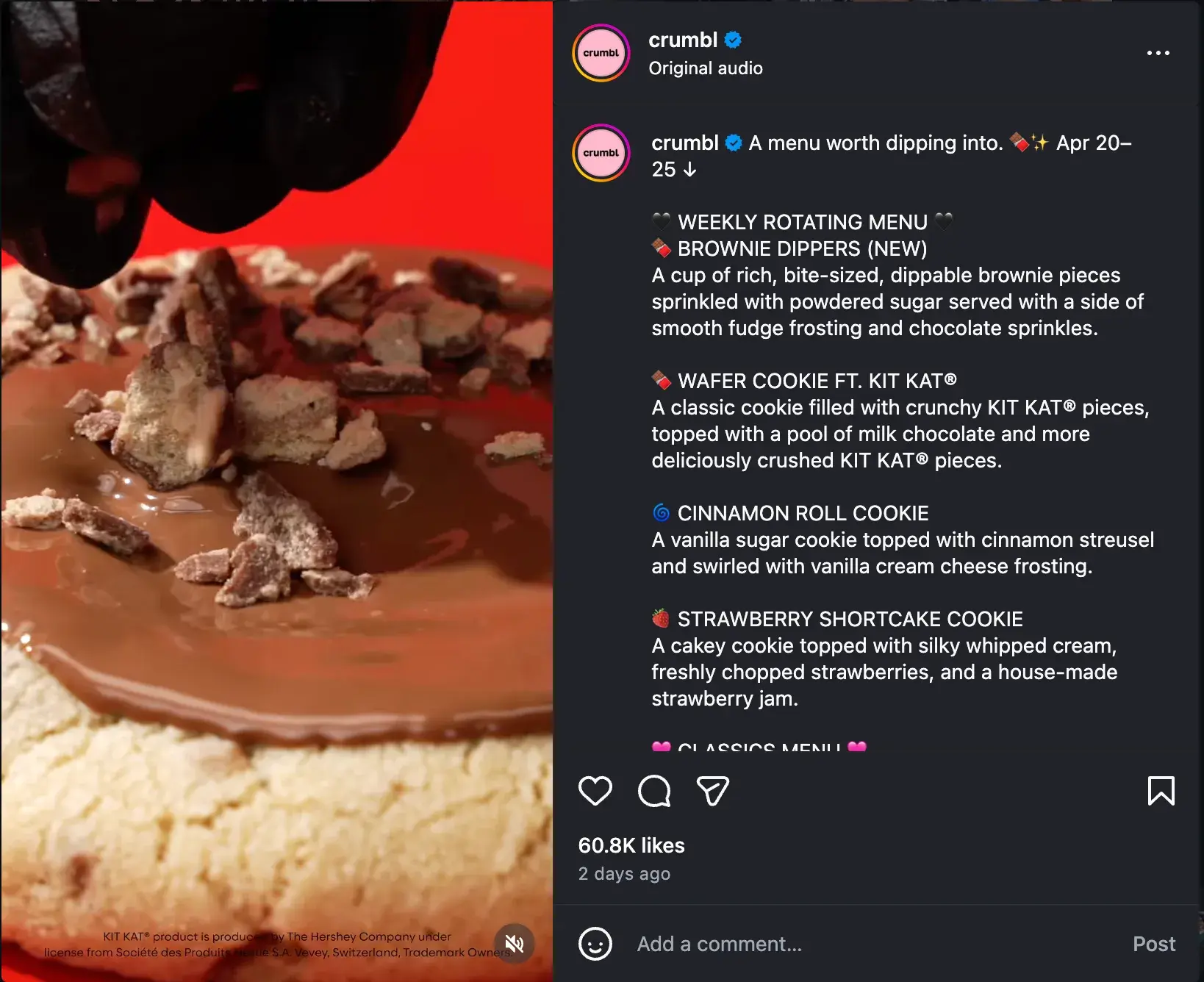
On their grid, they share a mix of detailed, sensory photos of their baked goods, aspirational highlights of their events, and on-brand antics with in-bakery team members. They also “programmatically” release their weekly menu on Sundays and run a contest to give away a box to four of their followers.
If that wasn’t an impressive enough engagement play, they take it to the next level in their Broadcast Channel, “Club Crumbl.”
 |
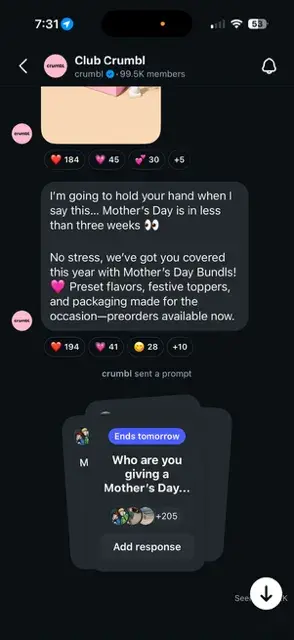 |
I’ve been a member for about a year now and have enjoyed seeing it use the space of 99.5k members to gather opinions on flavors, share behind-the-scenes content, and even offer exclusive giveaways.
It’s a light, fun (not to mention delicious) way to engage their audience and drum up foot traffic at their stores to claim freebies.
2. Facebook: Facebook Groups are the most popular community platform
What’s Working: Short-form video, Ads, Facebook Groups, Facebook Events, Facebook Marketplace
Contrary to what many may tell you, Facebook is not dead. It remains the second-most-popular social media platform among marketers surveyed, and to be honest, I’m not surprised.
With over 3 billion users worldwide, Facebook’s sheer mass keeps it competitive. Add in Facebook Ads, the prowess of sister platform, Instagram, and unmatched local appeal with Pages, Events, and Marketplace, and it still has a great deal to offer marketers.
Facebook Groups are particularly effective, with our survey showing it’s the most popular community platform among marketers (54.31%).
But there’s one big caveat to note: While billions have accounts on Facebook, the most active generations are Boomers and Gen X. Unless this is your demographic, your efforts are likely best spent elsewhere.
3. YouTube: Dominates long-form video
What’s Working: Long-form video, search-friendly descriptions, annotations, dynamic thumbnails
While YouTube may trail fellow video platform TikTok in terms of engagement and audience growth for short-form video, it sees far more success with long-form video (nearly 54% of YouTube marketers reporting the format delivers the highest engagement).
Why, you ask? Well, spend any time on the platforms, and you’ll see.
YouTube was originally designed for browsers and large-screen viewing. Its users visit in search of longer, more in-depth videos, giving marketers an opportunity to share informaton to match.
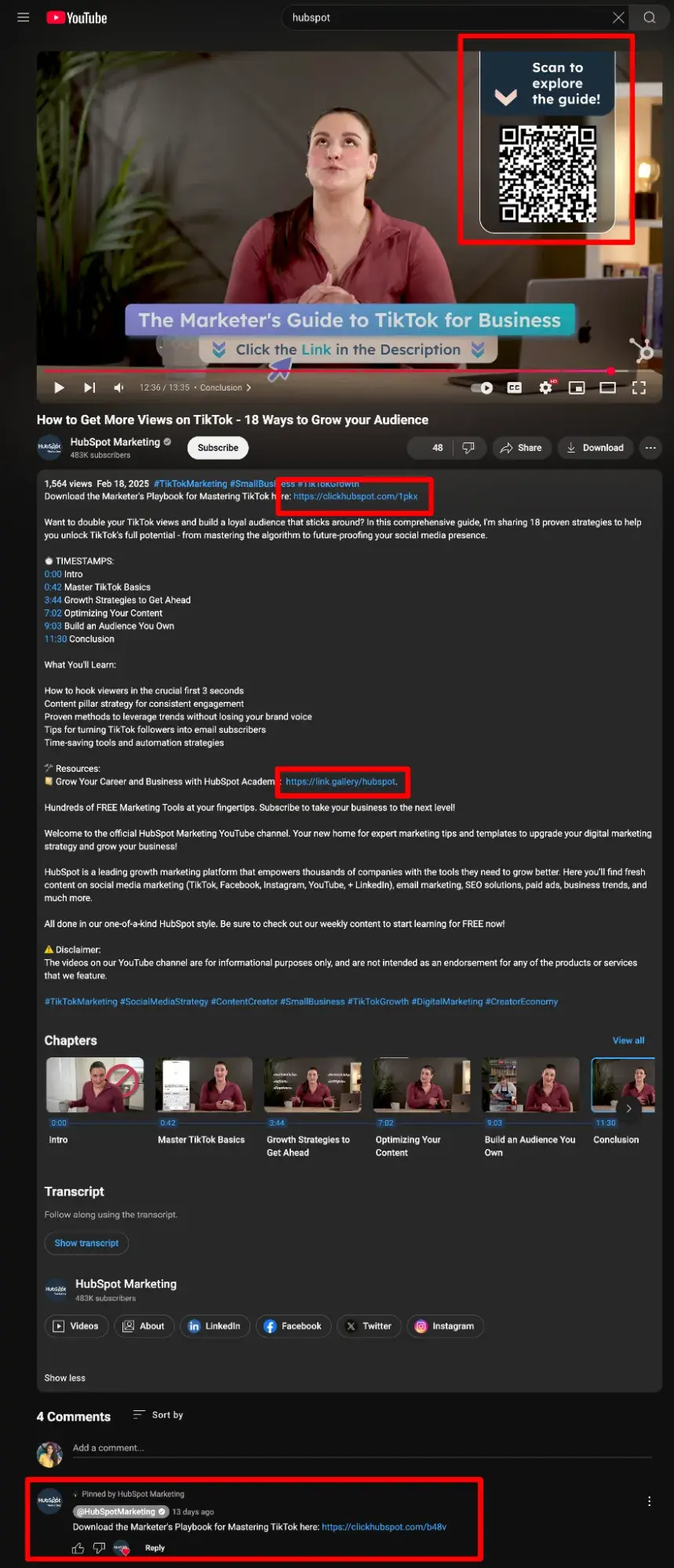
On YouTube, marketers also have plenty of opportunities to link viewers back to their website or landing pages, as highlighted below (e.g., video descriptions, channel bios, comments, and annotations).
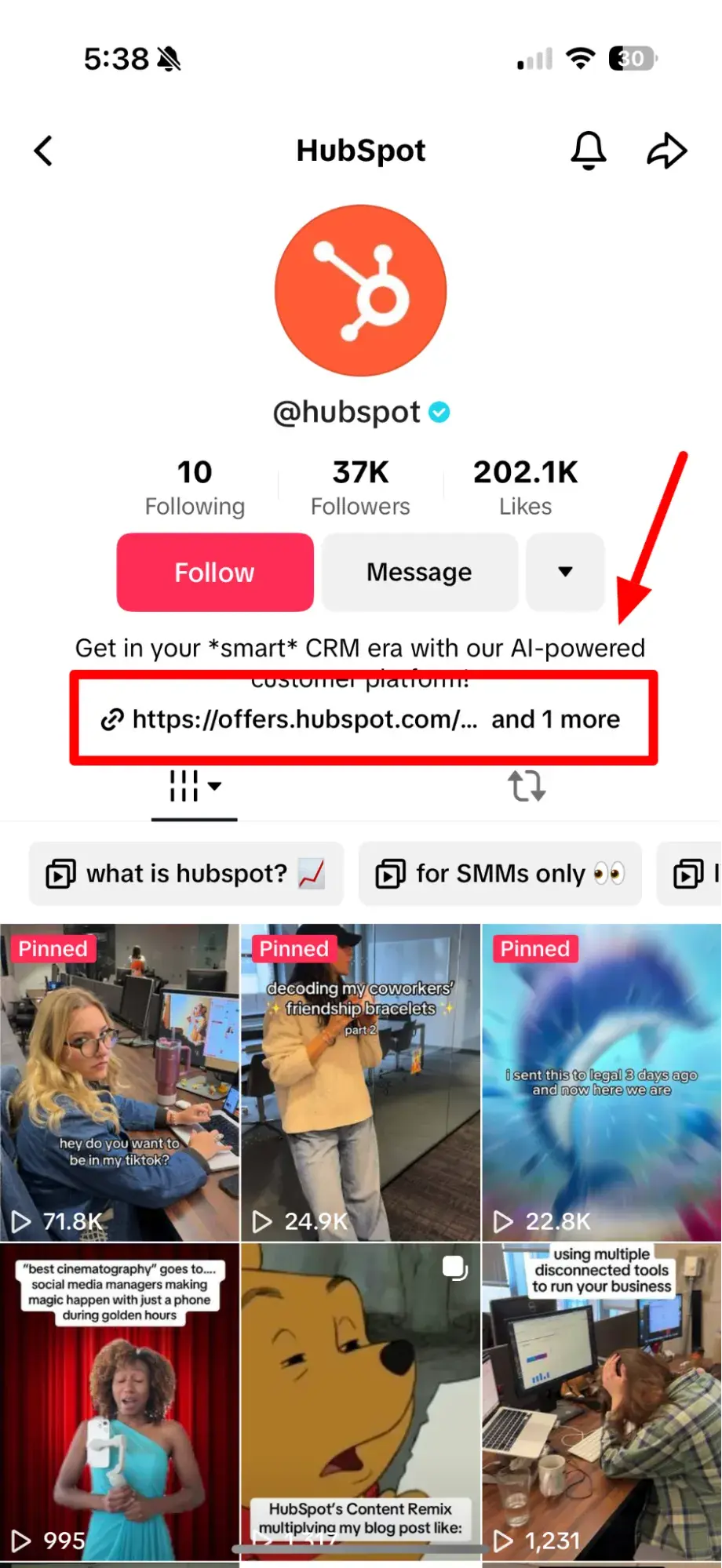
On TikTok, linking is only available to creators with at least 1,000 followers or a registered business account, and even then, it’s limited to your bio and comments, as seen in HubSpot’s account.
 |
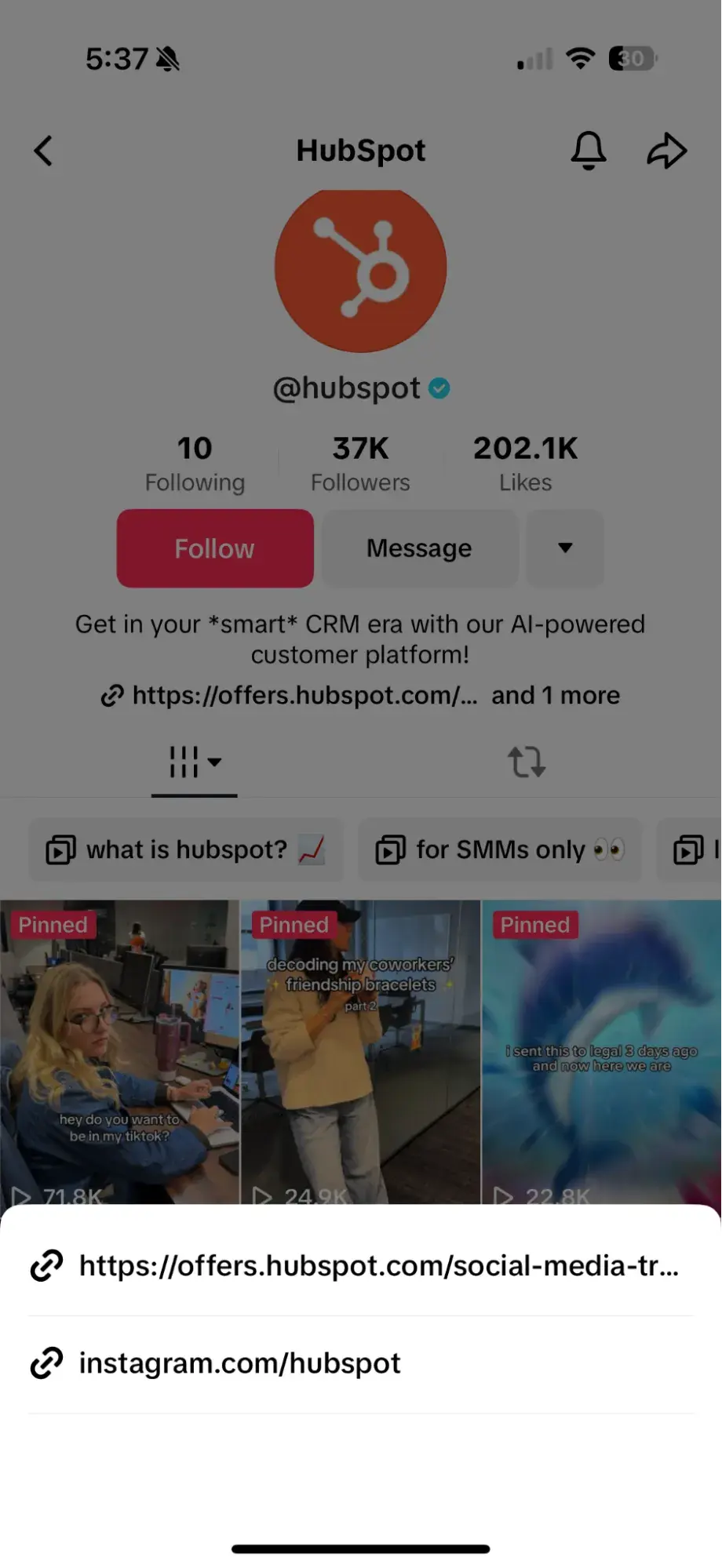 |
(Only the first link in your TikTok bio is clickable, though you can add multiple that will appear as plain text.)
Plus, with Google at its helm, optimized videos on YouTube are pulled into search results, getting you in front of the search engine’s billions of daily users. Yes, other videos can also appear in the SERP; it’s been believed for many years that Google prioritizes YouTube-hosted videos over those on other platforms.
If your business hopes to drive website traffic from long-form video and is debating where to host, keep this in mind.
4. TikTok: Ripe with ad opportunity.
What’s Working: Short-form video, Humorous content, Ads, Influencer marketing
TikTok has evolved from a pandemic pastime into a full business channel, and the numbers prove it.
Gen Z is the most prominent generation on TikTok, and with its growing market power (and comfort with making purchases on the app), the platform offers marketers opportunities to reach audiences and drive sales.
For example, take ads.
Our survey showed TikTok marketers leverage paid ads and boosted content (68%) far more than organic content (45%) or sponsored influencer content (38%). In fact, TikTok is the third most popular platform for paid and ad budget in 2026, behind only Facebook and Instagram.
With TikTok reporting that 1 in 3 of its Gen Z users are interested in buying from TikTok Live, and 74% of weekly users seek more information about an advertised product after seeing the ad on the platform, this is likely money well spent.
TikTok is also the second most popular platform for influencer marketing at 60.82%, behind only Instagram (78.14%).
What content works? Marketers reported humorous content drives the highest engagement at 30.12%, outpacing brand and product marketing content (24.90%) and educational content (13.05%).
Social Media Challenges
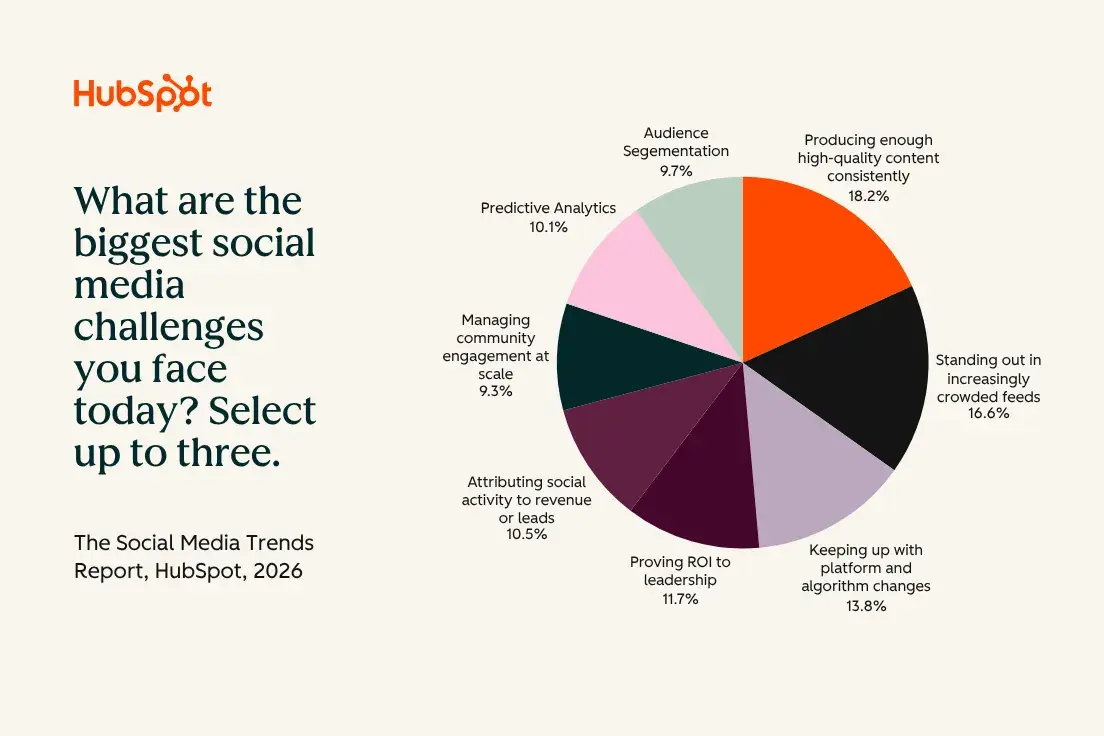
Social media marketing is far from without challenges, but our survey found that there doesn’t appear to be one overwhelming issue facing marketers.
Instead, marketers are grappling with a mix of obstacles, from keeping up with trends to creating engaging content. The landscape is fragmented, with no one issue overshadowing the rest.
Here’s how industry experts would handle some of them:
Standing out:
“As AI algorithms get better, it’s important to be more and more human. Anyone can ask their favorite LLM to write something for them but not everyone can write meaningful copy. AI can write poems and replicate structures, rhymes and style but it cannot access what humans use to write poetry.
I think finding good writers, investing in creatives, and fostering environments where creatives and strategists discuss and generate new ideas will be a key differentiator for companies in 2026 and moving forward.” - Roberto Murphy, Social Media Strategist, Sure Oak
Producing high-quality content:
“At Socialinsider, we use AI for video creation but we never skip human editing. That step is non-negotiable. AI alone produces content that looks like everyone else’s: same pacing, same feel, same energy. Human editing is what makes it yours.” - Adina Jipa, Co-founder, Socialinsider
Proving ROI
“The ROI problem persists because a lot of leaders simply do not accept how marketing works.
The customer journey is not linear. Someone sees your ad on Tuesday and buys on Friday after their coworker mentioned it. Social gets zero credit. But that is not a social media problem. We spent decades buying billboards and newspaper ads that we could never fully track either. Nobody questioned the ROI on a bus stop ad.
Stop leading with vanity metrics. And before any campaign launches, get everyone in the room and aligned on what you are actually measuring. That conversation has to happen before the content calendar, not after.” - Denise Reid, Founder and Principal Brand Marketing & Content Consultant, Purple Mango Co
We unpack the top challenges more and how you can combat them in “Top 5 Social Media Marketing Challenges in 2026, According to 1,100+ Marketers [+ How to Face Them].”
Top Social Media Marketing Goals
Increasing Brand Awareness
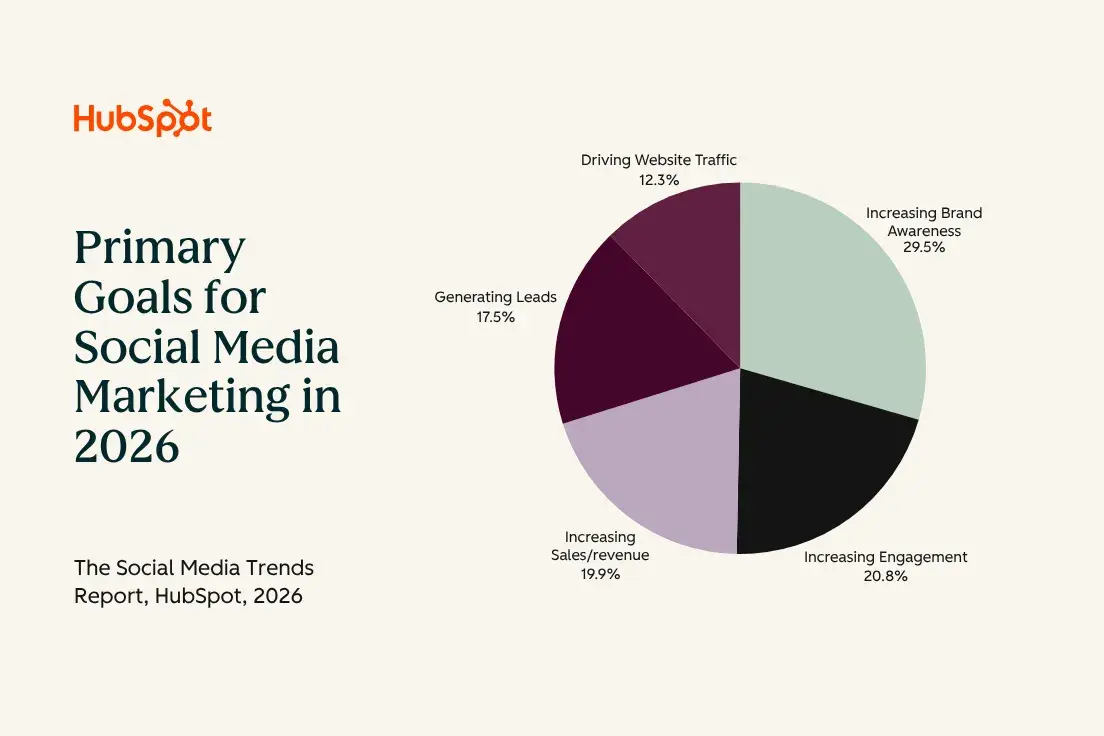
Regarding social media goals, our survey results were consistent with the State of Marketing — businesses are focusing on building brand awareness.
Increasing brand awareness ranked as the most commonly reported goal for social media marketers, with 29% of respondents selecting it as one of their primary goals. This is even a slight uptick from last year, when only 25% of respondents indicated the same.
Increasing Engagement
Increasing engagement ranked second among marketers’ goals, but, truthfully, many of the other goals (driving traffic, building community, etc) rely on it. While sales and conversions will always be the top concern for businesses, for example, these start with engaging your audience through content and conversation.
The Best Times to Post on Social Media
As a social media marketer, you likely want to be posting at the best times for peak engagement. So, during our annual State of Marketing survey, we gathered thoughts on the best times to post across social media platforms in the U.S. specifically.
- Facebook: 9 AM to 12 AM, closely followed by 12 PM to 3 PM
- YouTube: 9 AM to 12 AM, closely followed by 12 PM to 3 PM
- Instagram: 12 PM to 3 PM, followed by 3 PM to 6 PM
- TikTok: 3 PM to 6 PM, followed by 12 PM to 3 PM
- X: 3 PM to 6 PM, followed by 12 PM to 3 PM
- LinkedIn: 9 AM to 12 PM, closely followed by 12 PM to 3 PM
For tips on what other times to post or what to post during the times above, check out this social scheduling guide.
How to Use These Insights on Your Social Media Team
The data is only useful if it changes how you work. Whether you’re a solo social media manager or part of a global marketing organization, the findings we shared point to concrete shifts worth making now.
Here’s how to translate them into action based on your team size and industry.
For Small Teams (1–3 People)
When you’re stretched thin, focus beats breadth. Here’s how to work smarter with what you have:
- Pick 2–3 platforms and commit. Instagram should almost always be one of them, given its dominance across every major metric. Add a second based on your audience: Facebook if you’re targeting Boomers/Gen X or local communities; TikTok if you’re chasing Gen Z; LinkedIn if you’re B2B.
- Use AI for first drafts, not final ones. With 94% of social marketers now using AI, you’re not differentiating by using it — you’re differentiating by how well you edit it. Let AI handle ideation and caption drafts, then spend your time injecting your brand’s real voice, specific examples, and personality.
- Repurpose relentlessly. A long-form YouTube video becomes three Reels, five captions, and a carousel. A blog post becomes a week of LinkedIn content. Given that consistently producing high-quality content is the top challenge for 45% of marketers, repurposing existing material is the highest-leverage tactic available to a small team.
- Start one creator partnership. You don’t need a big influencer budget. Find a micro-creator (under 100k followers) whose audience genuinely overlaps with yours. One well-fitted partnership often outperforms multiple mismatched ones.
Quick win: Set up a simple social listening alert (Google Alerts, or a free tier of a listening tool) for your brand name and top competitor. Even 15 minutes of monitoring per week surfaces content ideas, customer sentiment signals, and trends you’d otherwise miss.
For Enterprise Teams (10+ People)
At scale, the challenge isn’t doing more; it’s doing it cohesively. Your biggest opportunity is closing the gap between platform specialization and cross-functional alignment.
- Specialize by platform, not just by content type. Assign platform ownership so each channel has a dedicated voice and strategy, rather than everyone publishing everywhere with no differentiation. Instagram and Facebook likely warrant the most investment; LinkedIn deserves a dedicated B2B strategy separate from the broader social calendar.
- Tie your social reporting to revenue, not just reach. Only 37% of marketers say it’s easy to connect social activity to business outcomes. Build dashboards that track intent signals — DM quality, branded search volume, social share of voice — alongside conversion data. Move leadership conversations from “how many impressions” to “how much did this reduce customer acquisition cost.”
- Launch a social ambassador pilot. As brands like Outshift by Cisco and Apulsify LLC are finding, employee-generated content builds earned trust that a corporate handle simply can’t replicate. Start with a small cohort of willing employees, give them a monthly touchpoint for guidance and ideas, and measure the engagement lift.
- Invest in social listening infrastructure. Only 13.54% of marketers currently use AI for social listening — which means it’s a real competitive advantage for those who do. For enterprise teams, this means integrating listening data into campaign planning, product feedback loops, and brand safety monitoring.
Quick win: Run a one-month attribution experiment using UTM parameters tied to a specific social campaign. Present the findings to leadership with language focused on pipeline contribution, not post performance to start shifting how ROI conversations are framed internally.
Industry-Specific Applications
SaaS and B2B Tech
LinkedIn is your highest-value platform, even though it ranks fifth overall. Lean into subject-matter experts (engineers, product managers, founders) as content creators. Their insights carry more credibility with your buyers than polished brand content.
For community building, LinkedIn newsletters and thought leadership posts are outperforming press releases and product announcement cadences.
Pair this with Reddit monitoring. SaaS conversations happen there, and Reddit’s growing influence in AI-generated search results means community presence has SEO and AEO implications.
Retail and E-commerce
Instagram and TikTok are your conversion engines; invest in both, but with different expectations. Instagram Shopping and Ads drive direct revenue while TikTok is where discovery and brand affinity build for Gen Z buyers.
Influencer marketing should be a budget line, not an afterthought as well. 60% of marketers are increasing influencer investment this year, and mid-tier creators (100k–500k followers) are delivering the strongest ROI.
Humorous, lo-fi content consistently outperforms polished brand video on TikTok — lean into it rather than fighting it.
B2B Services and Consulting
The ROI attribution challenge hits hardest here, since the sales cycle is long and rarely linear. Focus on building brand recognition and use LinkedIn as a reputation engine, not just a publishing channel.
Encourage consultants and client-facing staff to share real project insights and lessons learned. Authentic, experience-based content from practitioners outperforms corporate thought leadership at every stage of the funnel.
Your Social Media Success Roadmap
Ultimately, it’s up to you and your company to determine and plan your future success strategies! But our data and insights are always here to help.
To start building, refining, or researching more opportunities for your social media strategy:
Editor's note: This post was originally published in January 2025 and has been updated for comprehensiveness.
- Take our free social media certification course.
- Visit our State of Social Media Hub page, where you’ll find more data, videos, and exclusive expert insights.
- Download the free report below for a PDF with key data and insights.
![Is Threads losing steam? Here’s what we know [new research]](https://53.fs1.hubspotusercontent-na1.net/hubfs/53/is-threads-losing-steam.png)

![The fastest growing social media platforms of 2025 [new data]](https://53.fs1.hubspotusercontent-na1.net/hubfs/53/growing-social-media-platforms-1-20260227-7283097.webp)
![The Future of Social Media [Research]: What Marketers Need to Know in 2026](https://53.fs1.hubspotusercontent-na1.net/hubfs/53/future-of-social-media-1-20260331-3099000.webp)
%20(1).webp)