.png?width=112&height=112&name=Image%20Hackathon%20%E2%80%93%20Vertical%20(30).png)
By creating a Voice of the Customer (VoC) program, companies are able to consistently gather customer feedback across multiple touchpoints in the customer journey. This helps businesses gain a more holistic understanding of their customers’ experience since it’s not limited to a specific interaction.
Voice of the Customer (also called Voice of Customer) programs are critical for helping businesses uncover insights and better understand their customers. Before we dive into how to do this, let’s start with what the Voice of the Customer actually is.
Table of Contents
- What is Voice of the Customer?
- VoC Techniques
- Voice of the Customer Questions
- How Voice of the Customer Impacts Your Business
- Setting the Foundation of your VoC
- Voice of the Customer Analytics
- Voice of the Customer Tools
- Voice of the Customer Template
- VoC Templates
- Voice of the Customer Examples

What is Voice of the Customer?
Voice of the Customer (VoC) is a research method that collects and analyzes customer feedback. A VoC program helps you understand your customers’ needs, expectations, and how they feel about your business, product, or service. This process allows you to surface gaps between your customers’ expectations and the actual experience they have with you.
These insights can help you improve nearly every part of your business, including customer success, operations, support, and product development. Regularly gathering and analyzing customer feedback enables your company to proactively address any customer concerns and stay in lock-step with your customer base. This is especially important for companies that are experiencing rapid growth or looking to scale.
Thriving companies know that understanding and prioritizing their customers’ needs is key to successfully scaling their business. In fact, companies that prioritize the customer experience grow revenue 80% faster than their competitors. That means that if you aren’t actively listening to your customers, there’s a good chance that your competitors are.
To create a VoC strategy, you’ll need:
- A clearly defined question you’re looking to answer as the goal for your program. For example, “Why did customer retention rates drop for a particular product in the last quarter?” Or, “How do customers feel about the recent product enhancements?”
- A tool to collect VoC data, such as a dedicated customer feedback software or a survey provider.
- VoC feedback and data.
- A team to analyze the feedback and identify patterns.
.png)
61 Templates to Help You Put the Customer First
Email, survey, and buyer persona templates to help you engage and delight your customers
- 6 buyer persona templates
- 5 customer satisfaction survey templates
- 50 customer email templates
Download Free
All fields are required.
How Voice of the Customer Impacts Your Business
Prioritizing the customer experience is no longer optional for companies; it’s an expectation. As PWC says, “If experience isn’t your strategy, you’re doing it wrong.”
CX continues to rank as a top factor in consumer purchasing (and repurchasing) decisions, which means that shoppers expect brands to deliver on their promises. But how can a business truly know what type of experience their customers are having if they never ask them?
Taking the time to understand your customers’ needs allows you to build a more customer-centric organization, which benefits both you and your customers. Customer-centric organizations that leverage Voice of the Customer programs see benefits like higher retention rates, more repeat purchases, and better customer loyalty and advocacy.
By capturing VoC, you help deepen the relationship with your customers and build trust by engaging with them at every touchpoint. In my experience, customers want to give you their feedback, and when you take it in and act on it, you show them that you’re listening and you actually care about their experience.
VoC programs can help do things like:
- Detect risk, negative sentiment, or potential brand issues early on.
- Uncover issues with new releases or product enhancements.
- Understand where customers are getting stuck or frustrated.
- Evaluate new concepts, ideas, and solutions.
- Customize your products, services, add-ons, and features to meet the needs and wants of your customers.
- Serve your customers the solutions they really need.
Setting the Foundation of your VoC
There are multiple steps in the process of launching a Voice of the Customer program, but it’s important to do them in the right order.
Step 1: First and foremost, I suggest outlining your goal or objective for this program, as well as a clear question you’re looking to answer. It can be tempting to skip this, but trust me, it can be really easy to fall victim to scope creep without a clearly defined objective.
The question you’re looking to answer can be related to previous metrics, trends, or new customer behaviors. Here are a few examples of what that can look like:
- Customers with X product had a lower renewal rate this year. What issues or challenges are customers facing with this product that could be contributing to churn?
- We’re seeing low adoption for our newly released feature. Why are our customers not adopting this feature?
- We want to scale our virtual events to accommodate customers in EMEA. What day/time works best, and what type of content are EMEA customers looking for from virtual events?
Pro tip: I suggest running your proposed questions by a teammate or other internal stakeholder to make sure that your question matches the department’s goals.
Step 2: Now that you know what question you’re trying to answer, it’s time to establish an objective. Some common objectives for VoC programs include:
- Gathering insights/understanding needs. You may use a VoC program to gather insights and better understand your customers. For example, you might want to understand:
- Their perceptions about your product.
- How they feel about something specific (like AI, for example).
- Common pain points they’re facing.
- Gauging current performance. Some businesses launch a Voice of Customer program to set a baseline to compare future results to. When you make this your objective, you’ll likely want to ask the same questions during each iteration for data consistency.
- Improving a business function or product. A common use for VoC strategies is understanding your customers’ experience or preferences in order to improve something. You might use this method to improve a specific metric (like product adoption), the customer’s experience with your brand, or to enhance your product offering.
Step 3: Now that you’ve identified the question you need answered and your objective for the program, it’s time to plan which VoC technique you’ll use to reach out to customers and gather your data.
There are a variety of VoC techniques out there to choose from, so I’ve compiled a few of my favorites for you. Below are 12 methodologies that are commonly used for Voice of the Customer programs.
VoC Techniques
- Customer Interviews
- Online Customer Surveys
- Chatbots
- Social Media
- Website Behavior
- Recorded Call Data
- Online Customer Reviews
- In-Person Surveys
- Net Promoter Score®
- Focus Groups
- Emails
- Dedicated Feedback Form
Let’s dig into each of these techniques in detail. Keep in mind that some companies will combine multiple techniques in a VoC program.
1. Customer Interviews
I love customer interviews because the insights I uncover through this technique always surprise me. Customer interviews are a traditional technique to collect VoC data, and while they can be used at any stage of a project, you commonly see this method implemented when a company is looking to deepen its understanding of something. This includes testing concepts and ideas or doing early-stage discovery.
I’ve found that customers typically want to share their feedback with you, and they often have the best ideas for how you can improve. When you meet with them in a live setting, you go beyond just gathering data. By hosting a customer interview, you tap into the customer’s sentiment and you create a space for them to offer more detailed and robust responses to your questions.
While the cost of in-person interviews is the highest among all forms of interviews, it’s still largely considered to be the feedback gathering process that builds the most trust with your customers. This is because customers perceive this type of interaction as more personal.
You can run customer interviews for specific customers or for a group of customers with similar attributes. These interviews can be executed in person, via Zoom, or over the phone.
When I’d recommend this technique: This method is great when you want a deeper understanding of customers’ needs, as it allows you to have more nuanced conversations and obtain robust qualitative responses from customers. Keep in mind that you’ll need to carve out time to facilitate the interviews as well as to analyze the data, which can be more time-consuming than using something like a survey.
Pro tip: There’s a ton of great tools out there to help make a process like this easier. Great Question is one that I highly recommend if you’re looking for help finding research candidates and facilitating the interviews.
If you’re running the sessions yourself, be sure to read up on how to facilitate these interviews according to best practices. For example, it’s important to make sure you ask unbiased and non-leading questions. Here’s a great interview script you can use for inspiration.
2. Online Customer Surveys
Launching an online customer survey is a great way to capture VoC feedback and helps you gather data from a large group of customers at one time. An online customer survey allows you to understand your customers and help address any issues they might be facing.
To ensure you receive relevant feedback, you’ll need to carefully consider how you design the survey. It’s critical to carefully consider factors like the right survey platform and the type of questions you’ll be asking.
Platforms like QuestionPro and SurveyMonkey let you choose from different survey template types, such as multiple-choice surveys, drop-down surveys, and open-ended surveys.
One of my favorite online survey tools is HubSpot’s customer feedback software. Our tool makes it easy to set up online surveys and, in true HubSpot fashion, the response data is easily connected across systems. Respondents are automatically connected to a specific contact in your CRM, which means less manual work tracking responses for your VoC team!
Pro tip: Make it easy for your audience to participate in your online surveys, and get creative in how you distribute them. For example, I’m currently working on a VoC survey to gather feedback about our virtual live events. I’ve added a QR code linking the survey to slides that I’ll present in weekly webinars, which I hope encourages the large audience I have to pull up the survey right then and take it.
61 Templates to Help You Put the Customer First
Email, survey, and buyer persona templates to help you engage and delight your customers
- 6 buyer persona templates
- 5 customer satisfaction survey templates
- 50 customer email templates
Download Free
All fields are required.
3. Chatbots
I’m a huge fan of making customer interactions feel conversational. In my time working for a major chatbot company, I consistently saw my customers drive success by finding new and creative ways to move everyday interactions into conversations via chatbots.
VoC collection is one of those everyday interactions that can benefit from a conversational revamp. Data shows that customers want interactions that feel personalized and human-like, and the majority of them prefer chatbot interactions over form fills. By serving up a chatbot flow to ask for their feedback, you create a two-way interaction that makes the process feel less like a task and more like a conversation.
Plus, by leveraging live chat for VoC, you can create specific targeting conditions and escalation paths based on the response you receive. This means you can mitigate feedback in real-time, allowing you to quickly take action and improve the customer experience.
I’d recommend having two paths for this VoC technique, as follows.
Option 1: Gather feedback during existing interactions.
When a customer interacts with your chatbot on their own, close out the flow by asking for their feedback. Whether the customer is self-serving and using the bot to find answers or they’re creating a support ticket, take the chance to ask them for feedback.
Using a chatbot to gather feedback in this way allows you to control how many questions you ask and which questions they receive. For example, if they were using the bot to find an answer on their own, you can of course ask them if they found what they were looking for. Depending on their answer, you can ask tailored follow-up questions to gather more information.
Pro tip: It’s important to create an excellent experience if negative feedback comes through this channel. For example, if the respondent provides a low rating or expresses negative sentiment, consider routing them immediately to a human or triggering an escalation to someone who can quickly help.
On the flip side, if the response is positive, you could trigger the bot to ask them another question or two about their experience or ask them if they’d like to be a part of future customer advocacy efforts.
Option 2: Gather feedback based on specific triggers.
For this method, I’d suggest looking at certain customer behaviors and deciding where it might make sense to launch this survey. From there, create targeting conditions that launch the VoC program to align with those behaviors.
For example, if an existing customer does one of the following, it might make sense to launch a feedback flow in your chatbot:
- Visits a page on your website that indicates risk.
- Visits a page that might indicate satisfaction, like your customer advocacy page.
- Hits a certain milestone, like 6 months or 12 months as a customer.
- Completes a specific action in-app that equates to ROI with your product.
- Uses a newly launched feature.
Alternatively, if you’re looking for customer feedback from a specific segment of customers, you can create chatbot flows that only launch for customers who meet that segmentation criteria. For example, you might want to gather feedback from your top revenue-generating customers, or those currently in a specific stage of a sales opportunity.
Looking to get started with a chatbot tool? HubSpot’s chatbot builder software makes it easy to get chat up and running on your website.
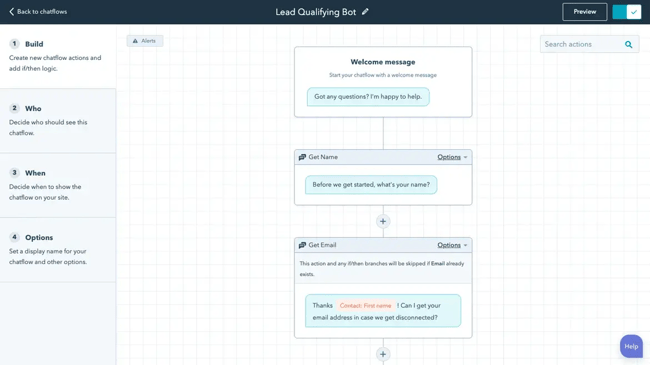
Get started with HubSpot’s chatbot software.
Final tip: If you’re using an AI chatbot, the benefits are even better. Your chatbot tool will be able to detect customer sentiment, meaning you can leverage that sentiment as a trigger to launch a VoC chatbot flow. Additionally, the tool will analyze the VoC bot flow responses for you and give you insights, themes, and even recommendations for improvement.
4. Social Media
Leveraging social media to gather feedback is a great way of meeting your customers where they’re at. Engaging with your customers on social media allows you to have two-way communication with them in real-time.
To do this, you can observe relevant ongoing conversations happening on major social platforms, like X, Facebook, or LinkedIn, and then decide how you’d like to get involved. This might look like you joining in the conversation (and thanking them for their feedback), or you could reach out to them privately for a one-on-one conversation. Even if you don’t get involved at all, just observing and taking notes on the feedback is worth your time.
People tend to get pretty candid on social media, and I’ve seen plenty of people complain and publicly tag companies on LinkedIn to call them out when they’re frustrated. To avoid this, keep a pulse on the feedback coming in via these sources so you’re not surprised by a potential PR fiasco.
While this technique is a good way to gather feedback, look for trends, and create stories, it may be more challenging to turn this into hard data. Create a plan to track the feedback that you uncover, since it won’t be coming in via automation the way other feedback might be.
Pro tip: Look for tools that can help you analyze feedback across social media platforms. Brandwatch is a software tool that can monitor customer perceptions and sentiment of your brand and provide you with insights.
If you’re a smaller company or software tools aren’t in your budget, find creative ways to leverage AI for this. Ask ChatGPT for specific insights about your brand across social media channels, or see what data you can export from your social channels (like your company’s Facebook page reviews, for example) and then upload to GPT Enterprise to analyze.
5. Website Behavior
Your website is an excellent source for capturing Voice of Customer insights. In addition to using chat and online surveys, you can also gather valuable feedback by analyzing how customers interact with your site — for example, through tools like heat maps that reveal user behavior and engagement patterns.
Consider leveraging a platform like Optimizely, which allows you to optimize digital experiences on your website by understanding behavioral patterns and A/B testing potential improvements.
Pro tip: Look for points of friction on your website and try to understand where customers might be getting stuck or frustrated. You should look at this across the customer journey and in all stages of the customer journey funnel.
Here are a few places I’d suggest starting with when you review your website for friction points:
- Menu navigation and search functionality.
- Content consumption.
- Sales interest/lead submission.
- Conversion/checkout.
- Excessive steps to complete an action.
- Misaligned communication (i.e., does your product or offering actually do what your website is saying it does).
6. Recorded Call Data
Existing interactions with customers can be a goldmine for customer feedback. Recorded calls with your customers can give you a broad overview of how they perceive your brand, where they’re getting frustrated, and what their expectations of your company are.
I’ve leveraged tools like Gong in the past to analyze customer feedback, specifically around newly released products or features. You can use these tools to search for certain keywords to see how many times they’re mentioned, or to surface sentiment, themes, and insights across your company.
If you’re not using a tool like the one I mentioned above, you can lean on AI or look for tools that can help you pull out insights and themes from the recorded calls that you do have on hand.
Though this technique may require an investment, I suggest making this part of your broader VoC work and doing it regularly. You’re likely to uncover themes and insights that you might have missed otherwise.
Regularly analyzing recorded calls also helps you better coach your customer support team in objection handling. It allows your support team to continually update their call scripts or support documentation since you’re staying on top of emerging themes.
Pro tip: Once you’ve analyzed the data from call recordings, consider reaching out to a few of the customers whose feedback you analyzed and ask them if they’d be willing to provide you with direct feedback. This might look like sending them an online survey or asking them for a customer interview.
7. Online Customer Reviews
It’s no secret that your company’s online reputation matters, and it can make or break your success. Whether consumers are shopping for a vacuum cleaner or enterprise software, they’re unlikely to make a purchase without first reading the reviews.
Data shows that 90% of consumers read a review before making a retail purchase, and 72% will read multiple reviews. This means that the online reviews of your product contain a goldmine of information that tell other consumers what’s great (and not so great) about your offering. It would be foolish not to tune into that information in order to better understand your customers’ experience.
Online review sites like G2 Crowd, TrustRadius, and TrustPilot enable you to begin collecting VoC data without needing to reach out to individual customers first.
I’ve personally worked with G2, and they do a great job of incentivizing consumers to write reviews and structuring the process so that reviews are vetted for authenticity. You can also work directly with G2 to run review campaigns for your business and ask your customers to participate.
Pro tip: You should regularly read through your company’s reviews online and, if you can export reviews (like from your Google business page), look for themes and insights.
8. In-Person Surveys
Opting for an in-person survey is yet another method to capture the Voice of the Customer. Whenever you have a captive audience of your customers in person, consider finding the right time (and delivery method) to ask them to participate in a survey.
At my company’s annual user conference, we conduct in-person surveys by asking customers who visit our booth to complete a quick survey. You could do something similar when you’re in person with customers, but just remember to make it easy for them to do.
You could provide iPads for customers to use to complete this or leverage a QR code for them to fill it out on their own. The format can be something as simple as a survey built in Google Forms.
Pro tip: I suggest incentivizing customers to complete it if you can by offering them something in return. That incentive could be company swag, a discount on your products, or entering them into a drawing. Incentivizing them increases the likelihood of people taking the time in person to participate.
9. Net Promoter Score®
If you’re not already gathering feedback via a Net Promoter Score, you should consider implementing one as soon as possible. Net Promoter Score (NPS®) is a management tool that is used to measure the loyalty of a company’s customers. Fred Reichfield, Bain & Company, and Satmetrix Systems created and developed this customer loyalty metric, and it’s used widely across companies of all sizes and industries.
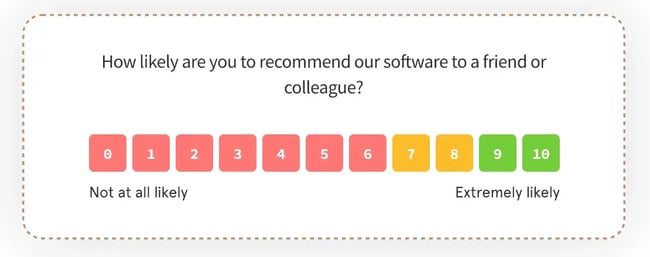
NPS gives you quick and reliable feedback from customers and creates a simple and easy way to gather feedback and measure progress. NPS asks customers the simple question below, and they answer on a scale of 0–10:
“How likely are you to recommend our company to a friend or a colleague?”
If you’re looking for a tool to leverage an NPS program, I suggest HubSpot’s customer feedback software. It’s an easy way to routinely gather customer feedback, which in turn helps you keep a pulse on customer sentiment.
Pro tip: In addition to analyzing the quantitative data within your NPS surveys, be sure to look through the qualitative data for themes and insights. Not to sound like a broken record, but AI tools can help make this process much quicker!
10. Focus Groups
In a focus group, a small group of 8–12 customers gathers to discuss their perceptions, beliefs, and opinions about your product or service. Participants are encouraged to speak openly and interact with one another.
This method helps uncover insights into how customers prioritize their needs, evaluate new concepts, and provide feedback. Focus groups are often used alongside interviews and surveys as a final step to explore and deepen understanding of the Voice of the Customer across different company touchpoints.
Looking for more information on running a focus group? Check out this article, “How to run a focus group for your business.”
Pro tip: When it comes to choosing an audience for your focus group, consider what factors you’d like to see in the customers you bring into this VoC program. You can segment them by different criteria within your CRM, like company size or ARR, for example.
11. Emails
This method can be as informal or as formal as you want it to be. You can send highly personalized emails to particular customers or create a template that can be used for the entire target group. You also have the option to either ask for feedback as a response to your email (which might be unstructured and time-consuming) or add a link in the email body to one of your surveys.
In my experience, this technique can be tailored depending on the nature of the ask. Here’s how I’d do it.
Asking for feedback as a response: I’d use this method if I only wanted to ask one or two very specific questions. I don’t want my customers to feel overwhelmed at the thought of having to type out a long or complex response, so I would make my question very specific and concise.
Including a link in the email: If I’m looking for general feedback or I want to ask multiple questions, I’d include a link in the email that redirects them to a survey. Answering multiple-choice or rating questions can be less mentally taxing for customers than having them reply to an email with open-ended responses.
In my experience, customers are more likely to participate if it doesn’t require a ton of thought and it’s easy to complete.
Whichever way you go about it, I suggest testing it for yourself. Based on what questions you’re hoping to get answered, ask yourself — which method would make you more likely to respond and participate?
61 Templates to Help You Put the Customer First
Email, survey, and buyer persona templates to help you engage and delight your customers
- 6 buyer persona templates
- 5 customer satisfaction survey templates
- 50 customer email templates
Download Free
All fields are required.
12. Dedicated Feedback Form
The final, and perhaps most essential method for collecting feedback, is including a dedicated feedback form on your website. Regardless of the other Voice of Customer methods you use, an online feedback form is a must-have.
A process like this ensures that you’re not limiting feedback to specific moments, and instead, you’re making it easy and always accessible.
It gives both existing customers and visitors the opportunity to share their thoughts anytime, without waiting for you to initiate the conversation. This shows your customers that you care about their experience and feels like an “open door” policy when it comes to hearing their concerns.
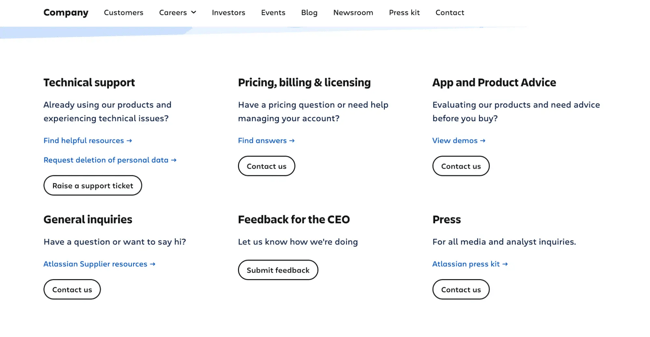
I’ve even seen some companies position their feedback form in creative and compelling ways, like Atlassian’s “Feedback for the CEO” form on their website. This is a nice way to let customers know that their feedback is making it to the right place.
Most of these VoC methods will help your team gather qualitative insights from customers. To do that effectively, it’s important to ask thought-provoking questions that encourage meaningful, detailed responses.
Keep in mind, though, that customers aren’t obligated to give feedback (especially not the kind that’s in-depth or actionable.)
If your Voice of Customer (VoC) efforts aren’t producing the insights you expected, it may be time to revisit and refine your questions.
Below are some of the most effective VoC questions to help you get stronger survey results.
Voice of the Customer Questions
- What characteristics do you look for in a company/product?
- What matters most to you when selecting a company for [product or service]?
- What comes to mind when you think about [company/product]?
- How can [company name] improve your customer experience?
- Name a competitor you would prefer over our product or service and explain why you would choose them.
- Would you recommend [company/product] and why?
- Which company have you purchased the most [product] from in the past 12 months?
Let’s go over each of these questions in detail, and I’ll also include my perspective as a CX professional for each question.
1. What characteristics do you look for in a company/product?
This question is a great starting point for a survey or questionnaire. Where possible, I like to focus on the customer’s needs, pain points, or concerns. I think this question does a nice job of doing that, as it’s asking the customer about their interests and needs.
By asking this type of question first, you give the impression that your interests are more customer-driven.
Pay attention to the vocabulary that your customers use when responding to this question. Even if the responses are similar, the vocabulary that’s used can indicate different audience characteristics.
For example, if you receive responses that use slang or shorthand, then you can deduce that this feedback is coming from a younger, more casual audience. This will help your team when making big operational decisions like changing a product or restructuring your pricing.
Should you ask this question as multiple choice or open-ended?
Open-ended. That way, you can get to know your audience with much more detail and depth.
My CX perspective: If I’m doing research on the pre-sales side of the customer experience or on my brand as a whole, I think this question makes sense to include. However, if I’m running a survey for existing customers, I may opt to exclude this question or tailor the wording to the objective of my VoC program.
2. What matters most to you when selecting a company for [product or service]?
This question is an excellent way to find out what your customers care about the most. Whereas the previous question asks about general characteristics, this question helps your team learn what influences the final purchasing decision. This allows you to drill down and then prioritize where you invest time and resources.
This question can help you launch an audit of your services and products to ensure you’re meeting customer expectations. Even more importantly, it can help you deduce whether your current business practices are getting in the way of the customer experience.
Most customers won’t reach out and tell you what they prefer when choosing a brand, and some questions skirt around the topic. This question will get straight to the point and give you a clear, actionable directive.
Should you ask this question as multiple choice or open-ended?
Multiple choice. Because most of us make purchasing decisions on common factors such as convenience and price, there’s no need to leave it open-ended. Consider giving customers the ability to choose up to three answers (preferably in order of preference).
My CX perspective: I like that this question asks the customer what matters to them — it feels customer-centric, but it also helps my company prioritize certain parts of their experience.
If my team is focused on improving the post-sale part of the experience, I’d likely ask something like this instead: “What matters most to you as you exit Onboarding with a software tool?”
3. What comes to mind when you think about [company name/product]?
This question provides your team with an immediate customer reaction about your company or product. I have found that the answers to this question can be really insightful, and oftentimes I’m surprised at some of the responses.
This essentially serves as an approval rating that lets you know how customers feel about your business at the moment. You can monitor responses to see how they change over time to determine whether your company is actually addressing the feedback.
Additionally, I like this question because it allows you to make sure that the way you’re promoting your product aligns with how customers are perceiving it.
One area where this is exceptionally helpful is during crisis management. If you’re not sure whether a crisis is resolved or not, you can use this survey question to get a general feel for how your business continuity plan is affecting your customers. If you’re still seeing negative comments toward your company, then you know that you need to continue working to resolve the crisis.
Should you ask this question as multiple choice or open-ended?
Open-ended. This is a highly subjective question, and every customer will answer differently.
My CX perspective: I’d anticipate that many of the responses to this question will revolve around customer support — whether it’s positive or negative. However, I also think that you’re likely to glean insight into how your company is innovating and some of the value realization customers are (or aren’t) seeing with your product.
By leaving this question open-ended, you get a glimpse into the customer’s unique perspective of what they think of your company or product.
4. How can [company name] improve your customer experience?
Admittedly, this question probably won’t produce many groundbreaking ideas. However, I still think this question yields a lot of valuable insights you can use to improve your company.
You can use the responses to this question to both drive new improvement ideas as well as gauge whether your current CX initiatives are making a difference. At the end of the day, you won’t always be able to act on every request or idea that comes through this question.
Even so, it’s still worth asking, as it shows your commitment to your customers and, in turn, drives customer loyalty. You could consider segmenting or prioritizing the responses by certain factors, such as your most valuable or high-spending customers in your CRM.
I’ve also seen the answers to this question change over time, depending on what a company has going on. For example, if you launch a new feature that has a bit of a messy feature roll-out, you’re likely to see that show up in the results of VoC programs launching after the roll-out.
Should you ask this question as multiple choice or open-ended?
Either/or. A multiple-choice question can have common answers such as “Offer free shipping,” “Offer chat on the website,” or more, depending on what you feel your brand needs to improve. This can help you get clear answers on what you should prioritize without having to sift through paragraphs of writing.
On the other hand, the customer experience varies from customer to customer, and an individual’s bad experience may be a catalyst for a major and important change in your organization.
To strike a balance between the two, you can opt for multiple choice or ranking, and then add a text box for customers to elaborate.
My CX perspective: I honestly think that some version of this question should always be included in a VoC program. I find that customers often have the best ideas on how you can make your product, processes, or experiences better. By asking them outright, you’re hearing straight from them on what they want and need instead of just assuming you know what they want from you.
I’ve seen companies build programming, processes, or features that were driven solely by internal motivation, yet not a single customer asked for them. As a result, those initiatives failed or required extensive reworking to meet customers’ needs.
Instead of assuming you know how to improve their experience, ask this question and compare your assumptions to their direct feedback for the best results.
5. Name a competitor you would prefer over our product or service and explain why you would choose them.
This question gives you two pieces of information. First, it tells you who your direct competitors are, or at least who your customers believe your competitors are.
This difference is important because your customers may be using a competitor that you’re currently unaware of. For example, customers may be supplementing your product or service by using a competitor who’s in a completely different marketplace.
The next piece of information that this question provides is why customers would switch to a competitor. It could be because of price, functionality, style, etc. Whatever the reason is, knowing why customers may prefer a competitor can help you address any weaknesses that exist in your products or services.
Should you ask this question as multiple choice or open-ended?
Open-ended. That way, you can find out who your customers think you’re competing with, thereby offering greater insight into where your product lacks.
My CX perspective: I like this question because it allows you to see what your customers find appealing about your competitors. However, I also think you could phrase it slightly differently to fit the needs or objectives of your VoC program.
For example, if you’re looking for feedback from existing customers who are approaching renewal or just completed a renewal, you might position this question as, “Name a [product/category] company that you considered/are considering in the buying process, and explain what you liked about them.”
6. Would you recommend [company/product] and why?
One way to determine customer satisfaction is to see if customers would recommend your company to others.
Customers typically trust other customers and won’t advocate for your product or service if they don’t like it. That’s because if they recommend a bad product or company, they risk ruining a personal or professional relationship in their own lives.
If customers are hesitant to recommend your company, you need to assess how your marketing, sales, and customer service efforts are affecting the customer experience.
A good addition to this question is to ask to whom they would recommend your product or service. This not only gives you an idea for potential lead opportunities, but also helps you gauge how invested customers are in your company.
For example, if a customer said they would recommend a product to their boss or a potential lead of their own, you know that your product is significantly meaningful to that customer. If they would only recommend it to a peer or acquaintance, then there may be an opportunity to enhance the customer experience for these users.
Should you ask this question as multiple choice or open-ended?
Both. For the recommendation part, you can create a multiple-choice section with simple answers like “Yes” or “No.” Afterward, include the option to elaborate with a text box.
My CX perspective: I think this is an excellent question to include in your VoC program, as the “why” is likely to give you some key insights. You’ll just want to be careful that this question doesn’t overlap too much with the audience receiving your NPS VoC questionnaire, as this question feels really similar.
Make sure you have a plan in place to act on the insights, as the responses to this question can create urgent opportunities for your business depending on which way they lean. If they’re overwhelmingly positive, you should be building or scaling your customer advocacy program in response. If the responses are overwhelmingly negative, you should be putting together a tiger team to address the insights and make organizational changes.
7. Which company have you purchased the most [product you offer] from in the past 12 months?
While this question may not apply to all businesses or industries, it can be a great question to find out who your strongest competitors are.
It’s similar to number five in that it also mentions your competitors, but this question tells you who your customers have done business with, not who they would do business with. Both are important pieces of data but offer slightly different insights.
After gathering answers for this question, you’ll know who is stealing your business (or who to look out for), which can help you bolster your competitive analysis efforts. If you get repeat answers, you can take a closer and much more thorough look at that particular competitor to see what they’re doing that you’re not.
Should you ask this question as multiple choice or open-ended?
Multiple-choice. This makes it easy for customers to choose from your competitors. Don’t forget to include giants such as Amazon or Walmart if you offer a product that can be purchased from those retailers. Last, include a write-in option.
These questions will help you gauge how customers feel about your brand, product, or service, and tell you in what instances they would do business with your competitors.
My CX perspective: I think this question could be helpful if you’re in B2C, ecommerce, or retail industries. But for SaaS software companies, I don’t know that it’s relevant. For B2B SaaS, I think question #5 is a better option if you’re looking to gather competitor analysis.
Now that you have robust data to work with, it’s time to analyze it all and create an action plan. That’s where a VoC Analytics program comes in.
61 Templates to Help You Put the Customer First
Email, survey, and buyer persona templates to help you engage and delight your customers
- 6 buyer persona templates
- 5 customer satisfaction survey templates
- 50 customer email templates
Download Free
All fields are required.
Voice of the Customer Analytics
A Voice of the Customer analytics program is a structured approach that enables companies to examine and interpret data collected from VoC surveys. Its goal is to uncover and track trends in customer sentiment, helping shape actionable plans to enhance the overall customer experience.
The most critical step in any VoC program is analyzing the data you’ve collected. With the techniques and questions outlined above, you’ll already have valuable insights in hand. Now it’s time to dig into that data and turn it into meaningful action.
Here’s how to get started.
1. Measure program success.
The first metric you’ll want to review is the VoC program’s response rate, or how many people participated in providing feedback. If the program’s response rate is lower than you were hoping for, you’ll want to take a second look at the methodology you used.
Start by looking at the technique you used and determining if it was the right technique for your audience. For example, if you are targeting a young audience, they might prefer social media outreach instead of surveys.
Additionally, you should review things like:
- Length of the survey/complexity of the questions.
- Work required from the participants to complete the program (i.e., if it was in person, were you asking for a large chunk of time from them?).
- Email copy and your email subject message.
- Survey dropoff or abandonment rates.
2. Identify trends and common themes.
You’ll want to analyze your data so you can understand what themes and insights came out of your customer feedback. For example, do most of your customers wish you offered a chat service? Are most customers happy with the responsiveness of your service team?
By understanding the themes and trends, you can prioritize initiatives and make sure that the most pressing matters are addressed first.
If I’m working with a large quantity of data (especially qualitative data), I like to use AI tools to help me with this. I ask the AI tool to surface common themes from the data, show me how many times they were mentioned, and include any details as sub-bullets for each theme. (The more specific you can be with your prompt, the better. Sometimes this requires a few rounds of prompting to get to where you want to be.)
If I’m curious about something specific, I’ll ask AI to tell me more about how it shows up in the qualitative data. For example, I might say, “What concerns did customers have about using AI in their daily roles?” This helps me quickly surface themes that I can later cross-reference to upcoming or existing initiatives.
3. Track (and organize) your findings.
After analyzing the feedback for trends in consumer behavior and preferences, add these new insights into your buyer personas. This helps you gather a more complete picture of your target audience.
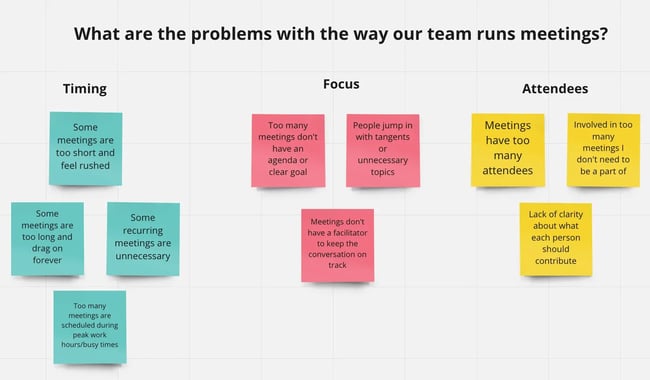
I also like to create an affinity diagram for insights when I’m working with qualitative data, as it creates a nice visual that helps me sort feedback into “buckets” or categories. This can also help you understand what to prioritize, as you can visually see which categories have the most entries.
As Miro says, “Think of an affinity diagram as a tool that brings order to chaos.” Here’s an example:
4. Visualize and report on these trends.
You can visualize trends using simple tools such as Google Sheets or a more dedicated reporting software such as Lexalytics. While it’s important to visualize the data and create reports, don’t present these reports just yet.
Pro tip: For cross-functional collaboration efforts, my VoC team creates a Google doc that provides a summary of the survey and key findings by survey category, as well as additional themes and insights.
As a cross-functional teammate, I appreciate this level of visibility as it summarizes the VoC findings and shows me what I need to know at a high level.
5. Create an action plan.
The look of your action plan will differ, depending on the themes and trends you may find. If you’re compiling the data and taking it to internal stakeholders, your job might just be to include the themes that require immediate action (versus proposing solutions).
However, if your team is the one driving action on the insights, you’ll want to include suggested actions for each key insight that requires attention. For example, if you received responses requesting a live chat widget on your website, your next step would be to look into investing in live chat software.
6. Present your report and action plan to your team.
It’s important to analyze your data and brainstorm an improvement plan before presenting the findings to your team. This creates an encouraging experience versus coming in with only negative insights and no key suggestions on how to address the issues at hand.
By pairing these results with an action plan, you can ensure your team will understand the actions they should take.
Now, let’s take a look at the tools you can leverage as you create a VoC program.
Voice of the Customer Tools
Developing and executing Voice of Customer strategies can require significant time and resources. Fortunately, there are tools out there that can help simplify and streamline the process.
1. HubSpot
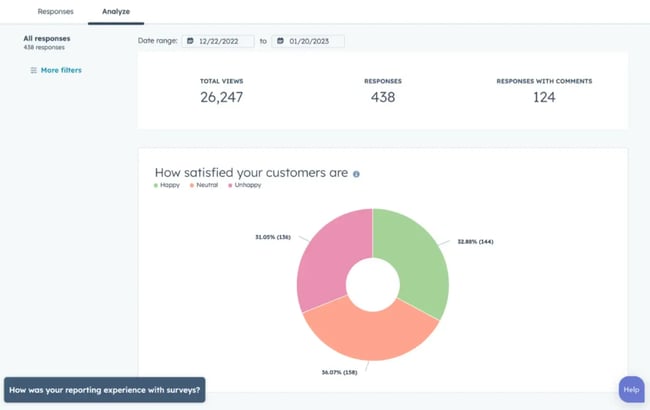
Best for: Mid-sized to large enterprises
HubSpot’s customer feedback software empowers companies to take the customers’ pulse and ensure they’re capturing critical KPIs. From pre-built NPS, CES, and CSAT surveys to customizable VoC templates, HubSpot has everything you need to truly hear your customers.
HubSpot’s VoC system is connected to its CRM and service software, helping you create a seamless customer service experience.
2. Medallia
Best for: Large companies and enterprises
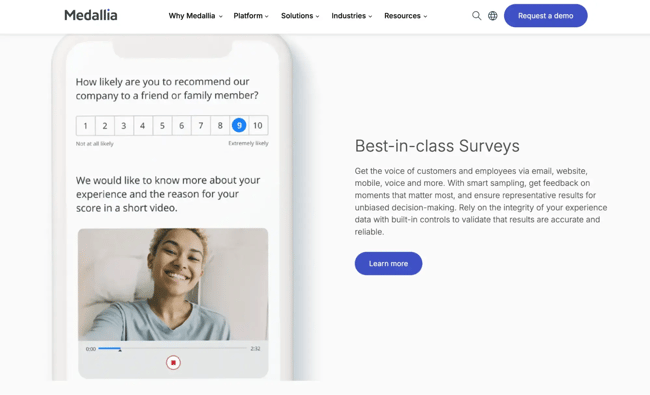
Medallia makes it easy for companies to capture customer signals, route them where they’re most useful, and make sense of large data volumes with robust analysis and prediction.
Medallia’s VoC software has multiple layers for employees and customers. For instance, employees can receive an in-depth review of a customer’s sales experience and their journey into purchasing said product or service. Medallia also lets you group customers depending on behaviors and contributing factors (i.e., coupon, discount, social media click, etc.) to analyze how the customer’s experience is.
3. InMoment
Best for: Large companies and enterprises
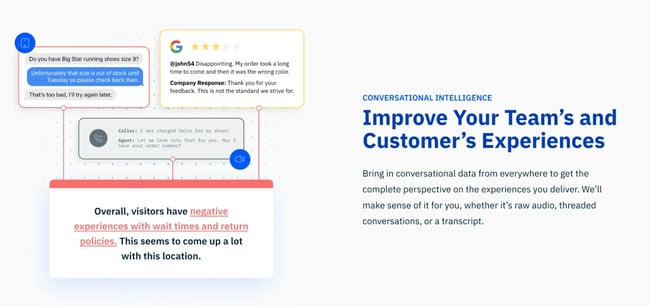
InMoment provides in-depth VoC data for the customer experience as a whole. It also lets your team drill down into users’ in-app experience to provide a more holistic view of how they’re interacting with your brand — and where there’s room to improve. Their VoC system is all about unifying what the customer, employee, and business need.
InMoment has a new program called “Experience Improvement,” which combines data, technology, and human behaviors to improve the “human” experience at your business. Indeed, their motto is to “bring back the human aspect in businesses.”
4. Verint
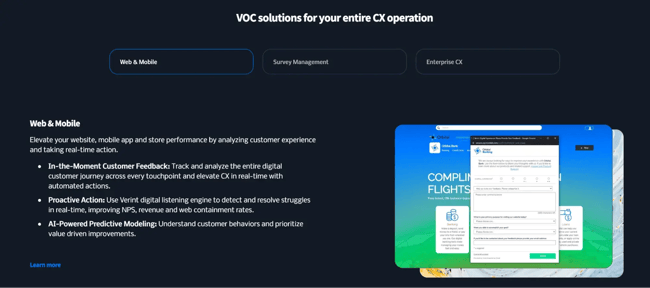
Best for: Large companies and enterprises
Verint’s software focuses on going beyond surveys to collect unstructured data across all customer touchpoints. Verint’s solution also offers automated analysis to help connect data silos and reduce the risk of missing key consumer data.
Verint sees how customers are shopping online, which is crucial because their experience is a factor in their purchase decision. So, with their VoC tools, you’ll be able to create tactical but humanized solutions that will help you increase customer loyalty and boost KPIs. Verint has real-time triggers and alerts that will help you understand the customer experience and predict future behaviors.
5. SentiSum
Best for: Mid-sized to large businesses
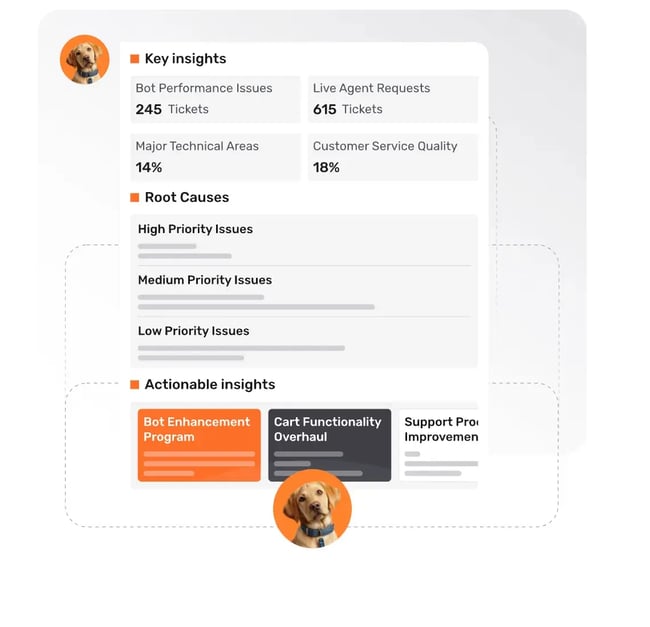
SentiSum looks to minimize consumer friction across channels by providing categorization and analysis for customer support conversations. Equipped with accurate, granular, and real-time data, companies are better positioned to identify and resolve key customer concerns.
SentiSum uses natural language processing (NLP) to help organize and understand the specific emotions and problems that customers are having. They also use AI that can be tailored to your specific business. By looking at specific and broad tags, SentiSum comes up with solutions that make it easier to handle errors and alleviate customer concerns.
6. AskNicely
Best for: Small to medium-sized businesses
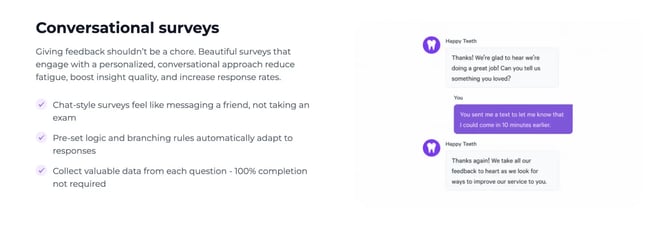
AskNicely is a Net Promoter Score (NPS) based software that allows businesses to collect customer feedback via SMS, email, or web responses. Create customized surveys and get feedback in real-time with the ability to publish to your team’s preferred channels like Slack. It can be integrated into an existing CRM or used with another support program.
7. Feedier
Best for: Medium to large enterprises
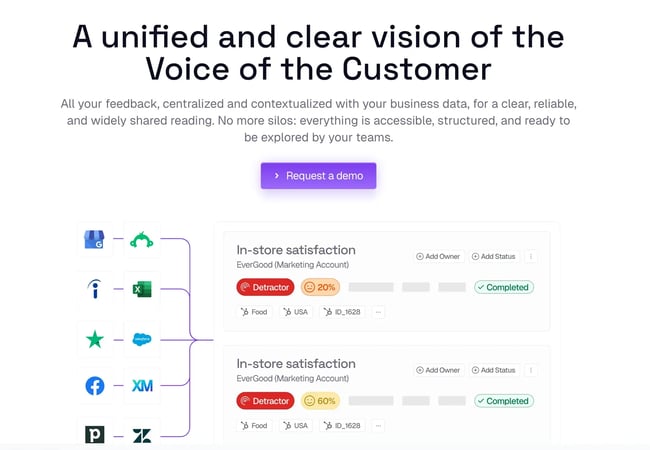
Feedier not only allows you to collect information from customers but also helps you organize it with a variety of built-in reporting tools. Once collected, you can automatically assign ownership to a particular feedback-triggered task, create workflows, and generate “close the loop” reports. Integration with Trello and Jira makes it easy to direct actionable items from feedback received.
8. CustomerGauge
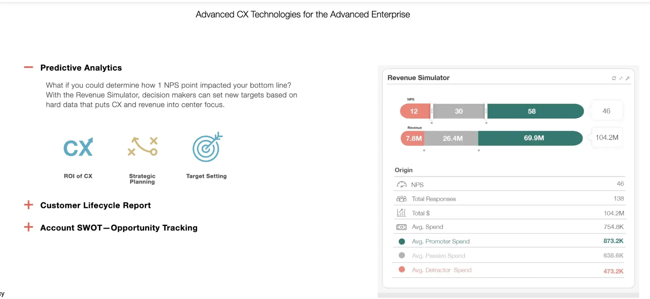
Best for: B2B customer experience
CustomerGauge’s Account Experience solution helps B2B companies capture and distribute feedback from accounts in real-time. Their “close the loop” tools make sure client concerns don’t fall through the cracks, and the built-in reporting tools are customizable to suit your needs.
61 Templates to Help You Put the Customer First
Email, survey, and buyer persona templates to help you engage and delight your customers
- 6 buyer persona templates
- 5 customer satisfaction survey templates
- 50 customer email templates
Download Free
All fields are required.
Voice of the Customer Template
To make the most of your VoC efforts, you need a reliable template that generates predictable results. A good VoC template helps you outline how to set goals for your customers. In this template, you’ll be able to outline:
- What the customer said.
- What the customer needs.
- How your company can provide the solution for the customer’s needs.
Tools like HubSpot’s customer feedback software can help with these efforts, but there are also some basic template guidelines worth following, no matter how you choose to create your VoC.
First, make sure your template is clear, concise, and to the point. VoC efforts are all about understanding your customers — they’re not exercises in marketing or customer conversion muscle. Make sure your questions are clear and get to the needs of the customer.
Speaking of questions, some of the most common include:
1. Where have you heard about [product or service] in the last six months?
This question helps companies understand if their marketing strategies are working or if they can be improved. When a customer explains how they learned about you, it reveals the channels and platforms that will give you the highest ROI.
2. Which social media platforms do you use every week?
Customers are always sharing opinions. You just need to know where to look to find them. Knowing where your customers are posting can help you collect VoC data on the channels your customers use most.
3. How does [brand or company] compare to the competition?
This question tells you where you rank alongside other businesses in your industry in your customers’ eyes. This is a great question to ask when trying to understand what you can improve to outshine your competitors.
4. How appealing are [specific services or products] to you? (offer a rating scale)
Ask prospects what matters most when selecting a company or service and offer choices such as price, experience, and branding. Offer a rating scale for each of these options, or allow customers to fill in a free-form text field. This question gives you insight into what your customers value most when they’re buying products.
5. How satisfied are you with [current product or service]?
The goal of this question is to understand the customer experience at an overarching level. Was it good, bad, terrible, or just “meh”? This gives you an idea of how much they enjoy your product and how likely they are to recommend it to others.
6. What do you like best about [current product or service]?
The goal of this question is to understand what your product does well. This may sound like the previous question, but it gives customers the opportunity to dig into the specifics of the product. Be sure to ask about unique features so you can get actionable answers.
7. What could be improved about [current product or service]?
Use this question to figure out how you can generally improve your product. You can only learn so much from your internal knowledge, and your customers’ perspective can round out your understanding. The feedback you receive can help you make your product better for its intended audience.
8. Would you like a follow-up from [company]? What form of communication do you prefer?
If you’d like to follow up with your customers, give them the option to choose the communication medium they prefer. This question is great because it gives the customers the opportunity to opt out of additional surveys if they’d like.
The goal here is to keep your VoC surveys focused: If you’re targeting customer service, ask questions that provide data relevant to this metric. If consumer experience with products or services is the priority, design your survey to reflect this aim.
Here are a few more free templates to help you get started.
VoC Templates
1. HubSpot
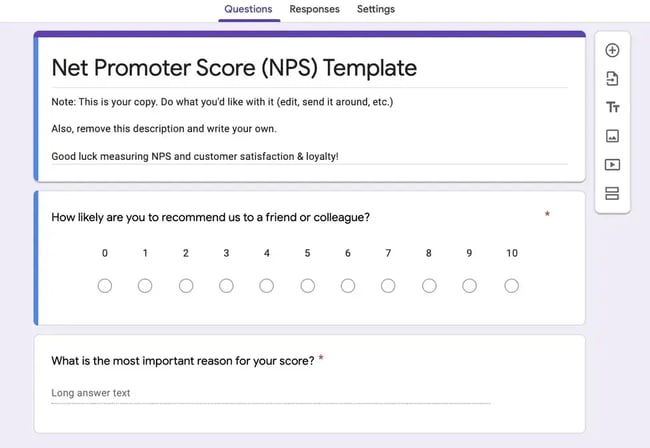
HubSpot’s customer service tools come with five VoC survey templates to help get you started. Conveniently, you have the option to make a copy of each in Google Forms, making it easy to collaborate and share.
2. Miro

Miro’s template takes a design-friendly approach to VoC feedback and surveys. Their template uses a sticky-note table layout and allows others from your team to collaborate.
3. QI Macros
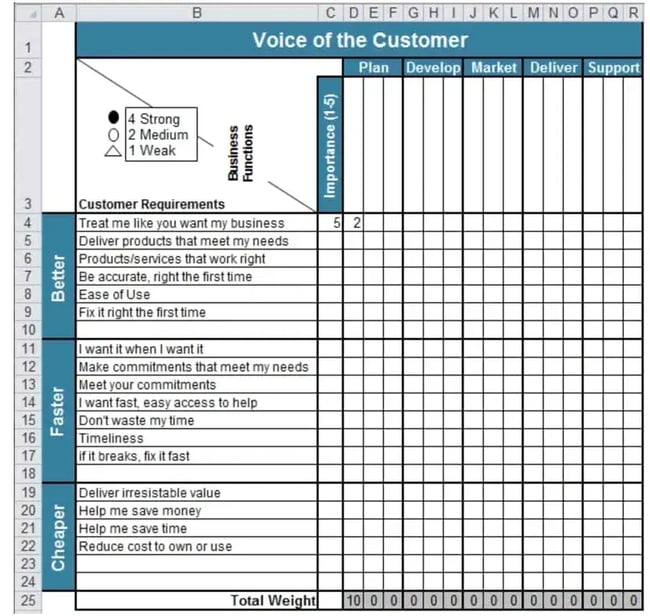
For a more bare-bones approach, QI Macros has a template that can be used in Excel. In this template, you’d place customer statements in the far left column and rank them by importance using the top right section.
Still not sure what VoC can look like for your company? Let’s take a look at some of the best examples of VoC analytics strategies in the industry.
Voice of the Customer Examples
If you’re still not sure how your business can profit from the VoC methodology, then it may help to look at some real companies that have successfully used this method.
I’ve pulled together five great examples of businesses that have benefited from implementing a VoC in their organization.
1. Katapult
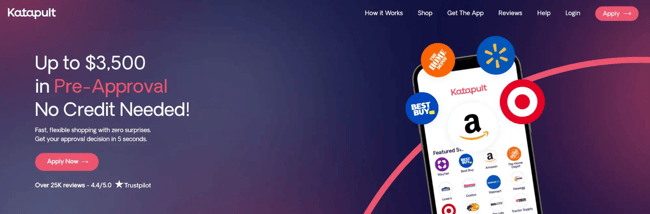
Katapult is a fintech company that offers lease-to-own payment services to consumers. As the company switched over to a new customer support platform, they made a variety of changes and improvements to their processes, including automatically sending surveys to customers to measure their feedback.
With their previous CRM, the process of surveying customers for feedback was manual and time-consuming. This meant that, as much as the marketing team at Katapult wanted to gather customer feedback, they couldn’t do it as often as they’d like to via this VoC technique.
By implementing a software tool that allowed them to automatically send customer feedback surveys out, the team at Katapult was able to routinely gather insights from their customers that they then used to drive improvements and enhance the customer experience.
The automated survey VoC program returned impressive results, including an improved customer experience, greater customer loyalty, and more repeat business.
Additionally, Katapult’s commitment to aligning sales, marketing, and customer service on the same platform allows all teams to have visibility into customer feedback. As a result, Katapult has consistently received 4.4 stars out of five from its customers on Trustpilot.
2. Counter Culture Coffee
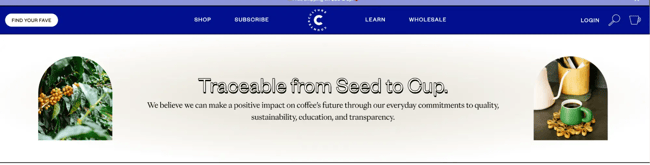
Counter Culture has long been a leader in both coffee quality and sustainability. The company builds strong relationships with growers and organizations worldwide to promote trust, enhance quality, and ensure transparency. Since Counter Culture doesn’t operate its own coffee shops, ecommerce serves as its primary direct-to-consumer (D2C) channel. As a result, creating positive online interactions and maintaining customer satisfaction are essential to earning and retaining customer loyalty.
CEO Brett Smith recognized that while they wanted to ensure their customers had an excellent experience when visiting their website, the company didn’t have the visibility they needed to address some of the feedback they were receiving. The company began monitoring blog post engagement and launched real-time, personalized outreach to customers, which resulted in an increase in brand loyalty. By connecting with their customers in this way, they’re able to better understand what their customers are thinking and address their needs.
3. Betty’s Burgers
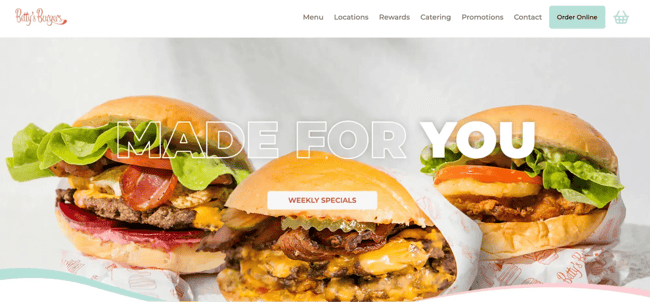
Betty’s Burgers is an Australia-based burger company with a laid-back, inspired brand. They’re focused on delivering exceptional quality to customers across their 67 locations, and they aim to make each experience a memorable one.
The company’s rapid growth created a challenge in maintaining a consistent and exceptional customer experience across restaurants. To address this, Betty’s Burgers implemented reputation management software to help surface actionable insights that helped them listen and act on customer feedback.
Their newly implemented software tool allowed them to uncover and address negative feedback while also surfacing trends and insights to improve the overall customer experience. They were able to see ratings and reviews across different review sites, and they made a daily practice of responding to every single one of them (including offering thoughtful gestures like gift cards to make up for the experience).
When Betty’s analyzed the reviews and started to address the feedback at large across their locations, they saw an uptick in positive reviews from customers. By leveraging insights to make organization-wide changes and monitoring and addressing customer feedback in real-time, they turned previously dissatisfied customers into loyal advocates.
4. Butternut Box
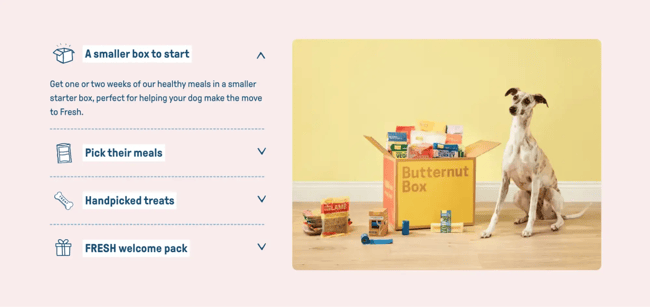
Butternut Box is a D2C brand that delivers fresh dog food to your doorstep via a subscription model. Butternut Box creates a personalized food plan based on a dog’s breed, age, and weight. While the company was receiving an abundance of customer feedback from a variety of sources, they struggled to build a comprehensive view of the customer experience so that they could act on the incoming feedback.
By implementing a tool that helped track and tag their customer feedback, Butternut Box could now see the actual drivers for their NPS scores. This created confidence in the insights they were gathering and helped them drive impactful change across the company. One key change they made based on these new insights was making a strong, compelling case to focus on value for money as a key metric.
This decision proved successful, and the company now places strong emphasis on the value-for-money metric across all areas of the business, setting specific quarterly goals for brand, digital, marketing, and strategy teams.
The team now uses NPS data across the entire organization and acts on insights they receive via NPS.
5. Benefit Cosmetics
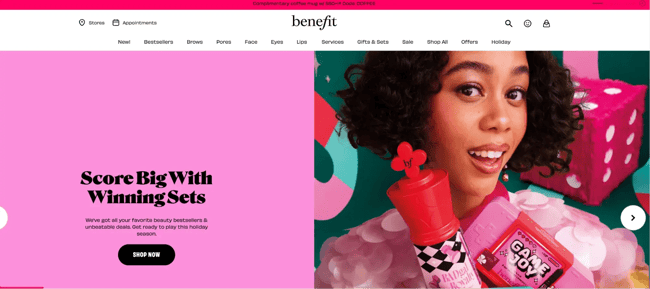
Benefit Cosmetics set out on a mission to turn their NPS detractors into promoters, or their “Frenemies” into “Besties.” They created a formal VoC program labeled “Mirror, Mirror,” designed to measure and understand the customer experience across 32 retail stores.
By understanding customer comments alongside the survey scores, store managers were able to understand and address the customer experience quickly. Store managers at each of the 32 stores reviewed feedback daily and followed up with customers where needed.
By creating a formal program that gathers and acts on feedback on a daily basis, Benefit Cosmetics committed to understanding (and improving) the customer experience. Their VoC program paid off, with a 5.8 increase in the average NPS score over a nine-month period.
A Voice of Customer program will lead to business growth.
Implementing a Voice of the Customer program puts you in lock-step with your customers and ensures that each business decision you make directly reflects the needs of your customers.
When you operate in this customer-centric mindset, you make decisions that directly improve the customer experience. This, in turn, leads to better satisfaction, retention, and loyalty from your customers.
In my experience, adopting a formal Voice of Customer program doesn’t just improve how your customer experiences your product or brand. It actually enables you to make decisions that drive higher revenue, increase retention, and scale your business.
Net Promoter, Net Promoter System, Net Promoter Score, NPS and the NPS-related emoticons are registered trademarks of Bain & Company, Inc., Fred Reichheld and Satmetrix Systems, Inc.
Editor's note: This post was originally published in April 2019 and has been updated for comprehensiveness.
61 Templates to Help You Put the Customer First
Email, survey, and buyer persona templates to help you engage and delight your customers
- 6 buyer persona templates
- 5 customer satisfaction survey templates
- 50 customer email templates
Download Free
All fields are required.
Customer Feedback

![How to Write a Thank You Letter for Customer Feedback [Templates]](https://53.fs1.hubspotusercontent-na1.net/hubfs/53/thank-you-letter-for-customer-feedback-1-20241003-1267887.webp)


.png)

-1.png)