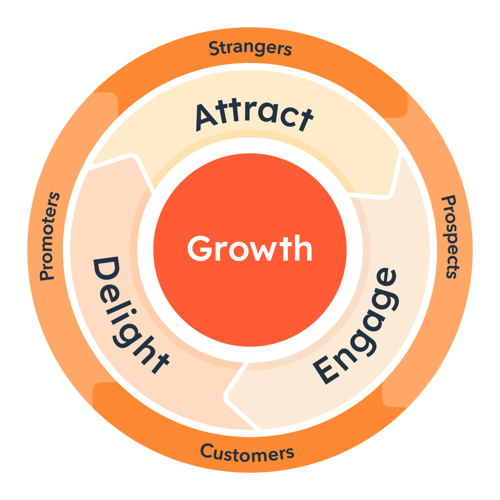
Inbound marketing strategies will help you effectively market to your target audience the inbound way. Keep your flywheel spinning and help your business grow better.
Attracting Strategies
Inbound marketing strategies that attract your target audience and customer personas are tied to content creation and development.
To reach your audience, start by creating and publishing content — such as blog articles, content offers, and social media — that offers value. Examples include guides on how to use your products, information about how your solution can solve their challenges, customer testimonials, and details about promotions or discounts.
To attract your audience members on a deeper level through inbound marketing, optimize all this content with an SEO strategy. Target specific keywords and phrases related to your products or services, the challenges you solve for customers, and the ways you help customers.
This SEO strategy will allow your content and information to organically appear on the search engine results page (SERP) when people search for this information. These folks are your target audience, and likely the right customers for your business.
Engaging Strategies
When using inbound strategies to engage your audience, make sure you’re communicating and dealing with leads and customers in a way that makes them want to build long-term relationships with you. When using these engagement strategies, inject information about the value your business will give them.
Specific engagement strategies may include how you handle and manage your inbound sales calls. Focus on how customer service representatives handle calls from interested people and prospects. Additionally, be sure you’re always solution selling rather than product selling. This will make sure all deals end in mutually beneficial agreements for customers and your business — meaning, you offer value for your right-fit customers.
Delighting Strategies
Inbound strategies that delight make sure customers are happy, satisfied, and supported long after they buy. These strategies involve your team members becoming advisors and experts who can assist customers at any time.
Incorporating thoughtful, well-timed chatbots and surveys to help, support, and request feedback is a great way to delight your customers. Bots and surveys should be shared at specific points throughout the customer’s journey to make sure they are relevant and valuable.
For example, chatbots may help current customers set up a new technique or tactic you've started offering that they’d like to take advantage of. Additionally, a satisfaction survey may be sent out six months after customers buy your product or service to get their feedback and review ideas for improvement.
Social media listening is another important strategy when it comes to delighting customers. Social media followers may use one of your profiles to give feedback, ask questions, or share their experience with your products or services. Show that you hear and care by responding to these interactions with information that helps, supports, and encourages followers.
Lastly, the mark of an inbound strategy focused on delighting customers is one that helps and supports customers in any situation, whether your business gets any value out of it or not. Remember, a delighted customer becomes a brand advocate and promoter, so handle all interactions, both big and small, with care.