Inbound Internet Marketing Blog

SEO, Blogging, Social Media, Landing Pages, Lead Generation and Analytics

SUBSCRIBE

The HubSpot Inbound Internet Marketing blog covers all of inbound marketing - SEO, blogging, social media, lead generation, email marketing, lead nurturing & management, and analytics. Join 53,183 others and subscribe now!

Subscribe to RSS feed Add us on Facebook! Follow us on Twitter

Get Free Marketing Info!

Get the world's best marketing resources right to your inbox! Join more than 817,000 inbound marketers!

Subscribe by email

Your email:

Listen to this blog!

Work at HubSpot!

JoinTheHubSpotTeam resized 200

HubSpot's Inbound Internet Marketing Blog

Current Articles | RSS Feed RSS Feed

Interruption Marketing Incites Anxiety; Inbound Marketing Builds Trust


.

Interruption MarketingLast week, I attended the MarketingSherpa Email Marketing Summit and MarketingExperiments Email Messaging Optimization Course. In it, Dr. Flint McGlaughlin, the speaker and director of MarketingExperiments, started talking about marketing in an all too familiar way. He stated a problem, in the form of a prospect's protest to marketers today, based on the changing nature of business interactions. The big takeaway: Interruption marketing incites anxiety; inbound marketing builds trust.

MarketingExperiments is big on heuristics to describe how to optimize marketing interactions. For example, the "Email Messaging Effectiveness Index" is a function of Relevance x Value less Inhibitors. In other words, the way to improve response rates for your offers (your email messaging effectiveness in this case) is to ensure that the value you offer outweighs the inhibitors -- friction and anxiety experienced by the prospect. If the pros outweigh the cons, why wouldn't the prospect convert?

A short video of The Prospect's Problem -- and Marketer's Response -- is included below and the full text is on the MarketingExperiments blog. But here are the main takeaways:

Marketing is about relationships.

Buyers naturally distrust anyone trying to sell them something. They don't want to be treated like just a potential sale, so don't "market to" them, "communicate with" them. You need to build a relationship with your prospect in order to earn their trust.

Offer value in exchange for what you're asking.

Marketers are always asking: Click Here! Subscribe! Buy Now! But what are you offering in exchange to actually motivate that prospect to act? Offer value first and establish yourself as a quality resource in order to earn your prospect's trust. This requires you to put the interest of your prospect first.

Experimentation and data are essential.

Real marketing decisions should be based on real marketing data. Marketers must experiment in order to learn what works and what doesn't for their business.

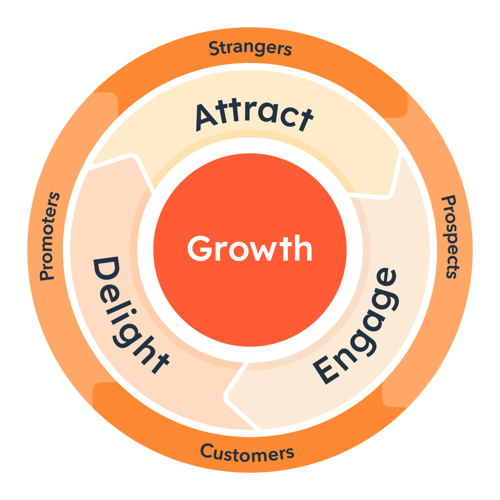
Altogether, this sounds a lot like the foundations of inbound marketing: create valuable content, engage in a conversation with your audience, and measure all your marketing efforts to constantly improve your marketing effectiveness. All of this leads to establishing your business as a hub for your industry so that your prospects come to you -- instead of you interrupting them with your marketing messages -- when they are in need of your products and services.

The Prospect's Protest and the Marketer's Response

What do you think? How have you been able to offer value and build relationships with your prospects instead of interrupting them with your marketing messages?

Photo by Ben Cumming

Inbound Marketing Kit

Learn more about inbound marketing and how to combine blogging, SEO and social media for results.

Download our inbound marketing kit.

Posted by Ellie Mirman on Mon, Mar 23, 2009 @ 07:57 AM

COMMENTS

Thanks for the post Ellie. The points are all excellent and underscore the classic marketing truth: relationships trump tactics. 
But I am a bit confused about the connection between the headline here and the content and what HubSpot is considering inbound these days? 
In the past HubSpot has dubbed email as part of the interruption realm, so imagine my surprise when I started receiving email from you guys a couple of months ago! 
I'm not complaining or upset by it, just confused me about the HubSpot message.  
I believe email marketing is a critical component of relationship building and hence belongs in the inbound marketing tool kit of every relationship based marketing plan.  
I'm wondering if that is the new HubSpot stance in light of this post and the implementation of email campaigns? If so...applause, applause and please don't tip toe around it, proclaim it proudly!  
Email marketing needs some champions leading the way to good and proper use of it for building relationships.

posted on Monday, March 23, 2009 at 9:21 AM by Lisa Almeida


Good work. You have confirmed my approach. We send out a monthly newsletter with information about relevant technical ideas for small business. And we send out emergency emails about impending virus or email threats.  
 
We never directly market our clients and that helps keep them open to our services. 
 
Thank you, 
Stu Kushner 
http://www.progressiveoffice.com

posted on Monday, March 23, 2009 at 9:53 AM by Stuart Kushner


@Lisa - Great question. I think it's all in how you use email marketing. If your email list is opt-in and your email subscribers want to receive your content, sending emails is all part of building on that relationship. If you're renting lists and interrupting people who aren't interested in what you do, that's outbound. Email can be an incredibly powerful marketing channel, if used correctly.

posted on Monday, March 23, 2009 at 10:47 AM by Ellie Mirman


Great post, Ellie.  
 
My initial sarcastic response was "So marketers are finally figuring out what good salespeople have been saying for 50+ years." 
 
But, I realized that was too sarcastic.  
 
In all seriousness, though, as I read this, all of what you're saying really reminded me of good "sales" practices. A good salesperson builds rapport, trust and credibility by asking the right questions, telling the right stories and demonstrating an understanding of the prospect's challenges.  
 
Good marketers do this too. It's just a little harder when it's 1 to many, which is kinda your point: use blogs, social media, etc to communicate to people.

posted on Monday, March 23, 2009 at 7:38 PM by peter caputa


In this post you come across as pro email marketing. 
 
In the post #IMS08 video interview Brian Halligan names email blasts as part of interruptive (outbound) marketing. 
 
Is that the official position of Hubspot or is it just Brian?

posted on Tuesday, March 24, 2009 at 1:31 AM by arthur charles van wyk


I think the take away here is that there are different types of email marketing. The outbound "flavor" is geared toward activities such as email blasts where hundreds or thousands of emails are pushed out with the hopes that some recipients will click through and possibly convert. It's a strategy based more on the law of averages than anything else even if the list is targeted in some way. 
 
On the flip side email marketing that is permission-based is a different story. This type of email is relationship building. Those that opt in want to have a dialogue and with the option to opt-out they have the power to end the conversation and the relationship without having to set up a spam filter. 
 
Two very different animals but the same technology

posted on Tuesday, March 24, 2009 at 5:45 PM by Dan Konig


Comments have been closed for this article.