In short, there’s so much more to consider if you want to create a robust social media marketing campaign that’s as impactful as it is effective.
Luckily, I’m not here to tell you how to run a social media campaign. I’m here to tell you what you should lean on — from tools to tactics — to make your next one a standout sensation. Keep reading to get everything you need (and then some) for your next social media glow-up.
Table of Contents:- What is a social media marketing campaign?
- What makes a social media campaign successful?
- How to Plan a Social Media Campaign
- How to Run a Social Media Marketing Campaign
- Social Media Campaign Examples
What is a social media marketing campaign?
A social media marketing campaign is a coordinated marketing effort using one or more social media platforms to achieve a specific business goal, such as increasing brand awareness, engagement, or sales.
Although a successful social media marketing campaign can be defined by one sentence, I would argue that its contents can’t be.
In the next section, I’ll explain in depth what scroll-stopping social media marketing campaigns entail and provide some eye-opening stats that will hopefully inform how you approach your social media marketing moving forward.
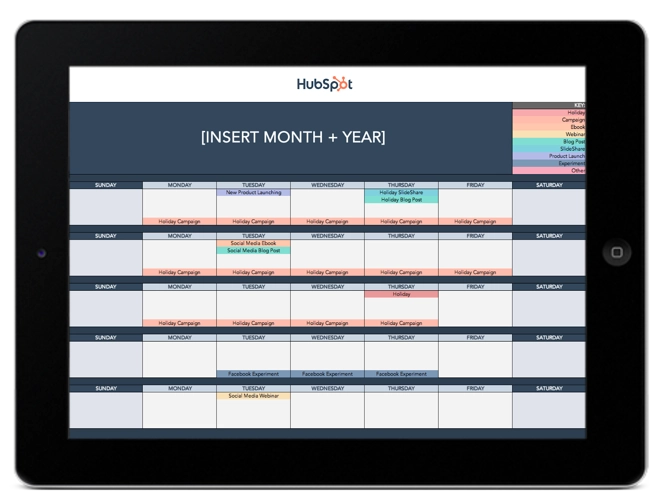
Free Social Media Content Calendar Template
Download the free template and user guide to manage your social media posts and strategy.
- Coordinate campaigns
- Increase your reach
- Measure engagement
- Plan your posts
Download Free
All fields are required.
What makes a social media campaign successful?
As I mentioned, the social media landscape has completely changed over recent years.
Over the last year, between algorithm updates, new platform launches, and shifting audience expectations, it’s clear that social media folks need to not only pivot but — and don’t come for me — also consider potentially deconstructing what content planning looks like.
Before I jump into how these shifts could directly impact your brand, I’d like to elaborate on what I mean by all this. Here’s a short breakdown:
- Social media marketing is becoming increasingly reliant on multi-platform strategy and multi-content execution. Brands and their social media marketers should no longer post one type of content, nor should they post on one particular platform. Audiences want to see a variety of content across all the platforms they engage with, even if those platforms and content types aren’t your brand’s bread and butter.
- If a brand wants to drive true ROI, its identity and motivations must be crystal clear through social media marketing. Consumers are done searching high and low to assess whether a brand is really what it says it is. These days, just by glancing at your social media profiles, they expect to get the big picture about a brand’s commitment to social issues, specific demographics of folks, and core values.
- A brand’s social media marketing needs to incorporate AI support wherever possible. If your brand isn’t utilizing AI, it’s missing out on major opportunities to streamline content, improve social listening, and make brand storytelling accessible to more audiences.
Now, I’m sure a couple of those truths were probably difficult to swallow, especially all at once, but they’re necessary … if growth is the goal.
If you want to know what it’ll take to adapt your social media campaigns and strategy for where the future of social is headed, take a look at the list of recommendations I put together below:
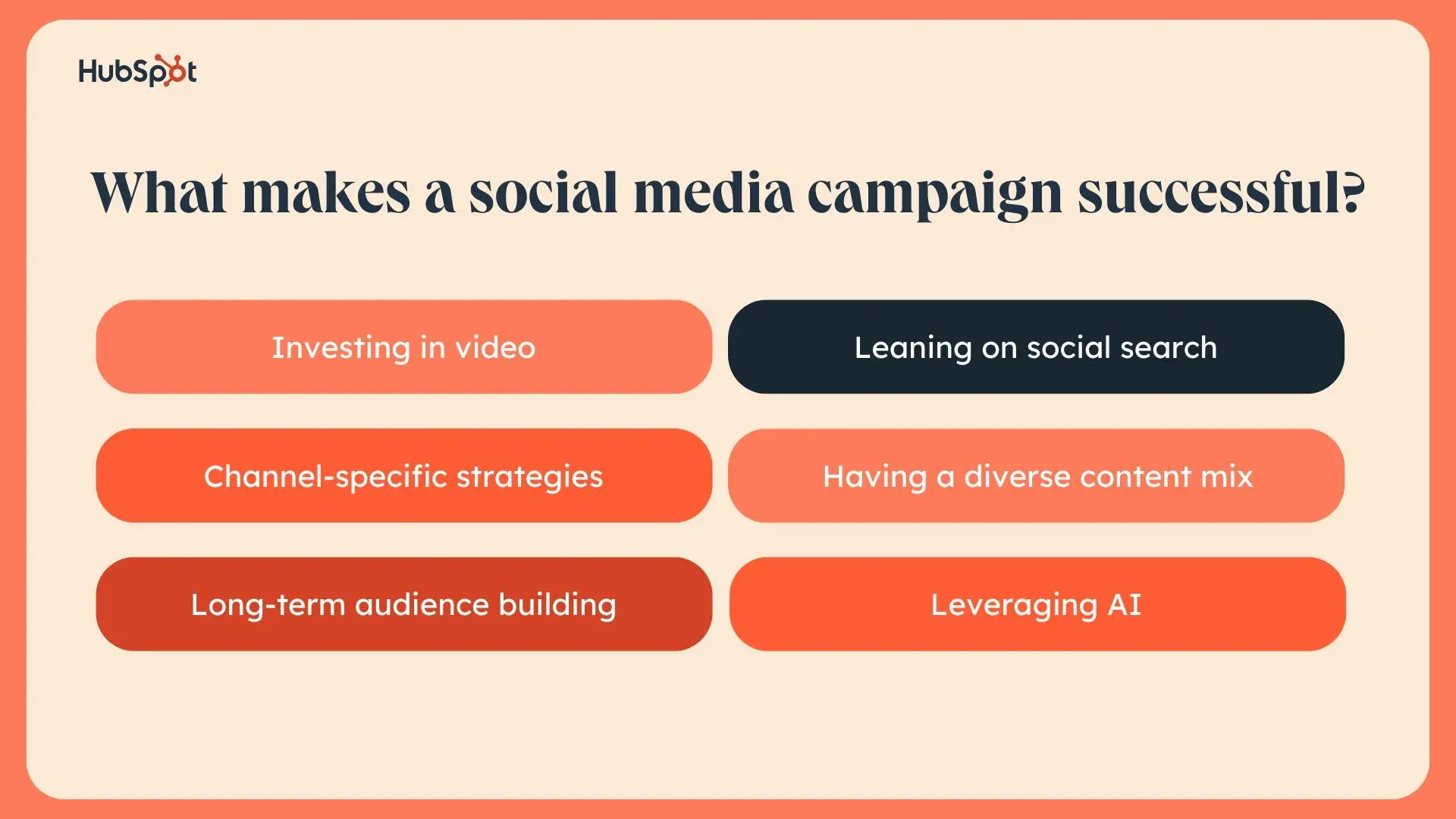
1. Investing in Video
Social media marketing is becoming more and more video-centric; now that video’s rise has arrived, it’s not going anywhere.
HubSpot’s 2025 State of Social Media Trends Report revealed that YouTube adoption has grown 65% in the last year. And, according to more data from the report, 83% of marketers feel comfortable posting on YouTube.
However, video strategy doesn’t start and end with YouTube. Check out how B2C and B2B marketers (and their dollars) are showing up across various video platforms:
- 34% of B2C marketers plan to invest more in TikTok this year, 31% in Instagram, and 29% in YouTube.
- 26% of B2B marketers plan to allocate more budget to TikTok in 2025, only 24% plan to expand efforts into Instagram. 22% will prioritize investments in YouTube.
2. Channel-specific Strategies
Social media marketing campaigns in 2025 are all about getting granular. As social media audiences develop preferences for how they want to engage with and receive content across different platforms, brands must shift and accommodate where their viewership and consumership will be and how to capture folks’ attention.
That said, as you develop a social campaign strategy, consider tailoring your approach for these top social media channels:
- YouTube (ranking at no. 1)
- Instagram (ranking at no. 2)
- TikTok (ranking at no. 3)
Now, although YouTube, Instagram, and TikTok take the top three slots for where brands are showing up, keep in mind that there are niche audiences on other channels. LinkedIn, Substack, Threads, Bluesky, even Facebook, are close runner-ups, so don’t write them — or what they can do for your social strategy — off completely.
3. Long-term Audience Building
If you want your social media marketing campaign to thrive and survive any algorithm, you must grow an audience that believes in every piece of content you create. This starts with slowly cultivating a real community.
Don’t believe me? Peep the stats from State of Social Trends below:
- 64% of companies have dedicated community managers
- 85% of marketers agree that building an active online community is crucial to a successful social media strategy
- 93% of marketers are maintaining or increasing their investment in community in 2025
Ultimately, audience building goes a long way in establishing trust and long-term loyalty. If you’re not invested in the people who make your brand successful, they won’t be invested in what it offers.
4. Leaning on Social Search
Search isn’t dead, it’s just gotten more social.
When you embark on the research phase of building out a social media marketing strategy (more on this later), you should consider two things: 1) how your brand is showing up in social media search results and 2) how you can leverage social search to get the answers you need, to make your social media marketing campaigns stronger.
State of Social Trends uncovered that 89% of marketers agree that optimizing content for on-platform search is important to their social strategy. Plus, 84% of marketers agree that consumers will search for brands on social media this year.
If anything, these numbers should reinforce that social search isn’t just an alternative to traditional search engines; it’s just an essential element to understanding how folks perceive your brand’s offerings and how they rank against others.
5. Having a Diverse Content Mix
I hate to break this to you, but … your next social media campaign strategy cannot prioritize only one content type. No more image-only feeds or motivational posts with curated cursive copy. Ditch ‘em.
Here’s the data from HubSpot’s 2025 State of Marketing Report to underscore my strongly written plea for content variety:
- 30% of B2C companies are leveraging short-form video, 22% are amplifying live-streamed video content, while 21% are leveraging user-generated content (UGC) and 20% are leveraging blog posts,
- 23% of marketers plan to invest in relatable content in 2025.
- 23% of marketers also plan to invest in funny content this year.
- 18% of marketers plan to invest in authentic content in 2025, too.
Clearly, audiences are asking for personalized content and to see a brand’s true colors. Therefore, brands and social media marketers should give them what they want. Otherwise, they risk getting left behind (and losing some crazy ROI).
6. Leveraging AI
Lastly, if you’re not leveraging AI in your social media strategy, you’re seriously missing out on ways to scale and streamline your social marketing campaign efforts. HubSpot’s State of Social Trends Report shared the following stats about how marketers are bringing in AI to enhance content creation and performance:
- 1 in 5 marketers plan to explore using AI agents to automate marketing initiatives from end-to-end strategy to execution.
- 75% of marketers agree that using AI helps them be more creative when making social media content.
- 71% of marketers actively use AI tools in social media marketing.
- 77% of marketers agree that AI will make it easier for them to connect with their audience on social media.
How to Plan a Social Media Campaign
There are so many ways to create a successful social media marketing campaign. Of course, your plans will vary based on industry, social media platform, and campaign type. Still, no matter how niche your brand is or what audiences you’re hoping to convert, never underestimate the power of taking it back to the basics.
That said, here are a few foundational tips I suggest keeping in your back pocket to guide the creation of your next social media marketing campaign:
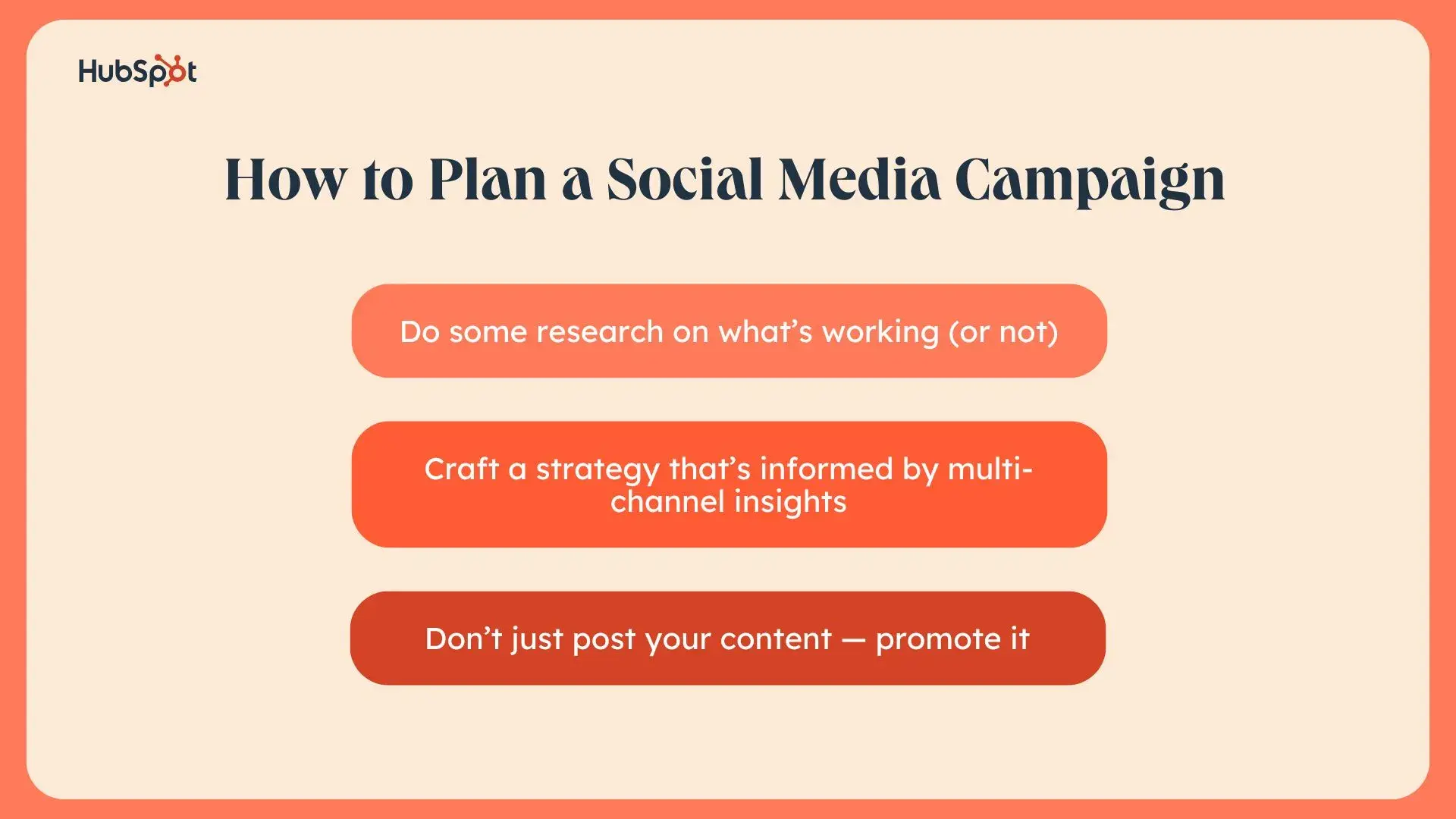
1. Start with researching what’s working (or not).
In the planning stages of your social media marketing campaign, you have to consider your competition. It’s non-negotiable.
When it comes to outshining your competitors on social, I follow one philosophy: what you’re doing is no better than what they’re doing until you do some deep diving to understand what’s oversaturated and what’s actually resonating.
Start with completing a SWOT analysis, then do some lurking on social (Reddit and TikTok will likely have the honest perceptions you’re looking for), then, finally ask yourself the following questions:
- Which companies are similar to yours and already have successful social media accounts?
- Which companies have campaigns that you know did well?
- Do the companies you review typically conduct giveaways, contests, or live videos?
- What is engagement like on their social posts?
By taking a step back and asking yourself these questions, you can determine how to make your campaign unique. But don’t stop there. Look for inspiration elsewhere, too.
If your competition isn’t on social media, you’re not a fan of their previous campaign style, or you have an exceptionally special business, look for other campaigns that inspire you and determine how you can apply elements such as a similar style, level of engagement, aesthetic, or a specific message to your campaign.
Free Social Media Content Calendar Template
Download the free template and user guide to manage your social media posts and strategy.
- Coordinate campaigns
- Increase your reach
- Measure engagement
- Plan your posts
Download Free
All fields are required.
2. Craft a strategy that’s informed by multi-channel insights.
Next, you’ll want to craft your campaign strategy. To determine your campaign strategy goals, you should work with data … not just any data, though. The data you’ll want to use should come from the following steps:
Find your target audience (across every platform you post on).
Think about these questions:
- Who are you trying to reach?
- How would you classify your target audience?
- What do you hope this campaign will achieve for your company and audience?
- How can you create continued engagement with your followers throughout your campaign?
Ensuring your content and messaging appeal to your target audience should always be your top priority. In fact, it’s a vital rule while developing your social media marketing campaign.
Never forget who you are trying to connect with and why. If you miss the mark, your audience won’t just notice, they’ll scroll right by your social posts and lose interest in your campaign altogether.
Here are some ways to appeal to your target audience on social media:
- Consider the trends that are resonating with audience across platforms. Ask yourself: What do people want to view these days? What have you seen doing well on other timelines? Think about what you see (and love to interact with) on your own timeline and adapt it to suit your brand’s voice on social.
- Create compelling visual content that feels authentic and engaging. Whether it’s a video on TikTok or a carousel on Instagram, make sure your visual content is compelling and interactive. Give your audience something they haven’t seen before, or add your own spin to something that’s doing well on folks’ timelines.
- Make your audience feel seen. If your followers leave questions, comments, or concerns on your posts, you should respond (‘cause duh). By doing so, you’ll form a personal bond with your audience, making them more loyal to you and your brand.
Choose your content types and format.
Remember what I said earlier about social media marketing becoming increasingly reliant on multi-content execution? At this stage of cultivating your social media marketing campaign, you should start zeroing in on the types of content you’ll need to create.
To determine your content types, you have to first consider the why behind your campaign creation. Here are some traditional instances in which your brand and/or company might create a social media marketing campaign:
- Holidays
- Special occasions or milestones
- Partnerships with other businesses
- User-generated content (UGC) promotions
- Contests or giveaways
Then, consider which content type should be used on what platform. For example, if your campaign uses a lot of still photography, Instagram might be the platform for you. If your campaign requires live streaming and want to share longer videos, TikTok might be a good option. And if you want to release shorter bursts of information, Threads or Bluesky could be a good fit. Think about what each platform is best for and go from there.
Pro tip: One of the best use cases for AI is repurposing your existing content into other formats while keeping a cohesive voice and message.
Personally, I think HubSpot’s Campaign Assistant is great for reusing and recycling content. It allows you to input your key messaging and CTA, then creates coordinating Instagram, Facebook, and Google ad copy without the heavy lifting (aka rewriting the same thing over and over across platforms).
Manage the results of your campaign strategy.
No matter why you’re creating your campaign, you’ll probably be interested in knowing your campaign’s level of success. But to make any conclusions about your success, you’ll need metrics to measure and monitor throughout your campaign.
A popular way to do this is through a metric tracker such as Google Analytics or HubSpot’s social monitoring and metric tracking tool. This type of concrete data will provide you with information like:
- Overall campaign traffic.
- How many new followers you’ve attracted (as well as how many followers you lost).
- Levels of engagement.
- Changes in website traffic.
- Changes in sales.
3. Don’t just post your content — promote it.
Now it’s time to start sharing your campaign and promoting your content. Check out some of the following techniques for promoting and sharing your content (I included some examples, too):
Promote one message throughout your campaign.
You should start by promoting one message on multiple platforms using content that fits the chosen platform. By consistently sharing the same message across your campaign, your followers will hear the same information repeatedly, allowing them to retain your message.
Marketing campaigns have proven that messages are most effective when repeated. Repetition results in familiarity, which fosters trust between your audience and your message, brand, and product. Redundant messages stick.
Balance your promotional and non-promotional content.
Your followers will notice if you’re constantly pushing promotional content on them. By balancing promotional and non-promotional content, your followers will perceive you as helpful and want to engage with you more.
In short, this is about your followers not feeling pressured or pushed into becoming a customer (because no one wants to be pressured into a sale, y’all). You will be most effective if you provide your followers with promotional content balanced with content they find enjoyable, like funny or light-hearted UGC.
Ensure your content is unique to your business.
Create an aesthetic for your campaign that matches your brand. Now, you want this to be unique. Anyone who lands on your page should know it’s yours without reading your profile handle.
When I think about aesthetic done right, I immediately picture Rhode Skin, Hailey Bieber’s “clean girl” skincare and makeup brand.
Rhode does visually-pleasing content exceptionally well. From curated color palettes to soft, dreamy concepts, Rhode creates Pinterest girly-inspired content with a twist. 99% of the time, that “twist” is always a surprise.
Sometimes, the twist is food marketing; other times, it’s a contemporary 80s glam revival. Audiences never know what’ll come next, and that’s the fun part. Scroll through the screenshots below to see what I mean:
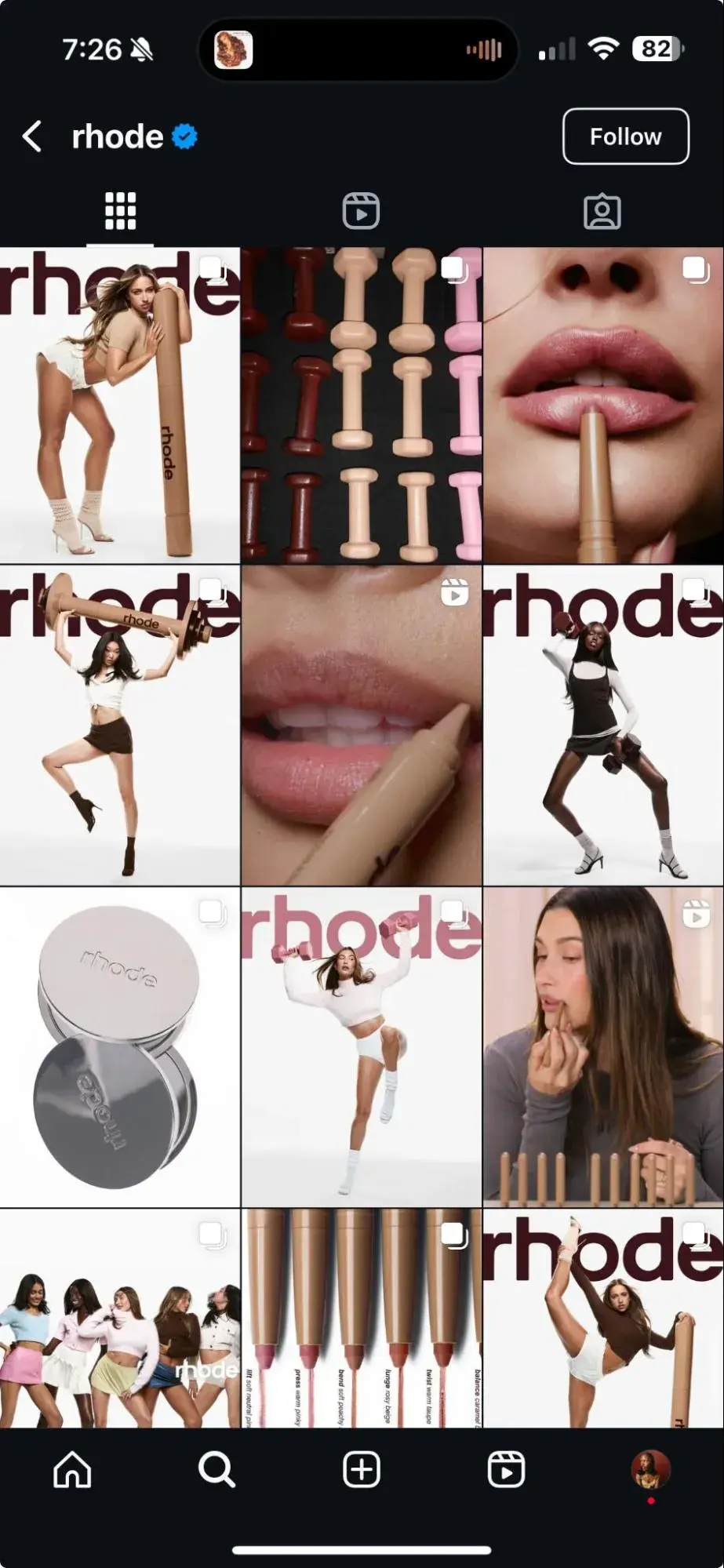
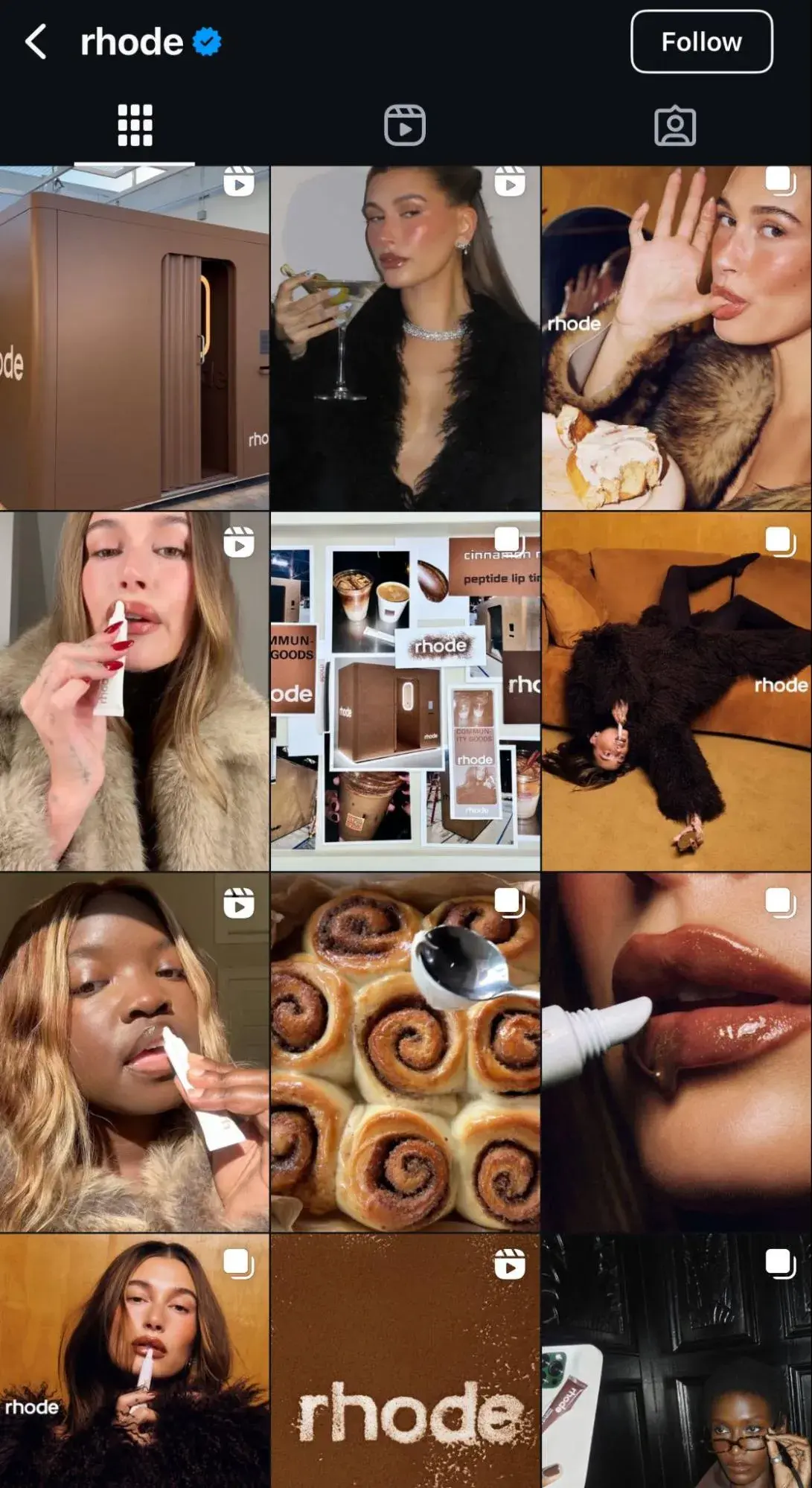
My point is this: being unique and authentic helps you stand out. It also gives people a reason to want to follow you over your competitors. Regardless of how you choose to stylize your content, it needs to feel cohesive, fun, and connected back to your brand’s offerings.
Engage with your audience regularly.
Say it with me now: No matter how many followers your brand may have, you should always set aside time to nurture your online audience. This means:
- Answering direct messages (DMs).
- “Liking” comments.
- Responding to feedback (even if it’s unkind).
Engaging with your followers, even in small ways, signals that you care about them beyond vanity metrics; that they’re not another number. Moreover, you cultivate relationships and experiences that keep followers invested in your brand by showing up for them consistently.
Create a unique hashtag for your campaign.
All major social media campaigns should have a hashtag that should be the same across social platforms; here’s why:
- Hashtags allow your team members to keep track of interactions.
- Hashtags make it easy for your followers to engage with your campaign.
- Hashtags are unique and memorable.
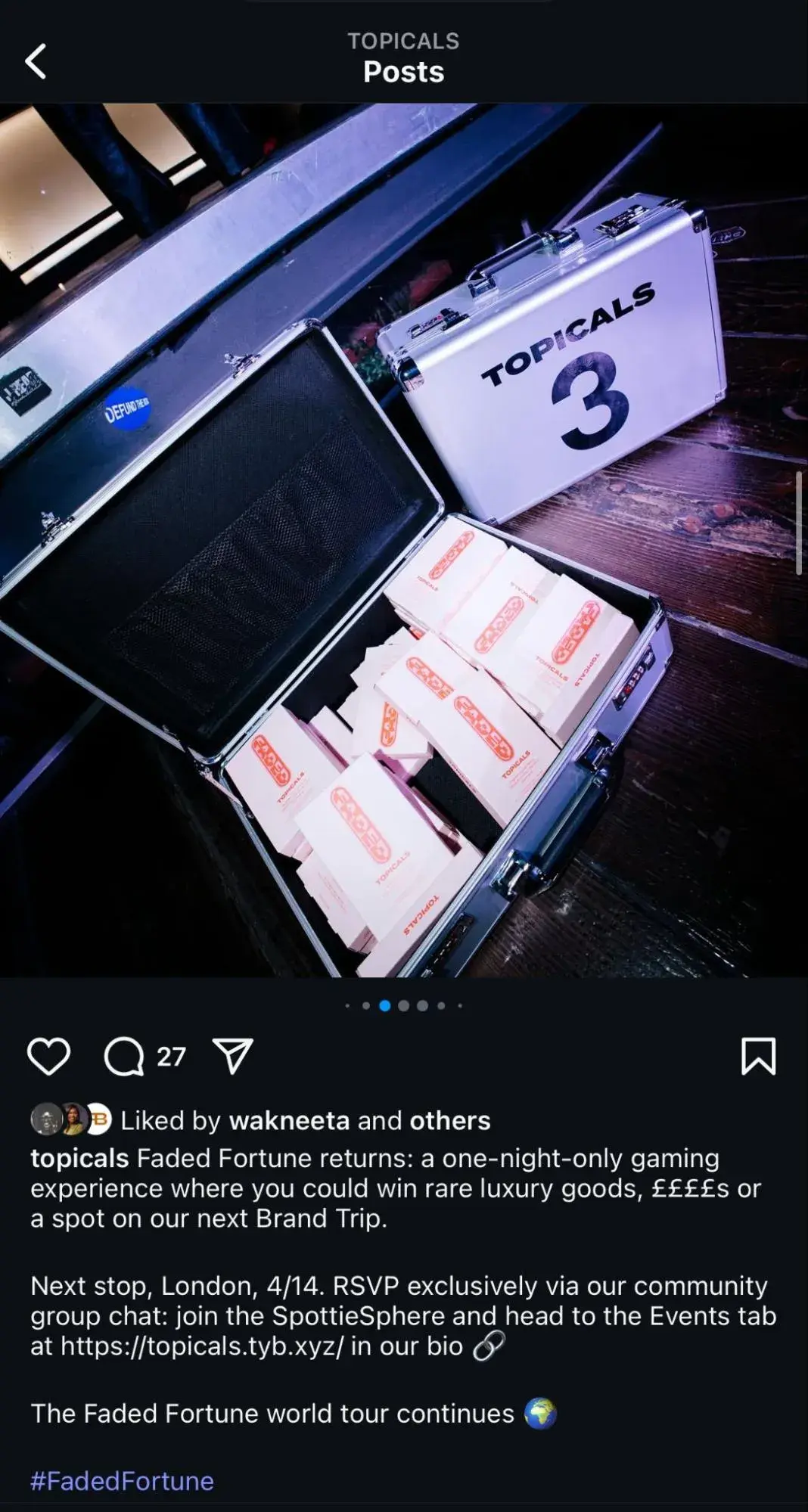
For example, Black-owned and Gen Z consumer-focused skincare and beauty brand, Topicals, has a newly-launched (but already buzzworthy) social media campaign called Faded Fortune. Faded Fortune may have been born through social, but its success is connected to IRL, one-night-only brand experiences, thus its impact extends beyond the digital space.
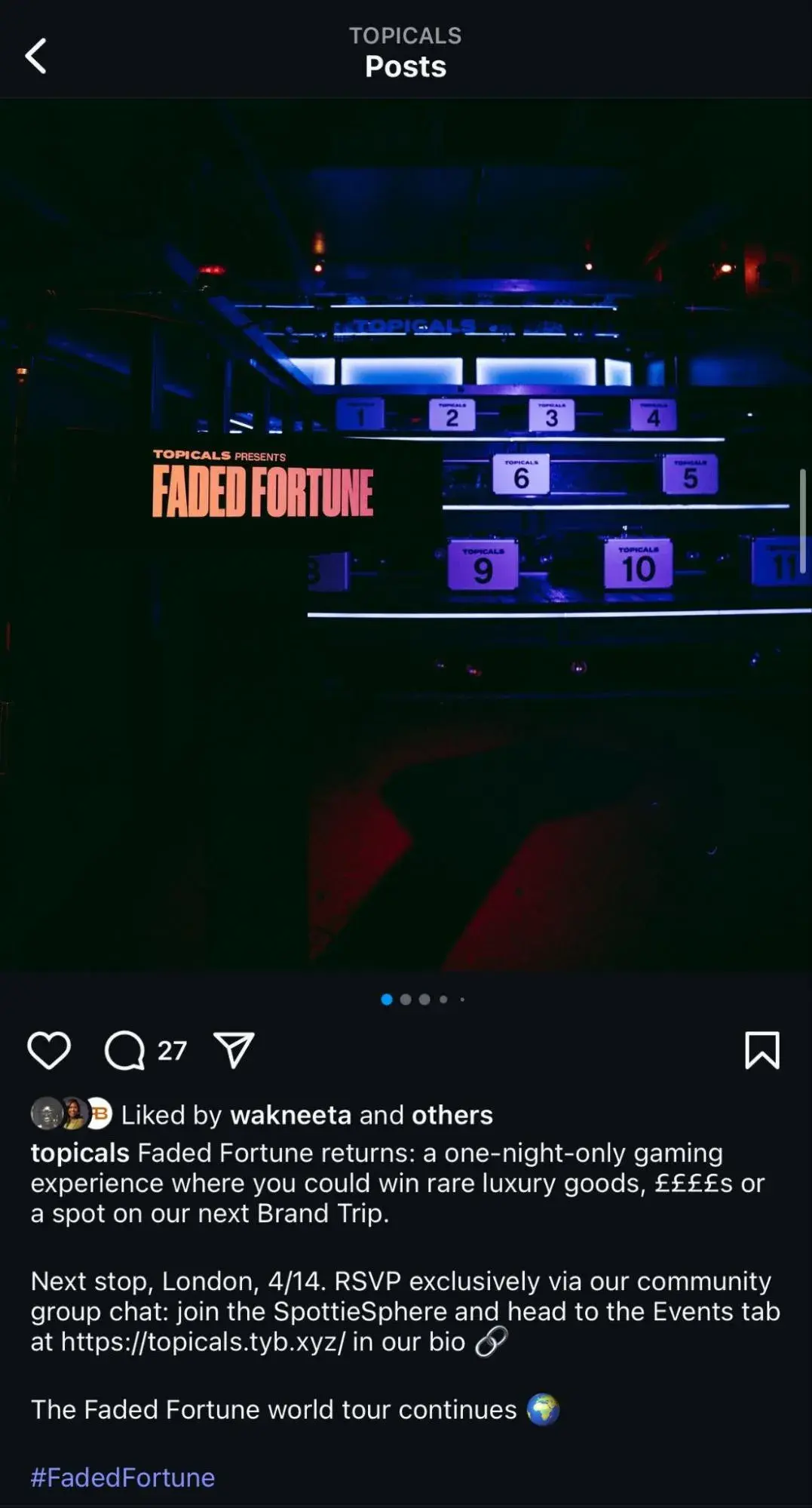
Additionally, Topicals’ campaign hashtag for Faded Fortune is, fittingly, “#FadedFortune.” It’s straightforward, simple to remember, and deeply connected to the brand’s in-person activations — as well as the guaranteed high-energy fun that consumers can expect from attending.
Additionally, Faded — a skincare serum and facial cleansing bar designed to brighten acne scarring — is one of Topicals’ core product offerings, so this campaign directly links the concept back to what they sell, grounding consumers in their brand narrative and a niche product-focused experience.
Automate your content with scheduling software.
Although creating engaging content and interacting with your followers may be time-consuming, there is a way to schedule your campaign posts ahead of time. (And, if I’m being totally honest, every social media marketing person is doing some form of pre-scheduling anyway. It’s part of the workflow.)
Tools such as Hootsuite, Sprout Social, and CoSchedule allow marketers to schedule posts with text, photos, videos, hashtags, and more. Plus, some of these scheduling tools — like HubSpot’s Social Media Management Software — contain analytics features to help users determine which scheduled posts are doing well and which posts need to be modified.
Use live streaming to your advantage.
HubSpot’s 2025 State of Marketing Report highlighted that 21% of B2C brands are leveraging live streaming as a part of their content strategy. With live streaming, audience members can watch content in real-time from anywhere around the world, which creates a golden opportunity for brands to expand their reach to new countries, demographics, and customer segments.
TikTok Live is one of the most popular ways to stream live content, followed by other platforms such as Instagram and YouTube. You can use live streaming to demo products for your followers, conduct giveaways and contests, interview guests and influencers, or simply make customers feel personally connected to your brand.
Ultimately, the way you promote your content is your decision, but don’t forget to test and analyze your results. By keeping a close eye on your performance, you'll know if any immediate changes can or should be modified while the stream is still live. Additionally, you can also apply your findings to future campaigns.
How to Run a Social Media Marketing Campaign
Here’s the thing: there’s no “right” or “wrong” way to run a social media marketing campaign. And I’m not here to convince you otherwise. Every brand’s goals are different, so every campaign will inevitably look a little different, too.
However, when you are running one, there’s a few standard building blocks that you have to prioritize from the very beginning; not all of them aren’t even explicitly responsible for strengthening your social media presence either. Instead, they exist in the backdrop of your overall digital strategy.
To provide more context and help you get a better grasp on these social media marketing campaign do’s, take a look at the list of foundation tips I put together below:
1. Improve brand awareness.
Although your social media marketing campaign may be focused on other KPIs, improving brand awareness should always be a core pillar of your social strategy. In fact, HubSpot’s 2025 State of Marketing Report noted that 13% of marketers plan to invest in brand awareness for the first time in 2025, so there’s no better time to lean into authenticity and purpose-driven messaging than right now. It’s never too late.
Your brand can improve brand awareness through social media in a variety of ways, such as:
- Posting your campaigns on a variety of platforms (hello cross-posting!).
- Using specific hashtags.
- Providing followers with incentives for sharing your content and tagging their friends (i.e., choosing a lucky follower to receive a goodie box of products).
- Posting a customer’s UGC on your feed or story.
Improving your brand awareness through social media doesn’t need to take a lot of time either. Once you have a plan for your campaign, you will be able to map out exactly where and when it should be posted to keep things efficient. It’s that simple.
2. Connect with your audience.
Connecting with your audience is important in all types of marketing, especially in social media marketing.
In a world with growing distractions and diminishing patience, effective marketing tactics matter more important than ever. The good news, though? Social media has made it easier to connect with potential customers anywhere around the world.
When working on a social media marketing campaign, you want to connect with your audience in two ways: 1) on a surface level — through a reshare, repost, comment, or a “like” — and 2) on a deeper level — through a relatable post that gets them feeling a certain way about your brand or products.
Once you make customers feel seen, they’ll keep coming back.
Free Social Media Content Calendar Template
Download the free template and user guide to manage your social media posts and strategy.
- Coordinate campaigns
- Increase your reach
- Measure engagement
- Plan your posts
Download Free
All fields are required.
3. Increase website traffic.
You probably already know this, but social media marketing is a great way to boost website traffic.
On social, customers have little patience and lose interest quickly. By including a URL to your brand’s website (and other social channels) in your bio, you:
- Guide curious scrollers right to your most valuable digital touch points.
- Increase the likelihood that potential customers engage with your product or service in ways that feel most accessible for them.
- Reinforce brand credibility by making it easy for users to find consistent, up-to-date information about your brand.
Here’s some other quick-win suggestions for increasing website traffic and visibility through your social media marketing strategy:
- Your campaign team can respond to followers on social with URLs to specific landing pages on your website. Whether it’s a product page, blog post, or FAQ, providing relevant URLs in conversation shows you’re listening — and it’s a subtle yet powerful way to guide users toward conversion.
- Add a website or landing page URL to your actual post on social media. Don’t just rely on your bio link. Including a clickable link in your actual post (where platforms allow) helps followers take immediate action. A well-placed URL removes friction and directs people exactly where you want them to go.
- Include a strong call-to-action (CTA) in your captions that encourages followers to click through to your website. A strong call-to-action, like “Learn more on our site,” “Shop the collection,” or “Get the full story,” can increase click-through rates while making your post feel purposeful and actionable.
Now that I’ve have reviewed some of the most successful ways to make your social media marketing campaign stronger, let’s dive into some of the best and brightest social media marketing campaign examples.
Social Media Campaign Examples
1. Rhode Skin: Peptide Lip Shape Liner
Dynamic poses. Life-size products. Heels with socks. If Rhode Skin knows how to do one thing right, it’s curating a vibe through social media marketing.
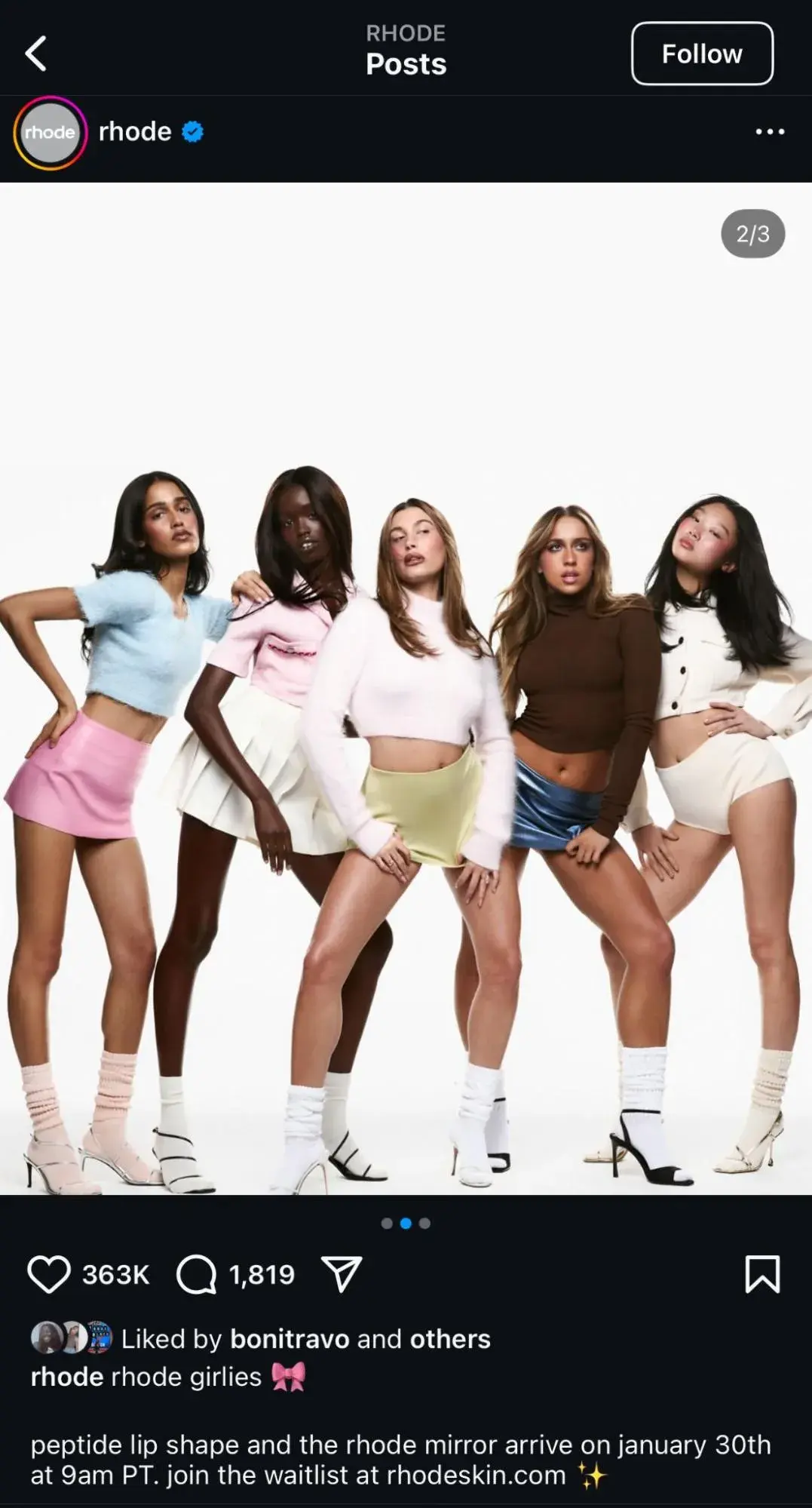
I know I briefly mentioned Rhode Skin, but I’d like to mention it again, especially if I’m going to talk about a masterful social media campaign. Rhode Skin’s peptide lip shape campaign, without a doubt, was one of the most talked about beauty campaigns of 2025.
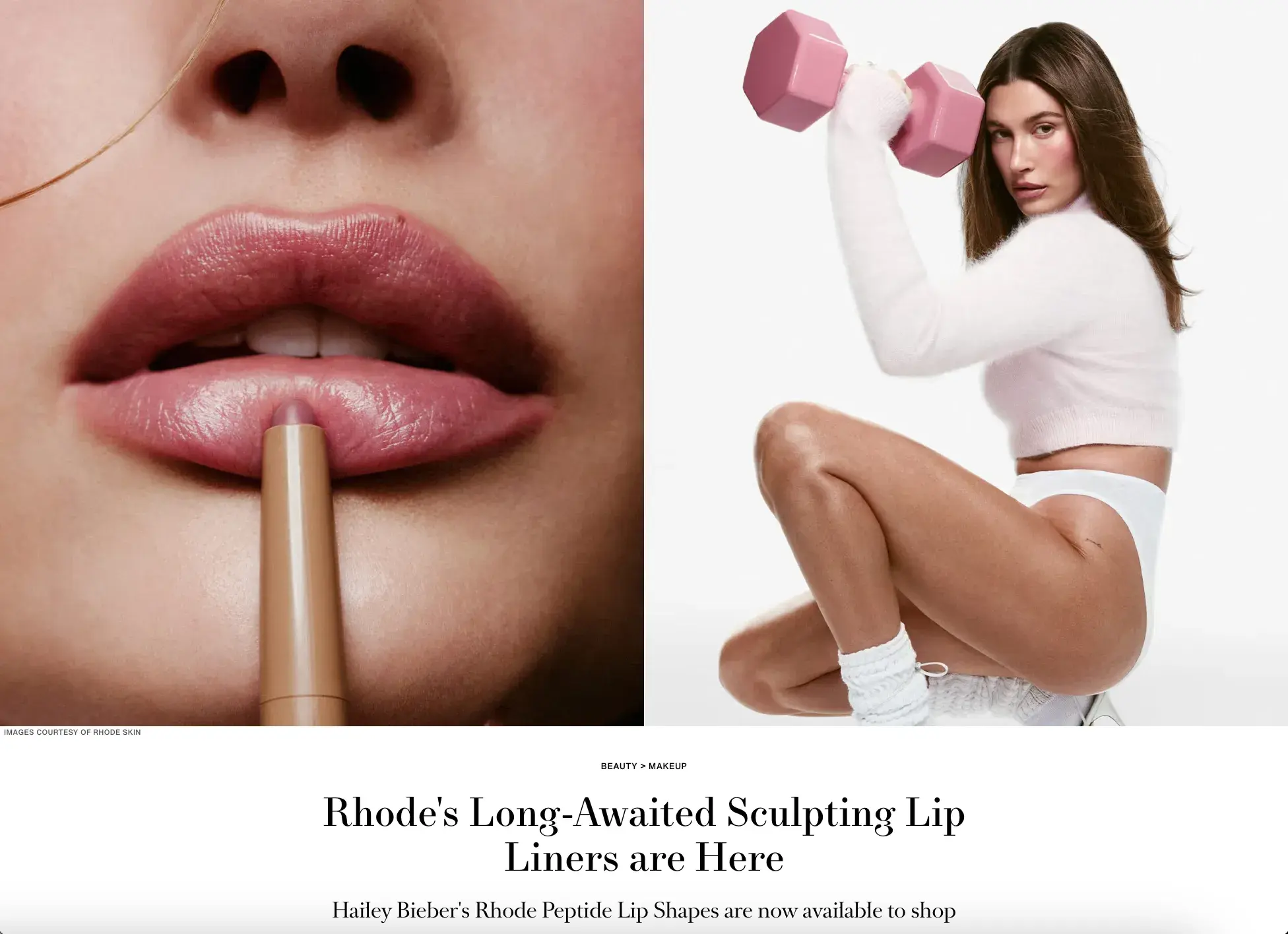
Starring the brand’s founder, Hailey Bieber, and recently-dubbed pop girl sensation Tate Mcrae, along with several other Rhode dreamgirls, the peptide lip shape campaign hit timelines in late January 2025 and left both Rhode evangelists and folks who were new to the brand pretty floored.
The result? Absolute fanfare takeover for the campaign across Rhode’s hero platforms — TikTok and Instagram — plus tons of UGC, some good, some bad, some neutral.
It’s important that I note that the response to Rhode’s peptide lip shape collection wasn’t all peaches and cream. A chunk of consumers — primarily women of color — had a lot to say about how the product was meant to be used; some felt confused by its longevity and wear.
Nevertheless, people showed up for Rhode. Here are what I think folks can take away from Rhode’s social media marketing campaign:
- Don’t be afraid to get literal with your social media marketing strategy. Rhode’s fitness-themed campaign aligns perfectly with the “shape” part of its collection name — Peptide Lip Shape. From gym-inspired visuals to cool girl athleisure aesthetics, they leaned into the theme and had fun with it. Literal doesn’t have to mean boring — it can actually create a clever, memorable through-line that audiences instantly connect with.
- If you can, put your founder front and center. One thing that Rhode’s customers always anticipate is that Hailey Bieber, its founder, will be at the front and center of its promotional campaigns. By establishing Hailey as a recognizable and consistent brand figurehead, Rhode strengthens brand familiarity and trust. Her presence adds star power, but more importantly, it humanizes the brand and gives audiences someone to follow, not just something to buy.
- Show your audience that you not only have range, but that you listen and don’t judge. After receiving backlash for not being diverse enough in its inaugural blush collection launch, Rhode was intentional about showcasing women with different skin tones — from fair to deep — in the rollout for this campaign. This visual inclusivity showed that Rhode was not only listening but also evolving. It made the brand feel more thoughtful, expansive, and aligned with a broader audience — a smart move that resonated across social channels.
2. On Shoes: Zendaya x ZoneDreamers
In April 2025, On, the Swiss-engineered shoewear and athleisure brand, launched a star-led, space-themed campaign and short film with Zendaya at the forefront of its promotional efforts.
The campaign was designed to spotlight its new Spring/Summer 2025 Movement collection along with its recently-released low-profile sneaker, Cloudzone.
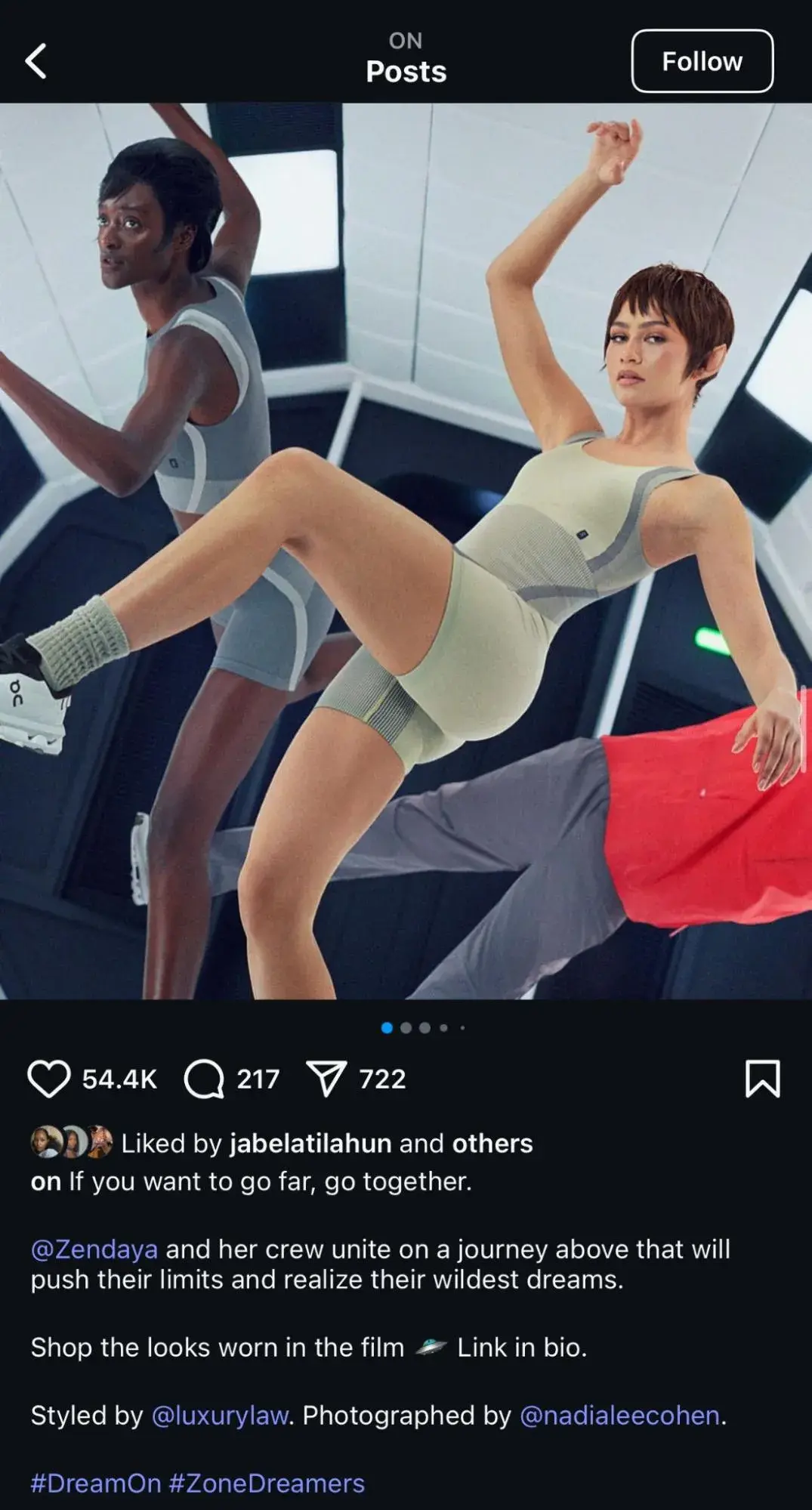
The social media marketing campaign was anchored by two hashtags: “#DreamOn” and “#ZoneDreamers.” Plus, along with the social media marketing campaign rollout, On also released a Zendaya “edit” featuring items from the brand, all hand-picked by Zendaya.
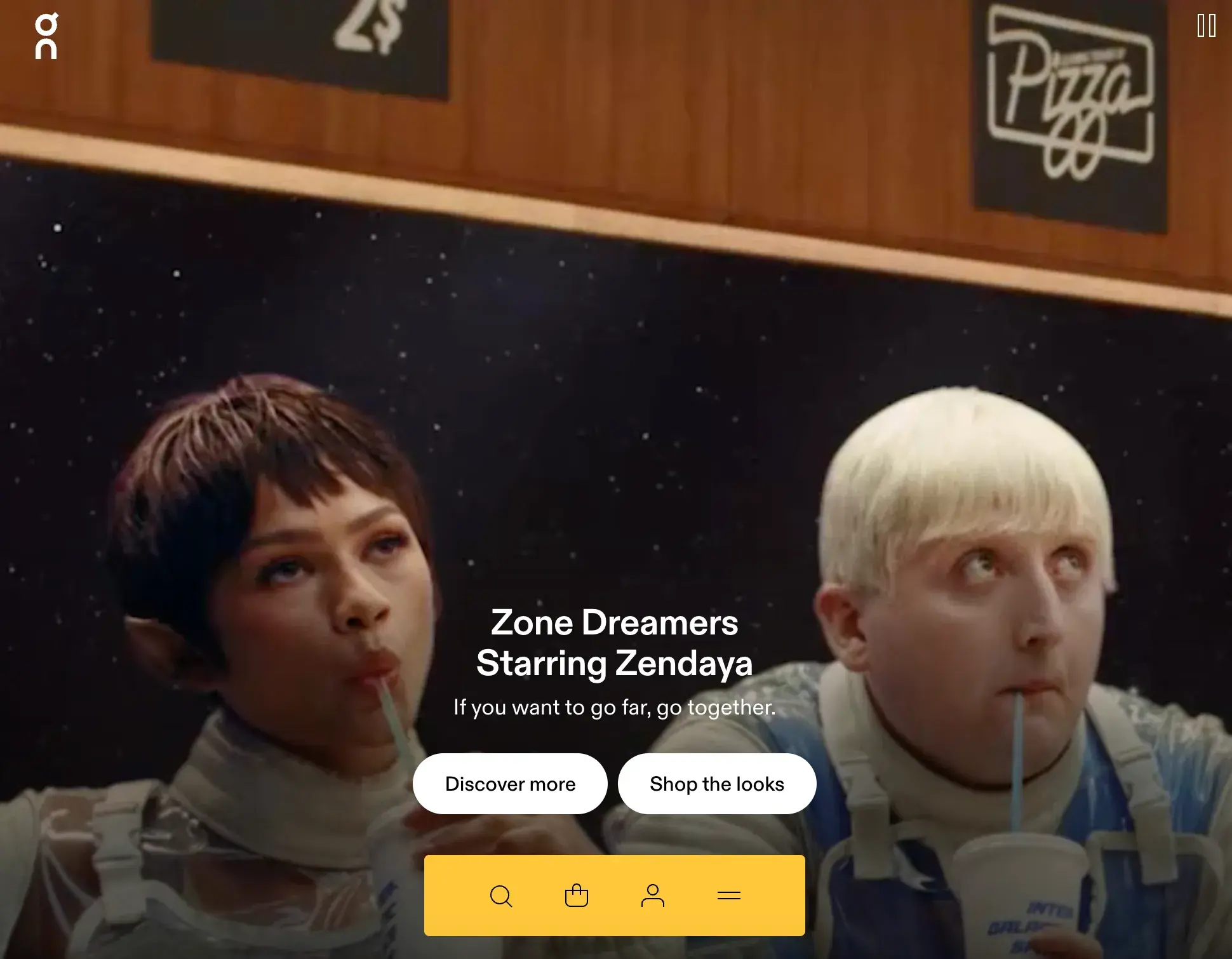
This was On’s first attempt at getting creative and totally out-of-the-box for a collection launch. Although perceptions about the campaign are relatively fresh, On’s consumers have already demonstrated excitement about Zendaya’s association with the brand, shopping her picks, and, of course, watching her in a completely new project (especially post-Challengers).
Here are my takeaways from On’s social media marketing methodology, if you care to take a few notes:
- If you can, get thematic. By world-building and choosing a specific theme to build their newest collection around, On created an immersive experience that extended beyond product alone. The space-meets-sport aesthetic gave the campaign a clear creative direction, made the visuals instantly eye-catching, and offered audiences something more imaginative than a traditional product launch.
- Don’t be afraid of ancillary marketing. On’s decision to place Zendaya not only at the helm of its social media campaign but its sister-short film helped stretch the campaign’s reach across multiple formats and audiences. The cinematic approach blurred the lines between fashion and storytelling — giving people more reasons to engage, share, and talk about the campaign outside of product-focused moments.
- Lean on high-production quality whenever you can. From casual short-form video edits to a longer-form short film, On didn’t cut corners on visual storytelling. This level of polish elevated the campaign and made it feel aspirational, yet still approachable. High-quality creative builds brand trust and makes content feel timeless — something that can be repurposed long after launch week.
3. Redken: Sabrina Carpenter x Acidic Bonding Concentrate Collection
In October 2024, Sabrina Carpenter, pop’s newest diamond of the season, joined Redken as its first-ever global ambassador.
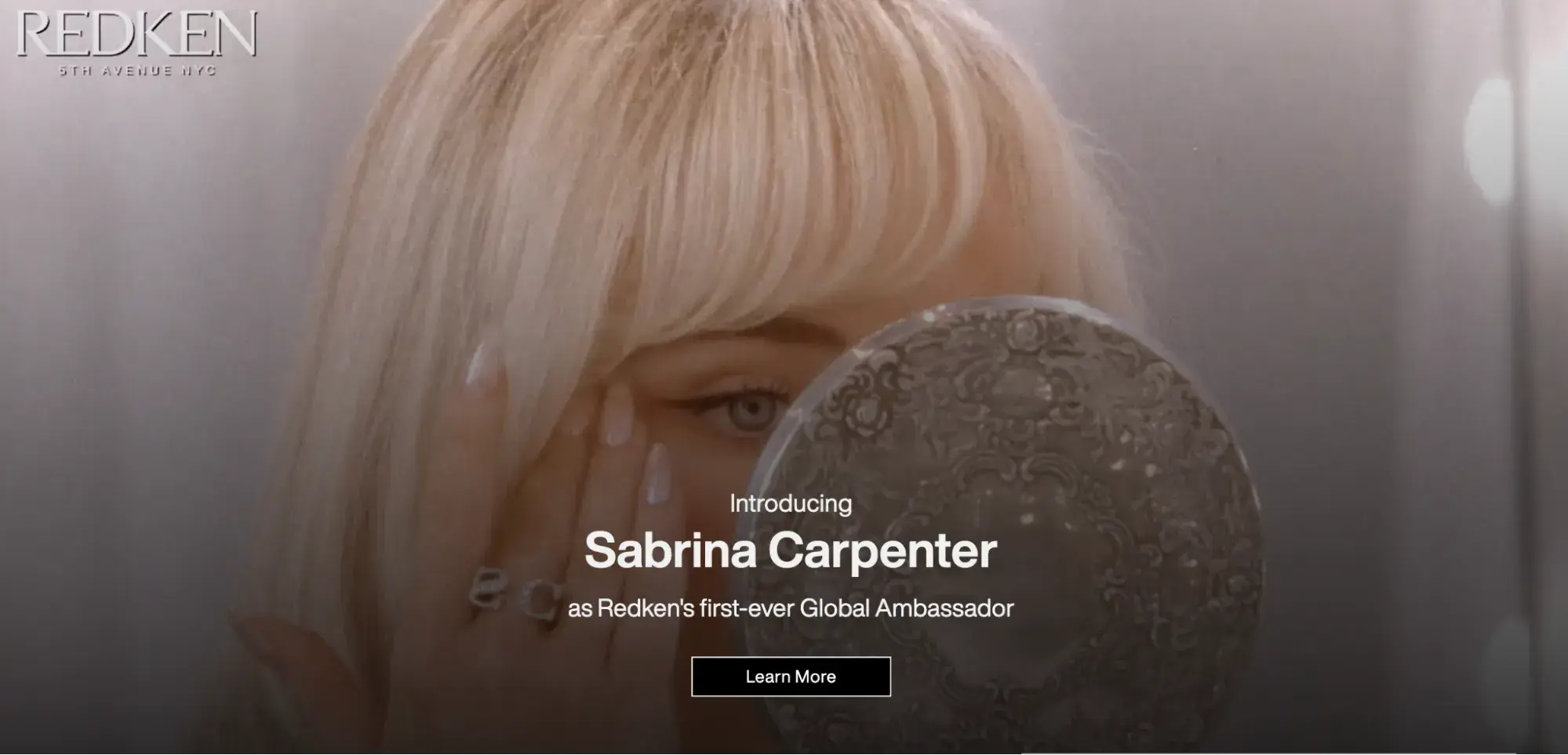
Sabrina’s first assignment? Promote Redken’s Acidic Bonding Concentrate (ABC) collection, aka the source for her healthy, glowing goldilocks.
While on tour, at press events, and through her own social media, Sabrina executed her half of the deal flawlessly. Meanwhile, on socials (particularly Instagram and TikTok), Redken had a Sabrina-style takeover, highlighting UGC content inspired by Sabrina’s go-to look, pictures of Sabrina’s best hair looks, and imagery inspired by her hit single, “Espresso.”
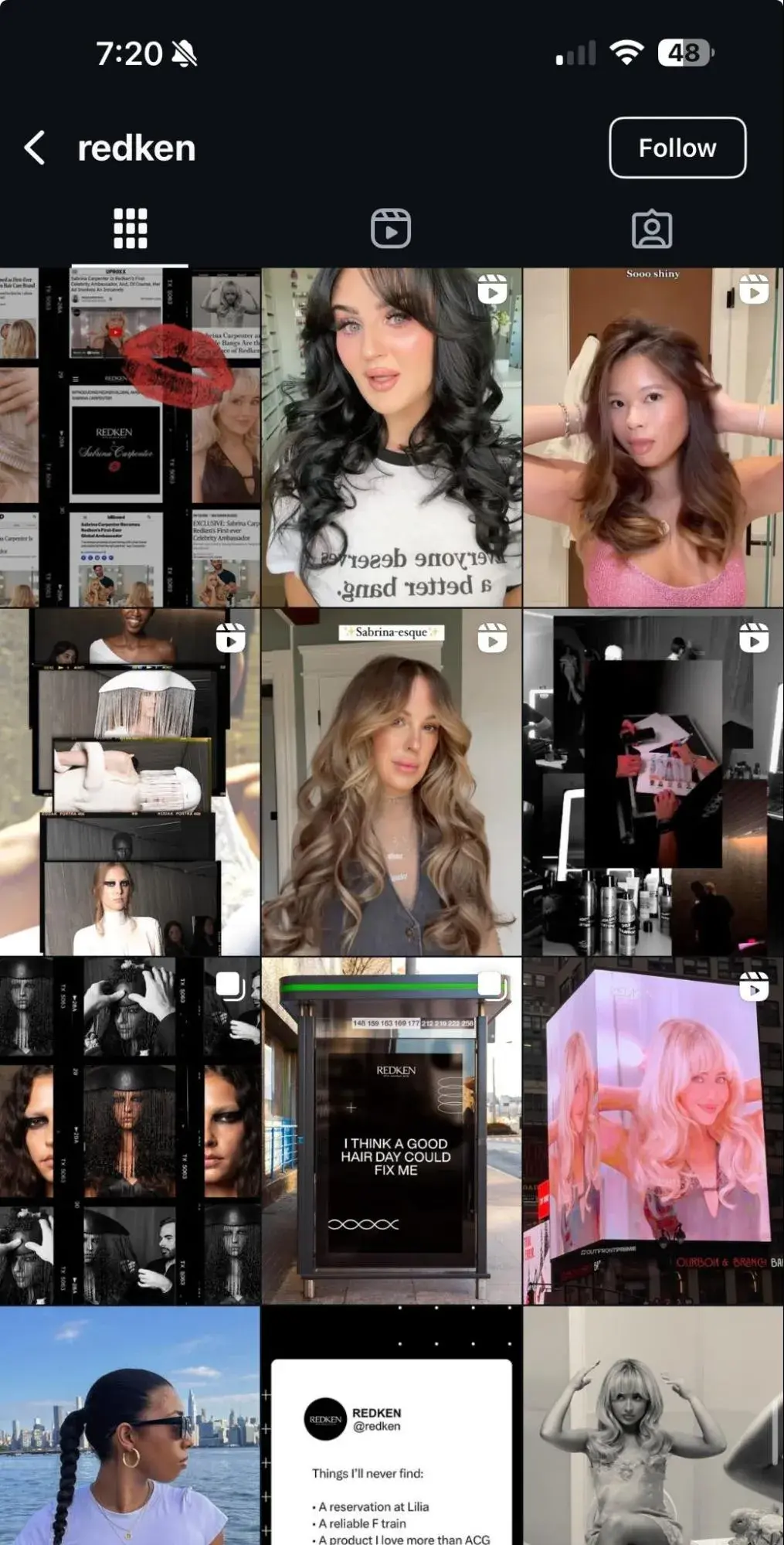
And although Sabrina’s Short ‘n’ Sweet era has been in motion for a while now, the brand is still committed to amplifying their ambassador whenever possible, even as her eras come and go.
In turn, folks and faithful Sabrina fans have adopted Sabrina’s haircare routine through buying the full Redken collection and following her step-by-step process for achieving her signature blonde hair.
Here’s what I think social media marketing folks can take away from Redken’s ABC campaign and partnership with Sabrina:
- Make a long-term investment. By partnering with Sabrina Carpenter as a global ambassador, Redken played the long game. Instead of a one-off collab or limited-time sponsorship, they committed to building a relationship that could evolve with her career — and her fans. That kind of consistency builds trust, awareness, and brand loyalty over time.
- Choose a name and a face that’s easy to remember. Because Sabrina is memorable, Redken’s ABC collection sticks with people. Their partnership with her not only taps into her musical notoriety but also nods to her playful, old Hollywood beauty aesthetic. Combined with a high-profile name like hers, the campaign became instantly recognizable — and even easier to search, reshare, and talk about.
- Match your feed to your brand’s energy. From the start, Redken’s campaign visuals echoed Sabrina’s vibe: fun, polished, confident, and feminine. Their social presence didn’t just sell haircare — it sold a recognizable aesthetic that aligned with their ambassador’s personal brand. That kind of creative cohesion goes a long way in building a social campaign that feels intentional, not just promotional.
Your Social Glow-Up Starts Now
I’ll keep it real — building a social media campaign that actually lands ain’t easy, but it is doable.
Strategy, consistency, creativity, and real-time audience awareness? That’s stuff you’ll need to see results. Whether you’re testing a new format, riding the wave of a trending audio, or deep-diving into platform analytics, what matters most is that you’re showing up with intention.
You’ve got the insights. You’ve got the inspo. Now go out there and post like you mean it. And when it clicks? Trust me — your audience will notice.
Editor's note: This post was originally published in October 2018 and has been updated for comprehensiveness.
Free Social Media Content Calendar Template
Download the free template and user guide to manage your social media posts and strategy.
- Coordinate campaigns
- Increase your reach
- Measure engagement
- Plan your posts
Download Free
All fields are required.
Social Media Campaigns