


Social media messaging has changed how businesses connect with their customers. Customer service once ran on phone calls and emails. Today, social media messaging platforms like WhatsApp, Facebook Messenger, and Instagram Direct have become the go-to channels for fast, convenient, and personal support.
→ Access Now: 5 Free Customer Support Templates
Social media messaging apps for customer service are the software applications that enable businesses to provide customer support through popular platforms like Facebook Messenger, WhatsApp, Instagram Direct, and X DMs, where customers already spend time communicating. Today, 65% of consumers use social media messaging apps to contact customer service, and 55% prefer them over traditional channels like phone and email.
Most social messaging platforms integrate with help desk solutions such as HubSpot Service Hub, offering features like instant replies, automated messages, personalized greetings, and consolidated chat threads to improve team productivity and customer experience.
This guide covers the most popular social media messaging apps for customer service, how they compare, and how to build a strategy that actually works for your team.
Social Media Messaging vs. Traditional Customer Service Channels
There are two ways in which brands can serve customers: through social media messaging apps or traditional customer service channels.
Social media messaging is a two-way conversation between a business and its customers through direct messages on social platforms. It is customer support delivered through popular messaging platforms, such as WhatsApp, Facebook Messenger, and Instagram Direct. Social media messaging for customer service focuses on support questions, issue resolution, order updates, and account help.
Many businesses also complement messaging with live chat support tools to capture and convert website visitors in real time.
Traditional customer service channels are the more established methods of support. These include phone calls, email, and in-person service desks, which have been the backbone of customer service for decades.
The State of Social Media in 2026
Explore the top trends in social media for brands to know and optimize your social strategy.
- AI Content Creation
- Community Building
- Social Media Shopping
- Social Vs. Search Engine
Download Free
All fields are required.
Form not available
Pro tip: For teams still relying on traditional channels, modern call center software can help bridge the gap between phone and digital support.
While both approaches aim to resolve customer issues effectively, they differ significantly in speed, accessibility, customer preference, and operational cost.
|
Factor |
Social Media Messaging |
Traditional Channels |
|
Response expectations |
Instant to near-instant. Users expect real-time conversations. |
Can be slower. Email can take 24 - 48 hours, and phone queues include hold time. |
|
Customer Preference |
65% of consumers use social media messaging apps to contact customer service |
Still preferred by older demographics. A survey shows 66% of people aged 65+ prefer phone calls compared to 34% of people aged 18-24. |
|
Availability |
Asynchronous, customers message on their own schedule |
Often limited to business hours, and customers dedicating time to the conversation (especially phone) |
|
Cost to Business |
Lower operational costs because agents can handle multiple chats simultaneously |
Higher costs because phone support is one-to-one and resource-intensive |
|
Personalization |
Conversation history preserved, easy to pick up where you left off |
Email threads can become confusing, especially with multiple operators; phone calls are time-consuming to retrieve. |
|
Reach |
Global reach via platforms like WhatsApp (180+ countries) |
International phone support can be costly |
|
Formality |
Informal and matches modern communication habits |
More formal in tone and structure |
|
Multimedia Support |
Supports images, video, voice notes, documents, and more |
Email supports attachments; phone is audio-only |
Social Media Messaging Strategy for Customer Service
A social media messaging strategy includes channel coverage, response-time targets, routing rules, and escalation paths.
Step 1: Define which platforms to prioritize.
Not every platform deserves equal investment. Platform selection should be based on customer channel preferences, message volume, and support use cases. Start by identifying where customers are most active and focus resources there before expanding.
Why this step is important: A dedicated and consistent presence on two or three platforms will always outperform a stretched, inconsistent presence across more. Platform fragmentation causes scattered conversations and inconsistent response times.
Pro tip: Once you’ve prioritized platforms, tools like HubSpot’s social inbox can sync supported channels such as Facebook Messenger and Instagram Direct. This allows teams to manage conversations, monitor activity, and respond efficiently using features like inbox streams.
Step 2: Set clear response time standards.
Establish internal benchmarks for first response times and make them visible to your team. Even a quick acknowledgment message can significantly improve how customers perceive your service. Timely responses are one reason businesses invest in real-time customer service tools for modern support teams.
Why this step is important: Speed is one of the biggest drivers of customer satisfaction on social messaging.
Step 3: Build a dedicated social service team.
Social messaging has its own rhythm, tone, and etiquette that differ from email or phone support. Where possible, designate agents specifically trained for social channels rather than pulling from a general pool.
Why this step is important: This builds expertise, consistency, and faster resolution times.
Step 4: Use automation without losing the human touch.
Automation is essential for managing volume, but it can quickly erode trust if overused or hidden. Use automated chatbots for greetings and simple FAQs, but ensure every interaction has a clear path to a real person when needed.
Automations can also manage customer interactions, routing conversations to humans when needed. A scalable messaging workflow runs through five steps:
- Intake
- Triage
- Assignment
- Resolution
- Follow-up
Why this step is important: Customers should never feel trapped with AI when they really need a human advisor. Research shows 69% of consumers prefer speaking with a human, and it’s important not to take that opportunity away if you want to provide optimal customer service.
Step 5: Create a library of approved responses.
Build a shared library of templates that follow brand voice for your most common inquiries, complaints, and escalations. Then, update it regularly as your products and policies evolve. Brand voice guidelines help maintain consistent tone and accurate answers across agents and channels.
Why this step is important: Consistency and speed improve dramatically when agents have pre-approved responses to work from.
Step 6: Track, review, and iterate.
A social messaging strategy is never truly finished. Schedule regular reviews of your key performance metrics, such as response time, Customer Satisfaction Score (CSAT), and First Contact Resolution (FCR), and use the findings to refine your approach.
Why this step is important: Small, data-driven adjustments compound into meaningful improvements.
Mobile Messaging Platform Comparison for Customer Service
Best Social Media Messaging Platforms for Customer Service
1. HubSpot Service Hub
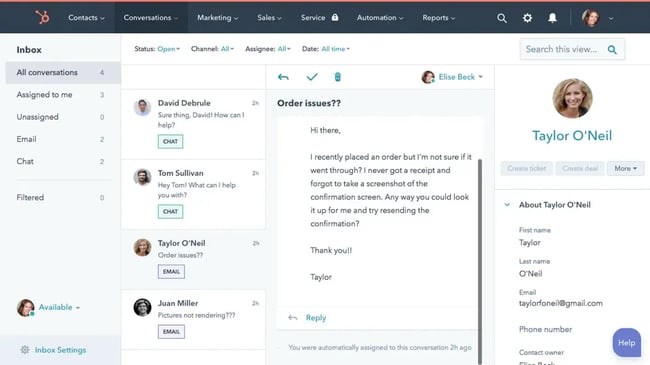
HubSpot Service Hub is a customer service platform designed to bring all your messaging channels, including social media, live chat, email, and forms, into a single, unified workspace. Rather than managing conversations across multiple apps, support teams can view, respond to, and track every interaction in one place.
This is particularly valuable for businesses that handle high message volumes across platforms like WhatsApp and Facebook Messenger. By centralizing conversations, HubSpot helps teams:
- Avoid missed messages
- Reduce duplicated replies
- Maintain full context across every customer interaction.
The platform also includes automation tools such as chatbots and routing workflows. This enables teams to triage incoming messages, assign them to the right agents, and resolve issues more efficiently. Along with built-in reporting, teams can track response times, resolution rates, and customer satisfaction to improve performance.
Because HubSpot is built on a CRM, every conversation is tied to a customer record, giving agents full visibility into past interactions, purchases, and support history, which leads to faster, more personalized service.
Support use case: Ideal for businesses managing multiple messaging channels at scale. One inbox for routing, triage, and every customer conversation across platforms.
Best for: Managing social messaging at scale with a unified inbox
2. Facebook
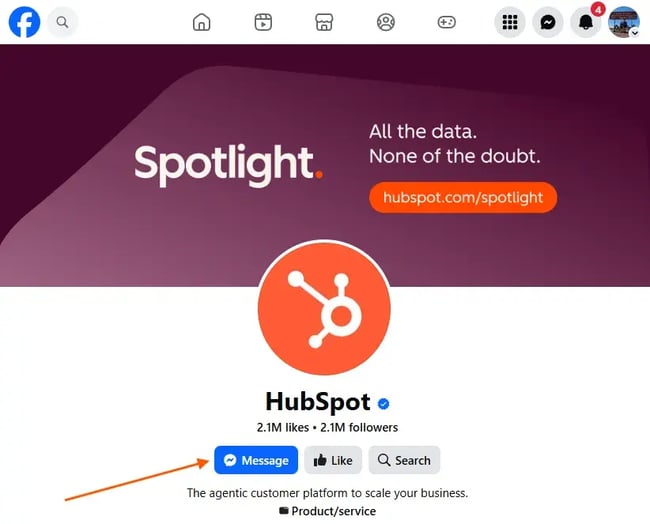
With 1.01 billion monthly active users, Facebook Messenger is arguably the most popular mobile messenger app, making it hard for businesses to ignore.
Because of its popularity, Facebook Messenger is easily integrated into most help desk solutions. It has features like instant replies, automated messages, and personalized greetings that improve your team’s productivity. Customers simply click on the “send message” button, and it triggers an immediate conversation with your team.
Important: Facebook Messenger is more than a support channel. Surveys show that customers trust brands that are available on Messenger and feel more confident about purchases.
Support use case: Ideal for handling high volumes of general inquiries, order updates, and post-purchase support.
Best for: B2C brands with a broad or mixed-age customer base
3. WhatsApp
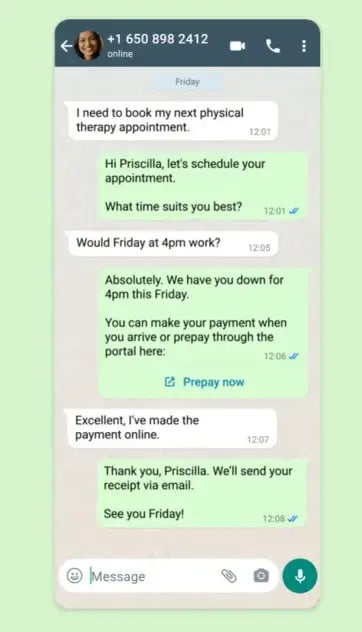
WhatsApp is the largest platform on this list, with 3.3 billion users across more than 180 countries. For many people, WhatsApp is a cost-effective alternative to texting, especially for international communication. Unlike most standard SMS messaging, WhatsApp doesn’t charge its users to send messages to different countries.
WhatsApp has a range of features that are useful for customer service teams using mobile software. For example, it has:
- Voice messaging that records speech and sends it via text
- A document-sharing tool that lets you send PDFs, spreadsheets, slideshows, and more to your customers.
These features allow your team to provide in-depth troubleshooting steps that guide customers to solutions without overwhelming them.
Customers are already on WhatsApp and familiar with the platform. For support teams, that’s half the battle. Through the WhatsApp Business platform and API, teams can automate responses, handle high volumes, and pipe conversations directly into their help desk.
Support use case: Ideal for international support, handling high volumes of mobile-first inquiries, and resolving complex issues through multimedia (e.g., sending guides, documents, or voice instructions).
Best for: Businesses supporting international customers at scale
Still like the idea of texting? Find suitable software in HubSpot’s roundup of the 10 Best Customer Service Texting Software.
4. Instagram
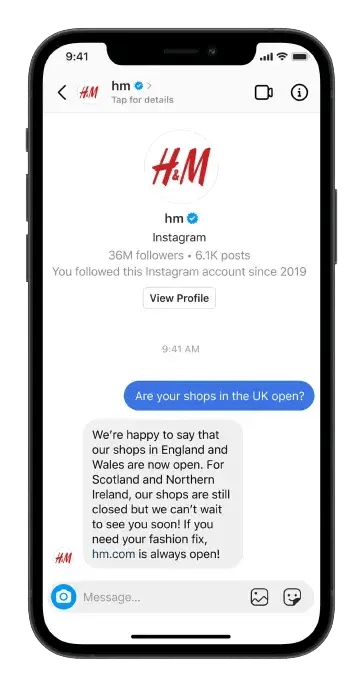
With over 2 billion monthly users, Instagram is a highly engaged platform, particularly among young adults aged 35 or under. For brands already investing in content and community here, Instagram becomes a natural extension of customer service.
This social media messaging app for business enables real-time, conversational support within a platform customers already use to discover and interact with brands. It integrates with business tools so teams can manage messages, comments, and story replies in one place and respond to customers before the moment passes.
One standout feature is video chat, which allows support agents to troubleshoot issues visually and in real time. Teams can also bring additional colleagues into conversations without transferring chats. This makes it easier to resolve more complex queries without friction.
Support use case: Ideal for handling product questions, pre-purchase inquiries, and resolving visually-led issues (e.g., sizing, product demos, or troubleshooting via video).
Best for: Visually driven brands targeting younger, mobile-first audiences
5. X Chat
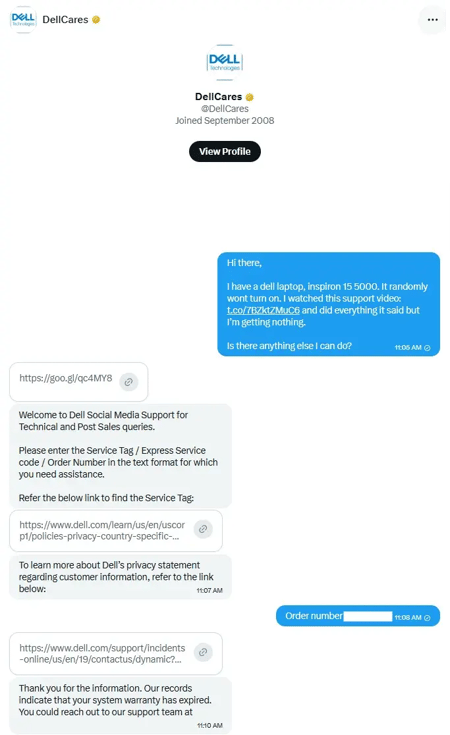
X has an estimated 388 million monthly users and has become popular for public complaints. Customers often call out brands openly before sliding into DMs.
Direct Messages (DMs) are an important private channel to resolve these issues before they become a public thread that damages the brand. This allows support teams to take control of conversations, gather sensitive information securely, and maintain a clear, trackable interaction history.
X is effective for time-sensitive support. Users expect quick responses, and they hold brands accountable in a public setting. Successful customer service teams quickly transition from public post to DM, managing reputation while efficiently resolving issues.
Support use case: Ideal for handling complaints, service outages, and urgent issues that originate in public conversations but require private resolution.
Best for: Real-time support and public-to-private issue resolution
The State of Social Media in 2026
Explore the top trends in social media for brands to know and optimize your social strategy.
- AI Content Creation
- Community Building
- Social Media Shopping
- Social Vs. Search Engine
Download Free
All fields are required.
Form not available
6. WeChat
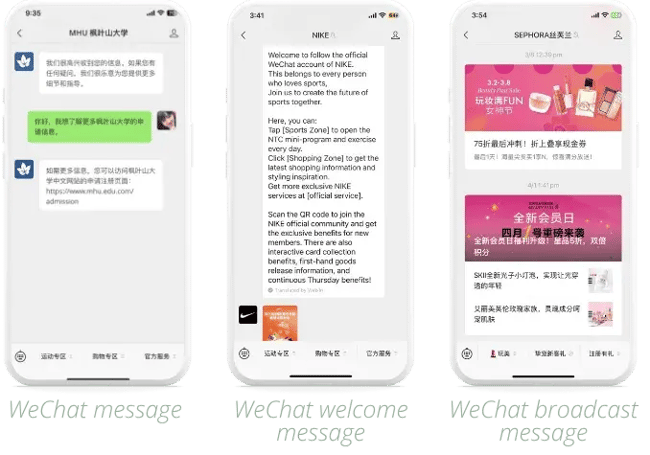
WeChat is China’s most popular messaging app with over 1.34 billion users. Since platforms like WhatsApp and Instagram are blocked in China, WeChat fills that gap. Beyond messaging, WeChat functions as an all-in-one system, combining:
- Communication
- Payments
- Brand interactions
The social media messaging app for businesses allows users to deliver end-to-end customer service experiences without requiring them to leave the app.
One cool feature that WeChat provides is its barcode scanner. Instead of asking people to provide personal information, WeChat users can scan a unique barcode that automatically adds contacts to their database. This not only saves users time but also provides additional security for sensitive information.
Support use case: Ideal for providing localized customer support in China, managing customer relationships, and delivering seamless service experiences within a single app ecosystem.
Best for: Businesses serving Chinese markets
7. LINE
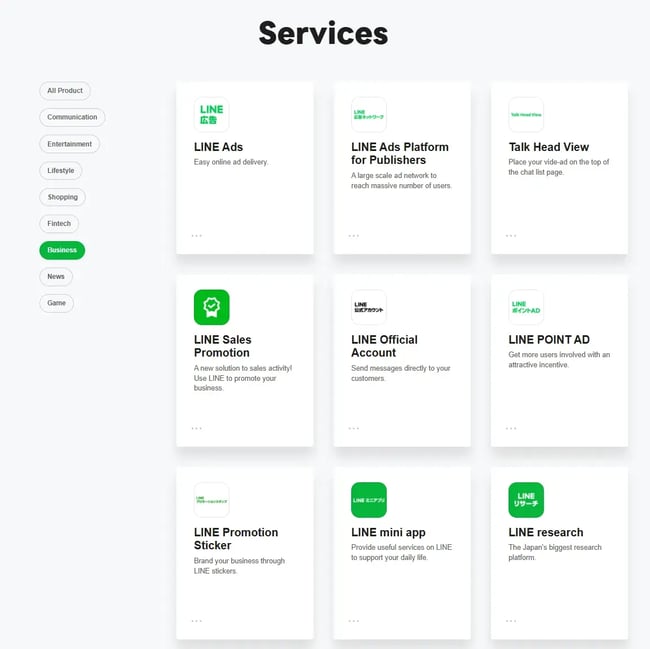
LINE has over 178 million users and is particularly popular in Japan, Taiwan, and parts of Southeast Asia. It’s the platform to be on if these markets matter to your business.
The platform blends messaging with marketing, allowing businesses to send updates, promotions, and support messages through official brand accounts. Marketing messaging focuses on promotional campaigns and brand communication rather than case resolution. Customers can follow brands directly on LINE, turning one-off support interactions into an ongoing conversation.
With features like free calls, video chat, and rich media messaging (including stickers and emojis), LINE enables brands to deliver more engaging and conversational support experiences.
Support use case: Ideal for combining customer support with promotional messaging, loyalty engagement, and ongoing customer communication in key Asian markets.
Best for: Brands targeting Japan, Taiwan, and Southeast Asia with promotional support messaging
8. Telegram
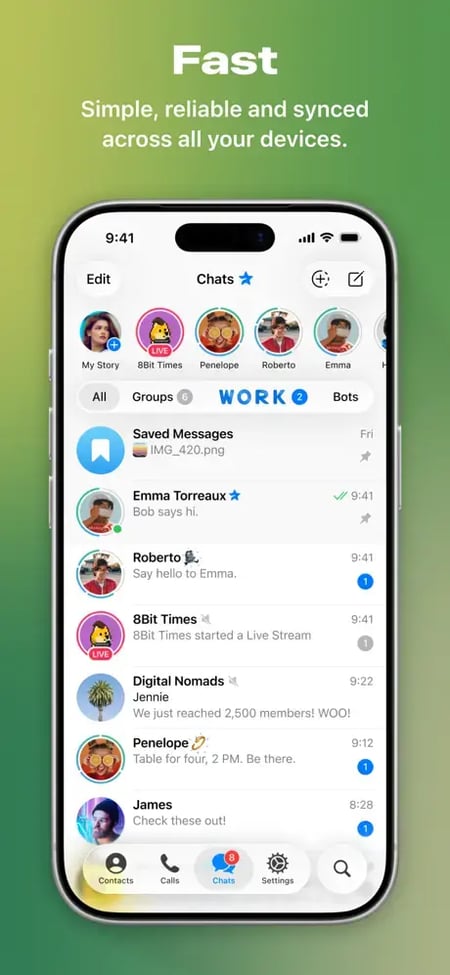
Telegram is a cloud-based messaging app with over 800 million active users, known for its strong focus on security and privacy.
For customer service teams, Telegram offers encrypted messaging and advanced privacy features that are particularly valuable when handling sensitive information. Businesses can also create bots to automate responses, manage FAQs, and streamline customer interactions.
Telegram provides a few unique features that protect messages from falling into the wrong hands. For instance, businesses can encrypt messages to prevent unauthorized access, and even set “self-destruct” timers that delete the message after a certain period of time. This is useful for B2B businesses exchanging sensitive information that hackers would have an interest in.
Support use case: Ideal for secure customer communications, handling sensitive data exchanges, and supporting privacy-conscious or B2B audiences.
Best for: Privacy-focused support and secure B2B communications
9. TikTok
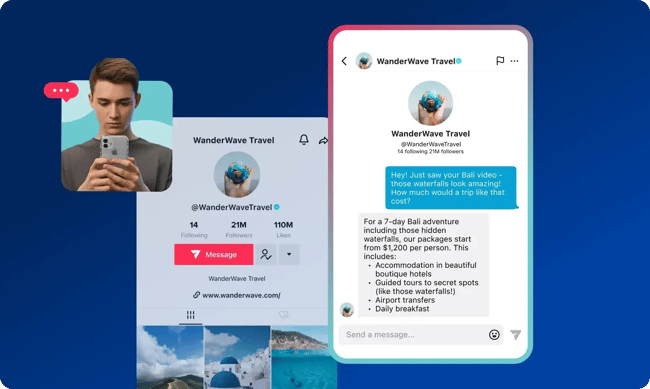
TikTok has grown into a major platform with 1.9 billion monthly active users globally. It’s popular among Gen Z, millennials, and younger audiences.
While primarily known for content and discovery, TikTok’s direct messaging feature is increasingly being used for customer interactions, especially by brands with a strong social presence. Customers often discover brands through content and then start conversations via DM, making it an important channel to capture and respond to inbound interest in real time.
Support use case: Ideal for responding to customer inquiries driven by social content, managing brand interactions, and supporting highly engaged audiences.
Best for: Engaging with younger audiences
10. Snapchat
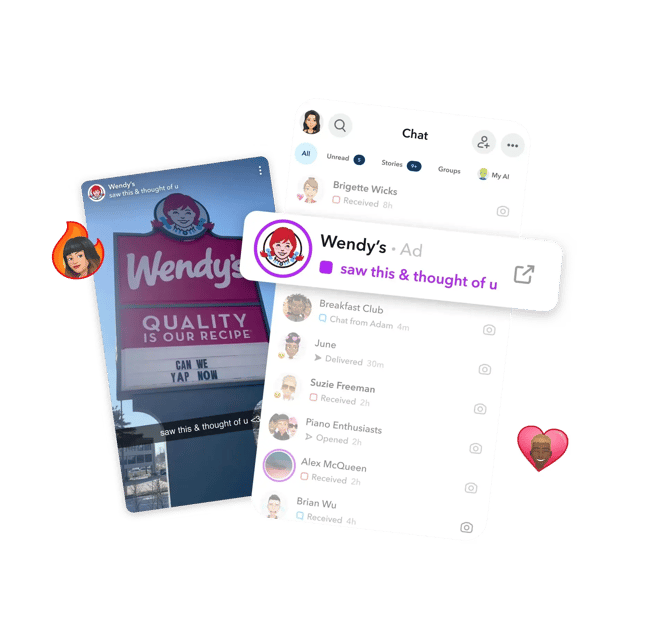
Snapchat’s reputation as a Gen Z platform undersells its reach and potential. Snapchat’s visual-first format makes it a natural fit for real-time customer interactions, particularly with younger audiences who already live on the platform. Content that disappears creates urgency, and that urgency translates directly into customer action.
Support use case: Ideal for quick, informal support interactions, brand engagement, and connecting with younger audiences in a native, platform-specific way.
Best for: Real-time, informal support with Gen Z and Gen Alpha audiences
11. Brosix
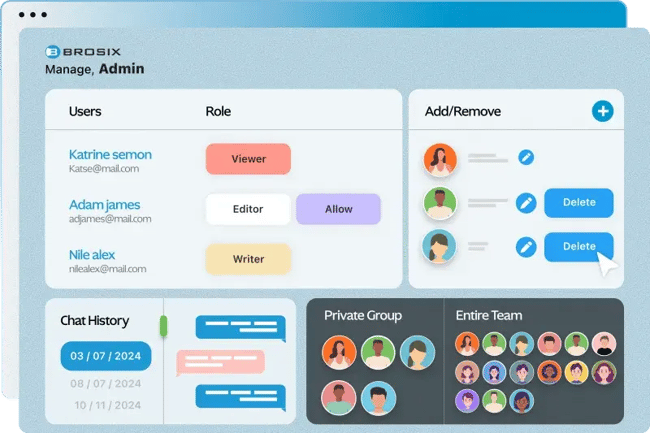
Brosix is a user-friendly messaging platform built for team communication. It offers a secure private team network that enables precise user management. With collaborative tools like chat, screen sharing, and file transfers, Brosix is designed for productivity-focused businesses.
Brosix Instant Messenger provides a range of features to enhance communication and collaboration. These include robust end-to-end encryption to ensure data security, efficient peer-to-peer (P2P) file transfer capabilities, and secure instant messaging. Additionally, it offers chat rooms for collaboration, real-time communication, and support for both mobile and web applications.
The platform supports live chat, notifications, whiteboarding, screen sharing, and offline messaging. Brosix also allows easy screenshot sharing. It’s a comprehensive messaging solution ideal for businesses seeking streamlined, secure communication.
Support use case: Ideal for internal collaboration within support teams, handling escalations, and securely sharing information during customer issue resolution.
Best for: Internal team communication and secure customer support collaboration
12. Zendesk Chat
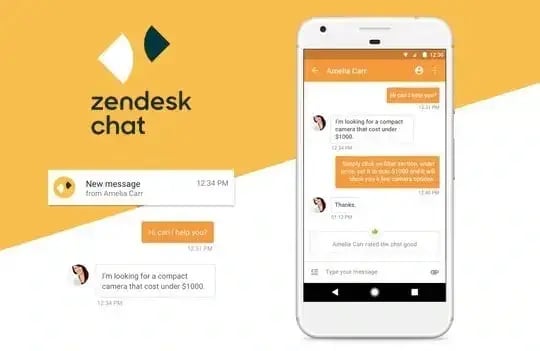
Zendesk Chat is one of the best customer service apps. It is a dedicated customer service tool designed to manage real-time conversations across multiple channels, including social messaging platforms.
Zendesk provides a centralized interface where support teams can handle chats, automate workflows, and deploy chatbots to manage common inquiries. Its integration capabilities allow businesses to bring together messaging channels into a single, unified system.
With built-in analytics and customization options, Zendesk Chat enables teams to track performance, optimize response times, and deliver more personalized support experiences at scale.
Support use case: Ideal for managing multiple messaging channels in one place, improving response efficiency, and scaling customer support operations with automation and analytics.
Best for: Unified Customer Support and Omnichannel Messaging Management
Common Social Media Messaging Challenges for Service Teams
Social media messaging apps open up new ways to connect with customers, but they come with operational hurdles. Here are five of the most common challenges service teams face, and how to overcome them.
1. Managing High Message Volumes
As businesses grow their presence across multiple platforms, the volume of incoming messages can overwhelm support teams. Without a structured system in place, messages get missed, response times slip, and customer satisfaction takes a hit.
The solution: Implement a unified inbox tool that consolidates messages from all platforms into one queue. Unified inbox tools reduce missed messages and duplicated replies across platforms. Combine this with automated routing rules that assign conversations to the right agent based on topic, language, or urgency, so no message falls through the cracks.
2. Maintaining Consistent Brand Voice Across Platforms
Each messaging platform has its own tone and culture, making it easy for responses to feel inconsistent or off-brand, especially when multiple agents are handling conversations simultaneously.
The solution: Create a messaging style guide specific to social customer service, covering tone, common phrases, and platform-specific etiquette. Pair this with response templates for frequently asked questions to keep communication consistent without sacrificing personality.
3. Keeping Response Times Fast Around the Clock
Customers on social messaging platforms expect near-instant replies, but most support teams can’t maintain 24/7 coverage without significant resources.
The solution: Deploy chatbots to handle greetings, FAQs, and basic routing outside of business hours. Set clear automated messages that inform customers of response times so that expectations are managed even when agents are offline.
4. Protecting Customer Data and Privacy
Most social messaging platforms weren’t built with enterprise security in mind, which creates real risk when customers share order details, account numbers, or personal data.
The solution: Establish clear protocols for what information can and cannot be shared over social messaging. Where possible, direct customers to secure, authenticated channels for sensitive transactions, and ensure your team is trained on data handling compliance relevant to your region.
5. Measuring Performance and Proving Value
Unlike traditional channels, social messaging can be harder to track, resulting in lost context between channels. Lost context occurs when a customer switches channels, and their conversation history is not connected. This lack of visibility across channels makes it difficult for service managers to report on performance, justify headcount, or demonstrate ROI to stakeholders.
The solution: Use a customer service platform with built-in social messaging analytics, tracking metrics such as first contact resolution, average response time, and CSAT scores per channel. Review these regularly in team reporting to identify gaps and make the case for continued investment.
Frequently Asked Questions About Social Media Messaging and Customer Service
What exactly is social media messaging for customer service?
Social media messaging for customer service involves handling customer inquiries and support requests via platforms such as WhatsApp, Facebook Messenger, and Instagram Direct. It meets customers where they already are, offering a faster and more convenient alternative to phone or email.
Which social media platform is best for customer messaging?
The best social media platform for customer messaging depends on your audience. Consider WhatsApp for international or mobile-first customers, Facebook Messenger for broader demographics, and Instagram Direct for younger or visually-engaged audiences.
How can we manage messages across multiple platforms efficiently?
The most effective approach is a unified inbox or omnichannel platform, such as HubSpot’s Service Hub, that consolidates all incoming messages into a single dashboard, so your team never has to switch between apps.
What response time should we aim for on social messaging?
Customers expect replies within an hour on social messaging platforms, and ideally within minutes for live conversations. Setting automated acknowledgment messages buys your team time while keeping customers informed.
How do we measure ROI from social media messaging?
Track a combination of efficiency and satisfaction metrics, including:
- Cost per resolution
- First contact resolution (FCR) rate
- Customer satisfaction score (CSAT)
- Average handle time
- Agent utilization rate
Should we use chatbots for social media messaging?
Yes, but selectively. Use chatbots for greetings, FAQs, and routing customers to the right team, but always provide a clear and easy path to a human agent for complex or sensitive issues.
Which social messaging platforms are most important for customer service?
Facebook, WhatsApp, Instagram, and X are the top platforms businesses should prioritize.
Choosing the Right Social Media Messaging App for Your Team
The right social media messaging platform is the one your customers are already using to reach you. Start by identifying where your highest message volumes come from, then build your strategy around two or three platforms before expanding.
As you scale, the biggest challenge won’t be choosing platforms; it’ll be managing them without losing efficiency or quality. That’s where a unified inbox, like HubSpot Service Hub, becomes essential. Bringing all your channels into one workspace means your team spends less time switching between apps and more time actually helping customers.
Whatever platforms you choose, the fundamentals stay the same: meet customers where they are, respond quickly, maintain context across every interaction, and make it easy to escalate to a human when it counts.
Editor’s note: This article was originally published in April 2020 and has since been updated for comprehensiveness.
The State of Social Media in 2026
Explore the top trends in social media for brands to know and optimize your social strategy.
- AI Content Creation
- Community Building
- Social Media Shopping
- Social Vs. Search Engine
Download Free
All fields are required.
Form not available