


Companies are not people.
Boom. How's that for a controversial opening line?
For the sake of harmony (and the point of this blog post), let's try to remove the political implications from that statement, and consider what it means for us as marketers.
How would most people describe their relationship with your company? Is it purely transactional, making you just a place they go to get something they need? Or do you elicit more personal feelings from your leads and customers? In an inbound marketing age where businesses are expected to get to know their target audience, develop personas, maintain an active social media presence, and be genuinely helpful to their leads and customers, it seems like there's room to develop a relationship between companies and consumers beyond just the transactional.
The fact is, people do business with people they like and trust, and it's really, really hard to trust a company. But you know when it's way easier to trust a company? When your audience is reminded there are real life humans working behind the scenes ... and maybe they can even get to know them a bit. So if your company comes off as cold, corporate, or faceless, it might be time to find a way to humanize your brand a little more. Here's how.
1) Write an 'About Us' page that's actually good.
The 'About Us' page is one of the most frequently flubbed up pages on the internet. Which is a bummer, really, because what better way to humanize your brand than a page dedicated to telling people about who you are?
So, who do you want to be? A faceless corporation? Or do you want to tell people about what you do, who you are, and why you think it might be interesting to them? I went looking for an example to show off here that's an extraordinary example of someone humanizing their company through their 'About Us' page, and thanks to Blog Tyrant, I found two examples for you.
First, I recommend you check out SEOmoz. Their page includes several sections that explain what they do and why they're valuable, as well as a timeline that explains how their company came to be -- written in a light-hearted yet professional way. Giving the backstory of how the company was founded gives readers insight into the founders' motivations, and also presents it in a way that shows the reader what value SEOmoz brings to the table for their customers.
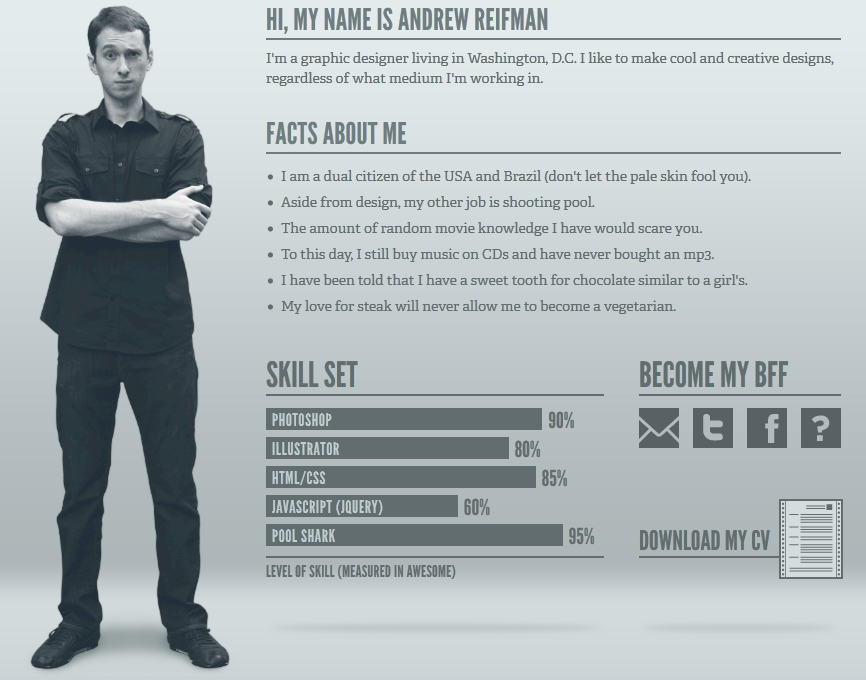
The other example of a killer 'About Us' Page I highly recommend is Andrew Reifman of Andrew Reifman Graphic Design. This page is notable because of its simplicity. Who he is, what he does, and the value he brings is all clear in just a few words. Plus you actually feel like you know the guy when you're done reading it! That makes it far easier for leads to determine whether he's someone they want to do business with, and you can bet the ones with whom this page resonates are going to be extremely eager leads.
2) Kill the business babble.
Just. Speak. Clearly. Business and industry-specific jargon is just another way of talking over people's heads, and although you think you sound super smart and important, you're really just coming off as inaccessible. Is that how you'd talk to someone in real life? No way. Unless you don't want any friends. Speak like a human being, and your brand will feel more relatable, too.
Hint: 'About Us' pages are often one of the biggest business babble offenders!
3) Inject a sense of humor into your content.
It's easy for B2C companies to create hilarious content -- and you certainly should! Everyone loves a laugh. This tip, however, is geared more strongly towards B2B companies; particularly those in kind of "boring" industries.
Look, you can get your point across really well with clear, concise, straightforward copy. That's fine. But you can get your point across and humanize your brand -- even delight readers -- if you can infuse a sense of humor into your content once in a while. Frankly, nobody expects it from you. And if you're one of the few brands doing it, it makes you look just awesome. Go ahead. Try to make someone crack a smile. What's more human than unbridled laughter?
4) Publish photos of your team being themselves.
Let your fans and followers get to know your employees a bit better by posting photos of them doing things "out in the wild." We did this on our own Facebook page with the aptly named album "HubSpotters in the Wild," but I'm a fan of how Deloitte did this on its Facebook cover photo, too. Take a look:
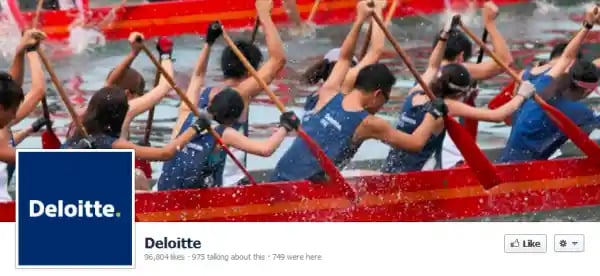
That's the Deloitte China Dragon Boat team. Who knew Deloitte had such cool employees? Well, we all do now! Deloitte (or any company for that matter) could take this one step further by venturing to replace its social media avatars with pictures of real people, as opposed to its logo, too.
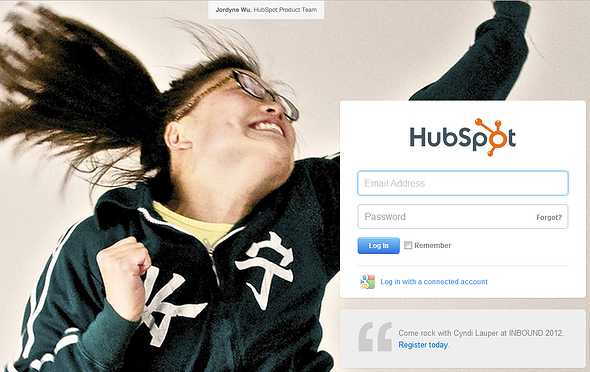
You don't need to limit yourself to just social media, either. You could find other places to introduce your employees to the world. At HubSpot, we've leveraged the space on our login screen (check it out!) so that when you sign in to your account, you're greeted with a random HubSpotter's smiling face, name, and role in the organization!
5) Introduce your community manager.
If you have a dedicated community manager running your social channels -- Facebook, Twitter, LinkedIn, even forums -- let people know who that person is. Take Uber, for example. They have an entire photo album on Facebook that introduces each city's dedicated community manager:
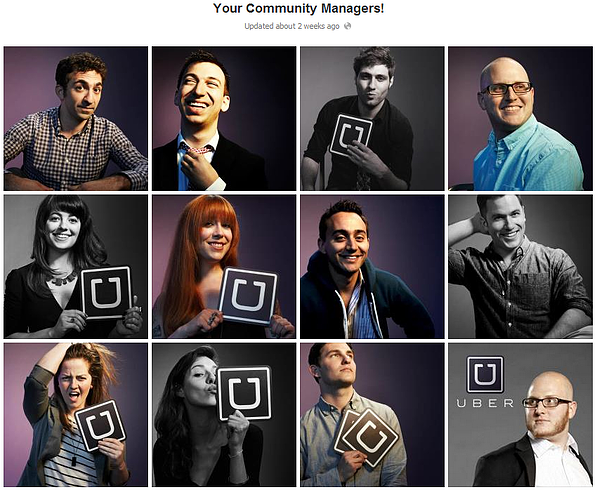
When you click into each photo, you get to learn more about the person that's representing the company. Take a look at Boston's community manager, Nick:

Uber has been so effective at humanizing ita that when my co-worker had a question about Uber this morning, I actually told her to tweet at Nick. Not Uber. Nick. Because when I use social media to get Uber customer support, I've always talked to a person -- Nick, specifically, -- as opposed to who-on-earth-knows at most other companies.
6) Sign your social updates.
If you don't have just one dedicated community manager, it may seem unwieldy to introduce the entire team -- this is a common problem faced by enterprise organizations. Consider signing your social media updates if you're one of many posting to a social account, particularly if you're using it for customer support. Take a look at how Verizon support does it on their Twitter account:
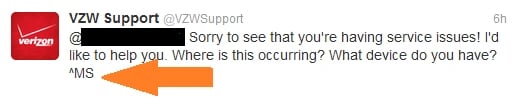
This helps remind people that even though they can't hear your voice, there's one real, live, breathing person that's dedicated to helping them.
7) Have conversations with fans, followers, and commenters.
But make sure they aren't all just about your company or industry -- although those are important, too. When you venture outside of your usual topics once in a while, it makes people feel comfortable being themselves ... because you're being yourself, too! You can also add more structure to these conversations if you like and periodically host Twitter chats, conversations about a particular topic at a specific date and time, held together by a pre-designated hashtag.
8) Encourage employees to be social on behalf of your company.
When employees post social media updates about or on behalf of their company, it does a few things:
- It lets people know that person gives a hoot about the company they work for.
- It lets people get to know the names, faces, and personalities behind a company.
- It gives the company's content way, way, way more reach.
While some companies, due to the nature of their industry, may need to keep a tighter lid on their social media networks, most businesses could really benefit from encouraging employees to use their social media accounts to share company content. And yes, they should even be able to do that during work hours! The times, they are a-changin'.
9) Admit your mistakes.
Everyone screws up. It's human. I'm not saying you should seek out mistakes to humanize your brand, but no one expects you to be perfect. Just like your mama told you, it's how you respond to your mistakes that matters! If you've suffered a public faux pas, just own up to it and apologize. Be genuine, and don't place blame elsewhere -- accept it on your own. People will move on quicker than you expect, and you'll emerge looking like a company that truly cares about what their audience thinks.
10) Poke fun at yourself.
Eventually, some of those mistakes you made will actually be funny -- "some" being the operative word. Take our blog post from a couple months ago, "Marketing Hall of Shame: HubSpot's Worst Marketing Mistakes, Revisited," for example. A lot of those mistakes weren't very funny at the time, but we took our public shaming and enough time had elapsed that we could poke a little fun at ourselves. If you don't take yourself too seriously, even make fun of yourself from time to time in a manner that isn't too self-deprecating, you remind your audience that you're just like them.
11) Sign your emails with your name. Like, your name.
Not your company name. A company can't send an email. A person at your company, however, can. For instance, what does your signature look like in your email marketing? Consider including a real person's name in your email signature, along with their role at your company, and maybe even a small headshot to make the message more personal.
You could also experiment with a more personal "From" field, including the email sender's real name alongside your company's name. Your results may vary, so we recommend conducting your own test, but when we A/B tested the inclusion of an employee's name alongside our company name, the results were fantastic!

12) Take off your marketer hat once in a while.
Ultimately, you're doing all this to get more traffic, leads, and customers. We know that. But it can be helpful to approach your efforts with a little less of a methodical marketer mindset, and more of a ... human one. For example, not every single tweet needs to be to a landing page. It's okay to throw in something you think your audience would just plain enjoy sometimes -- no link to your blog, lead-capture form, or transaction on the other end. The more you get to know your buyer persones as you interact with them every day, the more naturally you'll be able to do this; the content will practically roll off your tongue! Once you've established this natural rapport with your community, your relationship will be more akin to two friends hanging out -- and that makes for customers with higher lifetime value (aaaand the marketer hat is back on).
How else can brands make themselves seem less corporate, and more relatable to the world?
Image credit: twm1340



![How to Craft a Brand Manifesto [Guide + 10 Examples]](https://53.fs1.hubspotusercontent-na1.net/hubfs/53/brand%20manifesto.jpg)
![How to Tell a Compelling Brand Story [Guide + Examples]](https://53.fs1.hubspotusercontent-na1.net/hubfs/53/brand-story-2.jpg)

![7 Australian Companies with Great Taglines [+What Marketers Can Learn From Them]](https://53.fs1.hubspotusercontent-na1.net/hubfs/53/australian-companies-with-great-taglines.jpg)