
I like going to a coffee shop and being asked “the usual?” I can smile, nod, and pay for my drink. It's more than the convenience of not even having to place an order -- it's also nice to be remembered.
That almost never happens, though. I usually hear something like, "Hi. Welcome to Unicorn Coffee. Would you like to try our ‘It’s a Wonderful Life’ Peppermint Latte Mocha?" That’s more like an advertisement than a conversation. The message is totally impersonal, and a little annoying.
Download Now: 150+ Content Creation Templates
[Free Kit]
The same is true online. More than 60% of shoppers say they find it appealing when an online store remembers their personal and payment information to speed up a purchase, according to Capgemini.
Some marketers have caught on to the personalization trend, but not everyone. Research from Econsultancy, in fact, shows a wide gap between the percentage of marketers who like personalization, and those who actually use it. For example, 88% of marketers say using social graph data to personalize the online experience has a high impact on both ROI, and engagement. But only 6% actually do it. Additionally, 68% of marketers say personalization based on behavioral data has a high impact on ROI, and 74% say it has a high impact on engagement. But only 19% do it.
If you’re among the 94% of marketers not using social data to personalize content, or if you haven’t tried any personalization, then you’re missing out on at least 9 benefits to your marketing. What are those 9 benefits? Why, I'm so glad you asked ;-)
9 Marketing Benefits of Personalized Content
1) Increases Conversions
Let’s start with the most obvious benefit: conversion. When you tailor your message to the reader, your message has more resonance because, well, it means something. And generic is the enemy of conversions. Let's break down how personalization might for, say, an email campaign:
- Step 1. Subject Line: Personalized with the recipient’s name, company's name, industry, or topic of interest using dynamic tags.
- Step 2. Email Copy: Greets the recipient by first name, references prior behavior, and uses a dynamic call-to-action relevant to the reader’s prior behaviors.
- Step 3. Landing Page: Reiterates the message delivered in the email, and features Smart Fields pre-loaded with the recipient's information.
- Step 4. Follow-up Email: Thanks the customer for converting and makes recommendations for next actions, including reconversions based on complementary content.
Imagine incremental lifts in each of these areas -- that can yield a sizeable lift in a campaign’s overall conversion rate. Pretty powerful stuff, eh?
2) Makes Conversion Easier
Every step you take to simplify and clarify the conversion process will help your conversion rate, whether your goal is to get someone to transact, to download an ebook, or to sign up for a webinar. People are more likely to act when the action is fast and easy. This is why Amazon offers one-click purchases. It cuts friction dramatically.
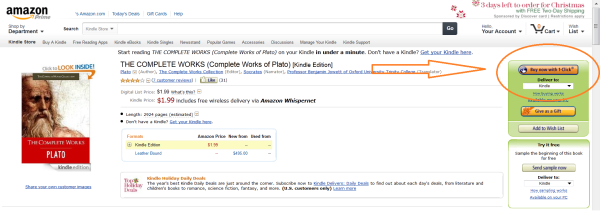
By “remembering” their behavior, preferences, and information, your marketing team doesn’t have to convince people to jump through the same hoops over and over. You can personalize forms with their information! Or you can only request the information your team doesn’t have, but needs to complete the transaction! You can offer a relevant additional product, service, or content offerings instead of making people dig for it! Cutting the number of steps to get to conversion will, duh, help you get more conversions.
3) Less Email Yields More Customers
Before marketers began segmentation and targeting, email was a numbers game. Companies sent a generic email to everyone on the list, and just did it over, and over, and over until a needed revenue level was hit.
Today, email is focused on relevance. In fact, I'd be surprised if you had any list left to send to if you still did the batch-and-blast approach. You're much more likely to spur action when you personalize the topic, timing, and content of an email to a reader’s profile, and segment your lists based on that. When engagement increases, you can send fewer emails to each subscriber and achieve greater results.
4) Builds a Passionate Audience
Everyone loves something. And when you love something, you're usually pretty specific about what exactly you love about that thing. For example, a coffee lover doesn’t just love coffee. He loves organic, fair-trade, Hawaiian Kona coffee.
Content personalization is the difference between showing a coffee lover an blog post titled “How to Brew the Best Cup of Coffee,” and an article titled “How to Brew the Best Cup of Hawaiian Kona Coffee.” It speaks directly to his passion.
And hey, when you leverage marketing automation, you have the power to generate niche levels of enthusiasm, but on a mass scale. It’s the best of both worlds!
5) Improves Lead Nurturing
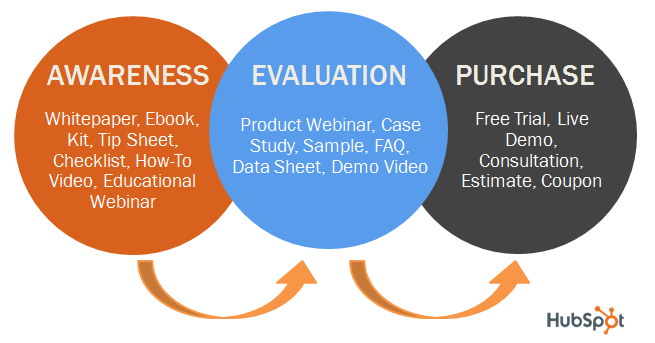
Lead nurturing is fueled by content. When you can personalize content to each person’s interests and behavior, your marketing will make a stronger connection and convert more leads into marketing qualified leads (MQLs), and sales qualified leads (SQLs). Remember, you should be personalizing not just by topic, but also by a lead's position in the marketing/sales funnel. For example, you should show general content to top-of-the-funnel leads and specific, product-based content to your bottom-of-the-funnel leads.
6) Improves Sales Calls
The information you use to personalize content all comes from somewhere in your database ... and your sales team would love to get their hands on that so they can personalize their sales calls. Not only should you be creating personalized sales enablement content for your sales team; you should be arming them with lead intelligence used to create all that content so their messaging can be better, too.
7) Keeps Your Website Fresh
Visitors who return to a website only to see the same offer over and over are probably not thrilled. Personalization through dynamic content, however, can present something new to visitors each time they arrive on your site. And not just new ... relevant to their interests! Whether you segment by list or lifecycle stage, you can ensure you're presenting content that will 1) interest visitors, 2) align with their stage in the sales cycle, and 3) allow you to move existing leads further down the sales funnel.
8) Welcomes Newcomers
Content personalization isn't just a benefit for nurturing -- it can also help you welcome newcomers to your audience, too. Let's take an email marketing welcome program, for example. You can get a stronger start with new subscribers by immediately showing that you have information relevant to their interests or needs. The personalization can be based on the first offer they convert on, the campaign that drove their response, or even the pages they visited on your website.
9) Helps Create Marketing People Love
Personalization is based on enabling you to get the right information, to the right people, at the right time -- whether that information is email content, a new offer, or an interesting blog post. Generic marketing makes people feel assaulted; personalized marketing makes them feel understood. It differentiates your company as one that cares enough to listen to leads and customers, and deliver the information they want. In other words, it helps you create marketing people love. That's some pretty good branding if you ask me.
What other marketing advantages have you encountered when you personalize your content?








![How to Get a Personalized Assessment of Your Website [Free Tool]](https://53.fs1.hubspotusercontent-na1.net/hubfs/53/00-Blog_Thinkstock_Images/website-grader.png)