Savvy marketers know it's rare to reel in customers at the first encounter with a brand. From my own experience, winning people over takes time, thoughtful touchpoints, and a whole lot of trust — which is what makes lifecycle marketing so crucial.
All businesses create their own unique lifecycle marketing strategy, but the purpose is the same: to engage customers, increase revenue, and grow a brand.
Different from the buyer's journey or conversion funnel, lifecycle marketing considers a customer long after they make a purchase. The focus is to bring in buyers and turn them into loyal brand advocates.
But what does that look like for your company? In this guide, we'll cover:
- What is lifecycle marketing?
- The stages of lifecycle marketing
- Creating a lifecycle marketing strategy
- Lifecycle marketing campaigns
- Lifecycle email marketing
Let's jump in.
![Download Now: Free Marketing Plan Template [Get Your Copy]](https://no-cache.hubspot.com/cta/default/53/aacfe6c7-71e6-4f49-979f-76099062afa0.png)
What is lifecycle marketing?
Lifecycle marketing is the mix of strategies a company uses to positively influence customer behavior as they move through each touchpoint of the marketing cycle, from the initial attraction to becoming a brand advocate.
A lifecycle can be short or long. Companies like Nespresso or Whole Foods Market have shorter cycles and need to attract people back almost immediately after they purchase.
But companies with lifecycles like Mercedes or Avocado Mattress play the long game of customer retention and advocacy to bring in more business. The ultimate goal is to always get customers and keep them coming back.
No matter the cycle length, there are various stages that make up any lifecycle marketing plan. Understanding these will help you target your audience's specific needs at each stage, whether they're coming in as a lead, first-time buyer, repeat customer, or lapsed customer.
The Stages of Lifecycle Marketing
- Awareness
- Engagement
- Evaluation
- Purchase
- Support
- Loyalty
Here's a brief overview of the main lifecycle stages:
.png?width=550&height=413&name=Lifecycle%20Marketing%20(2).png)
1. Awareness
This is when potential customers first learn about your company. As the top of your conversion funnel, it’s your chance to capture people’s attention and reel them further into your funnel.
2. Engagement
People begin interacting with your brand in the engagement cycle. They’re interested and want to learn about your offerings, whether by subscribing to your email list, following you on social media, or scrolling your website.
3. Evaluation
The evaluation stage is all about decisions. This is the time to make it easy for people to choose your brand by providing them with the right information to compare features, pricing, and value.
4. Purchase
Congratulations! Anyone who makes it through this stage is a customer. I use this step not to promote my brand, but to make a purchase as seamless as possible, making it simple for people to click “Buy.”
5. Support
From my experience, people tend to drop off after the first buy — which is why it’s important to make sure you meet customers' needs post-purchase. In the support stage, your goal is to follow up with customers and make sure they're satisfied with their purchase.
6. Loyalty
Customers reach this stage when they’re so happy, they let everyone know about your brand. You want to nurture that advocacy to retain their business and help bring in new buyers.
My experience with lifecycle stages has taught me that while it seems like a linear buyer journey — where customers move from step to step until they reach the end — it's more of a cycle that should continue repeating itself.
In other words, you can’t simply forget about a customer once they’ve made a purchase. If you put effort into developing a thoughtful plan, it can be much easier to meet and exceed your marketing, sales, and company goals.
Lifecycle Marketing Strategy
Strategy is the core of successful lifecycle marketing. Without it, you will likely bring in the wrong leads and will waste your budget on people who won't turn into brand advocates. With it, you can:
- Grow your customer base by offering a better buying experience.
- Improve sales by turning one-time buyers into repeat customers.
- Turn buyers into brand advocates who rave about your company.
- Improve your marketing ROI and lifetime customer value.
The best strategies account for how people interact with your brand at specific stages within the lifecycle.
Your company may do well with a simple strategy, or you may need to include more touchpoints and channels within each stage. For instance, a small art gallery may use social media, email, a website, and events to bring in artists and potential buyers.
But a major art museum like The Metropolitan Museum of Art will need a more complex marketing strategy to reach its thousands of visitors, attract donors, sell and retain memberships, draw in artists and exhibits, sell retail products, and host events.
No matter the size, all lifecycle marketing strategies are fueled by content. And with 70% of marketers actively investing in content marketing, you can miss out on potential buyers (and profit) if you don't create relevant content for every stage.
Instead of blindly marketing to the masses, you must be strategic and tie your sales directly to your promotion efforts. Let's walk through the strategies you can use at each stage.
1. Awareness
You want to attract as many people within your target audience as possible, so it's time to create highly shareable, highly visible content. Awareness strategies include:
- Create targeted audiences for each buyer persona, so you know the people you bring in fit your buyer profile.
- Research and use keywords that can help people discover your brand when searching online.
- Write blog posts that answer key questions your audience may have about common problems.
- Share your offerings in an eye-catching paid or organic social ad.
- Put up a billboard or banner ad in the places your audience visits.
- Create a catchy ad on the podcasts you know potential buyers listen to.
- Collaborate with guests or influencers your audience follows to cross-promote content.
It's important to bring people in, but remember not to focus all of your efforts on acquiring leads. Although 67% of companies use lead generation as the sole metric to determine content success, returning customers spend 67% more than new buyers on average.
2. Engagement
Your strategy for the engagement stage is to share information about your offerings so people can see why your brand is the best. Bring people to your website or channels, and keep them there.
These prospects are still relatively high in the sales funnel, so you have to answer their questions with succinct content that's easy to understand. Some engagement strategies include:
- Design engaging landing pages that are simple to navigate.
- Video demos to showcase the features of your product or service.
- Blog posts, guides, or templates that provide solutions to common customer problems.
- Whitepapers covering insightful research or industry trends.
- Case studies that highlight the positives of doing business with your brand.
- Email campaigns to address sticking points before they happen.
Engaging with customers is increasingly about personalization and instant gratification. In fact, 83% of customers who contact a company expect immediate engagement.
That means you need to have your channels dialed in and ready to respond, likely with help from automation technology. If you do, prospects will funnel into the next lifestyle stage.
Save time with HubSpot's Marketing Automation Software
3. Conversion
You've impressed a potential buyer, and the time has come to transition them from a prospect into a customer. To do that, make it as simple as possible for them to convert (aka, buy). I like to think about what people would need to see when comparing my brand to a competitor.
Here are strategies for making sure they're confident in their decision:
- Offer clear pricing and feature information on your site, so they can compare options.
- Share customer testimonials to build trust in the post-purchase experience.
- Create a demo or free trial to increase confidence in the full investment.
- Send an email that answers questions senior leaders may have to make pitching easier.
- Give a peek at your customer service experience for post-purchase support.
Just like the engagement stage, personalization is the key to conversion. Research shows that online retailers improve conversion rates by about 8% when personalizing the customer experience. So try to make a potential customer feel unique, instead of being another number that gets you closer to your revenue goals.
4. Retention
Unfortunately, not enough marketing dollars are spent on retaining customers. Lead generation may seem sexier, but 93% of customers are likely to make repeat purchases with companies that offer excellent customer service. If you can create a good experience and offer exceptional service right after people make a purchase, you can engage buyers and increase profits.
- Set up easy-to-use support options like live chat, messaging, FAQ pages, or troubleshooting forums. For simple service issues, 65% of customers prefer to help themselves.
- Onboarding materials that make set up and use simple and stress-free.
- Offer a discount code or perk for a future purchase.
- Announce a new product or offering with an engaging campaign — you can even offer exclusive first access to existing customers.
- Targeted ads with additional offerings that complement a first purchase (i.e., a sleeping bag and mat for someone who buys a tent).
- Emails to inform customers of updates or ways to improve their current purchase.
Don't leave your customers to fend for themselves in this stage. Honing your retention marketing strategies means boosting your revenue and improving your overall customer experience.
5. Loyalty
The final stage in lifecycle marketing is all about loyalty. When customers become advocates, they can't stop talking about your brand to anyone who will listen. They recognize your logo and will choose it over others without a second thought. They drive leads and sales and are repeat buyers. Strategies to cultivate this type of loyalty include:
- Exclusive in-app features or loyalty club membership.
- Incentives for sharing testimonials (i.e., discount codes or free products).
- Events or webinars with team members or industry experts.
- Referral programs for people who bring in new customers.
- Social media features to raise brand awareness for both companies.
- Reactivation campaigns for lapsed customers.
Customers who trust a brand are 95% more likely to remain loyal to it, so your job is to maintain peoples' expectations and show them why their feedback is valued. A strong strategy here encourages customers to repeat the cycle and bring new prospects into the awareness stage.
Lifecycle Marketing Campaigns
Designing campaigns for each lifecycle stage may seem overwhelming. But, from my own experience, a campaign doesn't have to be complex to be effective.
Start by defining the purpose of your campaign — whether its to attract new customers, retain current customers, build loyalty, engage lapsed customers, or increase customer lifetime value.
With a clear goal, you'll have an easier time focusing on one particular stage or looking across the entire cycle to see how you can improve efforts at each stage.
Check out how REI, an outdoor retail company, uses lifecycle marketing to engage people at different stages on a variety of channels.
1. Awareness Campaign
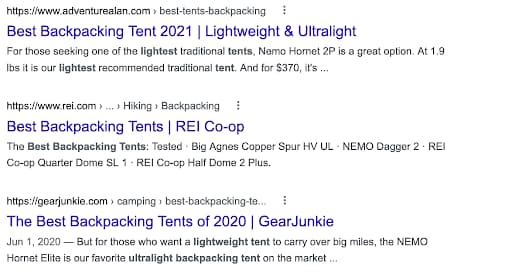
When I searched "best lightweight camping tents" on Google, REI popped up on the first page of results. The blog post is part of their "Expert Advice" column, which invites people to learn more about their product features, testing processes, and ratings. Of course, you can purchase each featured tent from REI in a few clicks.
2. Engagement Campaign
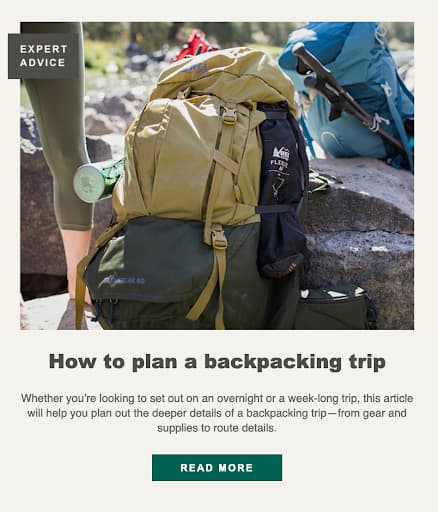
Say I've read a few blog posts from REI and am interested in the gear they sell. A website pop-up invites me to sign up for their email list, which I can't resist. The subject line of one email I receive is "We see backpacking trips in your future."
They know what I'm interested in and offer an email full of tips for planning a trip, including a gear list I'll need before I go. Down the funnel I go.
3. Conversion Campaign
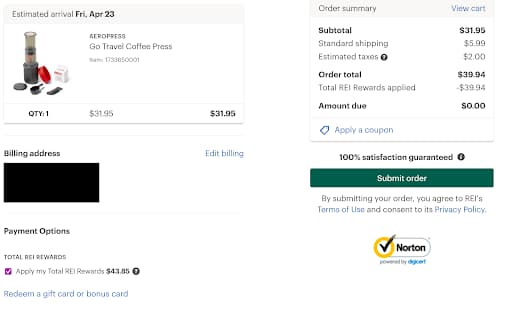
I scour the gear list to see what I need for my trip and discover I don't have a way to make my essential morning coffee. So I read a review post and decide to buy a lightweight AeroPress. A single click takes me to the product page, and I add the coffeemaker to my cart.
After signing in to my account, I’m taken to a checkout page that has my member ID, billing, and shipping information saved. It takes seconds to review and hit "Submit order."
4. Retention Campaign
My caffeine kick is taken care of, and I receive a confirmation email receipt for my purchase. It summarizes the order, outlines the return policy, and shares information about how I can donate used gear I may have laying around.
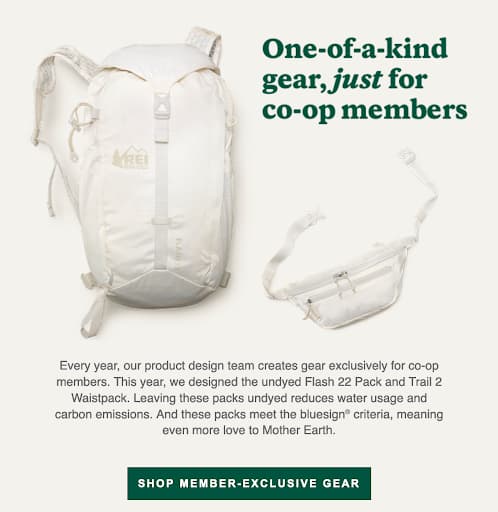
I'm a happy customer. A few days later, I get an email about the new gear line REI designed just for co-op members. It's one-of-a-kind and available in limited quantities. As a backpack hoarder, I'm tempted.
5. Loyalty Campaign
As an REI Co-op member for seven years, I'm on the path to being a lifelong customer. It's one of my first stops when I'm looking to buy anything for my outdoor adventures. And I've even encouraged some friends to become members.
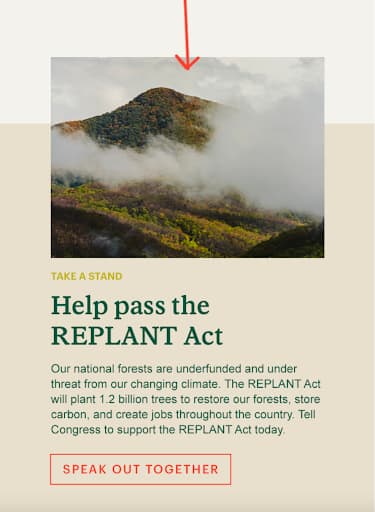
REI knows what matters to me and encourages me to participate in campaigns to protect wild areas, so they invite me to support the REPLANT Act in an email campaign.
By tapping into my values, I'm connected to the brand. And emotionally-connected customers spend about $699 per year with a company compared to regular customers who spend about $275.
Lifecycle Email Marketing
The examples above highlight a handful of ways to use lifecycle email marketing to engage customers. But sloppily sending emails isn't enough. They need to come at just the right time, so they don’t get buried in someone's inbox. And they must be enticing enough to open. The average email clickthrough rate (CTR) is 18%, which means a lot of messages go unopened and ignored.
The CTR varies by industry, so take a look at this breakdown to get an idea of your benchmark.
.jpg?width=512&name=lifecycle-email-marketing-industry-averages%20(1).jpg)
Don't be disappointed if your rates are low at first. There are ways to spice up your campaigns and get people interested enough to click. You can:
- A/B test your subject lines for length, messaging, and context.
- Optimize the preheader text so people get a good preview.
- Test the cadence, day, and time of day (i.e., Monday evening versus Tuesday morning).
- Try personalizing the email with the recipient's name.
- Send emails from a person at your company instead of the company name.
- Segment your email campaigns based on your audience segments (i.e., newsletter emails vs product emails).
- Consider your brand voice and tone for cohesive messaging.
- Make sure you have a clear CTA.
- Add eye-catching design, along with hero images, videos, or graphics.
Before you test emails, you need to design a campaign that anticipates the various touchpoints your customers require to move from the awareness stage to the loyalty stage. Let's take a look at how companies use email for lifecycle marketing campaigns.
1. Hilton Honors
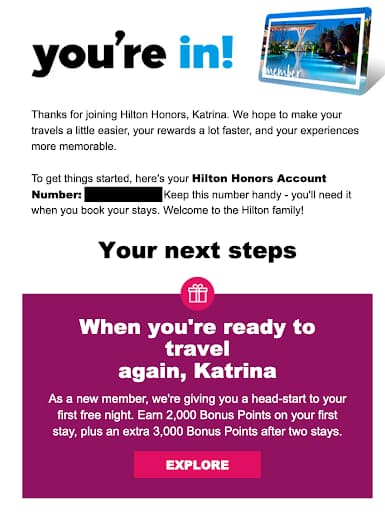
Welcome emails are expected when you sign up for a company's email list or loyalty program. I'm actually nervous my request didn't go through if I don't receive a Welcome email.
Here, Hilton sends a straightforward email for joining Hilton Honors and shares tips for making the most of membership. It's easy to scan and offers informative content to learn more about the company or the program.
Lifecycle Stage: Awareness
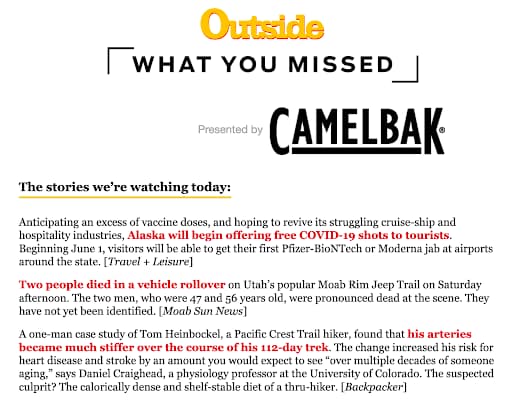
2. Outside Magazine
After signing up for Outside Magazine's daily newsletter, I can look through the email to read recent stories that pique my interest. The publication shares articles and gear promotions through embedded links, making it simple to click on their site and read the full piece.
Informational emails help bring people to your site, where they'll likely keep scrolling long past the initial article.
Lifecycle Stage: Engagement
3. Backcountry
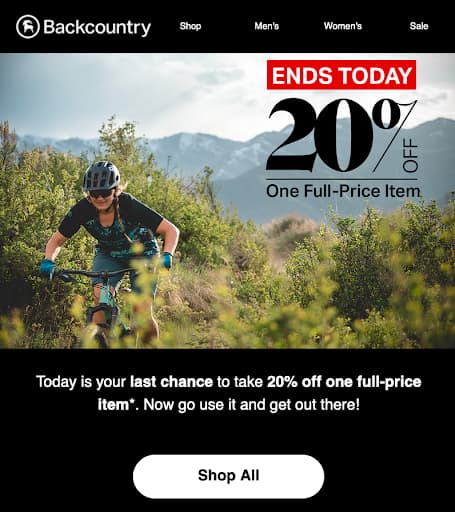
Let's keep going on this outdoor theme with a promotional email from Backcountry. Touting the subject line "Final Hours: 20% Off One Full-Price Item," it's meant to grab people's attention and get them to make an immediate purchase.
You can use this type of email for engaged customers who have already had multiple touch points with your brand. Maybe they've subscribed to your newsletter or have items sitting in their cart.
Lifecycle Stage: Convert
4. Sierra Club
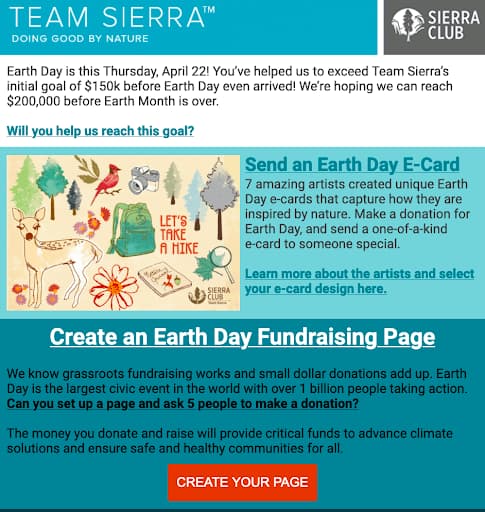
To remind donors about Earth Day and the various ways to give back, the Sierra Club sent this re-engagement email. It shares ideas to celebrate the holiday, explains how to raise money for the grassroots organization, and invites donors to free webinars from climate activists.
The on-brand combination of education and activism is a good way to remind supporters of their shared values and encourage donations.
Lifecycle Stage: Retention
5. Thirdlove
We touched on personalization more than once in this post, but there are so many perks of custom emails. Take this example from Thirdlove.
Their marketing team not only sends emails from a variety of accounts, like individual team member names, but they also personalize emails by sending a collection based on buying habits. It's intriguing to see your name this way, and clicking makes you feel special — even if hundreds of other people receive the same product options.
Lifecycle Stage: Loyalty

Incorporate Lifecycle Marketing Into Your Strategy
You know the benefits, stages, and ways to incorporate lifecycle marketing into your company's strategy. All that's left is to start mapping the cycle for your customer segments and managing the people you bring in.
Once you've done the hard work, you can save time with marketing automation software that simplifies tasks like setting up email campaigns, tracking analytics, planning your SEO strategy, and more.
If you want to learn more about managing customers once they're in the cycle, you can brush up on customer lifecycle management or see how to work with lifecycles in HubSpot.


![11 Recommendations for Marketers in 2024 [New Data]](https://blog.hubspot.com/hubfs/Marketing%20Recommendations.png)
![The Top 5 B2C Marketing Trends of 2024 [New HubSpot Blog Data + Expert Insights]](https://blog.hubspot.com/hubfs/top%20b2c%20marketing%20trends.png)
![5 Marketing Trends That Might Not Survive in 2024 [HubSpot Research + Expert Insights]](https://blog.hubspot.com/hubfs/marketing%20trends%20that%20might%20not%20survive%202024.png)