

Twitter is among the most popular (and powerful) social media networks. How you leverage the platform depends entirely on how its members use, follow, post, and interact with what they care about. Luckily, there are new statistics to make your social media marketing decisions more manageable.
So, how are people using Twitter nowadays? How are businesses using Twitter? And how connected do people feel to a brand due to your Twitter presence? Look at the most remarkable Twitter stats we've found for 2023. And if you're in a pinch, jump to the information you need below:
- General Twitter Statistics
- Twitter Statistics for Business
- Twitter User Statistics
- Twitter Usage Statistics
- Twitter Followers Statistics
Download Now: The 2025 State of Social Media Trends [Free Report]
Twitter Statistics
General Twitter Statistics
1. Most world leaders and foreign ministries have an official Twitter account. (Statista)
2. As of 2023, Twitter.com is the 4th most visited website in the world. (Similarweb)
3. The United States is the country with the most number of Twitter users, with 79.6 million users. (Demandsage)
Twitter Statistics for Business
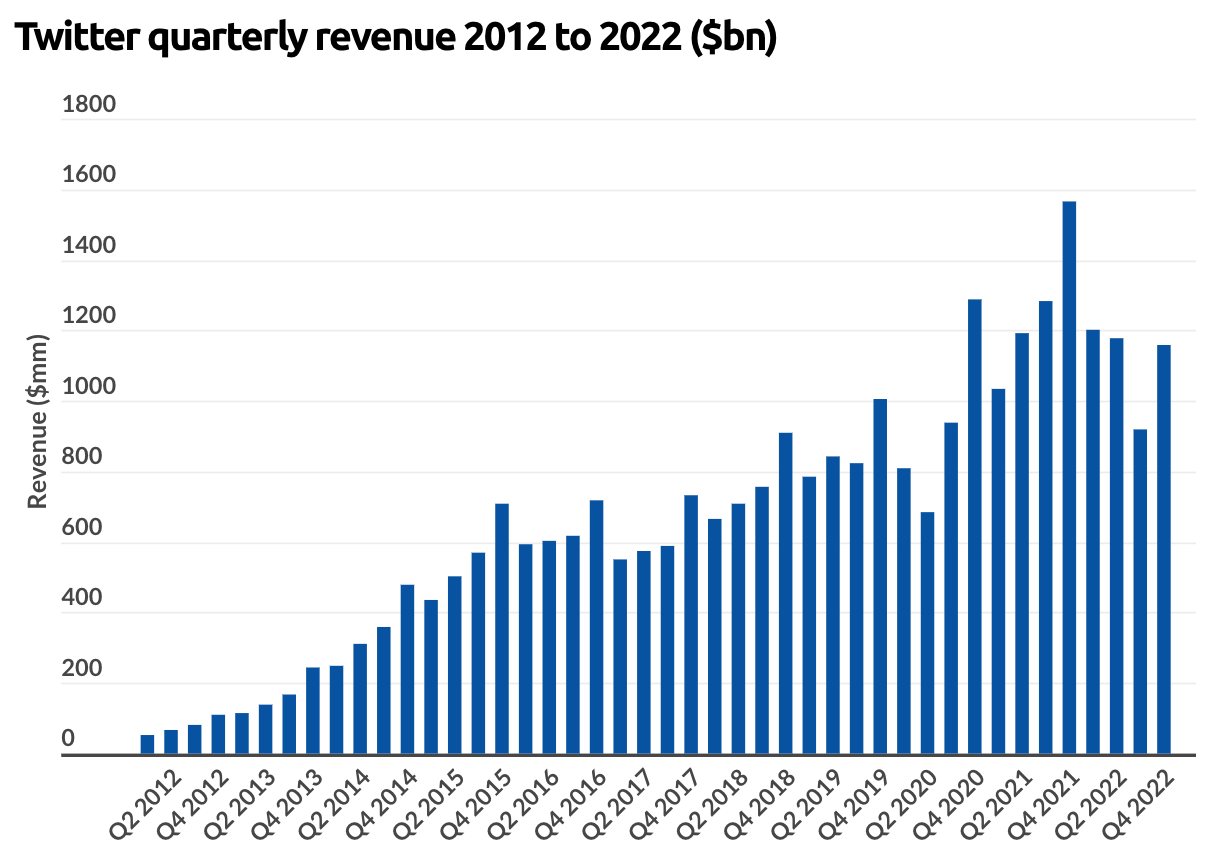
4. Twitter generated $4.4 billion in revenue in 2022, an 11% decline year-over-year. (Social App Report 2022)
5. 7% of social media marketers believe that Twitter is the most effective for building an active community on social media, higher than LinkedIn but less effective than Instagram at 26%. (Social Media Trends Report)
6. 6% of social media marketers think Twitter offers the highest ROI when selling products directly in the app. (Social Media Trends Report)
7. Even though only about 17% of Twitter’s users come from the US, it accounts for more than 50% of the company’s revenue. (Social App Report)
8. The top three types of content that offer the biggest ROI on social media are relatable content, trendy content (cultural moments and news), and educational/informational content (Social Media Trends Report)
9. Almost 30M unique social media authors mentioned “reviews,” “advice on,” “pros and cons,” “alternatives,” and “best option,” on Twitter, looking for more authentic sources of information that they can trust. (Social Media Trends Report)
10. 5% of social media marketers plan to work with influencers/creators on Twitter more than other social platforms. (Social Media Trends Report)
11. The average Twitter Ads ROI is 40% higher than the average media ROI for other channels. (Twitter Marketing)
12. 66% of brands are not moving their presence off Twitter in 2023. (HubSpot Research)
13. The top three formats that social media marketers plan to invest the most in for 2023 are short-form content (TikTok, Reels, etc.), long-form videos, and audio chat rooms (like Twitter spaces) (Social Media Trends Report)
14. The best time to post on Twitter is between 9 AM to 3 PM. (Social Media Trends Report)
Twitter User Statistics
15. The leading countries based on the number of Twitter users in 2022 were the United States, Japan, and India. (Statista)
16. Twitter currently has 237.8 million monetizable daily active users. (Demandsage)
17. Twitter has around 450 million monthly active users as of 2023. (Demandsage)
18. It's estimated that Twitter's monthly active users will reach 652.23 million by 2028. (Demandsage)
19. Around seven-in-ten adult Twitter users in the U.S. (69%) get news on the site. (Pew Research)
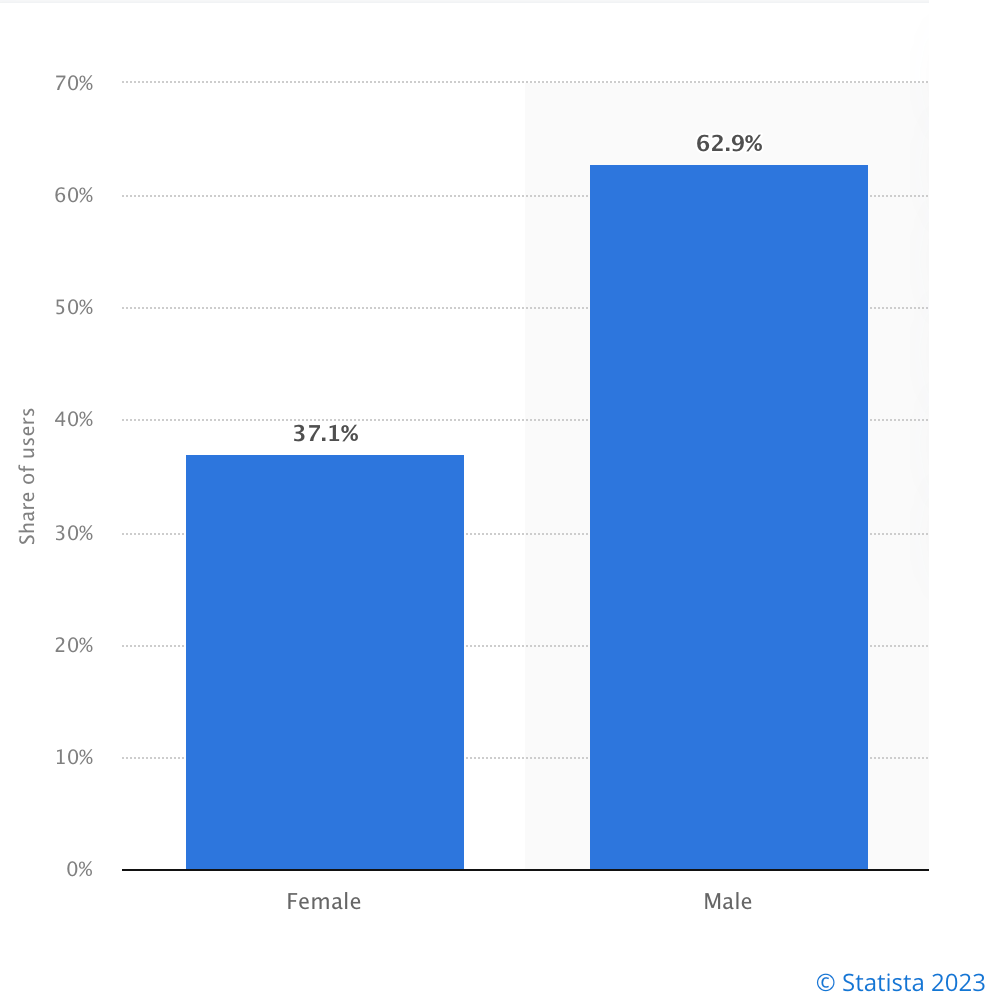
20. 62.9% of Twitter users identify as male, one of the highest gender disparities out of all social networks. (Statista, We Are Social)
21. Roughly half of U.S. adults who use Twitter (49%) post fewer than five tweets per month. (Pew Research)
22. 59% of infrequent tweeters (otherwise referred to as "lurkers") are between the ages of 30-49. (Pew Research)
23. Most Twitter news consumers in the U.S. say using the platform has increased their understanding of current events in the last year, but around a third say it has increased their stress levels. (Pew Research)
24. 31% of U.S. users say Twitter limiting the visibility of certain posts is a major problem, and 25% say the same about banning users from the platform. (Pew Research)
Twitter Usage Statistics
25. 80% of Twitter usage happens on mobile devices. (Google)
26. 55% of users log into Twitter each day. (Statista)
27. Twitter's global average time per visit is approximately 10 minutes and 32 seconds. (Similarweb)
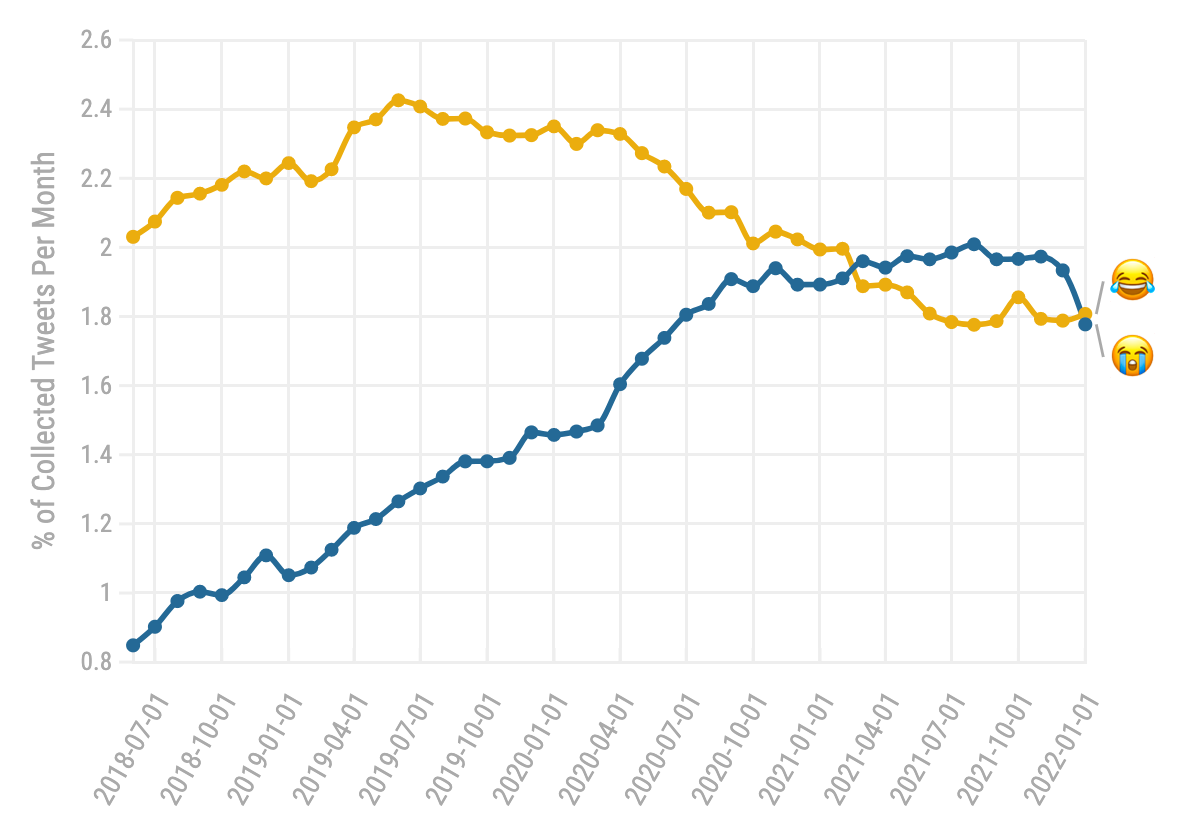
28. In 2022, 😂 Tears of Joy and 😭 Loudly Crying Face are tied for the most popular emojis used on Twitter. (Emojipedia)
Twitter Followers Statistics
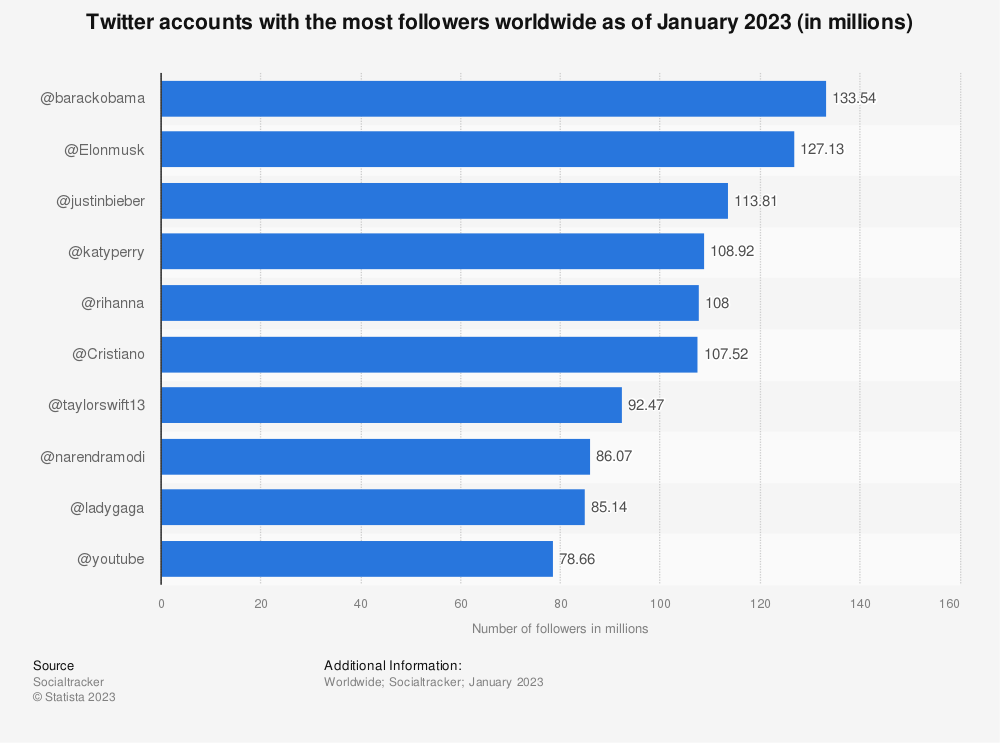
29. Former president Barack Obama is the world's most-followed Twitter account, at 133.1 million followers, followed by Elon Musk and then Justin Beiber. (Brandwatch)
30. The NBA and Google are the most followed non-media business accounts on Twitter. Their followers are 39.9 million and 28.9 million, respectively. (Statista)
31. The most followed news account on Twitter is CNN Breaking News (@cnnbrk), with 58.9 million followers. CNN controls the two most followed news accounts on Twitter. (Press Gazette)
Stay Up to Date on the Latest Twitter Stats
Twitter is adapting and changing amidst the rise of new social platforms and tech, but it's still a big competitor. Social media marketers should keep it on their radar and continue to leverage it to reach their target audience — just make sure you're using it wisely.
Editor's note: This article was originally published in March 2019 and has been updated for comprehensiveness.
![X (formerly Twitter) vs. Threads: What brands need to know [data]](https://53.fs1.hubspotusercontent-na1.net/hubfs/53/x%20vs%20threads.png)

![Twitter is Dead (Kind of): Where X Stands With Consumers [New Data]](https://53.fs1.hubspotusercontent-na1.net/hubfs/53/Untitled%20design%20(32)-1.jpg)
![11 Twitter Alternatives Marketers Can Consider [Data + Expert Insights]](https://53.fs1.hubspotusercontent-na1.net/hubfs/53/Twitter%20Alternatives.jpg)