

Job seekers, people managers, and career switchers in all industries want the same straight answer. So, here it is: While concerns about its capabilities are high, AI, as it is, is very unlikely to wipe out entire professions. Right now, AI is automating specific job responsibilities, which is actually more to our benefit — if we’re willing to work with it.
The World Economic Forum’s Future of Jobs Report 2025 estimates that AI and other structural shifts will displace 92 million jobs by 2030, while creating 170 million new ones; that’s a net gain of 78 million jobs worldwide.
Whether a role lands on the “displaced” side or the “created” side depends on the tasks it actually involves, not the job title on a business card.
This guide breaks down which jobs carry the highest AI exposure today, which ones are more likely to be transformed than eliminated, and how to build a career, in marketing or anywhere else, that can grow long term. Want the bigger-picture view first? HubSpot’s AI predictions for marketing are a good place to start.
Table of Contents
- 10 Jobs Most Exposed to AI by 2030
- Jobs Less Likely to Be Fully Replaced By AI
- How AI Is Transforming Jobs (Not Eliminating Them)
- What Jobs Will AI Replace? Roles at Risk and “Safer” Career Paths
- How to Build a Future-Ready Career with Loop Marketing
- FAQ About AI Replacing Jobs
- TLDR: Work with AI, not against it.

The State of Artificial Intelligence in 2026
New research into how marketers are using AI and key insights into the future of marketing.
- Marketing AI Tools
- Practical Tips
- Trends and Statistics
- And More!
Download Free
All fields are required.
Form not available
How AI Is Transforming Jobs (Not Eliminating Them)
Our State of AI report found 53% of respondents are at least moderately concerned that AI could automate their role, and those feelings are valid.
May some organizations be able to eliminate positions using AI? Yes. Job displacement due to technology has been happening since the industrial revolution (Just ask factory workers and “human computers”). But that isn’t a call for panic.
It’s a call to work with AI, not against it.
40% of respondents to our survey also said that job security concerns have led them to use AI somewhat more, and the results are encouraging.

According to recent data from the US Census, about a third of people who use AI at work said it cut one or two hours from their tasks, with another third reporting they saved even more.
Small efficiency gains like these add up and could be the difference between working late and leaving early on a Friday afternoon.
Plus, let’s be honest: we all have parts of our jobs that we dread. For me, it’s often the repetitive tasks that don’t require much thought or expertise but take way too much time. Thankfully, this is where AI excels most.
The Census data confirms this, finding the top five ways people used AI at work:
- 37% said they used AI to search for information or technical help.
- 32% to write communications, documentation, or instructions.
- 32% to generate ideas.
- 31% to interpret, translate, or summarize information.
- 27% to do administrative tasks.
Fewer people reported using AI for tasks like coding or modeling, customer support, and managing logistics or supply chains.
These numbers should be even more comforting for most professionals.
AI systems can automate repetitive, rules-based tasks like sorting data, generating first drafts, routing calls, and answering common questions well. But when it comes to making judgment calls, building relationships, showing experiential or emotional depth (obviously), or any work that requires a body in the room, it’s no competition.
In that respect, it’s safe to say AI isn’t taking jobs, but changing many by cutting back monotonous individual tasks and freeing up time for ones only humans can truly do.

AI has also led to the development of some new technical jobs involving machine learning, data science, and even robotics.
So what jobs are most likely to see the impact of AI? Let’s get into it.
What Jobs Will AI Replace? Roles at Risk and “Safer” Career Paths
Rather than providing a flat yes-or-no list, this guide helps you understand what actually makes a role at risk in the first place.
What makes a job vulnerable to AI?
The U.S. Bureau of Labor Statistics (BLS)’s newest AI exposure data tracks popular occupations with a Low, Moderate, High, or Very High AI exposure rating, built on a mix of research on AI’s theoretical capabilities and real-world usage data pulled from tools like Claude and Microsoft Copilot.
The highest-exposure jobs tend to share a few traits:
- Repetitive tasks or clearly defined workflows
- Data-heavy decision-making that doesn’t require much nuance
- Low emotional intelligence or in-person interaction requirements
- Standardized outputs that can be templated or scaled at volume
But BLS was clear: a high or very high exposure rating “does not necessarily mean employment will decline,” and low exposure “does not necessarily mean the occupation will be unaffected by AI.” The rating measures task overlap, not layoff probability.
Note: The same task-first lens is worth applying to how AI is changing businesses well beyond these examples.
Zeroing in on marketing, HubSpot’s 2026 State of AI in Marketing survey found companies are actively hiring or redeploying people into that last row: 36% are adding AEO specialists, strategists, or content creators; another 36% are adding AI coaches; and 30% are building out AI governance and compliance roles. HubSpot’s AI Jobs resource digs into more.
Some of these roles may surprise you, considering the current state of generative AI, but they shouldn’t. We’ll get into why in the next section.
The State of Artificial Intelligence in 2026
New research into how marketers are using AI and key insights into the future of marketing.
- Marketing AI Tools
- Practical Tips
- Trends and Statistics
- And More!
Download Free
All fields are required.
Form not available

10 Jobs Most Exposed to AI by 2030
- Word processors and typists
- Data entry keyers
- Telephone and switchboard operators
- Bookkeeping, accounting, and auditing clerks
- Computer programmers
- Receptionists
- Customer service representatives
- Retail salespersons
- Graphic designers
- Advertising sales agents
These roles show some of the clearest overlap between what AI already does well and what the job actually requires. None are guaranteed to disappear, but each is seeing measurable task automation or a projected employment decline.
1. Word Processors and Typists
Word processors and typists are projected to decline by over 34% by 2035, the sharpest drop in BLS’s 2025–35 projections, as both AI transcription tools and other technology increasingly substitute for the role. Even outside of marketing, AI transcription use can be seen in many professional fields, including medicine.
2. Data Entry Keyers
BLS projects “data entry” employment will shrink almost 26% by 2035, one of the steepest declines of any occupation it tracks, as AI, optical character recognition, and mobile data capture handle more manual entry work. CRM management is a good example of a marketing task that may be affected.
3. Telephone and Switchboard Operators
While already a niche occupation, telephone and switchboard operators are still common in hospitals, technical and customer service, and large offices. Nevertheless, automated phone systems are projected to cut employment in these roles by roughly 26–28% by 2035.
Telemarketer roles are also expected to drop by around 27%.
4. Bookkeeping, Accounting, and Auditing Clerks
BLS projects a 6% decline by 2035 in bookkeeping, accounting, and auditing positions as accounting software increasingly handles reconciliation and reporting on its own. The remaining workforce may be pushed toward a more analytical, advisory role.
Marketing tasks such as campaign budget tracking, ad platform spend reconciliation, and payment processing have the potential to be affected.
5. Computer Programmers
BLS projects computer programming positions to decline 7% by 2035. BLS notes that some higher-skill programming tasks are shifting to software developers, a role it separately projects to grow 10%.
6. Receptionists
Traditional receptionist jobs are projected to shrink 2% by 2035 as scheduling, check-in, and routine phone tasks move to software. The human touch, however, will remain valuable in in-person and relationship-focused environments.
7. Customer Service Representatives
One call to any customer service line and you’ll understand why BLS places customer service roles in its “very high” AI-exposure tier. AI is already fielding routine questions and drafting responses to both phone calls and live chats, though escalations still need a person. See how customer service roles are being rethought as a result.
8. Retail Salespersons
BLS’s sales occupations group overall is projected to decline through 2035 as self-checkout and e-commerce reduce the need for floor staff. This, however, does vary depending on the target market and industry.
9. Graphic Designers
The number of graphic design positions is projected to decline 2% by 2035, even as most original, brand-specific creative work still needs a human hand. This is the same tension web designers are navigating with AI-generated layouts, images, and more.
The projected decline in graphic design positions heavily impacts many marketing tasks, including social media content creation, website design, premium content creation, and more.
10. Advertising Sales Agents
Advertising sales positions are grouped inside the broader sales occupations decline as self-serve digital ad platforms like Facebook and Google Ads increasingly replace the human sales rep. For more on how AI is affecting broader sales roles, see our analysis of whether robots are coming for sales jobs.
The State of Artificial Intelligence in 2026
New research into how marketers are using AI and key insights into the future of marketing.
- Marketing AI Tools
- Practical Tips
- Trends and Statistics
- And More!
Download Free
All fields are required.
Form not available
Jobs Less Likely to Be Fully Replaced By AI
- Human Resources Managers
- Marketing Managers
- Sales Managers
- Public Relations Managers
- Market Research Analysts
- Event Planners
- Storytellers/Writers
- Editors
- Product Managers/Software Developers
- Chief Executives
Human-centered roles generally face a lower risk of full automation as the work leans on judgment, trust, care, accountability, or physical presence — aka qualities AI still struggles to replicate.
That doesn’t make these roles immune; rather, the core function is harder to automate away entirely.
1. Human Resources Managers
HR management roles are projected to grow 6% by 2035, faster than average, as companies lean more on people-strategy work like retention and engagement. I mean, think about it — when you’re facing a tough personal issue at work or going through a hiring process, you don’t want to speak to a robot. Human connection is critical to success here.
2. Marketing Managers
Marketing management jobs are projected to grow faster than the 3% average across all occupations, per BLS. Why exactly? Well, the interpretation, oversight, and company-specific context the role requires are hard to hand to a model.
Add in the necessary creativity, cross-team collaboration, and understanding of the human condition, and it’s easy to see why AI would have a tough time replacing these roles.
3. Sales Managers
This may seem contradictory considering other sales positions are predicted to decline, but it actually highlights an important takeaway about AI job displacement overall: automation shrinks execution work more than it shrinks oversight work.
That means sales management tasks tied to coaching, quota-setting, and relationships are still very much human-led and projected to grow faster than average.
4. Public Relations Managers
PR management roles are also projected to see faster-than-average growth. This is mainly tied to the media relationships and reputation judgment calls that the role depends on.
5. Market Research Analysts
A few years ago, market research roles were often flagged as automation-vulnerable, but this year BLS projects them to grow 7% by 2035, much faster than average. Market research roles are projected to grow because the responsibilities have shifted from things like running surveys, calculating results, and creating reports to data interpretation.
AI redirected research jobs toward the harder part AI still can’t do well: framing the right research question, reading nuance into ambiguous or contradictory data, and translating findings into a recommendation a business will actually act on.
There’s also a host of fact-checking and qualitative data research (like focus groups) that is still best handled by humans.
Related: 9 Best Marketing Research Methods to Know Your Buyer Better [+ Examples]
6. Event Planners
In a post COVID-19 lockdown world, demand for event planners is expected to grow 6% by 2035 as the popularity of professionally run in-person conferences and events — weddings included — keeps climbing.
Marketing-wise, this is huge as event marketing has also made a resurgence. For a deeper look at how to leverage this trend, see our guide on event marketing strategy and customer connection.
7. Storytellers/Writers
BLS projects little or no change in writer or “storyteller” employment through 2035, noting that AI writing tools are dampening demand somewhat, but that online media, advertising, entertainment, and reading for pleasure keep writers working.
As a writer, editor, and marketer of over a decade, I’ll also note that while AI has many helpful uses for our blog team even here at HubSpot, writing is another example of an arena where human experience, emotion, discernment, and creativity are necessary to maintain quality and effectiveness, and cannot be replicated by machines.
8. Editors
Editing means judging tone, accuracy, and originality — exactly the kind of contextual call that’s hardest to templatize, especially as AI speeds up the first draft. For that reason, BLS predicts editing roles will be less likely to be replaced by AI any time soon.
9. Product Managers/Software Developers
Software developers, QA analysts, and testers are projected to grow 10% by 2035, much faster than average, but why exactly? BLS notes that AI adoption is itself creating demand for people who build and maintain AI-powered products, and successful products require acute understanding of human behavior and needs.
10. Chief Executives
Strategy, accountability to a board, and motivating a workforce are still squarely human work. No AI model reports quarterly earnings to shareholders.
Again, there’s no such thing as a fully “AI-proof” career, but some roles certainly come closer than others, and lined up against the higher-exposure list above, the contrast in AI risk is clear:
But remember: This is just a snapshot in time.
As noted, some roles that were once considered “high exposure” to AI displacement are now “low.” The landscape of AI is evolving, and its long-term effects are a bit unpredictable. All we can do is tackle what we’re dealing with in this moment, and for those in the marketing industry, there is no shortage of ways to adapt.
How to Build a Future-Ready Career with Loop Marketing
Reskilling isn’t an AI panic button. For most employers and modern workers, it’s standard practice to stay competitive. That said, 77% plan to train their workforce to work with AI rather than against it, 29% of workers are expected to be upskilled in their current role, and 19% will be redeployed into new opportunities.

HubSpot’s own research found a similar pattern inside marketing departments specifically: 98% of teams are using AI in some form, though only 10% have reached a “transformational” level of adoption. More than half of marketers (53%) are also still at least moderately concerned that AI could automate part of their role, so adoption and concern are clearly running side by side.
Loop Marketing, HubSpot’s operating framework for the AI era, helps marketing teams navigate these conditions by testing, learning, and adapting as AI capabilities shift and deciding which tasks are ready to be automated.
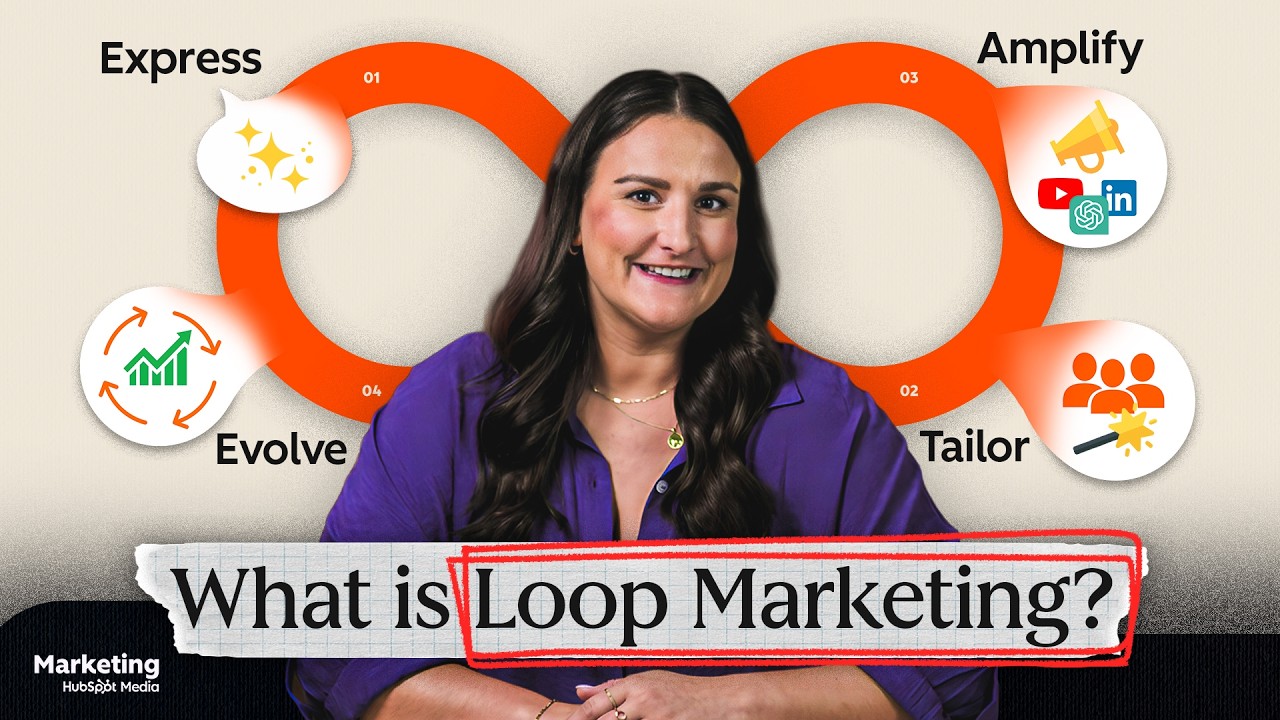
Loop Marketing is a marketing-specific model, not a universal career framework, but the same Assess → Experiment → Learn → Adjust logic transfers well to career planning in any field.
Here’s a four-step version any professional can use:
1. Express: Know what you actually do.
In Loop Marketing, Express means defining a brand’s voice and point of view before scaling it with AI. Applied to your own career, it means you should define your role by its actual tasks, not its title.
Yuval Halevi, co-founder of GuerrillaBuzz, shares how his team is approaching the AI shift: “We apply AI mainly to repetitive and time-consuming tasks, removing the monotony and freeing up time for more creative work.”
That’s the pattern worth checking for in any role, including your own.
A “marketing manager” job, for example, might bundle ten different task types with wildly different AI exposure levels. You can’t assess your exposure, or express your value clearly to a manager, without that breakdown first.
“Search for whatever your title or your position is and look at all the [AI] tools that exist within that,” says Duran Inci, CEO of Optimum7, on how he advises teams to stress-test their own roles before assuming the worst.
2. Tailor: Apply AI to the right tasks.
In Loop Marketing, Tailor means adapting a message to a specific audience instead of broadcasting one version to everyone. Applied to your career, it means testing AI on one narrow, bounded task (i.e. a first-draft outline, a data cleanup job, a routine email) rather than trying to automate your whole role at once.
HubSpot’s AI agents are one marketing-specific example built for exactly this kind of bounded task.
3. Amplify: Reinvest what AI frees up.
In Loop Marketing, Amplify means extending one piece of content across more channels without growing the team. Applied to your career, you should take whatever time AI frees up and reinvest it into the parts of your job that still need a person, like strategy, relationships, and judgment calls.
This works whether or not you use HubSpot specifically, but HubSpot’s platform does support AI-assisted automation across marketing, sales, and service workflows, and HubSpot CRM unifies customer data across teams, so those AI tools have accurate context to work from.
HubSpot’s broader ecosystem includes reports, templates, and training — including HubSpot Academy’s AI for Marketing course — built specifically to help teams adopt AI without losing that context.
4. Evolve: Measure, then adjust.
In Loop Marketing, Evolve means feeding performance data back into the next campaign cycle instead of treating a launch as finished. Applied to your career, you should check the AI-assisted work against four questions before you scale it up:
- Is the output actually accurate?
- Would a customer or colleague trust it as-is?
- Who signs off on it before it goes out?
- And if it’s wrong, who’s accountable?
For example, an AI tool might draft a customer email in 30 seconds instead of 10 minutes — but if you still need to fact-check every claim and rewrite the tone, the real time saved is much smaller than it looks, and someone still has to own the outcome.
If the output doesn’t accomplish what you need consistently, or if accountability is unclear, that task isn’t ready to be automated with AI. Keep it in the “supervised” column for now and revisit it once the AI tool, the prompt, or your review process improves.
That result then feeds back into Express: a clearer picture of which of your tasks are ready to hand off, and which still need you.
The State of Artificial Intelligence in 2026
New research into how marketers are using AI and key insights into the future of marketing.
- Marketing AI Tools
- Practical Tips
- Trends and Statistics
- And More!
Download Free
All fields are required.
Form not available
FAQ About AI Replacing Jobs
Will AI replace marketers?
Marketing managers still need to interpret data, oversee campaigns, and understand a company’s specific context — a mix that’s hard for AI to replicate end to end, which is part of why BLS projects faster-than-average growth for the role. However, marketers are not invincible. Marketers in these roles must stay diligent, understand AI capabilities, and adopt AI tools to help avoid displacement.
What jobs are safe from AI?
No job is fully “safe” from AI impact. However, roles built around strategy, empathy, creativity, and cultural context—such as HR management, sales and marketing management, PR, event planning, and executive leadership—face lower risk of automation than administrative or highly repetitive positions.
What jobs will be gone by 2030?
No jobs are projected to disappear entirely by 2030. The steepest declines in BLS’s current 2025–35 projections are concentrated in a handful of clerical and data-processing roles like word processors and typists, telephone operators, and data entry keyers among them, but even these are shrinking, not vanishing.
What jobs will be gone by 2050?
There’s no reliable, primary-sourced labor forecast that reaches that far out. Both BLS and the WEF limit their projections to a 10-year window precisely because longer-range forecasts introduce too much uncertainty for reliable predictions. Any specific claim about 2050 job losses should be treated as speculation, not data.
What jobs cannot be replaced by AI?
No jobs are fully immune to AI displacement, but roles that require physical presence (firefighters, dental hygienists), high-stakes judgment (executives, HR managers), or an original human point of view (writers, editors) currently carry the lowest AI exposure BLS tracks.
Which 5 jobs will survive AI?
More precisely: which 5 roles currently combine low-to-moderate AI exposure with steady or growing demand? Based on current BLS data, that’s human resources managers, event planners, market research analysts, software developers, and public relations managers.

TLDR: Work with AI, not against it.
The data tells a consistent story: AI is reshaping tasks much faster than it’s actually eliminating jobs.
The roles with the steepest declines share a common thread of being repetitive, rules-based, and low-judgment work, while roles built on strategy, trust, and original thinking are holding steady or growing.
Don’t get me wrong. I was initially worried about job security in the face of AI as well. However, as time has gone on, I’ve learned that for true experts in their fields, AI is more a tool to wield than an enemy to fear.
The best move isn’t to wait and see. It’s to look at your own role’s actual tasks, test AI on the ones it’s suited for, and reinvest the time you save into the work you and only you can do.
Ready to see where your team stands? Download HubSpot’s 2026 State of AI in Marketing Report to see how 1,700+ marketers are navigating this shift.
Editor's note: This post was originally published in October 2025 and has been updated for comprehensiveness.
The State of Artificial Intelligence in 2026
New research into how marketers are using AI and key insights into the future of marketing.
- Marketing AI Tools
- Practical Tips
- Trends and Statistics
- And More!
Download Free
All fields are required.
Form not available
.png)


