Is Facebook applicable for B2B companies? Absolutely! With more than 750 million users, Facebook is useful for far more than just teenagers playing online games. The social network has become a representative sample of the world's population. As a company selling to other companies, Facebook serves as an important tool for generating leads and nurturing customer relationships.
Let's take a look at 6 B2B companies and how they are using Facebook:
6 Ways B2B Companies Are Using Facebook
1. Rewarding Brand Advocates: In the world of outbound marketing, it wasn't easy for word-of-mouth buzz to spread quickly about your business. That has all changed. Smart B2B companies now realize that "fans" can be an important part of a successful inbound marketing strategy. Cisco has taken a unique approach to rewarding some of its biggest fans. It has created a SuperFan Spotlight on its Facebook page, which rewards members of the online Cisco community who share news and information about the company. 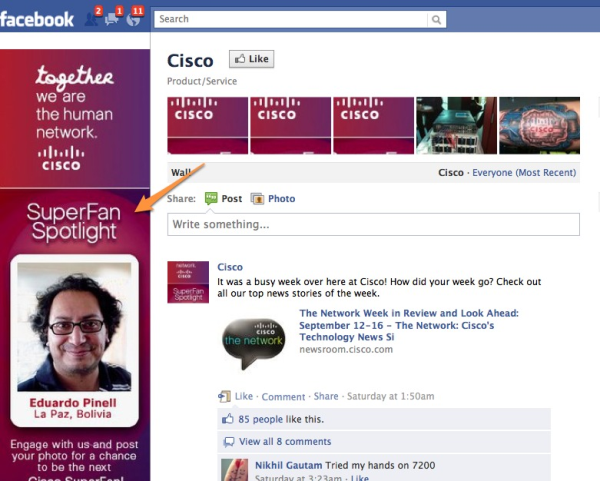
2. Doing Product Marketing and Promoting Testimonials: Does it get more B2B than vibration testing equipment? Fluke Corporation has gained more than 21,000 Facebook fans using some successful contests. Fluke is also a great example of a B2B company putting its product upfront in the right way in its social media marketing efforts. When you first visit the Fluke Facebook page, you are welcomed by an image about one of its featured products. In addition, the wall of the page is filled with customer testimonials.

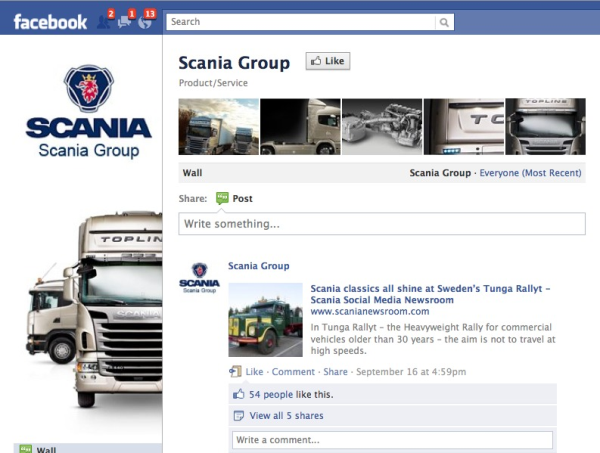
3. Promoting News: Nothing says B2B like commercial trucking. Scania Group, a manufacturer of trucking equipment, uses Facebook to expand the reach of its news and announcements. The company hosts a newsroom on its website that acts as a hybrid between a blog and a press room. Scania uses Facebook to distribute news and industry information directly to prospects and customers, expanding its reach beyond traditional media.
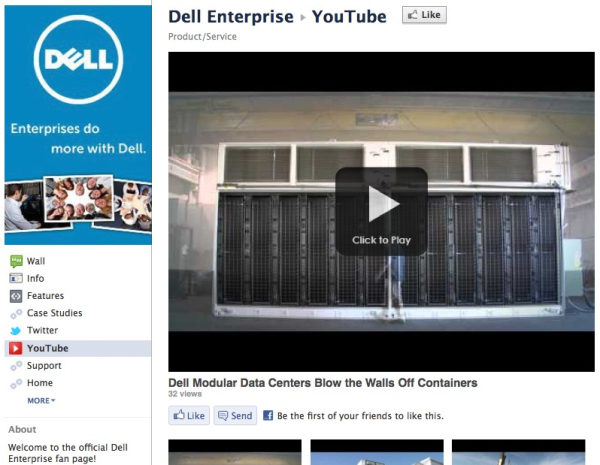
4. Sharing Videos: Facebook isn't only about text. Dell Enterprise, for example, has an entire tab on its Facebook page dedicated to sharing content from its YouTube account. Videos enable B2B companies to talk about best practices and product features in a different -- and often more compelling -- forum.
5. Showcasing Experts: In B2B marketing, building credibility and thought leadership through online content creation is a key part of successful inbound marketing. GE has come up with an innovative use of Facebook to help solve this problem. Using a custom Facebook tab, GE has created a digital experts panel that displays experts as well as their newest tweet, blog post, or Facebook update. 
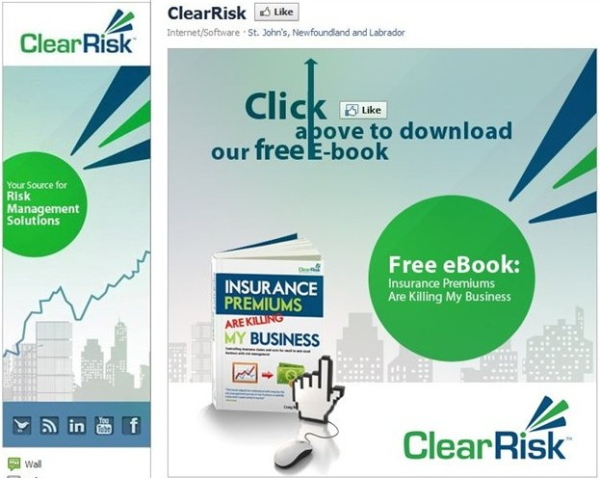
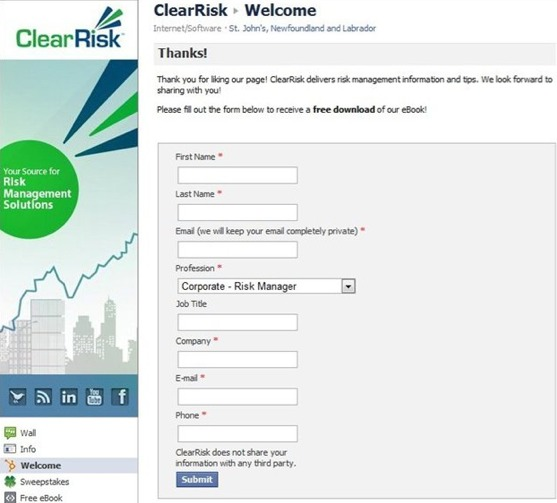
6. Generating Leads - The most important use of Facebook for a B2B company is generating leads and revenue for their business. One way to generate leads from Facebook is with a Like and lead gate. ClearRisk, an online provider of risk management solutions, uses the HubSpot Facebook Welcome application to encourage new visitors to their Facebook page to become a lead for their business.
Like Gate
Lead Form Within Facebook
Marketing Takeaway
It is clear that Facebook is a powerful tool for B2B marketers. When it comes to Facebook, set two clear priorities. The first should be setting up methods for generating leads directly from Facebook. The second should be integrating your overall inbound marketing strategy with your Facebook content and community. Look at how other B2B companies are using Facebook, but don't limit your strategies to only those that you currently observe in the market.


![22 Facebook Stats to Know in 2023 [+HubSpot Data]](https://www.hubspot.com/hubfs/Untitled%20design%20%288%29-1.jpg)
![How to Create a Facebook Group for Your Business [+ Why You Should]](https://www.hubspot.com/hubfs/Copy%20of%20Featured%20Image%20Template%20Backgrounds-Jun-30-2023-05-58-51-2746-PM.png)
![Facebook Insights: A Beginner's Guide [+ Step-by-Step Instructions]](https://www.hubspot.com/hubfs/Untitled%20design%20%2838%29.jpg)