.png?width=112&height=112&name=Image%20Hackathon%20%E2%80%93%20Horizontal%20(67).png)

With almost 4 billion people worldwide currently connected to the internet, there has never been a better time for businesses to include blogging in their marketing strategy.
Not only does blogging drive website traffic and promote your products and services, but it also helps you build trust with your potential customers.
In this post, we’re going to highlight the many benefits of blogging for business and how you can get started with creating relevant content that drives inbound links and traffic to your site.
Let’s get started.


What is business blogging?
Business blogging is a marketing tactic that uses blogging to get your business more online visibility. A business blog is a marketing channel (just like social media, direct mail, email marketing, etc.) that helps support business growth.
The Benefits of Blogging for Business
One question many people ask after starting a business is whether blogging is worth it in 2021.
Short answer: Yes! And here the reasons why we say so.
.png)
6 Free Blog Post Templates
Save time creating blog posts with these free templates.
- "How-to" Post
- "What is" Post
- Listicle Post
- And More!
Download Free
All fields are required.
1. It helps drive traffic to your website.
Raise your hand if you want more website visitors. Yeah, me too.
Now think about the ways people find your website:
- They could type your name right into their browser, but that's for an audience you already have. They know who you are, you're on their radar, and that doesn't help you get more traffic on top of what you're already getting.
- You could pay for traffic by buying an email list (don't you dare!), blasting them, and hoping some people open and click through on the emails. But that's expensive and, you know, illegal.
- You could pay for traffic by placing tons of paid ads, which isn't illegal but still quite expensive. And the second you run out of money, your traffic stops coming, too.
So, how can you attract new traffic or readers to your site? You can through blogging and optimizing your site for search engines.
Here's how it works.
Think about how many pages there are on your website. Probably not a ton, right? And think about how often you update those pages. Probably not that often, right?
Well, blogging is a great way to solve both of those problems.
Every time you create and publish a blog post, it's one more indexed page on your website, which means one more opportunity for you to show up on the search engine results page (SERP) and drive traffic to your website in organic search.
We'll get into more of the benefits of blogging on your SEO a bit later, but it's also one more cue to Google and other search engines that your website is active, and they should be checking in frequently to see what new content to surface.
2. You can repurpose blog content for social media.
Blogging for your business also helps you get discovered via social media. Every time you create a new article, you're creating content that people can share on social networks — Twitter, LinkedIn, Facebook, Pinterest — which helps expose your business to a new audience that may not know you yet.
Blog content also helps keep your social media presence going.
Instead of asking your social media manager always to create brand new content for social media (or creating that content yourself), your blog can serve as that repository of content.
You're strengthening your social reach with blog content and driving new website visitors to your blog via your social channels. Quite a symbiotic relationship, I must say.

3. It helps convert traffic into leads.
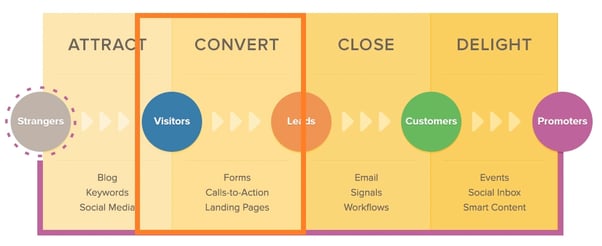
Now that you have some traffic coming to your site through your blog, you have an opportunity to convert that website traffic into leads.
Like every blog post you write is another indexed page, each post is a new opportunity to generate new leads.
The way this works is straightforward: Just add a lead-generating call-to-action to every blog post.
Often, these calls-to-action lead to things like free ebooks, whitepapers, fact sheets, webinars, trials, or basically, any content asset for which someone would be willing to exchange their information.
To be super clear for anyone unfamiliar with how traffic-to-lead conversions work, it's as simple as this:
- Visitor comes to website
- Visitor sees call-to-action for a free offer
- Visitor clicks call-to-action and gets to a landing page, which contains a form for them to fill in with their information
- Visitor fills out the form, submits information, and receives the free offer
If you scroll down in this blog post, you'll see a call-to-action button.
In fact, 99.9% of the blog posts we publish have call-to-action buttons, and yours should, too. That is how you turn your website traffic into leads for your sales team.
 Note: Not all blog readers will become leads, and that's okay. No one converts 100% of the people who read their blog into leads. Just get blogging, put calls-to-action on every blog post, set a visitor-to-lead conversion rate benchmark for yourself, and strive to improve the benchmark each month.
4. It helps establish authority.
The best business blogs answer common questions their readers and customers have.
If you consistently create valuable content or articles for your target audience, it'll establish you as an industry leader or authority in their eyes.
Pro tip: Having trouble with the "consistently" part? A tool like HubSpot's AI blog writer can help you generate valuable content in minutes.
Can you imagine the impact of sending an educational blog post you wrote to clear things up for a confused customer? Or how many more deals a salesperson could close if their leads discovered blog content written by their salesperson?
"Establishing authority" is not a vanity metric as concrete as traffic and leads, but it's pretty powerful stuff. You can use it to measure sales enablement.
Because at the end of the day, that's why many choose to start a blog.
Think about it:
- Suppose prospects find answers to their everyday questions via blog posts written by people at your company. In that case, they're much more likely to come into the sales funnel trusting what you have to say because you've helped them in the past — even before they were interested in purchasing anything from you.
- Prospects that have been reading your blog posts will typically enter the sales funnel with more knowledge of your products and services, your place in the market, and your industry. That makes for a far more productive sales conversation than one held between two relative strangers.
- Salespeople who encounter specific questions that require in-depth explanation or a documented answer can pull from an archive of blog posts. Not only do these articles help move the sales process along faster than if a sales rep had to create the assets from scratch, but they position the salesperson as a helpful resource to their prospect — thus helping to build trust.
6 Free Blog Post Templates
Save time creating blog posts with these free templates.
- "How-to" Post
- "What is" Post
- Listicle Post
- And More!
Download Free
All fields are required.
5. Blogging helps with link building.
Inbound links or backlinks are among the 200 factors the Google algorithm considers when ranking a site on its search engine result page. Many experts and small business owners also believe backlinks to be the 3rd most crucial factor in search engine optimization.
Although generating inbound links is essential, 41% of SEO experts say link building is the most challenging part of search optimization.
When you create articles that are not only valuable to your potential customers but also to other companies that your audience sees as industry leaders, it’d be easier to gain relevant links.
Links for authoritative websites serve as a vote of confidence or recommendation from other websites. And it signals to Google that you’re trustworthy and an expert in your industry.
Another benefit of backlinks is that they help you build your domain authority, which helps improve your overall discoverability in search engines.
6. It drives long-term results.
It would be fantastic if you could take a trip to Hawaii, go to the gym, and sleep for as many hours as you want, and still be able to drive traffic to your site.
Good news, though! That's what blogging does — primarily through search engines.
Here's what I mean:
Imagine you sit down for an hour on Sunday to write and publish a blog post. Let’s say that blog post gets you 100 views and ten leads on Monday. You get another 50 views and five leads on Tuesday as a few more people find it on social media, and some of your subscribers get caught up on their email and RSS. But after a couple of days, most of the fanfare from that post dies down, and you've netted 150 views and 15 leads.
It's not over.
Since that post is now ranking, it means that for days, weeks, months, and years to come, you can continue to get traffic from that blog post. So while it may feel like day one or bust, in reality, blogging acts more like this:

So while you're hitting your snooze alarm, surfing in Hawaii, and pumping iron, you're also driving traffic and leads. The effort you put in yesterday can turn into hundreds of thousands of views and leads in the future.
What’s more, you can monetize your blog content in many creative ways. Business models such as affiliate marketing mean you can generate an income from blogging on just about any topic — from makeup and beauty to camping and motorcycles.
There’s a wide variety of affiliate programs out there where you can generate an income from referring people to relevant products and services. For example, Augusta Precious Metals has an excellent affiliate program in the gold IRA space. Selling gold IRAs can be extremely lucrative for bloggers who know how to get leads through their content and then market to them effectively.
When it comes to blogging, most of your sales will likely come from your older articles.
More than half of the traffic generated each month on the Hubspot blog comes from posts published in previous months. They come from old posts.
The same goes for the leads generated in a current month — about 90% of the leads we generate every month come from blog posts published in previous months. Sometimes years ago.
We call these types of blog posts "compounding" posts. Not every blog post will fit into this category, but the more evergreen blog posts you write, the more likely it is that you'll land on one of those compounding blog posts.
In our research, we've found that about 1 in every ten blog posts end up being compounding blog posts.

To me (and hopefully to you), this demonstrates the scalability of business blogging.
While you might not see immediate results, over time, you'll be able to count on a predictable amount of traffic and leads for your business without any additional resource investment — the work to generate that traffic and those leads are already done.
If you'd like to learn more about the long-term impact of blogging and how to reap even more benefits from the blog posts that are ranking in organic search for your business, check out this article, "The Blogging Tactic No One Is Talking About: Optimizing the Past."
7. It helps you share company news.
Another benefit blogging affords every big, and small business is a medium to share their company news and stories.
Blogs can contain not only articles but also news that highlight what a company is up to.
Have you hired a new content marketing manager? Share it on your blog.
Interviewed online marketing and industry experts? Post it on your blog.
Have a brilliant case study that showcases how your products and services help customers? Tell your audience about it on your blog.
Are you hosting a local fair or trade show? Drum up attention for the even through your blog.
Not only does sharing company news on your blog humanize your brand, but it also helps your audience see that you’re not always about selling.
Secondary Benefits of Business Blogging
There are other reasons businesses might want to start a blog, but I think they're smaller and stray from the core benefits of blogging.
For example, I love to use our blog to test out extensive campaigns on the cheap before investing a lot of money and time into their creation. I also love to use our blog to help understand our persona better.
And while this shouldn't be their primary use, these are all significant usefulness of a business blog, but they're secondary benefits to me.
How to Start Blogging for your Business
You’ve seen the benefits your business blog can get you — more traffic, leads, authority, and a better relationship with your audience. And you’re undoubtedly itching to get started.
But how?
Our guide on how to start a successful blog has everything you need.
Editor's Note: This post was originally published in November 2020 and has been updated for freshness, accuracy, and comprehensiveness.
6 Free Blog Post Templates
Save time creating blog posts with these free templates.
- "How-to" Post
- "What is" Post
- Listicle Post
- And More!
Download Free
All fields are required.

![Do Blog Posts Actually Lead to Purchases? [New Data]](https://www.hubspot.com/hubfs/blogger-1.jpg)




![The Resources You Need to Get Started With Business Blogging [In Under 100 Words]](http://cdn2.hubspot.net/hub/53/file-251321191-jpg/Blog-Related_Images/get-started-blogging.jpg)