.png?width=112&height=112&name=Image%20Hackathon%20%E2%80%93%20Vertical%20(30).png)

But first, why is it essential to provide quality customer support?
Table of Contents
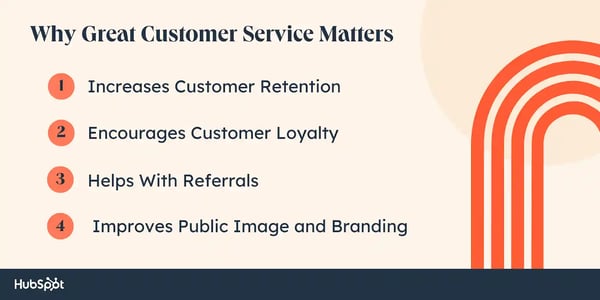
Why Great Customer Service Matters
Seventy-three percent of business leaders report a direct link between their customer service and business performance.
However, while the connection is unmistakable, customer satisfaction scores are falling. The average customer satisfaction score dropped by more than 11% between 2018 and 2022. To stand out, your team has to deliver excellent service.
Here are four other benefits of good customer service.
1. Increases Customer Retention
Retaining customers costs less than acquiring new ones.
Research from American Express found that acquiring a new customer costs six to seven times more than re-engaging existing customers. Serve the customers who've already chosen your brand, and you'll likely decrease churn.
In fact, 93% of customers are likely to make repeat purchases with companies that offer excellent customer service.
2. Encourages Customer Loyalty
In 2022, 36% of customers identified excellent service as a driver of brand loyalty. That goes far beyond the experience of buying a product.
If your customers encounter challenges, they'll look for multiple ways to contact you and quick response times to their messages.
When a customer receives a response within five seconds, the average customer satisfaction rate is 85%. When a reply takes more than two minutes, the satisfaction rate drops to 60%.
Keep your customers satisfied with your service, and they'll know you'll support them in all scenarios. This leads to greater customer loyalty.
3. Helps With Referrals
Your product may be excellent, but your customers won't recommend your offering if your service leaves them frustrated.
Only 13% of consumers will recommend a company whose customer service they've rated as "very poor."
On the other hand, customers who've had positive experiences with a company will be sure to refer their friends and colleagues, which is one of the best ways to gain new clients.
4. Improves Public Image and Branding
HubSpot research from 2022 found that 88% of customer service professionals believe that customers have higher expectations than in the past.
If customers' standards aren't met, that may be bad news for your brand.
Of custom service professionals, 85% responded that customers are more likely to share positive or negative experiences now than in the past.
Be sure to build goodwill with your customer. This helps improve both customer satisfaction and loyalty during challenging times.
Salesforce found 78% of customers will forgive a company for a mistake after receiving excellent service.
Mistakes will happen. However, it's not a matter of being flawless. Customers instead want you to respond to mistakes with grace, honesty, and the ability to find a solution.
Looking at these numbers, it's clear that great service is important. Next, we'll share guidelines that can improve your customer success organization and the customer experience.
15 Golden Rules of Customer Service
To help you build a great customer service framework, here are 15 important rules to follow.
1. Listen to your customers.
Listening is the first step to understanding.
Usually, everyone calling or emailing your customer service team has a problem to report — and if you don't listen, you'll never find out the customer's problem.
Research has shown that you feel positive about a conversation when you think the other party is engaged in active listening, and ideally, every conversation with a customer has a positive takeaway.
Pro tip: Respond to statements and questions to demonstrate your complete comprehension. Then, repeat what customers have said to ensure you understand each other.
2. Teach customers how to solve problems.
If you teach customers how to break down and succeed in a complicated process, they won't have to reach out as often for one-on-one assistance — saving them time and helping them be more successful.
You can take the first step in providing customer self-service by adding a knowledge base to your website.
A knowledge base is a series of customer-facing support articles that help customers troubleshoot common issues and roadblocks.
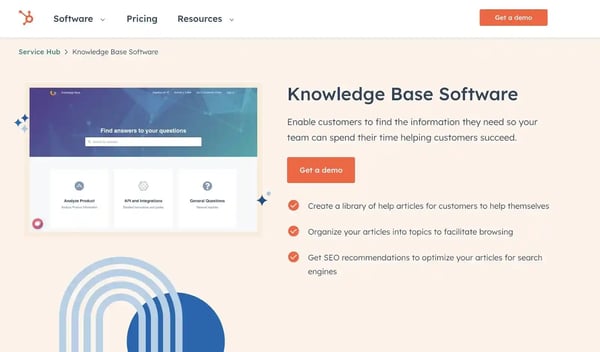
These days, customers prefer knowledge bases over all other self-service channels.
What we like: With a knowledge base, your customers can try to fix their problems themselves and then call your support team if they're still stuck or confused. This rule is important for businesses with complicated products, e.g., SaaS startups.
3. Pay attention to customer needs, goals, and concerns.
Your customers are telling you what they need. It's all over the internet, the comments on your site, and reviews.
Block off time each day for completing tasks outside the customer service phone or email queue. This should include researching what your users' top concerns are.
That way, you can remain focused and attentive when you hop on a call or chat with your customer.
Pro tip: Monitoring software, like Brand 24, allow your team to monitor mentions on key sites. You can see what customers post online — from what you're doing well to any concerns they might have
4. Ask the right troubleshooting questions.
Getting to the bottom of the problem requires some digging. Your job is to find out what their larger goal is, and you can often make their life easier.
Customers may call about a small problem, but what they might need is more support in understanding how to use your entire service.
Dig deep and ask questions to get a big-picture view of the issue, and a more comprehensive solution can present itself. Your customer will appreciate you taking the time and effort to help them troubleshoot on their own down the line.
Pro tip: Create a list of common questions, problems, and concerns that customers call with. Then write down relevant questions you can ask to get a full view of each customer's situation.
5. Work towards long-term solutions, not quick fixes.
It's advisable for you to take extra steps and additional time to thoroughly and completely troubleshoot customer issues and give them more guidance and advice for success with your product.
Companies that invest in customers' success achieve better outcomes — including happier customers and higher revenue. So when you're on a call, take your time, listen well, and be polite.
It might take longer, but you'll likely achieve a deeper understanding of what customers need.
Remember: Long-term solutions will guarantee customer satisfaction and company success, so be sure to thoroughly and completely troubleshoot customer issues.
6. Apologize and take ownership of problems.
Apologizing and taking ownership of a problem is one of the fastest ways to defuse an emotional situation, even if it's not your fault.
Remember, people want their feelings to be heard, understood, and respected. Apologizing for tough customer problems, even if it's not your fault directly, will help customers feel empathy.
They'll also be more willing to collaborate on troubleshooting.
7. Focus on solutions, not on blame.
Whether it's a miscommunication or a system outage, mistakes can happen on your company's end, and it's important to apologize in those moments.
But when you're apologizing — or explaining any backend issues that led to a customer problem — try not to blame another department or team member. Instead, focus on finding a solution and preventing it from happening again.
What we like: This strategy will make you and your organization appear more professional and reliable.
8. Put yourself in the customer's shoes.
Remember, 68% of customers will spend more with brands that appreciate them and treat them like individuals.
Empathy can go a long way, and finding out how the customer uses your products to achieve their goals might reveal a solution or new idea.
Plus, it will make the customer feel appreciated and taken seriously when you respond to questions and queries with context and background information about their particular business and needs.
Pro tip: Be the customer service rep you would like to interact with if you were having the problem your client is.
9. Treat free product users as customers.
Customers can cancel subscriptions the moment they wish to, which is why it's so important to assist free users as much as possible to show them the value of your product or service — and, eventually, show them the benefits of upgrading.
Your organization's customer service could convince them that your product is indispensable to their business — so make sure you put the muscle behind all of your customer calls.
What we like: When your customer succeeds, your organization succeeds, and teaching them how to use your free product offerings can help them (and you) achieve great outcomes.
10. Ensure effective communication.
Effective business communication is key to the success of a company.
Try to foster effective communication between your company and your customer by being timely, clear, and responsive with your customer support.
Pro tip: Provide the information your customers need about your product or service promptly to avoid unnecessary calls to your support team.
11. Personalize your customer support.
63% of marketers have observed that personalization increases customer interactions and, ultimately, better conversion rates.
Try to personalize your interactions with customers.
Use their names or any information you have about them to make them feel special. It doesn't go unnoticed.
Pro tip: Use a CRM to help you track all client interactions with your business. Your service reps can know immediately who they're talking to, what company they work for, and what product/service they've purchased.
12. Build strong relationships.
Do you know that 91% of American consumers will switch companies because of poor customer service?
This should show you how essential building good relationships with your customers is.
Consistently giving your customers proactive and swift customer service goes a long way in building a strong relationship with them.
Best for: A strong, positive relationship with your clients provides something to fall back on when something goes wrong. Both parties will be more understanding with each other.
13. Adopt omni-channel customer communication.
Omni-channel customer communication strategy is when a business assists its customers across multiple channels, making each interaction seamless and part of a whole.
A TCN survey found that 40% of consumers cited"multiple options for communicating" as the most important feature of a company's customer service department.
That can include via phone, email, and live chat.
Pro tip: An omni-channel service strategy allows you to reach your customers where they are. They no longer have to search and search to find you — your team is only a click, email, direct message, or phone call away.
14. Make sure you can keep your promises.
This is one of the most important customer service rules.
Don't over promise and under deliver. This makes customers feel disappointed and lose their faith in your business.
If you're not sure that you have a solution to the problem, ask the customer for some time and apologize for the delay instead of promising a quick fix to keep them happy and then failing to deliver.
Pro tip: When you promise something — such as a follow-up call or an email with information — be sure to do so within the promised timeframe to build customer confidence.
15. Laugh, smile, and have fun.
Pay attention to signals from your customer, and have fun with them if it seems appropriate.
Share jokes, laugh, and match their tone and style to make them feel comfortable and at ease. If they're smiling when they hang up, you've done a good job.
Every Customer Interaction Matters
Customer service is the backbone and face of any business. Take your customer service to the next level by following these golden rules of customer support.

Customer Service





.png)

-2.png)