
.png?width=112&height=112&name=Image%20Hackathon%20%E2%80%93%20Horizontal%20(24).png)

Customer feedback tools help businesses collect customer feedback at scale, turning raw insights into actionable improvements. Tools to collect customer feedback include survey platforms, feedback widgets, review management systems, and CRM-integrated solutions that capture customer opinions across email, web, SMS, and in-app channels. Collecting customer feedback enables service teams to identify pain points, measure satisfaction, and close the loop with customers before minor issues escalate.

Click Here to Get HubSpot's Customer Service Software
HubSpot Service Hub provides integrated customer feedback tools that centralize survey responses, support tickets, and conversation data within a unified CRM. This connection allows teams to track sentiment trends, automate follow-ups, and personalize service based on real customer input.
This guide will help you choose the right customer feedback tool for your needs. The tools below represent the leading platforms available in 2026, covering feedback management software, survey builders, and review collection systems designed for businesses of all sizes.
Use cases of customer feedback tools
The table below outlines seven common use cases for customer feedback tools, matching each scenario with the appropriate tool type, ideal application, and key features.
|
Use Case |
Tool Type |
Best For |
Key Features |
|
Post-purchase satisfaction surveys |
Survey platforms |
Measuring CSAT after transactions |
Email/SMS surveys, NPS scoring, sentiment analysis |
|
Real-time website feedback |
Feedback widgets |
Capturing in-the-moment reactions |
Pop-up surveys, heatmaps, session recordings |
|
Customer review collection |
Review management tools |
Building social proof and SEO |
Automated review requests, multi-platform aggregation |
|
NPS tracking |
Customer feedback platforms |
Measuring loyalty over time |
Recurring surveys, trend dashboards, segmentation |
|
Product feedback loops |
In-app feedback tools |
Collecting feature requests |
Widget embeds, voting systems, roadmap integration |
|
Support ticket analysis |
Help desk analytics |
Understanding service pain points |
Ticket sentiment analysis, CSAT after resolution |
|
Voice of Customer (VoC) programs |
Enterprise feedback suites |
Centralizing feedback across channels |
Omnichannel collection, AI analysis, executive dashboards |
Now that we’ve established the use cases of these tools, let’s get into the meat of this guide. Choosing the right customer feedback tool requires understanding how platforms differ in pricing, capabilities, and ideal applications.
.webp?)
Free Help Desk & Ticketing Software
Keep track of customer requests in one unified help desk that connects to your CRM database.
- Provide personalized, AI-powered support to your customers
- Save time, reduce errors, and streamline service processes
- Improve rep efficiency & time to resolution
- And more!
Best customer feedback platforms
Customer feedback platforms centralize survey responses, customer interactions, and sentiment data to help businesses track satisfaction trends and identify improvement opportunities. Service teams use these platforms to measure customer loyalty, automate follow-ups, and connect feedback directly to customer records for personalized service delivery.
1. HubSpot’s Customer Feedback Platform
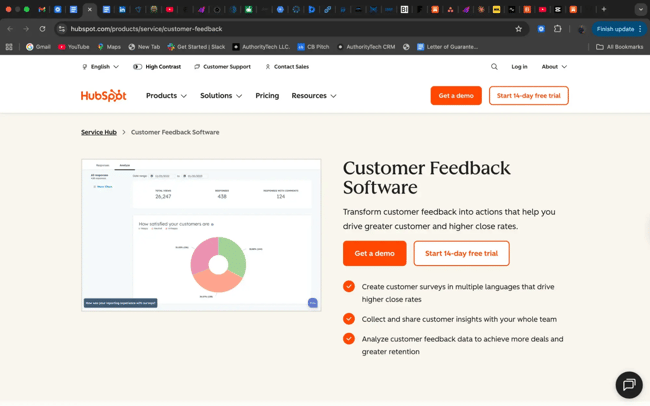
Get started with HubSpot’s Customer Feedback Platform
HubSpot Service Hub provides customer feedback tools that allow businesses to create and customize surveys for measuring customer satisfaction. The platform includes Net Promoter Score (NPS), Customer Satisfaction (CSAT), and Customer Effort Score (CES) survey templates, all designed to measure customer loyalty and identify opportunities for service improvement.
Best for: Businesses seeking to understand customer sentiment and track satisfaction metrics within a unified CRM system.
Notable features: HubSpot’s customer feedback platform offers customizable question types, built-in feedback dashboards, and real-time data collection. Survey responses sync automatically with contact records in HubSpot Smart CRM, enabling service teams to segment customers based on feedback scores and trigger automated workflows.
What we like: Surveys can be distributed via web links or email, and feedback data appears in real-time dashboards that teams can share across departments. This integration helps businesses forge deeper customer relationships and improve retention rates by acting on feedback quickly.
2. Hotjar

Hotjar enables businesses to understand user behavior on websites through heatmaps, session recordings, and feedback surveys. The platform captures how visitors interact with web pages, showing which elements receive the most attention and where users experience friction.
Best for: Discovering which website sections attract the most engagement and viewing digital properties through the perspective of target audiences.
Notable features: Hotjar heatmaps visualize where users spend time, which buttons they click, and which areas they avoid. Session recordings replay actual user sessions to help teams identify usability issues.
What we like: Hotjar maintains GDPR and CCPA compliance, ensuring that feedback collection adheres to privacy regulations.
3. Feedbackify
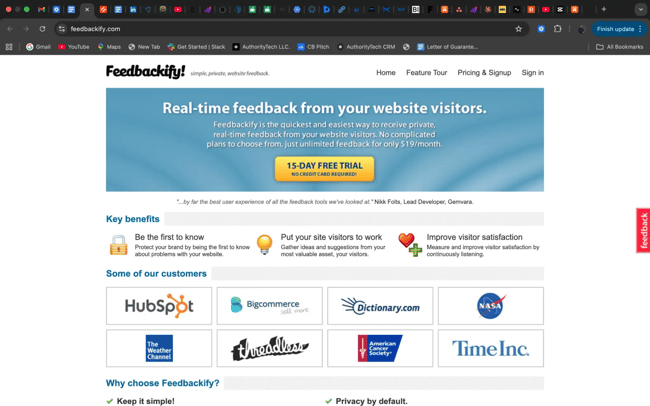
Feedbackify provides real-time feedback collection from website visitors with unlimited data capture for $19 per month. The platform includes a free trial, allowing businesses to test functionality before committing.
Best for: Launching customer feedback collection quickly with minimal setup time. Feedbackify offers a 30-second signup process and 5-minute integration.
Notable features: Continual feedback capture ensures businesses receive ongoing insight into what customers want, enabling rapid adjustments to products or services.
What we like: Feedbackify simplifies the process of collecting ideas and suggestions from customers, turning feedback into actionable improvements.
4. Qualaroo
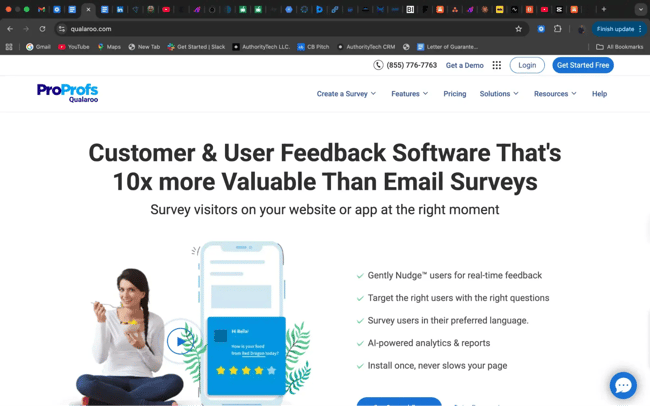
Qualaroo goes beyond tracking user actions to explain why customers behave in specific ways. The platform uses artificial intelligence to analyze feedback and generate detailed reports.
Best for: Understanding the reasoning behind customer behavior and identifying specific experience improvements.
Notable features: Qualaroo offers website, app, product, and UX feedback collection alongside exit surveys and “nudges” that prompt users at key moments in their journey.
What we like: Qualaroo is a lightweight solution that doesn't slow page performance, making it suitable for websites that prioritize speed.
5. Podium
Podium is an all-in-one platform combining business growth tools, communication features, and payment integrations. Like Qualaroo, Podium incorporates AI-powered analytics.
Best for: Creating seamless customer experiences and collecting feedback across all journey stages.
Notable features: Podium simplifies review collection, helping businesses double their review volume within 60 days or less.
What we like: The platform increases access to feedback while improving response rates, directly supporting sales conversion.
6. Zonka Feedback
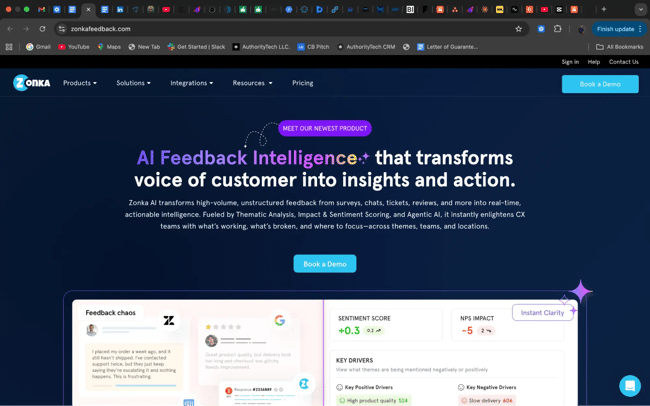
Zonka Feedback enables businesses to create and distribute surveys through email, SMS, websites, in-app channels, QR codes, and survey kiosks. The platform measures customer satisfaction and prioritizes experience improvements based on collected feedback. Zonka Feedback integrates with HubSpot Service Hub, syncing survey data, scores, and responses directly alongside HubSpot contacts.
Best for: Capturing customer feedback and generating actionable insights through CX metrics like CSAT, NPS, and CES.
Notable features: Multichannel survey distribution captures feedback at every customer touchpoint throughout the journey.
What we like: Zonka Feedback offers multiple paid plans alongside a free tier, meeting various business requirements and budgets.
7. Sprinklr Insights
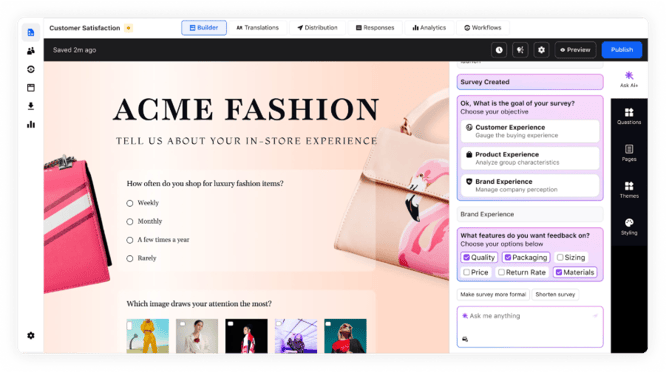
Sprinklr Insights is an AI-native consumer intelligence platform that helps enterprises capture, unify and analyze customer feedback across social, digital, review, media, and owned channels at scale. Built for large global brands, it enables teams to move beyond siloed feedback collection and build a connected Voice of the Customer program powered by real-time intelligence.
Combined with Sprinklr CFM, organizations can unify structured and unstructured feedback, uncover emerging themes and sentiment shifts, identify root causes behind customer experience issues, and route insights to the right teams for action.
Best for: Enterprise teams that need to centralize customer feedback, analyze customer sentiment at scale, and turn Voice of the Customer insights into business decisions.
Notable features: Sprinklr offers AI-powered Voice of the Customer intelligence with robust social listening and competitive benchmarking. It delivers real-time alerts and tracking across social, digital, review, and owned channels within a unified dashboard and workflow platform.
What we like: Sprinklr Insights is an AI-native platform that turns unified customer feedback into actionable insights. By consolidating structured and unstructured signals, surveys, reviews, social conversations, and digital feedback, it helps enterprises understand sentiment holistically, detect emerging issues early, and coordinate CX, reputation, and competitive decisions at a global scale.
8. Canny
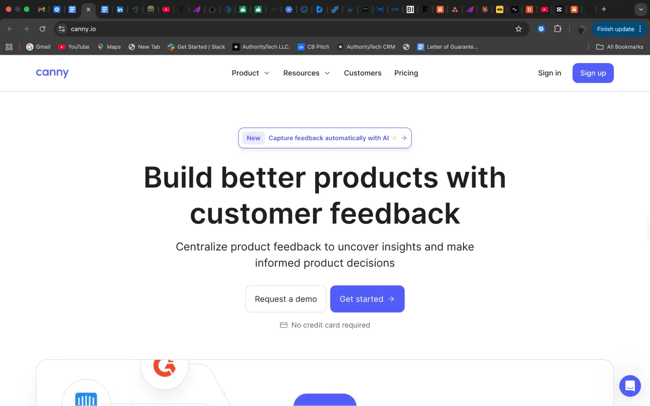
Canny helps businesses build better products by organizing customer feedback and feature requests in a centralized location. The platform integrates with existing workflow tools like Slack, Jira, and GitHub.
Best for: Organizing customer feedback to create a database of actionable product insights.
Notable features: Canny allows teams to see which features users request most frequently and prioritize development with data-driven roadmaps.
What we like: Canny collects feedback from both customers and internal team members, providing visibility into both sides of the product development equation.
9. Trustmary
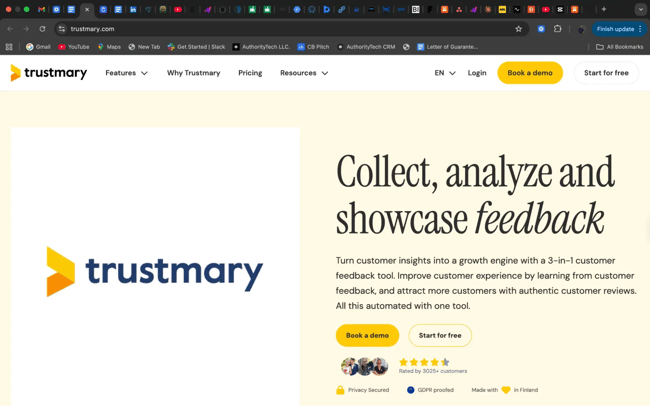
Trustmary combines feedback platform capabilities with customer review tools in a unified package. Businesses can collect, analyze, and showcase authentic customer feedback and reviews to build trust, improve SEO, and boost website conversion rates.
Best for: Service-oriented companies in traditional industries seeking to make customer feedback visible to potential customers.
Notable features: Trustmary measures customer satisfaction through NPS, CSAT, and star ratings, analyzes feedback trends, and converts feedback into customer reviews that can be displayed via website widgets.
What we like: Trustmary combines features from feedback management tools and customer review platforms, eliminating the need for multiple separate tools.
10. Wootric
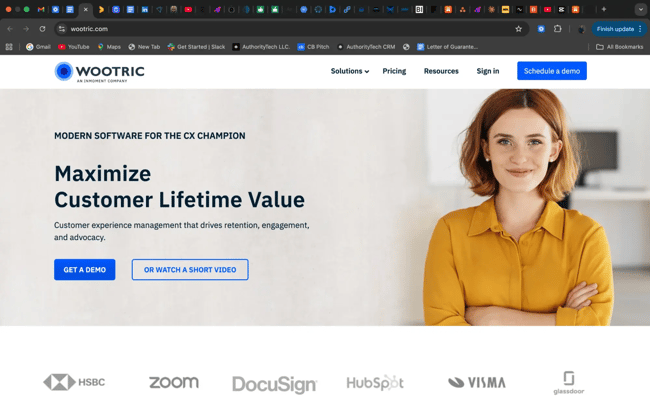
Wootric is a customer experience platform that uses single-question microsurveys to determine customer satisfaction. Businesses can trigger these surveys at critical touchpoints, making feedback collection effortless for customers while offering valuable insights for service teams.
Best for: Helping sales teams monitor customers, promote additional products, and ensure satisfaction after purchase.
Notable features: Wootric supports feedback collection through email, web and mobile apps, SMS, and chat. The platform includes NPS, CSAT, and CES surveys with multiple language options and an analytics dashboard for evaluating customer data.
What we like: Installation is quick and straightforward, and all collected feedback flows to a live dashboard for immediate review.
10. Pendo

Pendo allows businesses to create in-app walkthroughs that introduce features to new customers. The platform also includes sentiment analysis to help teams understand customer feelings about products and services.
Best for: Improving user onboarding, storing feedback, and generating reports that identify areas of excellence, improvement opportunities, and revenue-boosting features.
Notable features: Pendo offers customer segmentation, customizable reports and templates, data visualization, conversion tracking, and third-party integrations with tools like Calendly, Figma, and TrustRadius.
What we like: Instead of sending surveys via email, Pendo delivers NPS surveys, polls, and quizzes directly through mobile apps, increasing response rates.
11. Mentionlytics
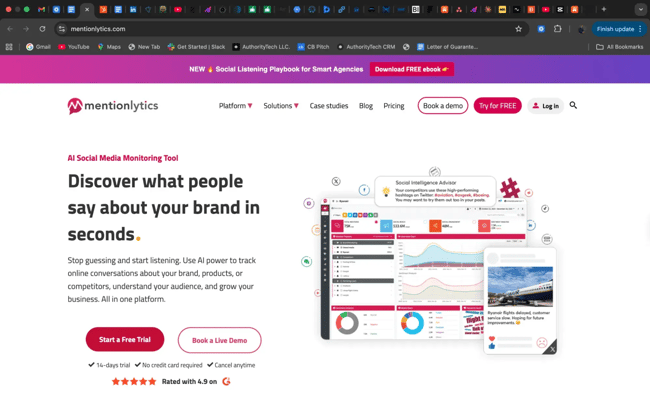
Mentionlytics is an AI-powered social listening and review monitoring platform that tracks brand mentions across social media, review sites, forums, blogs, and news outlets. The platform launched enhanced review monitoring features in 2025, consolidating social listening and reputation management into a unified system.
Best for: Businesses tracking customer feedback across public channels, including social media conversations and review platforms that customers might not tag directly.
Notable features: Mentionlytics uses AI sentiment analysis with 96% accuracy to categorize mentions as positive, negative, or neutral. The platform includes troll detection, Boolean search filters for campaign-specific feedback, and customizable reports that combine social mentions with review data.
What we like: Mentionlytics captures feedback that businesses might otherwise miss, including untagged social media mentions and conversations across 30+ review platforms. Real-time alerts enable rapid response to emerging issues.
12. SentiSum
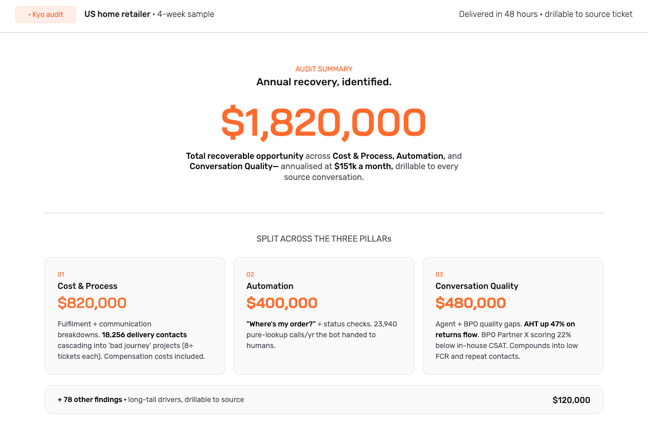
SentiSum is a closed-loop intelligence layer for customer experience. It pulls every conversation, ticket, chat, call, review, bot, and survey into one live picture that updates as new customer feedback lands.
Each issue gets classified by its cause and ranked by how much it costs. SentiSum then routes it to the named team that can fix it and tracks it through to resolution. It connects what customers say to what it costs, so you can cut that cost.
Anyone can ask questions in plain English through Kyo, SentiSum's AI agent, which is also available inside Slack as well as Claude & ChatGPT. CX, Product, Ops, Risk, and Leadership get answers on their own, without waiting on an analyst.
Best for: CX, product, and operations teams that want feedback tied to a cost and an owner, not just a sentiment score.
Notable features: SentiSum classifies every issue by root cause and ranks it by business impact, then sends it to the team that owns the fix. It prices the cost of issues like refunds, goodwill, and churn-risk language. It integrates with Zendesk, Freshdesk, Intercom, Gorgias, Dixa, and most survey tools and meets GDPR and SOC 2 compliance.
What we like: Instead of leaving teams with generic “positive” or “negative” labels, it classifies every conversation, ticket, chat, review, and survey response by root cause and then quantifies the cost of each issue. That means CX, product, and operations leaders can see, in one live view, which problems are eroding revenue and who owns the fix.
Best survey tools
Survey tools enable businesses to collect quick, focused insights about products, services, or overall customer experience. These platforms range from simple form builders to sophisticated survey software with conditional logic, automated workflows, and advanced analytics capabilities.
13. HubSpot’s Form Maker
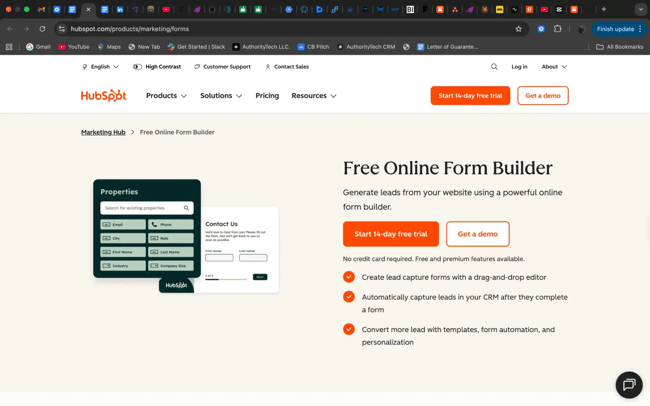
HubSpot’s Form Maker is a free tool enabling businesses to create various web forms, from simple sign-up forms to highly personalized customer surveys. While Form Maker primarily serves lead generation purposes, businesses can also use it to create forms that route information to customer relationship management (CRM) software or lead management platforms.
Best for: Creating personalized web forms (standalone, embedded, pop-up, and collected) to gather customer data needed for delivering optimal user experiences.
Notable features: Drag-and-drop form templates, automatic customer segmentation, custom fields, and lead tracking.
What we like: Form embedding requires no developer involvement—businesses can simply copy and paste installation code onto websites. The tool is free to start using.
14. SurveyMonkey
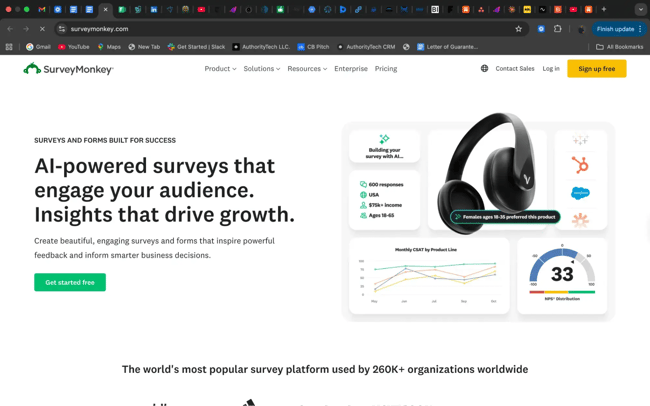
SurveyMonkey enables businesses to create and distribute surveys to understand customer thinking and analyze results. The basic plan is free, allowing unlimited surveys with up to 10 questions, though response limits apply. Paid plans remove restrictions and add analytics capabilities.
Best for: Creating surveys that capture customer attention and encourage feedback participation.
Notable features: SurveyMonkey offers expert-written survey questions and templates designed to generate high-quality customer responses.
What we like: Multiple plan options allow businesses to test functionality before committing to paid subscriptions.
15. Typeform

Typeform enables the creation of forms, surveys, and quizzes that identify what customers appreciate about brands, products, and services, along with areas needing improvement. The platform’s tagline, “There’s a better way to ask,” reflects Typeform’s approach to collecting customer feedback.
Best for: Generating customer interest in providing targeted, actionable feedback.
Notable features: Built-in video and photo libraries add visual interest to surveys and questions.
What we like: Questions appear one at a time, creating a user-friendly experience that maintains audience focus.
16. Survicate
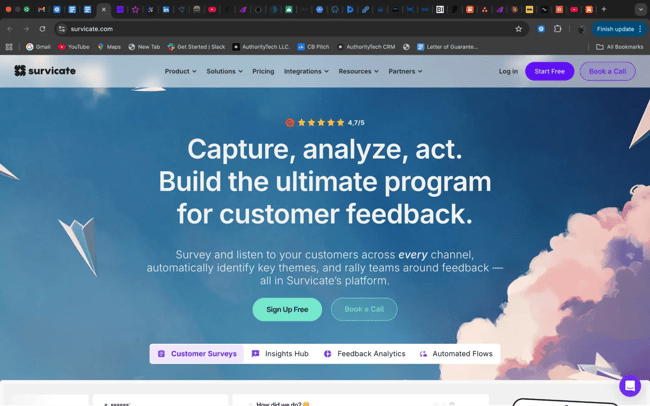
Survicate is a survey tool for gathering continuous feedback across channels, including email, web, in-product interfaces, and mobile apps. The platform balances robust functionality with ease of use.
Best for: Measuring Customer Satisfaction (CSAT) and Net Promoter Score (NPS) effectively and efficiently.
Notable features: Survicate offers native integrations with third-party tools and AI features that assist with survey creation and analysis.
What we like: Survicate provides a constant stream of customer insights from multiple touchpoints, and response analysis tools transform feedback into growth opportunities.
17. AskNicely
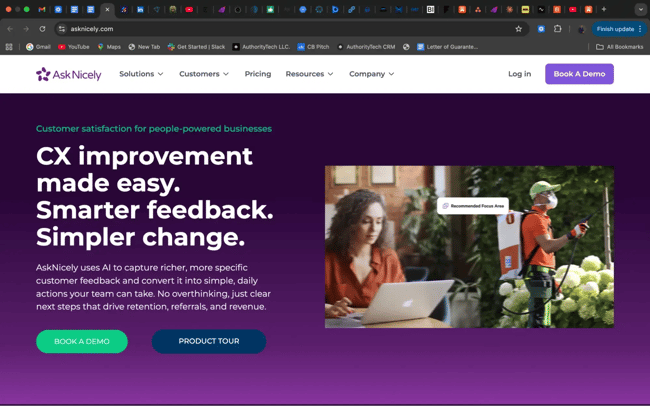
AskNicely enables businesses to capture customer feedback immediately following product purchases or service experiences through customizable surveys that collect insights while they remain fresh in customers’ minds.
Best for: Obtaining immediate feedback about products or services.
Notable features: Customer feedback collection occurs via email, SMS, or websites to maximize response rates.
What we like: AskNicely lives up to its name — surveys are designed to be friendly and conversational rather than formal or rigid.
18. Jotform
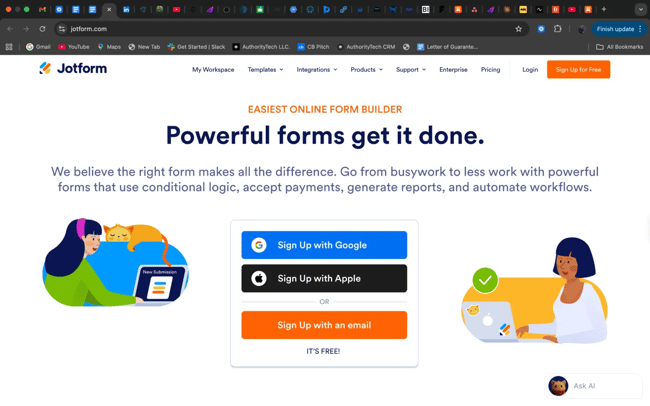
Jotform enables the creation of forms that encourage responses. Rather than relying on standard templates, Jotform allows businesses to build forms using conditional logic and automated workflows for maximum impact.
Best for: Building custom forms that integrate with existing business applications such as CRM and cloud storage systems. Jotform offers over 150 integrations.
Notable features: Payment support can be added to forms, enabling businesses to receive payments directly through any created form.
What we like: Businesses can create their first form for free to evaluate functionality, then choose from five plans ranging from Starter (free) to Enterprise (custom pricing).
19. Google Forms
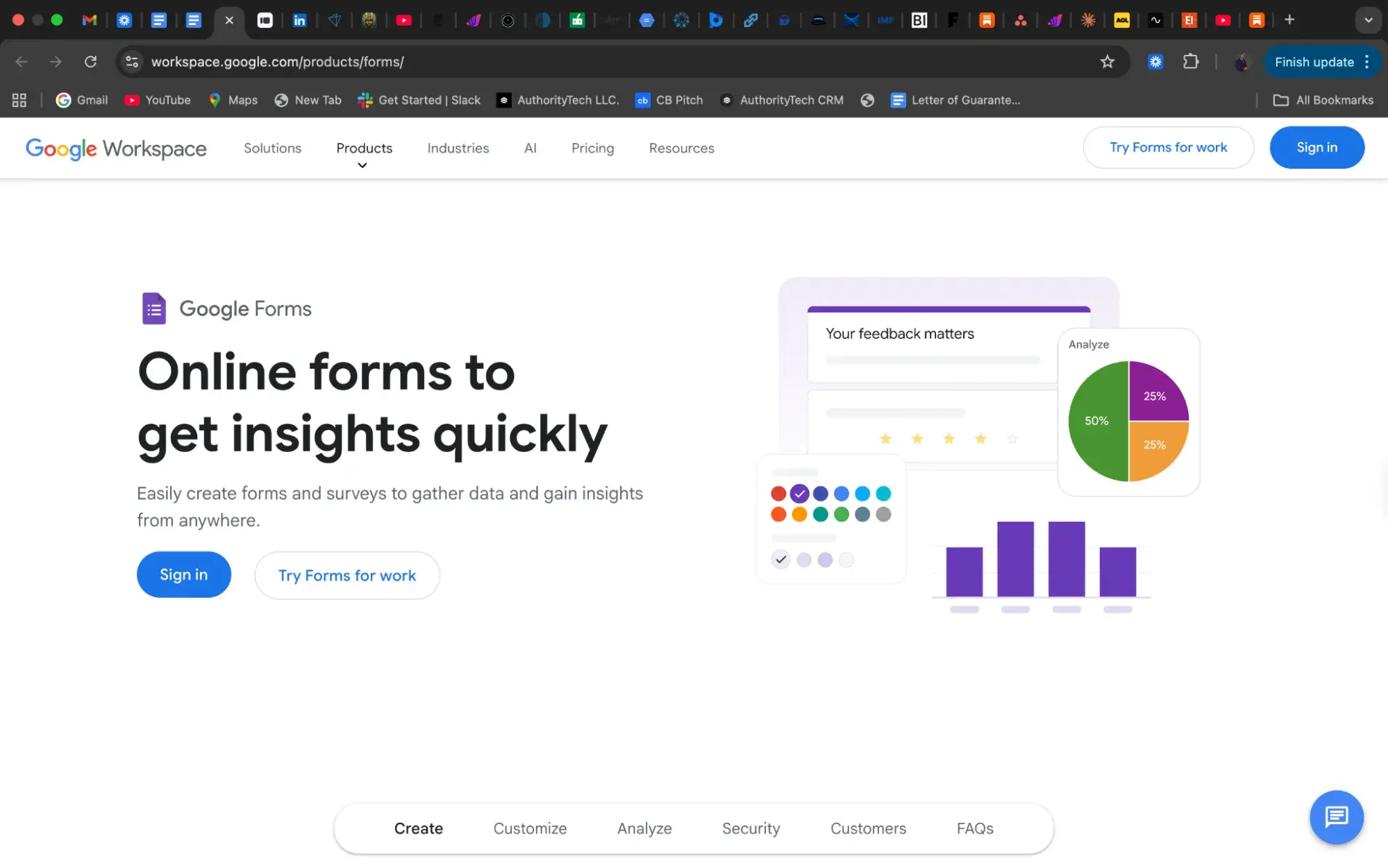
Google Forms provides a simple, familiar interface, particularly for businesses already using Google tools like Docs or Sheets. The straightforward interface and custom logic capabilities make form creation accessible.
Best for: Creating basic survey templates for collecting user feedback.
Notable features: Google Forms supports multiple question types, drag-and-drop question ordering, and rapid value customization.
What we like: Google Forms is completely free and integrates seamlessly with other Google products.
20. Formstack
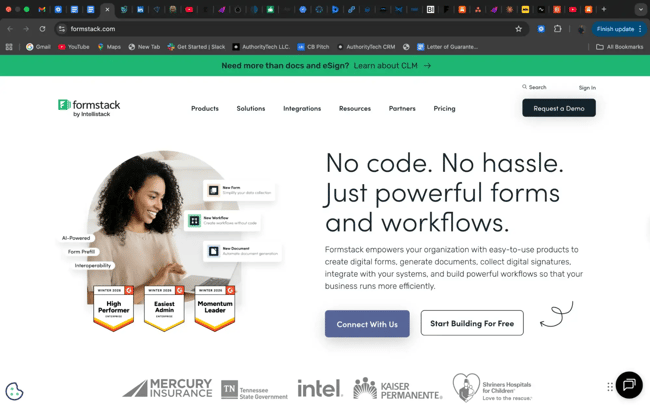
Formstack offers no-code form creation, allowing businesses to design and distribute customer surveys that are both relevant and timely.
Best for: Creating custom online forms for collecting, reviewing, and collaborating on customer feedback data.
Notable features: Formstack simplifies form creation through a drag-and-drop interface and conditional logic.
What we like: The tool requires no credit card to begin, and it supports HIPAA compliance, making it suitable for medical offices.
21. SurveySparrow
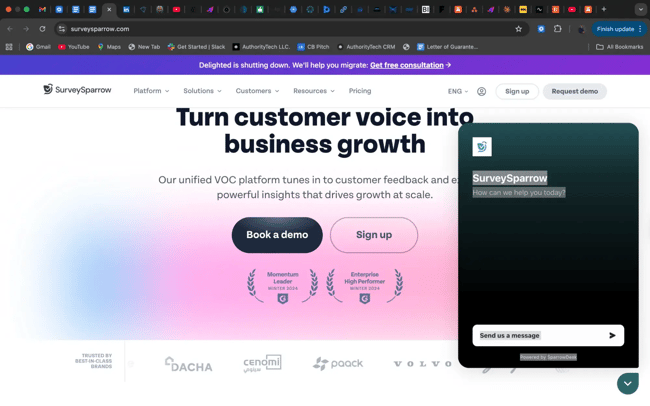
SurveySparrow allows businesses to create engaging customer surveys. The chat-like survey experience makes customers feel they are having conversations rather than completing interrogations.
Best for: Creating memorable surveys that make customers comfortable while expressing opinions about businesses.
Notable features: Device-responsive surveys, multiple survey channels (email, website, QR codes, SMS), vibrant color palettes and fonts, performance appraisals, website chatbots, and action automations.
What we like: SurveySparrow enables survey personalization for individual customers rather than using one-size-fits-all approaches. Custom thank you pages appear after survey completion.
22. Sogolytics
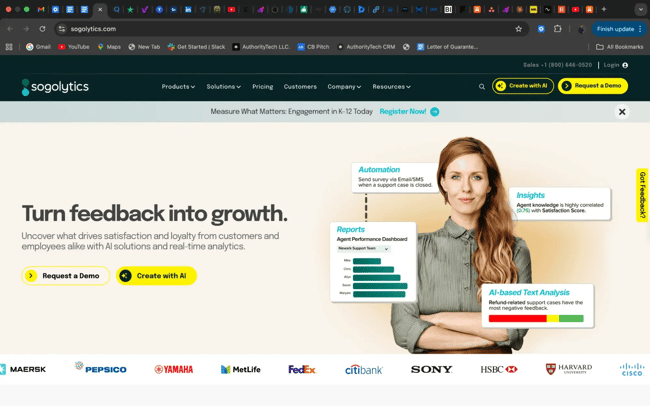
Sogolytics (formerly SoGoSurvey) helps small and large companies create sophisticated surveys to learn what customers think about their businesses.
Best for: Creating a wide range of data collection projects, including surveys, forms, polls, employee pulse checks, risk assessments, and customer experience management.
Notable features: 360-degree feedback (from supervisors, colleagues, and subordinates), NPS surveys, workflow automation, API integration and customization, and panel management.
What we like: Sogolytics emphasizes analytics to support data-driven decision-making.
23. SurveySensum
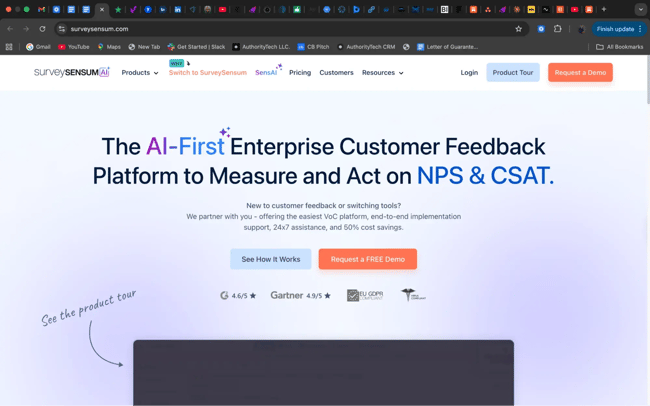
SurveySensum is an affordable AI-powered customer feedback platform designed for customer success and customer experience teams across industries including B2B, SaaS, and telecommunications. The platform functions as both a tool and a CX service, with dedicated consultants providing guidance from survey creation through action planning.
Best for: Businesses seeking end-to-end CX guidance alongside survey software, particularly those requiring affordable pricing with comprehensive features.
Notable features: SurveySensum creates NPS, CSAT, and CES surveys for various customer journey touchpoints, shares surveys across multiple channels, and collects real-time feedback.
A CX consultant provides implementation guidance and helps identify gaps and action plans. Plans start at $299 per month, with free trial and free forever options including unlimited surveys, templates, survey white-labeling, and users.
What we like: SurveySensum combines affordability with expert consultation, ensuring teams not only collect customer feedback but also understand how to act on insights effectively.
Best customer review tools
Customer reviews build trust and loyalty by providing social proof that influences purchasing decisions. Review management tools help businesses collect, monitor, and showcase customer reviews across multiple platforms.
24. TrustPilot
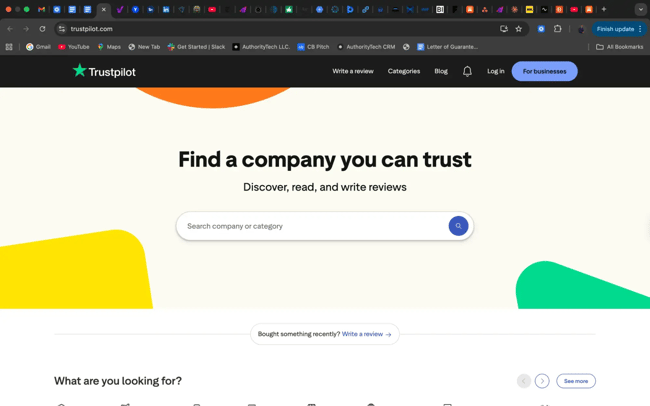
TrustPilot enables companies to collect customer reviews at key purchasing journey points. Businesses can use this data to improve consumer experiences.
Best for: Enhancing online reputation with verified reviews.
Notable features: TrustPilot enables collecting and displaying trusted reviews directly on websites.
What we like: Brands can easily monitor daily review averages and current TrustScore ratings.
25. Feefo
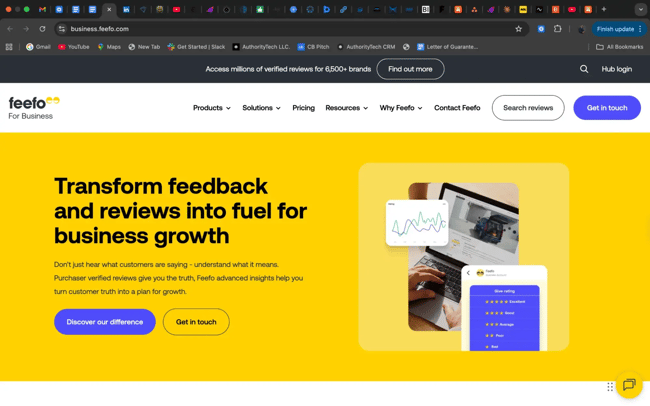
Feefo enables businesses to “go beyond the stars” with customer reviews to discover what customers genuinely think. By integrating with popular marketing platforms including Google, Magento, and Twitter, Feefo provides relevant and actionable feedback.
Best for: Obtaining reliable, customer-focused insights about platforms, services, and overall brand reputation.
Notable features: Built-in analysis tools help pinpoint emerging trends and enable effective action.
What we like: Feefo reviews come from verified customers, ensuring reliability and relevance.
26. Kiyoh

Kiyoh helps ecommerce businesses gain online exposure and boost brand presence across popular search engines like Google.
Best for: Increasing brand visibility and discovering what matters most to customers.
Notable features: Reviews are styled to match the website design, creating cohesive user experiences.
What we like: With over 8,000,000 reviews and more than 30,000 users, Kiyoh offers a growing review base that can enhance brand credibility.
27. Bazaarvoice
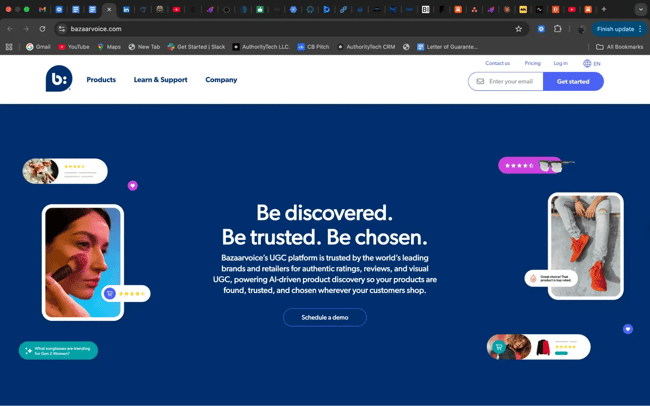
Bazaarvoice connects people to products, enabling retailers to focus on customer voices through authentic user-generated content.
Best for: Improving audience segment targeting with highly specific reviews and feedback.
Notable features: Bazaarvoice allows shoppers to view and share user-generated content and reviews, driving organic interest.
What we like: The user-generated content (UGC) model prioritizes people, providing actionable marketing insights.
28. Birdeye

Birdeye is a comprehensive platform helping businesses of all sizes manage online reputation, connect with prospects through digital channels, and gather insights to improve customer experience and grow sales.
Best for: Maintaining strong reputations, expanding reach, ranking high in search engines, and engaging with website visitors.
Notable features: Birdeye supports review monitoring across over 150 websites. Team members in large enterprises can use the platform without location restrictions.
What we like: Auto response templates enable quick review management. Organizations can use Birdeye to remove defamatory or spam reviews.
29. Grade.us
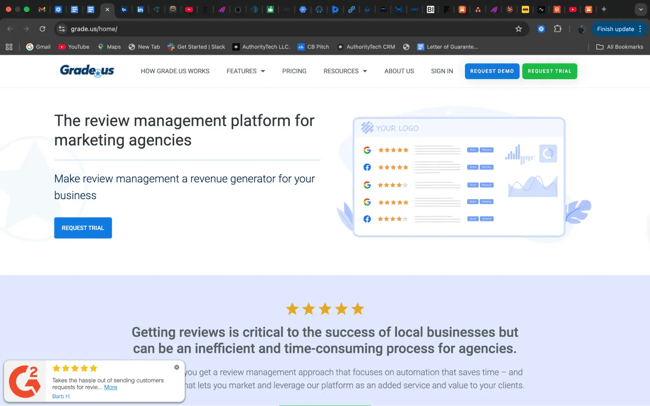
Grade.us is a cloud-based reputation management solution allowing marketing agencies to collect user reviews and manage multi-channel campaigns within one platform.
Best for: Helping agencies manage online reputation and gain more clients by offering reputation management as a service.
Notable features: Grade.us collects customer reviews from different channels, including emails and SMS campaigns. Agencies can select and publish reviews on social media sites, and the platform integrates with WordPress for easier review posting on WordPress websites.
What we like: Grade.us enables marketing agencies to manage and respond to online reviews across 165+ review websites. The platform also supports drip campaigns designed to increase customer review volume.
30. JustReview

JustReview is a free review collector that uses advanced technologies to curate business reviews from sites including AliExpress, Capterra, eBay, Google Shops, Product Hunt, TripAdvisor, Trusted Shops, and Yellow Pages, then embeds them on websites.
Best for: Notifying businesses when reviews are published and embedding them on business websites quickly.
Notable features: JustReview integrates seamlessly with ecommerce tools, including WooCommerce, Wix, Squarespace, WordPress, Shopify, and GoDaddy.
What we like: Businesses can embed reviews on websites through customized widgets including badges, testimonials, counters, summaries, and stars.
31. Yotpo

Yotpo is an ecommerce retention marketing platform enabling businesses to generate and showcase authentic customer reviews on websites to “turn one-time shoppers into loyal customers.”
Best for: Helping businesses boost conversions and increase recurring revenue through channels including SMS, reviews, loyalty and referrals, email, and subscriptions.
Notable features: Yotpo offers features supporting online reputation management, including a customizable review invitation system, automated spam filters, social media platform integration, and a robust analytics dashboard providing insights into customer behavior.
What we like: Yotpo simplifies requesting and collecting customer feedback, which businesses use to improve products, services, and customer experience.
32. Revuze
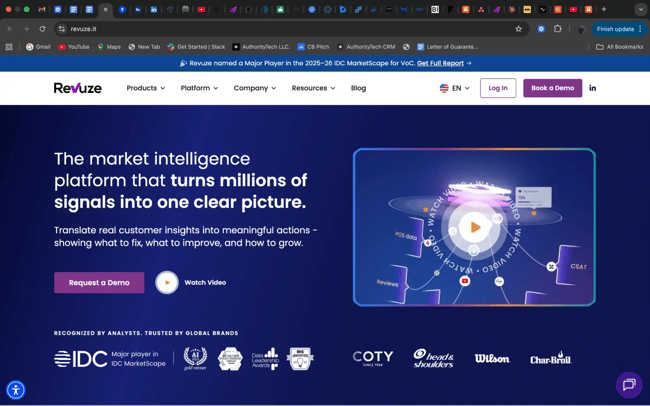
Revuze is an AI-powered Voice of Customer (VoC) platform that transforms unstructured consumer feedback into strategic actions. The platform gained significant prominence in 2025-2026 for its ability to consolidate data from product reviews, social media, surveys, customer care channels, and more, delivering clear, actionable recommendations for marketing, product development, and eCommerce teams.
Best for: Businesses needing to analyze large volumes of unstructured feedback across multiple sources and translate insights into specific product, marketing, and competitive intelligence actions.
Notable features: Revuze offers 360° insights through persona-based dashboards, trend detection, and competitive benchmarking. The platform provides dedicated hubs for marketing, product development, competitive intelligence, and ecommerce, delivering tailored insights that help brands refine messaging, optimize product features, and identify market gaps.
What we like: Revuze distinguishes between organic and incentivized feedback, helping businesses separate genuine signals from noise. The platform identifies early indicators of reputation risks and potential crises, enabling proactive management.
How to choose the right customer feedback tool
Selecting the right customer feedback tool depends on specific business needs, budget constraints, and the types of insights teams want to capture. Businesses should evaluate tools based on feedback collection channels, integration capabilities, analysis features, and scalability as customer bases grow.
Consider business size and budget.
Small businesses often benefit from affordable or free tools. Google Forms and SurveySensum’s free plan allow agents to run quick surveys about customer sentiment.
Mid-sized companies typically benefit from operationalizing feedback. That requires customer feedback surveys to integrate with the organization’s CRM. Beyond that, teams benefit from automated workflows and sentiment analysis. HubSpot Service Hub helps teams gather customer insights, analyze trend, and store all the data within the CRM.
Enterprise organizations need advanced capabilities, including multi-location tracking, role-based dashboards, and extensive integrations. Qualtrics, Medallia, or Revuze may be a good fit.
Evaluate feedback collection channels.
Customer service teams have different strategies for gathering customer feedback. The tools reps choose should align with the overall customer surveying strategy:
- Heatmap tools like Hotjar will be most useful for teams that want website feedback.
- SurveyMonkey and AskNicely allow reps to reach customers via email or SMS.
- Organizations needing in-app feedback collection should evaluate Pendo, Zonka Feedback, or Survicate.
- Businesses tracking social media mentions and review sites require social listening tools like Mentionlytics.
- Comprehensive review management platforms like Trustmary or Birdeye allow reps to monitor brand sentiment on review sites.
Assess integration requirements.
Customer feedback tools deliver maximum value when integrated with existing business systems. HubSpot Service Hub integrates natively with HubSpot Smart CRM, syncing feedback directly to customer records and enabling automated follow-up workflows. HubSpot also has a comprehensive ecosystem with thousands of integrations.
Plan for scalability.
Feedback needs evolve as businesses grow. Platforms offering flexible pricing tiers and unlimited response collection, like HubSpot Service Hub, accommodate growth without requiring platform migrations. Businesses expanding internationally should consider tools supporting multiple languages and regional compliance requirements, such as GDPR and CCPA.
Test before committing.
Most customer feedback platforms offer free trials or freemium plans. Businesses should test tools with actual customers before making long-term commitments. Look for ease of use, response rates, and whether insights generated justify the investment.
Pro tip: For additional resources on measuring and improving customer satisfaction, explore HubSpot’s voice of the customer methodologies and download free customer satisfaction survey templates.
Frequently asked questions about customer feedback software
How do I capture customer feedback?
Businesses capture customer feedback through multiple methods. Post-purchase email surveys collect feedback immediately after transactions, while website feedback widgets enable real-time input. HubSpot Service Hub centralizes feedback from multiple channels, connecting survey responses, support tickets, and conversation data within a unified CRM.
How can you automate customer feedback collection?
Customer feedback collection automation triggers surveys based on specific actions or milestones. For example, post-purchase automation sends satisfaction surveys automatically after completed transactions. Platforms like HubSpot Service Hub provide workflow automation that sends surveys based on predefined rules.
What’s the best tool to collect customer feedback?
The best customer feedback tool varies based on business requirements, the existing technology stack, and budget constraints. HubSpot Service Hub excels for businesses already using HubSpot's ecosystem. SurveyMonkey suits organizations that prioritize flexibility, while Typeform works for businesses that emphasize higher completion rates. Rather than a single “best” tool, businesses should evaluate which platform aligns with their feedback objectives.
What is customer feedback in CRM?
Customer feedback in CRM includes survey responses, satisfaction scores, and qualitative input. Feedback data is stored within the CRM alongside contact information, purchase history, and support interactions.
CRM integration creates comprehensive customer profiles that combine what customers do with what they think, enabling personalized service. HubSpot Smart CRM exemplifies this integration, storing feedback from HubSpot Service Hub surveys directly in contact records and enabling segmentation, automated workflows, and reporting based on satisfaction metrics.
Finding What Feeds Your Business
Customer feedback fuels business growth and customer retention. Businesses should select feedback tools based on collection needs, integration requirements, and analysis capabilities. HubSpot Service Hub provides comprehensive feedback management within a unified CRM. Service Hub also integrates with a wide ecosystem of tools that can help with social listening and gathering feedback.
Collecting customer feedback represents only the first step. The most successful businesses close the feedback loop by acknowledging customer input and implementing improvements. This cycle builds trust, creating competitive advantages in markets where customer experience increasingly determines business outcomes.
Free Help Desk & Ticketing Software
Keep track of customer requests in one unified help desk that connects to your CRM database.
- Provide personalized, AI-powered support to your customers
- Save time, reduce errors, and streamline service processes
- Improve rep efficiency & time to resolution
- And more!