
A few weeks later, I ran a round of buyer interviews with customers in that same segment. Turns out, we’d been speaking to the wrong pain points entirely. Their goals, decision process, and even language were different from what we’d assumed. Once we rewrote the campaign based on their actual input, performance jumped.
That experience changed how I approach marketing. Now, before building out messaging, launching a campaign, or creating new offers, I talk to real buyers. I don’t wait until after something goes wrong.
In this post, I’ll walk through the exact questions I ask during persona interviews and surveys, because the better your questions, the better your strategy.
Table of Contents
- Why conduct buyer persona interviews?
- 3 Key Benefits I’ve Seen from Real Buyer Persona Conversations
- Buyer Persona Questions I Ask in Interviews
- How I Turn Interviews Into Actionable Persona Templates
- What I’ve Learned from Buyer Persona Interviews
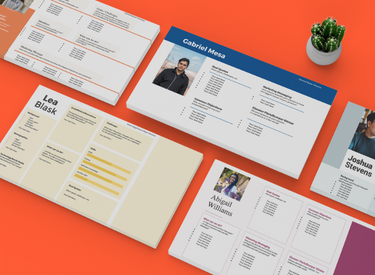
Buyer Persona Templates
Organize your audience segments and make your marketing stronger.
- Learn about personas.
- Conduct persona research.
- Create targeted content.
- Build your own personas.
Download Free
All fields are required.
Why conduct buyer persona interviews?
Most marketers know who they’re targeting on paper. You’ve got a few demographic bullets, maybe some CRM data, and general behaviors from analytics tools. But that isn’t enough to build messaging that works.
Buyer interviews help fill in the blanks.
They give you direct insight into how people think, what motivates them, what frustrates them, and how they decide what to buy. And in my experience, that context is what turns a good strategy into a great one.
I’ve worked on campaigns where we assumed the product was being used for one purpose, only to find out in interviews that customers were solving a completely different problem.
I’ve sat in sales calls where the buyer’s top concern never even came up in our nurture content. These are the gaps you can fix when you ask better questions.
Persona interviews don’t replace your behavioral data or analytics — they make that data more actionable. Tools like GA4, HubSpot, and heat maps show you what people are doing. Interviews help you understand why.
They’re also a faster path to clarity. A single 30-minute conversation with the right person can reveal more than weeks of spreadsheet analysis. You can test messaging, uncover blockers, and prioritize based on real-world language, not marketing guesswork.
If your campaigns feel flat or disconnected, chances are you’re missing your buyer's voice. These interviews are how I bring it back into the process.
3 Key Benefits I’ve Seen from Real Buyer Persona Conversations
Over the years, buyer interviews have become one of the most valuable parts of my marketing process. They don’t take long, but the impact compounds. Here’s what’s changed for me since I started talking to real people before building campaigns.
I captured more high-quality leads.
I used to build lead magnets based on what I thought prospects wanted. Sometimes, they worked, but the conversion rate was always unpredictable.
Then I started asking buyers what resources helped them the most. Their answers surprised me — many weren’t looking for broad guides or “ultimate checklists.”
Buyers told me they valued quick-start templates, decision-making frameworks, and how-to content they could bring to meetings.
Once I aligned our offers with that feedback, our lead gen forms pulled more qualified submissions. In one campaign, switching the asset type and headline based on interview feedback lifted the conversion rate by 40%. Those leads also moved faster through the funnel and closed at higher rates.
I personalized the customer experience.
With clearer persona data, I could confidently tailor lifecycle content and flows. I used interview quotes and patterns to shape onboarding emails, nurture flows, and even in-app prompts.
I learned which pain points to address in the first email, understood what language resonated best on live chat, and built email sequences around the goals buyers actually mentioned in their interviews, not what I assumed they cared about.
It gave our sales team more relevant context and clarity. We rewrote email handoffs and discovery questions to match the buyer’s mindset. That made the experience more consistent across channels, which builds trust and speeds up decision-making.
I improved my bottom line.
Better leads and more relevant content didn’t just feel good — they showed up in the numbers. After applying persona insights across three campaigns, we saw our cost-per-lead drop by 28%. Our CAC came down, too, because sales spent less time on poor-fit leads.
We also saw a lift in retention. When marketing and customer success addressed the same core goals and challenges, new customers felt more supported and stayed longer.
None of that happened overnight. But each interview added something we could use: sharper messaging, clearer positioning, or a more aligned offer. And over time, those small improvements stacked up.
Buyer Persona Questions I Ask in Interviews
Once I’ve scheduled a persona interview, I keep the conversation relaxed and open-ended, but I always come in with a clear set of questions. These questions consistently give me useful insights that I can turn into better content, stronger messaging, and a more effective customer journey.
How I Run Interviews
I keep conversations to 30-45 minutes, typically over Zoom. I record them (with permission) and use tools like Fireflies or Grain to capture highlights. If I ask a lot, I’ll send a thank you gift or gift card. I show up with 5-10 key questions, but let the conversation unfold naturally.
My go-to first step is to speak with customers who’ve seen strong success. I also talk to churned customers, closed-lost leads, or high-fit prospects who didn’t convert. They offer unique insight into what’s missing or unclear.
When starting a new project, I usually aim for five to ten interviews, but even three solid conversations can surface patterns. The key is quality — look for repeated language, consistent goals, and shared challenges. Once those start showing up, you’re getting what you need.
Questions About Their Personal Background
These questions help build rapport and give me context on the person behind the role. I usually start here to ease into the conversation and pick up details that can later shape tone or storytelling.
- Can you tell me a little about your background? How did you end up in your current role?
- What do you enjoy doing outside of work?
- Are there any communities, personal interests, or side projects that matter to you professionally?
- How do you usually prefer to communicate — email, Slack, video, phone?
Buyer Persona Templates
Organize your audience segments and make your marketing stronger.
- Learn about personas.
- Conduct persona research.
- Create targeted content.
- Build your own personas.
Download Free
All fields are required.
Questions About Their Company
Understanding the company context helps me match our messaging to buyers' environments. I want to know how their business runs, who they serve, and what constraints or opportunities might shape their decisions.
- How would you describe what your company does to someone outside your industry?
- What’s your team structure like?
- Who are your typical customers or clients?
- Are any major industry trends or pressures impacting your team right now?
Questions About Their Role
This section is where I dig into day-to-day responsibilities, challenges, and internal priorities. I’ve found that these questions often surface disconnects between how buyers talk about their work and how we typically market to them.
- What are you responsible for in your current role?
- What does success look like for you right now?
- What metrics or goals are you accountable for?
- What tools or platforms do you use regularly?
- What’s one thing you wish leadership better understood about your job?
- What’s been especially challenging for your team this quarter?
If someone gives a surface-level answer, I’ll gently follow up with: “Can you walk me through a recent example?” or “What made that especially challenging?” A little curiosity usually opens the door to richer insights.
Now that I have context on their background and responsibilities, I shift into understanding what they're aiming to achieve.
Questions About Buyer Goals
Understanding a buyer’s goals helps me position our product or service as a direct solution, not a nice-to-have. These questions uncover what success looks like from their perspective, so I can connect the dots between what we offer and what they actually care about achieving.
- What are your team’s biggest priorities this quarter?
- What goals are you personally measured against?
- Which business outcomes are you focused on right now?
- How do you track progress toward your goals?
- What would make this year a success for you?
Once I know what they’re working toward, I ask how they gather information, learn new skills, and explore new tools. This helps shape content formats and distribution channels.
Questions About How Buyers Learn
These questions give me insight into where and how buyers gather information, so I know where to show up — and how to show up — with content that resonates. The answers here often shape content format, channels, and partnerships.
- Where do you usually go to learn about [industry/topic]?
- Which newsletters, blogs, or creators do you follow regularly?
- Are there any events, podcasts, or communities you rely on to stay informed?
- Do you talk to peers or colleagues before making decisions?
- What’s the last piece of content that helped you make a decision?
Questions About Their Shopping Preferences
This part helps me map out the buying journey from their point of view—what moves them forward, what causes friction, and who’s involved. These answers are gold when aligning marketing with sales.
- What makes you trust a vendor or solution?
- How do you typically navigate a buying decision?
- Who else is usually involved in making the decision?
- How do you compare different options or vendors?
- What red flags make you walk away from a potential solution?
Once I understand how they buy, I shift the conversation to what drives those decisions: values, trust, and brand alignment.
Questions About Values
Buyers' values shape brand perception and long-term loyalty. These questions help me write messaging that aligns with what matters to them, beyond just product features.
- What values matter most to you in a business relationship?
- What does a trustworthy brand look like to you?
- Are any social, environmental, or ethical factors influencing your decisions?
- How important is transparency from vendors or partners?
- What kind of company culture do you like to work with?
Questions About Pains and Challenges
This is where the best messaging comes from. Buyers are more motivated to fix pain than pursue gains, so these questions help surface the friction they’re feeling right now and what they’ve already tried to solve it.
- What’s the most frustrating part of your job right now?
- Where do you feel like you’re wasting time or resources?
- What’s a problem you’ve tried to solve but haven’t cracked yet?
- What slows you down during a typical workday?
- What’s one tool or process you wish worked better?
To round out the picture, I ask about the broader environment they’re working in — things like tools, systems, and organizational shifts that shape their daily work.
Questions About Their Environment
I use these questions to understand what’s happening around the buyer that might influence their decisions — team changes, tech stack limitations, budget cycles, or industry trends.
- What tools or platforms do you use daily?
- Are there any big shifts happening in your company or industry?
- Is your team growing, staying flat, or changing direction?
- How do you typically learn about or adopt new tools internally?
- What’s your current process for evaluating new solutions?
How I Turn Interviews Into Actionable Persona Templates
When I collect buyer insights from interviews or surveys, I organize those insights into a clean, usable profile my entire team can work from — whether it’s for content, product, or sales.
If you’re looking for a fast, intuitive way to do this, try HubSpot’s Make My Persona tool. It walks you through each step and outputs a customizable persona you can share across your org.
You can also download free Buyer Persona Templates to get started, as well.
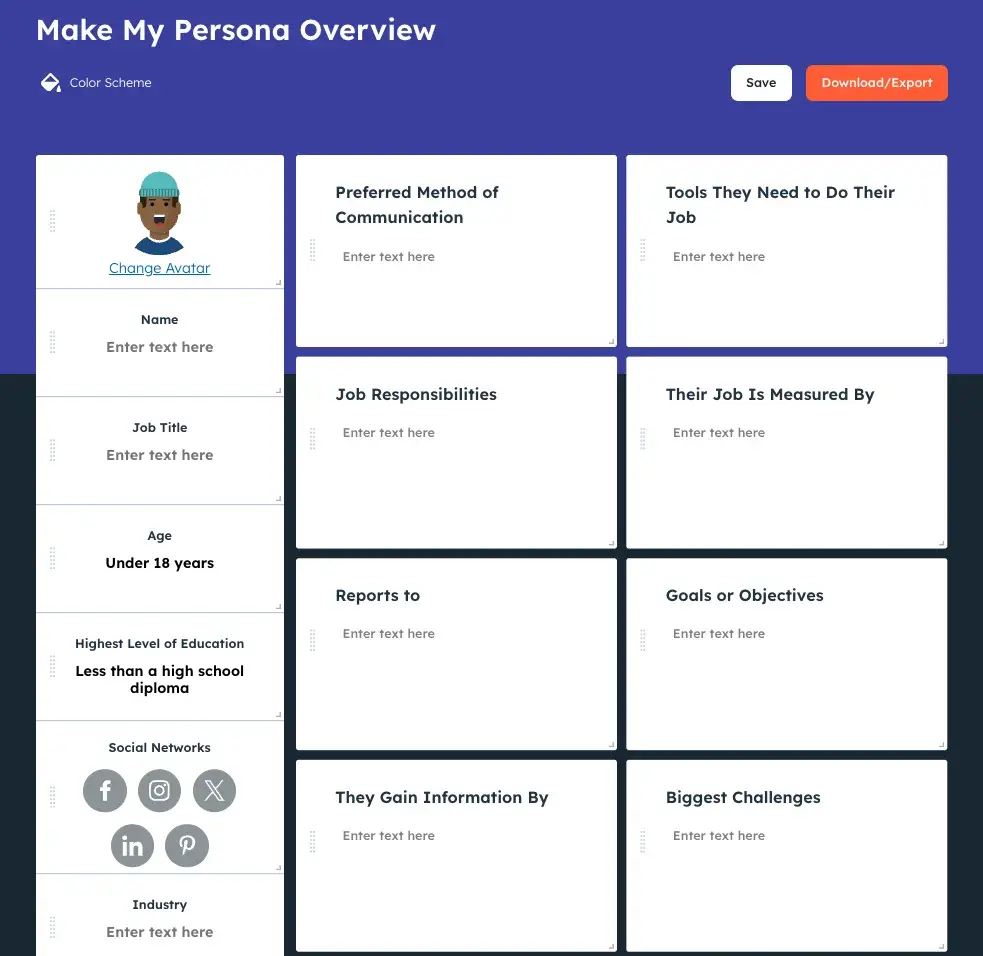
How I typically build personas:
- Group key insights by role, goals, and challenges.
- Pull direct quotes that reflect how buyers actually speak.
- Highlight blockers, motivators, and decision influencers.
- Build 1-2 profiles that represent the most valuable segments.
- Update personas at least twice a year, or whenever we launch something new.
I revisit these profiles regularly to keep our messaging sharp and aligned.
What I’ve Learned from Buyer Persona Interviews
I’ve done a lot of buyer interviews over the years — across industries, products, and funnel stages. And I can say with confidence: they’re always worth it.
Persona interviews are my shortcut to campaigns that convert.
They help me write with clarity, not guesswork.
They give sales a stronger starting point and make handoffs smoother.
They create alignment across teams without endless meetings.
And you don’t need dozens. Just a few real conversations can shift your entire strategy.
Editor's note: This post was originally published in October 2015 and has been updated for comprehensiveness.
Buyer Persona Templates
Organize your audience segments and make your marketing stronger.
- Learn about personas.
- Conduct persona research.
- Create targeted content.
- Build your own personas.
Download Free
All fields are required.
Buyer Personas

![The definition of a buyer persona [in under 100 words]](https://53.fs1.hubspotusercontent-na1.net/hubfs/53/Copy%20of%20Featured%20Image%20Template%20Backgrounds.webp)
![How to Create Detailed Buyer Personas for Your Business [+ Free Persona Template]](https://53.fs1.hubspotusercontent-na1.net/hubfs/53/buyer-persona-research_1.webp)