
Level up, and avoid potential pitfalls, with this guide to international SEO. You’ll learn what makes international SEO different, best practices, and what steps you can take to create an effective plan.
Table of Contents
- What is international SEO?
- What is an international SEO Strategy?
- Questions to Ask About International SEO
- Factors That Affect International SEO
- How to Develop an International SEO Strategy
- Tools for International SEO
- International SEO Best Practices
- International SEO Checklist

What is international SEO?
Websites and their content may be optimized for search engines like Google through a technique known as search engine optimization (SEO). The goal of international SEO is to increase a website's organic traffic from a variety of geographical regions (multiregional SEO) and linguistic groups (multilingual SEO).
International SEO, allows search engines in other countries to quickly find your site. You can also signal the languages you're using to target international audiences or native speakers.
How does international SEO work?
Google and other search engines are programmed to tailor results to the user's language and geographic location.
With international SEO, you can communicate to search engines that your site caters to visitors in a certain country or to those looking for your products or services in a particular language.
Language targeting, rel="noopener" target="_blank" hreflang tags, certain URL structures, and other localization signals all play a role in international SEO.
What’s the difference between International SEO and Local SEO?
The biggest difference between local and international SEO is scale. While local SEO is focused on keywords and target audiences within a narrow geographic area, international SEO targets audiences across diverse geographic regions.
There are four primary differentiators between local SEO and international SEO:
- Cost. Owing to their scale and scope, international SEO efforts come with significant costs.
- Content. To ensure international reach, you’ll need to create significantly more content than you would for a local SEO strategy.
- Capture. International SEO expands the target market you’re trying to capture, which necessitates in-depth research to ensure your brand aligns with customer expectations.
- Competition. Competition for keywords and customers is much greater for international SEO efforts. Instead of simply competing with other businesses in the same local sphere of influence, you could be up against multinational corporations.
Why is international SEO important?
If you expand a global market or would like to in the future, you’ll need to understand international SEO. This process will increase the exposure of your product or service in worldwide markets. The more people who see your offerings, the more people are likely to buy.
To put it another way, you can expand your consumer base, which will, in the end, lead to an increase in conversions.
International SEO can also create an advantage over your competitors. If you see that your competitors aren't optimizing their content for a different country or language, you can create content specifically for that region.
International SEO also leads to a boost in brand recognition. With an improved global user experience, you’re more likely to be seen as a global player in your market. Because of this, visitors will keep coming back to your site, which will ultimately boost sales.
What is an international SEO Strategy?
An international SEO strategy combines the policies, processes, and practices your brand uses to optimize search content for other countries.
An international SEO strategy for websites focuses on creating content applicable to local markets and developing a website structure that makes it easy for search engines to find and serve the right web pages to the right users at the right time.
Consider a company that sells window shades in the United States and is making a move into Canada. First, you’ll want to ensure Canadian customers are sent to the right pages on your website — pages that contain information about Canadian locations, Canadian shipping times, and costs in CAD.
You’ll need a website structure that includes both U.S. and Canadian pages and leverages enough metadata that search requests from users will direct them to the right page for their current location.
Does my business need an international SEO strategy?
It depends.
If you have no plans to expand beyond local markets, such as your current city or state, international SEO probably isn’t worth the time and resources required. In fact, international SEO can backfire if your business is entirely local.
Customers who land on international pages won’t be happy when they discover you serve a very small geographic area.
On the other hand, if you’re looking to expand beyond country borders, it’s worth spending on international SEO. Given the sheer number of companies competing on the global stage and the increased challenge of ranking highly for relevant keywords, a comprehensive strategy is critical.
Not sure how to get your international SEO efforts off the ground? We’ll explore questions that can shape your strategy below.
Questions to Ask About International SEO
- Where are you headed?
- Should you target language or country?
- What localization factors matter most?
- How can you build local links?
- Does social media matter?
- Are current keywords good enough?
- Do you have the right tools and talent?
1. Where are you headed?
Depending on the part of the world you’re targeting, your international SEO approach will change.
For example, if you’re headed to China, Baidu is the most popular search engine. Each search engine has its own approach to SEO, meaning it’s worth doing your research to find out what matters most for rankings.
2. Should you target language or country?
This is a common international SEO question: Are you better served to target a specific language or a country? The answer depends on your goals.
Language optimization may be the answer if you’re looking to appeal to a broad audience regardless of where they live. If you’re looking to grow brand awareness in a specific part of the world, opt for country-based SEO.
3. What localization factors matter most?
Localization is the process of optimizing your website and content to reflect the local language and culture. Two of the most important factors here are accuracy and common use.
First, it’s critical to make sure that translations of any keywords or slogans are accurate. Direct translations can open your brand and services to misinterpretations, such as the always-classic “Come alive with Pepsi” slogan translated as “Pepsi brings your ancestors back from the dead” in Chinese markets.
Common use is the other concern. The words and phrases used to describe your business may not be the same in different languages, even if the literal translation of words gives that impression. Find out what words locals use to describe your products and services and use those instead.
4. How can you build local links?
Building local links back to your site also helps with international SEO. Here, it’s a good idea to write articles for local blogs, get sponsored mentions on websites that offer advice or useful information, connect with local social media influencers, and sponsor local events.
5. Does social media matter?
While Google has expressly stated that social media doesn’t factor into international SEO rankings, you can increase brand awareness and local influencer connections with a strong social media presence.
6. Are current keywords good enough?
While your current keywords may help you rank in the top 5 locally, the sheer number of companies competing for these keywords in global markets means you need to take a look at who’s using these keywords, where they rank, and whether other similar keywords might drive better results.
7. Do you have the right tools and talent?
Finally, consider if this is something you can take on yourself or if you’re better off hiring an experienced international SEO company.
Factors That Affect International SEO
Multiple factors affect international SEO, including the following.
Customer Reviews
Customer reviews on your website or on local review sites can positively or negatively impact your SEO efforts. Better reviews mean a better connection with your primary keyword, in turn boosting your visibility.
Mobile Responsiveness
The responsiveness of your website on mobile also matters to overall search rankings. As a result, it’s worth finding a content delivery network (CDN) capable of providing a top-tier website experience regardless of where users are.
Google My Business Account
Your Google My Business Account can help boost your SEO efforts — so long as you ensure to update where your company is operating. This is a starting point for Google to seek out geographic and language metadata on your site.
Link Building
The more links heading back to your site from international sources, the better. As mentioned above, it’s a good idea to write for local blogs or connect with influencers to point links back to your website.
How to Develop an International SEO Strategy
Ready to develop your international SEO strategy? Start here.
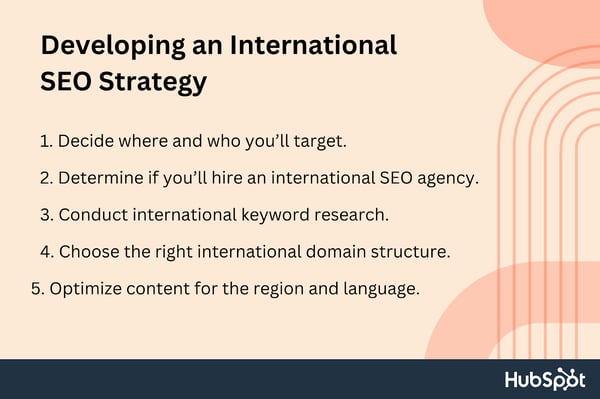
1. Decide where and who you’ll target.
First, pick your target market and target audience. For example, you might decide to target the larger market of Brazil, then hone in on a subset of that market that has the means and motive to buy your product.
The more focused your decisions are around “where” and “who,” the better your results.
2. Determine whether you’ll hire an international SEO agency.
Do you want to do the heavy lifting of international SEO yourself or outsource this effort? There are advantages to both.
You know your brand better than anyone else, but SEO experts are skilled at understanding local preferences and creating a strategy to match.
3. Conduct international keyword research.
Using relevant keywords is a critical component of search engine optimization. It's not enough to just translate your keywords if you're working on international SEO. In most circumstances, you'll need to transcreate them.
On a case-by-case basis, handle your keywords. It will be more challenging to convert certain keywords than others. Some global businesses, such as health or IT, commonly use English terminology, even if it isn't the country's official language. Therefore, translating these keywords would be meaningless.
If you're a law company trying to grow, you should be aware of the important keyword distinction between, say, trial lawyers in the United States and barristers in the United Kingdom.
Find out exactly what people in your target market are typing into search engines and modify your keywords accordingly. For instance, the United States and the United Kingdom celebrate Mother's Day on different days. This implies shoppers in both nations will be looking for Mother's Day gifts at different times of the year.
When you've finished translating or researching your keywords, you should see how often they're searched for.
To choose which keywords to use in your international SEO plan, you may use a tool like Google's Keyword Planner to research the number of times they are searched for each month in each target area.
4. Choose the right international domain structure.
The domain structure of your website makes it easier (or harder) for visitors and search engines to find your content. Different options include the following.
ccTLD
Country code Top-Level Domains (ccTLDs) are two-letter domains assigned to specific countries. For example, .us is for the United States, .ca is for Canada, and .uk is for the United Kingdom. To improve international SEO, you may choose to create a unique ccTLD site for each country where your products or services are available.
Example: mybusiness.ca, mybusiness.uk
gTLD
A generic Top-Level Domain (gTLD), meanwhile, refers to domain extensions with three or more characters. These TLDs are maintained by the Internet Assigned Numbers Authority (IANA). Common examples include .com, .gov, and .org.
Using a gTLD means that search engines won’t restrict results based on region, but it may reduce total traffic since many users prefer sites that include their country code TLD.
Example: mybusiness.com
ccTLD or gTLD with subdomains
You can also create subdomains for your site that combine aspects of both ccTLDs and gTLDs.
Example: ca.mybusiness.com
This offers the benefit of a country code and the advantages of a gTLD.
ccTLD or gTLD with subdirectories
Subdirectories, meanwhile, change the location of the country code:
Example: mybusiness.com/ca/
5. Optimize content for the region and language.
Finally, ensure all your content is optimized for your target region and its local language. This includes double-checking all TLDs, translations, and content assets to ensure they align with local expectations.
Oh, and don’t forget the rel="noopener" target="_blank" hreflang tag. This HTML attribute specifies the geographic area and language of a webpage. It’s used to differentiate similar web pages aimed at different audiences so that search engines don’t count them as duplicate content, and it looks like this:
<link rel="alternate" rel="noopener" target="_blank" hreflang="x" rel="noopener" target="_blank" href="https://example.com/alternate-page" />
Tools for International SEO
The right tools can also help you maximize the impact of international SEO by providing actionable data around traffic, click-throughs, and time spent on your site. Some of the most popular tools include the following.
HubSpot
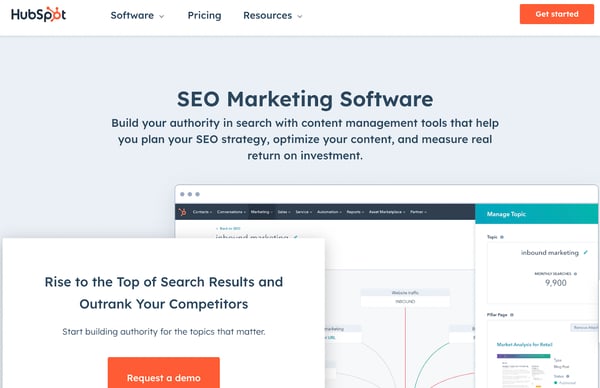
HubSpot’s SEO software allows you to create an international content strategy, gives you live tips to improve your on-page SEO, and lets you organize your website in a way that’s easy for both search engines and users to understand.
Google Search Console
Google Search Console lets you see what queries are driving traffic to your site, determine your position on Google Search, and analyze global site impressions.
Arel="noopener" target="_blank" hrefs

Arel="noopener" target="_blank" hrefs is an all-in-one SEO toolset that lets you optimize your site, analyze your competitors’ rankings, and find the best keywords for your brand.
Moz
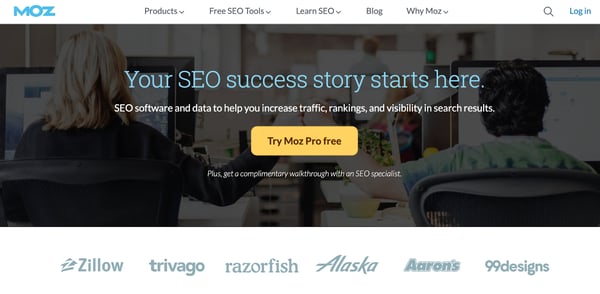
Moz offers site audits to determine potential issues, tracks keyword rankings across more than 170 search engines, analyzes backlink profiles to evaluate performance, and offers keyword research tools to find out how you stack up against the competition.
Semrush
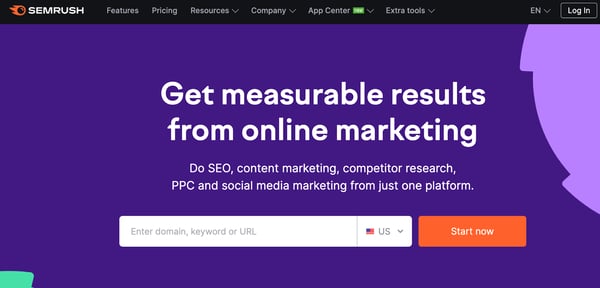
Semrush lets you identify high-value local and national keywords, analyze the backlink profile of any domain, and track your site’s SERP positions daily.
Google Analytics
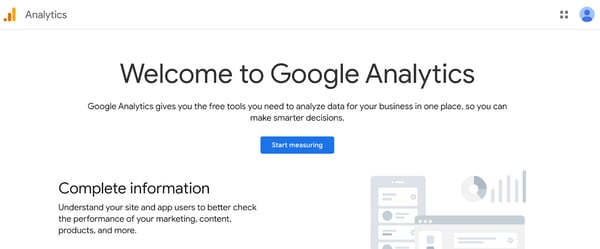
Google Analytics is an interconnected suite of tools that helps you analyze the impact of your website content worldwide.
International SEO Best Practices
No matter what approach you take to international SEO — language-focused or country-based, outsourced or in-house — the same best practices apply. Let’s take a look at a few below.
1. Define your market approach.
The methods used for SEO in one country may not be appropriate for use in another. Your company and its target customers should inform your strategy.
If you sell the same products in multiple countries, but to people who speak different languages, you should use a language-based segmentation strategy. This means ensuring all of your website's content is translated into all the languages important to your company.
Your business will need to take a country-by-country strategy if its products and services vary across international markets or if it uses a distinct brand name in each country's local language. You need individual country-specific websites optimized for their respective international markets.
2. Do your market research.
You should identify the potential buyer persona for your product or service and learn about their priorities before implementing an international SEO strategy.
To do this, you may conduct keyword research and investigate the channels through which these demographics frequently discover new products. Following that, you'll better understand which audiences to target and how.
3. Do competitor research.
Analyze your potential competitors to see how they are doing with search engine optimization, content marketing, and paid advertising.
You can use international SEO to discover unexpected opportunities if your competitors aren't yet optimizing their content for particular markets or languages.
4. Answer questions in the region’s native language and in the right context.
If there’s one thing to get right for international SEO, it’s ensuring you speak the same language as your customers. This means doing your research to ensure you’re always answering questions in their native language and in the appropriate context.
5. Think about how your strategy will affect the user experience overall.
International SEO isn’t just about keywords and content. It’s also about making sure the entire user experience is seamlessly aligned across your site.
That includes filling out forms in many languages, viewing prices in local currency, and accessing multimedia assets that include native speakers.
6. Pick the audiences that you're most interested in targeting first.
You don't have to optimize your content for every country and language at once when it comes to worldwide search engine optimization. There may be more than one phase to the rollout.
To learn how to execute international SEO, focus on reaching only one additional audience at a time. You and your team may learn about international SEO and acquire momentum for future projects by doing so.
7. Translate existing content carefully.
While translation tools provide a literal conversion of words and phrases, they’re often not used that way by locals. Customers will quickly recognize that something isn’t quite right.
Instead of translation, you’re really looking for “transcreation.” You want to recreate the same content but use the culture and language of your target market as a guide.
8. Optimize your website's language options (or website pages).
You must use the correct language for each page, regardless of whether you have chosen country-specific subdomains or a single domain with many subfolders.
This will send a strong message to Google and other search engines about the location-specific relevance of your material, increasing the likelihood that your pages will be ranked highly by those services.
It will also improve the experience for local users, which increases the likelihood that they will make a purchase or revisit your site.
Adding subfolders with specific pages in each language of your target countries is an alternative if having country-specific domains is either impractical or not strategically necessary for your business.
9. Avoid automatically redirecting users based on their IP address.
It might seem like the perfect solution. However, automatically redirecting visitors or search engines based on IP addresses can annoy users. It can be confusing for search engines too, meaning visitors may never find certain content.
Instead, let visitors and search engines know about an alternative version of a page. Show a banner at the top or bottom with a message and a link to the suggested page.
10. Topics should be adapted to local cultures.
Your country-specific pages should only contain content that is pertinent to the local audience. It's possible, for instance, that Australians won't find your coverage of American fashion or politics particularly interesting.
If this is the case, you should make an effort to produce content that is particular to and helpful for the demographic of people who will visit the specific country site.
It's advisable to seek some input from a native speaker of the target language before you start writing or designing anything for an international market.
11. Develop a link-building strategy, for each market.
Keep in mind that, similar to local SEO, the value of a link varies based on its point of origin. Google will see that your content is relevant to German users if you have a high number of inbound links from .de domains.
Consequently, it might adjust your page's ranking in the relevant regional search engine results pages (SERPs).
Spending time developing a solid link-building strategy for each page is time well spent, as local links will have the greatest influence on search results.
12. Take into account other SEO signals.
A website can also signal to search engines that it is intended for a certain nation by using techniques such as:
- Having a site hosted on a local IP address.
- Local content linking.
- Improving search engine rankings on country-specific platforms like Russia's Yandex and China's Baidu.
In addition to the best practices described earlier, it is important to consider these signals to determine whether or not they are relevant to international SEO strategy.
International SEO Checklist
Ready to get started on building your international SEO strategy? We've created a checklist to ensure you don't miss any step of the process.
- Determine what international content you offer and for which markets/languages.
- Make a keyword plan with appropriate terms for certain markets or languages.
- Create an international SEO-friendly URL structure.
- Build a sitemap.
- Choose a language and a country to target.
- Allow visitors to change the language of the website.
- For language targeting, use rel="noopener" target="_blank" Hreflang tags.
- Convert prices to local currencies.
- Make sure that the wording of each image's alt text is appropriate.
- Fix any bad redirects you discover.
- Fix mistakes, broken links, and crawling problems.
- For each market, develop a link-building strategy.
- Keep abreast of local and worldwide search trends.
- Make sure each topic you intend to discuss has good SEO potential.
- To keep your content current, employ native content developers and industry specialists.
SEO: Improving Your International Impact
The right SEO strategy sets your brand apart from the crowd. While this is important in home markets, it’s even more critical if you decide to go international because it will ensure your website is optimized to support high-value content and keywords across countries.
By considering local customs, language, and context, you can boost consumer engagement and maximize your international impact.
Editor's Note: This post was originally published in Dec. 2021 and has been updated for comprehensiveness.

SEO


.png)




.jpg)
![The Future of Google: Web Strategists Predict How AI Overviews & Other Search Changes Will Impact Traffic [New Data]](https://53.fs1.hubspotusercontent-na1.net/hubfs/53/seo-sge-1-20241031-8247348.webp)