.jpg)
That‘s the power of influencer marketing. Influencers begin to feel like friends. We watch them get married, go through breakups, start new careers, get fired, travel to faraway places, and fight with their best friend’s.
And when they partner with a brand, we're more willing to buy.
Here, I sat down with four experts in the influencer space — Imani Ellis, The Founder of The Creative Collective and CultureCon; Olamide Olowe, The Founder and CEO of Topicals; Shannae Ingleton Smith, The Founder and CEO of Kensington Grey; Justine's Camera Roll, Lifestyle and Beauty Influencer — to learn their tips for crafting a powerful influencer marketing in 2025 (plus, where the future is headed).
We‘ve also got data from 1,100+ social media marketers on how they’ve implemented influencer marketing at their own companies.
Table of Contents
- What is influencer marketing?
- Types of Influencers
- Platform Strategy: Where Should You Focus?
- Influencer Marketing Challenges
- How to Create an Effective Influencer Marketing Strategy, According to Experts
- Influencer Marketing Examples
- How Influencer Marketing Will Change in 2025 [Expert Predictions]
What is influencer marketing?
Influencer marketing is a strategy that employs leading and/or niche content creators to raise brand awareness, increase traffic, and market an organization's products or services. This collaboration between brands and creators allows businesses to expand their reach across their buyer personas.
Influencer marketing often involves using channels such as social media, blogs, columns, digital and print ads, and television. Influencer marketing is increasingly more popular among businesses because traditional advertising has become less effective in attracting leads and customers.
If you need help creating an influencer marketing strategy, don‘t panic — I’ve got you covered.
Influencer marketing works because it uses tactics like word-of-mouth marketing and social proof, which are now critical aspects of any successful marketing strategy.
Customers trust their peers, friends, and people they admire more than the companies selling the products and services they buy and use.
.png)
Free Influencer Marketing Kit
Learn the fundamentals of successful influencer marketing strategy with this free ebook and set of templates.
- Email templates for influencer outreach
- The do's and don'ts of working with influencers
- The ins and outs of paying influencers
- Measuring success from influencer campaigns
Download Free
All fields are required.
Types of Influencers
Next, let's dive into the different types of influencers, before we jump into expert tips on creating a powerful influencer marketing strategy.
1. Brand Influencer
A brand influencer has a following within a niche they regularly engage with. Because of this, they have the power to impact their purchase decisions.
The significant types of brand influencers are:
- Micro-influencers
- Celebrity influencers
- Blog influencers
- Social media influencers
- Key opinion leaders.
I'll define each type as we move on.
For instance, Justine, a lifestyle, beauty, and skincare influencer with 195K followers on Instagram, partnered with MAC Cosmetics to promote their products. Justine tags #MACAmbassador on the posts in which she showcases MAC products with her own takeaways.
2. Brand Ambassador
A business hires a brand ambassador to work under contract to help them achieve specific goals: increase brand awareness and boost conversions and sales.
A brand ambassador’s contract is typically long-term, from several months to years. During that time, they represent the brand and its lifestyle and know deeply about the business’s products or services.
They don’t necessarily need to be an influencer before becoming an ambassador.
For example, Quest Nutrition’s brand ambassador program requires all interested individuals to apply to their program.
Quest looks for individuals who embody their brand, are positive product spokespeople, create social media posts to promote their products, and live the Quest lifestyle.
Anyone who fits their criteria can apply and has the potential of being accepted. Applicants aren’t required to have a highly successful YouTube account, thousands of followers on Instagram, or a popular blog to become a brand ambassador.
3. Micro-Influencer
Micro-influencers have a relatively modest following of thousands or tens of thousands of people.
They create relevant content for their audience and communicate with them via social media platforms, blogs, other written publications, websites, and forums.
Micro-influencers typically have high engagement rates due to the size of their following and the type of content they create.
A smaller audience allows micro-influencers to bond with the people who follow them more regularly (compared to a celebrity with millions of fans) via their channel.
This makes them appealing to work with for businesses looking to develop personal relationships among their target audience.
HubSpot blogger and content creator Erica Santiago tells me this doesn't surprise her.
“I'm not an influencer, but I am a smaller content creator with over 7.5K followers across different platforms,” she says. “I basically created my own tight-knit community of people who want to keep up with my work and my life.”
She explains, “Because my following is smaller, it's a lot easier and less overwhelming to reply to like or reply to their comments, repost their content if it's relevant to my platform, or share important information with them.”
Santiago says her interactions with her followers helped her build a bond and trust with them.
“Again, I'm not an influencer—so I don't typically make product recommendations,” she says. “But if I tell them I'm enjoying TV or comic book series, they'll usually trust my judgment. I've seen people buy comics just because I did a review on my channel.”
For instance, Alphalete Athletics partnered with fitness micro-influencer Aly Gray (13.6K followers on Instagram) so Aly can wear and promote their clothing with her smaller but highly loyal and engaged audience.
In addition to sharing fashion looks and tips with their followers, they are also disability advocates and often share what it’s like being deaf.
4. Celebrity Influencer
Celebrity influencers are famous people with large followings — typically millions — known across many industries. They’re widely recognized and, therefore, have the potential to be very successful in influencing your target audience.
Even if your target audience doesn’t overlap with all of your celebrity influencer’s fans, having them promote and/or use your product or service is a powerful form of social proof.
Since celebrities are so well known, they’re effective at reaching multiple audiences across various channels.
However, I should tell you something interesting in regards to celebrity influencers: According to HubSpot research, most marketers are finding more success with micro-influencers than celebrity influencers, and only 20% of marketers currently work with mega- or celebrity influencers in 2025.
So, if you‘re not keen on shelling out a lot of money to get celebrities to promote your brand (and trust me ... it’s a LOT of money), don't feel pressured to do so.
5. Key Opinion Leader
Key opinion leaders (KOLs) are high-level experts on a specialized topic within a particular field. For example, a KOL might specialize in makeup application, the Paleo lifestyle, or Bikram yoga.
A KOL is an excellent option if your business wants to attract audience members in a specialized field.
Due to their expert knowledge on a particular topic, KOLs are trusted contributors in their industries and have followers of people who are also invested in those subjects.
Ready to get started? Let's review how to create your own strong influencer marketing strategy — plus tips from the experts.
Platform Strategy: Where Should You Focus?
Before diving into how to run a successful influencer strategy, it's important to note where you should run your campaigns.
The four most popular platforms for influencer marketing in 2025 are:
- Instagram (26%)
- YouTube (24%)
- TikTok (15%)
- LinkedIn (5%)
It‘s key to identify which platforms are most popular with your audience. This also helps you identify the right influencers, since you’ll want influencers that create content specifically for the platform of your choosing.
Smith also points to an often-overlooked platform that brands should consider: "The platform that I think is underrated, that I've been finding myself going into the deep depths of, is Reddit. Reddit drives a lot of traffic, not just for brands, but for creators' content... Those forums can be a source of underground information that can help drive you to an authentic answer on a brand."
For Reddit strategy, she advises: “If there is a topic related to the solution that your product or service provides, you can start a topic and talk about that specific topic in a genuine, authentic way. If you contribute to that conversation by providing your brand or service as a solution, that's a great way to get noticed from a brand perspective.”
Free Influencer Marketing Kit
Learn the fundamentals of successful influencer marketing strategy with this free ebook and set of templates.
- Email templates for influencer outreach
- The do's and don'ts of working with influencers
- The ins and outs of paying influencers
- Measuring success from influencer campaigns
Download Free
All fields are required.
Influencer Marketing Challenges
To create a strong strategy, it's equally important to know the challenges you might bump up against.
Fortunately, I have you covered. Our 2025 research identified these top challenges amongst the 1,100+ respondents:
- Finding and vetting the right influencers (37%)
- Measuring ROI (34%)
- Building creative strategies (28%)
- Keeping up with algorithm changes (28%)
- Managing costs (27%)
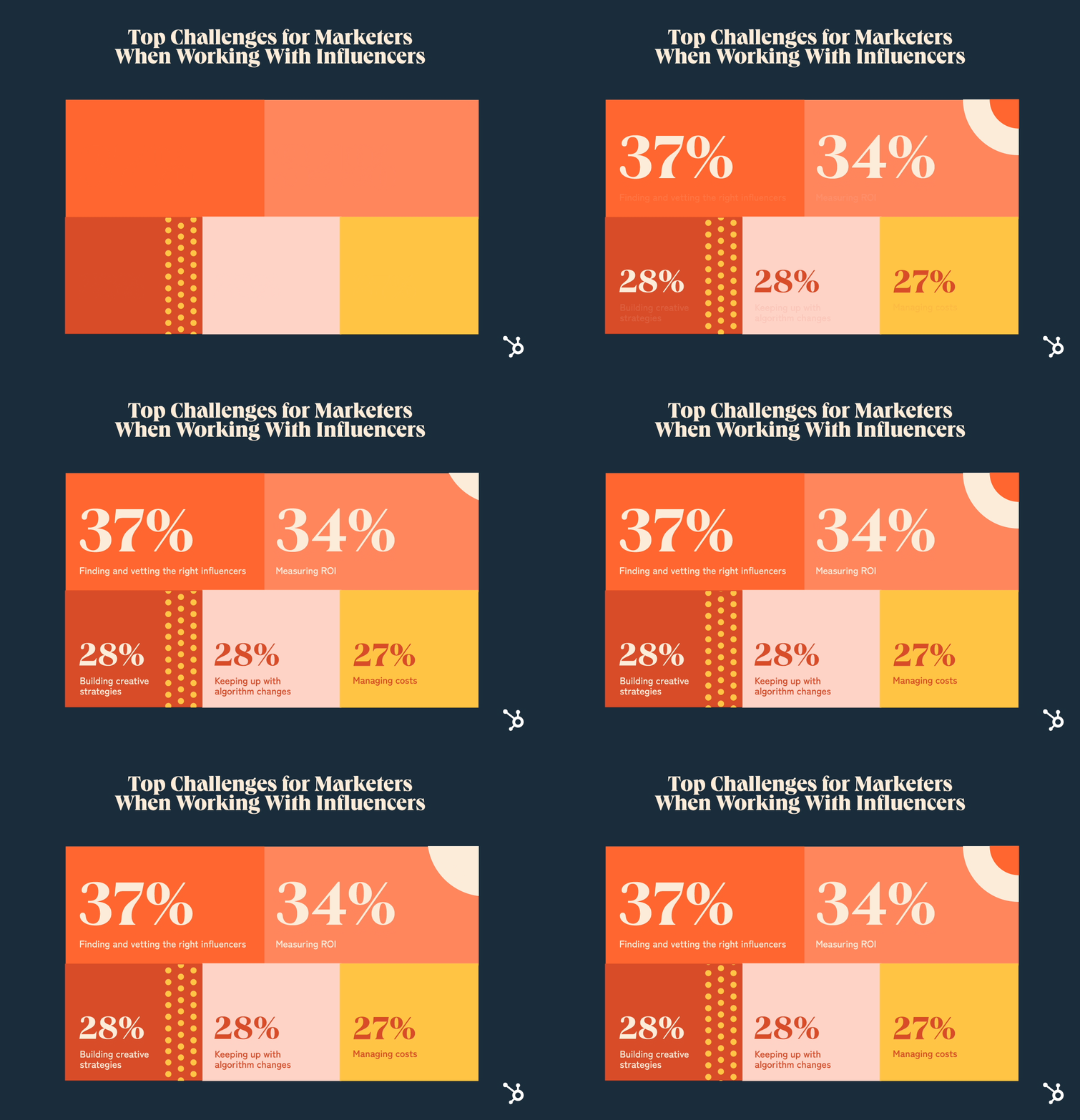
These challenges are worth keeping in mind as you read tips on creating an effective influencer marketing strategy from our experts. Hopefully, our expert guidance will help you steer clear of any of these pitfalls.
How to Create an Effective Influencer Marketing Strategy, According to Experts
Here‘s how to create a strategy that doesn’t just look good on paper, but actually moves the needle.
1. Figure out what “winning” looks like (spoiler: it's not just vanity metrics).
Diving into influencer marketing without clear goals is like trying to bake a cake without a recipe — messy, expensive, and probably disappointing.
Think about your objectives in terms of SMART goals. When developing influencer marketing SMART goals, there are three factors to remember: reach, relevance, and resonance. These will help you focus your goals on the different aspects of influencer marketing.
Beware: A good influencer strategy must start with a clearly defined goal.
As founder of CultureCon and The Creative Collective, Imani Ellis, explains: "The first thing we ask all of our brand partners is, What does a win look like? Because that's going to inform our strategy for you."
An influencer marketing strategy will look drastically different if your goal is brand awareness versus sign-ups.
Olamide Olowe, Topicals founder and CEO, told me her goals when it comes to influencer marketing aren't solely about revenue.
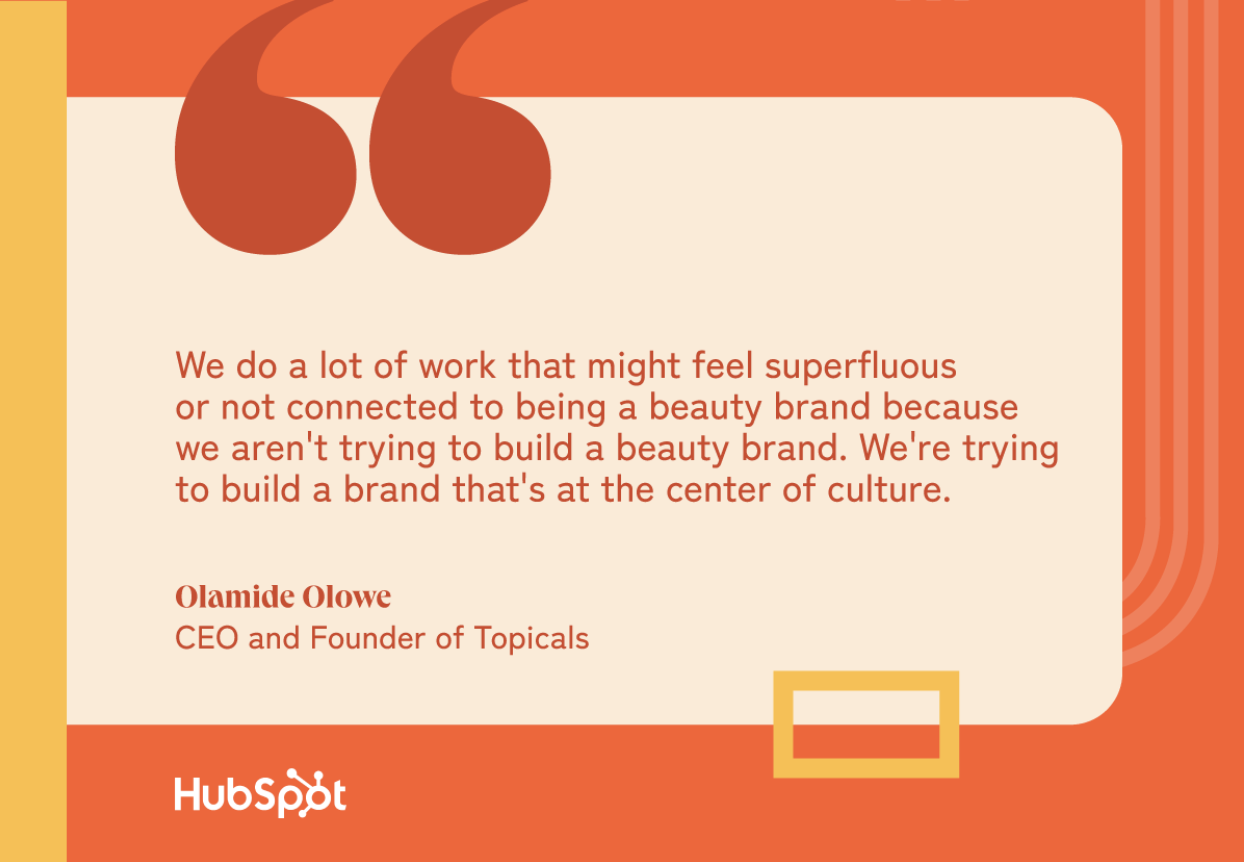
Instead, "Our goals are also cultural impact. We do a lot of work that might feel superfluous or not connected to being a beauty brand because we aren't trying to build a beauty brand. We‘re trying to build a brand that’s at the center of culture."
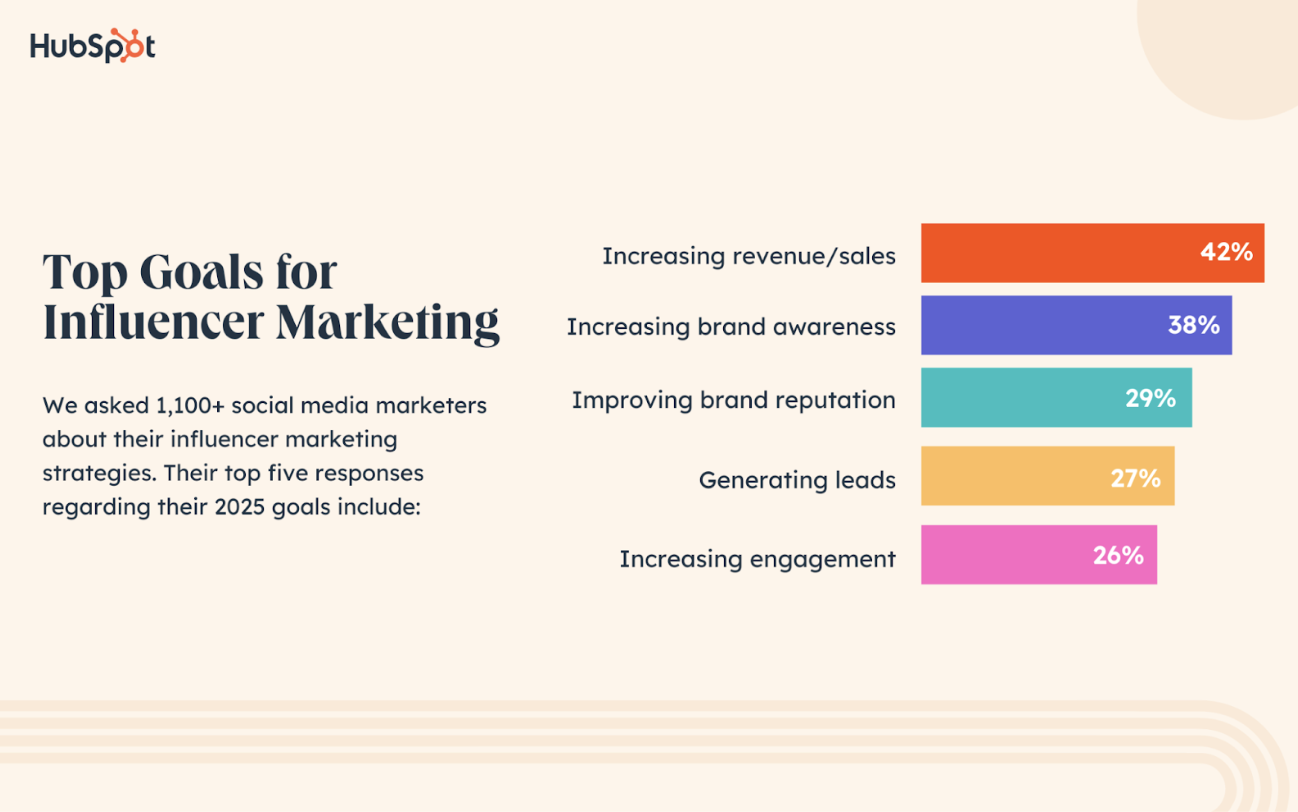
Need help determining what your goals are? According to our 2025 Social Media Trends report, the top goals for influencer marketing are:
- Increasing revenue/sales (42%)
- Increasing brand awareness (38%)
- Improving brand reputation (29%)
- Generating leads (27%)
- Increasing engagement (26%)
Finally, Ellis encourages marketers to plan your campaign with the end in mind: “So that halfway through the campaign you're not frustrated that you're not getting what you desired.”
2. Define your campaign audience.
Your campaign audience will be a subset of your buyer persona, but might also vary depending on:
- Goals
- Platform
- An influencer's audience
For instance, a marketer at a project management SaaS company might choose to target a subset of its B2B buyer persona — creative agency team leads — for a specific Instagram influencer campaign.
When thinking about audience strategy, Ellis suggests looking beyond individual influencers to entire communities, as well: "If you can tap into a community, you can see them as a vehicle for influencer marketing, rather than the traditional one-person-at-a-time approach."
For instance, let‘s say you’re selling a protein powder. Rather than targeting one fitness influencer, you might opt for identifying key communities that would respond well to your product: Like run clubs, or Reddit sub-threads.
Olowe agrees with this community-focused approach.
She told me, “About a month ago, we took roughly 20 influencers to Switzerland as part of a larger skiing event called 'Soft Life Ski'. We treated every single person on that trip like an influencer, regardless of whether we brought them as an influencer or not.”
Creating this sense of community amongst your most loyal customers is likely a much more powerful step towards increasing brand loyalty than paying some big-name influencers to promote your brand.
3. Set your budget and figure out your influencer type.
Your budget depends on your goals, audience, and how much your CEO actually believes in this whole “influencer thing.”
For instance, if you‘re a startup with a low budget, you might choose to work with a few micro-influencers rather than one macro-influencer. If you’re a mid-sized company with more resources, you might decide to bring on a celebrity influencer or work with a KOL who's highly regarded in their industry.
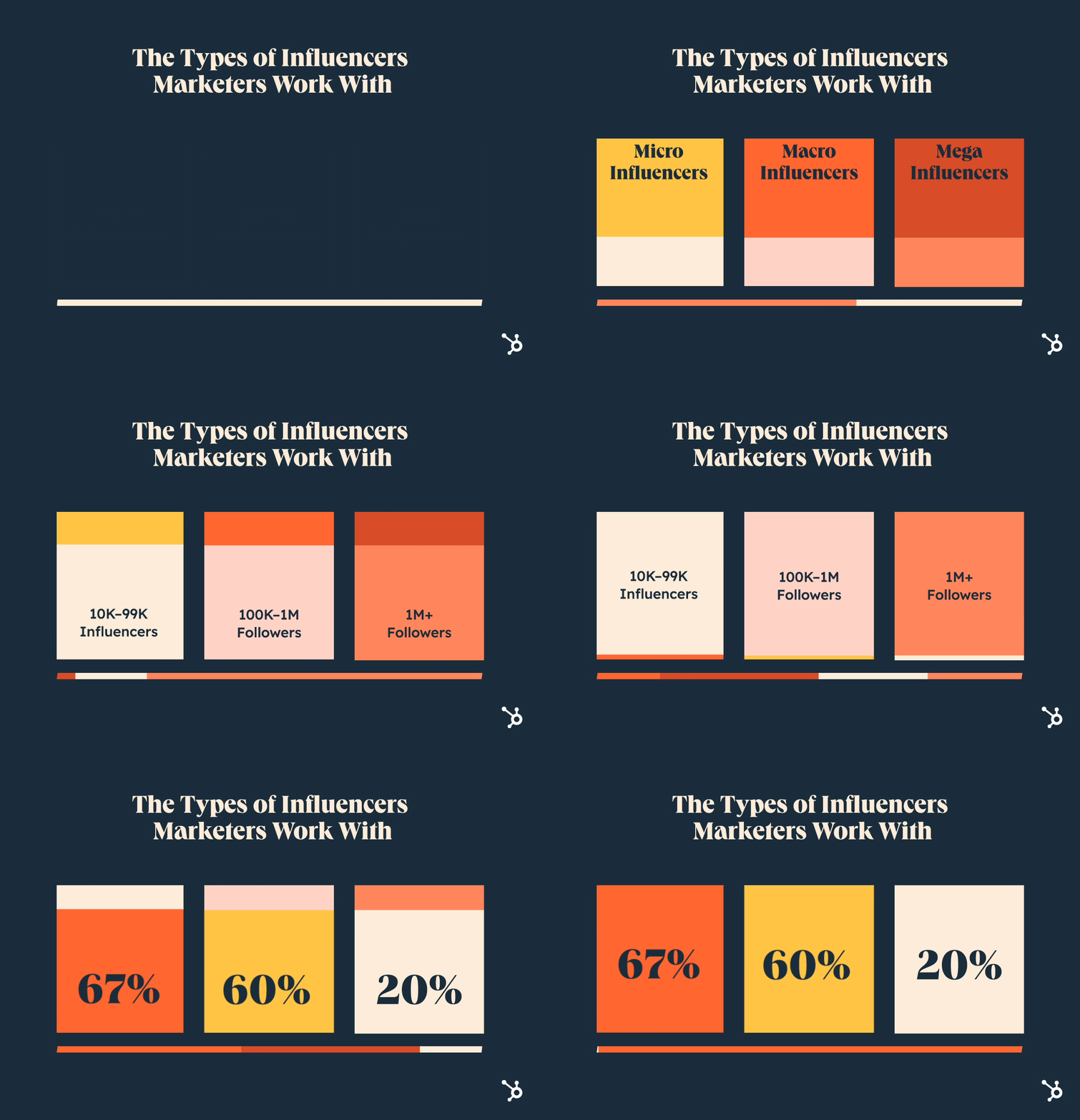
Our 2025 research shows most companies are playing the field with different influencer types:
- Micro-influencers (10K-99K followers): The crowd favorite at 67% of marketers
- Macro-influencers (100K-1M followers): Close second at 60%
- Mega-influencers (1M+ followers): Only 20% go this route, proving bigger isn't always better
Olowe uses a micro-influencer approach for Topicals: “We recently started working with a group of young boys who came on our radar because they made content about us. They do things that aren't traditionally done by boys — like, they went into Sephora and tried on our products. And that video alone got almost 3 million views.”
Additionally, she points out: “Micro-influencers are cutting through the noise in a way that some larger influencers can't because there's a bit of saturation in their audiences.”
4. Choose your influencer.
Once you know what type of influencer you want, it‘s time for the fun part — actually finding them. It’s like dating, but with brand partnerships (and hopefully less ghosting).
Ellis has the right idea: “find the Creator that you believe in.” This should be someone whose work you genuinely admire, not just someone with decent follower numbers and a willingness to work with brands.
And then — let them do their thing.
“I have found that when brands allow the Creator to do what they do best, it performs,” Ellis explains. “The audience is getting smarter... they know when the Creator had control, and they know when the Creator didn't. They're rooting for the brands that are giving creative freedom to the Creators.”
One creator I follow — Corporate Natalie — recently partnered with the AI presentation builder Gamma. The partnership worked well because Gamma allowed Natalie to focus on what she does best: creating satirical, humor-filled content about corporate life.
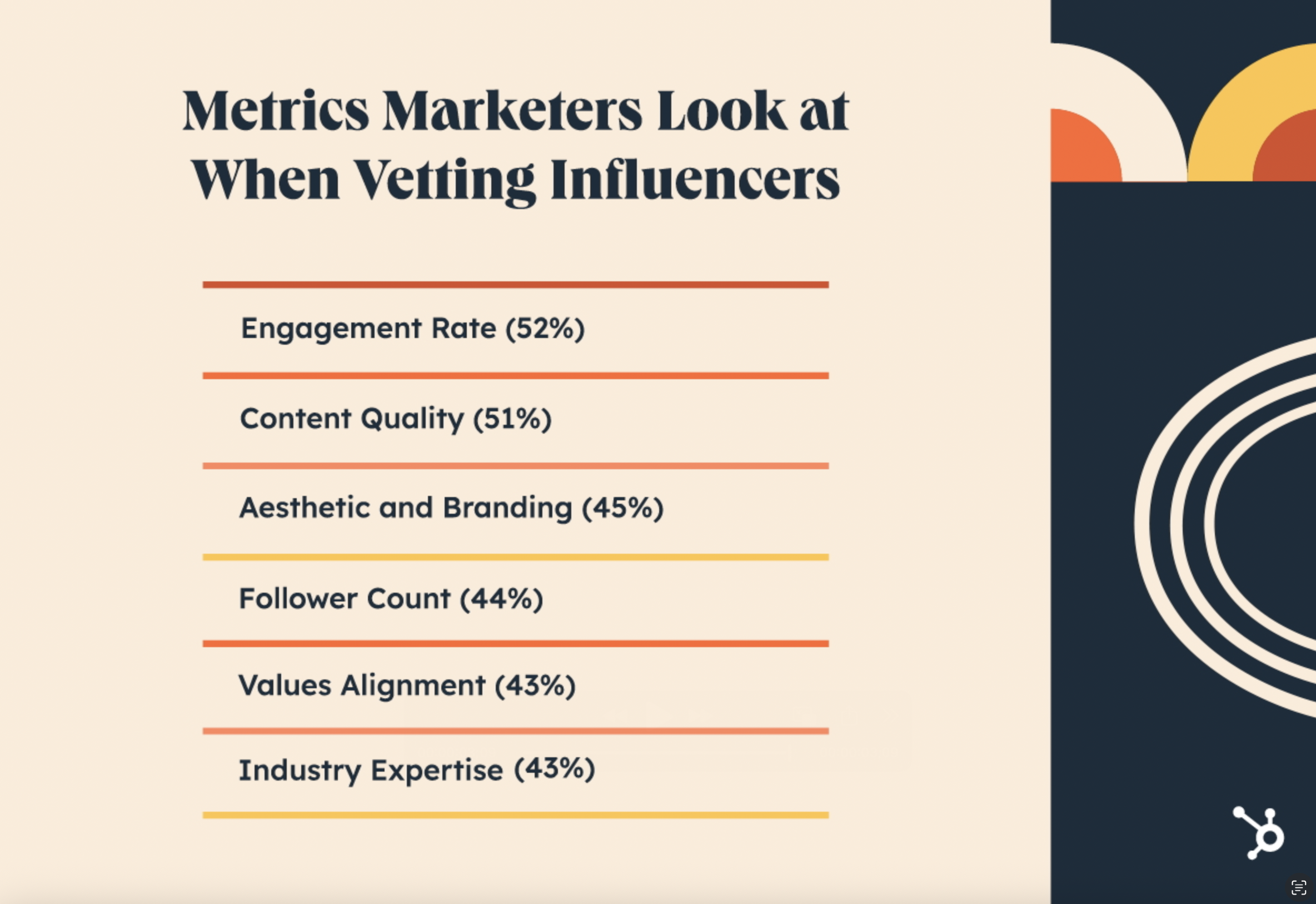
When vetting influencers, our 2025 research shows marketers care most about:
- Engagement rate (52%) — Are people actually paying attention?
- Content quality (51%) — Does their stuff look good?
- Aesthetic and branding (45%) — Do they match your vibe?
- Follower count (44%) — Size matters, but not as much as you think
- Values alignment (43%) — Do they align with what you stand for?
- Industry expertise (43%) — Do they actually know their stuff?
“Quality of content” and “engagement” are the top two factors marketers consider when assessing an influencer.
Notice that follower count falls fifth, behind alignment with company values and branding.
When considering someone for a campaign, ask yourself the following questions:
- Does this influencer and their lifestyle fit my brand image?
- Have they worked with any of my competitors?
- Who is this influencer's current audience?
- Is my target audience active on the platform/channel primarily used by this influencer?
- Does working with this influencer make sense for my budget?
- Has this influencer used any of my products or services before? Are they a customer?
- Does this person have a personality I want to work with?
- What will this influencer expect from our brand?
5. Craft your message — but let the influencer lead.
You‘ve found your influencer soulmate — congrats! Now it’s time to figure out what they're actually going to say about your brand.
Work with your team to develop campaign messaging, but remember: you hired them for their voice, not their ability to read a script.
Justine, a lifestyle, beauty, and skincare influencer, shares her perspective on effective influencer messaging: “Success for me is about true impact — cultivating a relationship with my audience that goes beyond trending sounds and likes. I try to approach every video in a way that balances my personality, is fun, and adds value.”
This authenticity is what builds credibility with both audiences and brands.
As Justine notes, “I think this combo has earned me trust with my community while still being attractive to brands.”
Be sure to share your brand guidelines — including details about your brand voice, tag lines, and language to avoid — with your influencers so they can remain on-brand with their content.
Remember, whether influencers post about your product or service once or 100 times, they still represent your brand and business. Ensure they have the tools to do so accurately.
But don't be afraid to let the influencer take the lead on a campaign.
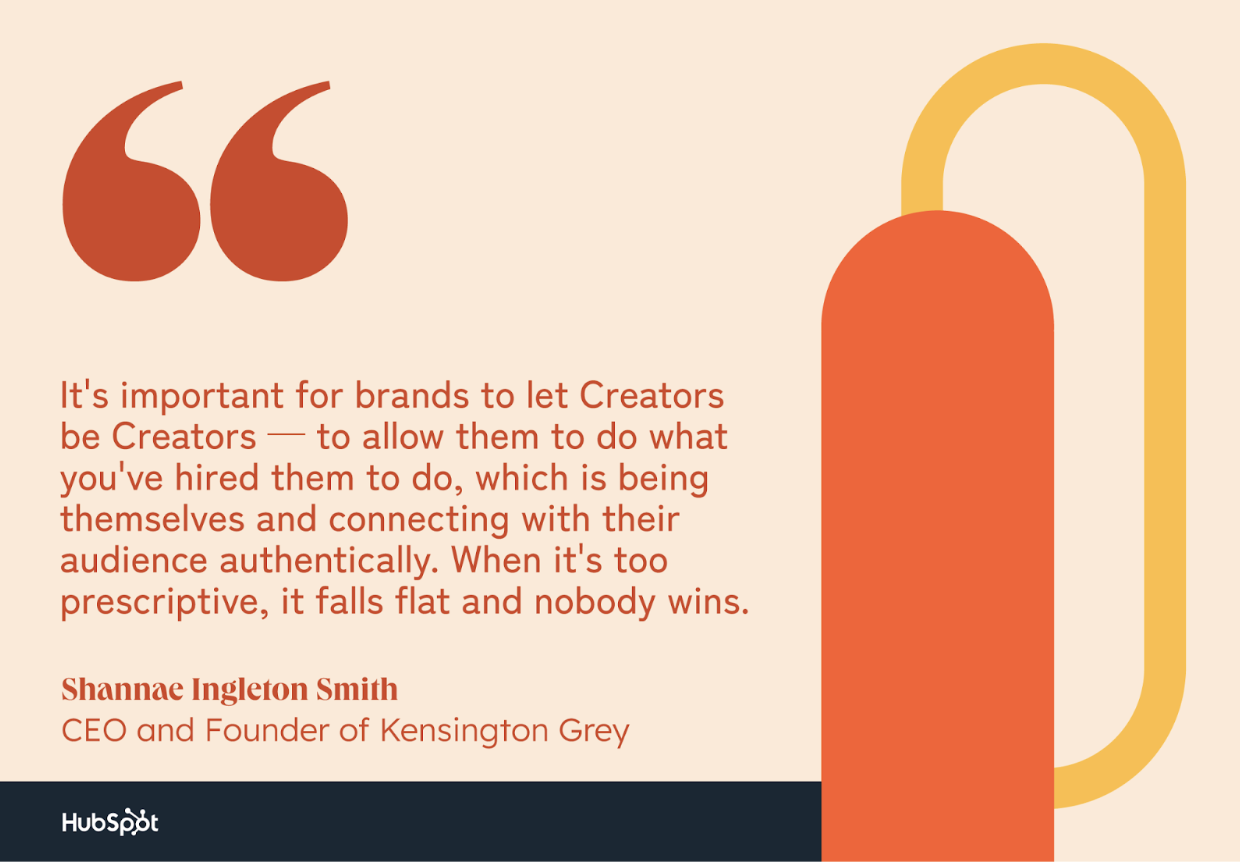
Shannae Ingleton Smith, founder and CEO of content creator agency Kensington Grey, emphasizes the importance of creative freedom: “It's important for brands to let Creators be Creators — to allow them to do what you've hired them to do, which is being themselves and connecting with their audience authentically. When it's too prescriptive, it falls flat and nobody wins.”
Smith adds, “The audience loses, and the brand doesn't get what they're looking for. Although it can feel risky, it's really important to give Creators full creative freedom to do what they're good at.”
6. Set expectations.
Finally, review your expectations for them and any expectations they have for you. Remember, your chosen influencer may have worked with other brands before yours — meaning they may already have their processes for doing business.
Additionally, their expectations will differ depending on the type of influencer they are. For example, a micro-influencer will have different expectations for how you communicate with them versus a celebrity. A micro-influencer may speak directly with you, whereas a celebrity may have an agent share on their behalf.
You'll want to ensure these expectations are written, agreed upon, and signed by you and the influencer — you can organize all of this information through an influencer contract. This will help you avoid any issues and discrepancies down the road.
To help get the ball rolling, here are some examples of the expectations to review:
- How this influencer will be paid or rewarded (money, swag, discounts, coupon codes, etc.)
- How long you'll be working together
- How you and the influencer will be communicating with each other
- Any other terms of contract necessary for your specific business to review
7. Get familiar with FTC guidelines.
Yes, there are guidelines, and you must follow them for your brand, reputation, and legality. The Federal Trade Commission has rules in place to prevent issues such as false advertising and scams.
And believe me when I say you do not want your brand on the FTC's bad side.
One rule is that influencers cannot hide their “material connections” to a brand they endorse. It must also be clear when content is an ad versus a genuine post.
For example, if an influencer finds a perfume they like and decides to talk about it on their platform, it may not count as an ad if they don't have a deal with that brand.
However, if the brand is paying the influencer to discuss and endorse their perfume, the influencer needs to state the content is an ad. That's why some influencers use “#Ad” in their posts.
Click here to learn more about FTC guidelines.
8. Pay your influencer.
Influencers don‘t work for free. You’ll need to discuss compensation early so you can both be on the same page about what the work will entail if you decide to move forward.
If you're a small company with little to no influencer budget, there are still ways to collaborate with influencers. You can offer:
- Swag (such as clothing, accessories, or product samples)
- Access to exclusive events as a VIP
- Free products and/or services
- Access to discount codes and coupons
Just be mindful that it can limit your options if you‘re unable to pay influencers in actual money. At the end of the day, they’re trying to make a living.
Additionally, some influencers and creators may view being paid in products or equity as a red flag. So, be willing to negotiate and make sure the influencer gets value out of the collaboration.
If it's helpful, here are some quick stats: HubSpot Blog Research found that marketers typically pay between $5K and $10K for nano, micro-influencers, and macro-influencers, with $10K+ budgets reserved for mostly mega influencers.
Plus, almost 50% of marketing teams that invest in influencer marketing allocate between $100K to $500K. And with 46% of companies planning to increase their influencer marketing investment in 2025, the competition for top-tier Creators continues to grow.
Free Influencer Marketing Kit
Learn the fundamentals of successful influencer marketing strategy with this free ebook and set of templates.
- Email templates for influencer outreach
- The do's and don'ts of working with influencers
- The ins and outs of paying influencers
- Measuring success from influencer campaigns
Download Free
All fields are required.
9. Measure your campaign results.
Lastly, you‘ll want to measure your influencer marketing strategy results. This is how you’ll determine the level of success you've had in reaching your audience with the help of the influencer.
The good news? Our 2025 research reveals that 85% of marketers report influencer marketing as effective (40.2% “very effective” and 44.8% “somewhat effective”).
Additionally, 76% of marketers say influencer marketing delivers better ROI than other marketing channels.
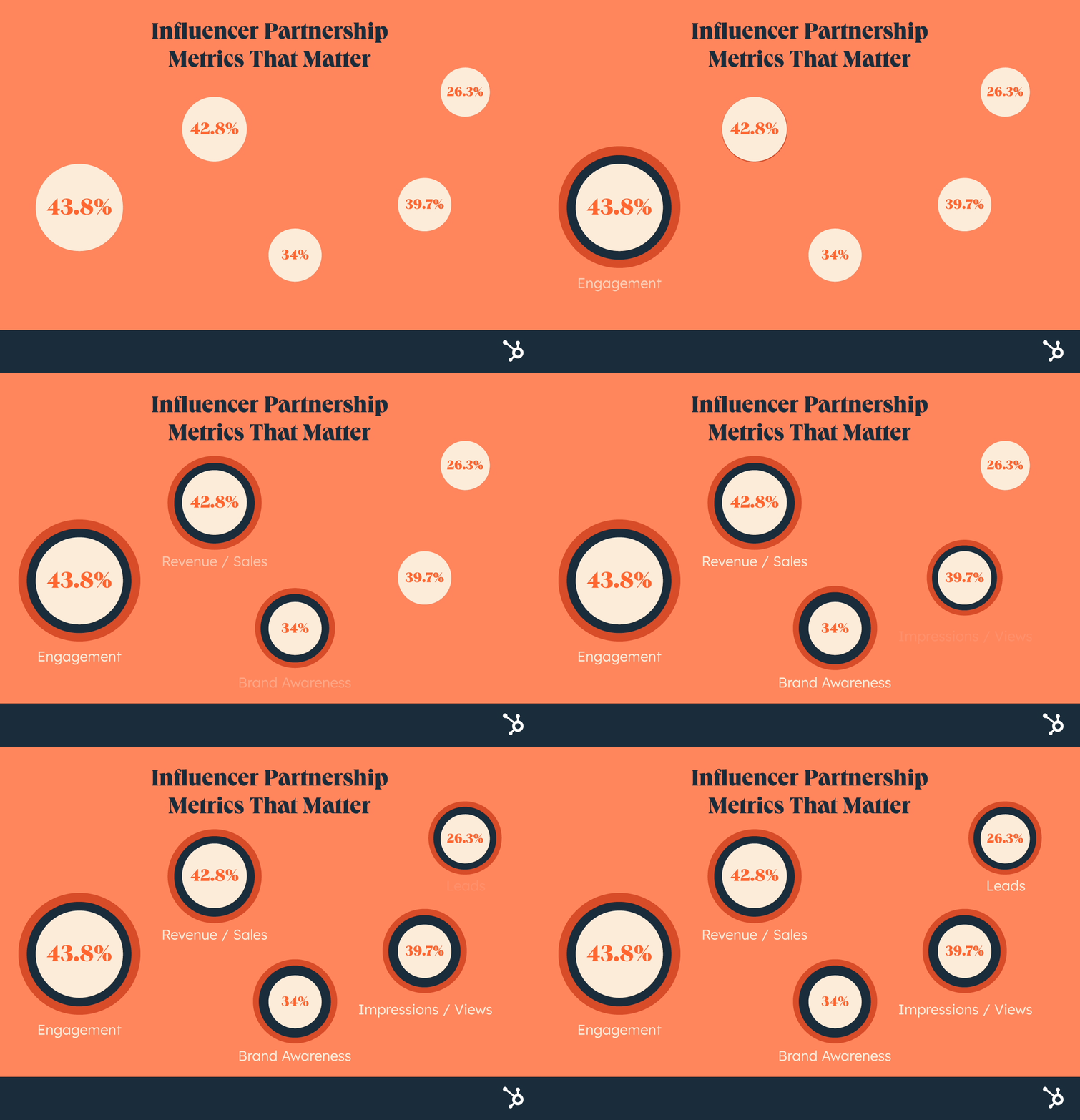
The metrics that actually matter:
- Engagement (43.8%) — Are people actually interacting with the content?
- Revenue/sales (42.8%) — Did anyone buy anything?
- Impressions/views (39.7%) — How many eyeballs saw this?
- Brand awareness (34.0%) — Are people starting to know who you are?
- Leads (26.3%) — Did anyone raise their hand and say “tell me more”?
Here's what to track:
- Engagement: All the likes, shares, comments, retweets, mentions, DMs, and reposts. Basically, did people care enough to do something?
- Reach: How many people saw your influencer‘s content about your brand? It’s like counting heads at a concert, but digital.
- Brand Awareness: Are people starting to know you exist? You can measure this through direct traffic, social engagement, social listening, and surveys (the quantitative and qualitative approach).
- Clicks: Did people actually click through to your website, sign-up form, or that giveaway you're running?
- Conversions: The holy grail — did people actually do the thing you wanted them to do? Calculate this by dividing conversions by total visitors.
- ROI: The ultimate question — was this worth it? Divide your return by your investment cost.
- Follower Growth: Are more people following you because of this partnership?
HubSpot's Social Tool can help you pull specific engagement-related data from various platforms, like reach and interactions. Your respective social platforms may also have built-in analytics tools, such as X Analytics and Instagram Insights.
Do you still need some inspiration for your influencer marketing strategy? Let's look at three successful strategies implemented by major companies.
Influencer Marketing Examples
1. Gentle Monster x Bratz collaboration
The Gentle Monster x Bratz collaboration is a powerful example of how brands can merge nostalgia with fashion to drive buzz — and sales — through influencer marketing. This campaign brings together the eyewear brand Gentle Monster with the iconic Bratz dolls, tapping into millennial and Gen Z love for throwback culture. By distributing the product through a wide network of influencers on Instagram and TikTok, the campaign creates a flood of authentic content that bridges the line between playful and aspirational.
One particularly creative execution came from micro-influencer @miraalmomani, who received both life-size sunglasses and a Bratz doll version of herself wearing the same merch. Her Instagram Reel is a seamless blend of product reveal and storytelling, edited in a way that feels personal. It’s effective because it turns product placement into a mini-experience — one that her audience can enjoy visually, while also triggering the kind of nostalgic excitement that makes the campaign shareable.
2. Kerrygold's influencer brand trip
Tarte Cosmetics, Revolve, and Airbnb are just a few brands that have leveraged influencer trips. And, perhaps most surprisingly: Kerrygold butter.
Kerrygold recently invited creators on an all-expenses-paid trip to Ireland, with experiences ranging from helicopter rides to culinary workshops. Their goal wasn't just to promote their product: It was to showcase the rich Irish culture and history behind it.
What really makes this campaign work is the ripple effect beyond the invited influencers. The trip generated a wave of reaction content from creators and followers who felt a serious case of FOMO. “A butter brand trip? ... Why wasn’t I there?” By grounding its luxury experience in real values (family farming, Irish heritage, premium ingredients), Kerrygold earned not just engagement, but admiration.
3. Bumble and Amelia Dimoldenberg
The Bumble and Amelia Dimoldenberg partnership is a strong example of influencer marketing done right.
By aligning with Dimoldenberg’s quirky, relatable persona—famous from “Chicken Shop Date”—Bumble taps into a younger, culturally engaged audience in a way that feels authentic and entertaining rather than promotional.
The campaign blends humor with high-quality creative direction, reinforcing Bumble’s brand as confident, modern, and approachable. This highlights the value of choosing influencers whose tone and audience naturally align with your message, and investing in content that feels like culture, not just marketing.
How Influencer Marketing Will Change in 2025 [Expert Predictions]
Finally, I asked some of our experts: What's going to change about influencer marketing over the next couple of years?
Here's what they had to say.
1. Influencer marketers are no longer the heroes — they're the guides.
When asked about any predictions for the future of influencer marketing, Imani Ellis didn't miss a beat: "The death of the diva," she told me with a grin.
"The people's princess, the Emma Chamberlain's, the Monet McMichael's… The people who say ‘I’m not the hero, I‘m the guide’—that is the future of influencer marketing."
A couple of years ago, I feverishly followed Selena Gomez for all fashion, makeup, and lifestyle tips. And it‘s not that I don’t still love Selena. But now, I follow with equal interest a mom from Texas who talks about deals she finds at Target (hi, Jen Reed!).
That's where influencer marketing is headed: In a more authentic direction in which followers care more about the everyday influencer than they do the mega-celebrity.
2. AI will boost Creator output.
AI has — and will continue to — drastically change the way we work as marketers.
And the same is true for creators.
As Smith puts it, "AI is making people‘s lives a lot easier. The velocity at which people are able to pump out content has skyrocketed. Now we’re in a situation where we have to question: Is this AI-generated? Was AI used in any step of formulating this concept, creating this content, or writing out this statement?"
She points to brands like Skims as an example of a business already implementing AI-generated content in their social media ads. To Smith, that‘s the direction we’re all headed.
“Output is going to increase,” she acknowledges — but, to Smith, this doesn‘t mean a diminishment in quality. She sees creators leveraging AI for administrative tasks, freeing them up to do more of what they’re best at.
“If you are truly creative, AI is just going to superpower that, not replace it.”
3. We'll shift from audience to community.

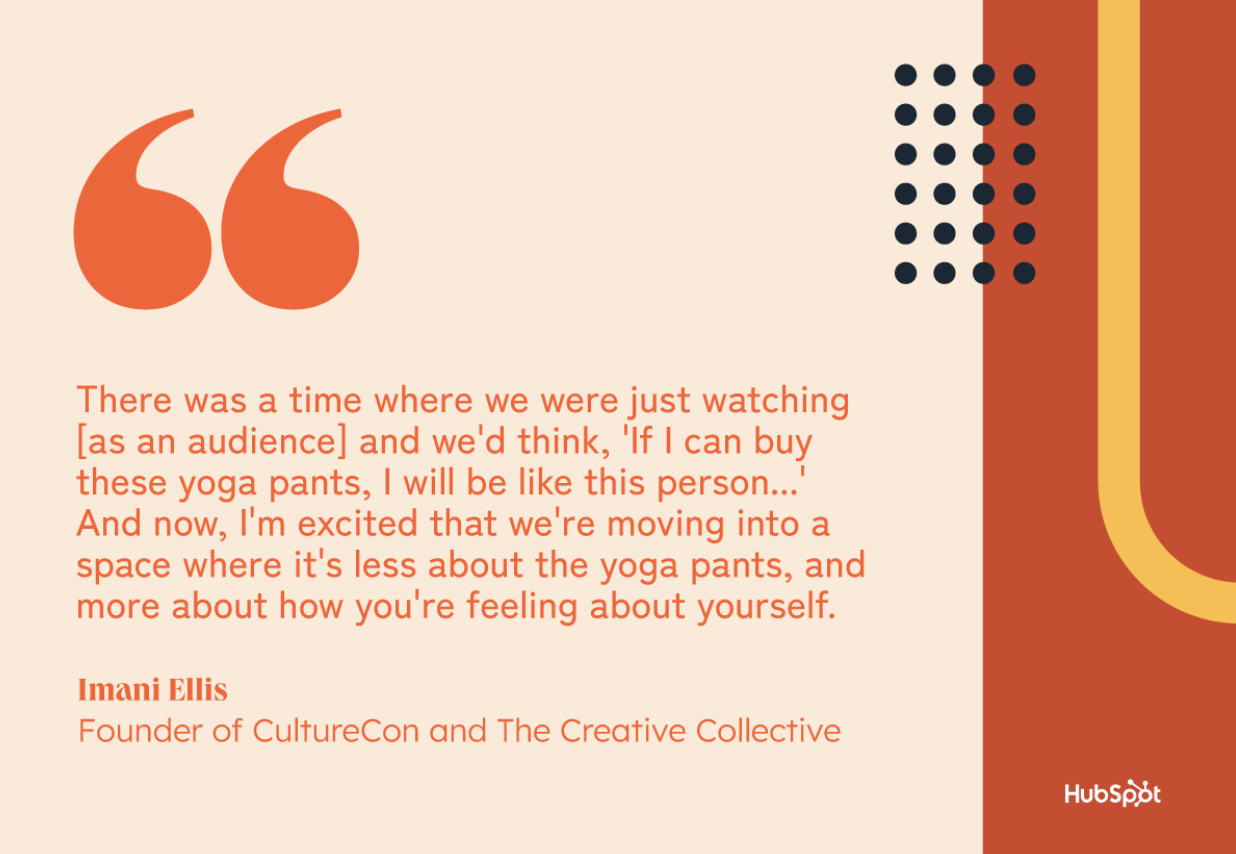
"There was a time where we were just watching [as an audience] and we'd think, If I can buy these yoga pants, I will be like this person," Ellis explains.
"And now, I‘m excited that we’re moving into a space where it‘s less about the yoga pants, and more about how you’re feeling about yourself."
We've become active participants in our influencer relationships. We DM them, we ask for advice, we comment with our own opinions and perspectives.
And by doing so, we‘ve also opened ourselves up to an entire community of like-minded people. It’s no longer just a one-way conversation between an influencer and her followers. It's now an opportunity to connect with each other, as well.
4. One-off posts will evolve into recurring formats.
Olowe predicts a future shift towards recurring content, rather than traditional one-off sponsored posts.
“We've seen quite a bit of success with 'man on the street' content,” she says, pointing to the People Gallery as a good example of this — which is a digital fashion platform founded by Maurice Kamara that showcases street style through spontaneous interviews and outfit breakdowns.
As another example, she tells me about "Faded By Any Means“, a short film inspired by the cult classic ”Belly", but with Topical‘s best-selling product Faded at the center as a product that’s so good it sells itself.
“It was a fun project and highlights the creativity around storytelling and how commerce and film are actually closely related,” Olowe says.
"Having this recurring content format, plus an influencer — almost as if they're actors — is what I think is really fascinating these days, versus just one-off posts."
5. The democratization of brand experiences.
Finally, all the Creators I spoke with echoed the same point: That the future of influencer marketing is going to shift from rewarding influencers to recognizing everyday customers.
A trend I can fully get behind.
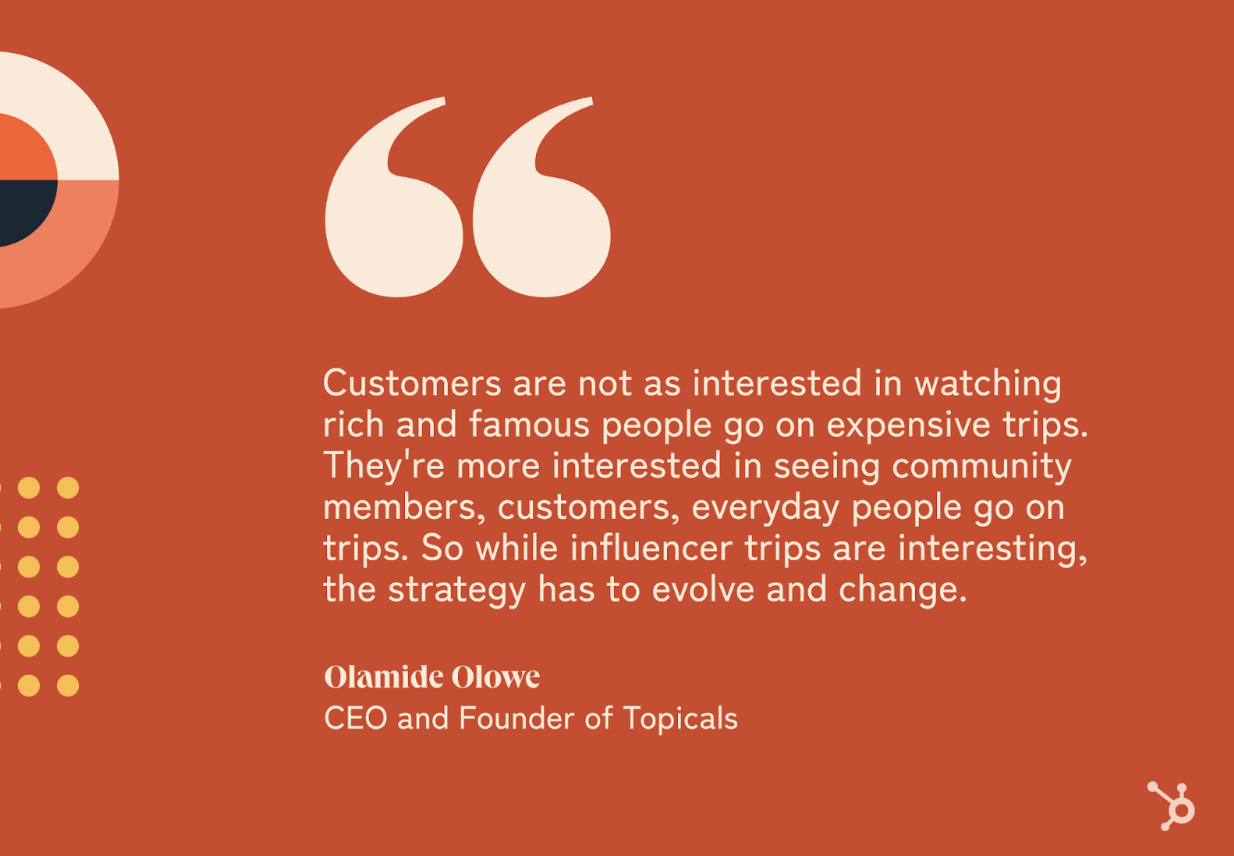
As Olowe puts it, "Customers are not as interested in watching rich and famous people go on expensive trips. They're more interested in seeing community members, customers, everyday people go on trips. So while influencer trips are interesting, the strategy has to evolve and change."
She adds, “This idea of making an influencer experience more accessible to everyday people is what I see for influencer marketing moving forward.”
The bottom line? Influencer marketing in 2025 won‘t just look different — it’ll feel different. We're trading glossy perfection for genuine connection, passive scrolling for active community, and exclusive experiences for inclusive ones.
The future belongs to creators who show up as real people, not polished personas.
And honestly? It's about time.
Free Influencer Marketing Kit
Learn the fundamentals of successful influencer marketing strategy with this free ebook and set of templates.
- Email templates for influencer outreach
- The do's and don'ts of working with influencers
- The ins and outs of paying influencers
- Measuring success from influencer campaigns
Download Free
All fields are required.

![Influencer Marketing Strategy: How to Build a Plan Creators & Customers Will Love [+ Templates]](https://53.fs1.hubspotusercontent-na1.net/hubfs/53/influencer-marketing-strategies-featured.png)

-1.png)
.webp)