Today‘s customers don’t just want personalized customer service experiences — they demand them. Generic, one-size-fits-all support no longer meets expectations. Customers expect businesses to remember their preferences, anticipate their needs, and tailor every interaction to their unique situation.

According to Deloitte Digital, brands with strong personalization engines aren’t just doing better; they’re 48% more likely to surpass revenue targets and 71% more likely to see customer loyalty rise compared to brands lagging in personalization.
So, how can businesses create the kind of customer intimacy that turns one-time buyers into lifelong advocates? Let's explore 10 proven ways to deliver personalized customer service that actually works.
Table of Contents
- 10 Ways to Deliver Personalized Customer Service
- What is personalized customer service?
- Why is personalized customer service important?
- How to Provide Personalized Customer Service
- Common Customer Service Personalization Challenges (And How to Overcome Them)
- Personalized Customer Service Examples
- Frequently Asked Questions About Personalized Customer Service
What is personalized customer service?
Personalized customer service tailors support and interactions to each customer’s unique needs, preferences, and historical relationship with a brand. For example, it‘s the difference between "How can I help you today?" and "Hi Sarah, I see you’re calling about your recent order of running shoes. How's your marathon training going?"
This approach goes beyond using a customer's name. It involves understanding their purchase history, communication preferences, past support interactions, and current context to deliver relevant solutions faster and with greater empathy.
.webp)
Free Customer Journey Template
Outline your company's customer journey and experience with these 7 free templates.
- Buyer's Journey Template
- Future State Template
- Day-in-the-Life Template
- And more!
Download Free
All fields are required.
Form not available
The Psychology Behind Personalization
When customers receive personalized service, it triggers positive emotional responses that reduce stress and increase satisfaction. Personalization makes customers feel valued, understood, and empowered to resolve their issues. Research shows this psychological impact translates directly to customer loyalty, as people naturally gravitate toward brands that demonstrate they remember and care about individual preferences.
How It Differs From Traditional Service
Traditional customer service follows scripts and standard procedures that treat every customer the same. A traditional support rep might offer the same three solutions to everyone calling about a product issue, regardless of their history with the company.
Personalized customer service adapts to each customer's unique situation. The agent considers purchase history, preferences, and past interactions to offer the most relevant solution first, saving time and reducing frustration. For example, if a customer previously expressed a preference for email communication, a personalized approach would default to email follow-ups rather than phone calls.
This shift from one-size-fits-all to individualized support is why customers are willing to spend more with companies that deliver the personalization they seek.
|
Traditional Customer Service |
Personalized Customer Service |
|
Uses scripts and standardized procedures |
Adapts to each customer’s unique situation |
|
Offers the same limited set of solutions to everyone |
Recommends solutions based on purchase history, preferences, and past interactions |
|
Reactive — solves the problem presented |
Proactive — anticipates needs based on customer data |
|
One-size-fits-all experience |
Individualized support tailored to each customer |
|
Often feels generic or repetitive |
Feels relevant and human |
|
Less likely to drive loyalty |
Over 90% of customers are willing to spend more when personalization is done well |
Why is personalized customer service important?
Personalized customer service builds deeper relationships by making every interaction more relevant, efficient, and human. When businesses tailor support to individual customer needs and preferences, they create experiences that drive loyalty, reduce friction, and generate measurable business outcomes. The data is clear: personalization isn‘t just good for customers, it’s essential for competitive advantage and revenue growth.
Benefits for Customers
Personalized support benefits customers by creating a smoother, more human experience at every touchpoint, leading to better outcomes and stronger customer relationships.
Here’s how.
Reduced Effort and Frustration
With 84% of consumers reporting they must exert significant effort to find help online, personalization cuts through the noise. Customers get relevant solutions faster without repeating themselves across channels, reducing the time and energy used to resolve issues.
Enhanced Trust and Loyalty
Personalized customer service improves customer satisfaction, loyalty, and retention. When businesses use customer history and preferences to tailor responses, customers feel valued and are more likely to stay loyal.
Better Problem Resolution
Personalized customer service connects customers with agents who already understand their context, purchase history, and past interactions. This background knowledge leads to faster, more accurate solutions tailored to each customer's specific situation, often resolving issues on the first contact.
Benefits for Your Business
Revenue Growth
Companies that excel at personalization don’t just create better customer experiences — they see direct financial returns. As above, brands with strong personalization are 48% more likely to surpass revenue targets, demonstrating that tailored experiences translate directly to business performance.
Convenience Increases Sales
Personalization drives convenience by making every interaction faster and easier. According to BCG, convenience boosts conversion and cross-sell rates by 30–40%.
Examples of personalization driving convenience include:
- Streaming platforms use viewing history to automatically pre-load shows a user is likely to watch next, reducing scrolling and decision fatigue.
- Airlines surface a traveler’s upcoming reservation, preferred seats, and baggage history the moment they open the app, allowing check-in with almost no steps.
- One-click ordering stores a customer’s payment, shipping, and preferences, so buying takes just a single tap.
- Restaurants let customers instantly reorder favorites, and retailers suggest items that “complete the look” for an outfit to purchase.
These convenience-led experiences remove friction and help customers get what they need quickly directly increasing conversion rates and order values
Competitive Advantage
When customers feel recognized and understood, they’re far less likely to shop around. According to Medallia’s State of Personalization Report, 82% of customers say that personalized experiences influence which brands they choose. In highly saturated markets where products and pricing look similar, personalization becomes the differentiator.
Brands that deliver relevant, timely, and tailored interactions create stickier relationships, reduce churn, and make it harder for competitors to win customers away.
Measurable ROI
The benefits of personalization are measurable through concrete business metrics. Companies can track the impact of personalized support through repeat purchase rate, customer lifetime value, first-contact resolution, and satisfaction scores. When those numbers rise, ROI becomes clear: more loyal customers, reduced support costs, and stronger revenue growth. Personalization isn‘t just a feel-good initiative; it’s a strategic investment with quantifiable returns.
How to Provide Personalized Customer Service
Delivering personalized customer service requires combining customer data, smart technology, and human connection to tailor every interaction to individual needs and preferences. The most effective strategies balance automation with empathy, using CRM systems to track customer history while empowering teams to apply that knowledge in genuine, helpful ways.
The following 10 strategies outline how to provide personalized customer service that builds loyalty, improves satisfaction, and drives measurable business results — from learning customer names to creating seamless omnichannel experiences.

10 Ways to Deliver Personalized Customer Service
- Learn (and use) your customers' names.
- Be friendly and human.
- Collect and leverage customer data.
- Offer custom and unique solutions.
- Get to know your customers on a personal level.
- Provide a VIP experience for your best customers.
- Use technology to your advantage.
- Train and empower support reps.
- Create a seamless omni-channel experience.
- Get feedback from your customers.
1. Learn (and use) your customers' names.
Marketing and sales teams probably (should) have the names of your existing customers, so don't be afraid to use them. And for new customers? Ask and capture them. This way, customer service reps can easily greet their customers by name over the phone, in an email, or via live chat.
Why this works: It‘s simple yet effective. Knowing someone’s name is the first step in building a relationship. Plus, it feels a lot better to be referred to by your name than a generic ‘customer12345’ placeholder.
2. Be friendly and human.
Treat your conversations like you‘re talking to a friend or family member. Don’t skip the niceties or miss an opportunity to turn even the toughest conversations into a positive interaction.
Why this works: When brands humanize the conversation, it‘s much easier for customers to feel like you’re focused on them and their individual needs. Kindness and positivity both go a long way in achieving customer satisfaction.
Free Customer Journey Template
Outline your company's customer journey and experience with these 7 free templates.
- Buyer's Journey Template
- Future State Template
- Day-in-the-Life Template
- And more!
Download Free
All fields are required.
Form not available
3. Collect and leverage customer data.
Sales and marketing teams are likely already collecting customer data, and they should use it to their advantage. Learn about customers' browsing habits and purchase behaviors and tailor marketing communications and messaging to their specific interests.
Why this works: It eliminates the guesswork from your customer interactions. Marketing and sales teams can utilize this data to make informed product recommendations or send targeted communications tailored to their customers' preferences.
Unified customer data enables personalized customer interactions across channels. For example, HubSpot CRM centralizes purchase history, interactions, and preferences so support teams can tailor conversations based on a single customer view.
In the video below, you can see how marketers can use HubSpot CRM to:
- Create and manage leads in HubSpot
- Utilize lead stages for efficient tracking
- Customize your HubSpot CRM for personalized outreach
- Leverage HubSpot's prospecting tools for better engagement
- Automate your sales process with HubSpot workflows
4. Offer custom and unique solutions.
It becomes easier to tailor products and services to meet specific customer needs when a business has obtained enough data about them. This could involve providing custom quotes to meet customer specifications or designing unique products to align with a specific customer's request.
Why this works: This goes back to the fact that one-size-fits-all customer service is going out of style. Not all customers are the same, and offering custom products and services demonstrates to customers that they’re cared for and understood.
5. Get to know your customers on a personal level.
As a business, it's important to build relationships with your customers. Take opportunities to learn more about your customers — beyond just their order history. This includes their interests and hobbies, as well as their likes and dislikes.
Why this works: The more brands understand about their customers, the stronger the relationships will be. And customers who build a strong relationship with your brand are less likely to churn.
6. Provide a VIP experience for your best customers.
Show your best customers that they’re appreciated for being them. Organize for marketing or sales teams to offer special discounts or freebies to your repeat customers. Or show your longest-standing customers they’re cared for by giving them exclusive access to new products or services.
Why this works: Perks are a great way to keep your customers happy and engaged with your company. Recognizing that an individual customer has repeatedly purchased or been a loyal brand advocate for a long time shows them that they’re appreciated.
7. Use technology to your advantage.
There are a number of ways businesses can use technology to provide a more personalized customer service experience. For example, a chatbot is a great automated tool that customer service teams can use to answer common customer questions or inquiries.
HubSpot Service Hub provides tools for delivering scalable, AI-powered personalized customer service. Its AI chatbots can automatically answer questions, route tickets, and pull customer records from HubSpot CRM to personalize responses in real time.
Why this works: Speed is one of the most important principles of customer service. Automated technology like chatbots can help your support team address a larger volume of individual customer requests more quickly and effectively.
8. Train and empower support reps.
Documentation, such as canned responses, can be helpful guidance for customer interactions. But it's also a good idea to give your support reps the tools to go off-script and encourage them to make each customer conversation their own.
Platforms like Service Hub provide reps with a single view of conversations across email, chat, and social, ensuring agents always have context— regardless of who handled the issue last. See the details in the following screenshot:
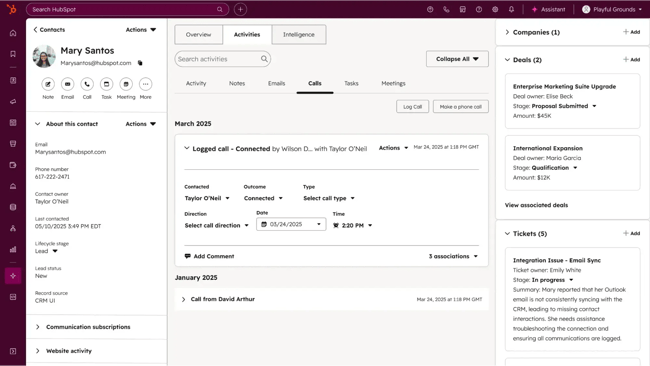
Why this works: In addition to adding that human element, deviating from the script gives sales reps the flexibility to tailor the conversation to the individual customer. Plus, the conversation feels a lot more real when agents have the power to control it.
9. Create a seamless omni-channel experience.
Saying goodbye to one-size-fits-all customer service means the same for communication channels, too. The reality is that customers want an omnichannel customer experience, meaning they can access your customer service representatives, products, and services on multiple platforms. To make it easy, keep the customer experience consistent.
With tools like HubSpot’s Conversations Inbox and CRM, every message — email, chat, Facebook, WhatsApp, and web forms — lands in one unified workspace. That means customers never repeat themselves, even if they switch channels.
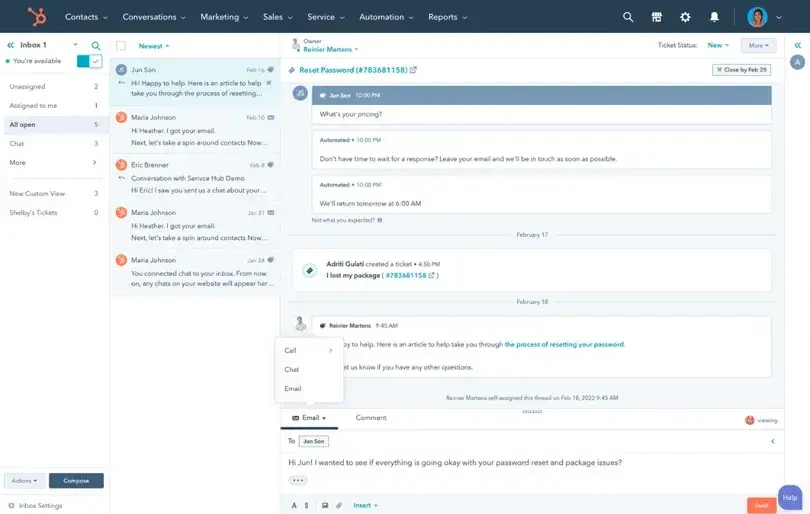
Why this works: When a customer can access a single profile or customer hub regardless of the channel they‘re using, that means they don’t have to repeat themselves or keep restarting the customer service process for the same issue. Customer frustration avoided.
10. Get feedback from your customers.
The best way to show customers that they’re valued as individuals is by asking for their feedback on how well your company is meeting their needs — and how an organization can do better.
Measuring personalization success requires tracking Key Performance Indicators (KPIs) like:
- Customer Satisfaction Score (CSAT)
- Net Promoter Score (NPS)
- Customer retention
Tools like Service Hub’s CSAT, Customer Effort Score (CES), and NPS surveys allow businesses to capture feedback and monitor satisfaction trends over time through built-in reporting dashboards.
Why this works: When brands ask for feedback, it provides an opportunity to take a step back and actually listen to what customers are saying. However, the implementation of this feedback is key to creating the ultimate personalized customer experience.
Now that we've covered the what, why, and how of personalized customer service, let's take a look at a few examples of businesses that are doing it right.
Free Customer Journey Template
Outline your company's customer journey and experience with these 7 free templates.
- Buyer's Journey Template
- Future State Template
- Day-in-the-Life Template
- And more!
Download Free
All fields are required.
Form not available
Common Customer Service Personalization Challenges (& How to Overcome Them)
Even when businesses understand the value of personalized customer service, implementation often presents obstacles. Data silos prevent teams from accessing complete customer context, privacy concerns limit what information can be collected and used, technology limitations make real-time personalization difficult, and scaling personalized experiences beyond small customer segments requires significant resources.
These challenges are solvable with the right approach. Below are the most common personalization barriers and practical strategies to overcome them without compromising customer experience or operational efficiency
|
Challenge |
Solution |
|
Data is scattered across systems |
Centralize customer data in a CRM |
|
Too many customers to personalize manually |
Use AI + automation to personalize at scale |
|
Customers worry about data misuse |
Be transparent + offer data control |
|
Personalization varies by channel |
Connect data across all channels |
|
Agents don’t know how to apply personalization |
Train and equip agents with real-time insights |
Limited or Fragmented Customer Data
Many organizations have customer information scattered across multiple systems, making it difficult to form a comprehensive picture of each customer.
How to overcome it: Integrate systems through a unified Customer Relationship Management (CRM) or customer data platform that centralizes information from all touchpoints. This unified view enables teams to track customer history, preferences, and interactions across channels, allowing both agents and automation to personalize in real time. When a customer contacts support, agents immediately see past purchases, previous support tickets, communication preferences, and ongoing deals without switching between systems.
Read 12 Powerful CRMs for a shortlist of the 12 best CRMs, who they’re best for, and the benefits of CRMs for businesses.
Scaling Personalization Beyond Manual Effort
Providing personalized service becomes increasingly difficult to scale as customer volume increases. Teams cannot individually research and tailor every interaction when handling hundreds or thousands of daily customer contacts.
How to overcome it: Use AI and CRM automation to deliver data-driven personalization at scale. Automated routing directs customers to agents who specialize in their product or industry. Proactive recommendations surface relevant help articles based on browsing behavior. Self-service portals suggest solutions tailored to each customer's purchase history and past issues. These tools enable companies to personalize every interaction without increasing manual workload.
Privacy Concerns and Customer Trust
According to HubSpot’s latest Consumer Trends Report, 75% of consumers view data privacy as a basic human right, and 76% say they are concerned about how companies use their personal information. These stats illustrate the tension between collecting data for personalization and respecting privacy boundaries.
How to overcome it: Be explicit and transparent. Tell customers what data is collected, why it’s collected, and how it benefits their experience. Provide clear options to manage communication preferences, opt out of data collection, or delete their information. Make privacy policies accessible and written in plain language rather than legal jargon. When customers understand and control how their data is used, they're more likely to share information that enables better personalization.
Inconsistent Experiences Across Channels
A customer might get personalized service in one channel and generic service in another, leading to frustration. This inconsistency creates frustration as customers must repeat information and context across different touchpoints.
How to overcome it: Connect customer data across all touchpoints — chat, email, phone, app, and social — so every interaction starts with the same context. When a customer switches from chat to phone, the agent should already see the chat transcript and understand the issue. Omnichannel platforms that unify customer data eliminate repetitive questions and create seamless experiences regardless of how customers choose to reach out.
Lack of Agent Training
Even with customer data available, agents may not know how to apply it meaningfully during a conversation. Without proper training and tools, personalization remains theoretical rather than practical.
How to overcome it: Provide comprehensive training on using customer data to build rapport and solve problems faster. Equip agents with tools that surface relevant information at the right moment — customer purchase history, sentiment analysis from past interactions, predicted needs based on browsing behavior, and recommended next actions based on similar customer scenarios. When agents have both the skills and the systems to apply customer knowledge, personalization becomes consistent across the entire team.
Personalized Customer Service Examples
Personalized customer service takes different forms across industries, but the goal remains consistent: make service faster, easier, and more relevant to each individual customer. Whether it's recommending the right product, tailoring professional guidance to specific situations, or delivering customized support for complex needs, successful brands use customer data to create experiences that feel individual rather than generic.
The following examples show how businesses across different sectors implement personalized customer service strategies to drive loyalty, satisfaction, and measurable business results.
Financial Services: HSBC and Custom Financial Planning
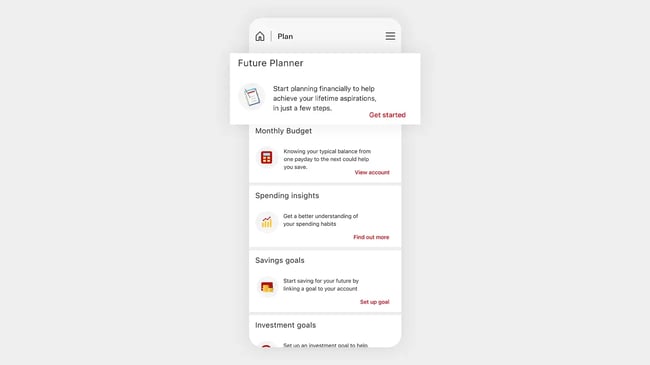
Banks and investment platforms are moving away from generic financial advice and toward tailored guidance based on each customer’s financial profile. These apps utilize AI in customer service to deliver personalized solutions.
HSBC, for example, uses real-time customer data and AI insights to surface personalized spending recommendations, savings nudges, and investment suggestions inside its mobile app.
Customers set their own financial goals, such as saving for a holiday, planning for the future, or building long-term wealth. The app generates a financial profile that displays the current net worth and progress toward those goals, making it easier to track how close customers are to achieving their financial plans.
Healthcare: Cleveland and Tailored Patient Support
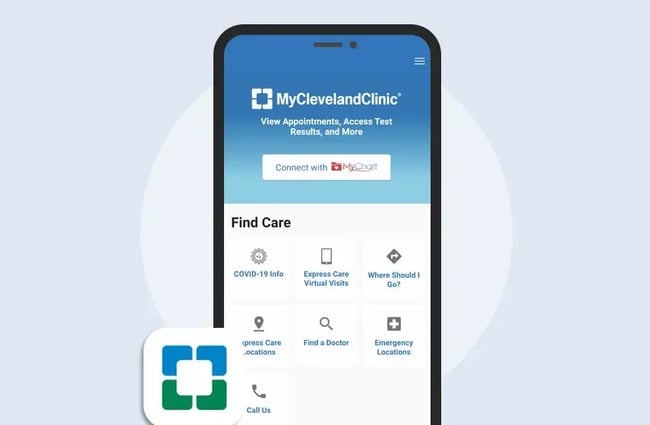
Healthcare organizations are increasingly personalizing digital touchpoints to make care easier to navigate.
For example, the Cleveland Clinic offers an app that allows patients to access information about their medical history, upcoming appointments, reminders, medication prompts, and educational resources tailored to their specific diagnosis, age, and care plan.
B2B Manufacturing: Airbus Helicopters and the Custom Support Portals
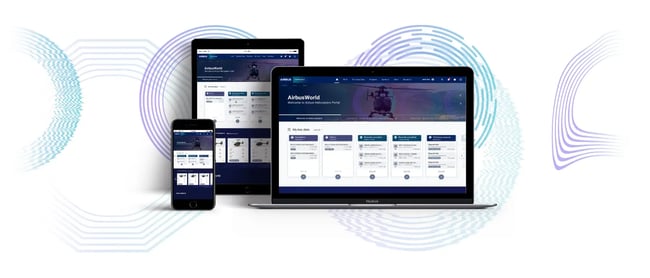
In manufacturing, personalization often happens through self-service portals that adapt to each client’s products, history, and service needs.
Airbus Helicopters offers a personalized support portal used by operators worldwide. When customers log in, they see maintenance schedules for their specific aircraft, order history, service manuals for their exact models, and proactive alerts when parts are due for replacement.
Instead of navigating generic documentation, every resource is tailored to the equipment they own — reducing downtime and service requests.
Retail: Amazon and Starbucks

Amazon is a prime (no pun intended) example of a company that provides personalized customer service. They use data collected about their customers to provide a more customized experience.
For example, Amazon utilizes purchase history data to make product recommendations and send targeted emails with special offers tailored to customer interests.
They also offer custom solutions to meet customers' specific needs, such as their Amazon Prime service, which provides free shipping and exclusive deals for members.
Starbucks is also doing it right in terms of personalized customer service. They use technology to their advantage by using chatbots to answer common customer questions and AI to provide personalized food and beverage recommendations.
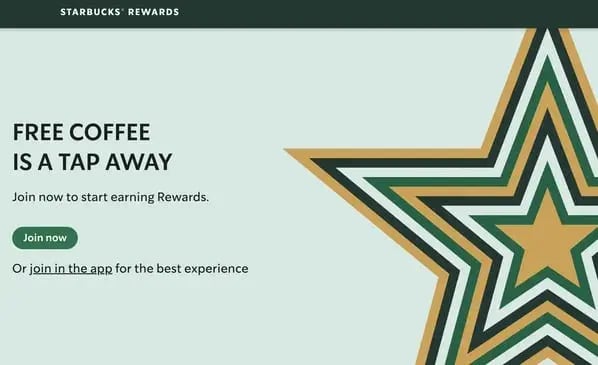
Starbucks is another company that tailors to their best customers through the Starbucks Rewards program, where customers can rack up stars for freebies and other tasty benefits.
Frequently Asked Questions About Personalized Customer Service
What exactly is personalized customer service?
Personalized customer service tailors support interactions to each individual customer's specific needs, preferences, and history with a brand. Instead of treating every customer the same, personalized service uses customer data to make interactions more relevant, efficient, and human — making customers feel recognized and valued as individuals rather than ticket numbers.
What's a simple example of personalized service?
A simple example of personalized service is sending targeted product recommendations based on past purchases instead of generic promotional emails. A customer who bought running shoes might receive tips for marathon training and suggestions for running accessories, while someone who bought dress shoes gets style guides for formal occasions.
How do I start personalizing customer service?
Start personalizing customer service with three foundational steps
- Capture customer names and use them in every interaction
- Track interaction history so agents don't make customers repeat themselves
- Segment your customers based on behavior and preferences to deliver relevant communications
Which types of businesses need personalized service?
Every business benefits from personalization. The key is adapting strategies to fit your specific industry and customer needs. Personalization is especially critical for:
- Ecommerce companies competing on customer experience
- Subscription services aiming to reduce churn
- B2B companies with long sales cycles
- Healthcare providers managing patient relationships
- Financial services building trust with clients
Get personal with your customers.
Personalized customer service is a key element of success for any business. By taking the time to get to know your customers and offer custom solutions to meet their needs, create a loyal customer base that will keep coming back for more.
Editor's note: This post was originally published in August 2022 and has been updated for comprehensiveness.
Free Customer Journey Template
Outline your company's customer journey and experience with these 7 free templates.
- Buyer's Journey Template
- Future State Template
- Day-in-the-Life Template
- And more!
Download Free
All fields are required.
Form not available