

What is local SEO?
Local SEO (Search Engine Optimization) is the process of improving search engine visibility for local businesses, primarily those with brick-and-mortar locations. By following local SEO best practices, businesses can improve organic traffic from searches performed by customers in nearby areas.
Search engines rely on signals such as local content, social profile pages, links, and citations to provide the most relevant local results to the user to gather information for local search.
With local SEO, businesses can use this to position their products and services to local prospects and customers searching for them.
Local SEO Tips
- Optimize for Google My Business.
- Engage on social media and add posts to Google My Business.
- Ensure your name, address, and phone number are consistent online.
- Optimize online directories and citations.
- Perform a local SEO audit.
- Improve your internal linking structure.
- Optimize URL, title tags, headers, meta description, and content.
- Add location pages to your website.
- Create local content.
- Ensure your website is mobile-friendly.
- Get inbound links with relevance and authority.
- Participate in your local community.
.png)
Complete SEO Starter Pack
An introductory kit to optimize your website for search.
- Increase your organic traffic.
- Plan your keyword strategy.
- Debunk SEO myths.
- Build a blog strategy.
Download Free
All fields are required.
1. Optimize for Google My Business.
Google My Business has become the creme de la creme of local search. Since Google supports, verifies, and shares its own content generously, Google My Business is an ideal tool to help your business meet Google's needs.
To ensure you're optimized for Google My Business, you'll want to:
- Create and verify a Google My Business page.
- Use Google Posts within your account.
- Encourage your customers to share reviews online.
- Respond authentically to reviews, specifying location. For example, “We appreciate your feedback on [product/service] in [city, state]. We value your input and look forward to working with you again. Thank you from the [full company name] team.”
If Google can verify your business as authentic, the search engine could potentially reward your business with a coveted sidebar space in Google's local search.
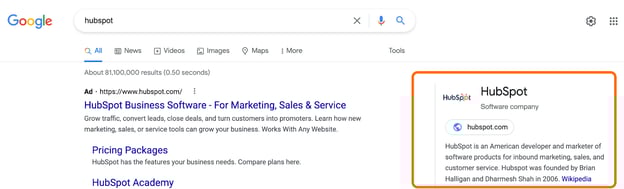
Don't just do this for the SEO, either. By having reviews and keeping your contact information and operating hours up-to-date, you're improving the experience for potential customers to find you. Finding current data is essential to consumers, now more than ever, due to 2020's disruption in consumer shopping behavior and business operation.
2. Engage on social media and add posts to Google My Business.
Google considers content shared on social media more important now than ever before.
Now that you've carved out a beautiful Google My Business page, share it on social media, further aligning social and search.
3. Ensure your name, address, and phone number are consistent online.
You've got to make it easy for people and search engines to find you, and to do this you have to set up your NAP.
What does NAP mean in local SEO?
The acronym, NAP, stands for the name, address, and phone number (with area code) of a business. Your NAP should be considered crawlable HTML text on your site for Google to display it better according to location-based search results.
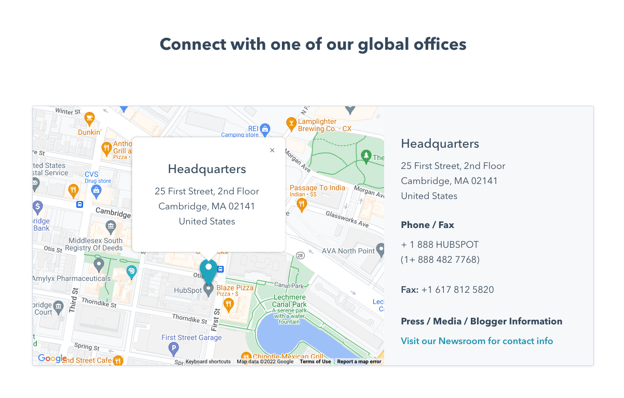
Pro Tip: Avoid the common mistake of only including the NAP within an image — images can't be crawled from search engines like HTML text.
The most common location for the NAP is in the footer or header of the site. Additionally, you should include your NAP on a “Contact Us” page, too.
4. Optimize online directories and citations.
For United States companies, these four map data aggregators provide many map data for Apple, Yelp, Bing, Google, Trip Advisor, and more:
Consistency is key: verify that your citations are consistent and complete across these four data aggregators.
Discrepancies like misspellings, abbreviations, lack of suite number, or wrong phone number can be problematic.
If Google can't determine which information about your business is correct, it may not show your business at all in search results.
Pro Tip: Remove any duplicate listings you find in online directories. And while you’re at it, get a Chamber of Commerce membership in your community to gain an external inbound link specific to your area.
5. Perform a local SEO audit.
Once you have the fundamentals down, it may be tempting to put your foot on the brake. However, SEO is an ongoing and intuitive process. Instead of stopping there or simply making changes and seeing what sticks, it helps to perform a comprehensive audit to see where your website stands and what you need to work on to achieve your goals. A local SEO audit may include the following:
- Google My Business Audit - How does your Google My Business appear in the SERPs? Is the information accurate?
- Google Search Console Audit - Is your site crawlable? Does it have any errors that would hinder indexing?
- On-Page SEO Audit - Does your site accommodate all the on-page SEO elements that help ranking?
- Citation Audit - Are all of your citations correct in the top business directories?
- Competitor Analysis - How does your site match up with your competition's? Are there any gaps that you need to close? How do you match up in terms of inbound links, content, design, and positioning?
- Website Audit - How well is your website performing?
6. Improve your internal linking structure.
Although external links pointing to your site are ideal (which I'll discuss soon), adjusting your internal linking structure will also boost your SEO rankings.
Why does internal linking matter? It does the following:
- Supports website navigation
- Assists with information architecture and website hierarchy
- Distributes page authority and ranking power among pages
If you want to improve your internal linking structure but aren't sure where to start, check out Kissmetrics' The Seven Commandments of Internal Linking for Top-Notch SEO.
7. Optimize URL, title tags, headers, meta description, and content.
When it comes to content, every new blog post is a new indexed page for your site, a new page on which to target a geographic search phrase, and a new opportunity to get found in the search engine results pages (SERPs).
Every time you write a piece of content, optimize the content for search engines by using high-volume keywords in the URL, title, header, meta description, and body. If you're having trouble coming up with geo-targeted content, consider highlighting customer success stories and case studies.
Pro Tip: The more specifications you add to these assets (especially for each location of your business), the better you’ll be able to optimize “near me” local searches.
Complete SEO Starter Pack
An introductory kit to optimize your website for search.
- Increase your organic traffic.
- Plan your keyword strategy.
- Debunk SEO myths.
- Build a blog strategy.
Download Free
All fields are required.
8. Add location pages to your website.
If you have more than one brick-and-mortar location, create location pages. Location pages provide readers with your name, address, phone number, store hours, unique store descriptions, parking/transit information, promotions, and testimonials from happy customers.
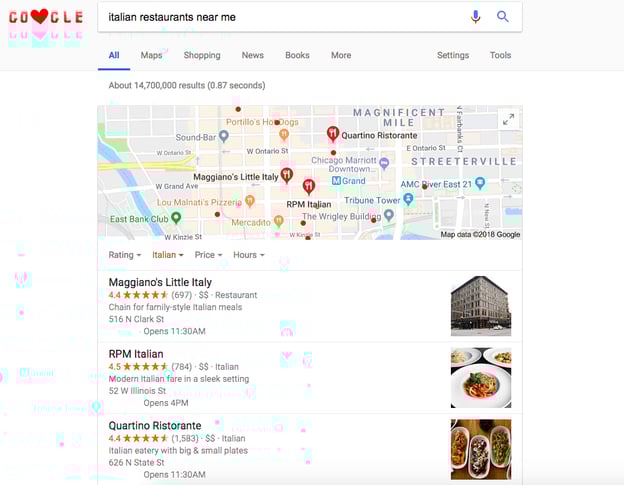
It's also important you avoid duplicating content across multiple location pages. For single-location businesses, create a locally descriptive About Us page. You can even get bonus points if you add a Google Map to your website on your respective location page(s).
9. Create local content.
Google continues to get smarter, which means content creators can now write more for users and less to appease search engines.
Be the local authority for your industry by promoting local industry gatherings, news, employees, and other educational content on your blog. Think of top-of-the-funnel content that goes beyond what your business sells.
For example, if you're a local security company and trying to attract businesses new to the area, create a helpful resource to get these businesses well-acquainted with your city. A map of local service providers or a calendar of city-wide events could both provide value for your persona and contain highly relevant on-page local signals.
10. Ensure your website is mobile-friendly.
Local and mobile search go hand in hand (61% of all Google searches are performed on mobile).
Some of the most common ways people will use your site in a mobile environment are to look up reviews, find directions to your location, and search for contact information. In fact, "near me" searches on mobile have increased 250% since 2017.
Make it easy for your prospects and customers by making your site mobile-friendly.
11. Get inbound links with relevance and authority.
Inbound links are compelling opportunities to boost your local SEO — every inbound link tells Google you're a legitimate company, and inbound links can also raise your domain authority. Here are a few ways to get inbound links:
- Guest Blog Posting
- Scholarships
Start with your network, including the Chamber of Commerce, business improvement districts, licensing bureaus, trade associations, resellers, vendors, manufacturers, and other affiliates.
12. Participate in your local community.
The more you participate in the local community, the more digital PR you'll receive. Partnering with a nonprofit on a campaign, having a volunteer day in your organization, sponsoring an event (even an online one!), or appearing in the local media as an authority in your industry are all ways to earn press, brand awareness, and inbound links.
For example, given that .edu links are the bee's knees for domain authority, why not earn some links by featuring a scholarship in your geographic region? It should be relevant to your industry, send the right signals to your domain (given the backlinks from schools) and make you feel good, too! Moz built a solid guide on the steps to success for effective scholarship outreach.
Local SEO Tools
Now that we've covered how to optimize your business for local SEO, let's explore some practical tools you can leverage to improve your ranking in the areas where it matters most.
1. Whitespark Local Citation Finder
Pricing: Small Business Plan; $25/month, Specialist Plan; $50/month, Agency Plan; $100/month, Enterprise Plan; $200/month
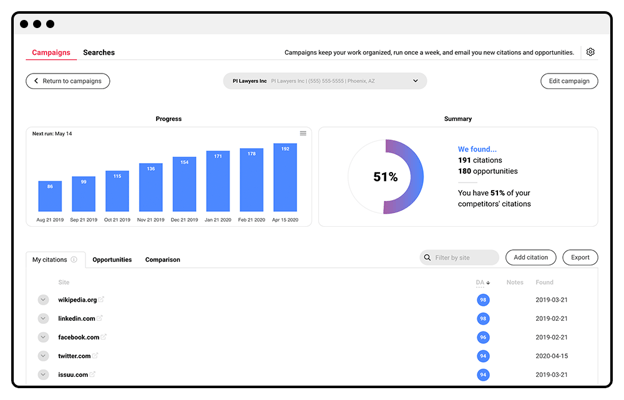
A local citation is any online mention of a local business's name, address, and phone number.
Citations matter because they help surface local businesses in online search, and when local businesses actively manage its sources to ensure data accuracy, it promotes trust in these online listings.
Whitespark knows this realm well — really well. Whitespark offers local listing management, recommends where to list your business, examines your competition, and robustly builds and monitors your citation growth for better local search rankings.
2. Screaming Frog
Pricing: Free Basic Version, Paid Version; $209/year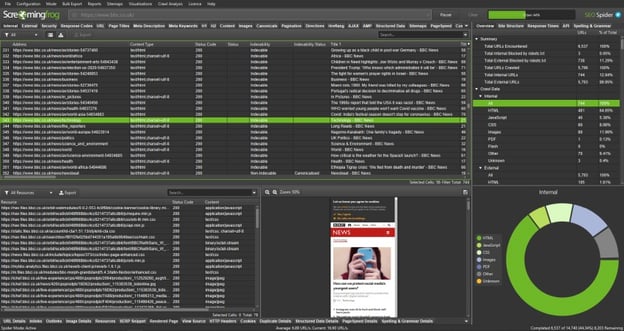
This desktop program crawls websites' links, images, CSS, script, and apps from an SEO perspective. Curious if you have any 404's? Or wondering about missing meta descriptions or H1s? Screaming Frog will analyze up to 500 URLs for free and unlimited URL analysis in its paid version.
3. Moz Local
Pricing: Lite Plan; $14/month, Preferred Plan; $20/month, Elite Plan; $33/month
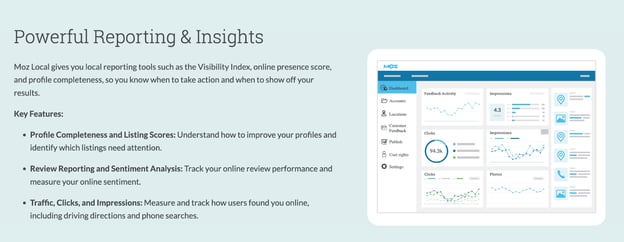
Less expensive than most of its counterparts, Moz Local will ensure your business listing has been verified on Google and Facebook and distribute your listing across the search ecosystem.
Additionally, Moz Local will collaborate with data aggregators to help push listings, ensuring your business gains visibility.
4. Ahrefs
Pricing: Lite Plan; $99/month, Standard Plan; $199/month, Advanced Plan; $399/month, Enterprise Plan; $999/month
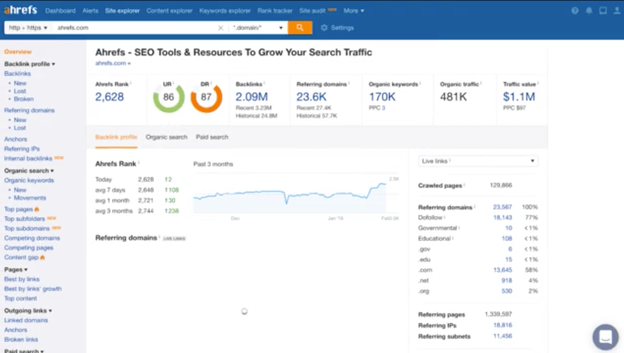
Ahrefs helps with backlink checking, which is essential as these links (directed toward your website) indicate website authority.
Ahrefs also offers competitor analysis, keyword research, and insight into other websites' anchor text when backlinking to your site.
5. Buzzstream
Pricing: Starter Plan; $24/month, Growth Plan; $124/month, Professional Plan; $299/month, Custom Plan; $999/month
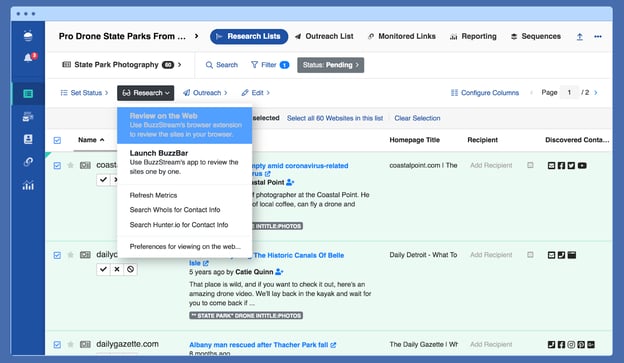
BuzzStream facilitates earning local backlinks, which helps you identify and build relationships with local influencers by researching influencers, tracking conversations, and providing reporting insights into your outreach campaigns, team performance, and link placements.
6. BrightLocal
Pricing: Single Business Plan; $29/month, Multi Business Plan; $49/month, SEO Pro Plan; $79/month
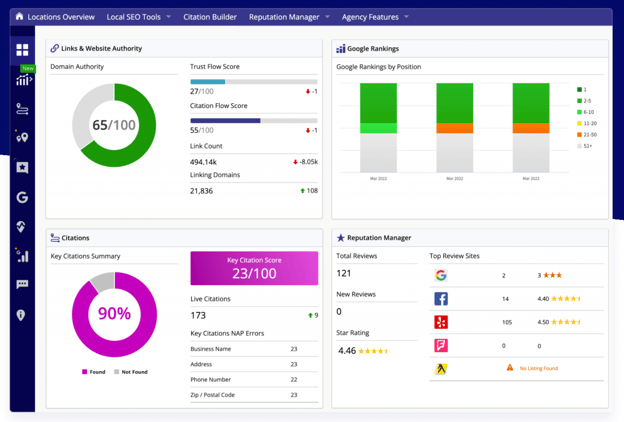
BrightLocal is a comprehensive SEO tool suite built explicitly for local business marketing needs.
The tool can help you generate and monitor reviews on local sites, understand your local search performance, and analyze nearby competitors.
BrightLocal also offers client access and white-labeled reporting — making it a solid fit for agencies and brands alike.
Improve Your Business Visibility with Local SEO
Local SEO is an integral part of any SEO strategy for local businesses. Local SEO will help your audience find you when they search online if you have a storefront or service area. We hope you find this article helpful in your journey to gain brand recognition and authority on the net.
Editor's note: This post was originally published in April 2018 and has been updated for comprehensiveness.
Local SEO


![Local SEO Audit: Everything You Need to Know [+ How to Perform One]](https://53.fs1.hubspotusercontent-na1.net/hubfs/53/Local%20SEo%20Audit%20Final.jpg)

![What Are Local Citations [+ 4 Steps to Build Them for Your Business]](https://53.fs1.hubspotusercontent-na1.net/hubfs/53/GettyImages-1331173398%20(1)%20(1).jpg)