
To help inspire your marketing team and invigorate your 2023 digital marketing strategy, we’ve cultivated a comprehensive list of digital marketing tips from marketers here at HubSpot as well as industry experts.
Table of Contents
What is digital marketing?
Digital marketing is a broad term that encompasses any type of brand promotion in the digital space, from social media to blog posts to paid advertising.
Marketing is a general term that refers to content that has:
- A sales goal (for example, a Facebook ad for a clothing line’s summer sale).
- General brand awareness and education (for example, that same clothing line sharing tips on Instagram for how to wash their items).
The benefit of digital marketing is that it’s more scalable than traditional or offline marketing.
Traditional market tactics include billboards, print magazine features, event marketing, direct mail, and in-person presentations, to name a few techniques.
The opportunities presented by digital marketing for brands are limitless.
Types of Digital Marketing
Before pursuing a plan for your business, it’s important to understand the different types of digital marketing and the opportunities each presents.
Social Media Marketing
Social media marketing is a form of digital marketing that, as the name suggests, takes place on a social media platform.
There are dozens of social media platforms that each have more than 100 million active users, but most brands focus on the most prominent for marketing their brands:
- TikTok
- X (previously Twitter)
- YouTube
Social media, while incredibly powerful, is a borrowed platform. A digital marketing strategy can’t rely solely on social media because you don’t own your followers or channel subscriber list.
Platforms change, become obsolete, shutter, get banned by the government, and mistakenly suspend accounts without review. While your Instagram account or YouTube channel may be free, you metaphorically rent the space on the platform because you can be evicted anytime without notice or cause.
Social media is a wonderful place for lead generation, but you have to capture those leads. This fuels the need for another form of digital marketing: content that you own.
Proprietary Marketing Channels
The goal of social media marketing isn’t to simply build an audience; it’s to build an audience and inspire them to follow you from social to a proprietary marketing channel that you own.
There are many proprietary marketing channels that businesses own, with some of the most common being:
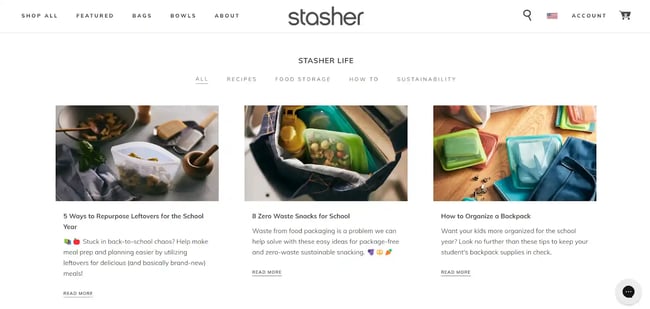
- Website, blog, digital shop, etc.
- Email list and SMS list
- Company mobile app
- Client or contact roster
Traditional forms of proprietary marketing resources include a Rolodex, direct mailing list, and physical storefront, to name a few. These types of marketing are done organically, which brings us to the third type of marketing we’re going to examine.
Paid Digital Marketing
Paid advertising is the most aggressive and advanced form of digital marketing.
Some examples of paid digital marketing:
- Social media promoted posts
- Influencer marketing
- Website banner ads
Look with an inquisitive eye on your next social media scroll or YouTube search and it won’t take you more than 30 seconds to notice paid digital advertising on your screen. Advertising and organic marketing are closely related but different types of marketing.
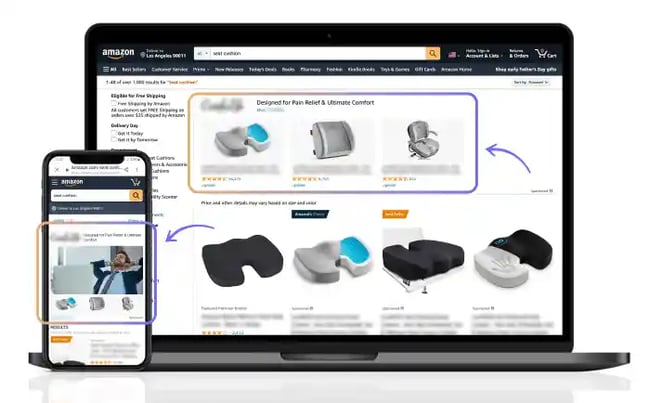
Paid marketing is like pouring gasoline on a fire: Ads can result in huge growth, but if you pour it on while your flame is too small, your fire will go out. Your organic digital marketing efforts are essential in growing a strong fire that can withstand advertising.
Here are some of our favorite tips to help make it happen for your brand.
The State of Marketing in 2025
HubSpot's Annual Inbound Marketing Trends Report
- Top Marketing Channels
- AI in Marketing
- Managing Privacy
- The Future of Marketing
Download Free
All fields are required.
Marketing Research Tips
Ahead of every successful marketing campaign, social media carousel, or blog post is a well-developed plan. Use these marketing research tips to help you get to know your audience and craft a tailor-made plan for them.
1. Craft highly relevant content with AI personas.
An essential part of any digital marketing strategy is understanding who your target audience is, and that comes from developing your brand’s persona.
Sometimes called the “brand personality,” “ideal client avatar,” or a similar alias, this is a description of your client that you remember every time you create content. Many brands will have more than one persona to represent different stages of the buyer’s journey.
Understanding your brand’s personality has long been viewed as a hallmark of effective marketing, but it’s even more important in the age of AI because marketers need to tailor AI-generated ideas and mold them to fit their brand’s unique client.
“Many marketers are using AI for content production, but it’s important to note that whatever content is generated by AI, you still have to edit it, proofread it, and humanize it,” said Isabella Bedoya, founder of MarketingPros.ai.
“My favorite use case for AI in digital marketing is how accurate it is with creating audience personas, which allows you to craft content strategies and content pieces that actually feel relevant to your target market.”
While a brand persona is a behind-the-scenes digital marketing task, it’s one that has an impact on every aspect of your marketing that goes out to the viewer.
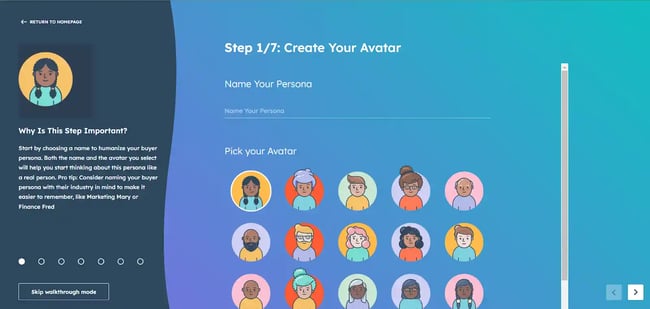
Use AI to help generate different brand personas for your brand and then plug those characteristics into our buyer persona generator so that you can share this with your whole marketing team.
2. Routinely update your understanding of your customer.
Knowing your ideal customer is a starting point, but it’s not the ending point. Just as every individual evolves, your customers will evolve and you’ll need to continually get to know them.
“Keep on top of the pulse of the customer, and hold yourself accountable to it,” said Ari Plaut, a Product Marketer at HubSpot.
“Schedule monthly time to shadow your support team and your sales team. Your best content ideas will come straight from the source — your customers."
3. Match your content to every stage of a buyer’s journey.
With the exception of kiosks at the mall selling magnetic bracelets that claim to radically improve balance, companies almost never sell a product to a customer the day they learn about it. Instead, customers go through what’s called the buyer’s journey from awareness to purchase.
It’s important to match your content to customers at every stage of that journey, or your content won’t resonate with a large part of your audience.
“Personally, I think a big ‘Ah-ha’ moment for our customers when talking about ads strategy is when we tell them they need to match their content offer to a moment in the buyer’s journey,” said Alex Girard, an Associate Product Marketing Manager at HubSpot.
“It doesn’t make sense to target an ad for a sales demo at someone in the awareness stage. It also doesn’t make sense to target an awareness stage offer, like a recommended blog post, at someone who is ready to buy.”
Content Creation Tips
With your marketing research complete, it’s time to start creating content.
Before exploring specific tips for creating content for Google search and social media, let these guidelines help you create content that resonates with your audience and converts.
4. Don’t just write about your products or services.
A brand that only talks about themselves in their content marketing is a brand that’s going to leave a lot of money on the table with their digital marketing.
“Don’t just write about your products or services on your blog. That can immediately alienate anyone who isn’t already close to purchasing,” advised Karla Cook, a Senior Manager of the HubSpot Blog Team. “Instead, invest the time in learning about what your target audience is interested in, and develop content that aligns these interests with what your brand can offer.
“For example, if you’re selling coffee makers, you might create a blog series that looks at different ways to improve your morning routine.”
5. Use AI to help generate content ideas.
Generating content ideas is one of the most important and time-consuming parts of marketing, and AI can help lighten the load. While AI can’t replace the human creativity and execution that great content requires, it can help immensely with ideas generation.
“AI has been great to give ideas, an outline, or be a starting point for content that I write,” content creator Karolina Kubala shared. She doesn’t recommend leaning on AI completely, though.
Karolina offers this advice: Use AI like a guide on a canvas, but paint the picture yourself with your own creativity.
“I use ChatGPT as a starting point with content I create, to help me with an outline or give me a good direction.”
Using AI to free up time for your higher-impact tasks is a popular trend. Our State of AI research found that 83% of professionals using AI say that it enables more time spent on the most impactful work.
The State of Marketing in 2025
HubSpot's Annual Inbound Marketing Trends Report
- Top Marketing Channels
- AI in Marketing
- Managing Privacy
- The Future of Marketing
Download Free
All fields are required.
6. Personalize your content.
With an abundance of shopping options at their disposal, consumers want to feel like the companies they purchase from offer a personalized experience.
Customers need to understand how your content contrasts against the other products and services that they’re weighing, and they see that contrast when you personalize your brand.
“Personalize your content to differentiate your business from competitors and create a unique customer experience,” shared Clint Fontanella, a Junior Staff Writer at HubSpot. “More than 40% of customers switch brands due to poor online personalization.”
If you’re not sure what makes your content unique compared to your competitors, use AI to help you understand.
7. Use AI to analyze your reviews (and your competitors’).
Sometimes your customers or clients can articulate what makes your offer unique better than you can.
Tap into that potential by using AI to analyze the sentiment of past customers through review mining. Or, perform the same analysis on your competitors’ reviews to find opportunities.
“This allows you to track your own and your competitor’s reviews for patterns, things to improve, common phrases, etc.,” said Rahul Choudhary, founder of Beef Up Media.
He offers these steps to anyone who wants to try this technique for themselves. Gather reviews for ChatGPT to analyze in a spreadsheet, and prompt it to answer these questions:
- What are the common struggles, challenges, or pain points that the reviewers were facing?
- How did the product/service help them?
- What are the common outcomes that the reviewers received?
- What are the common drawbacks of the product/service?
“And voila!” said Rahul. “You can use this information to optimize your marketing efforts, website messaging, etc.”
Conducting research is a task that 48% of marketers report using AI for, and this is an easy way to try it for your own brand.
8. Leverage industry experts.
See huge returns by leveraging industry experts in your digital marketing.
“Be sure to include industry experts in your content marketing programs,” said Amari Gonzalez, content marketing manager at LinkedIn. “Industry experts have taken a lot of time to build trust within their audience.” Brands leverage that trust by featuring a familiar face that represents industry expertise and credibility.
Amari suggests including experts in any area of your content marketing:
- Blog posts
- Social media posts
- Videos
- Ebooks
- Reports
- Advertisements
- Podcasts
In addition to the implied endorsement your brand receives by collaborating with experts, they may share the content with their audience when it’s published.
Industry leaders being represented in your marketing touches on a type of marketing that’s much older than the pixel: word of mouth.
This can be done organically in the ways above, or you can invest in influencer marketing. Influencer marketing has been growing in popularity for years, and it’s still holding strong in its return on investment (ROI).
Our marketing industry trends report found that influencer marketing offers the 2nd high ROI of any 2023 marketing trend.
9. Leverage video testimonials.
Video marketing specialist Doug Dibert, Jr. refers to YouTube as an untapped goldmine. Where to start? He says the answer is video testimonials.
“Imagine a thrilled customer sharing how your product or service transformed their life,” shared Doug. “These authentic tales, more persuasive than any 5-star review, will fill your YouTube channel with compelling content.”
“Sprinkle in some Video SEO magic, and you’re on an express journey to the next level.” When optimized for YouTube search, videos can appear in both YouTube search results and Google, which means tapping into two search engines with one piece of content.
Our marketing industry trends report predicts that YouTube will see more growth than any other platform in 2023.
10. Remain consistent in design when launching a campaign.
It’s easy to run away with creativity when an ads budget is involved, but remember to remain consistent so that consumers recognize the campaign across platforms.
“When launching an integrated campaign on multiple channels, make sure you tie together your creative design and messaging so there is a red thread throughout the campaign,” shared Brittany Geoffroy, a Marketing Manager of Global Acquisition.
The State of Marketing in 2025
HubSpot's Annual Inbound Marketing Trends Report
- Top Marketing Channels
- AI in Marketing
- Managing Privacy
- The Future of Marketing
Download Free
All fields are required.
Social Media Marketing Tips
Social media marketing is one of the primary marketing channels that brands invest in today. Try some of these tried-and-true methods today.
11. Use your DMs.
Social media isn’t a megaphone where you loudly share your message with whoever will listen. It’s a two-way street where brands will engage both publicly (in comments) and privately (in direct messages) with their viewers.
Using direct messages (DMs) for customer service has the third highest ROI of all our 2023 marketing trends and is expected to grow further in 2023, and they hold enormous weight when it comes to digital marketing. DMs can be used to:
- Answer questions from potential buyers.
- Troubleshoot problems that existing customers have.
- Engage and respond when happy customers share your product online.
At the heart of the growth in DM popularity is the desire for audience members to feel a sense of real community.
Being as responsive in private as you are in public is also a key factor in building trust and genuine dialogue with an engaged community, which 90% of marketers say is crucial to a successful social media strategy.
12. Spread content across platforms (with care).
It makes sense to reuse social media content across platforms, but simply downloading a TikTok video and uploading it as a Facebook reel won’t do much for your digital marketing goals.
Only 17% of marketers share identical content across platforms; instead, 48% of marketers share similar content but with some tweaks specialized to the new platform...
- Dimensions
- Trends
- Demographics
Make your audience feel like you care about their viewership. Avoid making your content look lazy, like leaving a watermark from a past platform when you repurpose it on platform number two.
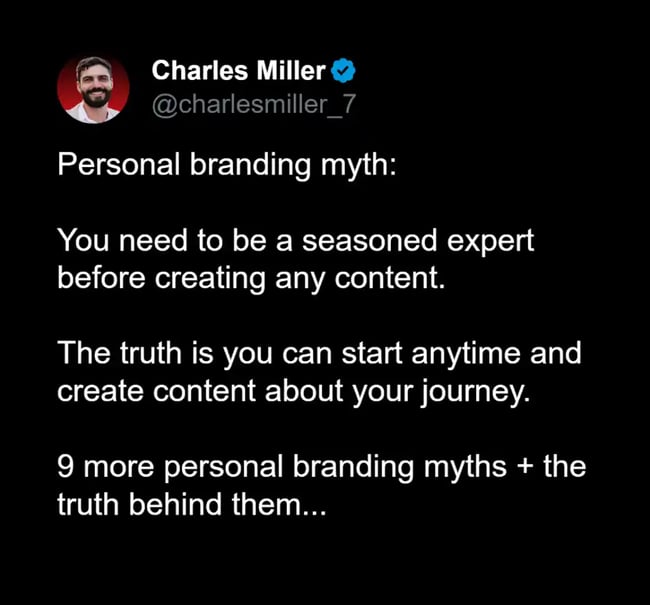
13. Try short-form videos.
While video has been popularized by YouTube for years, it’s reached a new level with the advent of short-form video. This term generally refers to videos that are under 60 seconds and are vertically-oriented instead of the previously standard horizontal.
This content sensation started on TikTok in 2020 and has earned a lofty place on most platforms such as Instagram, Facebook, and YouTube.
Our research has found that short-form video is the type of social media content with the highest ROI, and the format which will see more growth than any other format in 2023.
If you haven’t figured out short-form video for yourself yet, try one of these popular format types:
- Displaying how your product or service work
- Answering audience questions
- Client testimonials or reviews
Search Engine Optimization and Website Marketing Tips
Social media is an active form of digital marketing where you’re actively putting logs on the fire every day to engage with your audience.
Digital marketing aiming for Google traffic, on the other hand, is a more passive inbound marketing strategy.
Search engine optimization (SEO) writers at your company can write a well-optimized blog post that ranks on Google and passively brings viewers to your website for months or years. Here’s how to capitalize on the opportunity.
14. Incorporate SEO into your overall content strategy.
Even though SEO is an old trick, it’s one that marketers are still getting results: SEO clocks in as the third trend marketers will spend the most money on in 2023.
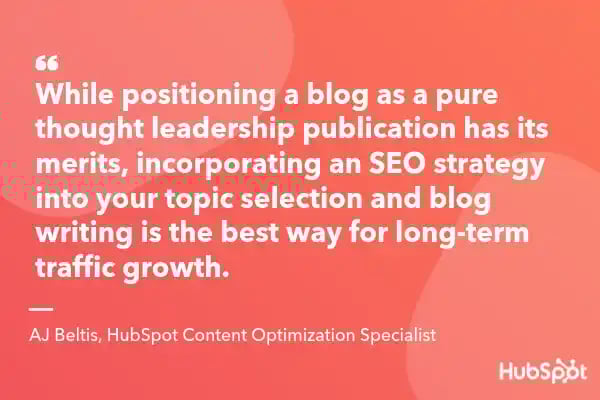
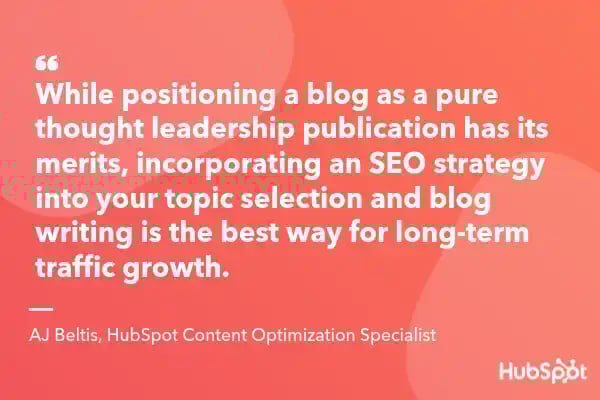
“While positioning a blog as a pure thought leadership publication has its merits, incorporating an SEO strategy into your topic selection and blog writing is the best way for long-term traffic growth,” shared AJ Beltis, a HubSpot Content Optimization Specialist.
“Use sites like Ahrefs or SEMRush to find out what people in your industry are searching for and talking about as a first step to maximizing your blog’s potential.”
15. Manually research Google’s rankings.
While there’s an endless list of software that conducts keyword research for you, your research doesn’t stop once you find a great keyword opportunity.
The next stage of your research requires you to go to Google and see what’s ranking and learn from it.
“It’s important to do manual research and see for yourself what types of pages Google is ranking,” shared Sarah Blocksidge, marketing director at Sixth City Marketing. “Do thorough competitor research and see for yourself what types of pages are ranking well.”
Even though you can use AI to provide actionable SEO insights, as 37% of bloggers do, no program or algorithm renders this step of your research moot. Sarah recommends asking yourself these questions during research:
- Are they product and service pages? Blog posts?
- How are they structuring their headers and metadata?
- Does their content thoroughly answer a question or provide definitions and FAQs?
16. Don’t underestimate backlinks.
Getting a backlink to your website means that someone else links to your website from their website, and these are powerful for SEO.
“Marketers are increasingly shifting their SEO strategies from keywords to topics,” shared Braden Becker, a Senior Staff Writer at HubSpot.
“In other words, the more keywords you target that all belong to a similar topic, the more expertise you’ll demonstrate, and the better you can perform for each individual keyword. But expertise and organic traffic don’t happen at the same time.”
Braden additionally suggested, “While topics are important to building your reputation, you still need the backlinks — a major ranking factor for Google — to back it up.”
After you create content on each topic, Braden suggested taking these steps to get a sense of how your content will perform:
- Share the content in as many ways as you can.
- Network with people in your industry.
- Track how many other publishers are linking back to your content.
The State of Marketing in 2025
HubSpot's Annual Inbound Marketing Trends Report
- Top Marketing Channels
- AI in Marketing
- Managing Privacy
- The Future of Marketing
Download Free
All fields are required.
17. Target multiple search engines (Pinterest).
While the search engine conversation always starts with Google, it doesn’t end there.
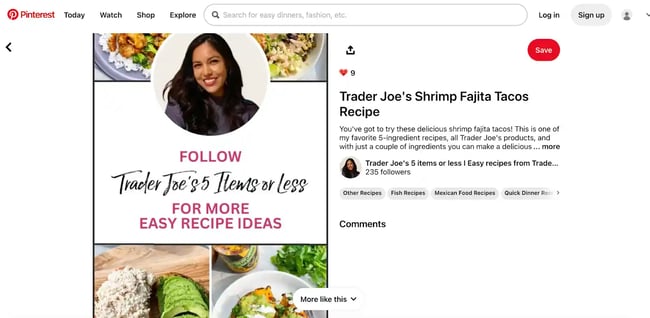
Pinterest is also a search engine, but unlike Google, it won’t index and rank your pages on its own. The foundation of Pinterest marketing is creators uploading a thumbnail image (called a pin) summarizing every webpage they have.
“Pinterest is the best place to share everything you’re creating, from content to products,” said Nadalie Bardo, Pinterest expert. “With a bit of SEO and a graphic, you can level up your traffic!”
Nadalie shared this list of content ideas to repurpose onto Pinterest:
- Blog posts, podcast episodes, and YouTube videos
- TikToks, Instagram Reels, YouTube Shorts
- Product listings, sales pages, and work-with-me pages
- Infographics and illustrations
- Inspirational quotes, or artwork
- Affiliate content and product reviews
- Photos and videos

Digital Marketing Big Picture Tips
Digital marketing is a large machine with many moving cogs, changing components, and rapidly-evolving landscapes.
It’s important to keep your eye on the big picture to stay on course, and market reporting along with these tips can help.
18. Focus on the long-term.
The focus of digital marketing should always be on long-term goals, despite any pressure to cut corners.
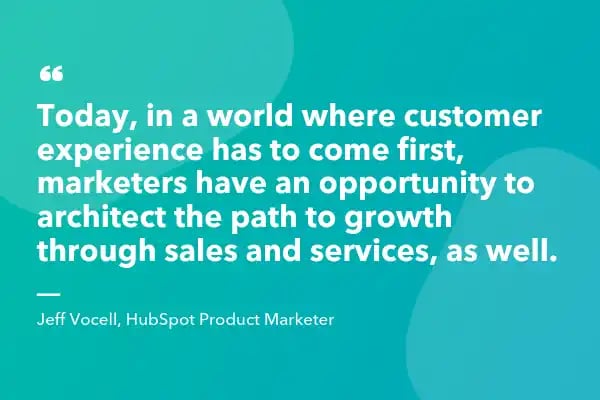
“I'm a marketer, and I understand the pressure to deliver leads to sales each month. But employing short-sighted tactics that generate some attention and may result in a momentary spike ultimately won’t set you, or your customers, up for success in the long-term,” said Jeff Vocell, a HubSpot Product Marketer.
“As marketers, we should focus on generating demand through helpful and customer-centric campaigns. Focus on delight, no short-sighted acquisition.”
19. Pivot as audience preferences shift.
With new features being introduced constantly across marketing channels, it’s important to have a flexible approach and not pass up opportunities because you’re unwilling to match your audiences’ shifting preferences.
“Businesses constantly need to ensure their digital strategy remains relevant to their target audience,” shared Kristen Baker, an Associate Content Strategist at HubSpot.
”For instance, if you’re targeting a group that’s primarily active on Instagram, focus on that platform and consider using your resources to create engaging Instagram Stories, instead of spending too much time making YouTube videos. However, pay attention to if, and when, your audience’s preferences shift."
While an annual strategy and goals list is nice, you may need to pivot as your audience's preferences evolve (maybe more than once per year).
More than half of all marketers pivoted their strategies in 2021, and of that group, 83% said that they altered course two to four times in a single year.
20. Follow consumer trends.
Your audience’s preferences are unique to your organization, and on the other end of this moving pendulum are consumer trends.
“Read consumer trend reports, and then brainstorm ways that your brand can leverage the insights to help convert followers to customers and customers to brand evangelists,” recommends Mikayla Catoe, co-founder of BEGOOD Creative Marketing Agency.
For example, here’s a fascinating find from The Coefficient Capital Consumer Report. Given the chance:
- Gen Z survey respondents would prefer to improve their mental health by 25% (over physical health).
- Millennials responded the opposite.
“Brands should list ways they can use this trend to their advantage and list the costs associated with each to determine which makes the most sense from a logistical and financial perspective.”
21. Try new things.
While pivoting is often strategic, sometimes marketing encounters a need to go all the way back to the drawing board and start throwing things at the wall.
“If you see that something could be working better, go back to the drawing board and try something new,” said Meredith Hart, a Junior Staff Writer at HubSpot.
"This can apply to internal processes within your team or with your digital marketing efforts.”
When it comes to your digital marketing efforts, that experimentation could look like:
- Creative email subject lines
- A themed blog series instead of one-off
- Trends and humorous content
You never know what kind of content is going to resonate with your audience until you try it out. Sometimes the most unexpected content can get the biggest results and help you stand out.
For example, has your brand ever tried humorous content? A reported 66% of social media marketers said that funny content is most effective at standing out in a crowded digital space.
“Small changes can have big results," Meredith encouraged.
The State of Marketing in 2025
HubSpot's Annual Inbound Marketing Trends Report
- Top Marketing Channels
- AI in Marketing
- Managing Privacy
- The Future of Marketing
Download Free
All fields are required.
22. Invest in AI-powered personalization strategies.
Once you have established Google rankings and website traffic coming in on a regular basis, you can use AI-powered personalization strategies to tailor the user experience even further.
“This involves tailoring content, offers, and recommendations to individual users based on their behavior, preferences, and past interactions with your business,” shared Yogesh Kumar, digital marketing manager at Technource.
Tailored AI can produce personalized recommendations by analyzing data from:
- Social media engagements
- Purchase history
- Website interactions
- Email responses
23. Understand the big picture when analyzing an advertisement’s performance.
When you leave the organic marketing domain and enter paid advertising, understanding how to tailor and pivot your content is even more important because ad budgets aren’t endless.
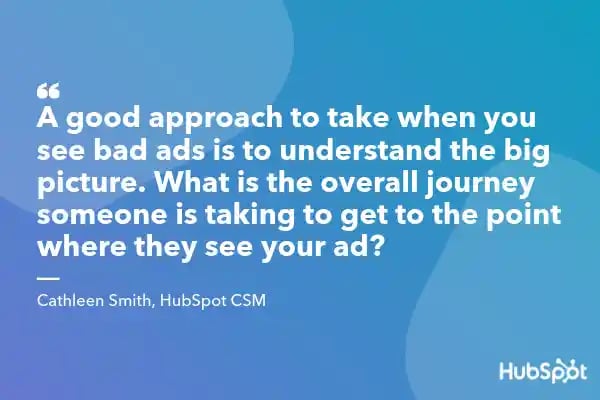
“If your ad isn’t performing well, don’t just look at the messaging itself, but see if there’s a mismatch between what someone is searching for, the messaging you are showing them, and the landing page on which they end up,” shared Cathleen Smith, a CSM at HubSpot.
“With that bigger picture in mind, when you see a ‘bad’ ad, look at all the different pieces of your campaign to determine what needs optimization.”
When your ad under-performs, look at the big picture and ask yourself: What is the overall journey someone is taking to get to the point where they see your ad?
For example, examine the journey someone takes after seeing a Google ad. Someone had to:
- Search for a keyword you chose.
- See your ad.
- Have it resonate with them.
- Click on the ad directly.
- And then have the landing page feel relevant and easily digestible.
24. Become a growth leader for your company.
“Marketers have never had a better opportunity to be growth leaders,” said Jeff Vocell, a HubSpot Product Marketer.
“Marketing has historically been responsible for attracting new leads and then passing them off to sales.
Today, in a world where customer experience has to come first, marketers have an opportunity to architect the path to growth through sales and services as well.
“Instead of solely thinking about how you can bring in new customers, start to ask yourself and your colleagues around you:
- What happens when this lead is passed over to sales?
- And what happens when sales pass them to services as a customer?
“It’s likely you’ll find opportunities for advocacy and marketing embedded in those moments that will help you grow better.”
Conclusion
Have you been inspired by these digital marketing tips and strategies to boost your brand’s marketing? Marketing is an ocean, and I hope that one of these fish speaks to you and motivates you to deepen your seas.


.jpg)



![Here‘s Everything I’ve Learned About Internet Marketing [Data + Expert Tips]](https://53.fs1.hubspotusercontent-na1.net/hubfs/53/internet-marketing-1-20250128-2273831.webp)

.png)
![How Performance Marketing Works [+ 6 Tools You Can Use]](https://53.fs1.hubspotusercontent-na1.net/hubfs/53/performance%20marketing.webp)