.png?width=112&height=112&name=Image%20Hackathon%20%E2%80%93%20Square%20(8).png)

The best content marketers aren't afraid to share. Share content. Share links. Share ideas. Share data.
That said, you're also supposed to give credit where credit is due. Learning how to properly cite sources will avoid any confusion and ensure you (and anyone you do business with) is following generally accepted internet sharing etiquette.Download the free stock photos you've been searching for here, no attribution required.
Below is a quick guide to help you navigate citing sources in essays and across the internet.
Skip to:
- Citing Sources in Essays
- Citing Sources in Blog Posts
- Citing Sources in Social Media
- Citing Images & Visual Content
Commonly Used Citation Styles
If you’re already working within a marketing team or educational institution, it’s possible they already have designated formats they’d like you to use for citing sources. Otherwise, you’ll need to choose one and stick with it consistently throughout the materials you’re publishing. Below are some of the types of citation styles you’ll find.
- MLA: Created by the Modern Language Association, MLA style is a set of writing standards and guidelines primarily used for citations in the humanities field and academic writing.
- APA: This format is based on the Publication Manual of the American Psychological Association. The style is meant for professionals and academics in behavioral and social sciences.
- Chicago Style: Chicago style citations have two methods — One for notes and bibliography, which is often used by those in the humanities. The other for author-date citations which is the preferred method for those in the sciences.
How to Cite Sources in an Essay
When tasked with writing an essay, you’ll likely be using one of the citation styles above. Let’s look at a few examples to show you just how to do it. For simplicity, we’ll stick to formatting for in-text citations.
MLA
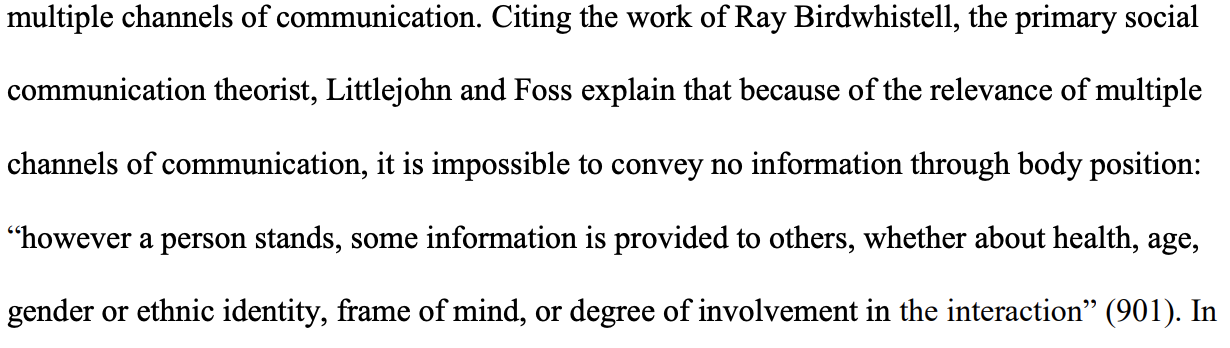
For citing sources in-text, MLA style is marked by using parentheses containing either the author of the quote or reference and the page number the reference is pulled from.
This example is pulled from an essay featured on MLA's website.

If the author is mentioned in-text, you can omit it in the citation and just use the page number like in this example below.
APA
For in-text APA citations, use the author’s last name and publish date of the material you are referencing. If pulling a direct quote, include the page number as well.

Chicago Style
Since we’re sticking with in-text citations, we’ll cover the author-date format of chicago style citations. These citations included the author (or authors), publish date, and page number the reference is pulled from. Take this example from Murdoch University:

In addition to citing sources in-text, essays also commonly require a separate works cited page with a full list of the sources you used. It’s important to note that different types of publications will have different guidelines for each citation style, so check the specifics of each before publishing your essay.
How to Cite Sources in Blog Posts & Long-Form Content Assets
Blogs are hotbeds of source attribution issues, probably just due to the sheer volume of content the format offers. Gated and long-form content assets are prone to the same attribution issues, too, but perhaps to a lesser extent since the volume is typically lower, and turnaround times longer. So let's walk through a couple common scenarios bloggers come across and figure out how to address them — but bear in mind you can apply these attribution methods to your long-form content assets, too.
Citation Scenario #1:
Let‘s say you’re quoting another blogger in your post — hey, sometimes you literally couldn't have said it better yourself. First of all, you have to actually quote them. Don't just take their words and adopt them as your own; they took time to think of that explanation.
But there‘s still some internet etiquette that goes along with quoting someone other than just throwing some quotation marks around their statement. Here’s an internet-friendly way to quote someone in your content (taken from a blog post of ours):

Not only does Natasha Pierre get credit for her quote, but her company is mentioned with hyperlinked text to her website. As an added bonus, you can opt to link to the person‘s social media handle — by no means necessary, but certainly a nice gesture. Aside from mentioning the person’s name, it's also nice to provide them with an inbound link — either to the page from which you drew your quote, or to another meaningful page on their site.
One thing to keep in mind when quoting text from someone else's website is that many companies have content usage guidelines that will let you know how, or if, they want you to use their content. Take a look at HubSpot's content usage guidelines to get an idea what these might look like,but in a nutshell, they‘re the guidelines laid out to try to ensure you use the right stuff in the right way. For example, oneof the notable parts of our content usage guidelines is that you can quote our content on your website, but only up to 75 words; this is to prevent duplicate content issues that would impact both our own organic search rankings, and the other website’s. So when quoting content from another source, do a quick check to see whether they have similar guidelines to which you should adhere.
Citation Scenario #2:
Now let‘s say you have data you’d like to cite in a blog post. What do you do? This:

The copy around the statistic not only gives credit to the company that published the data, but Wordstream also receives a link back to their site. That link, however, should not just go to their homepage. Point that link to the actual page on which that data lives. This is for the benefit of the reader, too, so they can dig into the research more if they're so inclined.
Citation Scenario #3:
There‘s one final caveat to your blog post/long-form citations that is just a matter of proper internet etiquette. If you found a quote, article, or data point via another website, it’s nice to indicate that in the copy. For example, if you're newsjacking and you found the story via another website, give them a nod that they‘re the ones who broke the story originally. Or, if you’re reading a blog post and there‘s a particularly compelling quote contained therein from an industry influencer, it’s nice to give credit to the blogger that called that out. You might phrase it like this:
"Today we learned via the <link>New York Times</link> that <link>Twitter</link> is hiring a new type of CTO — their first ever Chief Tweeting Officer."
The NYT link should head to the article they published on the subject, and the Twitter link should head to their blog post or press release announcing the news.
Make sense? Alright, on to social media.
How to Cite Sourcesin Social Media
When you‘re sharing someone else’s content in social media, the approach you take to give proper credit changes depending on the social network. Here's the breakdown:
To Cite Someone's Content on X (Formerly Twitter):
Simply include a “via @username” somewhere in the post. If you‘re reposting someone’s content but you edit their original, be sure to change “RT” to “MT,” which stands for “modified tweet.”
To Cite Someone's Content on Facebook:
Facebook makes it pretty easy to give credit when you‘re sharing someone else’s content right from their own timeline — they have a ‘Share’ button ready and waiting for you, and they make it easy to see the originating URL, originating sharer, as well as the names of people who shared it.

If you‘re citing content from elsewhere on the web, but want to give attribution to another person or company, you can find that person/company on Facebook and link to their Facebook Timeline in the status update. It’ll look like this (note the WordStream hyperlink in the image below).

If you‘re sharing content from another source and they don’t have a Facebook page, then the link to their piece of content will suffice.
To Cite Sourceson LinkedIn:
Proper source attribution on LinkedIn is simple. Just include the link to the content you're citing in the update, and mention the person or company name.
To Cite SourcesContent on Pinterest:
Pinterest is all about content sharing, so it‘s no wonder proper source attribution is built right into the platform with their "Repin" button. When you go to repin content, however, sometimes the original creator has included a URL, hashtag, or other indicator of authorship. Don’t edit that link out — it's poor form.
And marketers, beware. If you include your link in the “Description” section of your pin, you may get flagged as a spammer.
How to Give Credit to Guest Authorsand Ghost Writers
Maintaining a blog takes help, sometimes from guest authors orghost writers. If you‘re using a ghost writer, you don’t have to give credit to that author. That‘s the whole point. They’re ghosts. You can't see them.
But if you‘re publishing a post from a guest blogger, you certainly should be giving them credit for their efforts. In a few ways, actually. Here’s what you should be doing to give an e-nod to those writers:
- Provide space somewhere for the guest blogger to get not just their name mentioned (as a byline, ideally), but also the company they work for.
- Give them space to include a short bio that describes what their company does — this usually accompanies their byline or a separate author profile page. Many sites allow guest authors to include an inbound link to their website within that byline, too.
- Let them include at least one contextual link within the body of their blog content, too. Some sites allow more than one link within the body of the content, but the minimum should certainly be one.
Some companies also outline very detailed guest blogging policies. If you're concerned about mitigating the differences of opinion on some of these issues, make sure you write out your own detailed guest blogging policies for your website so expectations are set up front.
How to Cite Images and Visual Content
If you‘re a regular reader of this blog, you know we’re behind sharing the wealth when it comes to visual content marketing — and we love it even more if you can give credit to the original artist properly. Here‘s when you need to give credit, when you don’t, and how to do it.
To Cite Visualizations, SlideShares, and Infographics:
If you‘ve found an infographic or visualization on another site that you’d like to feature on your website, you should treat it similar to how you‘d treat citing any other content on your website. Simply include a link to the original source’s website where that visual lives, and include their name in the text.
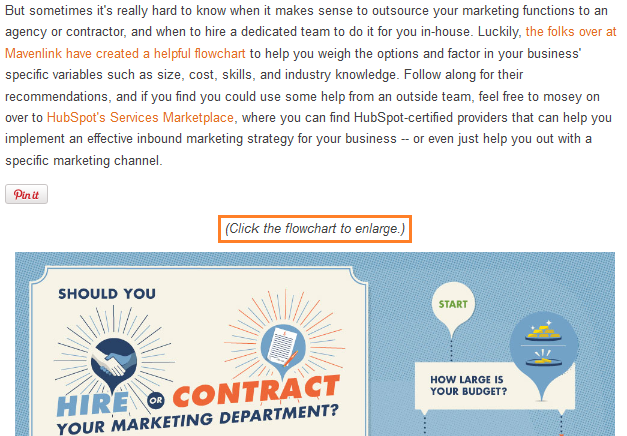
You should also try your best to uphold image quality when republishing their visual content — if the website has embed code for that visual, use that code. This is why we try to make a point of creating embed code when we create visuals (and why we love that YouTube and SlideShare make it easy to grab embed code). It makes sharing easier for those that choose to republish the visual, and helps them maintain the quality and resolution in the process. If embed code isn't provided, you can also include instructions like “click to enlarge” for static images — this helps ensure the visual fits the width of your website, but still provides a good reader experience.
To Cite SourcesWithin a SlideShare, Infographic, or Visualization:
And what happens if you hired a designer to create something for your site — how do you give credit to the designer? Well, it depends on the terms you‘ve worked out together. You could hire a ghost designer (kind of like ghost writers) so that the content looks like it was designed in-house by your company. In that case, you don’t have to worry about attributing the design work to anyone. If, however, you‘ve agreed to give credit to a designer, there should be some space in the visual (not a lot, but some) that gives them credit for their work. Here’s an example of how we gave credit to the designer in one of our infographics — check out the bottom left:

And what happens if you cite content from other sources in your infographic? Use that bottom section for that, too. Here's an example:

If the list of source URLs is getting too unwieldy, you can also set up a URL to send people to for the sources:

And remember, if you‘re creating a SlideShare, you have the benefit of being able to make links clickable within the SlideShare. If you’d like instructions for doing that, check out this blog post — but this means that you can treat source content in a SlideShare with the same level of respect you treat source content in a blog post or elsewhere on your website.
How to Cite Photographs and Other Images:
Much like your infographics and visualizations, how you cite photos and images featured on your website depends on where you sourced them. When you buy stock imagery, it's license free. You bought it, you own it, and you can do what you want with it.
But many marketers are trying to find images for content such as blog posts, and don‘t wantto pay for a stock photo every single time. Some people go to Google Images and simply find an image they like ... thing is, all those images have varying levels of permissions. So while it may be okay that some of them are used on your blog or website, that’s not universally true of all of them.
Some marketers have started to use Creative Commons to deal with this issue because they have filters that let you select images you can “use for commercial purposes” and/or “modify, adapt, or build upon.” Unfortunately, you can't always trust those filters — users have been known to upload photos and images that perhaps they have the license to use, but you do not. So if you want to be totally safe, I recommend purchasing a license to a stock photo site. There are also some free stock photo sources, like HubSpot's free stock photos and Death to the Stock Photo, that you can check out if you're on a tight budget.
The Caveat (There‘s Always a Caveat, Isn’t There?)
Of course, some people who have content online, including some marketers, don’t want to share content at all and will get very upset if you do so — even if you give them full and generous credit for it, links and all. What happens when you share content from them? Well, it‘s possible they’ll contact you to take it down. Or, if they have the resources, they‘ll send a lawyer to do so. If that happens to you, I recommend respecting the fact that they don’t want to share data, quotes, visualization, etc. — it's probably not worth the headache to fight it.
Editor's Note: This post was originally published in August 2012and has been updated for freshness, accuracy, and comprehensiveness.



![If Everyone is a Content Creator — Is Anyone? [Data + Expert Insights]](https://knowledge.hubspot.com/hubfs/contentcreator.webp)

![How to Collaborate with Brands as a Content Creator [Expert Tips]](https://www.hubspot.com/hubfs/Untitled%20design%20%2865%29-1.jpg)