
Best Practices for Creating a Landing Page
What makes a landing page effective?
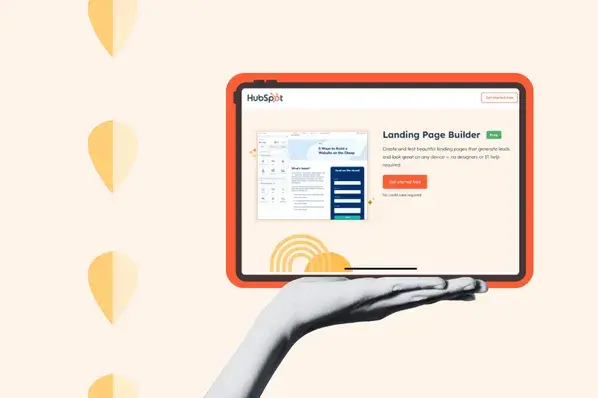
Free Landing Page Builder
Create and test beautiful landing pages that generate leads and look great on any device.
- Build landing pages.
- Turn visitors into leads.
- Optimize for SEO.
- And more!
What is a landing page?
What is a landing page?
A landing page is a web page for collecting a visitor's contact information in exchange for a resource, like an ebook. You can collect this contact information using a lead-capture form where visitors enter details like their name, email address, and job title.
Generating leads for your business is a necessary part of your marketing campaign. No matter your channel, your target people won’t convert themselves into potential customers. To do that, you’ll need quality landing pages built specifically to convert those visitors. Having a few landing pages on your website ensures you don’t miss opportunities to turn these individuals into paying customers.
Today, we'll explore the benefits of landing pages and how you might use them to reach your business goals.
What is a landing page used for?
The goal of a landing page is to convert and build a repository of leads that you can nurture with personalized marketing campaigns such as email, direct mail, paid ads, or other types of targeted marketing before those leads reach your sales team to make a purchase.
Types of Landing Page Offers
Every landing page that follows best practices targets leads with a specific content offer. Here are content offers you can add to a landing page to convert visitors into leads:
1. Ebooks and Whitepapers
If you’ve written a blog post introducing a topic your audience wants to learn about, you can satisfy their interest by elaborating on the subject in an ebook or whitepaper. You can “gate” this resource behind a lead-capture form using a landing page.
Once your visitors complete the form, they can access the content.

2. Email Newsletter Subscription
Let's say you write lots of blog content on a similar topic. You can develop an ebook or whitepaper elaborating on specific details. However, you can also offer your readers an email newsletter they can subscribe to for the latest content on that topic.
Use a call-to-action (CTA) on various blog posts to invite readers to subscribe to your blog. This CTA can link to a separate landing page where they can sign up for your email list.

3. Online Course Enrollment
Whether you're in the education industry or offer skill-based certifications, your online courses should have their landing pages. You can invite new students to sign up for a class you offer using these pages.
This type of content adds value to your audience’s experience — they’ll have more access to you through a private channel, like email, to discuss the course content and get feedback on their progress.

4. Event Registration
Similar to online courses, events require you to collect information from your audience so they can receive updates leading up to the occasion. An event and its various sessions and keynotes can have its own landing pages to turn interested prospects into event attendees and leads.

5. Free Trial
Are you offering a free demo of your product? Your demo offering could use its landing page. Bring users to a page where they can sign up for a free trial of your software using their name, email address, job title, and any other necessary information.
Don’t forget to follow up with these leads — they’ve shown an interest in what you sell based on your landing page, so make sure your sales team closes the deal.

6. Community Membership
If your business thrives on building a community among customers, you should have a website dedicated to dialogue between users. You can create a landing page that lets website visitors sign up to become a more significant part of your business.
There‘s no harm in making it invitation-only either — it’s a great way to try your hand at relationship marketing to close these deals.

7. App Download
Developing a mobile app for your product improves customer experience and gives your business another avenue to get leads. To do that, you can create an optimized landing page that invites users to download your app.
On the analytics side, you can use both Google Analytics to capture insights about who is visiting the landing page and downloading the app, then use that data to make your landing page even more effective.

The Benefits of a Landing Page
There are endless benefits to building landing pages for your marketing campaigns or content offers. Below, we’ll dive into seven factors that make landing pages an indispensable lead-generation tool.
Free Landing Page Builder
Create and test beautiful landing pages that generate leads and look great on any device.
- Build landing pages.
- Turn visitors into leads.
- Optimize for SEO.
- And more!
1. Landing pages aim to increase conversions
A targeted page that ties back to an offer or next step is critical to providing value upfront. This can also encourage new site visitors to provide information in exchange for an immediate, tangible reward.
For instance, let‘s say you’ve landed on a business‘s website and are immediately greeted with a pop-up form asking for your name and email. That’s a bit jarring before you even know what the company is about, isn’t it?
Alternatively, imagine you‘ve found a business’s free ebook on social media, which outlines ten immediate solutions to your problem. I‘m willing to bet you’re more likely to provide your name and email for that valuable content, right?
Many companies send advertising, email, or social media traffic to their home pages. This is a huge missed opportunity. When you know a stream of traffic will visit your website, you can increase the likelihood of converting that traffic into leads by using a targeted landing page.
For example, those users who convert on your social media ebook landing page are interested in social media. To nurture those leads, you might follow up with a personalized email detailing additional content you can provide related to social media.
2. Landing pages can provide additional insights into your target audience
You can track those that convert best by creating various landing pages with segmented offers. This can give you valuable insights into your audience's interests.
You could use the data you collect from your landing pages to create a more targeted, personalized marketing strategy.
Plus, landing pages don't just tell you which content your audience likes best — they also tell you the channels your leads prefer. This helps your marketing team to improve their strategy and promote content on the preferred channels of your audience.
For example, let's say you created two landing pages related to an e-commerce product. You find that the first landing page performs exceptionally well. However, the second one, which has lots of traffic from Facebook, has double-digit cart abandonment.
This information can help you figure out what’s not working. With it, you can create future campaigns that avoid previous setbacks. You would also have a basis for incorporating additional e-commerce content into your marketing strategy.
3. Landing pages can grow your email subscriber list
In exchange for the content offered on your landing page, you'll typically ask users to provide their email and name. This can help you quickly grow your email subscriber list and segment that list to provide personalized follow-up emails.
People who've filled out a form in exchange for content or information on your product or service have shown an interest in what you offer. This means your subscriber list will have potentially high-quality leads.
Consider how you might further nurture them by sending a “Thank you" email after they download your landing page offer, with additional resources related to the content in which they've shown interest.
4. Landing pages are testable
A landing page is a fantastic opportunity to get creative. You can use it to run split tests and find the landing page design and copy that performs best with your target audience. Additionally, it's often lower risk to test out a new landing page rather than making major design changes to your entire blog or website infrastructure.
A.J. Beltis, HubSpot's Content & Acquisition Manager, told me, “If you're using a content management system with a built-in A/B testing tool (like HubSpot's Content Hub), you can easily set up and run a test to see which copy, design, imagery, and page elements yield a stronger conversion rate. This means you can quickly uncover new ways to drive more leads and contacts for your business.”
5. Landing pages allow you to measure metrics directly tied to business goals
If you've created a landing page to market your new product or service, you can use that landing page to measure metrics directly tied to your business goals.
For instance, let's say your marketing team has to increase sales for your new email tool. To accomplish this, your team creates a campaign with a landing page offering a free demo of your tool.
You might measure conversion metrics on that landing page to determine how well your campaign is performing or if you need to make tweaks to communicate the true value of your new product.
Additionally, you can measure which sites drive the highest conversions to your landing page and put more resources into marketing your email tool on those sites — or social media apps.
6. Landing pages add context to your offer
A.J. Beltis told me one of the biggest benefits of a landing page is the opportunity to add context to your marketing offer.
“Marketers feel motivated to bypass the landing page process and skip right to the conversion by encouraging form fills in other methods, such as through a chatbot," says Beltis.
However, this process eliminates the opportunity to add more context to what you're offering.
“Imagery and essential information that can only be shared with a landing page provide context to those who need it before they decide to convert," Beltis adds.
7. Landing pages increase brand value and help make a good first impression
A well-designed landing page can impress and turn new visitors into leads by showing the valuable content your company can deliver. Even if a viewer doesn't immediately convert, a well-designed landing page can increase brand recognition and help nurture leads for future sales.
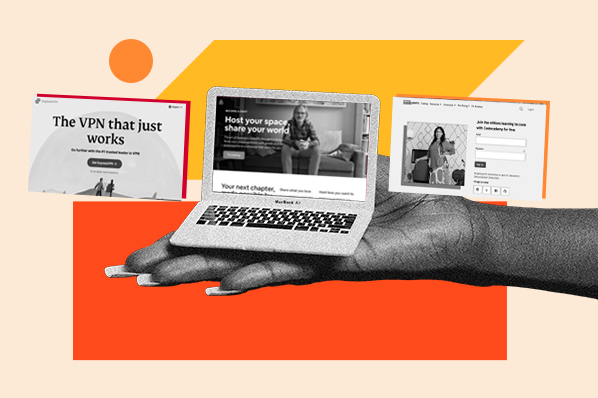
For instance, look at this impressive landing page created by Talisker, a whisky brand. Using Ceros' landing page product to design an immersive experience, Talisker is demonstrating brand value and making a fantastic first impression on new visitors.
This is proof that a landing page doesn‘t have to be boring — in fact, it shouldn’t be. Take the time to create an engaging, interactive, and interesting landing page that communicates the value of your brand.
Free Landing Page Builder
Create and test beautiful landing pages that generate leads and look great on any device.
- Build landing pages.
- Turn visitors into leads.
- Optimize for SEO.
- And more!
Landing Page Examples
If you’re looking to create some landing pages, taking inspiration from existing landing pages helps. Below are three examples of landing pages and why they are inspiring.
1. HubSpot
This HubSpot landing page displays a guide that users can access to build a consistent brand. We love the guide is free, and it's also a creation of two brands: HubSpot and Brandfolder.
Another brilliant feature of this landing page is its GDPR compliance. This is included in the FAQ section so readers can learn how HubSpot uses their data.
Industry: SaaS
What We Like
- “Free guide” is the first phrase we read on the landing page. These words are powerful because they make the reader know they can get this guide at no cost and enjoy the benefits of building their brand's consistency.
- As users scroll down the landing page, they see what the guide will include. Plus, there’s a scrollable PDF that shows some pages of the guide. These allow readers to check out the first few pages of the guide and make them opt in if they like what they’ve read.
- People always have questions. They want to know how you use their data if they’ll be sold down the line, and so on. Including an FAQ section gives you an opportunity to answer these questions that readers may have.
2. Wendy Maynard
The landing page headline lets you know why you’re getting the guide. Want to make passive income? You should download this guide.
The subhead is also great because it promises readers that after grabbing the guide, they will know how to create a profitable digital product easily. These will encourage more sign-ups.
Industry: Digital Marketing
What We Like
- “Free download” is the first phrase on the landing page. These words show that the effort required by the reader to get the resource is minimal.
- Sign-up forms shouldn’t require excessive information. Here, Wendy requires a name and email, and that’s it. The shorter the form, the better.
- No one wants to work with faceless individuals or brands. By putting her picture on the page, Wendy makes her brand personable.
3. HomeLoanGurus
HomeLoanGurus connects homebuyers with lenders — including those with a poor credit score. HomeLoanGurus does a fantastic job by talking about the core challenge of their audience and how they fix it.
Industry: Finance
What We Like
- Buying a home for the first time is truly scary, and the landing page headline encapsulates this feeling. By turning the visitors' feelings into words, HomeLoanGurus connects with the pain point of its audience and shows empathy.
- Home buying is a complicated process. There are regulations, paperwork, and terminology to learn. But on this landing page, HomeLoanGurus simplifies this process into three steps, making it easier for the visitor to take the first step.
- More words are not always better. More words can overwhelm readers and make them tune out of your message. By keeping this landing page short, HomeLoanGurus shares more information in fewer words.
Best Practices for Creating a Landing Page
1. Find a landing page builder.
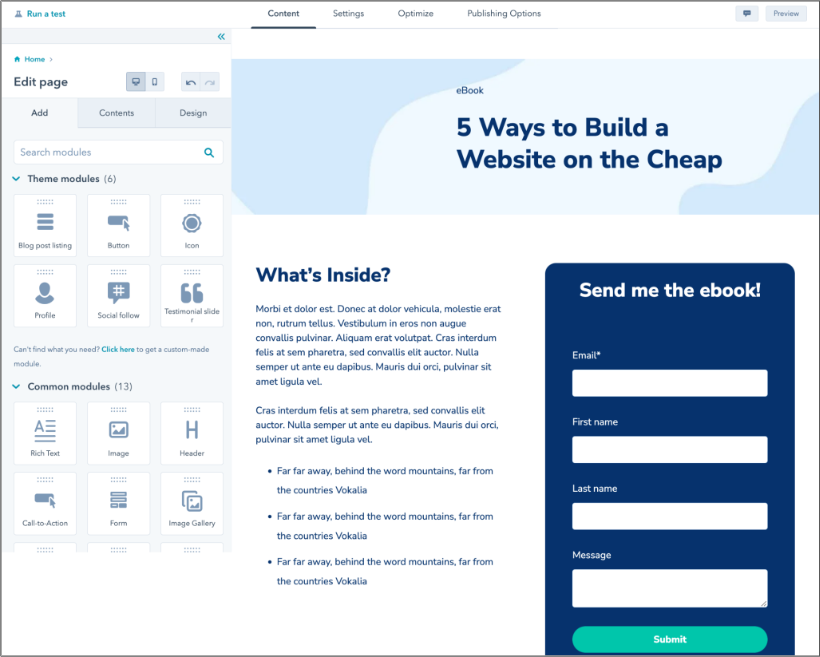
To create a landing page, start by exploring landing page builders — unless, of course, you're using a content management system that already provides landing page templates, like HubSpot.
Look for a landing page builder that is intuitive and simple to use — this way, you’ll have a shorter learning curve and will produce landing pages quickly. I recommend drag-and-drop style builders — they’re awesome for speeding up your workflow.
2. Use landing page templates.
Once you've determined the right software to build your landing page, get inspired by some landing page templates. You might also use this as an opportunity to take AJ’s advice above. and A/B test two designs to explore the design elements that result in the highest conversions.
3. Communicate value.
Every landing page you design has to communicate the value you‘re providing visitors in exchange for their contact information. And, of course, you’ll want to include a form that visitors will fill out in exchange for your promoted offer.
To learn more about how to create a landing page in detail, read How to Create a Landing Page: The Simple Step-by-Step Guide.
What makes a landing page effective?
A good landing page is the equivalent of a baseball mitt — it catches the traffic that your marketing campaign pitches to the audience. This means that the landing page you create should be specific to the type of traffic that it’ll be catching.
For example, if your marketing campaign features an ebook, your landing page should also mention the ebook. It’ll be even better if the ebook is the only content offer mentioned on the landing page.
This ensures people won’t become confused about what they’re going to receive when they share their contact information.
The landing page is targeting only the people who are (presumably) interested in this ebook. That’s because this ebook has exclusive information that elaborates on a topic your audience cares about.
With the offer, you can convert a higher percentage of your website visitors into leads, whom you can then follow up with using a lead nurture campaign.
Ready to create your first landing page or improve on a landing page you already have? Here are some of the most important elements you’ll want to implement to ensure your landing page is moving your business closer to its goals.
1. Intuitive Navigation
You‘ve brought your targeted traffic to a page where they can take your desired action. Don’t distract them! Limit the number of exits from your landing page so that your visitors focus on filling out your form.
A key part of this is to remove the website navigation elements on landing pages. This helps put the focus back on the content you're offering.
See how the landing page below does this — aside from the HubSpot logo, there are no navigation buttons to confuse or distract visitors.
2. Sharing Options
Tap into the largest community of your best (and free) marketers: your audience. Add share links to your landing page to encourage your website visitors to share your content with their audiences.
3. Valuable Content Offers
If you have a valuable offer, your visitors will give up their contact information for it. Ask yourself whether your offer is compelling to your audience, and make sure your landing page shows that value.
One way to ensure your landing page adds value is to show your audience the content they're going to receive — directly on the page. See how this can look in the example landing page below.

4. Succinct Copy and Lead Forms
The longer your landing page and form, the more friction you add to the lead-generation process. Keeping your lead form short and straightforward will increase your conversion rate.
Pro tip: Put as many contact fields as you can on the same line. Shortening the height of your lead-capture form helps you limit the more trivial fields you might be tempted to include.
It also prevents your landing page visitors from getting spooked by a form that's asking too much of them. As shown below, sometimes all you need is a first and last name, followed by an email address.
5. Focused Communication
You might be tempted to create a catch-all landing page that mentions your online course, email newsletter, ebook, and every other content offer you’re promoting. This is not ideal.
People should visit your landing page to get a particular offer. This offer should also match the communication they saw right before they clicked your landing page link. Did you share a social media post about your latest free email template? If so, that’s exactly what your landing page should communicate.
Use the headline to grab the reader's attention and let them know, “Hey! You’re in the right place to download that free email template.” The imagery of the template and a few bullet points about the benefits of it will help communicate this point, too.
6. Tracking and Analytics
It’s one thing to know how many visits your landing page received. It’s another to know where those visitors came from.
You’ll need to know this information so that you can optimize your marketing campaign to generate more leads. If email marketing is generating more clicks to your landing page than the search engines, then it’s a good idea to focus on email marketing tactics while you optimize your landing page for the search engines.
UTM tracking parameters can help you uncover these insights, too. You can use tools like Google Analytics, Bit.ly, and HubSpot to create and track UTM parameters. Here’s a detailed guide on how to use UTM codes.
7. Constant Improvement
Your landing page can always use more testing and improvement. Make sure you have a landing page creation tool that lets you create and test many landing pages to see what works best for your business.
You can also make use of an AI campaign assistant to create copy for your landing pages in minutes rather than weeks.
[Video: What Is a Landing Page? ]
Gotta Catch ’em All
You’ve spent weeks, months, or even an entire quarter developing the perfect marketing campaign and content offers to appeal to your buyer personas. Don’t let that hard work go to waste — remember, converting visitors to leads is your main goal.
Building quality landing pages for each campaign or offer you create will be an important part of your lead-generation strategy. Use the best practices in this article to build the perfect landing pages for your business and capture every lead you can.
Editor's note: This post was originally published in October 2020 and has been updated for comprehensiveness.


![Why You Need to Create More Landing Pages [Data + Tips]](https://53.fs1.hubspotusercontent-na1.net/hubfs/53/create%20more%20landing%20pages.png)
.png)