Social media listening tools have become essential for modern marketing teams. These platforms go beyond surface-level metrics to help you understand sentiment, detect trends early, and uncover real opportunities for growth — all in real time.

Every minute, customers are openly sharing online what they love, what frustrates them, and what they expect next from brands. If you’re not actively listening to customers and prospective leads, you’re missing out on an opportunity to protect your brand and create deeper relationships.
Missed feedback, like comments on a Reddit post or a customer complaint tweet, can quietly damage your reputation. While you’re blissfully unaware of online chatter about your brand, competitors who act faster on social insights — 62% of marketers use social listening tools! — shape the narrative and win over your customers.
In this guide, you’ll learn how to choose, compare, and implement the best social listening platforms for your goals — whether you need an all-in-one enterprise suite, an AI-powered sentiment tracker, or a budget-friendly tool to start.
Table of Contents- Why Social Listening Tools Matter for Your Brand
- Social Listening vs Social Media Tracking
- What are the key features to look for in social media listening tools?
- How We Chose the Best Social Media Listening Tools
- Best All-in-One Social Listening & Management Tools
- Best Social Media Listening Tools
- Best Budget-Friendly Social Listening Tools
- Best Social Listening Tools for TikTok Monitoring
- How to Choose the Right Social Listening Tool for Your Goals
- FAQ: Social Media Listening Tools
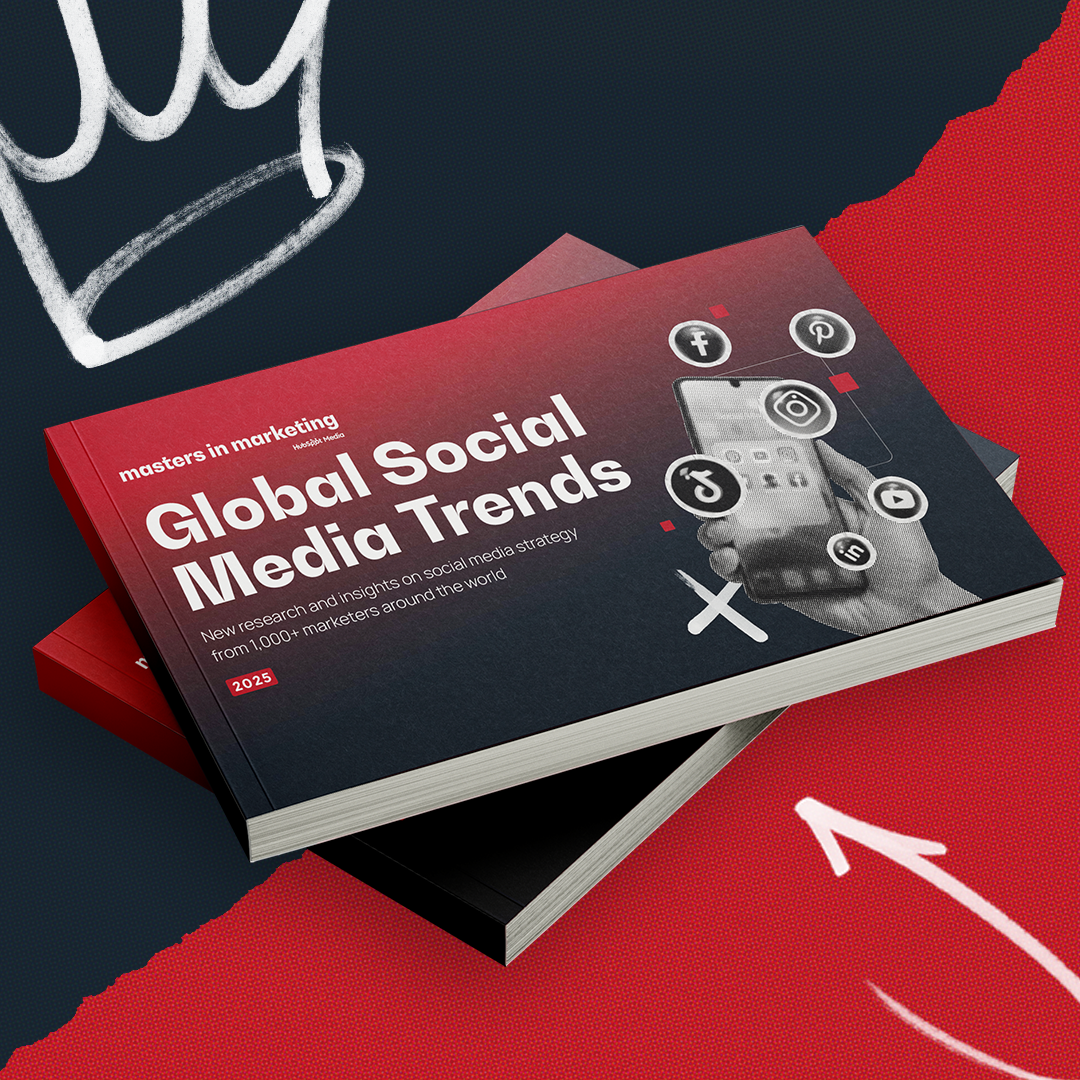
The State of Social Media in 2025
Explore the top trends in social media for brands to know and optimize your social strategy.
- AI Content Creation
- Community Building
- Social Media Shopping
- Social Vs. Search Engine
Download Free
All fields are required.
Form not available
Key Takeaways
- Social media listening tools help businesses track, analyze, and respond to online conversations about their brand, competitors, and industry.
- The best tools offer real-time monitoring, AI-powered sentiment analysis, and seamless integration with your marketing stack.
- When choosing a platform, compare its features, pricing, supported networks, and integration options to ensure they align with your business size and goals.
- For a unified approach, consider solutions like HubSpot that connect social listening with CRM data.
What is social listening?
Social listening refers to monitoring and analyzing social media profiles for customer feedback and direct mentions of brands. These tools look for any conversations with relevant keywords, topics, competitors, or industries.
Marketers can use social listening to uncover insights that help determine the best ways to improve their social media strategy, brand perception, positioning, and social presence.
Pro tip: Explore HubSpot’s Social Media Management Software today and discover the impact of social listening and social media automation
Why Social Listening Tools Matter for Your Brand
Social media listening tools enable brands to monitor and analyze online conversations. Every post, comment, and mention on social media holds valuable insight — not just about your brand but also about your customers and your market. But as great as social media is for reach and brand awareness, it’s nearly impossible to track millions of conversations without a social listening tool.
Social listening tools help brands uncover the stories behind the data long before a passing trend has, well, passed. With these real-time insights, you’re better able to understand:
- What people care about.
- What they expect.
- Where opportunities are hiding.
When used strategically, social listening turns social media from a performance metric into a growth engine. It allows you to spot emerging trends before competitors, understand what actually matters to customers, protect and build your brand reputation, and turn conversations into revenue. Here’s how.
1. Spot emerging trends before competitors.
Social listening is a priority for over half (63%) of social listening leaders. Social listening tools analyze keywords, hashtags, and sentiment to surface what people are talking about right now, often weeks before those ideas become mainstream.
Listening tools help marketers better understand trends before they emerge, and they can be the difference between staying relevant in a conversation and being late to the game. Early visibility into those shifts helps your team adapt faster, refine messaging, and build content that feels timely instead of reactive.
However, Baruch Labunkski, CEO of Rank Secure, warns that not every social media trend will be appropriate for your brand. He said, “The critical defining factor to achieve balance with brand strategy and emerging trends is fit. Adopting a trend works only if there is a natural synergy in terms of a brand’s tone, voice, and audience. If it doesn’t, then the final outcome is a missing inconsistency.”
Final verdict: Use your judgement.
Example of social listening tools in action: A beauty brand notices a spike in mentions of “skin barrier repair” across Reddit and TikTok long before it trends in mainstream publications. Within weeks, they can adjust product positioning and own the conversation, increasing engagement and conversions.
Pro tip: Use your social listening dashboards in HubSpot to track rising keywords, hashtags, and sentiment shifts alongside your content performance data. When a new topic starts gaining traction, you can quickly pivot your blog, ad, or campaign strategy — and even create automated reports that flag trend changes for your team each week.
2. Understand what actually matters to customers.
Social media can often feel murky, especially when it’s not immediately clear why some content performs well and other content flops. Social listening tools help marketers better analyze top-performing content, giving them a clear answer to “why” a post or video performs better than others.
When brands understand which kind of content resonates with their audience, they can focus on what works to better connect with them.
Take Labunski, for example. He said, “Our initial attempts at social listening confirmed that the audience was mostly segmented around ‘authentic content.’ People seemed to enjoy unscripted, behind-the-scenes content, and overly polished posts failed to capture their attention. There was increased audience engagement with raw, unedited content, and this wasn’t a mere passing phase. This audience behavior was a radical makeover with staying power.”
Example of social media listening tools in action: A SaaS company discovers customers frequently mention “setup complexity” on LinkedIn and Reddit threads. Using those insights, they can rebuild their onboarding sequence, cutting time to activation by 40%.
Pro tip: Use your social listening data to inform your CRM segments. When you notice recurring themes — like complaints about onboarding or requests for a specific feature — tag those mentions and sync them to contact records in HubSpot. Then, you can build targeted email workflows, adjust nurture sequences, or flag product feedback directly to your customer success team.
3. Protect and build your brand reputation.
Social listening tools help brands identify potential public relations issues early and respond before they spiral or go viral. In fact, 57% of brands use social listening tools to uncover customer attitudes and opinions, tapping into real-time context that often lags behind with surveys or focus groups.
Additionally, when brands use social listening tools, they can uncover areas of friction within their products that could lead to customer churn. Addressing these issues before they compound shows customers your brand cares about their experience.
Labunski saw this play out in real time. He told me, “One of our SaaS clients detected confusion during onboarding and noted it frequently. This encouraged the development of clearer onboarding videos and simpler documentation. This helped to decrease the number of support tickets by almost 20%.”
Example of social media listening tools in action: A healthcare provider uses sentiment alerts to catch a wave of patient frustration after a billing system update. Quick responses and transparent communication can turn criticism into appreciation and build trust.
Pro tip: Set up real-time social mention alerts in HubSpot and route them to the right team automatically — customer service, PR, or sales. When a post or comment meets certain sentiment or keyword criteria (like “refund” or “recommendation”), your team can jump in fast with a personalized response.
4. Turn conversations into revenue.
Social listening isn’t just about awareness — it’s about opportunity. Listening tools help you recognize those moments — and empower sales and marketing teams to act fast.
Labunski’s team monitors intent-driven comments, like “best alternatives” or “who has the best product.” When his team finds those kinds of comments, they reach out directly to the user. And he told me it pays off, adding, “Several of those interactions have become valued customer relationships.”
Example of social listening tools in action: A software company spots potential buyers asking for CRM alternatives on X. Their rep joined the thread with a helpful guide — and closed three deals that week.
Pro tip: Connect your social listening streams directly to your HubSpot CRM to capture high-intent mentions — like someone asking for product recommendations or comparing competitors. When those keywords appear, automatically create a lead alert for your sales team or enroll that contact in a follow-up workflow.
Social Listening vs Social Media Tracking
Before we discuss the best social media listening tools, it’s important to clarify a common misconception: Social media tracking does not function in the same way as social media listening.
Social media tracking (also known as social media monitoring) is a short-term strategy that involves identifying and responding to brand mentions on social media. In contrast, social media listening is a long-term process of analyzing online conversations to proactively identify ways to improve brand strategy.
Although these two terms are often used interchangeably, there’s an important difference.
Social monitoring is more reactive and focuses more on what the audience says about the brand. Think about a candle-making business. If a customer posts on TikTok that the candle jar shattered in transit, the business can send them a replacement to build goodwill.
Social listening, on the other hand, uses aggregated data to investigate why people say what they do and what that means for the brand. If many customers post positively about a line of candles made with organic beeswax, the business can infer that sustainability matters to its audience.
With that in mind, let’s cover which features you should look for in a social media listening tool before signing up for a subscription.
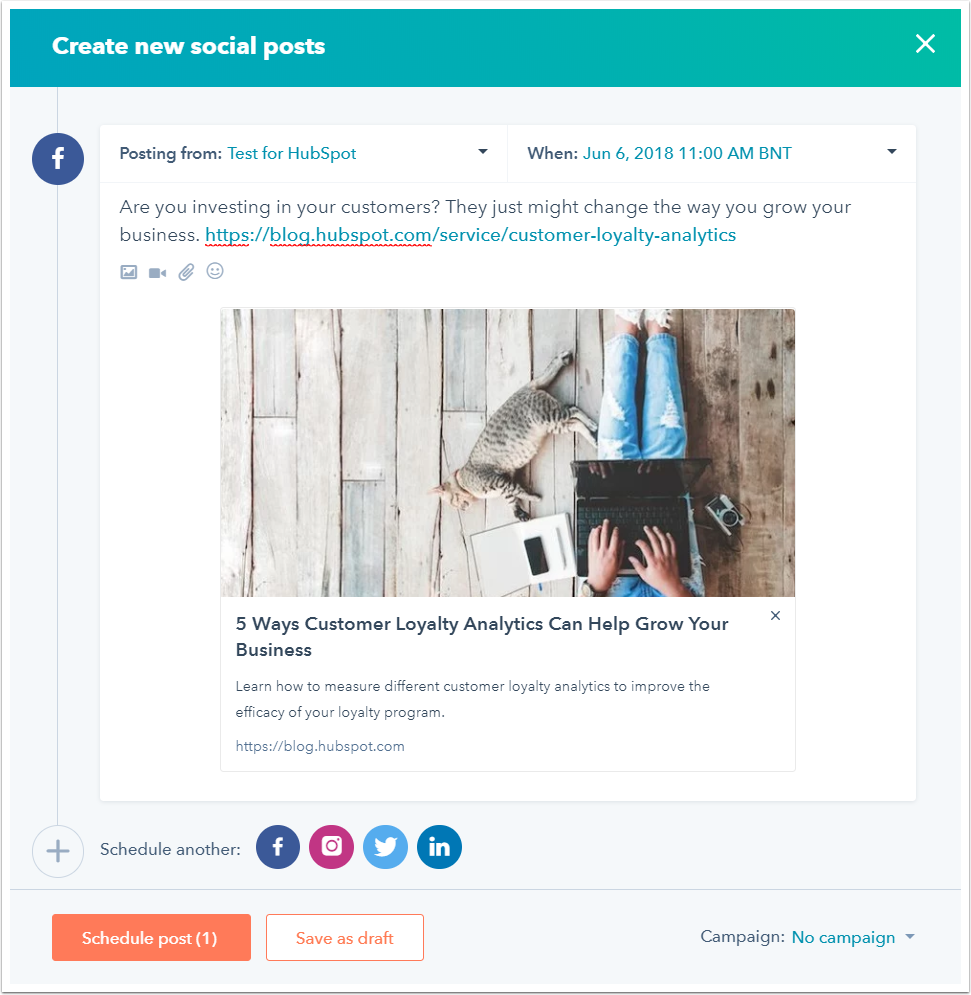
HubSpot's Social Media Management Software
Time-saving tools to help you prioritize your social interactions — so you can connect with the people who matter most.
- Manage campaigns.
- Monitor mentions.
- Attribute value.
- And more!
What are the key features to look for in social media listening tools?
Not all social media listening tools are created equal. Some platforms track mentions and hashtags, while more powerful solutions offer AI-powered capabilities that go far beyond simply monitoring conversations.
When AI insights, publishing, and analytics live within the same unified systems, marketing, sales, and service teams have instant access to a single source of truth for every customer interaction.
Here’s what sets these all-in-one platforms apart:
- Unified dashboards for monitoring, publishing, and engagement. Easily manage every social channel from one place, with visibility into conversations, campaigns, and community interactions.
- AI-driven sentiment analysis and trend detection. AI-powered social listening platforms provide real-time sentiment analysis and trend detection. Quickly identify shifts in audience mood or emerging topics before they impact your brand.
- Enterprise-grade reporting and analytics. Visualize performance across networks with customizable dashboards and shareable reports.
- Team collaboration and workflow tools. Streamline approvals, assign responses, and ensure your team never misses a critical mention.
- CRM and marketing integration. Connect social insights with contact data, pipelines, and campaign results to understand the real ROI of social engagement.
When these capabilities live inside one platform, it’s easier to connect them to revenue, retention, and reputation.
How We Chose the Best Social Media Listening Tools
To compile this list, I reviewed over 30 social media listening platforms, comparing their features, usability, pricing, and integrations. I prioritized tools that offer:
- Real-time monitoring.
- Sentiment analysis.
- AI-powered insights.
- Seamless connections to CRMs and marketing platforms like HubSpot.
Each tool included here has active user reviews, recent product updates, and a clear value for marketers focused on growth and ROI. To get us started, here are the best all-in-one social listening tools.
|
Platform |
Best For |
Key Features |
What We Like |
Starting Price |
|
HubSpot Marketing Hub |
B2B companies using CRM-driven marketing |
- AI-powered social post generator - Cross-platform post scheduling - CRM-integrated keyword tracking and alerts - YouTube reporting and analytics - Manage Facebook, Instagram, X, and LinkedIn from one tool |
Lets you tag social posts to specific campaigns for full-funnel insights. |
$800/month |
|
Sprout Social |
Agencies and enterprise teams |
- Unified inbox for engagement - Content publishing and scheduling tools - Integrated social listening and trend tracking - Competitor benchmarking and industry insights - HubSpot integration for centralized reporting |
Combines deep analytics with collaboration and competitive benchmarking. |
$199 per user/month |
|
Brandwatch |
Large enterprises and agencies |
- AI-powered consumer intelligence and trend detection - Benchmarking and share of voice analysis - Digital asset library - 100M+ data sources for brand mentions - Focus Panels for demographic analysis |
Multilingual coverage and AI-driven insights for global brands. |
Custom pricing (demo required) |
|
SocialBee |
SMBs, marketing teams, creators, agencies |
- AI-powered social media management - Best times to post suggestions - Post time suggestions - Collaboration features - Visual content calendar |
AI Copilot that creates posts, images, and social media strategies |
$29 per user/month |
|
Hootsuite |
Small to mid-sized marketing teams |
- Unified dashboard for engagement and response - Keyword and hashtag tracking - Streams feature to monitor topics and trends - AI caption generator and post idea tool - Integrations with HubSpot, TikTok, and Pinterest |
Wide range of native integrations and intuitive workflow management. |
$99 per user/month |
Best All-in-One Social Listening & Management Tools
If you’re looking for a platform that does more than track mentions, the best all-in-one social media listening and monitoring tools bring everything together: publishing, engagement, analytics, and AI-powered insights — in one connected workspace.
1. HubSpot Social Media Management Software
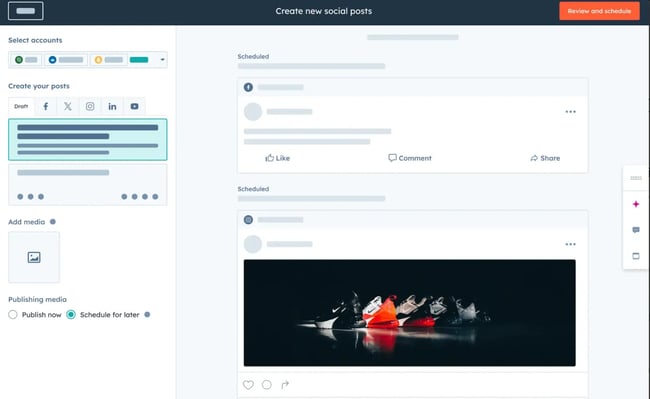
HubSpot’s Marketing Hub is an all-in-one social media marketing software that makes it easy to monitor interactions, conversations, and audiences across platforms. Marketers create streams that automatically alert sales teams when someone mentions a specific keyword online.
With HubSpot Marketing, teams get the tools they need to manage day-to-day interactions and engagement on social media. HubSpot integrates social listening data with CRM records. Marketers can then target specific audiences using context from the contacts database in their CRM. This can help teams better understand what these groups think of a business.
One of my favorite features of HubSpot’s social media tools is that you can post content and reply to your audience directly from HubSpot. You don’t need to log in to each social platform separately.
What does that mean for you? You can manage your entire social strategy — from planning to sharing to analyzing — from one central location.
Key Features
- Marketing Hub saves time with the AI-powered social post generator.
- Marketing Hub schedules social posts in advance across multiple platforms.
- Marketing Hub integrates social tools with teams’ contacts database and CRM.
- Teams can use keyword streams to track conversations critical to their sales pipeline.
- Teams can report on video strategy with YouTube reporting.
- Marketers can manage social profiles on Facebook, Instagram, X, and LinkedIn from one tool.
What I like: HubSpot lets you use tags to associate social posts with specific marketing campaigns for more effective big-picture insights.
Price: Plans start at $800 per month.
2. Sprout Social
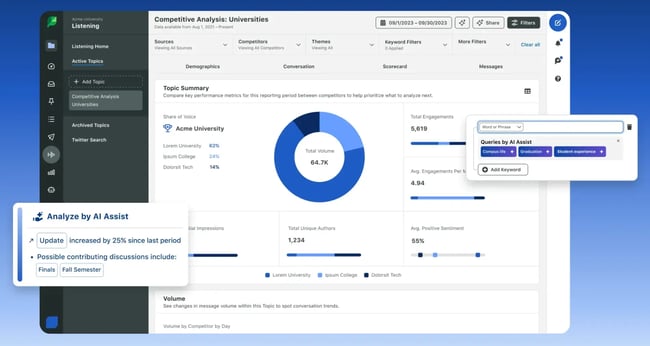
Sprout Social is a comprehensive social media management platform that provides powerful solutions for social listening and analytics, customer care, and employee advocacy. Users can easily build queries that let them track customer posts related to topics of their choice.
Beyond that, Sprout Social makes identifying trends easy. Users can generate a word cloud to see which terms appear most when customers talk about a company. Service teams then know which insights to assess more carefully.
Key Features
- Map out a content strategy and schedule posts with the Publishing tool.
- Monitor and manage engagement across social networks in a unified inbox.
- Integrate Sprout Social with HubSpot software to collect accurate social reports all in one place.
- Uncover trends in social conversations, learn about your audience, and gain actionable insights to inform your marketing strategy with the integrated social listening tool.
What I like: Sprout Social includes competitor analysis and industry insights to help benchmark your brand’s performance.
Price: Plans start at $199 per user/month.
3. Brandwatch
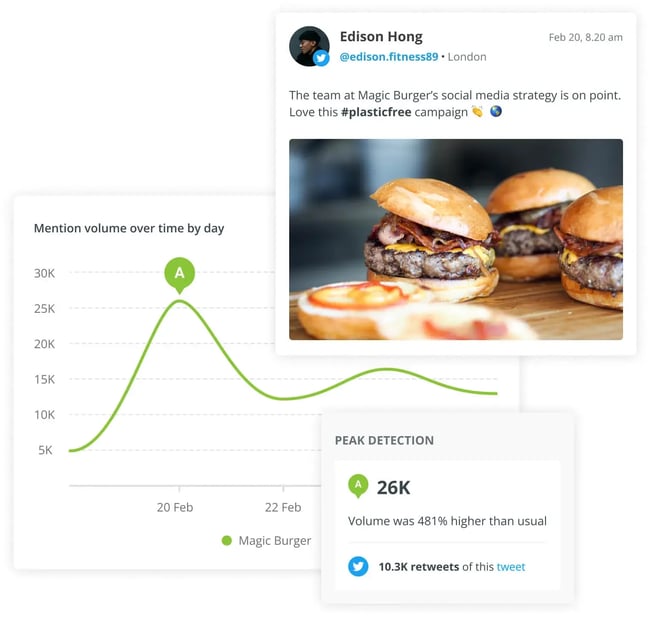
Brandwatch is a digital marketing suite with consumer intelligence, social media management, and influencer management tools. Like the other all-in-one tools, Brandwatch allows for social media scheduling across various platforms and enables social listening by aggregating relevant interactions.
Brandwatch also offers its continuous innovation. The platform often adds new features, such as using AI to uncover brand insights, which helps users stay at the forefront of social listening.
Key Features
- Store all visual content in the digital asset library.
- Monitor messages from all social channels in one inbox.
- Stay competitive with benchmarking tools, including share of voice analysis.
- Aggregate brand mentions from 100+ million sources in the social listening tool.
- Get a deeper analysis of user demographics and behavior with Focus Panels.
What I like: Brandwatch offers multilingual coverage, making it an excellent option for marketing agencies with clients in different countries.
Price: Book a demo for pricing.
HubSpot's Social Media Management Software
Time-saving tools to help you prioritize your social interactions — so you can connect with the people who matter most.
- Manage campaigns.
- Monitor mentions.
- Attribute value.
- And more!
4. SocialBee
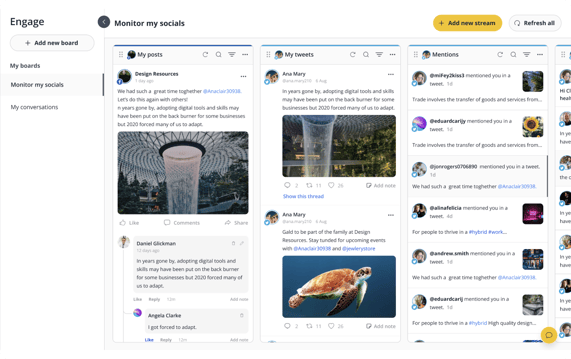
SocialBee is an AI-powered social media management platform for brands and marketers that helps them create content and stay on top of conversations by generating posts, monitoring mentions, and managing messages in one dashboard.
SocialBee’s Social Inbox feature brings together messages, comments, and mentions from multiple social media platforms into one centralized dashboard. Instead of switching between platforms, you can manage all conversations from a single place, making it easier to reply quickly and keep communication organized.
Key Features
- Track brand mentions and conversations to respond quickly and stay aware of online activity.
- Manage all comments and mentions from a single dashboard to ensure no engagement is missed.
- Generate captions, post ideas, images, and social strategies with AI to create content faster and easier.
- Get the best times, platforms, and types of content suggestions to maximize engagement.
- Combine content creation, engagement, and monitoring in one platform for a streamlined workflow.
What I like: SocialBee includes an AI assistant that can generate captions, images, and hashtags for posts, helping users overcome writer’s block and create engaging content in seconds.
Price: Plans start at $29/month.
5. Hootsuite
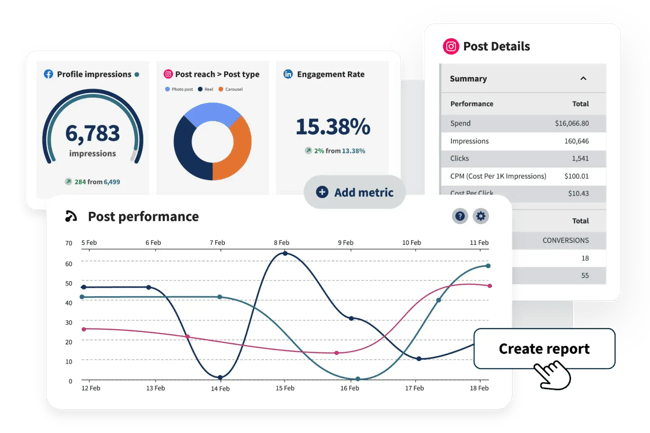
Hootsuite is a social media management platform that provides a concise dashboard where users can view and respond to all messages, comments, and brand mentions across several different social media accounts. It also provides social listening tools that let marketers track brand mentions along with relevant keywords and hashtags.
The Streams feature makes it easy to track activity across all of your accounts and monitor relevant topics and trends.
When it comes to social listening, I asked Kaitlin Milliken, a senior program manager at HubSpot, about her experience on the platform.
“I used Hootsuite in a previous role where I helped launch a new publication for business executives. We always watched to see which content people talked about and liked. That helped us decide if experimental posts — like quizzes or Q&As — were worth doing in the future,” Milliken says.
Key Features
- Easily monitor and respond to brand mentions directly in the platform.
- Optimize paid social campaigns with the Boost option.
- Manage activity and measure success across social platforms, including Facebook, Instagram, X, YouTube, LinkedIn, TikTok, and Pinterest.
- Generate captions and post ideas with the AI tool.
- Seamlessly integrate Hootsuite with HubSpot to streamline marketing efforts, gain deeper insights into audiences, and drive targeted engagement.
What I like: Hootsuite offers a wide selection of native integrations, making it useful for brands that already have a well-established tech stack.
Price: Plans start at $99 per user/month.
Best Social Media Listening Tools
6. Meltwater
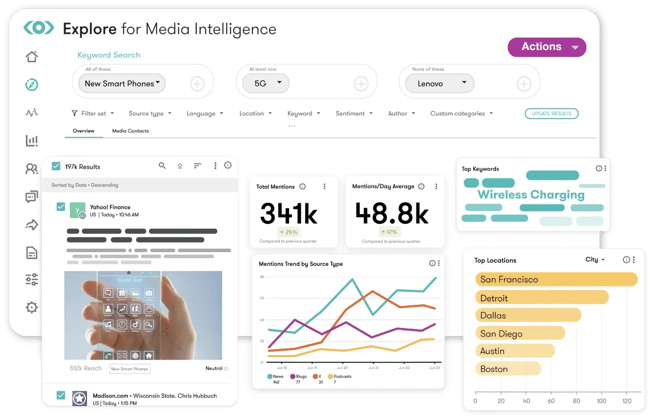
Meltwater is a global media intelligence and social listening company. Meltwater provides a range of software solutions and services that help businesses monitor and analyze their online presence, track media coverage, and gather valuable insights from social media and other online sources.
Meltwater’s suite is one of the more comprehensive offerings on this list. It includes features like media monitoring, customer sentiment analysis, trend tracking, influencer identification, and competitive analysis.
Meltwater also gathers social listening data from a wide range of online channels, allowing businesses to gain a comprehensive understanding of their brand’s reputation and industry trends.
Key Features
- Identify emerging trends and topics relevant to the brand or industry.
- Monitor data from social media platforms, news sites, blogs, forums, and other online sources.
- Analyze the sentiment behind social media posts, articles, and other online content to better understand public opinion.
- Generate customized reports with key metrics, charts, and insights to measure the impact of social media efforts.
What I like: Meltwater’s Newswire integration makes it a great choice for combining social media and public relations (PR) management in one platform.
Price: Book a demo for pricing.
7. Mentionlytics (Pro Plan)
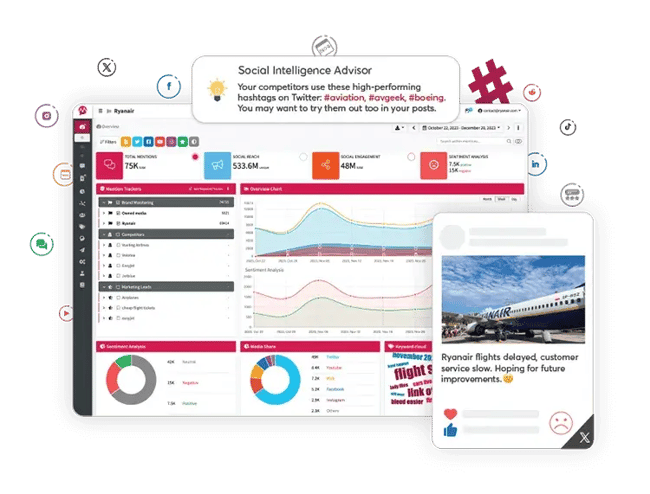
Mentionlytics is an AI-powered social media listening tool that offers real-time monitoring and analysis of online conversations. It efficiently tracks brand mentions, keywords, and hashtags across all major social media platforms and the web.
Mentionlytics uses comprehensive reporting to help make informed decisions and design proactive engagement strategies. Beyond that, its exceptionally personal customer service team ensures users get the most out of each feature.
Key Features
- Track mentions, keywords, and hashtags to easily identify where and when users mention a brand online.
- Use sentiment analysis to understand whether online mentions of a brand are positive, negative, or neutral in 100+ languages.
- Improve social media strategy based on real-time data analysis from Social Intelligent Advisor (SIA).
What I like: Mentionlytics captures user mentions even if the person who posted doesn’t tag your brand, allowing you to catch more opportunities to improve the customer experience.
Price: Pro Plan is $416 per month; other options available.
8. Onclusive Social (formerly Digimind)
Onclusive Social (formerly Digimind) is a leading global social listening platform and competitive intelligence software that transforms social and online data into actionable consumer and business insights. The brand reputation dashboard is useful for effectively planning, executing, and analyzing a marketing strategy.
That said, the Onclusive Social tool collects a large amount of data and isn’t the easiest to filter out metrics, so it’s best for individuals who have more experience with analytics and data management.
Key Features
- Get insights from the past through the historical search feature.
- Make sense of social data with intuitive dashboards and charts.
- Uncover trending topics in social conversations and make informed strategic decisions through consumer insights from multiple sources.
What I like: Onclusive Social has one of the most user-friendly and intuitive experiences of all the tools on this list, making it easy to understand the social media analytics and insights it provides.
Price: Customized according to needs.
9. Agorapulse (Advanced Plan)
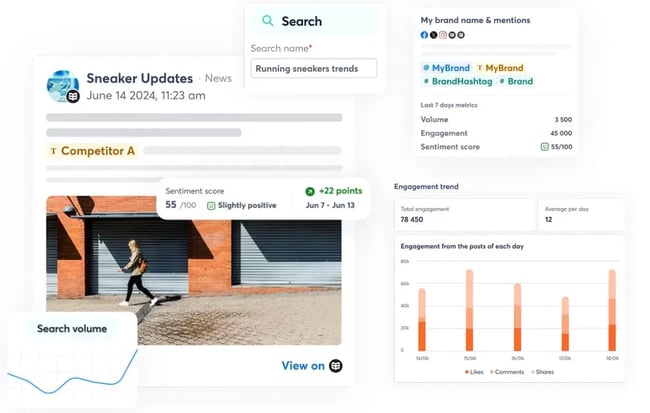
Agorapulse’s Professional plan allows teams to have one unified inbox for all social media conversations. Users can publish across several platforms, access brand monitoring insights, and generate analytics reports. That means marketers can see mentions while scheduling out posts.
While there is a free plan available, I wouldn’t recommend it, as it limits scheduling to 10 posts and only provides basic reporting.
Key Features
- Focus on what’s important with YouTube, Facebook, Instagram, and Boolean search parameters.
- Organize content strategy by labeling items, such as key posts, competitor activity, and customer feedback, for easy retrieval and response.
- Discover new feedback and customers with unlimited saved searches.
- Manage Facebook and Instagram ad comments and receive stats as soon as you want them in chronological order.
What I like: The Canva integration (available on the Professional plan and higher) makes it easy to create and schedule visually compelling posts in your brand’s style.
Price: Advanced Plan is $149 per user/month.
10. Oktopost
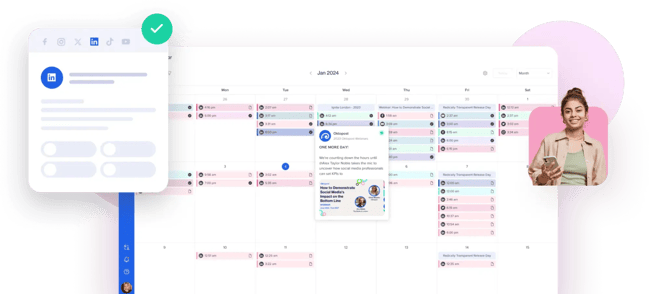
Oktopost is a social media management platform for B2B marketers that monitors and measures all social media activities. Oktopost even tracks conversations about a brand from more than 75 million unique websites.
Oktopost also makes it easy to see who’s discussing a brand positively. Marketers can see which influencers and thought leaders already love what they do. Influencer marketers can then spot brand advocates that they can partner with.
One of my favorite Oktopost features is the social employee advocacy application, which isn’t typically included in social media software. In one place, you can create posts for your employees to share, creating more brand awareness and even generating leads.
Key Features
- Tie Oktopost to B2B social media marketing goals.
- Use PDF sharing and tracking to easily share engaging content with audiences.
- Use advanced reporting to determine social media ROI.
- Publish content to LinkedIn, Facebook, X, Instagram, YouTube, and even WeChat.
- Integrate Oktopost with HubSpot CRM to engage and converse with prospects, score leads based on engagement, enhance nurturing programs, update contact records, and inform sales of any negative sentiment coming from prospects on social media.
What I like: The Oktopost mobile app makes it easy to manage posts from your phone, especially on LinkedIn.
Price: Book a demo for pricing.
11. Mention
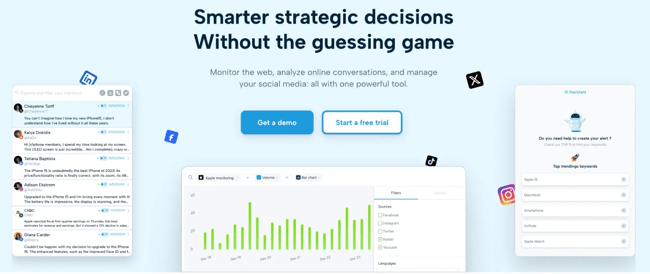
Mention is a social listening software that has the capacity to track over a billion content sources across 44 languages to monitor brand mentions all over the world. Users can also select what content they’d like Mention to tune out, so they’re only paying attention to trends that matter. Say goodbye to bots and hello to real customers!
Mention’s competitive analysis tool lets you compare your brand against two or more competitors so you can ensure your content is always relevant, timely, and unique to your brand when compared to other industry leaders.
Key Features
- Effectively manage any social media uproar or crisis situation with the Crisis Management feature.
- Use the Team feature so employees can collaborate on social media management efforts and alert each other when they need help.
- Use the social listening software to track success with any compatible platform, including Facebook, Instagram, and X.
What I like: Mention offers a variety of report templates that are easy for analytics beginners, as well as custom options for more experienced users.
Price: Plans start at $599.
HubSpot's Social Media Management Software
Time-saving tools to help you prioritize your social interactions — so you can connect with the people who matter most.
- Manage campaigns.
- Monitor mentions.
- Attribute value.
- And more!
Best Budget-Friendly Social Listening Tools
Short break in this list to explain why your brand might opt for a budget-friendly social listening tool before buying a paid subscription.
The truth is not every brand needs enterprise-level social listening — especially when they’re just starting out or validating their strategy. Budget-friendly and free social media monitoring tools can deliver surprising value when used strategically.
When free social media listening tools make sense:
- Testing the waters. The team is new to social listening and wants to understand its value.
- Limited volume. The team sees fewer than 100 mentions per month.
- Single platform focus. The team primarily needs to monitor one or two networks.
But here’s when it’s smart to upgrade social listening tools:
- Growing volume. The team is drowning in mentions and needs better filtering.
- Team collaboration. Multiple people need access to and assigned workflows.
- Advanced insights. Teams need sentiment analysis, competitor tracking, or trend detection.
- Reporting requirements. Stakeholders expect professional reports and dashboards.
Be warned, free social listening tools often come with some limitations. They’re great for testing the waters, but they’re built for exploration. You’ll get basic visibility into mentions and keywords, but with limited data, features, and integrations. As soon as your volume grows or you need more support, you’ll want to upgrade to a paid plan that supports real-time insights and CRM-connected actions.
That said, here are the best budget-friendly social media listening tools on the market.
12. Buffer
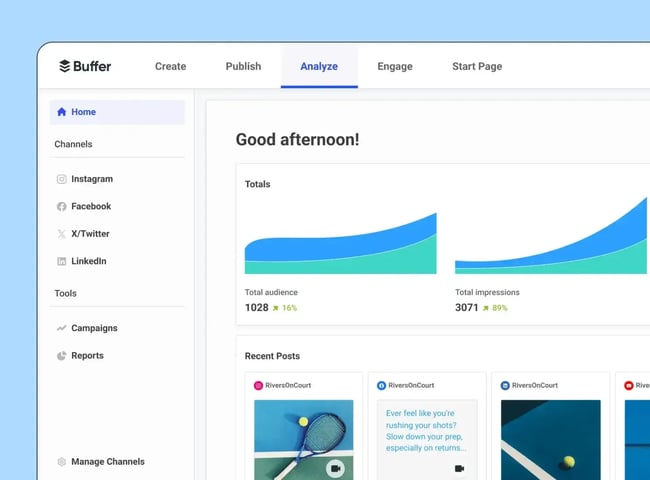
Buffer creates an omnichannel experience for social media and community teams. For individual users or small businesses just getting started with social media, the free plan is a great option, as it lets users connect up to three social media channels.
The tool also makes it easy to find the conversations that matter most, join them right away, and delight digital audiences. Marketers can post content and engage directly in replies from one centralized dashboard through a team-shared inbox.
Key Features
- Plan effective social campaigns using the scheduling and publishing features.
- Integrate with Facebook, X, Instagram, TikTok, LinkedIn, Pinterest, and Google Business Profile.
- Use the story monitoring feature to record and analyze stories on channels like Facebook and Instagram.
- Monitor team performance by measuring engagement and audience behavior with the reports and analytics tools (paid plans only).
What I like: The free version includes a landing page builder and an AI assistant to help you create social posts faster.
Price: Free and paid plans are available.
13. Awario
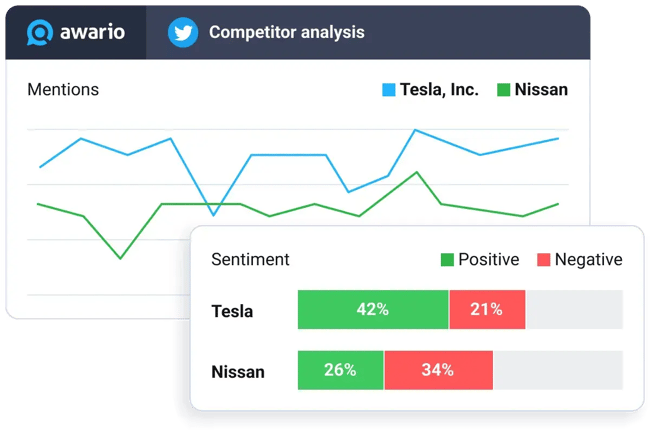
Awario is a social listening tool focused on building brand awareness that tracks keywords in any language. Awario is a great solution for companies that want to grow their international customer base through social media engagement.
The platform provides everything marketers need to not only monitor and respond to comments but also build meaningful relationships with their target audience on social platforms.
Key Features
- Pair the social listening software with blogs, forums, and external websites using the API (Enterprise plan only).
- Connect Awario with Facebook, X, Instagram, Reddit, and YouTube profiles.
- Identify influencers by seeing which creators have been mentioning your brand on different social platforms.
- Keep an updated list of new leads so the sales team can pursue them.
What I like: The optional Awario Leads feature helps you build a sales pipeline of social media users seeking out your products.
Price: Plans start at $49 per month.
14. Metricool
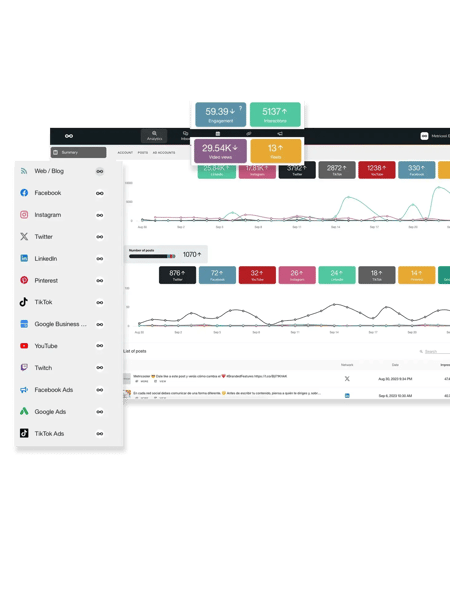
Metricool is an all-in-one social media and digital marketing platform designed to help creators, agencies, and businesses streamline their online presence. It allows users to plan, schedule, publish, and analyze content across multiple social media networks, manage ad campaigns, and build custom reports — all from one central dashboard.
One of the key advantages of Metricool is that it brings together the tasks of scheduling content, monitoring engagement and traffic, analyzing competitors, and reporting results — so you don’t need separate tools for each function. Because it supports both small creators and larger agencies, it can scale to different levels of usage and need.
Key Features:
- Multi-platform content scheduling and auto-publishing with a visual calendar and best-time suggestions.
- Analytics and performance tracking across social profiles, websites/blogs, and ad campaigns.
- Competitor and hashtag tracking to benchmark your work and find opportunities.
- SmartLinks (link-in-bio tool) and AI-powered assistance for content ideas, caption writing, and streamlining workflows.
What I like: Metricool offers branded exportable reports (PDF/PowerPoint) and a unified inbox for messages/comments across networks.
Pricing: Free forever plan, plus paid plans available.
Best Social Listening Tools for TikTok Monitoring
15. Keyhole (Team Plan)
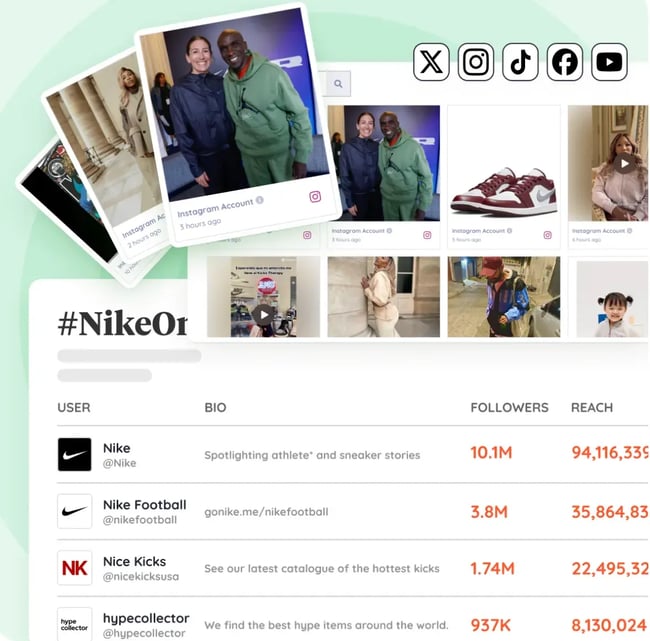
Keyhole is a social listening tool that helps track direct and indirect brand mentions across several platforms, including TikTok, Instagram, Facebook, X, and LinkedIn. With the Team plan, marketers can get thorough TikTok analytics, including competitive analysis and data-driven recommendations for hashtags, video effects, and post times optimized for engagement.
Making the most of TikTok matters. A negative viral video can generate mountains of bad press. On the flip side, a great influencer partnership on the platform can help teams earn business. Keyhole can help with both.
Key Features
- Get unique insights into a brand’s tracked hashtags.
- Use posting recommendations to increase engagement with the brand’s videos.
- Discover trends as they emerge with machine learning-powered trend analysis.
- Use follower insights to get to know the target audience better across several platforms.
What I like: The real-time mention alerts help you capitalize on opportunities while they’re still buzzworthy.
Price: Book a demo for pricing.
16. Iconosquare
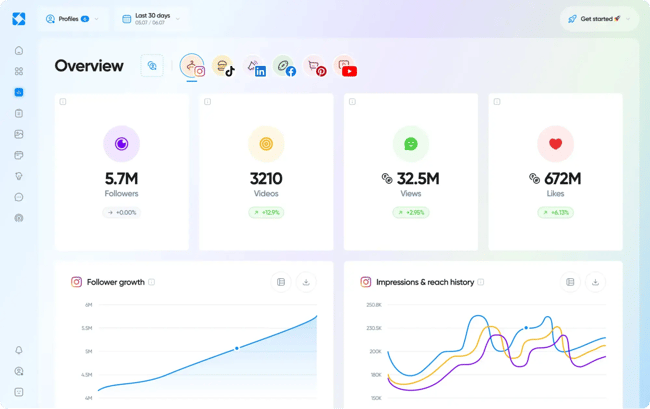
Iconosquare offers solutions for publishing, monitoring, and analyzing social media content and profiles. Iconosquare uses advanced analytics and graphs to measure success on TikTok, X, Facebook, LinkedIn, and Instagram. Learn teams or marketers who wear many hats will find the option for automated reports quite useful. The platform also allows you to moderate comments so you can hide negative mentions.
The tool also allows marketers to schedule content ahead, store content for future use, and preview feeds prior to posting or scheduling. Plus, teams can get real-time engagement information with the tool’s social listening capabilities.
Key Features
- Cross-post social content to different profiles at the same time.
- Monitor, manage, publish, and analyze social content on TikTok, Facebook, Instagram, and X.
- Use the Conversations feature to listen and engage with audience members on the platform.
What I like: Iconosquare can track over 100 different social media metrics, making it easy to customize reports based on what’s most impactful for your brand.
Price: Plans start at $33 per month.
How to Choose the Right Social Listening Tool for Your Goals
Choosing the right social listening tool starts with knowing what you want to accomplish. Are you trying to protect your brand reputation, monitor campaign impact, or generate leads from online conversations?
The best platform isn’t necessarily the one with the most features — it’s the one that fits your goals, workflow, and budget. Here’s how to evaluate your options and set your team up for success.
1. Match the tool to your team’s needs.
Before comparing features, define what success looks like for your organization. Ask:
- Do you need a full social listening platform that integrates with CRM and analytics tools, or a lightweight monitoring app for mentions?
- Will multiple departments use it (marketing, sales, service, PR)?
- How important are AI capabilities, sentiment analysis, or competitor benchmarking?
Pro tip: Start with a trial period for 1–2 top contenders and run them side by side for a week. You’ll quickly see which aligns best with your workflows.
2. Implement with a clear listening strategy.
Even the most powerful social listening software only works if it’s set up intentionally. Start by identifying the conversations that matter most.
Quick implementation checklist:
- Define your primary goals (e.g., customer insights, crisis monitoring, trend detection).
- Build keyword lists for your brand, competitors, and industry terms.
- Set up alerts and sentiment filters for real-time visibility.
- Integrate your tool with your CRM or marketing automation platform (HubSpot makes this seamless).
- Assign clear ownership for monitoring, reporting, and engagement.
Pro tip: Once configured, review data weekly to refine filters and uncover insights you may have missed early on.
3. Track the metrics that matter.
To prove the ROI of social listening, focus on metrics that connect directly to business outcomes, not just mentions or follower counts.
Key social listening metrics to track:
- Share of voice. Your brand’s presence compared to competitors.
- Sentiment trends. Changes in positive, neutral, or negative mentions over time.
- Response rate and time to reply. Indicators of customer engagement efficiency.
- Emerging keyword frequency. Early signals of market or product trends.
- Conversion opportunities. Leads or pipeline value generated through social conversations.
Expert suggestion: Labunski says, “Measuring the business impact of social media activity requires UTM parameters and CRM tagging to track conversions to their initial touchpoint on social media. Integrate social listening into the sales funnel to create significant value.”
Pro tip: Pair these insights with CRM data to see how listening influences conversions, retention, and advocacy.
4. Turn insights into action.
The most successful teams close the loop by acting on what they learn. Share key takeaways from your listening reports with stakeholders in marketing, product, and customer success.
When teams across your organization can see what your audience is saying in real time, you move from reacting to conversations to leading them.
Pro tip: Integrate your social listening dashboard with your HubSpot CRM to automatically tag contacts based on mentions, sentiment, or intent keywords. That way, every conversation becomes part of your customer story — from first impression to closed deal.
FAQ: Social Media Listening Tools
Which social media listening tool is best for my business size and budget?
The best social media listening tool depends on how complex your needs are.
- Small businesses can start with budget-friendly options like Awario or Buffer, which offer strong monitoring and sentiment tracking at accessible prices.
- Mid-sized teams often choose Hootsuite or Sprout Social, which combine social scheduling with in-depth analytics.
- Enterprises and agencies benefit from HubSpot or Brandwatch, where listening, publishing, CRM, and reporting are all connected.
If your goal is to tie social insights directly to sales and service performance, an all-in-one platform like HubSpot delivers the highest long-term ROI.
What features should I look for in a social media listening tool?
Prioritize tools that make data actionable, not just visible. The best social listening platforms include:
- AI-powered sentiment analysis and keyword clustering.
- Real-time alerts for brand mentions or crises.
- Cross-platform tracking across social, forums, and news.
- Integration with your CRM or marketing automation tools.
- Customizable dashboards and reports for different teams.
If collaboration, analytics, and CRM alignment matter to you, an integrated suite like HubSpot will save significant time and context switching.
How much do social media listening tools cost, and what’s the ROI?
Pricing for social media listening tools varies widely — from free plans with basic tracking to enterprise solutions that start around $250–$900 per month. The ROI depends on how effectively your team turns insights into action.
When done right, social listening can drive measurable returns through:
- Faster response times and better customer retention.
- Early detection of brand or PR risks.
- Data-driven content and product decisions.
- New leads from intent-based conversations.
Social listening ROI is measured by KPIs such as share of voice, sentiment trends, engagement rates, and conversions over time.
What’s the difference between social media monitoring and social listening?
Social media listening tools differ from social media monitoring tools by providing deeper analysis and actionable insights.
Social media monitoring focuses on tracking mentions, tags, and direct interactions — essentially, what’s being said. Social listening goes deeper by analyzing why those conversations happen and what they reveal about customer sentiment, emerging trends, and market opportunities.
Monitoring tells you when someone mentions your brand. Listening tells you what to do next.
How do I set up and implement social listening effectively?
Effective social listening implementation requires clear goals, keyword setup, tool selection, alert configuration, and action on insights. To implement social listening successfully:
- Define clear goals — reputation management, lead generation, or customer insight.
- Build keyword lists for your brand, competitors, and industry topics.
- Set up sentiment filters and real-time alerts for spikes in conversation.
- Assign ownership for responding, reporting, and escalating insights.
- Integrate your listening tool with your CRM (HubSpot automates this easily).
Start small — one campaign, one listening goal — and expand as your team gains confidence in interpreting the data.
Which social listening tools offer the best AI-powered features?
AI is rapidly transforming social listening. The most advanced platforms — HubSpot, Brandwatch, and Sprout Social — now use machine learning to detect sentiment, summarize trends, and even recommend responses.
- HubSpot: Uses AI to automate sentiment tagging, summarize insights, and alert sales when high-intent mentions appear.
- Brandwatch: Offers deep consumer intelligence with AI-powered topic clustering and multilingual analysis.
- Sprout Social: Delivers AI-assisted content suggestions and conversation analysis for trend detection.
AI-powered social listening tools don’t just collect data — they help you predict and act on it faster.
Do I need technical skills to use social media listening tools?
Most modern social media listening tools are user-friendly with intuitive dashboards, so no coding or advanced technical skills are required. Many offer guided setups, templates, and tutorials. If you’re interested and able, advanced users can explore API integrations and custom analytics.
How long does it take to see results from social listening?
It depends on what your goals are and how you plan to use the social media listening tools, but some results will be evident immediately, while you’ll have to wait longer for others.
- Initial insights appear within hours or days of setup.
- Trend and sentiment analysis improve over time with more data.
- Long-term benefits — like improved brand reputation — emerge in weeks or months.
Regardless of what you’re hoping to achieve, consistent monitoring delivers the best results.
Can social media listening tools monitor private social media accounts?
No, social listening software can only access publicly available data. They monitor public posts, comments, hashtags, and mentions. Private messages or closed-group content remain inaccessible, which ensures compliance with privacy and data protection laws.
How do social media listening tools integrate with CRM or marketing platforms?
Most social listening tools offer native integrations with popular CRMs (e.g., HubSpot, Salesforce). If not, APIs allow for custom connections to marketing dashboards. Data sync enables unified customer insights and engagement tracking.
Integration is essential because it helps turn social data into actionable sales or supports leads.
Social Media Listening Tools to Add to Your Tech Stack
Social media listening tools help businesses track, analyze, and respond to online conversations about their brand, competitors, and industry. The best tools offer real-time monitoring, AI-powered sentiment analysis, and seamless integration with your marketing stack.
When choosing a social listening platform, compare features, pricing, supported networks, and integration options to match your business size and goals. For a unified approach, consider solutions like HubSpot that connect social listening with CRM data.
Ready to get started? Try a leading social listening tool free today.
Editor's note: This post was originally published in January 2019 and has been updated for comprehensiveness.
HubSpot's Social Media Management Software
Time-saving tools to help you prioritize your social interactions — so you can connect with the people who matter most.
- Manage campaigns.
- Monitor mentions.
- Attribute value.
- And more!
Social Media Marketing