

However, when developing and executing a sound SEO strategy for your business, just creating content for the keywords your customers are searching for is both arduous and wrong.
In this post, we’ll explain an SEO strategy and how you can create your own to help you meet your content marketing goals.
Know precisely what you need? Jump to one of the following sections:

What is an SEO strategy?
An SEO strategy is a process of organizing a website’s content by topic to improve the likelihood of appearing in search results. Essentially, it is the process you follow to maximize the opportunity to gain organic traffic from search engines.
.png)
Complete SEO Starter Pack
An introductory kit to optimize your website for search.
- Increase your organic traffic.
- Plan your keyword strategy.
- Debunk SEO myths.
- Build a blog strategy.
Download Free
All fields are required.
An SEO strategy is essential because it helps you stay on track when creating content. Instead of just making what you think people are looking for, your plan will ensure you create content people search for.
For content marketing, an SEO strategy is a critical piece of the puzzle because it is how your content will be seen in the first place, especially in search engine result pages (SERPs). If your content is scattered and unorganized, search engine bots will have more difficulty indexing your site, identifying your area of authority, and ranking your site pages.
Mobile SEO Strategy
Keeping mobile SEO in mind when creating your overall strategy is crucial. Mobile optimization ensures your site and content are available and accessible to visitors on mobile devices. (That means they can have the same experience and receive the same value as desktop browsers.)
Mobile optimization is also essential because Google practices mobile-first indexing. Instead of crawling a desktop site, the algorithm will use the mobile version of your site when indexing and ranking pages for SERPs.
Aside from mobile-first indexing, mobile SEO strategy also matters to consumers. According to HubSpot Blog’s 2023 Web Traffic & Analytics Report:
“54% of consumers use their phones most often when looking up a question on a search engine.”
Over half of online shoppers pick up their phones to ask questions that may lead to purchases. Optimizing your site to reach and capture that market share makes sense when all's said and done.
While it’s not an entirely separate process, there are distinct considerations for mobile SEO, like monitoring page speed, responsive site design, local SEO, and creating high-quality content, regardless of the device it’s viewed on.
Expert Insight
I spoke with Mersudin Forbes, a p ortfolio SEO director and agency advisor with 15 years of experience in SEO.
“When it comes to thinking about a mobile strategy for SEO, it is important to think about how a user is seeking to complete their desired transaction and ensuring that this matches their expectations on mobile,” says Forbes.
Forbes explains that it’s not only Google that practices a mobile-first indexing system but most search engines. So, ensuring that relevant content and functionality is surfaced on mobile remains essential.
Pro tip: “You may also want to test your website speed by throttling page speed tests to 3/4G to ensure that user experience and page responsiveness don't decline with less bandwidth,” says Forbes.
What is a search engine optimizer (SEO)?
Search engine optimizers (SEOs) optimize websites to help them rank higher on SERPs and gain more organic traffic. A search engine optimizer is a highly specialized content strategist who helps a business discover opportunities to answer people's questions about their respective industries.
There are three types of SEO that an SEO strategist can focus on:
- On-page SEO. This SEO focuses on the content on site pages and how to optimize it to boost the website's ranking for specific keywords.
- Off-page SEO. This SEO focuses on links directed to the website from elsewhere. The number of backlinks a site has from reputable sources helps you build trust with search algorithms.
- Technical SEO. This SEO focuses on a website's backend architecture, like site code. Google cares just as much about technical set-up as it does content, so this position is essential for rankings.
Bear in mind that every business has different objectives, so it’s an SEO’s job to examine their industry, determine what their audiences care about, and develop a strategy that gives them what they’re looking for.
Below, I’ll go over some steps you can take to ensure your SEO strategy sets you up for success.
Complete SEO Starter Pack
An introductory kit to optimize your website for search.
- Increase your organic traffic.
- Plan your keyword strategy.
- Debunk SEO myths.
- Build a blog strategy.
Download Free
All fields are required.
SEO Strategy for Beginners
I’ve been an SEO for the more significant part of the past decade, and I can tell you that our industry has never seen anything like this before.
The search landscape is no longer the same in 2024. With the advent of search AI and AI-generated content, we must implement new approaches to keep our sites ahead of unprecedented competitive challenges.
The good news is that the basics of SEO remain the same. Focus on the user first, always. Focus on helping them, always, and not just gaming the algorithm. Your goal isn’t just to rank highly — it’s to get the right content in front of the right people.
I will walk you through a basic SEO strategy I would use to start a site in 2024 for the first time. Later, below, I’ll cover a more sophisticated SEO content strategy that has generated millions of organic traffic visits for the HubSpot blog.
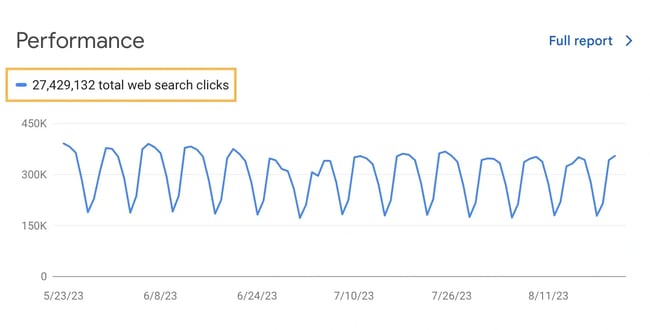
Let’s get started.
1. Search for your company’s head term on Google.
If I were trying to start an SEO strategy in 2024, my first step would be to look for my company’s head term on Google.
“Head term” refers to the general word or phrase you’d use to describe your product, service, or even the topic you’d like to write about. If I were trying to launch HubSpot for the first time, I would look up “marketing software,” our product’s head term.
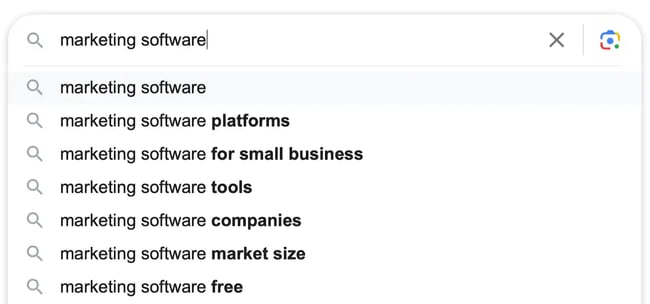
And if I were trying to start a blog about publishing, I’d look up “publishing blog.”
Head terms are usually high-volume, meaning many people search for the terms every month. That makes them more challenging to rank for.
What we’re trying to do with this step is not find keywords but rather build our awareness of the search landscape. Take note of everything you see, including the terms suggested after you type in your head term.
We don’t need to use any fancy tools yet, though you’re welcome to use them if you’re familiar with SEO tools. With Semrush, for instance, you can look at the exact number of searches a term receives and an estimation of how difficult it’d be to rank on the first page.
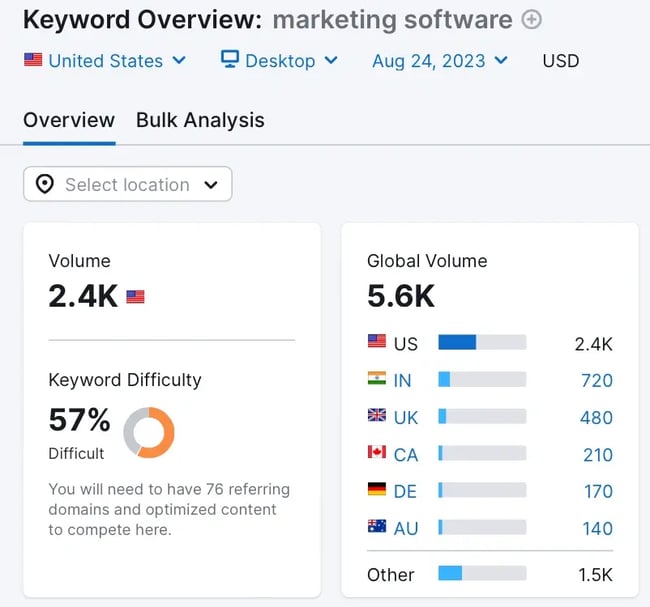
But I’d caution against using tools just yet. Looking directly at the SERPs as you create an SEO strategy is crucial because Google comes up with new SERP features daily.
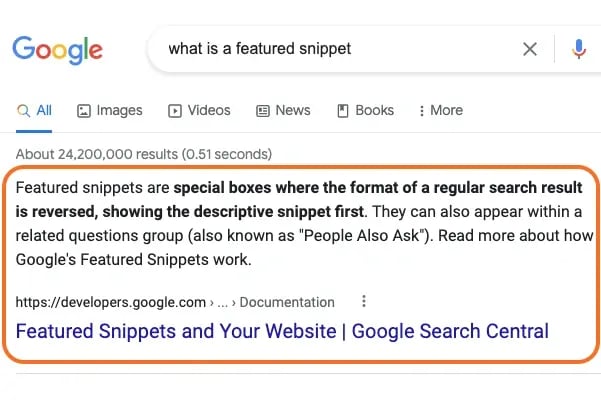
I’m not just talking about AI-generated results. Featured snippets, local packs, image packs, knowledge packs, and “People Also Ask” boxes can be valuable sources of information that can help you optimize your website later.
2. Look at Google’s suggested searches and filters.
After looking up your head term, the most critical step is to look at Google’s generated filters, highlighted below.

Don’t look at the standard filters, such as “Images, “Shopping,” “Maps,” and so on. You’re looking for the unique filters Google generated for your head term.
These filters are invaluable for answering several questions:
- What are people looking for that's related to your head term?
- What would they find most useful?
- Does your service or product match what people are looking for?
- Can you offer a product page or article that people would find helpful?
If I were building a product page for Marketing Hub, I would be able to answer these questions favorably. Marketing Hub is free, small businesses can use it, and it’s useful for digital marketing.
That means I could probably address a person’s goal when they’re looking for this term. This is good strategic information to have. I wouldn’t execute it just yet because I haven’t considered how difficult it is to rank for this term.
Remember: Head terms are more difficult to rank for, so you’ll want to aim for longer keywords (also called “long-tail keywords”) in your SEO strategy. You can begin getting ideas on long-tail terms by clicking on the filters below your head term.
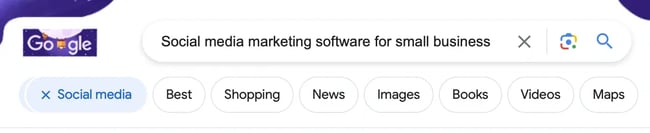
Now, for my publishing blog, I see that I could focus on the publishing industry or self-publishing, as seen by the filters below.

That’s good news — but later down below, I see that Google has included a “What to read” search feature.
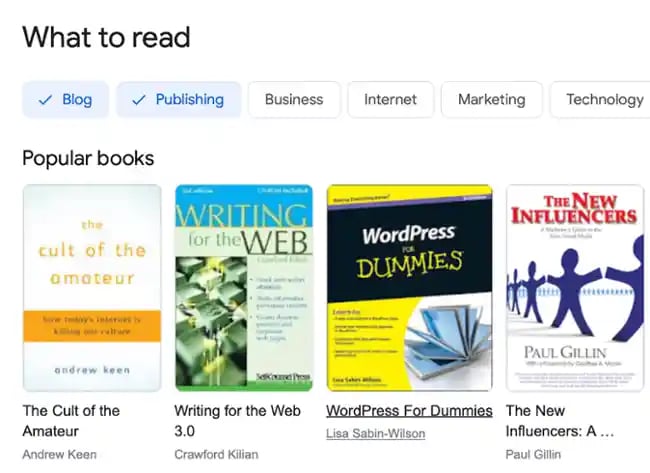
That tells me that a blog could be a good fit for this term but that people are also looking for books on publishing. I would then revise my initial head term or revise my blog strategy to slant toward thought leadership.
3. Examine the SERPs.
Once you’ve found a good head term and perused the filters, take a look at the SERPs. I’d recommend going several filters deep so you can get an approximation of a long-tail keyword.
We’re looking for several pieces of information here:
- How many people are trying to rank for this term?
- What kinds of publishers and companies are ranking? Well-known publishers like the New York Times or Nerdwallet, or niche publishers and companies?
- What is located “above the fold” (the area in the upper part of the page before the user scrolls)?
- What SERP features is Google including?
- What kinds of pages and articles are ranking?
For “marketing software for small business,” a relatively long-tail keyword, I saw that Google delivered 850M+ results.
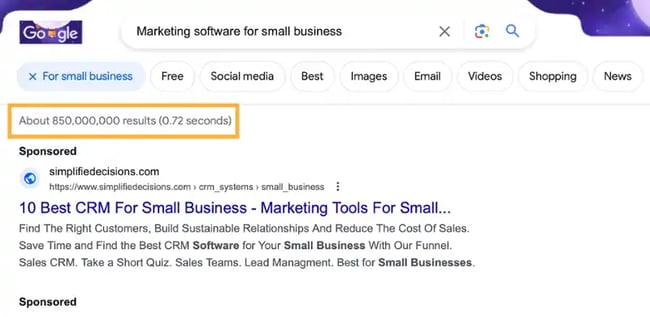
Yikes. That’s a lot of competition.
But the truth is Google has excellent crawlers. It will find just about any website related to a term and rank it to answer a searcher’s query. Don’t be discouraged by large search results.
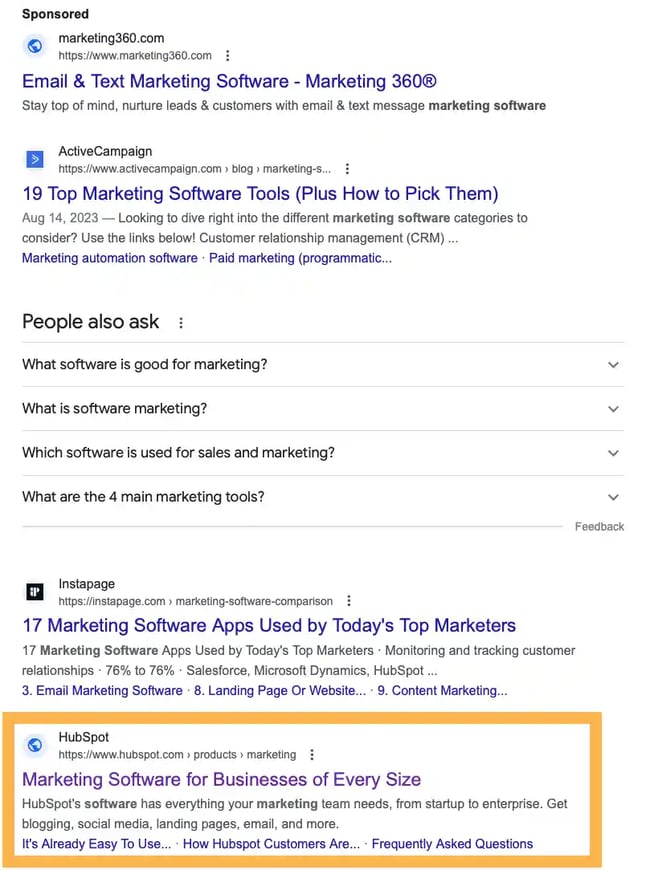
You should pay close attention to what’s happening in the results themselves. For instance, “marketing software for small business” has multiple SERP features:
- Sponsored ads.
- “From sources across the web” product panels.
- A “People also ask” box.
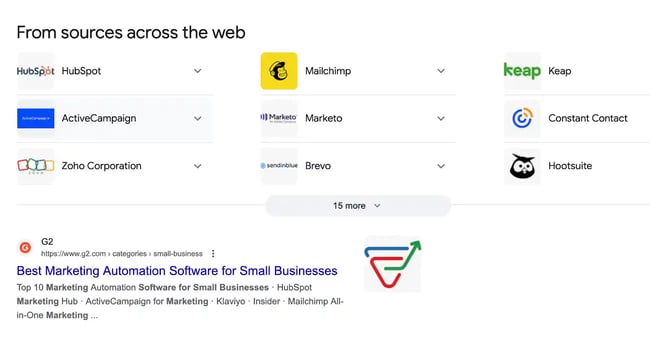
Yikes again. All of these conspire to give us fewer chances for ranking for this keyword because the SERP features push us down, and we’re already competing against publishers like G2.
Even if we managed to rank on the first page, our click-through rates would probably be lower because this is such a competitive term. Click-through rate refers to the number of people who see your search result compared to the number of people who actually click on it.
I would do one of the two things below:
- Search for an even longer long-tail keyword to try to rank for.
- Continue examining the SERPs for opportunities related to the same search intent, like related searches and FAQs.
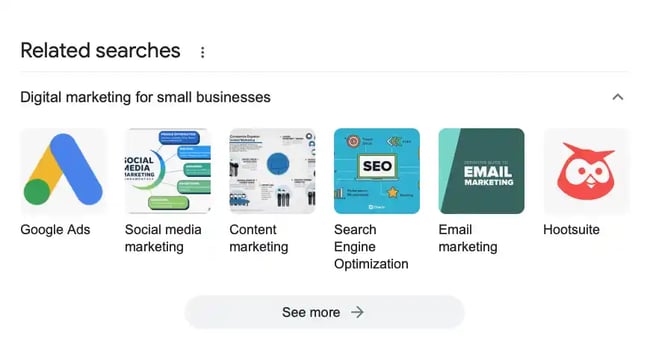
Search intent refers to what the user wants to do when they input a keyword in Google.
If I search “how to bake kale chips,” then I intend to not only bake kale chips but also stay “healthy.” As smart as it is, Google would deliver both recipes and related questions about kale chips’ “health value.”
The SERP features for “marketing software for small business” are all supposed to serve a single intent: A searcher who wants to market their small business using software.
Therefore, every SERP feature you see is an additional opportunity to serve content to the same searcher.
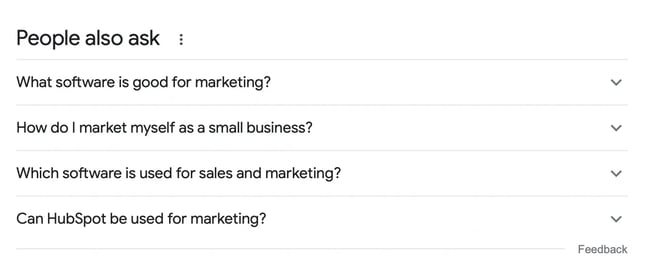
The “People also ask” box is a gold mine for finding related questions that the same user probably has, giving us an opportunity to answer those questions.
With SEO, what matters most is not just that your page ranks — but that the right user finds you and ends up becoming a customer (or signing up for your newsletter, subscribing to your YouTube channel, etc).
If I were creating an SEO strategy for Marketing Hub in today’s search landscape, the “People also ask” box is probably where I’d start for keyword and content ideas, and not the head term itself.
The questions, after all, serve the same user and are much less competitive.
You could also use a tool such as Answer the Public to find questions and related terms.

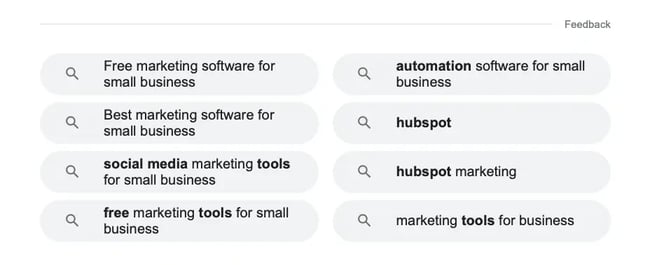
Of course, don’t forget a classic: Looking at suggested searches at the bottom of the SERPs. These will give you alternative terms you could try to rank for and additional long-tails and hints about your top competition.
4. Analyze your competition.
When you find a keyword you’re happy with, it’s time to start looking at your competition.
I would say that with SEO, it’s less about what we do and more about what they do than beating them. The thing is, though, that how we beat competitors has changed. It’s no longer about who has the longest blog post or the most backlinks (although these are still important).
The Google search algorithm has gotten more complicated than ever. It’s important to take into account a wide variety of factors like website age, authority, user experience, and even website structure.
Looking at these elements can help you decide what you should put on your website and learn what Google is currently favoring.
When trying to rank for the term “publishing blog,” I found three top competitors: Selfpublishing.com, thatpublishingblog.wordpress.com, and janefriedman.com.
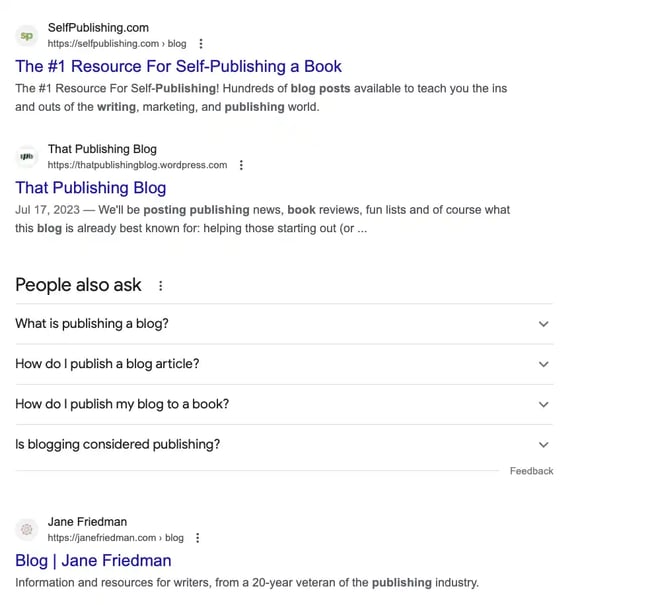
I would look at several things when trying to beat these competitors.
- What kind of content do they publish?
- What kinds of categories do they address?
- What’s the publishers’ or owners’ personal and professional history? Jane Friedman, for instance, is a known industry veteran.
The first question, in particular, is essential for mapping out my SEO content strategy.
For instance, selfpublishing.com has the following categories:
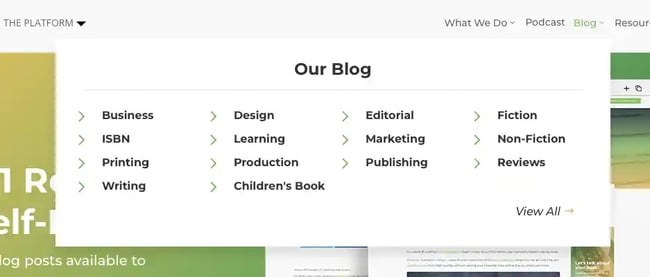
If you’d asked me years ago how I would approach beating this publisher, I would say that I would copy all of their categories and add three more just for kicks.
But Google is no longer the same. It values authority and expertise. It wants to know that you know what you’re talking about and that you’re not just gaming the system.
Therefore, based on my personal expertise, which is in children’s fiction, I’d probably choose two to three categories where I feel I could create a wealth of content: Writing, Children’s Fiction, and Publishing.
If I were trying to rank for “marketing software for small business,” I would ask:
- What kinds of articles or pages are ranking?
- Because this is such a competitive term, what kind of authority or history do I need to rank?
- Could I create something similar?
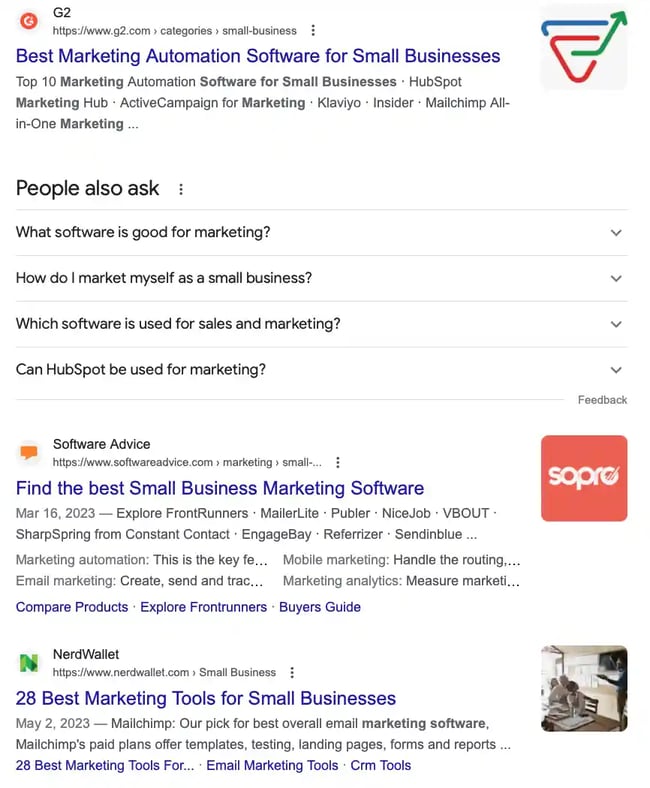
Look at your competitors’ pages, and keep their qualitative attributes, such as their history in the industry, in mind. But don’t be discouraged by long-time industry players.
When I was an SEO at a transportation startup, we were competing against transportation companies that had been in the industry for 30+ years.
But with a strong content SEO and backlink-building strategy, we managed to get one of our transportation partners to the top of the SERPs.
Once you’ve scanned your competitors, it’s time to dive into a simple three-pronged strategy:
Authority, content, and backlinks.
Complete SEO Starter Pack
An introductory kit to optimize your website for search.
- Increase your organic traffic.
- Plan your keyword strategy.
- Debunk SEO myths.
- Build a blog strategy.
Download Free
All fields are required.
5. Generate online authority.
If content is queen and backlinking is king, authority is the kingdom.
Authority, in fact, is everything.
These days, SEO isn’t just about writing SEO-optimized content and hoping the algorithm will discover you.
Once upon a time, you used to be able to include the keyword in the title, headings, and text and rank well.
Now, there are a wide variety of content quality factors that Google takes into account, such as:
- Expertise.
- Experience.
- Authority.
- Trustworthiness.
Collectively, these are called E-E-A-T, and they’re part of Google’s Search Quality Rater guidelines. Google wants to know that you’re qualified to deliver information to searchers. And if you’re selling a product, it wants to know that you’re legitimate.
Let’s go back to the publishing blog example. Jane Friedman, who ranks #3 for the term “publishing blog,” is a well-documented industry veteran. Her site ranks for 30K+ keywords, and she has more than two hundred thousand backlinks.
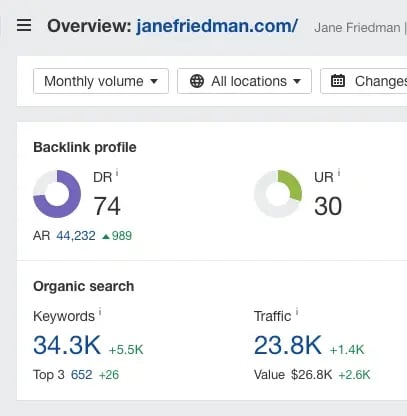
Her blog post, “How to Find a Literary Agent,” ranks #1 for the highly competitive head term “literary agent,” above top publishers such as Reedsy and even Wikipedia.

Why?
Because Friedman has plenty of E-E-A-T — she’s an expert with experience, and therefore, she’s authoritative and trustworthy.
There are several ways to build your authority when creating an SEO strategy for a new site or company:
- Include your credentials across several sources on the web: LinkedIn, Facebook, your personal website, etc.
- Interview experts and include their insights in your pages and blog posts.
- Hire freelance writers who specialize in your niche, and use their name, content, and insights on your website.
- Publish guest blog posts in authoritative blogs and websites to slowly build a digital footprint.
The Google algorithm is smart. It can cross-reference hundreds of thousands of sources to determine whether you’re an authority in the field.
To make it a bit easier for the algorithm, you should also make your authority clear, as Jane Friedman does below in her biography.
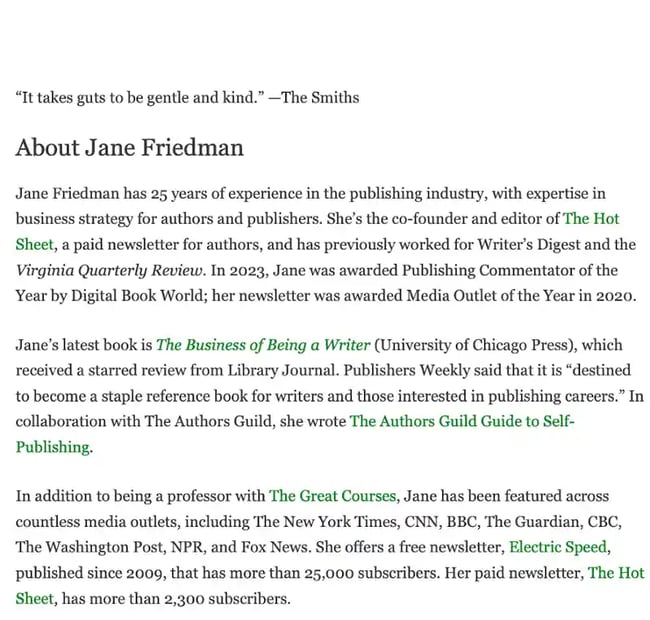
If I were launching Marketing Hub for the first time, I would:
- Cite my nearly decades-long digital marketing experience on the “About” page.
- Publish guest blog posts on marketing blogs and websites.
- Start another media outlet, such as a podcast or blog, to publish my marketing opinions and insights.
- Publish an ebook with my marketing expertise.
- Hire software developers who’ve created proven products before — and publicize that Marketing Hub was made by the developers who made X.
As you foster authority, you should concurrently create content on your website, which I cover next.
6. Create search engine optimized content.
This step is probably what you thought of when I first started talking about an SEO strategy. And for good reason. According to the web analysts and SEO experts surveyed for HubSpot Blog’s 2023 Web Traffic & Analytics Report:
“Optimizing your on-page content around target keywords is the most effective strategy for ranking highly in SERPs.”
Remember all that research we did at the beginning? It finally comes into play because it’s time to create content that’s optimized for those long-tail keywords.
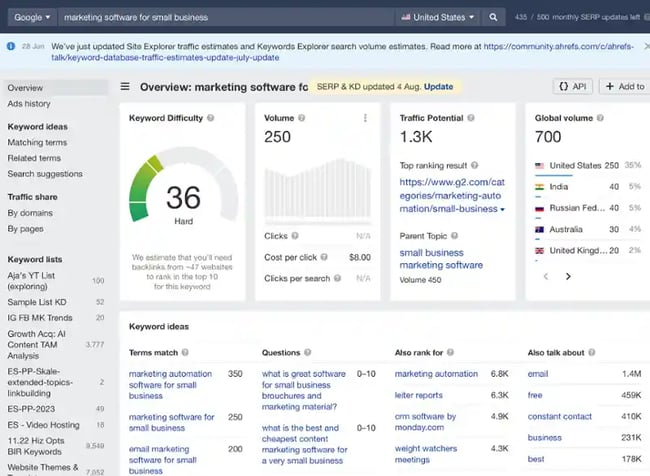
I recommend using a tool to help you find potential keywords, such as Ahrefs or Semrush.
Here’s a guide on keyword research to help you out.
I follow one simple rule when creating content I want to rank: Write for humans first, search engines second.
I like to think of it this way. I’m writing an article or page to help a person. But also to hold the algorithm’s hand a little bit. Google is smart, but not so smart to rank your page unless you give it a few hints.
Therefore, I like to stick to the basics.
1. Include the Keyword in the Page Title, H1, Text, Meta Description, and URL.
I generally include the keyword a few times on and off your page to give Google a hand.
As an example, our product marketing team optimized Marketing Hub’s page to a T.
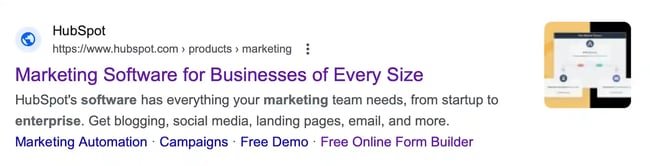
What we like: They include the keyword in the page title (which is the text that appears in search results, pictured above), the H1, and the very first line of text at the top of the page.
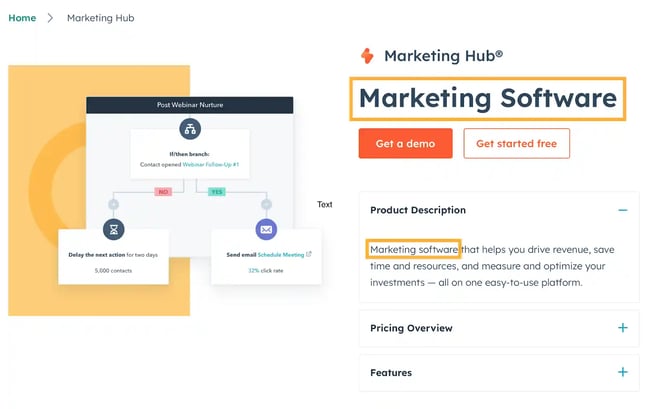
And, it works: We rank #3 for the highly competitive term “marketing software.”
You’ll also want to include your keyword in the meta description and the URL.
2. Be helpful.
Be helpful with your content. Ask yourself: When a person lands on this page, what would they be looking for?
You can answer this question by examining the SERPs and your competition. You can also think through your reader’s thought process and their search intent.
For Marketing Hub, we included commonly asked questions, even those related to one of our competitors.
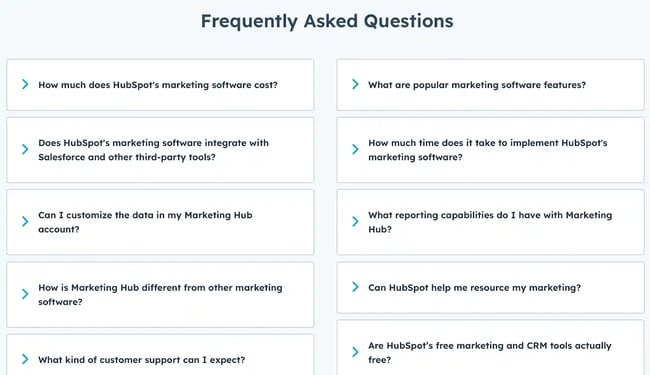
And Jane Friedman includes information on what to expect from a good literary agent.

What we like: Notice that this content is not necessarily beautifully formatted, nor does it target a specific keyword. It’s supposed to help the reader first and foremost — and by helping the reader, you help yourself.
After all, Google only wants to rank content that genuinely helps someone do or learn something.
3. Include alt text and compress images.
Image alt text still remains one of the most underrated ways to optimize your page.
Not only does it improve web accessibility, but it gives you a chance to rank in Google’s image pack and image results. That ultimately means more traffic to your website.
And if you don’t believe me: Here’s a traffic snapshot from HubSpot’s image pack rankings (look under the column titled “Traffic”).
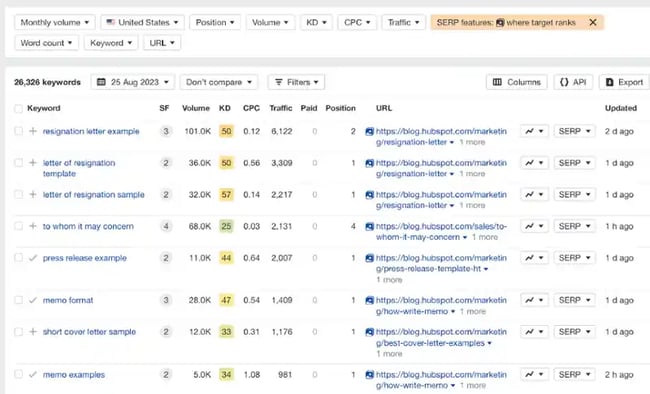
Just from our position for “resignation letter example,” we’ve received more than 6K organic visits.
Not surprisingly, the image that ranks has the alt text “gracious resignation letter sample.”
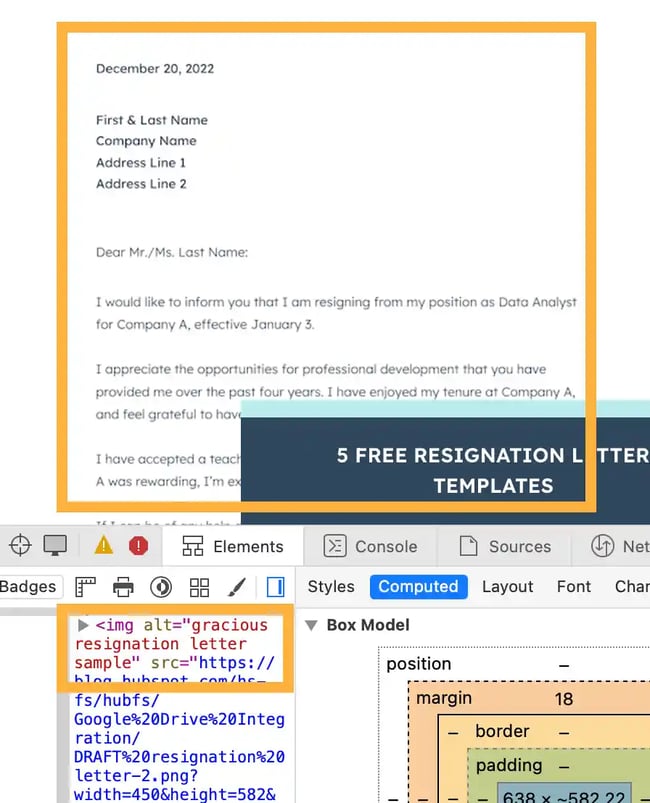
In addition to describing what the image contains, you should include your keyword in the alt text to give you a better chance of ranking.
Lastly, don’t forget to compress your images so that your page loads more quickly.
4. Build Internal Links
After creating content, internal linking is paramount.
It creates a network for Google to follow. Remember, the Google algorithm is smart, but it still needs a hand here and there. How will it know certain pages are topically related unless you tell it?
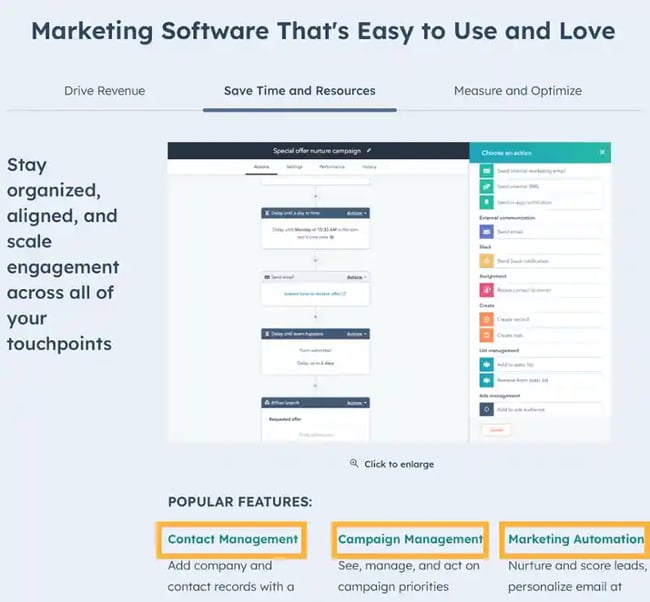
So, by internally linking from one page to another, you’re giving the algorithm a pattern to follow.
At the HubSpot blog, we call this the pillar-cluster model, which helped us overcome a year-long traffic plateau.
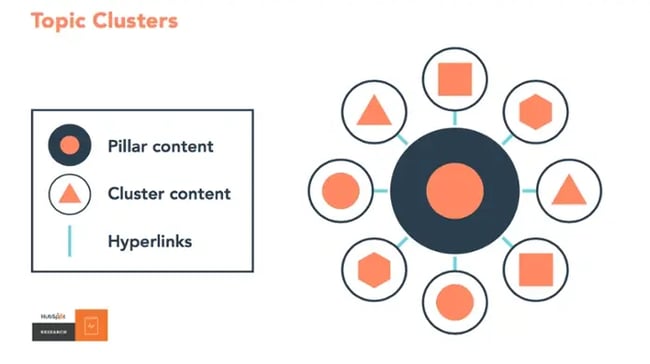
By internally linking, you’re telling the algorithm that a number of your pages are interrelated. You’re also signaling that you cover specific topics at length and that you’re, therefore, an authoritative resource.
And authority is everything.
Expert Insight
I reached out to Nedim Mehic, who has 10 years of experience in SEO. He’s also the founder of Beki AI, an internal linking software.
“As an internal linking software founder, I might be biased, but I can confidently say that in 2024, internal linking remains a pillar of effective SEO strategies," says Mehic.
Mehic explains that by strategically interlinking pages, we accomplish two major goals: “We guide users in navigating the site with ease and assist search engines in effectively understanding and organizing our content.”
Aside from achieving those two goals, internal linking can garner significant results in other areas. “I've seen so many websites find success after improving their internal linking strategy that they neglected for years,” says Mehic.
When I asked what “success” looks like in this context, Mehic cited a user in the beta test phase for Beki AI. The user reported an 800% click increase after adding relevant internal links to a page that was struggling with traffic.
Complete SEO Starter Pack
An introductory kit to optimize your website for search.
- Increase your organic traffic.
- Plan your keyword strategy.
- Debunk SEO myths.
- Build a blog strategy.
Download Free
All fields are required.
7. Build backlinks.
Content is still queen — but she has to be accompanied by her king: Backlinks.
You could have the most beautiful, SEO-optimized website, but Google won’t rank it unless you receive “votes” from other sites.
We’ll cover backlinks again for your SEO content strategy below. However, I can’t underemphasize how important they are, so I’m going to repeat it again.
Backlinks are the most quantitative way to build authority in your industry. The more backlinks you have, the more authoritative you seem to the Google algorithm.
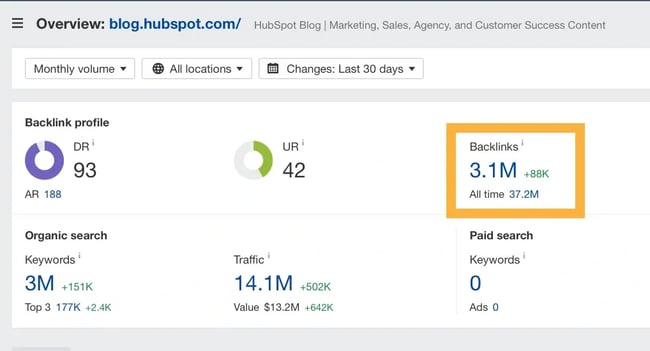
Why? Because a site wouldn’t link to you unless you were a legitimate, trustworthy source of information.
Here's a selection of my favorite backlink strategies:
- Publish guest blog posts on other publishers’ websites and link back to your site.
- Write helpful content that other sites will want to link to.
- Publish original research that other publishers will want to link to.
- Partner with companies on co-marketing campaigns.
- Join industry membership organizations with public profiles.
- Sponsor events and conferences.
Here’s an example of some original research by Design Bundles that generated backlinks.
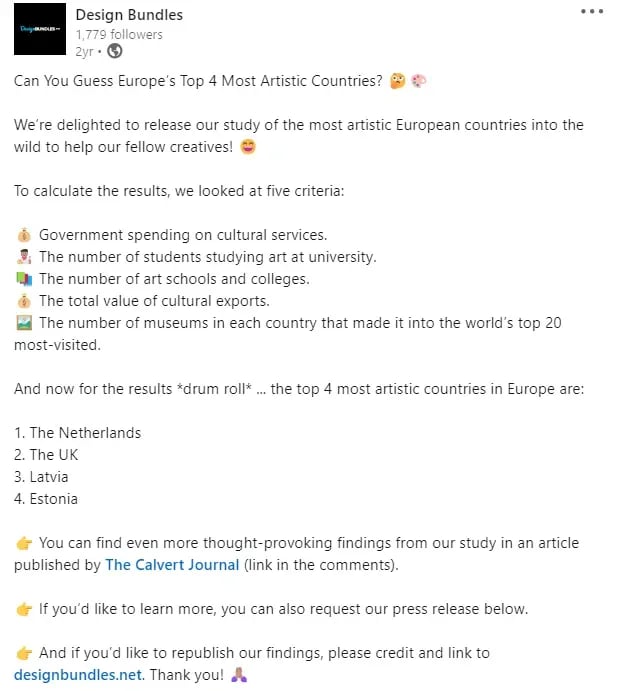
What we like: The research isn’t just compelling but highly tailored to the company’s niche. That means it likely generated relevant backlinks, and thus relevant viewers, to the website. The research methodology is also sound. Plus, we love that Design Bundles repurposed the research and press coverage across its social channels. Here’s how The Calvert Journal featured the research.
Next up, I’m going to dive a little more deeply into the SEO content strategy that’s driven millions of visits to the HubSpot blog.
SEO Content Strategy
- Make a list of topics.
- Make a list of long-tail keywords based on these topics.
- Build pages for each topic.
- Set up a blog.
- Create a consistent blogging schedule.
- Create a link-building plan.
- Compress media files before uploading them to your site.
- Stay up-to-date on SEO news and best practices.
- Measure and track your content's success.
1. Make a list of topics.
To get your SEO content strategy off the ground, make a list of topics you’d like your content to address.
To start, compile a list of about 10 words and terms associated with your product or service. Use an SEO tool (Google's Keyword Tool, SE Ranking, Ahrefs, SEMRush, or GrowthBar, just to name a few) to research these words, identify their search volume, and come up with variations that make sense for your business.
You can also speed up the process with HubSpot’s Blog Ideas Generator. You can type in your main keyword or a brief description of your blog’s contents, and the platform will generate topics, sub-headings, and even drafts based on your input.
The tool also integrates with SEMRush to help you fine-tune the generated output with relevant high-performing keywords.
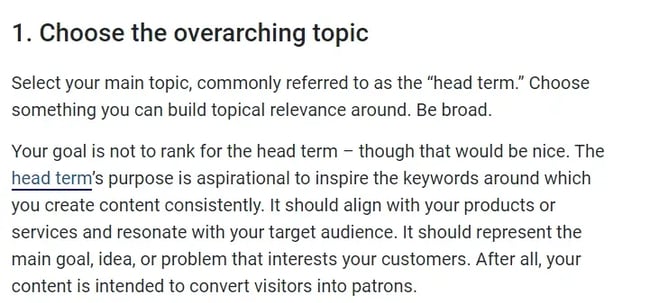
By doing this, you are associating these topics with popular head terms (or short-tail keywords, if you'd prefer), but you’re not dedicating individual blog posts to these keywords. Let’s go over an example of this process using the image below.
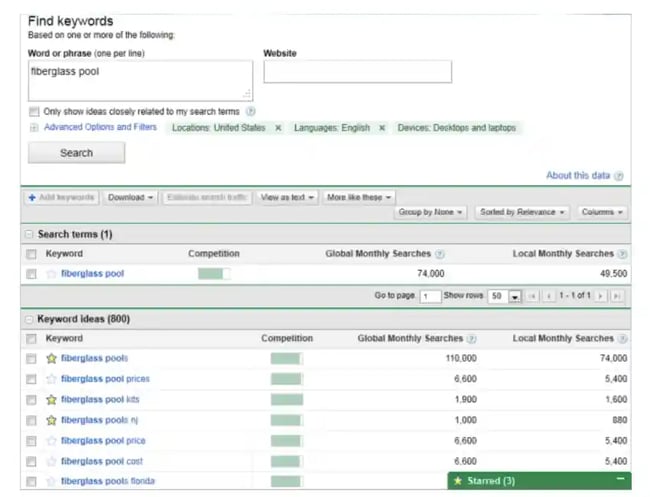
Let’s say a swimming pool business is trying to rank for “fiberglass pools,” which receives 110,000 monthly searches. This short-tail keyword can represent the overarching topic for creating their content, but the business will also need to identify a series of related keywords to include in their content. For example, they could opt to use the “fiberglass pool prices” or “fiberglass pool cost” to achieve additional rankings for the overall keyword of fiberglass pools.
Using search volume and competition as your measurement, you can create a list of 10-15 short-tail keywords that are relevant to your business and are being searched for by your target audiences. Then, rank this list based on monthly search volume.
Each of the keywords that you’ve identified are called pillars, and they serve as the primary support for a larger cluster of long-tail keywords, which we’ll discuss below.
2. Make a list of long-tail keywords based on these topics.
During this step, you’ll begin optimizing your pages for specific keywords. For each pillar you've identified, use your keyword tool to identify five to 10 long-tail keywords that dig deeper into the original topic keyword.
For example, we regularly create content about SEO, but it's difficult to rank well on Google for such a popular topic with this acronym alone. We also risk competing with our own content by creating multiple pages that are all targeting the exact same keyword — and potentially the same SERPs.
Therefore, we also create content on conducting keyword research, optimizing images for search engines, creating an SEO strategy (which you're reading right now), and other subtopics within the SEO umbrella.
This helps businesses attract people who have varying interests and concerns, and ultimately creates more entry points for people interested in what you have to offer.
Use your long-tail keywords to create blog posts or web pages that explain the specific topics within the pillars you’ve selected. Together, all of your long-tail keywords create a cluster around a pillar topic. Search engine algorithms depend on the relationships between clusters to connect users with the information they're looking for.
Here's a short video on this concept:
[Video: Topic Clusters: The Next Evolution of Content Strategy ]
Think of it this way: The more specific your content, the more specific the needs of your audience can be, and the more likely you‘ll convert this traffic into leads. This is how Google finds value in the websites it crawls — the pages that dig into the inner workings of a general topic are seen as the best answer to a person’s query and will rank higher.
3. Build pages for each topic.
When it comes to websites and ranking in search engines, trying to get one page to rank for a handful of keywords can be next to impossible. But here's where the rubber meets the road.
Use the pillar topics you came up with to create a page or post that gives a high-level overview of the topic using the long-tail keywords you came up with for each cluster in step two. These pillar pages can essentially be a table of contents, where you’re giving a description of the main topic and briefing readers on subtopics you’ll elaborate on in other posts.
Ultimately, the number of topics for which you create pillar pages should coincide with your business needs, like the number of products and offerings you have. This will make it much easier for your prospects and customers to find you in search engines no matter what keywords they use.
4. Set up a blog.
Blogging can be an incredible way to rank for keywords and engage your website's users. After all, every blog post is a new web page and an additional opportunity to rank in SERPs. It’s no wonder, then, that marketers cite blogging as the top media format they aim to use for the first time in 2024. (HubSpot’s Ultimate List of Marketing Statistics for 2024)
Long story short? If your business does not already have a blog, consider creating one. As you write each blog post and expand on your clusters, you should do three things:
- Don‘t include your long-tail keyword more than three or four times throughout the page, as Google doesn’t consider exact keyword matches as often as it used to. In fact, too many instances of your keyword can be a red flag to search engines that you're keyword stuffing to gain rankings, and they’ll penalize you for this.
- Second, always link out to the pillar page you created for your topics. You can do this in the form of tags in your content management system (CMS) or as basic anchor text in the body of the article.
- Once you publish each blog post, link to it within the parent pillar page that supports the subtopic. By connecting both the pillar and the cluster in this way, you‘re telling Google that there’s a relationship between the long-tail keyword and the overarching topic you're trying to rank for.
5. Create a consistent blogging schedule.
Your blog should be a trove of information for your prospective customers. That means not every blog post or web page you create needs to belong to a topic cluster. There's also value in writing about tangential topics your customers care about. Doing so will help you build authority with Google algorithms.
But it'll take time to build that authority, so make it a point to blog at least once a week. Remember, you’re blogging primarily for your audience, not search engines, so study your target market and write about things that they’re interested in.
It may also be helpful to create a content strategy to stay consistent with your blogging schedule and focused on your goals.
Expert Insight
I spoke with Zoe Ashbridge, Senior SEO Strategist at forank. Ashbridge has nearly a decade of experience in digital marketing and SEO.
"Your blog will likely become your biggest traffic generator, providing you're doing it properly,” says Ashbridge.
"Weekly blogging can feel like a lot, but if you're starting out, content production is truly what you need. You want to become the most trusted resource within your niche so your users are served and Google prioritizes your site in SERPs,” Ashbridge explains.
Pro tip: A simple Google sheet helps manage blog production.
“At minimum, use a Google sheet to keep a record of the blogs you‘re posting, their keywords, the date published, the cluster they belong to, and the live URL. Refer back to this sheet when you’re monitoring performance or for internal linking,” she says.
6. Create a link-building plan.
The topic cluster model is your way forward in SEO, but it‘s not the only way to get your website content to rank higher once it’s been created.
While our first five steps were dedicated to on-page SEO, link-building is the primary objective of off-page SEO. Link-building is the process of attracting inbound links (also called backlinks) to your website from other sources on the internet. As a general rule, sites with more authority that link back to your content have a more significant impact on your rankings.
Dedicate some time to brainstorming all the various ways you can attract inbound links. Maybe you’ll start by sharing links with local businesses in exchange for links to their own sites, or you’ll write a few blog posts and share them on different social media platforms. You can also approach other blogs for guest blogging opportunities through which you can link back to your website or find different agencies that provide link building services.
7. Compress media files before uploading them to your site.
This is a small but important step in the SEO process, especially for mobile optimization.
As your blog or website grows, you‘ll undoubtedly have more images, videos, and related media to support your content. These visual assets help retain your visitors’ attention, but it's easy to forget that these files can be very large. Since page speed is a crucial ranking factor, it’s important to monitor the size of the media files you upload to your site.
The bigger the file size, the more difficult it is for an internet browser to render your website. It’s also harder for mobile browsers to load these images, as the bandwidth on their devices is significantly smaller. So, the smaller the file size, the faster your website will load. But how do you compress images and still retain quality?
It’s worth considering the use of a compression tool to reduce file sizes before uploading images, videos, and gifs. Sites like TinyPNG compress images in bulk, while Google's Squoosh can shrink image files to microscopic sizes. However, you choose to compress your media, keeping files in the kilobytes (KB) range is a good rule of thumb.
Complete SEO Starter Pack
An introductory kit to optimize your website for search.
- Increase your organic traffic.
- Plan your keyword strategy.
- Debunk SEO myths.
- Build a blog strategy.
Download Free
All fields are required.
8. Stay up-to-date on SEO news and best practices.
Just like marketing, the search engine landscape is ever-evolving. Staying on top of current trends and best practices is an important strategy, and there are multiple online resources that can help you do so. Here are a few resources to check out:
- Moz.
- SEOBook.
- Search Engine Roundtable.
- Search Engine Land.
- Diggity Marketing.
- This blog!
9. Measure and track your content's success.
SEO can take a lot of time and effort, and because of this, you’ll want to know if your strategy works. It’s important to track your metrics to understand the success of your overall process and identify possible areas for improvement.
Not sure where to start when it comes to metrics? According to 2023 HubSpot data, sales, leads, and conversions are the most important metrics tracked by web analysts. Next up are total monthly visitors, click-through rate, search traffic, and bounce rate.
You can monitor organic traffic using your preferred web analytics tool or create your own dashboard using Excel or Google Sheets. For a more comprehensive solution, consider using HubSpot's Marketing Analytics and Dashboard software, which provides a centralized platform for tracking all your key SEO-related metrics.
Also, tracking indexed pages, conversions, ROI, and your rankings on SERPs can help you recognize your success as well as identify areas of opportunity.
Creating an SEO Report
An SEO report is an overview of the SEO efforts you’ve enacted over a specific period of time. It essentially shows how successful you’ve been, as well as any areas that need improvement. Having a consolidated report also helps you present the data to relevant stakeholders to display why your SEO activities are important and how they drive growth for your business.
Your SEO report can contain metrics like organic traffic results, the SEO health of your website, inbound link generation, and also address any areas where growth has declined that need to be addressed for future improvement.
The image below is an example of an SEO report from Ahrefs, which has given an overview of the link-building progress of the SEO efforts.
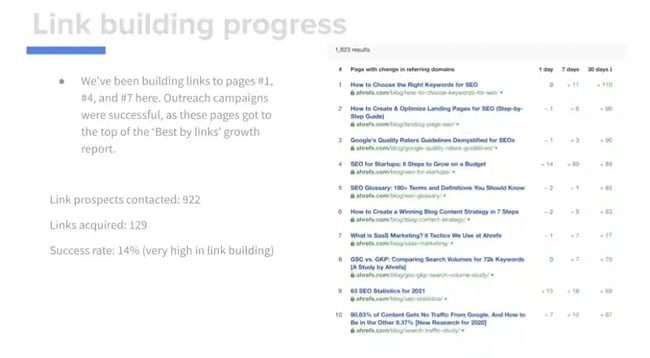
What we like: We love that the report is broken down across one, seven, and 30 days, so it’s clear to see the traction of link-building campaigns over a given period. You can then identify what’s working and what isn’t across these intervals.
In order to fuel your SEO report, you’ll actually need to have completed some SEO activities, and below, I’ll give some high-quality examples of successful SEO.
Best SEO Examples
As mentioned above, there are a variety of different things you can do for your business to enact your SEO strategy. Below, I go over some examples of what this looks like in practice that you can use as inspiration for your own processes.
There are a variety of different things you can include in your SEO strategy. Consider the following.
1. Writing Compelling Meta Descriptions
A meta description is the snippet of text below a title and link in search results. The description, well, describes the content of the page to the person conducting the queries so they know what to expect. The image below is the result of a search query for market research.

What we like: This is a high-quality meta description because it lets Google know exactly what the page contains, helping your content surface in the correct search results and helping audiences understand exactly what they’re about to click on.
2. Getting Content Backlinks and Inbound Links
A backlink, also called an inbound link, is when another website links back to your website or blog content. It’s usually placed as a hyperlink on a string of text that relates to your content, and when clicked, they’re taken to your site.
Backlinks are an effective SEO tool because they show search engines that your content is authoritative and relevant, helping you rank higher in SERPs. The image below is an example of a blog post from the Content Marketing Institute that has a backlink to the HubSpot Blog post that you’re reading right now.
Pro tip: You can use different paid tools like Ahrefs and SEMrush to find your existing content backlinks. But to find this one, I made use of Ubersuggest’s free backlink checker.
3. Optimizing Your Site Pages for Page Speed.
Page speed is how quickly the content on your website loads when someone visits a specific page on your website. Google began taking page speed into account for SERP rankings in 2018, making it a critical area of focus when you enact your strategy.
Pro tip: Try the “Compress media files before uploading them to your site” step I outlined above in your SEO strategy. This is a critical step in optimizing your site for page speed.
4. Local SEO
Local SEO is improving search engine visibility for your business’s location. An effective local SEO strategy will surface your content in search queries from customers in your local area, letting them know your business is there to meet their needs.
The image below is a SERP result example for “best restaurants Brooklyn,” showing local SEO in action.
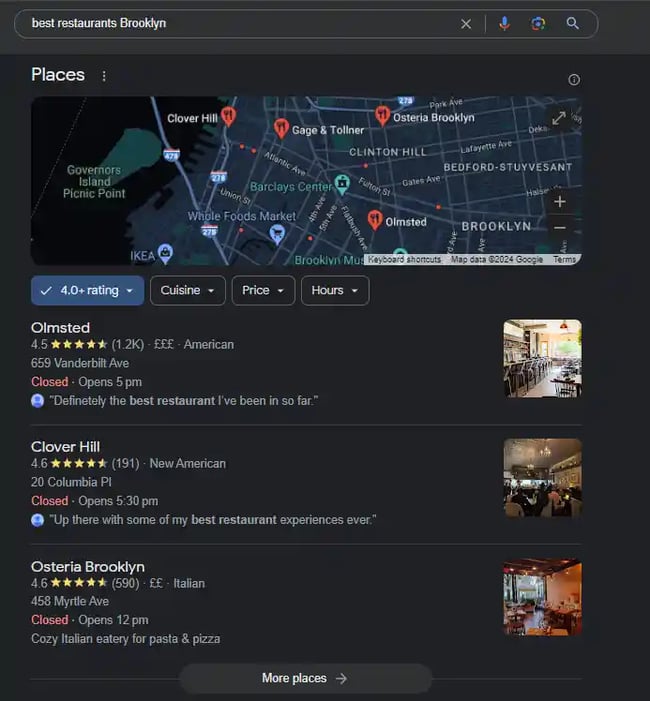
What we like: The three businesses that appear in results have an optimized Google My Business profile that contains information that helps it surface in results for Brooklyn-area restaurants. Having up-to-date information here doesn’t just help the restaurant’s wider SEO efforts. It also helps potential customers find the information they need.
Expert Insight
I contacted Christopher Levy, senior manager of SEO at Marketing Six, for comment. Christopher has ten years of SEO experience and specializes in local.
“While most SEOs have had to compensate for traffic erosion due to Google's increasing use of rich features and paid ads on search engine result pages (or SERPs), local SEOs must compete with two of the most visually appealing and authoritative features that dominate local,” says Levy.
Christopher explains that local service ads (or LSAs) are one of these features. This ad format is exclusive to local businesses in fields such as plumbing, law, dentistry, preschools, childcare, and massage, to name a few.
The other is the local pack or Google Maps — this SERP feature takes up nearly the entire browser menu on mobile search. Google Maps often meets the searcher's needs by providing geographic proximity, reviews, and an easy click-to-call feature.
“A business's presence on Google Maps is managed via Google Business Profiles (or GBPs)... Administering a client's GBP is an important skill set that a local SEO must learn,” Chris emphasizes. This skill set includes optimizing the listing to be up-to-date and accurate, with relevant and compelling visuals.
“You can also share content, updates, and offers on a GBP,” he offers.
Pro tip: “Soliciting and responding to reviews is another important role in managing a GBP that draws on skills needed for outreach. It would be best if you worked with your local clients on a strategy for soliciting reviews from their customers,” he says.
SEO Process
Once you’ve created your SEO strategy, you should also build a process to continue optimizing for new keywords and evolving search intent. Here are a few steps you can take.
1. Historically optimize your content.
Devote some time each month to updating old blog posts with new and up-to-date information to continue ranking in SERPs. You can also use this time to add any SEO best practices that weren’t initially addressed, like missing image alt text.
2. Look out for changing keywords and new search intent.
After a few months, track how your blog posts are ranking and which keywords they're ranking for. This can help you adjust subheadings and copy to leverage new search intent that your audience may be interested in.
3. Add more editorial value to your old content.
Sometimes, you'll find that a post is completely out of date. In this scenario, you should go beyond the average historical SEO update and give it a full refresh. You can do this by updating out-of-date information and statistics, incorporating new sections for added depth, and adding quotes or original data to give the post more referral traffic.
4. Create a monthly content plan.
To keep up with your SEO strategy, it can be helpful to create and refine a monthly content plan. You can place it into a spreadsheet, and your teams can track it accordingly. The list below is an example of a monthly content plan that takes the above steps into account.
SEO Monthly Plan
- Devote time to keyword research related to your industry.
- List blog post ideas that leverage opportunistic keywords.
- Identify blog posts that can be updated or refreshed.
- Identify other SEO opportunities, such as holidays.
- List content ideas in a Search Insights Report.
- Assign content to your team.
- Track progress at the end of each month.
With a monthly SEO plan like the one above, plus a tracking document like a search insights report, you can build out and execute an efficient SEO strategy. You can also identify and leverage low-hanging-fruit topics to discuss related to your industry.
Create A Strategy That Supports Your Business Goals
Ranking in search pages can be difficult. While it may seem enticing to create content that is centered around high-traffic keywords, that strategy may not help you meet your business goals.
Instead, opt to create an SEO strategy that helps you address your individual business needs, like increasing customer acquisition, for greater marketing success.
Editor's Note: This blog post was originally published in April 2019 but was updated in January 2024 for consistency and freshness.
Complete SEO Starter Pack
An introductory kit to optimize your website for search.
- Increase your organic traffic.
- Plan your keyword strategy.
- Debunk SEO myths.
- Build a blog strategy.
Download Free
All fields are required.
SEO Strategy



![Should Marketers Optimize for Bing? [Data + Expert Tips]](https://53.fs1.hubspotusercontent-na1.net/hubfs/53/BING-SEO%20(1).png)


![How Web Strategists Think SGE Could Impact Search Pages [New Data]](https://53.fs1.hubspotusercontent-na1.net/hubfs/53/Copy%20of%20Featured%20Image%20Template%20Backgrounds%20(5)-1.png)
![How to Find SERP Feature Opportunities [+ Free Tools]](https://53.fs1.hubspotusercontent-na1.net/hubfs/53/serp-feature-opportunities.jpg)