
What is context marketing?
Context marketing is the process of delivering marketing content — such as blog posts, offers, emails, and advertisements — to customers at a specific point in their buyer’s journey. Timing and specificity is critical for context marketing to work.
My favorite context marketing definition is delivering the right content, to the right people, at the right time.
Let me explain what I mean by context a little more, though. When you have context around something, you have a larger, more telling picture — you know, those little details that lend more clarity to things that would otherwise be pretty general, unspecific, and, well, uninteresting.
The best marketers leverage context about their audience, leads, and customers in their content marketing. They create audience profiles and buyer personas and use that information to create more effective marketing and advertising campaigns.
Now that we have a basic understanding of context marketing, you might be wondering what the difference is between content marketing and context marketing. Let’s take a look below.
Content vs Context Marketing
‘Content’ is the material you deliver to your customers: blog posts, articles, offers, newsletters, emails, campaigns, and advertisements. ‘Context’ refers to the timing and circumstances surrounding your delivery of this content.
A marketer using context would know more about a lead than her first name. They might also know what industry she works in, what kind of content she likes best, through which channel she prefers to consume content, whether she's currently using another solution to meet her needs, and whether her company has budget at this time of year.
As a marketer, if you were asked to "market" to someone, and all you were given was a first name and the type of company your lead works at, wouldn't your first question be ... what else do we know about her? Probably, if you want to do your job way better.
That's the idea behind context marketing: Using what you know about your contacts to provide supremely relevant, targeted, and personalized marketing.
Why is context marketing important?
Context marketing is important for many reasons, but there are two top ones that make its importance even more salient. Let’s go over them below.
Context marketing converts better.
When you're creating marketing that's targeted at people's point of need, it stands to reason that marketing will perform much better for you, because you aren't delivering marketing content that's misaligned with their interests or stage in the buyer’s journey.
Think about it: If you know that a B2B lead is getting a new budget in January and it's December, you're able to send her insanely targeted content that addresses her needs — like, say, an offer for a custom demo of your product with a rep that specializes in the finance industry. That's content that she's pretty likely to convert on, especially if she's downloaded a buying guide and visited your product pages.
Hot tip: Keeping track of your prospect’s activity using marketing automation software will make context marketing easier. You’ll know which products your prospect is most interested in and how many times they’ve visited your website.
Context marketing increases retention.
When you have context around your relationship with a contact, you're able to provide more personalized and relevant marketing content that's targeted to their needs.
This is great for two reasons: Personalized and relevant marketing is the foundation for creating content people love and engage with. What's more, personalized and relevant marketing is typically not the kind of marketing that annoys people into clicking "unsubscribe". If they feel like you’re out to solve their problems specifically, customers are much more likely to stay with you.
Why not use the context around your relationships with your contacts to create marketing that they love and convert on? Let’s take a look at how you can get started.
How to Start Context Marketing
Alright, how does this "context marketing" theory manifest itself? What would it look like for you, as a marketer? With the help of marketing automation software, here are some examples of where you'd actually use the principle of "context" in your marketing.
1. Create specific offers for specific posts and pages.
One easy way you can start context marketing? Create offers that extend the value of your website. Bonus points if these offers answer a specific pain point or problem that a customer is trying to solve for when visiting that page.
Most blog posts in HubSpot’s library feature an offer that’s directly related to the topic of the article. For instance, in our blog post about creating a marketing plan, you can download a marketing plan template — which is something that someone wanting to create a marketing plan might need.
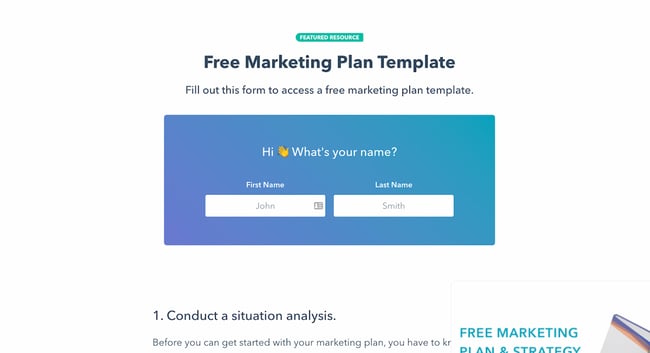
Come up with content offers that will benefit your readers and website visitors depending on the page they’re visiting. For instance, if you sell hiking shoes and you’re writing a blog post about going on a solo hiking trip, you might feature an offer for downloading a solo hiking checklist.
2. Add smart calls-to-action (CTAs) to your website.
You can take personalized offers to the next level by featuring smart calls-to-action. Let’s say you have a variety of offers you want to use to convert traffic into leads, leads into qualified leads, and qualified leads into customers.
To increase your lead conversion rates, you probably don't want leads visiting a case study webpage (typically an action you'd perform further along in your buyer's journey), and finding a CTA leading them to a blog post (which is meant for people earlier in the buyer's journey).
However, not everyone who visits a case study page on your website is necessarily ready to talk to a salesperson. You don't want to turn them away, either, by offering a CTA that's too pushy.
Fortunately, with smart CTAs, you can actually surface a CTA that automatically aligns with the visitor's stage in the sales cycle ... or any other host of criteria you want to set. Think industry, business type, location, and past activity/behaviors.
For instance, if you have already downloaded an offer from HubSpot, you might see this CTA on certain social-media-related posts:
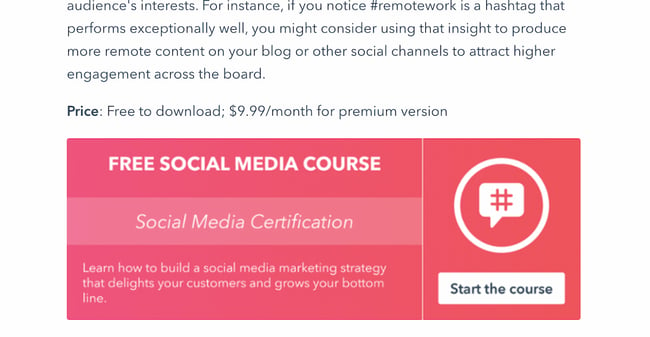
But if you haven’t downloaded an offer before, you’ll see the default CTA:
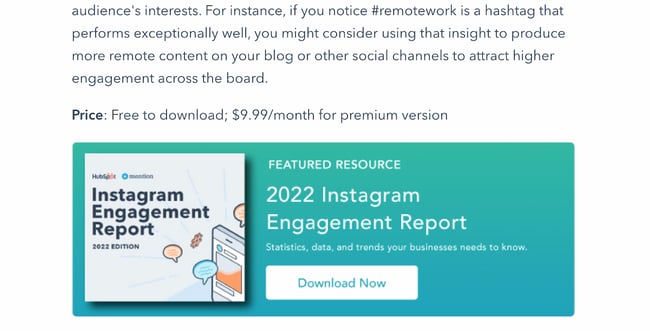
This type of smart content can help you capture your audience’s information at all stages of their buyer’s journey.
Hot tip: HubSpot’s marketing automation software lets you easily create a smart calls-to-action with little technical knowledge.
3. Create smart forms that shorten the conversion cycle.
Smart forms know if someone has already filled out the form fields you're asking for. If you use smart forms, for instance, your site visitors won't see "First Name" and "Last Name" every time they fill out a form — instead, they'll answer those questions once, and then never again.
This will help you glean new information about your leads each time they fill out a form, instead of just more of the same stuff. It also helps you create a more seamless, personalized user experience that leverages prior interactions with your website as context.
Here’s one example from HubSpot Academy. This is what I see when I’m logged into the HubSpot CRM:
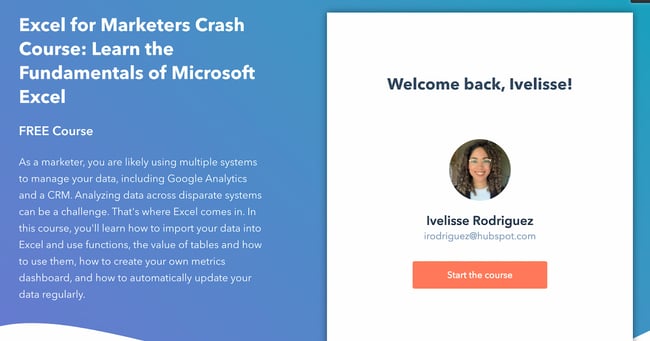
The form knows I’m a current HubSpot customer and doesn’t require me to create a new account. I only have to click one button: “Start the Course.”
But this is what I see when I’m not logged in:
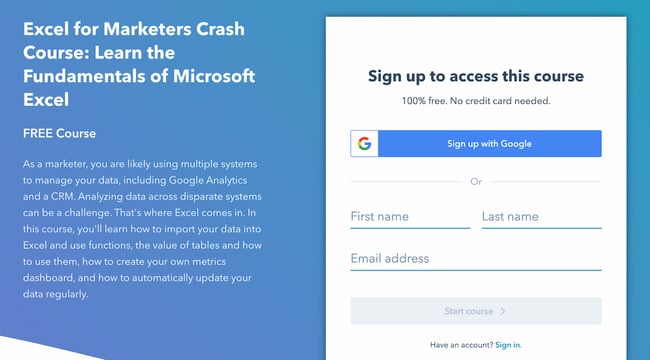
Ultimately, smart forms will help you gather even more context about your visitors, leads, and customers, and help increase conversion rates over time.
Hot tip: You can easily create smart forms inside HubSpot’s marketing automation software.
4. Leverage dynamic email content and workflows.
Your forms and offers aren't the only things that need to be smart. Your email database — especially if you want to maintain your space in people's coveted inboxes — needs to be segmented into highly targeted lists, as well.
I happen to be subscribed to Grammarly emails on both my work and personal emails. Because I only use the Grammarly Chrome extension at work, I receive emails like this:
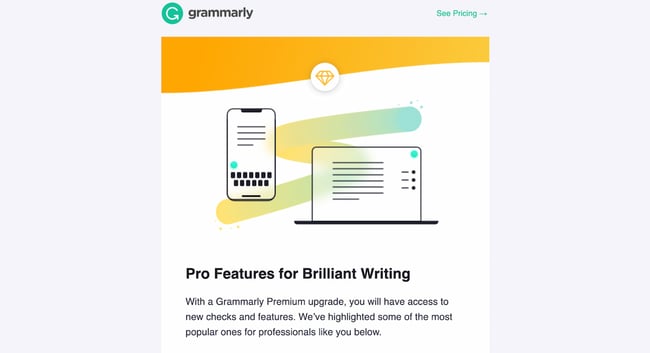 In my personal account, however, I use Grammarly’s web app regularly and review thousands of words for a personal project. Here’s the email I get:
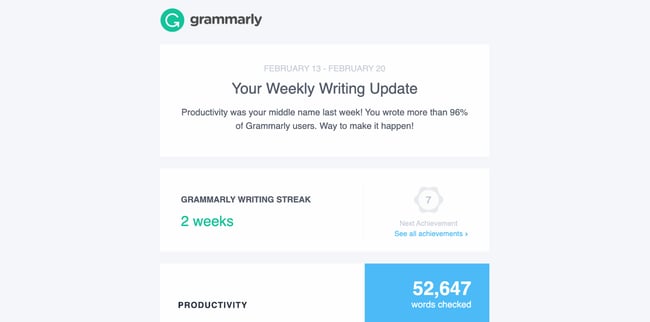 Throughout the email, Grammarly prompts you to upgrade to the premium version and take advantage of its other tools. Because I don’t use the Chrome extension in my personal email account, it includes a call-to-action to install the extension. It’s delightful to receive an email that uses my account activity as context.
Beyond email segmentation, your email lists need to be smart enough to know when to pull in a contact, and certain information you have in your database about that contact, into your email marketing campaigns.
Remember, a great context marketer delivers the right content, to the right person, at the right time. So to send emails that are contextually relevant, you need to use their activity and background to deliver personalized content that delights them and prompts them to convert.
Context Marketing Examples
While context marketing may sound complicated, it’s actually quite simple in practice. In fact, as a customer, you may have seen or enjoyed context marketing yourself. Let’s take a look at some examples.
1. Google’s Product Ads Carousel
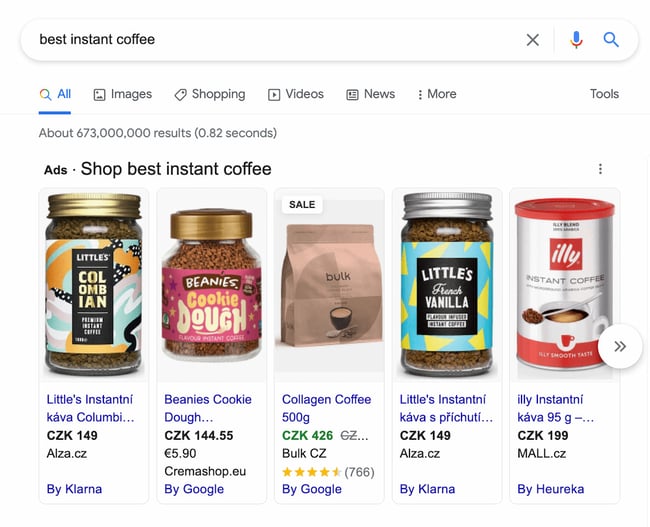
Have you ever looked up a product on Google and see a carousel at the top (as opposed to just the plain search results)? The products you see are typically ads for the exact same thing you searched for.
This is a prime contextual marketing example. Google uses your behavior and search query to deliver ads that are contextually relevant. Imagine if, when searching for instant coffee, Google delivers ads for french presses instead. While you might be interested in French presses and even searched for them before, you’re looking for instant coffee right now.
That’s why it’s important to answer for your customer’s specific pain points and queries, and to do so at the right time. And you don’t have to be a highly sophisticated search engine to do so. Remember those offers we spoke about in the previous sections? That can function in the same way as Google’s product carousels.
2. Asana’s New Feature Pop-Up
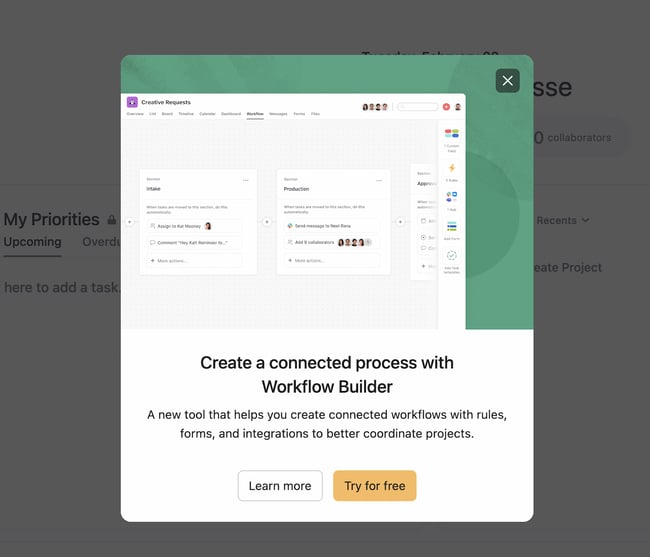
There’s no more powerful place to carry out contextual marketing than right within your own product, website, or store. Asana’s example shows that you can upsell customers easily by marketing a new feature and prompting them to try it for free.
This is an excellent example of contextual marketing because you wouldn’t be interested in trying this new feature unless you were a current Asana user. For instance, if Asana had placed this pop-up on their homepage, they likely wouldn’t have much success with it. But because it pops up after you log in, you’re more likely to say, “Sure, I’ll try it.”
You can achieve something similar by instituting a website personalization campaign. When people visit your product page, for instance, they might see a popup to schedule a meeting with a salesperson. But when they’re on the blog, they might see a popup to subscribe. These simple changes can help you capture more leads and use the context from their activity to deliver an offer they won’t resist.
3. LinkedIn Company Page Sidebar Ad
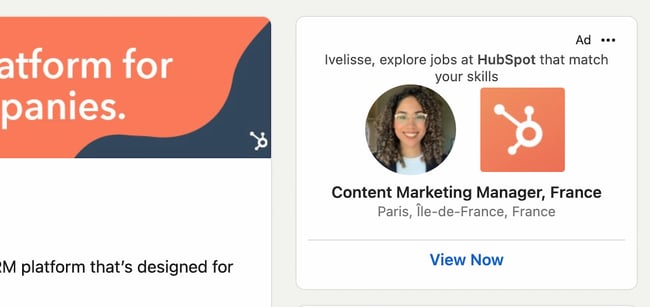
When you visit a company page on LinkedIn, it provides a little sidebar ad that prompts you to find roles at that company that match your skills.
LinkedIn does this because it knows that you might be open to opportunities even if you don’t list it on your profile. And if you’re looking at a company page, you might be interested in working at that firm. LinkedIn uses this context to deliver a relevant ad that you can’t help but click on.
Another reason this is such a great example is that it also lists a job title that relates to yours. So if you’re a financial advisor and are looking at JP Morgan Chase’s company page, LinkedIn will automatically advertise financial advisor roles at the firm.
Context Marketing is the Next Evolution of Content Marketing
Without context, you risk reaching the wrong people at the wrong time. Begin using context in all of your marketing and advertising campaigns, and you’ll see an exponential increase in conversions, helping you exceed your lead acquisition goals and increase revenue at your company.
Editor's note: This post was originally published in March 2013 and has been updated for comprehensiveness.
Marketing Strategy




![The state of inclusive marketing in 2025 [new data + expert insight]](https://53.fs1.hubspotusercontent-na1.net/hubfs/53/inclusive-marketing-report.webp)
![How marketers are navigating a possible recession (and advice about what you should do during it) [new data]](https://53.fs1.hubspotusercontent-na1.net/hubfs/53/image12-May-27-2025-02-18-19-8390-AM.png)



![Cultural Marketing: What It Is & How to Do It The Right Way [According to Experts]](https://53.fs1.hubspotusercontent-na1.net/hubfs/53/Untitled%20design%20-%202025-04-03T163531.949.jpg)