

To help you keep pace with these trends, let's take a look at some visual content marketing statistics that demonstrate the impact visual content has on reach, engagement, and sales.
Emerging Visual Marketing Stats
52 Visual Content Marketing Statistics You Should Know
General Visual Content Statistics
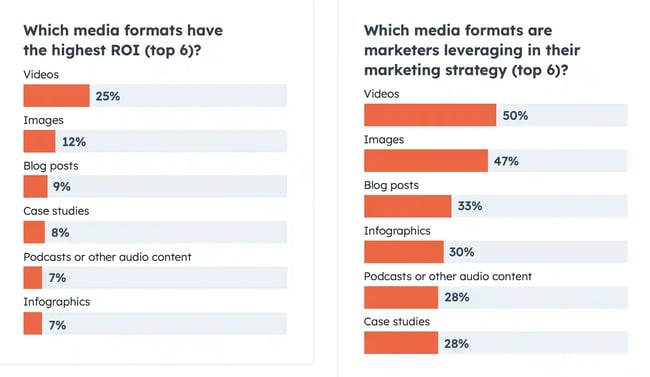
- Video is the most popular and effective media format. (HubSpot)
- 50% of marketers leverage video in their marketing strategy, followed closely by images at 47%. (HubSpot)
- Long-form videos above 30 minutes, like webinars and live events, saw over 11,000% growth over the past decade, making it the fastest-growing video segment. (HubSpot)
- 71% of B2B marketers say content marketing has become more important to their organization in the last year. (Content Marketing Institute)
- In 2021, over 50% of marketers used visuals in over 91% of their content. (Venngage)
- According to a survey by Venngage, original graphics are the most used type of visual content by marketers at 36%, followed by stock photos at nearly 34%. (Venngage)
- 30% of marketers primarily create visual content for blogs, followed by social channels such as Facebook and LinkedIn. (Venngage)
- According to The World Health Organization, there are an estimated 2.2 billion people with visual impairments globally. (World Health Organization)
- Over 50% of marketers agree that visual content is essential to their marketing strategy. (Venngage)
- A third of marketers find producing visual content consistently is their biggest struggle with content production. (Venngage)
The State of Marketing in 2025
HubSpot's Annual Inbound Marketing Trends Report
- Top Marketing Channels
- AI in Marketing
- Managing Privacy
- The Future of Marketing
Download Free
All fields are required.
Video Marketing Statistics
- 75% of adults in the US watch short-form video content on a mobile device. (eMarketer)
- 59% of Gen Z viewers use short-form video apps to discover things that they then watch longer versions of. (Think With Google)
- On average, people watch 17 hours of video content per week. (HubSpot)
- 91% of consumers want to see more online videos from brands. (HubSpot)
- Social media videos are the most common type of video marketers create at 71%, followed closely by explainer videos at 70%. (HubSpot)
- 96% of consumers have watched an explainer video to learn more about a product. (HubSpot).
- 80% of marketers held live events in 2022. (HubSpot)
- When it comes to B2B, 79% of people say they’ve been convinced to purchase an app or piece of software because of a video. (HubSpot)
- YouTube is the most widely used video platform by marketers at 90% (Facebook is second, at 86%). (HubSpot)
- 33% of marketers leverage short-form video content in their marketing strategy.
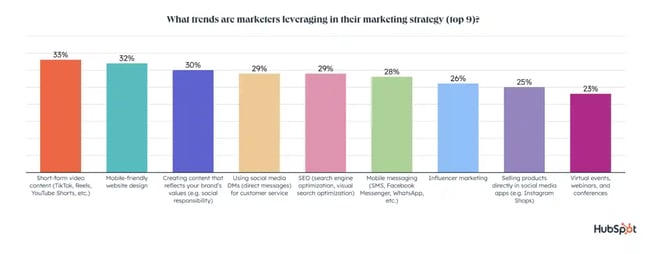
- Short-form video has the highest ROI of all marketing trends. (HubSpot)
- Most short-form videos are under 60 seconds, and they have the highest average engagement. (HubSpot)
- Over 11 million people streamed video for the first time on Twitch in 2022. (Twitch)
- In 2022, YouTube surpassed Netflix as the top streaming platform in the US. (HubSpot)
Emerging Visual Marketing Trends
- 90% of marketers using short-form video will increase or maintain their investment next year, and 21% of marketers plan to leverage short-form video for the first time in 2023. (HubSpot)
- 56% of marketers plan to increase their investment in TikTok in 2023. (HubSpot)
- 24% of marketers are planning to invest more in video than any other format in 2023. (HubSpot)
- 1 in 3 marketers plans to stop using NFTs this year. Additionally, 29% plan to stop marketing in the Metaverse and in audio chat rooms. (HubSpot)
- 65% of all web traffic is via a mobile device. (Similarweb)
- 40% of marketers plan to prioritize mobile-friendly website design in 2023. (HubSpot)
- 56% of consumers who are interested in the metaverse want to watch TV and movies there. (GWI)
Infographic Stats for Visual Content Marketers
- Original graphics like infographics and illustrations perform best, according to marketers. (Venngage)
- Stock photos perform the worst out of all visual formats. (Venngage)
- When it comes to content creation, 30% of marketers share infographics. (HubSpot)
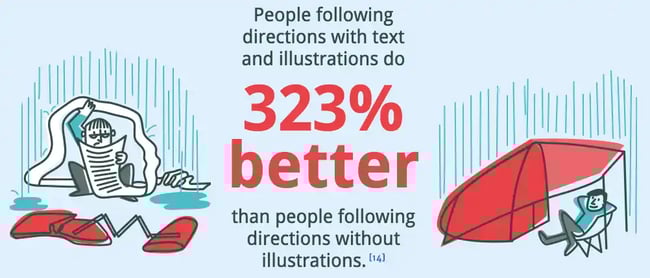
- One study found that people following directions with text and illustrations do 323% better than people following directions without illustrations. (Springer)
Source: NeoMam
Social Media Stats for Visual Content Marketers
- Facebook is the most popular social media platform, used by 64% of marketers. Additionally, it has the best ROI compared to other social media platforms. (HubSpot)
- 70% of Instagram users don’t mind seeing ads when watching videos on Instagram. (Instagram Business)
- 26% of marketers plan to use TikTok for the first time in 2023, and 16% of marketers plan to invest more in TikTok than any other social media app. (HubSpot)
- In 2023, 31% of marketers use YouTube Shorts and Instagram Reels. (HubSpot)
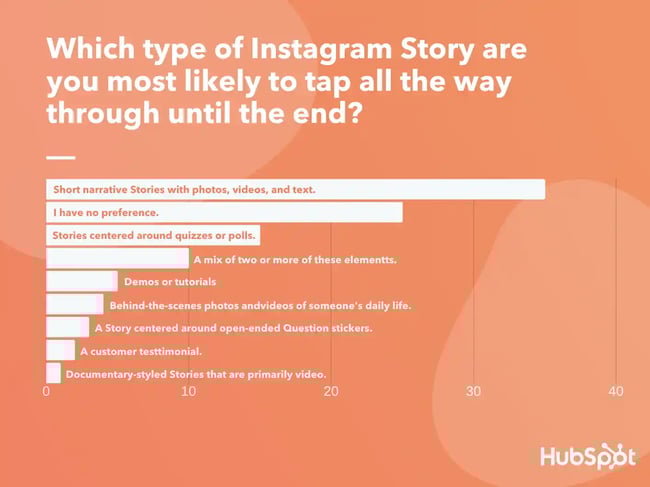
- Of the Instagram Story formats people prefer most, 35% say they engage with short narrative-styled Stories with photos, videos, and text most often. (HubSpot)
- YouTube is the most popular social media platform among teenagers, with 95% of American teenagers ages 13 to 17 using it. TikTok is the second most popular platform among teens at 67%. (Pew Research)
- As of 2022, the largest demographic of U.S. Instagram users was between the ages of 18 and 29, making up 71% percent of Instagram's user base in the U.S. (Pew Research)
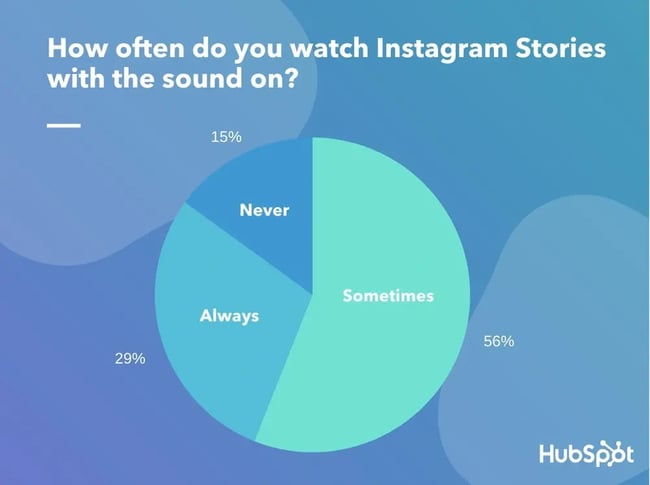
- In a poll of over 350 consumers, 56% said they “sometimes” watch Instagram Stories with the sound on, while 29% said they “always” do this. (HubSpot)
- On Instagram, carousel posts draw the highest engagement of all post types, followed by video posts. (Statista)
- For videos up to 5 minutes long, viewers will watch about 50% of the content. (HubSpot)
- Snapchat had 100 million daily active Snapchat users as of 2022. (Statista)
- Advertisers can reach more than 250 million people on Pinterest. (Hootsuite)
- Pinterest users are five times more likely to make a purchase after using a Try-On enabled pin, Pinterest’s AR feature. (Hootsuite)
- The revenue from Pinterest increased to $2.8 billion in 2022 (an increase of 9% from the previous year), highlighting the platform's expanding influence. (Coin Data Flow)
- By the end of 2022, Pinterest had 450 million global active users. (Pinterest)
- Users who saw immersive, actionable ads on Pinterest were 59% more likely to recall that brand. (Pinterest)
Editor's note: This post was originally published in April 2020 and has been updated for comprehensiveness.
The State of Marketing in 2025
HubSpot's Annual Inbound Marketing Trends Report
- Top Marketing Channels
- AI in Marketing
- Managing Privacy
- The Future of Marketing
Download Free
All fields are required.
Topics:
Visual Content


![How Visuals Will Impact Marketing in 2017, According to New Data [Infographic]](https://53.fs1.hubspotusercontent-na1.net/hubfs/53/00-Blog_Thinkstock_Images/how-visuals-impact-marketing-2017.png)
.jpg)
![10 Types of Visual Content Your Brand Should Be Creating Right Now [Infographic]](https://53.fs1.hubspotusercontent-na1.net/hubfs/53/00-Blog_Thinkstock_Images/Visual_Content_Types.jpg)
![How Images Make Content More Shareable on Facebook, Instagram & Twitter [Infographic]](https://53.fs1.hubspotusercontent-na1.net/hubfs/53/shareable-images.jpeg)

![A Handy Little Guide to Creating Visual Content for Social Media [Infographic]](https://53.fs1.hubspotusercontent-na1.net/hub/53/file-2667260844.jpeg)
![How to Get More Engagement With Your Visual Content [Infographic]](https://53.fs1.hubspotusercontent-na1.net/hub/53/file-2415990899.jpeg)