.png?width=112&height=112&name=Image%20Hackathon%20%E2%80%93%20Vertical%20(11).png)

But if you're new to customer reviews or not sure where to find them, let's brush up on some basics and highlight why they're relevant for your business.
In a bit of a time crunch? Use the jump links below to navigate to the exact content you're looking for.
Table of Contents
- Customer Reviews & Their Benefits
- Best Customer and Product Review Sites
- Customer Review Sites for B2C Companies
- Customer Review Sites for B2B Companies
- Other Places for Consumer Reviews
Customer Reviews
Customer reviews are pieces of feedback given to a business based on a customer's experience with the organization. These reviews can be public or private and are collected by either the company or third-party review sites. By obtaining and analyzing customer reviews, businesses can measure customer satisfaction and improve their customer relations.
.png)
Free Customer Referral Templates
45 email & social media templates to ask for referrals and spread the word about referral programs
- Email Templates to Ask for a Referral
- Email Templates for Following Up with a Referral
- Social Copy Templates About a Referral Program
- And More!
Download Free
All fields are required.
Benefits of Customer Reviews
There are two major reasons why customer reviews are important.
1. Customer reviews are a learning opportunity for your business.
Negative or neutral reviews provide your company with an opportunity to learn and develop. You can see exactly where your business is failing to meet customer needs and remove common roadblocks in the customer journey.
For particularly poor reviews, reps can follow up with these customers and prevent potential churn. They can highlight specific pain points and craft personalized responses geared to specific problems. This makes your customer service team appear more invested in your customers' goals, which results in fewer negative reviews and increased customer retention.
2. Customer reviews are marketing and sales tools for your business.
The other major reason for obtaining reviews is the opportunity to share them with potential customers. Positive reviews can be used as customer testimonials during lead acquisition and can help you add more contacts to your CRM. In fact, 91% of consumers read at least one review before purchasing a product. So, don't just pat yourself on the back the next time you get a five-star review; Make sure everyone knows how good a job your company is doing.
With that in mind, it's not safe to assume we all know where to track down those positive customer reviews. I mean, we might all be able to rattle off one or two sites ("Yelp! And I think you can get them to show up in Google Maps, too?"), but we don't exactly have a laundry list of options at our disposal
Check out our list of the best product review websites for B2B and B2C companies. Keep in mind that every industry has niche sites, too. For instance, those in the restaurant industry may want to be on UrbanSpoon or OpenTable. This blog post won't get into sites that are specific to one industry, but it will provide review sites that apply to businesses in almost any industry.
Best Customer and Product Review Sites
- Amazon Customer Reviews
- Wirecutter
- Angi
- Choice
- Trustpilot
- TestFreaks
- Which?
- Consumer Reports
- Consumer Affairs
- TripAdvisor
- Yelp
- Google My Business
- Influenster
- HubSpot's App Marketplace
- FinancesOnline
- Compare Camp
- G2 Crowd
- TrustRadius
- SoftwareWorld
- GoodFirms
- Salesforce AppExchange
- Better Business Bureau
- Glassdoor
- Blind
- Manta
- Capterra
- HundredX
- Facebook Ratings and Reviews
- Foursquare
- Superpages
- Top Ten Reviews
- Your Own Website
Customer Review Sites for B2C Companies
1. Amazon Customer Reviews
Amazon was one of the first online stores to allow consumers to post reviews of products in 1995, and it remains one of the most important resources for consumers looking to make informed purchase decisions. Even if people can and do buy a product elsewhere, if it's sold on Amazon.com — unless it's gasoline or drug paraphernalia, that is — then many people will look up its Amazon review before they decide to buy.
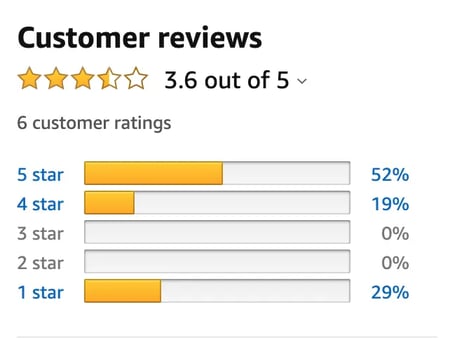
What's going to separate your product from one that looks just like it? Those shiny gold stars and good customer reviews. Products are rated on a five-star rating scale, which is broken down by the percentage of reviews per star, followed by most helpful customer reviews and most recent customer reviews.
Benefits of Amazon Customer Reviews:
- Amazon has over 300 million users who can see your review.
- Amazon's rating system is straightforward and easy to understand.
- Amazon offers a product ranking feature that rates your product's popularity.
- Amazon users are loyal — 22% won't look at competitors if they discovered the product on Amazon.
2. Wirecutter
Part of the New York Times, Wirecutter is an excellent resource for customers looking for honest, independent product reviews. All products go through rigorous testing by the Wirecutter team so readers can rest assured that their recommendations are legit.
From a business perspective, there isn't much you can do to influence ratings on this site, but it should encourage your brand to make its products the best they can be.
Benefits of Wirecutter:
- Reviews on Wirecutter are in-depth and highly researched.
- Although Wirecutter earns commission through affiliate links, they do not earn if readers return a product they recommended that they are dissatisfied with — keeping reviewers honest.
- Wirecutter gets about 12 million readers per month and serves as excellent promotion should your brand get chosen as one of its top picks.
3. Angi (Formerly Angie's List)
Geared toward U.S.-based service businesses, Angi is a "higher-end" review site, because users actually have to pay for membership. But you get what you pay for. The reviews, given on an A–F scale, are typically very well-thought-out — not a lot of that ranting and raving that's more common on free review sites. The reviews can't be anonymous, which helps cut down on fake or misrepresentative reviews, and companies are allowed to respond to the reviews posted about them, too.
It's free to set up a page for your company. Once you have yours, encourage your customers who are on Angie's List to leave reviews there — members are the only ones allowed to do it!
Free Customer Referral Templates
45 email & social media templates to ask for referrals and spread the word about referral programs
- Email Templates to Ask for a Referral
- Email Templates for Following Up with a Referral
- Social Copy Templates About a Referral Program
- And More!
Download Free
All fields are required.
Benefits of Angie's List:
- Reviews on Angi are typically of high-quality since users need to pay to use the site and can't post anonymously.
- Even though this is a paid subscription service, it's free to list your company on Angi.
- If a customer has a bad experience with a recommended provider, Angi will work with both the customer and the company to resolve the issue.
4. Choice
Have customers located in Australia? CHOICE is an independent, member-funded consumer advocacy website based in Australia. It independently evaluates products and provides detailed reviews to its members.
The bulk of its work involves consumer rights, exposing shady industry tactics, as well as providing product reviews. In addition, it allow members to rate and discuss specific products and services with other CHOICE members. If you have customers in Australia, we recommend encouraging those who are on CHOICE to leave reviews there.
Benefits of Choice:
- Choice posts over 200,000 reviews each year and serves about 2,400 institutions worldwide.
- Since Choice evaluates products and services independently, its reviews are unbiased.
- Choice has a "Choice Picks" page where you can see the best products that it recommends.
5. Trustpilot
Trustpilot is a fast-growing, community-driven consumer review platform based in Denmark, although it has expanded out of Europe into 65 countries, including the U.S. The platform for businesses helps companies from all over the world proactively collect customer reviews. It's the customers who write both product and seller reviews, keeping it third-party verified.
While there is a basic version for free (this lets you create a profile page and collect customer reviews), the paid versions let you create customizable review invitations, share ratings and reviews on social media, and link review data to your internal business systems.
Benefits of Trustpilot:
- Over 500,000 websites are rated on Trustpilot.
- Trustpilot uses its own review system to rate its website. Based on about 136,000 reviews, Trustpilot is rated four stars out of five.
- Trustpilot has advanced SEO features that help your website rank higher on SERPs when customers leave reviews for your company.
- Trustpilot can be integrated with Shopify, Magento, and MailChimp.
6. TestFreaks
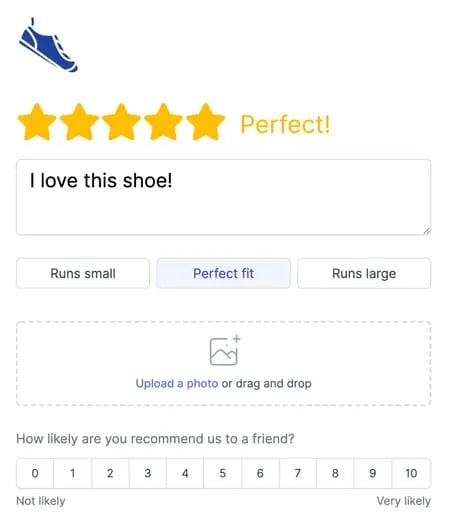
Similar to TrustPilot, the Swedish-based TestFreaks helps companies proactively collect customer reviews and write seller reviews to complement them.
Another cool addition? Its question and answer feature, which lets prospective customers post questions and receive answers directly from your customer service team.
Benefits of TestFreaks:
- TestFreaks has 100 million crawled reviews from over 15,000 sources.
- TestFreaks provides a content moderation team that analyzes content in over 20 languages.
- TestFreaks has an import feature where you can upload external customer reviews into its website.
7. Which?
Which? is an independent consumer review organization that tests and reviews products and then writes about them. Unlike Angie's List, it's the folks at Which? who write the reviews — not the customers. They don't accept submissions for product testing or survey inclusion, but they do encourage people to let them know about their products and services by emailing brcpress@which.co.uk.
While this leaves less room for you to influence whether your products end up on their site, it's still worth knowing about and checking in on this popular site, especially if you have customers in the U.K. The website has product reviews for everything from dishwashers and tablets to cars and credit cards. It tests and reviews all these products, and then writes about both its methodologies and results. It also surveys customers for things like the best and worst firms for customer service.
A lot of its content is free, but customers can become members for £10.75 per month to get access to a "Best Buys" and "Don't Buy" list, the latest reviews of products from its test labs, and access to its consumer legal advice service.
Benefits of Which?:
- Which? offers more than 8,000 free reviews.
- Which? tests and reviews more than 3,600 new products every year.
- To prove that it's impartial, Which? provides a video that shows users how it tests and reviews each product.
- Which? is 100% independent. It doesn't accept freebies from product manufactures or retailers so its reviews remain unbiased.
- Which? offers a "Safety Alert" feature that notifies users when a product is deemed unsafe. There's also a "Brand Alert" feature that lets you know if a brand has a history of creating unsafe products.
8. Consumer Reports
A nonprofit organization, Consumer Reports is an independent product-testing organization that runs unbiased tests to rate and recommend products. It has reviewed over 7.7 million products, accept no advertising, and pay for all products that it tests. (Fun fact: The company buys and tests 80 cars each year!) This is about as legitimate as it gets. As such, there's not much you can do here "except" if you sell a product, make sure it's really, really good.
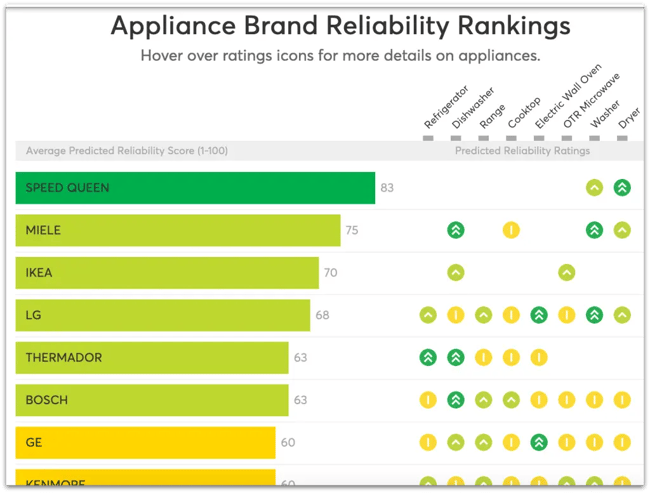
If nothing else, you could take this website as a lesson in excellent content creation. For each product it reviews, it provides the review criteria, product overviews, a buying guide, and social sharing buttons. It's all quite comprehensive and, well, helpful. Pretty much the key to great content, am I right?
Benefits of Consumer Reports:
- Consumer Reports has over 63 testing facilities — including its 327-acre auto test center.
- Consumer Reports has spent over $30 million on testing and rating products.
- The company plans to test more than 8,500 new products in 2021.
- There are over eight product categories to choose from — each having several subcategories within them.
- Consumer Reports provides an overall score for each product, so you know exactly how it compares to other products in its category.
9. Consumer Affairs
Consumer Affairs is a for-profit organization that reviews companies using an “overall satisfaction rating." This average is scored on a one to five-star scale that's updated every time a new review is submitted. Each company's page provides a list of all its reviews, which includes the consumer's star rating as well as a short explanation for its score.
Free Customer Referral Templates
45 email & social media templates to ask for referrals and spread the word about referral programs
- Email Templates to Ask for a Referral
- Email Templates for Following Up with a Referral
- Social Copy Templates About a Referral Program
- And More!
Download Free
All fields are required.
Consumer Affairs also allows users to submit review recordings, which are two-minute videos where people talk about their experience with a brand. This makes the review much more compelling because you can actually see the person talk and express their genuine feelings about the company.
Benefits of Consumer Affairs:
- Consumer Affairs offers a "trending" section where you can view its lastest and most popular reviews.
- Consumer Affairs provides a demo for brands looking to buy a subscription to its service.
- The "Review Feed" feature allows you to research all of your customer reviews in one, scrolling feed.
- Consumer Affairs has a "Video Review" option where customers can record themselves giving a review.
10. TripAdvisor
If you're in the travel, hotel, airline, entertainment, or restaurant industries, you'll want to check out the reviews on the popular website, TripAdvisor. As the largest travel site in the world, it has over 225 million reviews, opinions, and photos taken by travelers. It also has some awesome content on low airfares, travel guides, rental listings, and advice forums for pretty much every location in the world you could possibly imagine. A lot of people look there before booking a trip.
The key to a successful profile on TripAdvisor is making it as close to the top of the popularity index as possible, so that people searching for information in a specific place see your listing. According to TripAdvisor, the popularity ranking algorithm is based on three key components: quantity, quality, and recency of reviews. Here's an excerpt of the advice they give businesses looking to improve their ranking:
"Quantity: Ask your guests to write reviews, and use our management center tools to remind them after they check out. Offering incentives for reviews is against the rules, though — take a look at our policy to make sure you understand what is and isn't okay.
Quality: Guests who enjoyed first class hospitality and a memorable experience are more likely to write positive reviews. Monitor what previous reviewers have written to see what worked and did not work best for your property so you can maintain and improve your service.
Recency: Recent reviews factor more strongly on your popularity rankings and older reviews have less impact on a hotel's ranking over time. Once again, encourage guests to write reviews to keep fresh content rolling in."
Benefits of TripAdvisor:
- TripAdvisor has collected over 887 million reviews for eight million companies.
- TripAdvisor Plus gives you access to discount hotel pricing for over 100,000 locations.
- The average TripAdvisor Plus member saves about $350 the first time they use their membership.
- TripAdvisor Business Advantage showcases your company's best reviews so customers see them first when reviewing your profile.
11. Yelp
Yelp is a free review site that lets consumers rate businesses on a five-star scale. Any business can set up a profile on Yelp for free, and users can set up their own free profiles to review a business. You're free to respond to reviewers, too, but we recommend taking a balanced and polite approach to any negative reviews you receive, as Yelpers are in a pretty tight-knit community.
Yelp has also come under fire over the past few years for some slightly shady practices, like incentivizing businesses to advertise with them in exchange for gaming the search results for their business ("Pay us money and we'll push bad reviews down!"). Savvier consumers have learned to look at Yelp reviews as a whole and with the reviewer's clout in mind, instead of getting turned off by a business because of one bad listing.
That being said, it's still to your benefit to get a constant stream of positive online reviews coming to your business' Yelp account so happy customers are always at the top of your review feed — especially if you're a location-based business. Yelp profile information contains things like store hours and location information, so your profile will often turn up when people Google your business.
Benefits of Yelp:
- Yelp has roughly 184 million monthly users worldwide.
- Anyone can sign up for Yelp and it's fairly easy for customers to leave a review — making it a good source of customer feedback.
- Yelp users are a tight-knit community. Active users will provide a lot of detailed feedback for your business.
- Research shows an increase of one star in your Yelp rating can increase revenue by 5-9%.
12. Google My Business
You know those reviews that show up when you search Google for a business? Yeah, those things are on this list in a big way.
Google's Pigeon algorithm update uses distance and location ranking parameters to deliver improved local search results. So, in order for your business' website to be properly optimized for search, you'll want to set up verified accounts with local directories — especially Google's, called "Google My Business." Getting reviews, comments, pictures, and so on, especially on Google, can give you a boost in search. Only verified local Google+ pages can respond to reviews.
An added bonus? Google Maps pulls that information and those reviews into the app, so having a lot of content in there will make your business look more reputable.
Free Customer Referral Templates
45 email & social media templates to ask for referrals and spread the word about referral programs
- Email Templates to Ask for a Referral
- Email Templates for Following Up with a Referral
- Social Copy Templates About a Referral Program
- And More!
Download Free
All fields are required.
Benefits of Google My Business:
- Google is the world's largest search engine and controls over 90% of the search engine marketshare.
- Google can localize your review search, meaning it will only show results for businesses located in the area that you searched.
- It's free to create and customize your Google Business Profile. Setting up only takes a few minutes.
- Nearly 10% of Google's search algorithm is influenced by Google Reviews. The more positive reviews that you have, the higher your business will rank on SERPs.
13. Influenster
If you sell consumer products, Influenster is a review site you'll want to make sure you've covered.
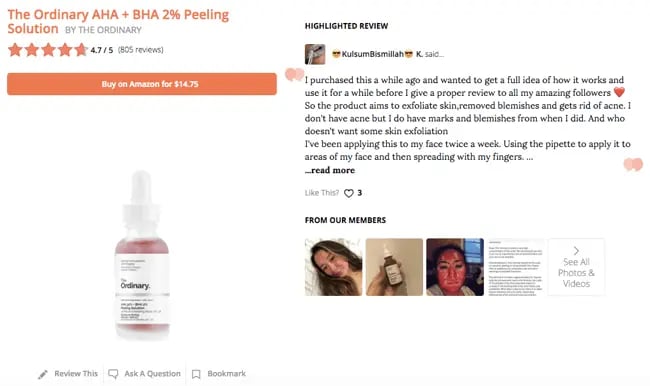
Influenster features customer reviews and news about consumer products — primarily skincare, beauty, makeup, hair, and other health and body products. Visitors can search the site by brand name or by a specific product they're looking for, and Influenster links to websites where visitors can buy the products.
The reviews are comprehensive and feature lots of detail and images to accompany them. So if you're in the beauty business, consider directing your shoppers to review your products on Influenster to help attract new customers, too.
Benefits of Influenster:
- There are over six million users who are actively leaving reviews on Influenster.
- Influenster users have left over 50 million organic reviews on the website.
- Influenster sends its users "VoxBoxes" where they can test out new products for free.
- Influenster helps businesses create "sampling campaigns" where you send users a sample of your product then follow up afterwards to sell them the complete version.
Review Websites for B2B Companies
14. HubSpot's App Marketplace
HubSpot's App Marketplace is a space where businesses can browse through extensions, tools, and apps that connect to their HubSpot account. Some apps are built by HubSpot, while others were designed by partners and third-party organizations. Offering all of these tools in one place makes it easier for HubSpot users to add new features to their accounts that may not be included with their subscription.
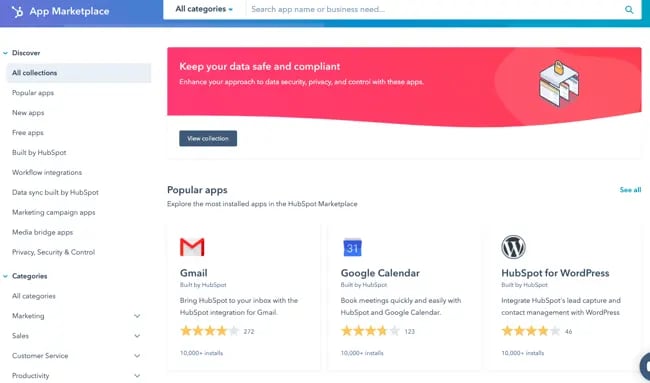
The nice part about this customer review site is that it's categorized based on the product you're looking to install. There's individual sections for Marketing, Sales, and Service tools, as well as other sections like finance, workflow integrations, popular apps, and more.
Reviews are rated on a five-star scale and customers have to answer questions like, "What did you like about this product? What did you dislike about it?" and "What problem did this product solve?" These questions provide more context into the review so you know exactly why a customer rated a business or product the way they did.
Benefits of HubSpot App Marketplace:
- There are more than 500 apps featured in HubSpot's App Marketplace.
- Product pages not only list reviews, but also pricing info, notable features, and account requirements for downloading each tool.
- Customers have the option to upvote reviews that they find helpful.
- The reviews on this site provide "quality ratings" for features like ease of use, functionality, purchase value, and customer support.
15. FinancesOnline
FinancesOnline is one of the fastest-growing platforms for B2B & SaaS software reviews, with more than 2,800,000 visitors every month.
It gathers thousands of user reviews every month, with each reviewer authenticated via LinkedIn to ensure only actual users share their experience with the community. User reviews are based on detailed surveys, which offer a really in-depth look at each tool. Algorithmic analysis is also a foundation for quarterly reports in the most popular categories.
To balance the user perspectives, each review also includes a detailed analysis prepared by the internal team of B2B software experts, who analyze key usability factors such as features, integrations, mobile support, etc. This evaluation is then combined into the unique SmartScore™ system, which gives readers an easy reference on what the experts' community thinks about each business solution.
As an added bonus, the product pages rank high in Google, so getting a few positive user reviews on their site could be beneficial for your brand recognition.
Free Customer Referral Templates
45 email & social media templates to ask for referrals and spread the word about referral programs
- Email Templates to Ask for a Referral
- Email Templates for Following Up with a Referral
- Social Copy Templates About a Referral Program
- And More!
Download Free
All fields are required.
Benefits of FinancesOnline:
- FinancesOnline has roughly three million visitors to its site every month and over ten thousand detailed company reviews.
- The SmartScore system grades products on several factors including functionality, collaboration features, customization, ease of use, and more.
- FinancesOnline uses a customer satisfaction algorithm that calculates an overall score for a business based on reviews, comments, and opinions that are posted on various social media channels.
- The "Verified Quality Seal" let's users know that a business or product is reliable and trustworthy.
16. Compare Camp
Compare Camp is a B2B review site that deals primarily with business software. If you're looking to introduce a new tool or system to your company, Compare Camp can help you pinpoint the exact software that's right for you. Not only does this site show you how other people feel about a specific product, but it also lays out the key benefits of the product as well as any new trends that may be occurring in that particular industry.
When you first navigate to the site, Compare Camp provides you with a list of software categories to choose from. After you select a section, it gives you a description of the category along with a detailed list of product and company options. Compare Camp also explains any varying types of products within that section as well as the top features you should look for when buying that software. It's a very handy guide to have especially when you're considering a product that you haven't purchased before.
Benefits of Compare Camp:
- Over 100,000 companies use Compare Camp every month.
- There are over 25 product categories to choose from, including CRM Software, Sales Software, eCommerce Software, and more.
- Each category provides a "Top 10" list of the best software available in that section.
- If you're not familiar with a product, each category provides a brief description of what the software is and why you might want it.
17. G2 Crowd
If your business sells software, you'll want to be sure you have a presence on G2 Crowd. Every month, more than 5 million people looking to buy software read the 1+ million user reviews on this website so they can make better purchasing decisions.
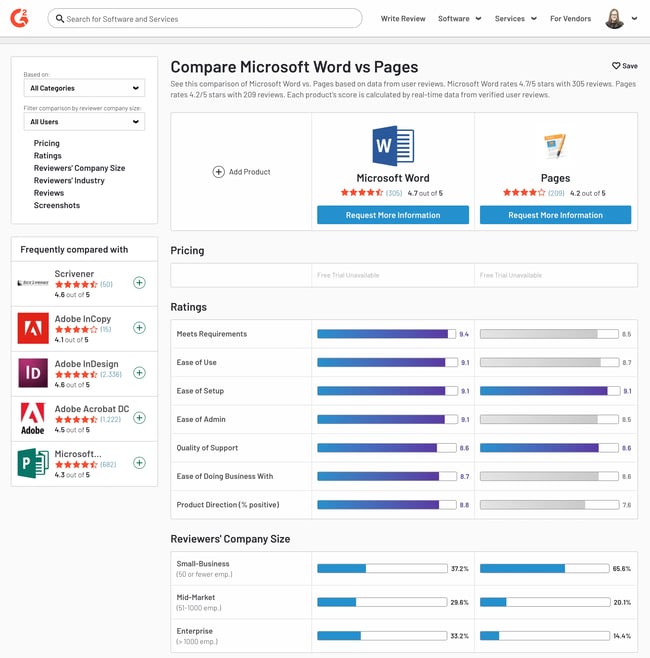
G2 Crowd operates kind of like Yelp, but in a specific niche. Companies are reviewed on a five-star scale, and reviews cover everything from setup and ease of use to security and support. Reviewers answer questions like "What do you like best?"; "What do you dislike?"'; and "Recommendations to others considered the product." Also, you can upvote and downvote others' reviews.
Benefits of G2 Crowd:
- There are nearly 1.4 million reviews featured on G2 Crowd.
- G2 Crowd offers a video review option where users can record themselves leaving a review.
- When a customer leaves a review, you can see whether the customer is a verified user and how active they are on the platform.
- G2 Crowd allows businesses to request reviews from customers. This helps you build a pool of customer reviews for your company.
18. TrustRadius
Like G2 Crowd, TrustRadius is an online review site for software businesses. Reviewers on the site are authenticated via LinkedIn to make sure they're users (although the reviews themselves can still be anonymous), which allows users to see what their LinkedIn connections are saying about particular pieces of software on TrustRadius. This adds a layer of trust for someone reading the site.
You can use the site to browse reviews of individual companies, or compare two companies side-by-side to compare their five-star ratings, screenshots of their products, pricing details, and user comments from reviewers.
In addition to the company reviews, TrustRadius has put together a whole bunch of buyer guides for categories including talent management software, business intelligence software, core HR software, social media, and A/B testing to help people find the right product for them based on hundreds of reviews and user ratings.
Benefits of TrustRadius:
- There are over 300,000 customer reviews posted on TrustRadius.
- TrustRadius does not sell leads or ad placement. This keeps reviews unbiased and vendors can't skew results.
- TrustRadius reviews are more in-depth. On average, each review has more than 400 words.
- Each customer review is vetted by TrustRadius' research team and is evaluated for quality, depth, and detail.
19. SoftwareWorld
SoftwareWorld is a dynamic software and services review platform that may help you showcase your products or services to a wider range of audiences, or a potential customer searching for the right solution. SoftwareWorld is a top-notch digital review platform that allows companies to get listed and showcase their products and services on the platform. It also enables users to freely navigate the categories and listicles to identify the software and services they may require. Some of the crucial categories that SoftwareWorld offers are accounting software, CRM software, ERP software, and LMS software.
SoftwareWorld allows customers (active or previous) to write reviews and share their experiences of particular products or services. They just need to register and sign in on the platform with their LinkedIn credentials to ensure review authenticity.
Benefits of SoftwareWorld:
- The platform incorporates 5000+ software and 2000+ services listed in more than 500 categories for users to explore.
- SoftwareWorld’s product pages include crucial details, starting with a detailed overview of the product followed by a category-wise feature listing, pricing section, and FAQs.
- It provides comprehensive buyer’s guides for vital categories to help users make selections with confidence.
- Unfamiliar with software? No worries. All the software pages have a brief introduction, enlightening what the software is and how your business may benefit from it.
20. GoodFirms
GoodFirms is a B2B research and review platform that focuses on connecting service seekers with the right software and service providers.
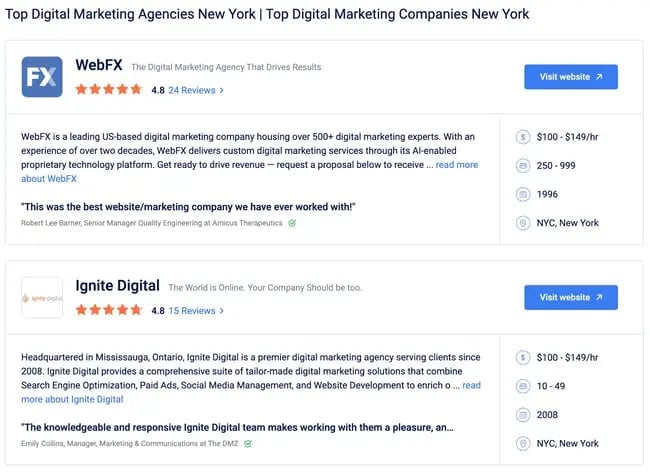
GoodFirms analyzes the top-performing companies and software solutions based on three important pieces of criteria: Quality, Reliability, and Ability. These metrics are further segmented into authentic feedback by customers, a portfolio of the company, its market penetration, years of experience, and serviceability. The companies are then ranked based on their cumulative research scores. GoodFirms offers quick filters to sort the service providers by their hourly rate, location, and number of employees.
Free Customer Referral Templates
45 email & social media templates to ask for referrals and spread the word about referral programs
- Email Templates to Ask for a Referral
- Email Templates for Following Up with a Referral
- Social Copy Templates About a Referral Program
- And More!
Download Free
All fields are required.
Benefits of GoodFirms:
- GoodFirms has over 30,000 customer reviews and 60,000 business profiles on its website.
- GoodFirms offers a discussion platform where customers can form an online community and talk about specific products and brands.
- GoodFirms provides over one thousand unique case studies that outline new trends and technology emerging in your industry.
- When searching for a specific company or product, customer reviews can be filtered by device, location, and industry.
21. Salesforce AppExchange
Have an app on the Salesforce AppExchange? Then you'll want to keep track of your app's ratings and reviews there.
Reviews are based on a five-star rating system, and each app has reviews listed with the most helpful positive review and most helpful negative reviews first, followed by all reviews, from which users can filter by rating, date, and helpfulness. This customer review site has embraced transparency, letting users access thousands of reviews and see the number of downloads with just a few clicks.
Benefits of Salesforce AppExchange:
- There are over five thousand products that are listed in Salesforce AppExchange.
- This site features a live chat option where you can speak with someone if you have questions about a business, product, or review.
- Users in Salesforce AppExchange can comment, like, and report other customer reviews.
Customer Review Sites for Both B2B & B2C Companies
21. Better Business Bureau
A nonprofit site, the Better Business Bureau (BBB) evaluates all types of businesses against a set of best practices for how businesses should treat the public. It doesn't directly recommend or endorse any businesses, products, or services; it simply provides the public with information about businesses, and whether they have met the BBB's accreditation standards. It will also review both accredited and non-accredited businesses.
A business' profile listing on the BBB contains general overview information, like a short company bio and the company's accreditation status, a history of any complaints made about the business and whether they were resolved, customer reviews, and the BBB's A - F rating of the business.
Benefits of the Better Business Bureau:
- There are more than 5.4 million business profiles listed on the Better Business Bureau.
- As a government-sponsored organization, you can trust that its reviews are unbiased.
- Attaining your BBB accreditation shows that your business is reliable and trustworthy.
- Last year in the United States, BBB reviews were accessed more than 120 million times.
- 88% of consumers prefer to do business with a company that is BBB accredited.
22. Glassdoor
Glassdoor is an employee review site that helps anyone — from prospective employees to prospective customers to investors — get an idea of what a company is really like from the inside. In other words, it helps measure the more qualitative factors of things like valuation.
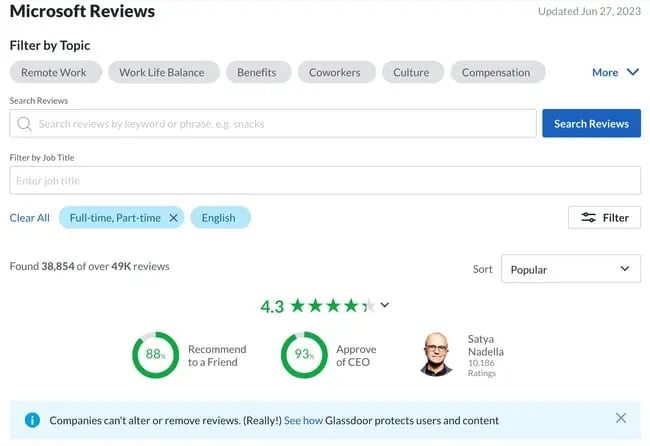
Employees can share what it's like to interview and work at their companies, and the site shows visitors which companies are rated highest by their employees. Many employers use it to build their employment brand so they can target and recruit candidates, but you can also use the reviews to share ideas internally for improvement among your management team.
Creating an employer account is free, and it's easy to track and respond to reviews. For example, you can set up alerts so you get an email each time a new review is posted so you can acknowledge and respond to each one.
Benefits of Glassdoor:
- There are about 90 million reviews, salaries, and insights listed on Glassdoor.
- Over 60 million people use Glassdoor every month to research a company or provider.
- Reviews are left by employees who have experience working with that company.
- When a company responds to a review, it shows you the name of the employee as well as their job title.
23. Blind
Similar to Glassdoor, Blind's platform provides a place employees can leave feedback about what it was like to work at a particular company — though it focuses on the tech industry. On the site, professionals can anonymously communicate with other members, ask questions, provide company insights, and get advice.
What sets Blind apart from its competitors is that it feels like you're dropping in on a water cooler conversation in your office rather than a standard review site.
Benefits of Blind:
- Employers can view discussions in real-time from verified employees.
- Get authentic, anonymous, and unfiltered reviews.
- Over 7 million users across 300,000 companies.
24. Manta
Manta is a marketing agency that also functions as a customer review site primarily features small- to medium-sized businesses. Rather than displaying the top customer reviews right away, Manta organizes search results based on the relevance of your keyword. Then it displays the list of companies with their contact information, so users can quickly connect with a business.
Manta is different than most review sites because it focuses more on connecting people than it does on reviewing products and services. To find customer reviews, you need to select a business, go to their individual listing page, and scroll past their features and products before seeing a review. That way, customers use the reviews as one of the final selling points for purchasing a product or service.
On Manta, the goal is to rank your business as high as possible for each relevant keyword that users can search. So long as your company is in the top search results, you'll have a higher chance of connecting with leads using this site.
Free Customer Referral Templates
45 email & social media templates to ask for referrals and spread the word about referral programs
- Email Templates to Ask for a Referral
- Email Templates for Following Up with a Referral
- Social Copy Templates About a Referral Program
- And More!
Download Free
All fields are required.
Benefits of Manta:
- Manta has data on 35 million businesses spanning across 149 countries.
- Every month, Manta adds 14,000 new listings to its website.
- It's easy to leave reviews on Manta. You just fill out a star rating and write a short description justifying your rating.
25. Capterra
If you're a SaaS business, Capterra is a review site that evaluates software sold by B2C and B2B companies. It has an easy-to-use internal search engine which lets users search for software based on industry, company, or software type. Once a search processes, Capterra displays a list of companies relevant to your keyword and a brief summary describing their product(s).
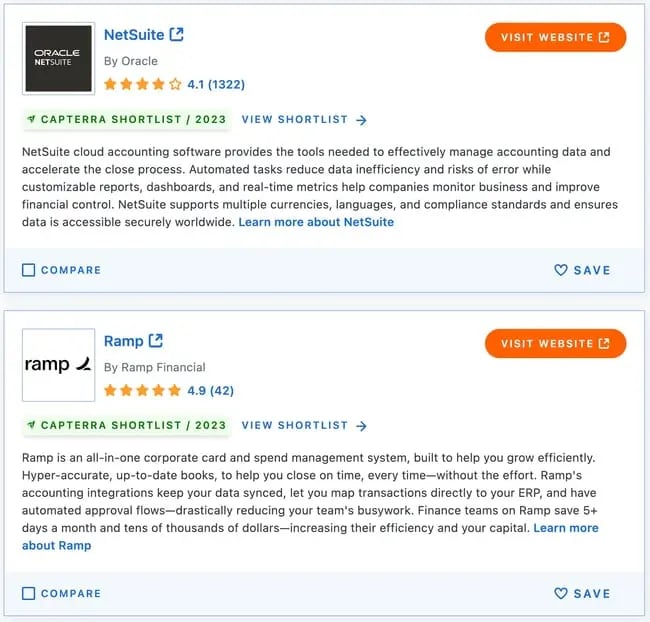
Users can also compare products on the site. Capterra has a "compare to" feature which lets you select up to four companies and displays the benefits of each side-by-side. You can see everything from ease-of-use to the quality of their customer support, all in one comprehensive view. This makes it easy and efficient for users to find software that best fits their needs.
Benefits of Capterra:
- There are over 1.5 million validated customer reviews posted on Capterra.
- Capterra provides 800 categories to choose from as well as reviews for over 50 thousand products.
- Before clicking into a review, Capterra provides a brief overview of the company, its products, and its mission.
- Capterra provides a pros and cons list for each business profile. This gives users a snapshot of the best and worst features for each company.
26. HundredX
HundredX is a review site and a customer service tool. Businesses create an account on the website and ask customers to leave feedback after working with them. HundredX streamlines the process by providing tools that automatically send out surveys and collect feedback on behalf of the business. With this site, customer services teams don't have to manually seek out reviews or scan third-party sites to obtain customer feedback.
The benefit of signing up for HundredX is the reviews are private. If you get a bad review, leads can't see that feedback and be influenced by the negative comments. This gives your company a chance to correct your mistake before losing potential customers.
Benefits of HundredX:
- HundredX provides profiles for over 1,600 businesses spanning across more than 60 unique industries.
- HundredX offers incentives for users to leave reviews. Roughly 90% of its users participate on a regular basis.
- HundredX's tools helps you create an automated system for creating surveys and collecting customer reviews. This provides an ongoing stream of feedback as you continue to grow your customer base.
Other Places for Consumer Reviews
Online reviews also exist on sites that aren't necessarily built just to publish online reviews. Some businesses use their social presence and website to encourage online reviews ... and some brands just get them unsolicited, for better or for worse.
Here are some sites that, if you choose to (please, choose to) can serve as additional hubs for online reviews. And they're awesome, because they have enormous reach, and you have some — if not entire — control over these properties.
27. Facebook Ratings & Reviews
Did you know there's a place on Facebook for fans to leave ratings and reviews of your business? There sure is ... it's named, aptly, Facebook Ratings & Reviews. It appears on the left-hand side of your Facebook Page, and you can't move or remove it like you can other parts of your Page.
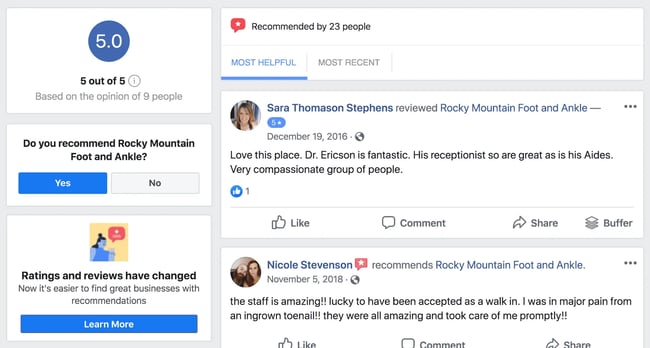
Anyone logged into Facebook can post a rating or review of a business. All they have to do is go to the Reviews section of your Page, click the grey stars to choose a rating, and then write an optional review. They can make that review public, visible to friends, or visible only to them.
Benefits of Facebook Ratings & Reviews:
- There are more than 2.7 billion users who are active on Facebook each month.
- To collect reviews on Facebook, all you need to do is set up a Facebook Business Profile.
- 2/3 of Facebook users visit a local business's Facebook Profile at least once a week.
- Facebook is a platform designed for communication. This increases the chance of having productive conversations with those who leave a review for your business.
28. Twitter
The ridiculously fast-paced nature of Twitter makes it seem like a weird place to try to accumulate reviews. But while users might not always search for reviews directly on Twitter (unless you started some kind of review hashtag, perhaps), tweets are still indexed in search results. That means a user's tweet, whether complimentary or less-than, could pop up in the SERPs when someone's searching for reviews on your business.
Not only that — there are things you can actively do with the positive tweets coming at you. For instance, we tested the element of social proof on conversions here at HubSpot, attaching three tweets that gave positive reviews on an ebook we were promoting at the time. Guess what happened? The CTA with the three tweets converted better than the CTA with no tweets. If you start to "Favorite" tweets that could serve as positive reviews in the future, it'll be easier to find them when you want to use them in your marketing.
Free Customer Referral Templates
45 email & social media templates to ask for referrals and spread the word about referral programs
- Email Templates to Ask for a Referral
- Email Templates for Following Up with a Referral
- Social Copy Templates About a Referral Program
- And More!
Download Free
All fields are required.
Benefits of Twitter:
- There are over 300 million daily active users on Twitter.
- Twitter lets you communicate both publicly and privately with users. This means you can respond to customers on your feed, but also move the conversation to direct messaging if needed.
- Feedback on Twitter is very immediate. When customers want to voice an opinion about your business, they can do it almost instantly on Twitter.
- Twitter reviews are qualitative. You don't have to worry about an overall rating or satisfaction score when customers leave reviews.
30. Foursquare
Yes, people still use Foursquare. In fact, a ton of people are still using it: racking up 55 million monthly active users (MAUs) to be exact.
Not only can you check-in to different locations and businesses using the app, you can also leave reviews on Foursquare — making it another interesting platform where your brand or business could be discovered by potential customers looking for suggestions — and five-star reviews.
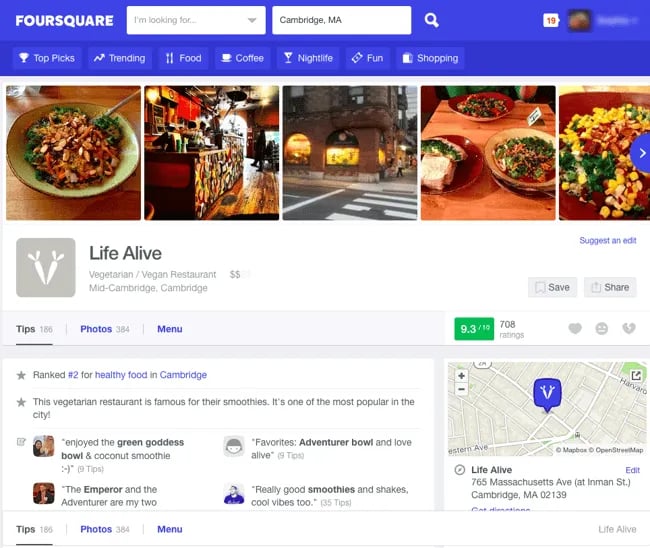
If your business depends on walk-in foot traffic — restaurants, coffee shops, shopping boutiques, etc. — make sure your Foursquare business profile is filled out and updated so people can find you when they go to check-in — and then ask your visitors to review you there.
Benefits of Foursquare:
- There are over 55 million monthly active users on Foursquare.
- Over two million businesses are using Foursquare to connect with customers.
- Foursquare provides marketing tools for your business. You can give special promotions and discounts to existing customers as well as provide tips for new users who are visiting your business for the first time.
31. Superpages
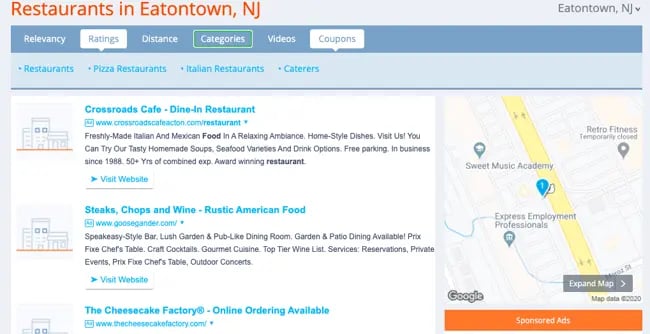
Superpages lets you search for businesses based on their distance from you, overall rating, industry subcategory, online videos, and even promotional coupons.
Once you find a company that you like, this site shows you where the business is on the map as well as a review summary outlining all of the reviews left for the organization. Visitors can quickly assess what other users are saying about the business and use the coupon links to get the same deals as other customers.
Benefits of Superpages:
- Customers primarily use the map/location features to search for businesses. This is ideal for small- to medium-sized businesses that many only be located in a few areas.
- Each company profile has a "view services" tab that explains exactly what the organization has to offer.
- Superpages provides a service that evaluates your brand's online reputation for free.
- Superpages is centered around local participation. So, you can trust that reviews left for your business are coming from customers in your area.
32. Top Ten Reviews
It’s hard to resist a good top 10 list. Top Ten Reviews satisfies this craving by giving visitors a list of 10, detailed reviews for every post on the site. These posts have a wide topic range as well, touching on everything from mattresses to landscaping to laptops.
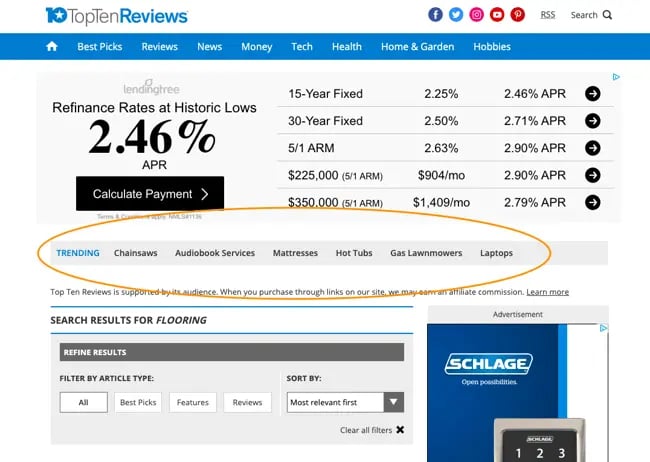
There's also a "trending" bar that shows you categories that are currently popular on the site. As a business owner, this can give you an idea of what consumers are buying more of at that particular moment.
Benefits of Top Ten Reviews:
- Top Ten Reviews has reviews for products ranging everywhere from gas-powered lawnmowers to eyeglasses.
- Each review has an "our verdict" section that summarizes the pros and cons of each product as well as whether or not the website would recommend it.
- For each product, Top Ten Reviews provides the latest deals available and links users to where they can find them.
- Top Ten Reviews are very detailed. They have sections outlining the product's features, its specs, overall performance, user testimonials, and more.
33. Your Own Website
Finally, the one place where you have total and utter control: your website. It's an excellent place to publicize reviews you receive (perhaps embed some of those tweets you favorited?).
You could carve out a section of your website dedicated just to reviews and testimonials, and even include a form so happy customers can submit their unsolicited reviews.
But if you're actively campaigning for positive online reviews and you encounter happy customers who want to leave you a positive review but don't have accounts on sites like Yelp, Angie's List, or Google, it's handy to have a place on your website to publish their kind words. Consider adding testimonials to landing pages and product pages, too.
Benefits of your own website:
- You have complete control over the format and rating system for your reviews.
- You can dictate which reviews you want to publish on your website.
- Having reviews on your website is timely. People browsing your site can read your positive reviews as they're shopping for your products.
Which customer review site is best?
The easy answer is all of them. The right answer is a little more subjective.
The best customer review site for your business will be whichever one(s) your customers are using most. The more reviews you obtain, the more you'll learn about your business and how customers feel about you.
Choose a handful from the list above and get started collecting reviews that can help improve and grow your business.





![5 Expert Tips for Responding to Customer Reviews [+ Examples]](https://53.fs1.hubspotusercontent-na1.net/hubfs/53/customer%20reviews%20examples_featured.png)