Growth in SaaS depens on more than acquisition. A SaaS marketing plan must account for how customers activate, adopt, and expand over time, not just how they enter the funnel. Customers that renew or upgrade their purchases improve recurring revenue. Marketing plans that stop at purchase leave significant revenue on the table.
![Download Now: Free Marketing Plan Template [Get Your Copy]](https://no-cache.hubspot.com/cta/default/53/aacfe6c7-71e6-4f49-979f-76099062afa0.png)
This guide explains what makes a SaaS marketing plan different, which components matter most, and how to build a plan that supports sustainable, compounding growth.
Table of Contents
- What is a SaaS marketing plan?
- How to Create a SaaS Marketing Plan
- What Makes SaaS Marketing Different
- The Best SaaS Marketing Channels to Prioritize
- SaaS Marketing Plan Best Practices
- Frequently Asked Questions
What is a SaaS marketing plan?
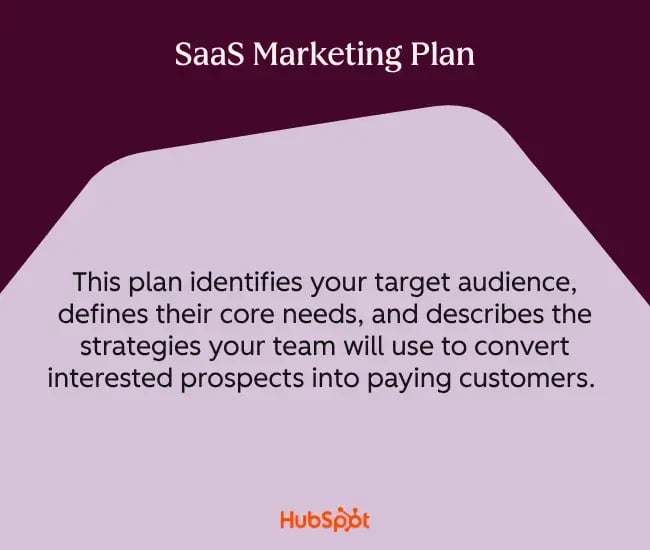
A SaaS marketing plan acts as a structured blueprint to acquire, convert, retain, and expand subscription customers. It starts with identifying the ideal customer profile (ICP) and defining that user’s needs. From there, it outlines the strategies marketing teams use to convert prospects into paying users.
What Makes SaaS Marketing Different
SaaS marketing prioritizes lifetime value over one-time transactions. Traditional marketing strategies celebrate a single point of sale. Meanwhile, digital marketing for SaaS companies must secure ongoing value across months or years. Remember: Subscription models rely on predictable revenue, so growth depends heavily on post-acquisition retention and account expansion. Just l hunting for new sign-ups leaves money on the table.
SaaS requires tighter alignment between marketing, product, and customer success. A structured plan identifies target markets and focuses acquisition spend, freeing up resources for product development and customer success. Ultimately, a structured plan turns customer relationships into predictable revenue engines.
A high-performing SaaS marketing plan actively addresses three distinct pillars.
- Continuous value demonstration: Marketing must consistently remind users of the software’s value to prevent customer churn.
- Resource optimization: Data-driven frameworks streamline engagement tactics, dropping the customer acquisition cost (CAC) while scaling conversion performance.
- Expansion-led growth: Strategic campaigns encourage existing users to upgrade tiers, unlock features, and refer new clients, maximizing lifetime value (LTV).
Pro tip: Treat the SaaS marketing plan as a living document that connects marketing KPIs directly to product usage metrics. If customers do not activate quickly during onboarding, even the best top-of-funnel acquisition strategy will fail to generate sustainable revenue growth.
Free Marketing Plan Template
Outline your company's marketing strategy in one simple, coherent plan.
- Pre-Sectioned Template
- Completely Customizable
- Example Prompts
- Professionally Designed
Download Free
All fields are required.
Form not available
How to Create a SaaS Marketing Plan
- Pinpoint your buyer personas.
- Research the competition.
- Identify key goals.
- Choose your channels.
- Set your budget.
- Measure your progress.
- Test, test, test.
1. Pinpoint your buyer personas.
The first step in creating a SaaS marketing plan is identifying buyer personas. These are structured representations of ideal customers that define who the product is built for, what problems they are trying to solve, and how they make buying decisions. A well-defined persona goes beyond basic demographics and includes:
- Core pain points and goal.
- Current tools or workflows.
- Buying triggers and objections.
- Role in the decision-making process.
For example, a buyer persona for a CRM SaaS product might be an HR leader at a mid-sized company struggling with fragmented payroll and benefits systems. This context shapes what marketing and retention look like.
Clear personas ensure that marketing efforts align with real customer problems rather than assumptions. If the product solves a real problem for that persona, they’re more likely to buy and renew.
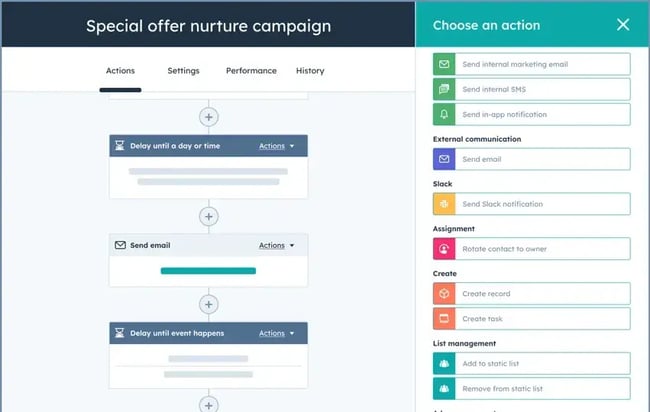
Teams often use marketing automation software to operationalize personas and build tailored lead nurturing sequences for each segment. Automating these tasks allows messaging, content, and timing to adapt based on persona-specific behavior and needs.
Pro tip: Start with focusing on two to three personas. Over-segmentation early makes execution slower.
2. Research the competition.
Next up is researching the competition. The more marketers know about what other SaaS providers are doing, the better prepared they are to outperform. Integrating this information into a marketing plan helps ensure that campaigns aren’t treading on ground already covered by the competition.
3. Identify key goals.
Key goals help teams measure the success of their marketing plan. These goals should be SMART — specific, measurable, achievable, realistic, and time-bound.
For example, consider a team looking to boost SaaS sales.
- Specific: The team wants to increase the number of new, unique visitors that fit the brand’s ICP.
- Measureable: The team will track traffic sources and how visitors were referred to the site.
- Achievable: Analytics and data-tracking tools provide the visibility needed to assess whether targets are realistic.
- Realistic: The team will benchmark against the closest competitor to set attainable goals.
- Time-bound: Everything will get measured across Q3.
4. Choose your channels.
Channel selection in a SaaS marketing plan should map directly to where buyers actually spend time. Marketing teams should consider the ICP, buyer journey, and growth model (product-led, sales-led, or hybrid). Channels will vary based on what the team is selling.
The goal is not to be present everywhere, but to invest in the channels that best support how target customers discover, evaluate, and adopt the product. Audience behavior plays a role, but in SaaS, buying context matters more than demographics alone. Enterprise buyers often rely on research-heavy channels and peer validation, while self-serve users respond to product-led entry points and fast access to value.
For example, research from Gartner found that while 75% of B2B buyers prefer a self-service experience, these journeys more frequently lead to buyer regret and returns. Hybrid interactions, i.e., ones that combine digital touchpoints with human support, are 1.8x more likely to result in high-quality deals.
Content and SEO
Content and SEO drive long-term, high-intent acquisition by capturing demand from users actively searching for solutions. This includes creating blog content, comparison pages, use case pages, and product-led content tied to specific jobs-to-be-done.
During my discussions with SaaS founders, I’ve noticed that SEO and content have received some negative attention in the last few years, particularly in discussions around AI search. Much of this skepticism emerged soon after the launch of ChatGPT, before these systems began pulling from live web data and directing traffic back to the content sources they used.
SEO remains a core growth channel for many SaaS companies. Answer engines often cite content that follows traditional SEO best practices (plus a few AEO specific tips). Today, teams are pairing SEO with AI tools to scale content production more efficiently, while still focusing on quality, relevance, and distribution.
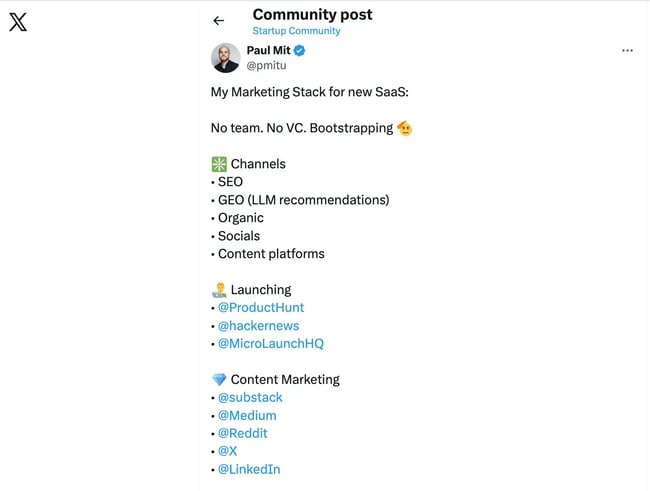
For example, Paul Mit, founder of three SaaS brands (including FoundbaseHQ), calls it an essential SaaS digital marketing strategy pack for any self-funded SaaS:
Pro tip: SEO content can help educate buyers as they consider their options. Posts that target longtail queries can help capture bottom- and mid-funnel demand,
PPC (Paid Search and Paid Social)
Content marketing helps potential buyers learn about the brand and its offerings. PPC can help convert prospects who are already in search of a solution. Paid search and social put the offering in front of people who have a need and may be close to purchasing.
PPC accelerates acquisition by targeting high-intent keywords or specific audience segments. Paid search captures active demand, while paid social supports awareness and retargeting.
Pro tip: Paid social works well for time-sensitive events and situations where teams need to generate pipeline fast.
Email Nurture
Email nurturing converts and activates leads by delivering relevant, persona-specific content over time. It’s critical for guiding prospects through longer SaaS buying cycles and improving activation post-signup.
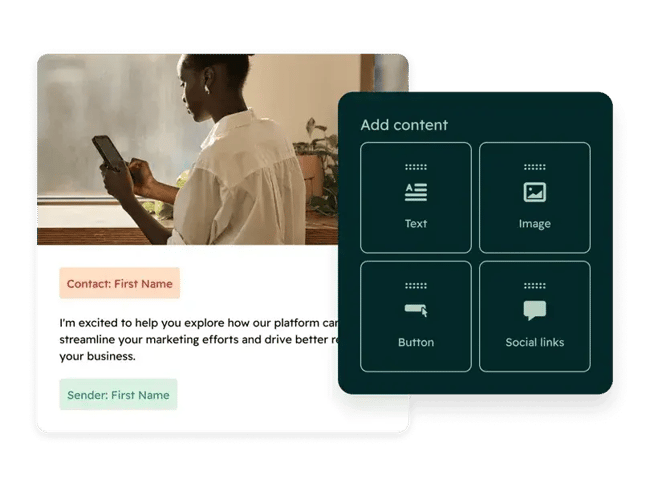
Tools like HubSpot’s email marketing software enable teams to build automated nurture streams tailored to each persona, ensuring that messaging aligns with user intent and stage in the funnel.
Pro tip: Email marketing can help teams move leads from interest to activation. Email can also help keep existing customers engaged, making them more likely to renew their purchase.
Account-based Marketing (ABM)
Account-based marketing personalize every piece of out reach for a specific buyer. Teams may have a list of target companies or accounts. From there, they create marketing and sales enablement material that speaks to that prospect’s needs.
ABM targets high-value accounts with personalized campaigns across multiple touchpoints, often in collaboration with sales. It is highly effective for enterprise SaaS with longer deal cycles.
Pro tip: Use ABM for complex, multi-stakeholder deals and contracts with high annual spend.
Partnerships
Partnerships expand reach through integrations, co-marketing, affiliates, or channel partners. They help SaaS companies tap into existing audiences and build credibility faster. According to a SaaS marketing analysis by Digital Applied, this channel leads to a median pipeline share of 11% for companies.
Pro Tip: Partnerships can help brands enter new markets, where a company could benefit from a partner’s existing credibility.
Product-led growth (PLG)
Product-led growth uses the product itself as the primary acquisition and conversion channel. Free trials, freemium models, and self-serve onboarding work because they allow users to experience value before committing.
Most online users have experienced PLG in one form or another, perhaps without even knowing it. For example, every time someone shares notes, templates, or dashboards built in a tool like Notion, it effectively acts as a product-driven ad. People can see the value of the tool through real usage. The product becomes the marketing, with users demonstrating value organically as part of their workflows.
As a content marketer, I’ve seen PLG often come up in conversations with SaaS founders who prefer not to engage in traditional sales motions like cold outreach or sales calls. For some companies, it becomes a major channel for client acquisition.
Pro tip: As a content marketer, I’ve seen PLG often come up in conversations with SaaS founders who prefer not to engage in traditional sales motions like cold outreach or sales calls. For some companies, it becomes a major channel for client acquisition.
5. Set your budget.
Next is setting the budget. Each channel comes with an associated cost, and the more quickly teams want the results, the more they have to spend. As a result, it’s worth sitting down with marketing, sales, and finance teams to create a budget. This should provide enough room to finish the job without breaking the bank.
6. Measure your progress.
No marketing plan is complete without a clear description of what’s being measured, how often it’s measured, and what results are expected. By defining metrics before starting marketers are better prepared to ensure that outcomes align with expectations.
Measurement in SaaS should connect directly to the funnel and revenue model, including metrics like:
- Acquisition efficiency (CAC, conversion rates).
- Activation (trial-to-paid, time to value).
- Retention and churn.
- Expansion and revenue growth.
Consistent tracking requires centralized visibility across channels and campaigns. Tools like marketing analytics software allow teams to monitor channel performance, MQL velocity, and campaign ROI in one place, making it easier to identify what is driving growth and where to adjust.
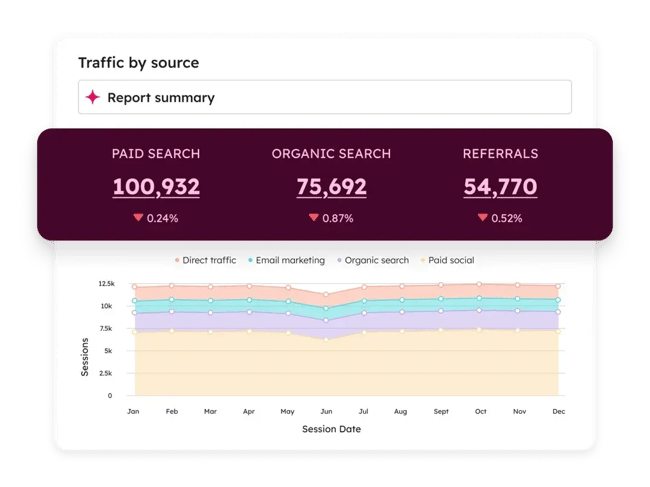
Pro tip: Tie every channel and campaign to a single primary metric. This prevents diluted reporting and makes it easier to identify what is actually moving the business forward.
7. Test, test, test.
Finally, make sure the marketing plan builds in time for both initial and ongoing tests. These tests can be straightforward A/B analyses to see which of the two campaigns offers better performance. They can also take the form of more in-depth user sentiment surveys and social media analysis.
Free Marketing Plan Template
Outline your company's marketing strategy in one simple, coherent plan.
- Pre-Sectioned Template
- Completely Customizable
- Example Prompts
- Professionally Designed
Download Free
All fields are required.
Form not available
The Best SaaS Marketing Channels to Prioritize
Selecting the right channels determines how quickly and sustainably a SaaS business grows. High-growth companies focus on channels that align with their buyer journey, contract value, and acquisition model rather than spreading resources across every available platform.
The table below breaks down the five core SaaS marketing channels, what each is best for, and when to prioritize it.
Pro tip: A comprehensive B2B SaaS marketing plan template simplifies execution by pre-mapping key SaaS metrics directly to actionable channel budgets. This ensures marketing goals tie directly back to recurring revenue targets.
SaaS Marketing Plan Best Practices
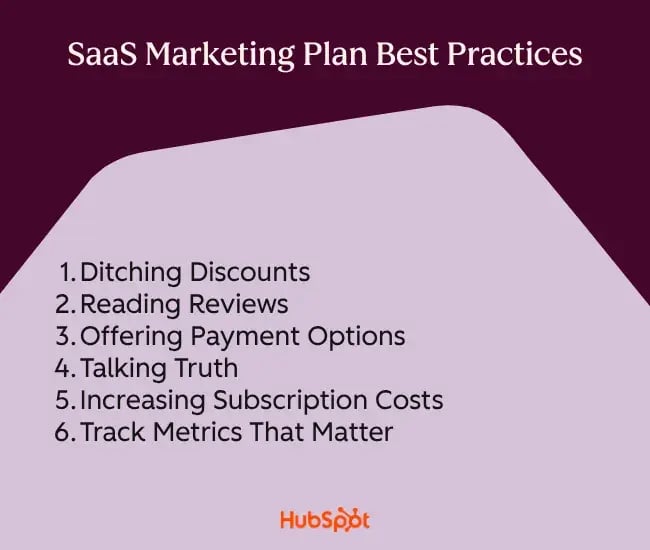
1. Ditching Discounts
Discounts often seem like a win-win: Customers get a better deal, and the business gets new clients. The problem? Discounted rates on SaaS products can bring in customers that are outside the target audience. Once their discounted rate ends, they often churn to other providers that offer similar discounts.
Instead of competing on lower prices, SaaS companies should compete on performance. The stronger questions to answer are what the product offers that competitors don’t, and what genuinely sets it apart in the market.
2. Reading Reviews
The more a marketer knows about what users want, the better. As a result, it’s worth reading SaaS review sites to glean information about user pain points. It’s also a good idea to submit your solution for review.
While specific feedback may be hard to hear, it offers the opportunity to improve the product and generate more revenue.
3. Offering Payment Options
Choice helps keep clients. While some customers may prefer year-long contracts paid month-to-month, some are willing to pay more per month for shorter terms. Others prefer to pay up-front for a year of service (or more) if paying in full helps bring the price down. Offering multiple options helps marketers cast a wider customer net.
4. Talking Truth
Never exaggerate the product’s capabilities or lie about features. This means that if there is a new feature in the pipeline that should go live in two months, leave it out of the marketing plan.
Here’s why: Long-term relationships depend on trust. If you make promises you can’t keep, customers will go somewhere else.
5. Increasing Subscription Costs
It may seem counterintuitive, but raising costs can actually increase the customer base. Customers are willing to pay more for best-in-class services. If marketers can show how their SaaS product addresses customer pain points, a company can charge higher prices while growing their customer base.
6. Tracking SaaS Metrics that Actually Matter
A SaaS marketing plan should be anchored in a small set of core metrics that reflect acquisition efficiency, revenue growth, and retention. These metrics provide a consistent way to evaluate performance across the entire funnel.
- Customer Acquisition Cost (CAC) measures the total cost of acquiring a new customer, including sales and marketing expenses, divided by the number of new customers acquired.
- Customer Lifetime Value (LTV) estimates the total revenue a customer generates over the duration of their relationship with the business.
- The LTV:CAC ratio compares the value a customer generates to the cost of acquiring them, with a common benchmark of 3:1 indicating a sustainable and efficient growth model.
- Churn rate measures the percentage of customers or revenue lost over a given period, indicating how well the business retains its customer base.
- Monthly Recurring Revenue (MRR) and Annual Recurring Revenue (ARR) track predictable subscription revenue on a monthly or annual basis, providing a clear view of growth and revenue stability.
- Net Revenue Retention (NRR) measures how revenue from existing customers changes over time. That may include expansion, contraction, and churn.
Frequently Asked Questions
What is the 3-3-2-2-2 rule of SaaS?
The 3-3-2-2-2 rule of SaaS is a revenue growth trajectory benchmark for early-stage companies. Starting from a baseline of $1M in annual recurring revenue (ARR) as an example, the rule targets tripling revenue for two consecutive years, then doubling it for three consecutive years. This creates a five-year path from $1M to roughly $72M ARR.
The framework emerged as a more realistic alternative to the T2D3 model, which starts from a higher ARR base and demands a more aggressive early growth pace. The 3-3-2-2-2 rule is used primarily by venture-backed SaaS founders as a growth planning tool and investor communication framework. Missing a single year is not necessarily a red flag. What matters most is the overall growth trend and whether unit economics remain healthy across the trajectory.
What is the 3-3-3 rule in marketing?
The 3-3-3 rule in marketing focuses on delivering concise, focused communication that is easy for prospects to understand and act on. The rule organizes campaigns around three elements.
- Three key messages: Focus outreach on the most important value points instead of overwhelming prospects with information.
- Three supporting benefits or proof points: Reinforce credibility and differentiation with specific evidence.
- Three calls to action or next steps: Guide the audience toward conversion with clear next steps.
What is a SaaS marketing strategy?
A SaaS marketing strategy defines the high-level methodology a software company uses to position its product, differentiate from competitors, and reach its ideal customer profile. Unlike a tactical marketing plan that lists specific campaigns and daily schedules, this long-term strategy establishes the core value proposition, pricing tiers, and primary growth models.
What are the 5 C’s of a marketing plan?
The 5 C’s framework offers an analytical structure to evaluate the environmental factors that impact marketing success. A comprehensive plan breaks down these five core components.
- Company: The organization’s product strengths, resource limitations, technological capabilities, and unique competitive advantages.
- Customers: A deep dive into the target market’s behavioral patterns, explicit operational pain points, buying criteria, and segment sizes.
- Competitors: A detailed analysis of direct and indirect market alternatives.
- Collaborators: The identification of external partners, integration ecosystems, agencies, and distributors who help scale the software’s distribution.
- Climate: The assessment of macro-environmental forces, including changing industry regulations, economic shifts, technology trends, and cultural movements.
Build a SaaS marketing plan that scales with the business.
An effective SaaS marketing plan requires an operational framework that scales predictably alongside the business. Successful teams don’t chase after every new marketing trend or every available digital channel. Lasting growth requires a systematic approach rooted in understanding the ideal customer profile (ICP) clarity. From there, marketers can focus on the right channels and post-acquisition retention.
Grounding execution in clear metrics, from activation through account expansion, turns guesswork into a repeatable revenue engine. A structured plan creates the baseline and ensures that every campaign directly advances core business objectives. With a solid planning framework in place, execution can begin with confidence.
Editor's note: This post was originally published in November 2015 and has been updated for comprehensiveness.
Free Marketing Plan Template
Outline your company's marketing strategy in one simple, coherent plan.
- Pre-Sectioned Template
- Completely Customizable
- Example Prompts
- Professionally Designed
Download Free
All fields are required.
Form not available
SaaS
![What are ISVs? [Examples, Benefits, and More]](https://53.fs1.hubspotusercontent-na1.net/hubfs/53/ISV.png)
-1.webp)