Most teams managing website visibility today are trying to optimize traditional SEO performance while also trying to understand what AI answer engines want. Those requirements don’t always overlap, and the tools designed for one don’t always serve the other. AEO tools exist because AI answer engines rely on structure and clarity, not just ranking signals.
Table of Contents
- What is AEO for website optimization?
- What to Look for in AEO Tools
- Best AEO Tools for Website Optimization
- How to Choose Your AEO Tech Stack
- Tool Type vs. Team Need
- Frequently Asked Questions About AEO Website Optimization Tools
What is AEO for website optimization?
Buyers increasingly start product research inside answer engines like ChatGPT, Gemini, and Perplexity instead of scanning a page of blue links. This growth is evident in Google’s report that its Gemini app surpassed 750 million monthly active users by the end of 2025.
That reach is changing how purchases happen. HubSpot’s State of AEO 2026 report found that 44% of marketers have made at least one business purchase based on a brand an AI answer surfaced, and that AI search is now the strongest predictor of purchase intent among CRM software buyers.
Answer engine optimization (AEO) is the practice of improving how often and how accurately your brand appears in AI-generated answers. AEO website optimization tools help teams improve AEO visibility and answer engine readiness by structuring content so models can find, interpret, and reuse it.
Content becomes usable by answer engines when its meaning is explicit. Answer engines synthesize a response from sources they can parse cleanly, so pages with clear entities, stable definitions, and predictable structure are easier to extract and cite than pages that bury the same information in loose prose.
HubSpot AEO Tool
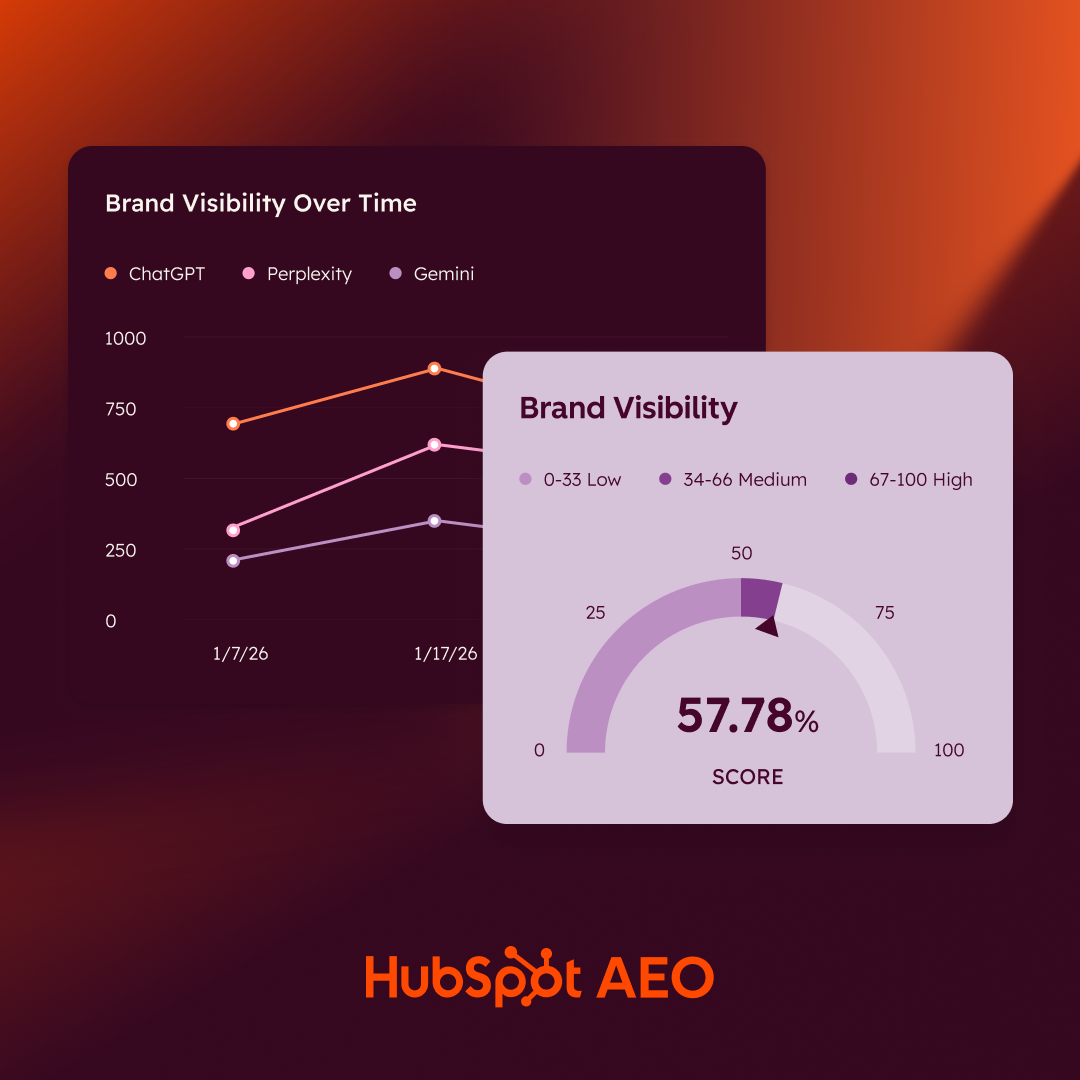
See exactly where your brand shows up in answer engines and take action to close AI visibility gaps.
- Track AI mentions.
- Analyze citations
- Monitor prompts
- Benchmark competitors
AEO vs. SEO: What’s the difference?
AEO differs from traditional SEO because it focuses on answer extraction, citations, and answer engine visibility rather than ranking position. The two work together: SEO earns the crawlable, authoritative pages that AEO then makes extractable.
What Makes Content AEO-Ready
AEO-ready content is extractable, citable, and structured. Extractable content presents clearly defined units that a model can lift. Citable content gives that model a named, stable source to attribute. Structured content uses headings, schema, and internal links to make those units machine-readable and connected.
Pro tip: Five on-page signals are especially useful for AEO readiness. Descriptive headings segment answers, clean URLs keep pages stable, internal links map topical relationships, schema markup helps search systems understand page entities, and strong technical performance supports crawling and user experience.
What to Look for in AEO Tools
The methodology behind a tool roundup matters less to buyers than a clear answer to one question: Which capabilities does my team actually need? AI visibility tools share a common set of jobs, but not every team needs every feature on day one. The right starting set depends on how much you publish and how established your AEO practice already is. The six capabilities below separate the must-haves from the nice-to-haves.
Must-have for every team:
- Multi-engine visibility. Buyers research across ChatGPT, Perplexity, and Gemini, so a tool that tracks a single engine reports on only a fraction of where your brand appears. Treat coverage of multiple answer engines as a baseline requirement, not a premium add-on.
- Source attribution. AEO reporting should show not only whether your brand appears in AI answers, but where that visibility comes from. At a minimum, the tool should separate owned-page citations, third-party citations (where an engine credits external coverage of you rather than your own site), and unlinked brand mentions. Knowing which of the three is driving your presence tells you whether answer engines are using your content directly, borrowing authority from outside coverage, or naming your brand without sending credit to your site.
- Reporting clarity. Output only helps if your team can read it and act. Look for scored visibility, share of voice, and other AEO metrics presented in plain language rather than raw exports that need manual cleanup before anyone can use them.
Add these as your program matures:
- Competitive benchmarking. Benchmarking measures your share of voice against named competitors for the prompts that matter in your category. It delivers the most value once you have a baseline to compare against, which makes it a fast follow rather than a first purchase.
- Schema support and readiness checks. Structured data helps answer engines interpret your entities and relationships, and readiness checks flag where pages fall short of extraction requirements.
- CMS workflow integration. Tools that surface fixes inside your publishing environment let teams act on gaps without moving findings into a separate system. For low-volume sites, that’s a convenience. For high-volume teams, it removes the main delay between spotting a gap and publishing the fix.
How to prioritize: Start with the three must-haves. They establish where you stand and whether your changes are working. Layer in competitive benchmarking once you have a baseline worth measuring against. Teams running high-volume publishing workflows should weigh CMS workflow integration and schema readiness most heavily, because at scale, the constraint shifts from knowing what to fix to fixing it consistently across hundreds of pages.
Best AEO Tools for Website Optimization
Knowing which features matter is the easy part. The harder problem is that most AEO tools describe themselves in almost identical language, so it’s tough to tell what any one of them actually does for your site. The tools below are grouped by the single job each does best, which lets you match a tool to the gap you’re trying to close.
HubSpot AI Search Grader: Free AEO Readiness Testing
If you suspect answer engines are skipping your site but have no idea where you actually stand, that uncertainty is usually the hardest part of getting started. HubSpot AI Search Grader is a free tool that scores how answer engines represent your brand today, giving you a baseline before you commit to any structural changes.
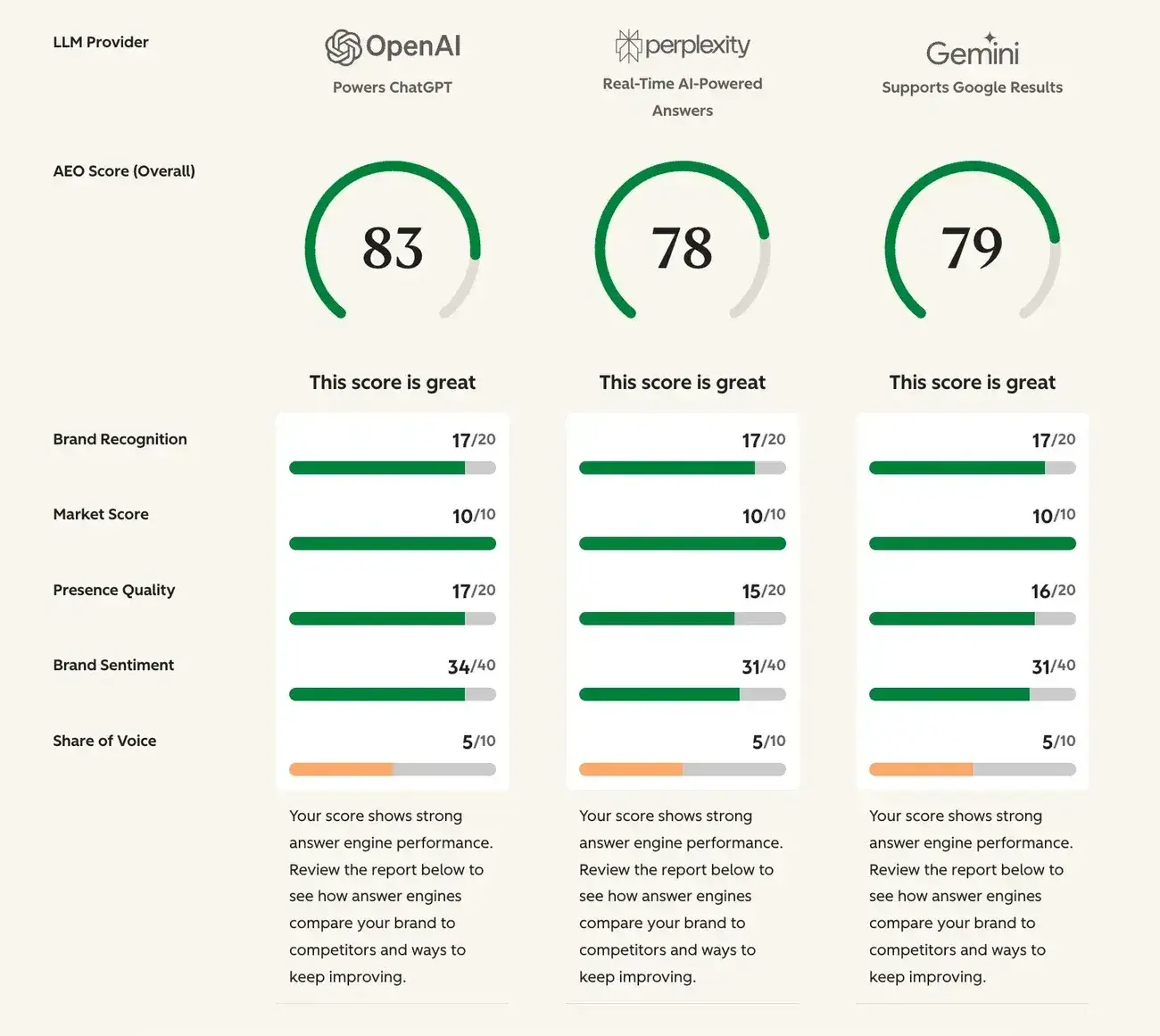
The grader checks how your brand currently surfaces across ChatGPT, Perplexity, and Gemini and returns a share of voice score, so your starting point is a number rather than a guess.
Best for: Teams unsure of their AEO readiness who want a fast, no-cost snapshot before investing in tools or content work.
HubSpot AEO Tool
See exactly where your brand shows up in answer engines and take action to close AI visibility gaps.
- Track AI mentions.
- Analyze citations
- Monitor prompts
- Benchmark competitors
Limitations: The grader is a point-in-time snapshot, not a monitoring tool. It doesn’t track changes over time, follow specific prompts, or benchmark competitors on an ongoing basis, and a strong score doesn’t guarantee citation or inclusion in AI answers.
For continuous tracking, HubSpot AEO picks up where the grader leaves off: It tracks your chosen prompts across answer engines, analyzes which sources earn citations, and benchmarks competitor share over time. HubSpot AEO is a paid tool, available on its own for $50/mo or included in Marketing Hub Pro and Enterprise.
HubSpot Content Hub: CMS for AEO-Ready Content Creation
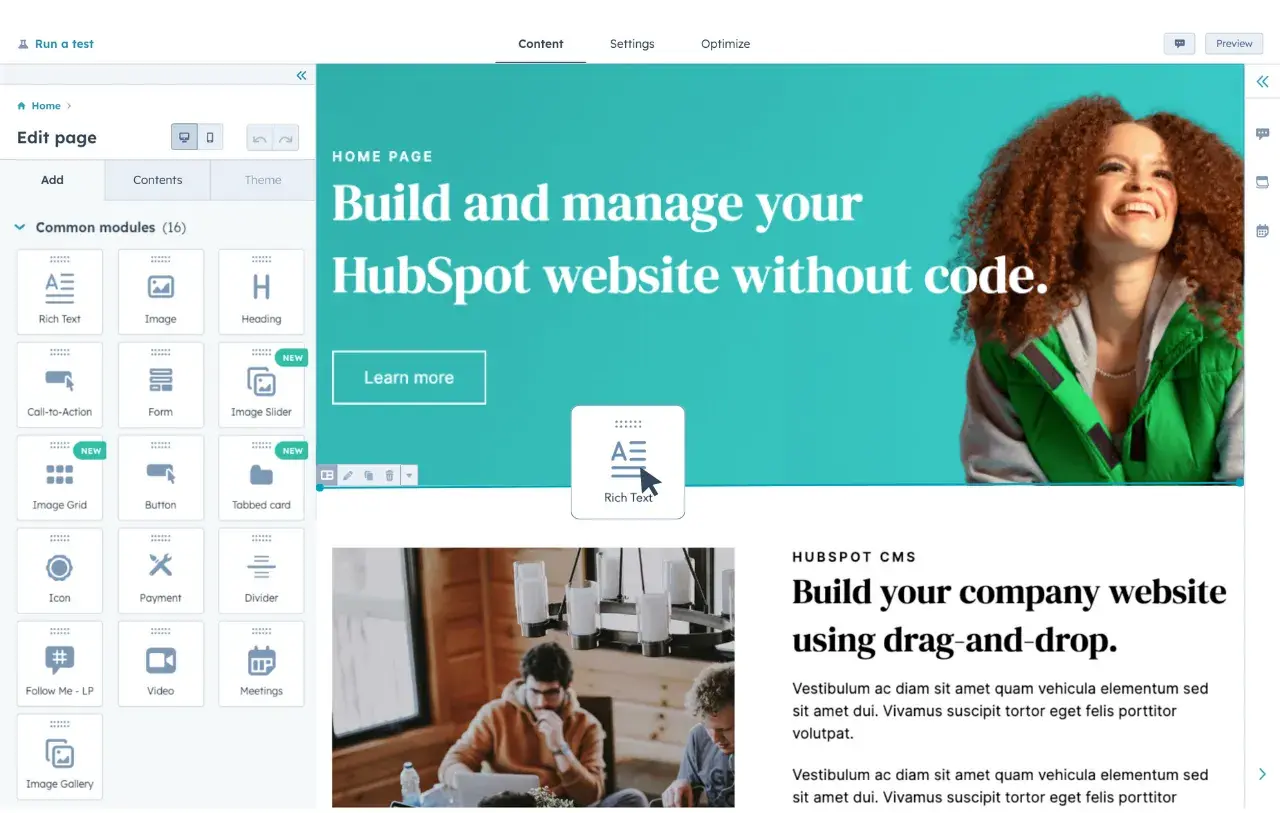
HubSpot Content Hub is a content management system for creating, managing, and publishing website content. It serves as the implementation layer for AEO: the place where teams apply the structure answer engines rely on, rather than a tool that scores or tracks AI visibility.
Why It Matters for AEO
Answer-engine readiness depends on consistent page structure, and Content Hub builds structural guidance into the publishing workflow itself. The SEO recommendations are oriented toward traditional search, so they improve the foundation answer engines draw from rather than measuring AI visibility directly. For visibility tracking and citation analysis, that work happens in HubSpot AEO, a separate tool.
Who It Is For
Content Hub fits marketing teams and website managers who publish regularly and want structural guidance inside their CMS instead of moving findings between separate tools. It pairs well with a dedicated AEO tracker: Content Hub handles creation and on-page structure, while a tracker reports on how often answer engines cite the result.
Supported Capabilities
- CMS for creating, managing, and publishing website content
- In-editor SEO recommendations
- Content publishing and optimization workflows
HubSpot AI Content Writer
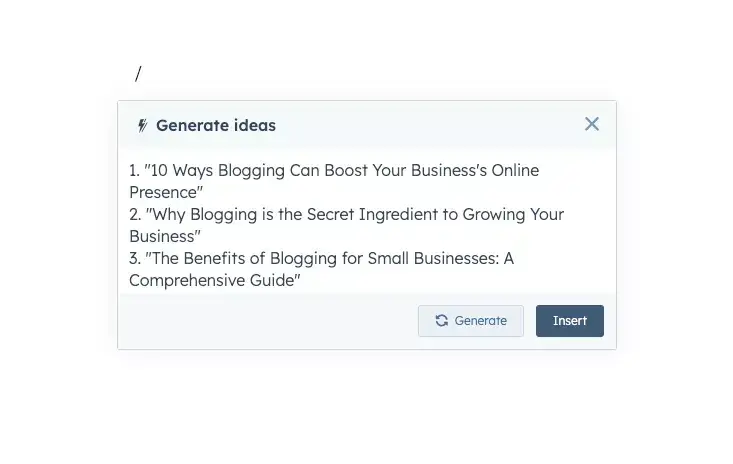
HubSpot AI Content Writer assists with drafting and refining content inside the CMS. The tool supports content creation workflows but does not claim to generate AEO-optimized or AI-citable content by default.
Important to note:
- The CMS provides SEO guidance, not AEO guarantees
- AI writing features support drafting, not strategy or validation
Schema App: Structured Data Tools for AI Extraction
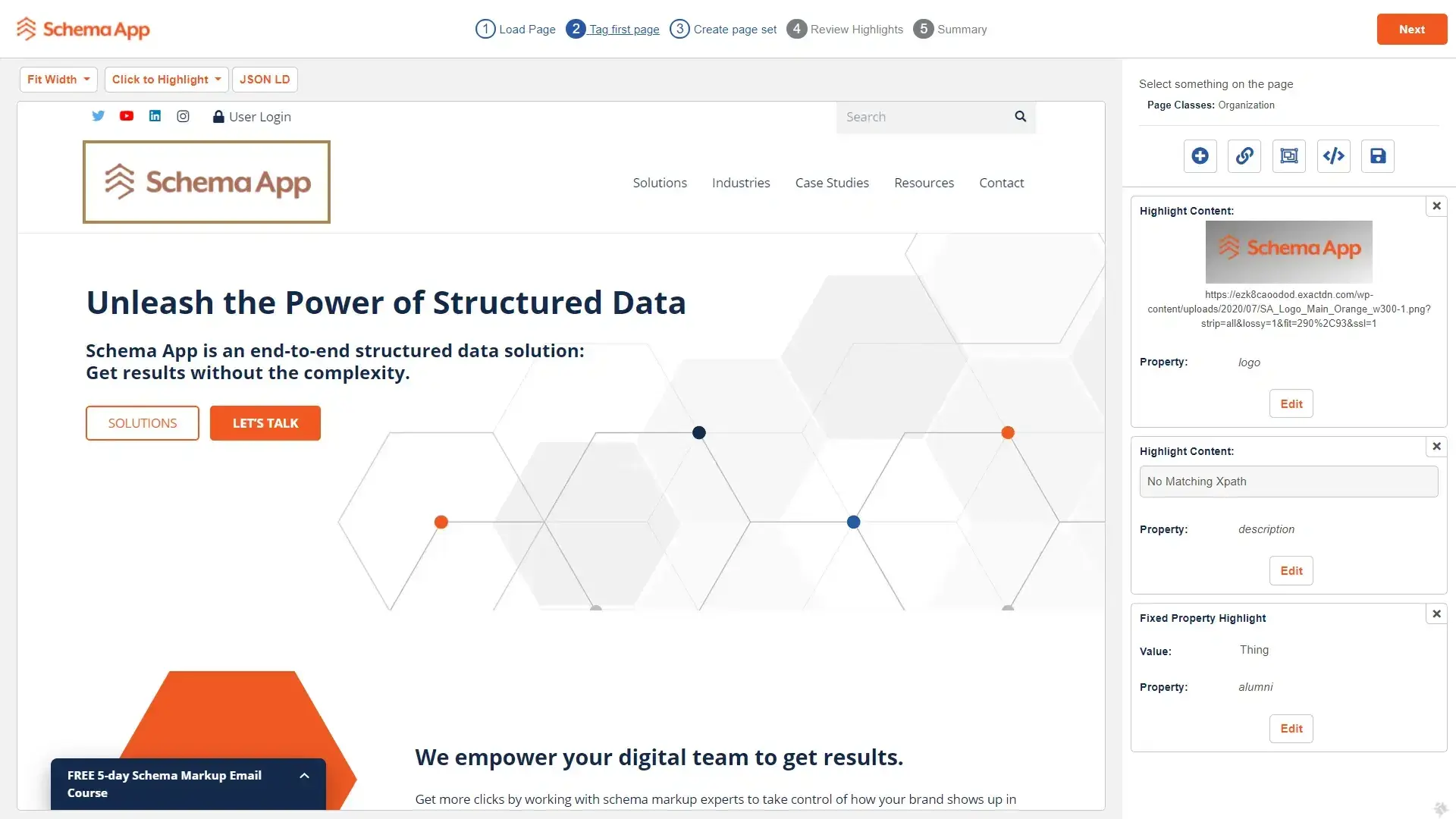
Schema App helps websites apply and manage schema markup at scale, so AI systems can correctly interpret entities, attributes, and relationships. Well-implemented schema markup can increase the likelihood of accurate extraction and citation in AI-generated answers.
Schema consistency becomes harder to maintain as content volume grows. If entity definitions vary across templates, AI systems may interpret the same concept differently across pages, which undermines extractability.
Core Schema Types for AEO
- Organization, Product, and Article schema
- FAQ and HowTo schema for answer formatting
- Entity relationships and attributes
Best for: Teams managing large content libraries where schema consistency across templates is difficult to maintain manually.
Link Whisper: Internal Linking Tools to Support AEO Architecture
Link Whisper identifies contextual internal link opportunities across existing WordPress content, helping teams strengthen site structure, connect related pages, and surface orphaned content. Internal links help search systems discover pages and understand relevance, which can support AEO readiness by making a site’s topic coverage easier to navigate and interpret.
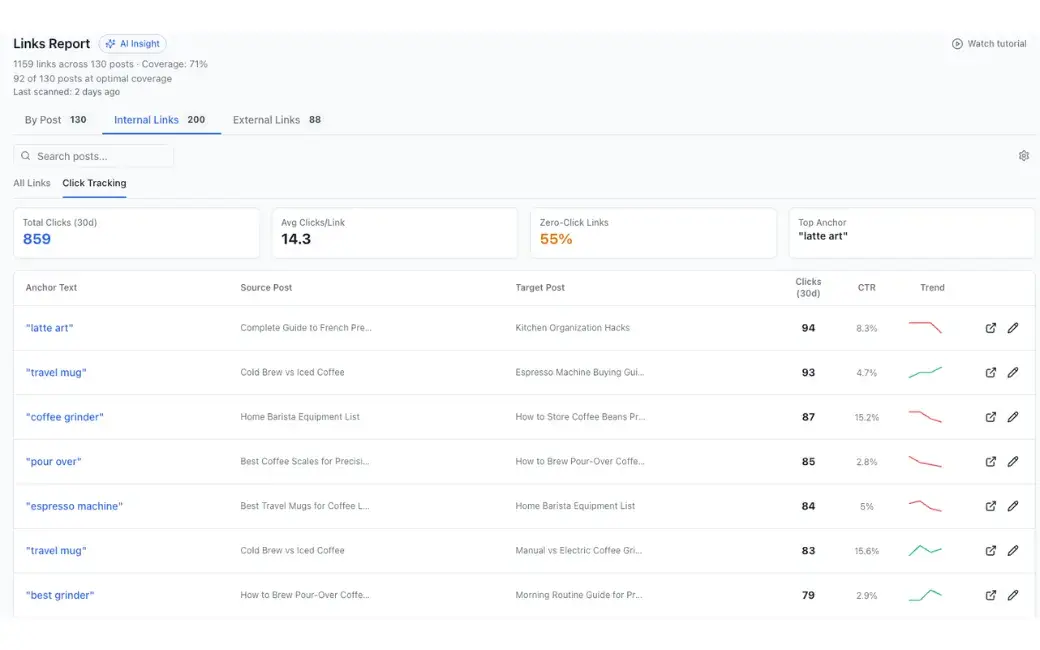
Best for: Content teams with large existing libraries who need to scale internal linking without auditing every page manually.
Profound: AI Visibility Monitoring and Citation Tracking
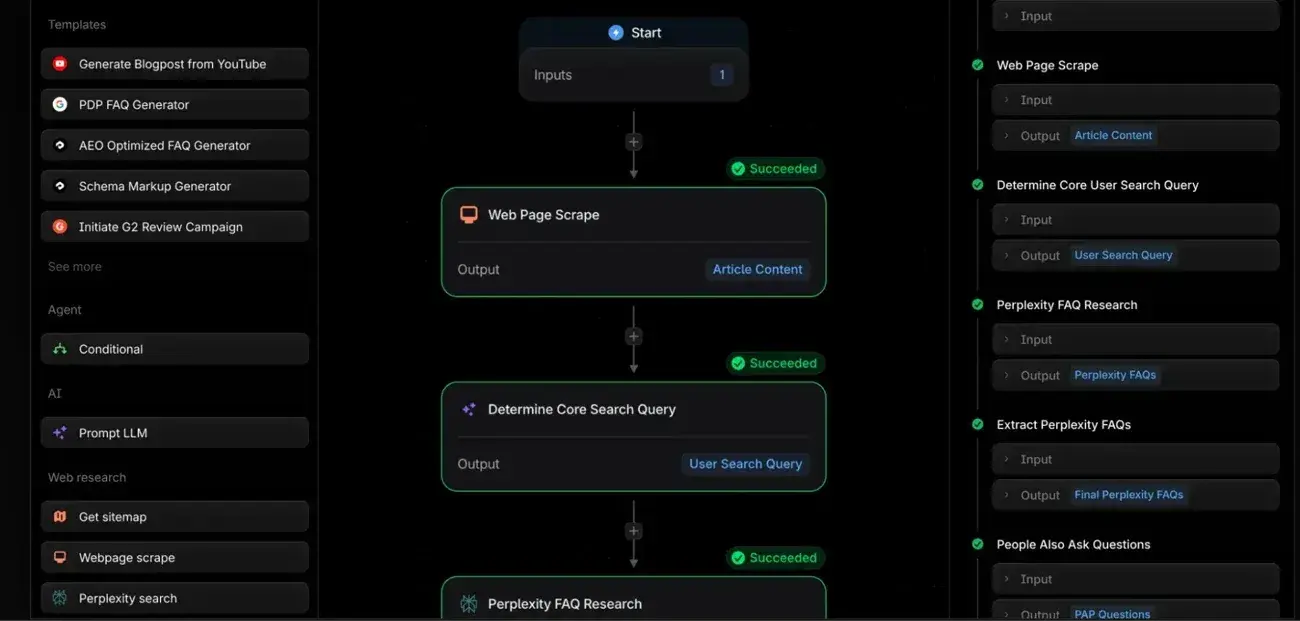
Profound monitors brand and content citation across AI-generated answers and large language models, surfacing which pages appear as named sources in synthesized responses.
AI visibility tools measure patterns and proxies rather than guaranteed inclusion. Citation tracking provides directional insight into answer presence, but no platform can guarantee placement in AI-generated responses.
What AI Visibility Tools Measure
- Answer inclusion across AI systems
- Brand and domain mentions
- Citation frequency trends
Best for: Teams that need to report on AI answer visibility and track whether structural improvements are translating into citation presence across LLMs.
Pro tip: Brand-level trackers tell you how your own pages are performing. To gauge how much the answer engine landscape itself is shifting, AEO Sensor is a free tool that monitors volatility across answer engines at the industry level. It doesn’t report your individual brand’s visibility, but it shows how often AI answers are changing in your category, which helps you separate your own movement from broader churn in the landscape.
Check out our article on free AEO tools.
How to Choose Your AEO Tech Stack
An AEO tech stack is the set of tools used to assess, apply, and maintain AEO practices across a website. The stack determines how teams identify structural gaps and apply improvements consistently over time.
Execution sequence matters because AEO depends on repeatability. Running an assessment can tell you where your content is failing to get picked up by answer engines. CMS workflows determine whether those issues can be addressed at scale. Tool selection depends on workflow maturity and which AEO gaps matter most.
HubSpot AEO Tool
See exactly where your brand shows up in answer engines and take action to close AI visibility gaps.
- Track AI mentions.
- Analyze citations
- Monitor prompts
- Benchmark competitors
Step-by-step Decision Framework
- Define the primary AEO outcome: AEO outcomes typically fall into one of the following: readiness scoring, citation growth, content extractability, or operational scale. You need to know what outcomes you’re targeting before you can choose the right AEO tool.
- Identify the execution surface: The execution surface is the system where content is created and maintained. A CMS is often the execution surface for AEO.
- Select an assessment layer: An assessment layer establishes a baseline for how answer engines currently represent your brand, and an AEO audit helps identify specific content gaps. HubSpot AI Search Grader provides a baseline view of how your brand appears across answer engines, including recognition, sentiment, and share of voice.
- Select an implementation layer: An implementation layer supports structured content creation and governance. HubSpot Content Hub provides CMS workflows and embedded SEO guidance that aligns with AEO requirements.
- Add specialized tools only where gaps remain: Specialized tools should address a single constraint, such as schema governance, scale of internal linking, or AI answer tracking.
How the HubSpot AEO Stack Works Together
An effective AEO tech stack follows a clear execution sequence rather than functioning as a collection of disconnected tools. The HubSpot stack supports that sequence from baseline to tracking to execution, with Marketing Hub and Content Hub together forming the execution layer.
Step 1, the baseline: HubSpot AI Search Grader. The Grader is a free, point-in-time snapshot rather than a deep technical audit. It scores how answer engines currently represent your brand, covering recognition, sentiment, and competitive standing, so you know where you stand today.
Step 2, the diagnostic layer: HubSpot AEO. Available on its own for $50/month or included in Marketing Hub Pro and Enterprise, HubSpot AEO tracks your chosen prompts over time across ChatGPT, Perplexity, and Gemini, analyzes which domains and content types earn citations, and benchmarks your share of voice against named competitors. It then turns that data into prioritized recommendations. In Marketing Hub, it uses your connected CRM data to suggest which prompts to track from the start.
Step 3, the execution layer: Marketing Hub and Content Hub. Marketing Hub Pro or Enterprise is where AEO surfaces the gap and connects it to action, so recommendations live in the same platform where you create content rather than in a separate system. Content Hub is the CMS where teams turn those recommendations into published pages, writing and structuring the content with in-editor SEO recommendations. Together, they keep diagnosis and execution in one place.
Tool Type vs. Team Need
Use this table to match AEO tool categories to common team needs. Each row maps a tool type to its primary AEO job and the signal that indicates when that tool becomes necessary.
Frequently Asked Questions About AEO Website Optimization Tools
How can I optimize my website for AEO?
Start with structure: descriptive headings, clean URLs, and a logical page hierarchy that answer engines can follow. Add schema markup so engines can better interpret your entities, and use internal links to connect related pages into topic clusters. Then check your AI visibility with a free tool like AI Search Grader.
What is the best AEO tool?
There’s no single best AEO tool; the right one depends on your goal. For a free baseline, AI Search Grader rates your current visibility across answer engines. For structured publishing, HubSpot Content Hub builds optimization into your CMS. For ongoing citation monitoring, a tracker like HubSpot AEO reports where your pages appear in AI answers.
Is AEO better than SEO?
Neither is better; they solve different visibility problems. While SEO focuses on rankings and clicks in SERPs, AEO focuses on brand mentions and citations in AI answers. They share the same foundation, since pages that rank well in organic search are more likely to be cited by answer engines. Treat AEO as a complement to SEO, not a replacement for it.
Is SEO dead or evolving in 2026?
SEO is still relevant in 2026. Strong organic rankings now do double duty: They win clicks in search and also improve your odds of being cited in AI answers. What’s changed is that you’re optimizing for a second surface, answer engines that synthesize responses. The practical move is to keep investing in SEO while layering AEO on top.
How long does it take to see results from AEO changes?
It depends. Structural fixes (cleaner headings, schema, internal links) can get picked up fast: Answer engines can recrawl and re-index an updated page within hours to a few days, so the content becomes eligible to surface almost immediately. Citation gains move more slowly. One Profound analysis of roughly 900 newly published marketing pages found a median lag of 6.81 days between publishing a page and its first citation in ChatGPT or Claude. Broader visibility and share of voice take longer still, since answer engines weigh accumulated authority, and you’re tracking a daily trend rather than a single result.
Getting Started
Getting cited in AI answers starts with knowing where your brand stands today. Run the free AI Search Grader to see how ChatGPT, Perplexity, and Gemini represent your brand, then use that score to decide which structural fixes to make first. It’s the fastest way to turn AEO from guesswork into a baseline you can build on.
Editor's note: This post was originally published in March 2026 and has been updated for comprehensiveness.
HubSpot AEO Tool
See exactly where your brand shows up in answer engines and take action to close AI visibility gaps.
- Track AI mentions.
- Analyze citations
- Monitor prompts
- Benchmark competitors
AEO