![The Social Media Content Calendar Template Every Marketer Needs [Free Template]-4-1](https://53.fs1.hubspotusercontent-na1.net/hub/53/hubfs/Imported%20sitepage%20images/The%20Social%20Media%20Content%20Calendar%20Template%20Every%20Marketer%20Needs%20%5BFree%20Template%5D-4-1.png?width=112&height=112&name=The%20Social%20Media%20Content%20Calendar%20Template%20Every%20Marketer%20Needs%20%5BFree%20Template%5D-4-1.png)

I mourned a little the day Duo, Duolingo’s mascot, died. And, I rejoiced when the company brought him back, saying the neon-green owl faked his own death. That’s the power of social media marketing. Brands have the opportunity to tell stories in creative formats that can win our attention.
That’s a huge market. According to Statista, there were 5.24 billion social media users as at Feburary 2025, representing over 63.% of the entire world’s population. In 2024, people spent an average of 143 minutes daily on social media. But guess what? Sometimes, I spend three to four hours daily on social media and most likely, other people do too.
![Download Now: The 2025 State of Social Media Trends [Free Report]](https://no-cache.hubspot.com/cta/default/53/3dc1dfd9-2cb4-4498-8c57-19dbb5671820.png)
Whether you’re a marketer or business owner, your potential customers are active on social media platforms and it's vital to stay on top of different social media trends. In this guide, I’ll share everything I’ve learned about social media marketing, its benefits, and how to build a social media marketing strategy that delivers the results you want.
Table of Contents
What is social media marketing?
Social media marketing is the process of creating content for social media platforms to promote your products and/or services, build community with your target audience, and drive traffic to your business. With new features and platforms emerging every day, social media marketing is constantly evolving.
While social media marketing is incredibly valuable and beneficial to your business growth, your strategy will differ based on which social media networks your audience spends their time on.
Benefits of Social Media Marketing
Trust me, there are many reasons why your company should use social media marketing.
According to marketers surveyed for a recent Social Media Marketing Industry Report, here are some of the top benefits of social media marketing:
- 83% of marketers increased exposure for their business.
- 73% of marketers increased traffic.
- 65% of marketers generated leads.
- 62% of marketers developed loyal fans.
- 52% of marketers increased sales.
The State of Social Media in 2025
Explore the top trends in social media for brands to know and optimize your social strategy.
- AI Content Creation
- Community Building
- Social Media Shopping
- Social Vs. Search Engine
Download Free
All fields are required.
Here are a few other trends we found in our 2025 HubSpot Social Media Trends report:
- Most marketers agree (69%) that more shopping will happen directly on social than on brand websites or third-party marketplaces.
- Over 40% of Gen Z and millennials report buying a product directly on socials in the past three months.
- 85% of social media marketers say building an active social media community is crucial for a successful social media strategy in 2025.
- 89% of social media marketers say optimizing content for on-platform search is important to their overall social media marketing strategy.
Beyond data, here are a few benefits of building out your social media marketing strategy.
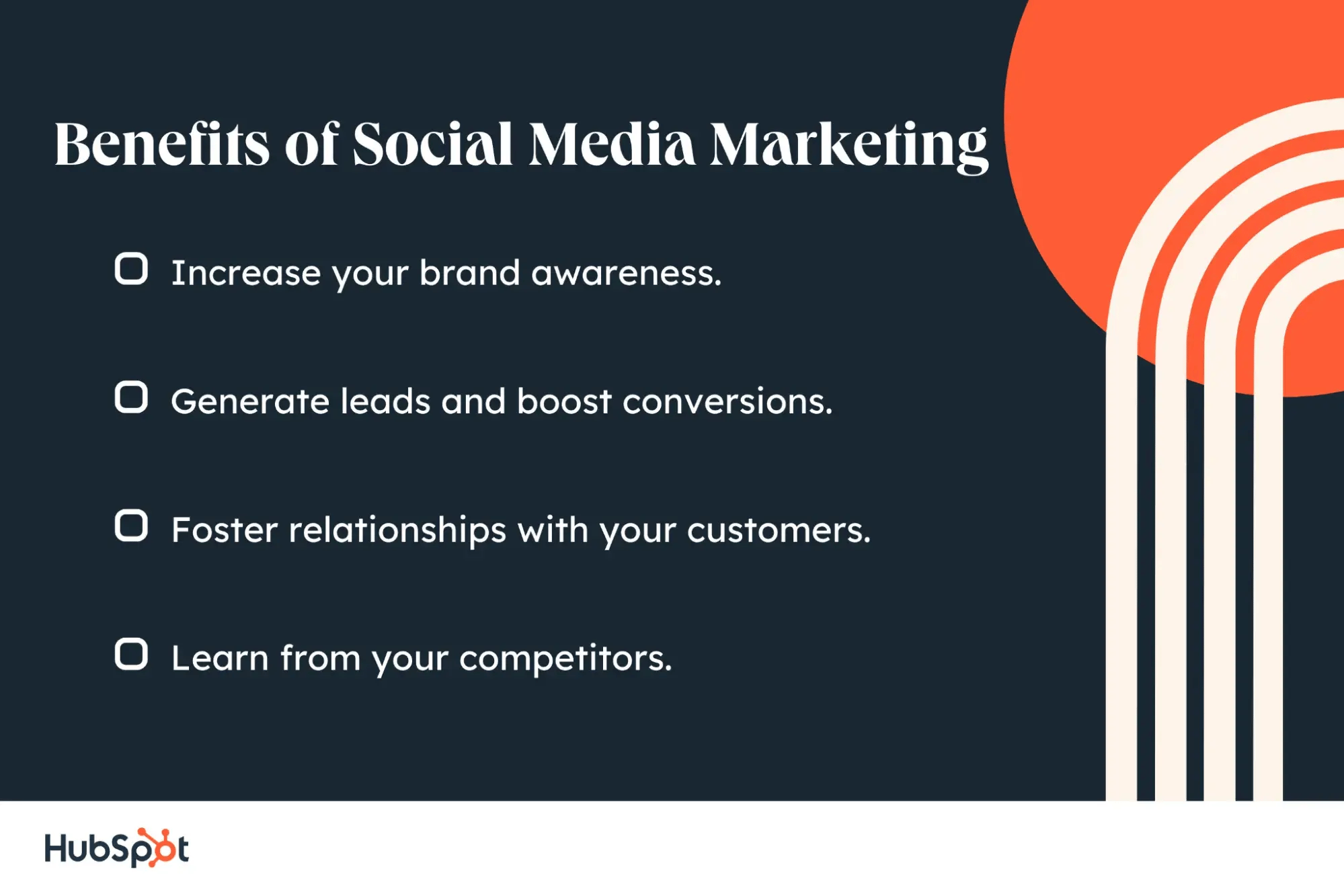
1. Increase your brand awareness.
With so many people on social media, you have the opportunity to massively increase your brand awareness. In fact, social media is known to drive engagement through comments, likes, shares, reposts, and saves. Your digital presence also directs traffic straight to your site, allowing you links to offers in your profile, bio, and posts.
2. Generate leads and boost conversions.
Promoting and sharing your products on social media is a simple way to improve lead generation, boost conversions, and increase sales. Here are some examples I found on how to use social media to generate more leads.
- Create contests for your visitors and followers on your social media profiles.
- Include links to your website and offers in the bio sections of your profiles.
- Host live videos to announce new products and provide updates or details about exciting news at your company.
- Implement a social media marketing campaign on one of your channels.
- Sell your products through your social profiles. For example, you can enable Facebook's Shop Section or Instagram's Shopping feature on your profiles. These features allow people to click on products you've shared and view price, material, and size information. Then, they can easily proceed to checkout and buy the product directly from you.
Pro tip: Want to learn how to create a Facebook page for your business? Check out this video:
3. Foster relationships with your customers.
Connecting and engaging with your social media followers can encourage them to build lasting relationships with your business. So, I strongly recommend you interact with them on your posts, respond to their questions and comments, and provide any help they may need.
You can also ask them questions about your products and services or their pain points. Beyond that, you can host giveaways for people who share their thoughts with your team. That can show how much you value customer input and support.
4. Learn from your competitors.
I’ve noticed that social media allows you to look at what is and isn't working for your competition. You can watch how audiences respond to their social media tactics, the products they‘re promoting, or their level of interaction with followers. You can then decide what should or shouldn’t change regarding your company's approach.
Looking for your example? Before the 2025 Super Bowl, probiotic soda brand Poppi sent 32 influencers vending machines for their gameday watch parties. The campaign sparked digital backlash for being out of touch.
Competitor Ollipop could then learn what not to do. Ollipop also posted “32 machines times $25K per machine yikes” on one of Poppi’s videos, feeding into the fire.
Learn how to conduct a competitive analysis to discover how you can beat the competition.
How to Create a Social Media Marketing Strategy
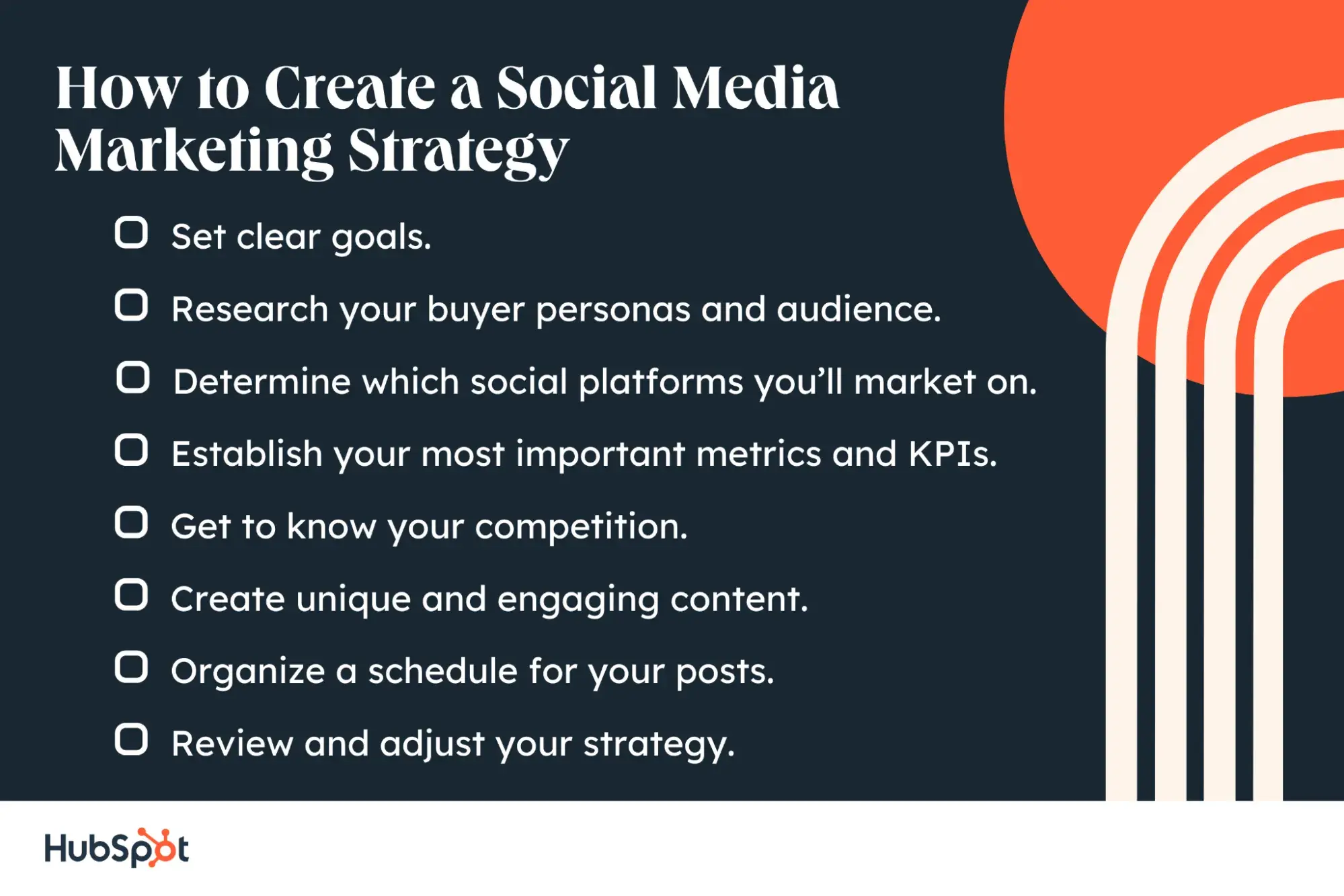
- Set clear goals.
- Research your buyer personas and audience.
- Determine which social platforms you’ll market on.
- Establish your most important metrics and KPIs.
- Get to know your competition.
- Create unique and engaging content.
- Organize a schedule for your posts.
- Review and adjust your strategy.
Although social media constantly evolves, there are foundational steps required to succeed. As a result, you can follow the same steps you would take to create a marketing strategy and narrow it to a specific channel.
To help you hit the ground running, here are the steps I recommend for creating a winning social media marketing strategy.
Step 1: Set clear goals.
The first step is to define your social media goals and ensure they align with your overall business objectives.
Ask yourself: What do you want to achieve through your social media marketing efforts? Maybe you want to increase brand awareness, drive website traffic, generate leads, boost customer engagement, or improve customer satisfaction.
Once you've set your high-level goals, I recommend you break them down into smaller, actionable steps. This will help you identify the specific actions and strategies needed to achieve your goals.
For example, if your goal is to increase website traffic through social media, actionable steps could be to increase posting frequency, optimize content for sharing, or run targeted ad campaigns.
Step 2: Research your buyer personas and audience.
Once you’ve established your goals, I suggest you determine who your buyer personas and audience are. You can then target their needs and interests appropriately.
Here’s another thing I’ve learned. If you don’t know your target audience and buyer personas, most likely you’ll share the wrong type of content and fail to get a response that can help you achieve your goal.
So, consider the people you're trying to reach and how you would classify them as a group. For example, if your company sells trendy leggings and joggers, you might classify your target audience as millennials who like to wear stylish athletic apparel regularly.
By considering your buyer personas and target audience, you'll find it easier to identify what content engages them successfully. Feel free to use our Buyer Persona Templates or the Make My Persona Tool to save time and hit the ground running.
Pro tip: I recommend gathering feedback from your followers to get insights into their preferences, pain points, and satisfaction levels. This data can help you identify areas for improvement and even refine your buyer personas.
HubSpot's Social Media Management Software
Time-saving tools to help you prioritize your social interactions — so you can connect with the people who matter most.
- Manage campaigns.
- Monitor mentions.
- Attribute value.
- And more!
Step 3: Determine which social platforms you'll market on.
Here’s another thing I’ve also realized quickly. With lots of social media platforms out there and new ones showing up constantly, it’s important to identify which platforms you’ll use.
But remember, it‘s more about your target audience’s needs, where they spend their time, and the kind of content you want to create.
“It's important to be where your audience of potential customers is today and where they might be tomorrow,” said Andrew Delaney, former social media marketing manager at HubSpot. “It's better to be ahead of the curve than behind.”
For example, Gen Z is all about TikTok. If that’s your primary audience, I’d suggest you use that platform and meet them where they already are. But if you're going for that target audience of athleisure-loving millennials, you may want to focus most of your social media efforts on Instagram — millennials are the largest user base on the platform.
Stephanie Morgan, founder and CEO of social media agency Social Lock, echoes this sentiment.
“Think about their behaviors and where they hang out online. If that's Pinterest, use that platform for your brand. If that's TikTok, use that platform for your brand,” Morgan adds. “Don't waste time on a platform that your ideal client avatar is not very active on.”
When it comes to the content you want to create, consider what each platform specializes in. For example, if you want to share video-forward content, a platform like YouTube is your best bet.
All this to say, you aren’t restricted to best-fit channels. Having a presence on multiple platforms is important, and I always encourage experimentation on emerging platforms or those that don’t entirely align with your social media marketing needs. Not only does it diversify your strategy, but it also helps you interact with the unique audiences and requirements of each platform.
Pro tip: I only recommend this type of experimentation for businesses with established marketing strategies on platforms that work and deliver your desired results. Placing all of your stake in something new, if you’re just getting started, can do more harm than good.
Step 4: Establish your most important metrics and KPIs.
Your social media strategy should be data-driven, regardless of your goals or industry. That means focusing on data that aligns directly with your goals and social media metrics that matter.
Here are the most important metrics I recommend tracking:
- Reach. Post reach is the number of unique users who saw your post. How much of your content actually reaches users’ feeds?
- Clicks. This is the number of clicks on your content or account. Tracking clicks per campaign is essential to understand what drives curiosity or encourages people to buy.
- Engagement — or the total number of social interactions divided by the number of impressions. Engagement shows how well your audience perceives you and their willingness to interact.
- Hashtag performance. What were your most-used hashtags? Which hashtags were most associated with your brand? Having these answers can help shape the focus of your content going forward.
- Organic and paid likes. Beyond a standard “Like” count, these interactions are attributed to paid or organic content. Given how much harder organic engagement is to gain, many brands turn to ads. Knowing these differences can help you budget your ad spend and the time you invest in different formats.
- Sentiment. This measures how users react to your content, brand, or hashtag. Did customers find your recent campaign offensive? What type of sentiment do people associate with your campaign hashtag? It’s always better to dig deeper and discover how people talk or feel about your brand.
Step 5: Get to know your competition.
Whether you’re just starting with social media marketing or have years under your belt, I believe it’s important to always understand the current state of your industry. That’s especially true when it comes to your competitors.
That’s why I recommend carrying out a competitive analysis from time to time. It will allow you to understand who the competition is and what they’re doing well (and not so well). You’ll also get a sense of what’s expected in your industry, which will help you set your own social media targets. You can even spot opportunities.
Say, for example, my main competitor is dominant on Facebook but puts little effort into Twitter or Instagram. Rather than solely focusing on winning fans away from a dominant player, I can also look to networks where my audience is underserved. I’m not abandoning Facebook (because I know it works), but I’m diversifying my strategy and building a presence where an untapped audience is ready to hear from me.
Pro tip: I recommend monitoring your competitors’ customer reviews to gain insights into what their customers like and dislike about them. Pay attention to common complaints or recurring themes to understand their pain points, and aim to solve those pains in your own strategy.
Step 6: Create unique and engaging content.
With billions of social media users around the globe, I’m sure some of your followers — or the people browsing your profile — have also seen your competitor's content.
This is why it’s so important to have an engaging social media presence that stands out and provides viewers with a reason to click that “Follow” button and interact with your brand. If your content keeps them engaged, social media algorithms will also work in your favor and prioritize showing them your content because they’ve demonstrated an interest in it.
I follow quite a few brands on Instagram, but I only see content from 3 or 4 regularly. That’s because they have the most engaging content that inspires me to interact. And the algorithm prioritizes their posts over others.
Not sure what's considered engaging? Morgan has a recommendation.
“My number one tip to brands for creating engaging content on social media is to do market resarch first, because what will be engaging depends on the audience,” Morgan said. “When you know what your audience likes and needs to know, you can create content that engages those interests.”
Want some hard facts about what content to create?
Here are some insights directly from consumers, courtesy of my teammate Max Iskiev's research into consumer trends:
- Consumers spend the most time engaging with visual content, specifically images/photos/infographics (53%) and short-form video content (44%).
- Millennials spend the most time engaging with short-form video content.
- Gen Z, Millennials, and Gen X enjoy video content the most, and Boomers enjoy images/photos/infographics.
- Relatable content is the most memorable content overall among consumers. For Gen Z and Millennials, funny content is the most memorable.
Another tip to help you get creative is to consider the content your competitors are sharing and how you can uniquely promote your products.
Also, take advantage of the features offered by the platforms you use. For example, you can create live videos on Facebook to share the latest details about a product launch or conduct a giveaway.
You can also use your current customers' and promoters’ content (user-generated content) and re-post their content or encourage them to use a hashtag to share their experiences and pictures with your products.
Lastly, leverage trends. Social media trends are always coming up, especially on short-form video platforms like TikTok. Don't be afraid to join in, but you still have to be intentional about how you do it.
“If the trend started happening three weeks ago, probably you’ve missed the boat,” Morgan said. “Catching the trends early is the best way to capitalize on it, without coming across as inauthentic, or like you're trying too hard, or worse [as] 'chuegy' — see Gen Z for that one.”
Step 7: Organize a schedule for your posts.
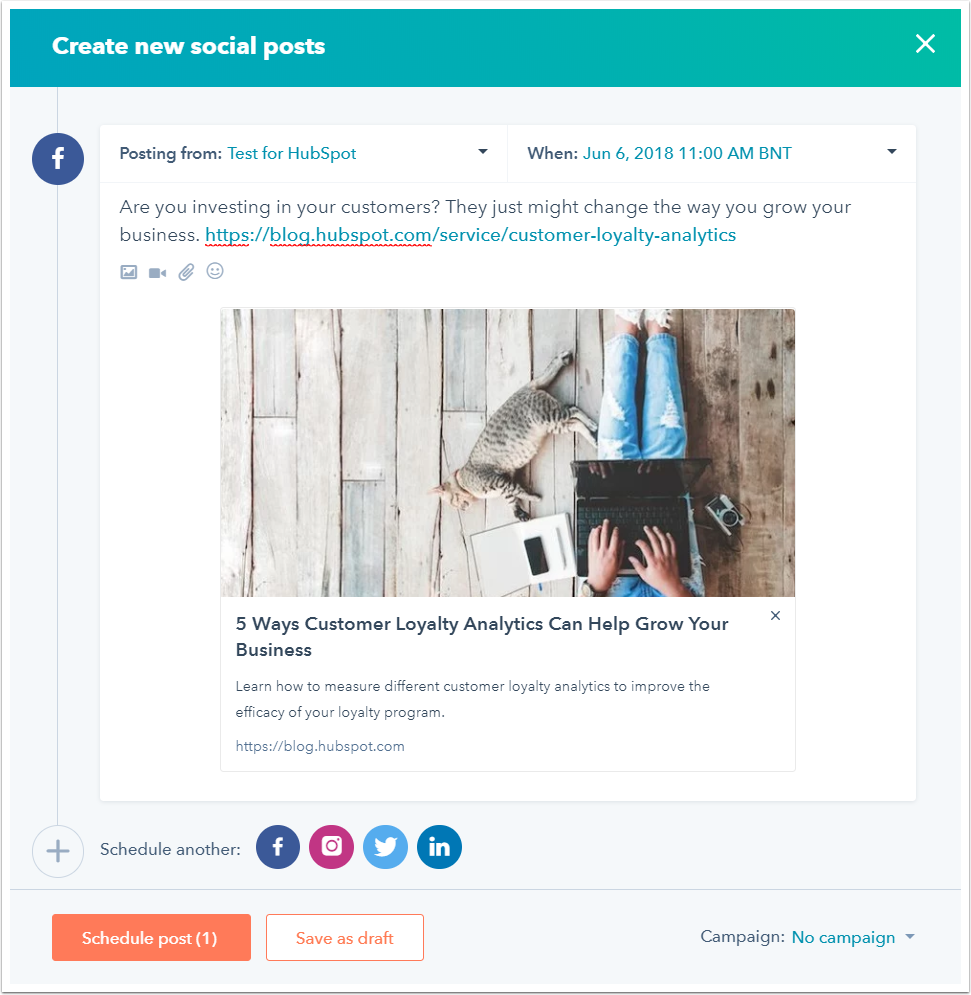
Using a social media management solution is one of the easiest ways to ensure your content is shared as planned. These tools let you write captions, prepare pictures and videos, and schedule posts in advance. Some even automatically share your content on schedule and monitor post interactions and engagement.
I recently tested a few social media content calendar tools, and I can’t recommend them enough. They were all extremely easy to use, and the time-saving benefits are a worthwhile investment for any social media marketer looking to optimize their process and save time.
Here are some examples:
HubSpot
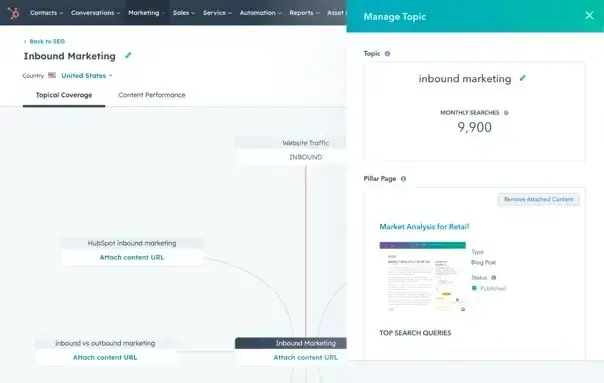
HubSpot offers a social media tool — as part of the marketing software — to help you publish and monitor your content and create real connections with your followers. You can schedule and publish your content in advance and compare in-depth reports on your posts’ engagement to understand the performance of various platforms, types of content, and posting times.
You can also use HubSpot’s social media tool along with the platform’s Starter Customer Platform — a bundle that includes tools from all the other HubSpot products. This opens a lot more room as to what you can do on your social accounts. There are also chatbots to handle social customer service and invoice management for social ecommerce.
Sprout Social
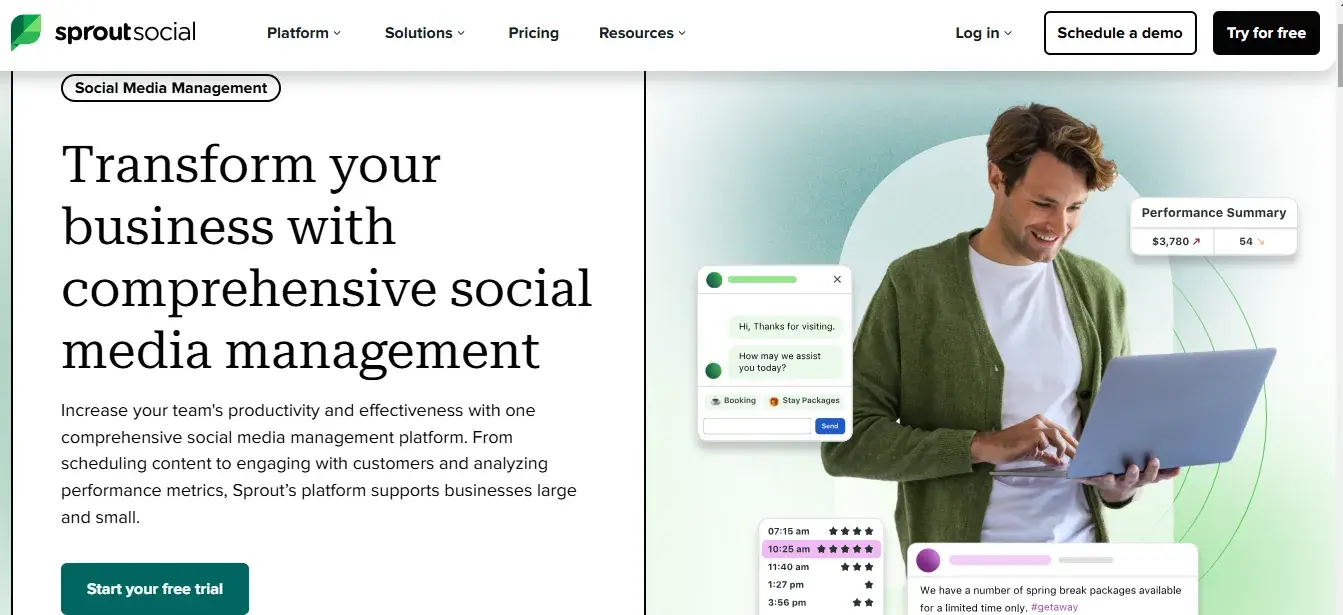
Sprout Social is a social media marketing and management solution. Its dashboard is designed to help your team organize and plan content creation, manage campaigns, understand engagement, and review content reports and analysis.
Hootsuite
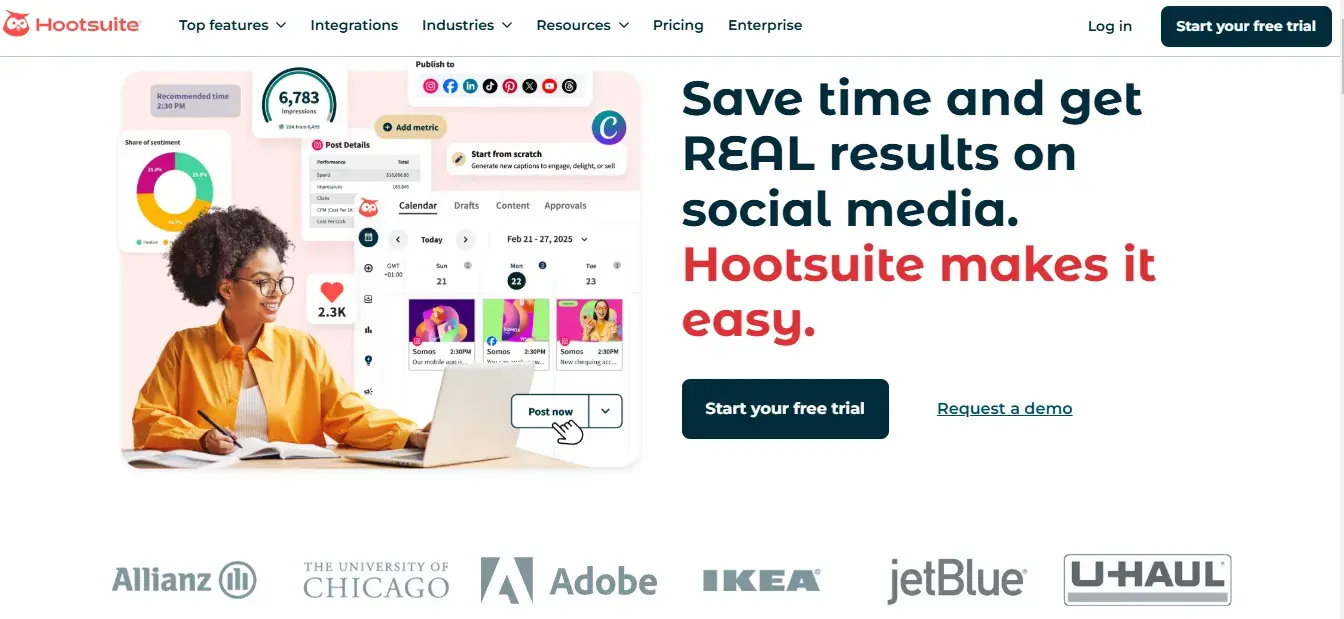
Hootsuite is a social media management platform for finding, scheduling, managing, and reporting on your content. You can schedule posts in advance on all of your channels at once and measure your ROI with comprehensive content analysis.
How often should you post on social media?
As a rule of thumb, you should only post on social media when you have quality content to share (meaning that there’s a reason you’re posting it). This can help you strike the right balance when it comes to posting frequency.
Morgan says the top mistake she sees brands make regarding social media marketing is focusing on the quantity of content instead of the quality.
“They think they need to post every day, so they force themselves to create posts to fill up the calendar,” she said. “Odds are, every single one of those posts isn't going to be very valuable to the ideal customer. I've coined this 'clutter content.'”
Instead, she recommends downsizing in quantity and upping the quality.
“It's better to post two or three times a week with super valuable content versus posting seven times a week with only one or two valuable posts,” said Morgan.
There are plenty of studies and resources available explaining social media post frequency standards by industry and platform for you to follow. Every business is different, so find what works for your audience.
Look at your analytics to see when you get the most engagement, and create a posting schedule that speaks to those times. Then, you can begin experimenting with more or fewer posts — as well as other factors such as the time of day you're posting on social — to determine what provides the highest level of engagement.
You can use our Social Media Content Calendar Template to plan ahead and stay organized. But if you’re a startup, try our Social Media Content Calendar Template for Startups.
Pro tip: Here’s a cheat code for you. Iskiev, who I mentioned above, asked marketers how often they post on social media, and they most commonly said multiple times per week. This can be a guiding metric.
The State of Social Media in 2025
Explore the top trends in social media for brands to know and optimize your social strategy.
- AI Content Creation
- Community Building
- Social Media Shopping
- Social Vs. Search Engine
Download Free
All fields are required.
Step 8: Review and adjust your strategy.
Social media is always evolving, so I think it’s important to periodically check in and make sure your strategy is still effective. This could be monthly, quarterly, or annually, depending on your business needs and resources. Use these reviews to determine what's working, what needs improvement, and what new opportunities to explore.
When conducting these reviews, take the time to assess whether you're making progress toward your social media goals and objectives. Compare your actual performance against the benchmarks and KPIs you established. Then, identify any gaps or areas that need improvement.
I think it’s also important to keep up with the latest trends. Be sure to monitor changes in social media algorithms, user behavior, or new features, as well as emerging platforms and technologies.
How to Analyze Your Social Media Marketing Impact and Results
One of the most important aspects of social media marketing is keeping track of your posts on every channel. You can do this by reviewing and managing your social media metrics, and at the end of the day, ensure all your efforts help you achieve your goals.
Social Media Metrics
Social media metrics are data related to the success ofyour posts, and your impact on your audience and customers on various platforms. These metrics may include data about levels of engagement, likes, follows, shares, and all other interactions on each platform.
Some metrics I think you should monitor and track include:
- Engagement. This includes clicks, comments, likes, and replies on your social media posts. There are also platform-specific types of engagement, such as "Saved“ posts on Instagram and ”Pinned" posts on Pinterest.
- Reach. The number of people who have seen any content associated with your page or profile is your reach.
- Followers. This is the number of people who have clicked your “Follow” button and regularly see your content in their feeds.
- Impressions. This is the number of times a post is seen, regardless of interaction. Impressions usually come from someone scrolling through their feed.
- Video views. On Facebook, YouTube, Instagram, or any other social channel with video capabilities, this is the number of views each gets.
- Profile visits. This is the number of people who have visited your profile.
- Mentions and tags. This is when someone mentions your brand, business, or profile in their own post. Someone might add your profile’s handle to a piece of their content with a direct tag, usually using the “@” symbol. For example, “loving these new shoes from @nike.”
- Reposts. This is when a member of your audience posts a piece of your content on their profile.
- Shares. This is the number of times people have shared content from your profile to their own or with their network.
I also learned that you can influence all of these metrics, increase your social following, and improve overall engagement on your profile by using the same tactics you use to generate leads and boost conversions.
Morgan adds that the metrics you focus on will depend on your business’ level of maturity:
- If you're new, focus on building an audience and creating awareness. Key metrics: reach, impressions, audience growth.
- If you're growing, focus on building trust. Key metrics: Likes, saves, comments, DMs.
- If you're established, focus on retaining and nurturing. Key metrics: Likes, saves, comments, DMs.
- If you're launching something, focus on selling. Key metrics: DMs and clickthrough rate
How to Measure Social Media Metrics
Here’s something else I also discovered. There are multiple ways to monitor your social media metrics. Some platforms even have built-in analytics tools for you to use, such as:
You might also choose to use an analytics and tracking tool such as Google Analytics. I view it as a great option if you want to track your social media and website metrics.
Meanwhile, HubSpot’s marketing analytics software is an excellent choice if you want to get a unified overview of all your campaigns. This helps you gauge how each specific channel contributes to your overall marketing goals.
For example, you can identify how many visitors a specific social advertising campaign drives to your website, then zoom in on the details to see how many of these visitors turned into qualified leads or made a purchase.
Lastly, remember that social media scheduling solutions, like Sprout Social, also have built-in social media monitoring and analytics tools.
Any metrics tracking tool you use will give you a better understanding of what your followers and audience respond well to and what you should consider modifying to improve engagement.
Now that you have a good understanding of the benefits of social media marketing, how to build your strategy and analyze your impact and results, I’m going to share some popular social media marketing platforms next.
Social Media Marketing Platforms

- Users: Over 3 billion monthly active users worldwide
- Audience: Cusp of Gen Z and Millennials (most users aged 24-35)
- Industry impact: B2C
- Best for: Brand awareness, advertising, community building
Facebook is the largest and most established social media platform. Since its launch in 2004, it has become an invaluable tool for B2C businesses, offering advanced advertising tools and organic opportunities.
TikTok
- Users: Over 1.5 billion active monthly global users
- Audience: Primarily Gen Z followed by Millennials
- Industry impact: B2C, then B2B
- Best for: Short-form, creative video content, user-generated content, building brand awareness
When you think of short-form video, you probably think of TikTok. The platform rose in popularity in 2020 and shows no signs of slowing down. It's one of the best platforms for community building, with marketers ranking it in third place behind YouTube.
Check out this post to learn more about how the TikTok algorithm works
- Users: 2 billion monthly active users
- Audience: Nearly even distribution of Gen Z and Millennials
- Industry impact: B2C
- Best for: High-quality images and videos; user-generated content; advertising
Instagram launched 13 years ago and has taken the world by storm. When it comes to sharing visually compelling content, Instagram is where brands go. Another thing that sets the platform apart is its advanced eCommerce tools.
Today, users can discover brands, browse their products and/or services, and complete a purchase without leaving the app — making Instagram a hard platform to beat. In fact, consumers say Instagram offers the best in-app shopping experience, and Instagram Shops is the most popular social selling feature among social media marketers.
X (formerly Twitter)

- Users: 611 million monthly active users worldwide
- Audience: Primarily Millennials
- Industry impact: B2B and B2C
- Best for: Public relations, customer service, community building
While Instagram focuses on visuals, X (formerly Twitter) focuses on words. Since the early days of 140-character tweets (the limit is now 280), the platform has now expanded to include an audio tool called X Spaces, a community-building tool for creators called Twitter Subscriptions, and Twitter Blue for those interested in an elevated Twitter experience.
The State of Social Media in 2025
Explore the top trends in social media for brands to know and optimize your social strategy.
- AI Content Creation
- Community Building
- Social Media Shopping
- Social Vs. Search Engine
Download Free
All fields are required.
- Users: 770 million active users worldwide
- Audience: Older Gen Z (24+), Millennials (largest user base), and Gen X
- Industry impact: B2B
- Best for: B2B relationships, business development, and social selling
LinkedIn is Facebook‘s professional cousin. It’s perhaps the only platform where its audience is clearly defined: Working professionals looking to network and seek out new opportunities.
That makes it the ideal platform for B2B companies looking to identify key decision-makers, prospect and sell, and also build an industry-specific community.
YouTube
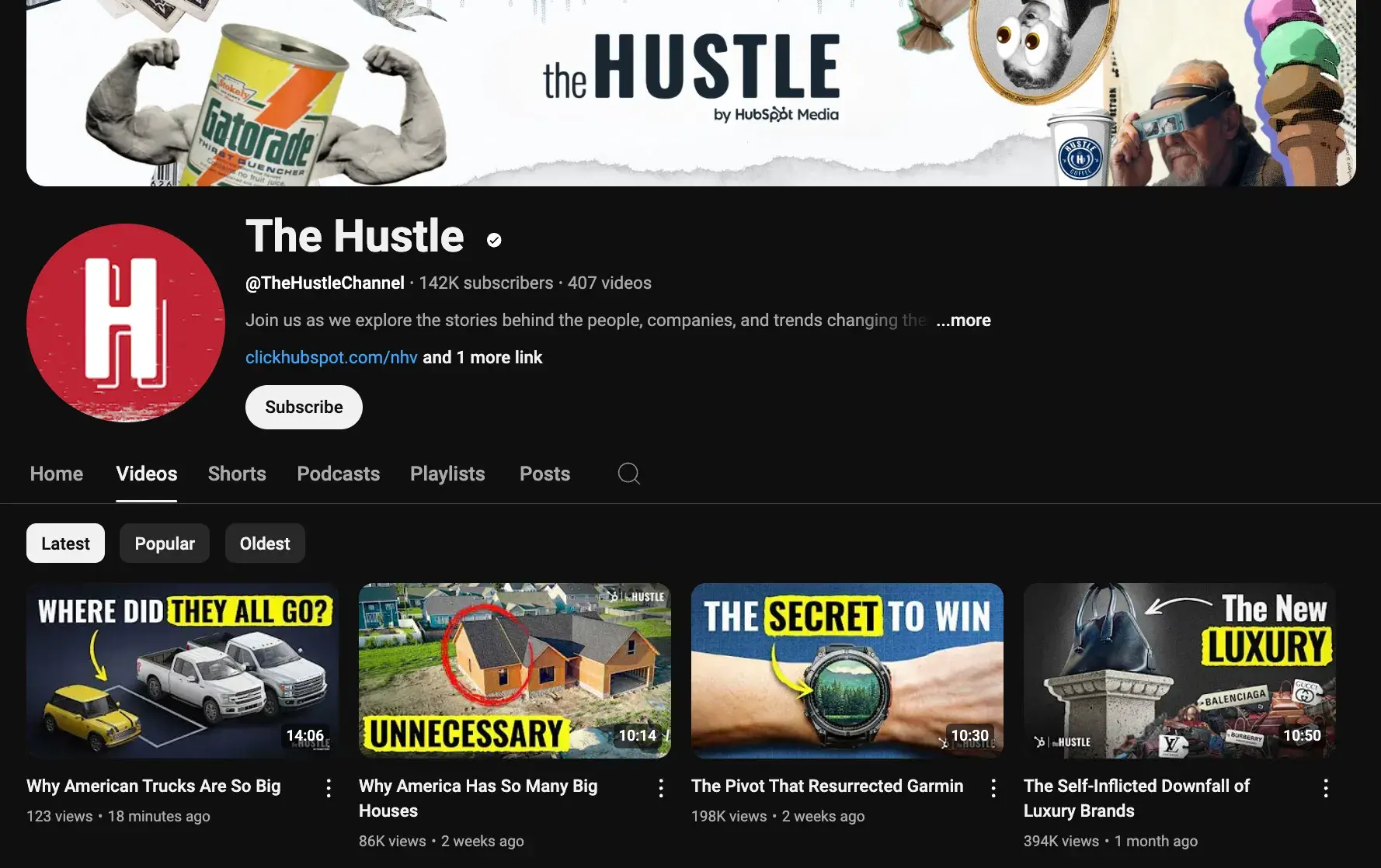
- Users: Over 2.5 billion monthly active users worldwide
- Audience: Primarily Millennials but has a strong audience across gender and age demographics
- Industry impact: B2C and B2B
- Best for: Brand awareness, long-form entertainment, how-to and explainer videos, SEO, advertising
YouTube is the second most visited website in the world. In addition, marketers name it the second-best platform to build community.
In addition to being an incredibly popular platform, its users tend to stay longer because it features mostly long-form content — making it an ideal platform to share educational content.
Snapchat

- Users: 800 million monthly active users worldwide
- Audience: Primarily Generation Z
- Industry impact: B2C
- Best for: Brand awareness, advertising, location-based marketing
When Snapchat came out in 2011, it introduced content that you could share with your friends and would expire after 24 hours.
Many thought the brand would disappear once Instagram introduced Stories, the same feature with a different name, but it continues to be popular among young adults.
- Users: Over 500 million monthly active users worldwide
- Audience: Primarily Millennials with a solid audience in Gen Z
- Industry impact: B2C
- Best for: Visual advertising; inspiration
Think of Pinterest as a visual storyboard that allows users to get inspiration for everything from fashion to home decor.
96% of top searches on Pinterest are unbranded, showing that Pinners are open to new ideas. In addition, 80% of weekly Pinners say they feel inspired by the shopping experience on the platform. So, not only is it a great discovery tool, but it's also a way for brands to build their narrative through visual stories.
- Users: Over 2.5 billion monthly global users
- Audience: All age groups
- Industry impact: B2C and B2B
- Best for: Brand awareness, customer service, community building
WhatsApp is a popular global instant messaging app that people in over 180 countries use to send texts, pass voice messages to family and friends, share images, and also make calls through their phones.
In 2018, WhatsApp Business was introduced, making it easier for businesses of all sizes to quickly communicate with their customers globally, provide customer support when required, build a community, and constantly engage their target audience and prospects.
In the third quarter of 2024, WhatsApp Business had 966.5 million monthly active users.
Social Media Marketing Resources
To my surprise and excitement, I discovered a lot of social media marketing resources that can help you build a social strategy for your company. Here are my favorites.
Social Media Marketing Courses and Training
If you feel it's necessary for your specific situation, here are two ways to earn an education in the field of social media marketing
1. Earn a certificate administered by a company.
HubSpot offers a free social media certification course that teaches you how to engage with your customers and improve conversions. You'll also gain a better understanding of how to develop your strategy, extend your reach, and measure your social media ROI.
LinkedIn Learning is another platform where you can earn a certification and share it on your profile.
2. Leverage YouTube university.
YouTube is a goldmine of educational content. With a quick search, you‘ll find hundreds of long-form videos offering in-depth courses on social media marketing. Granted, you can’t connect with a live educator. However, it's free and can be a great starting point before you dive into a paid course.
Social Media Marketing Books
Reading relevant content about social media marketing is another great way to learn more about the field. Here are some highly-regarded books I’d recommend.
1. Likable Social Media, Third Edition: How to Delight Your Customers, Create an Irresistible Brand, and Be Generally Amazing on All Social Networks That Matter by Dave Kerpen
This New York Times Bestseller explains why being likable and engaging with followers on social media is one of the most powerful ways to grow a customer base.
The book teaches you how to make impactful content for your followers to interact with and share with their networks. Author Dave Kerpen also describes why you need to ensure you're consistently delighting your followers to avoid losing them at any point in time.
2. Jab, Jab, Jab, Right Hook: How to Tell Your Story in a Noisy Social World by Gary Vaynerchuk
According to author Gary Vaynerchuk, the key to social media marketing success isn‘t about pushing out a lot of content — it’s about posting specific content tailored toward your target audience and using the right platform to do so.
In his book, Vaynerchuk covers how to do this, as well as connect with your followers and customers on a deeper level through social media. You'll learn how to create memorable and unique content that stands out in comparison to the competition.
3. The B2B Social Media Book: Become a Marketing Superstar by Generating Leads with Blogging, LinkedIn, Twitter, Facebook, Email, and More by Kipp Bodnar
HubSpot's CMO, Kipp Bodnar, writes about the ways B2B businesses can generate more leads and conversions through social media marketing. You will learn actionable methods you can use to increase your base of followers and drive leads, as well as understand the ROI of various B2B social media marketing strategies.
Emerging Social Media Platforms
Recent HubSpot Blog Research found that marketers are constantly on the lookout for new or emerging platforms. That might be because these platforms can offer them a new avenue to reach their target audience in a more effective way.
Here are some emerging social media platforms I discovered while working on this piece:
Though it can take a while for platforms to take off, you’ll want to have a plan of action ready, once they do.
Start Marketing on Social Media
With billions of people active on social media, it makes sense for marketers and businesses to connect with their audience, engage their customers, and also promote their products and services through social media marketing.
That’s why I’ve shared everything you need to know, so you can understand how social media marketing works without feeling overwhelmed. I also included some free templates that can help you hit the ground running faster.
For best results, I wouldn’t recommend starting on multiple social media platforms at the same time. Instead, start on just one platform and master it. Then, you can move to the second one, master it, before moving to the next one, if necessary.
In essence, start working on your social media marketing strategy today, so you can create more awareness for your business, increase your followers, improve engagement, and boost conversions.
Editor's note: This post was originally published in March 2019 and has been updated for comprehensiveness.
The State of Social Media in 2025
Explore the top trends in social media for brands to know and optimize your social strategy.
- AI Content Creation
- Community Building
- Social Media Shopping
- Social Vs. Search Engine
Download Free
All fields are required.
Social Media Marketing
![12 social media trends marketers should watch in 2025 [new data]](https://53.fs1.hubspotusercontent-na1.net/hubfs/53/social-media-trends_6.webp)
![The best social media platforms for video content in 2025 [consumer data]](https://53.fs1.hubspotusercontent-na1.net/hubfs/53/img-1-20250516-9399498.webp)


.png)
![Social media shopping in 2025: Everyone’s shopping on social — here’s how marketers can keep up [new data]](https://53.fs1.hubspotusercontent-na1.net/hubfs/53/1052%20x%20850%20social%20media.jpg)

![Best Social Media Marketing Courses to Take Online [Free & Paid]](https://53.fs1.hubspotusercontent-na1.net/hubfs/53/ft-smm.webp)