In our Social Media Marketing Trends report, we asked 1,100+ social media professionals about the social media platforms they use most in 2025. We also tapped experts to weigh in on the ones that are losing steam, and the trends determining how marketers can optimally reach their audiences and customers across this digital ecosystem.
Table of Contents
- 2025 Social Media Trends
- Social Media Platforms Marketers Should Watch in 2025
- New Social Media Platforms
- What Platforms May Be Losing Steam?
- How To Determine Which Social Media Platforms Are Worth the Investment
The State of Social Media in 2025
Explore the top trends in social media for brands to know and optimize your social strategy.
- AI Content Creation
- Community Building
- Social Media Shopping
- Social Vs. Search Engine
Download Free
All fields are required.
2025 Social Media Trends
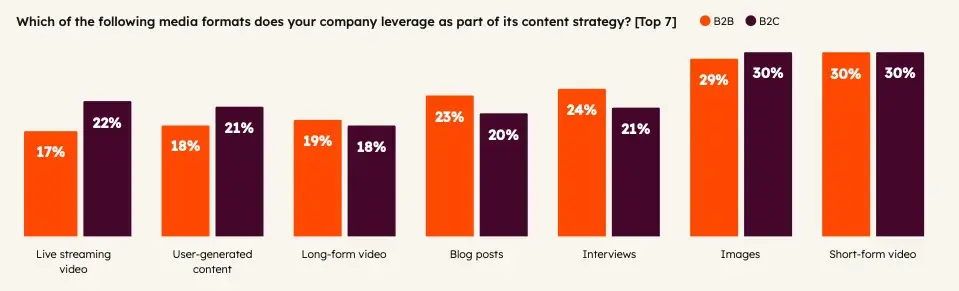
1. Short-form is dominating.
In 2025, it’s no secret that quick videos are dominating — I recently wrote about this short-is-king surge among social media entrepreneurs.
Turns out, short-form video is the top format among social media marketers more largely, who’ve determined it has the highest ROI.
It’s also the area in which they plan to increase the most investment in 2025 — when compared to other focuses like images, UGC, and live streaming — with 75% planning to keep their current investment level and 17% planning to increase theirs.
2. AI is being leveraged for content creation.
The number one way marketers are using AI is for content creation — specifically for assistance with tasks like writing copy, creating images, and generating ideas from scratch. According to HubSpot findings, about 56% of marketers are using AI to create short-form videos, while 53% are using it to generate images, and 42% are creating long-form videos.
I’ve found that ChatGPT is a helpful tool to generate thought-starters — just be sure to spend enough time training it to understand your brand’s unique tone of voice. I’ve found it particularly useful in instances involving collaborations: Maybe you’re partnering with another brand and need guidance for how to merge the two styles for a collaborative campaign or event.
“I think AI gives us much more leverage,” says Aymber Young, a social media growth expert. “The biggest change that I‘m seeing is the ability to integrate AI to where you don’t have to do as much of the legwork when it comes to content creation.”
“You can go to ChatGPT and say, ‘Hey, I create content on health and wellness, and I want people to focus on eating plant-based foods. Can you give me a content calendar for the month, for LinkedIn? For YouTube?”
3. Live video and audio are building community.
I’m a big fan of how-the-sausage-is-made videos. In other words, brands who take viewers behind the scenes in a way that feels more raw and personal than edited content does.
According to Brown, this strategy works really well for building trust.
“Lives should be staples in any sort of strategy that involves building relationships with an audience,” she says. This is especially true in what she calls an ongoing “trust recession,” wherein people are using a lot more discernment when determining where to spend their dollars.
4. Content must entertain audiences.
People want to be entertained, even while they’re being sold a product or taught something new. Bonus points if you can make them laugh: Turns out, 91% of consumers want brands to be funny.
“I work with a lot of clients to help them ‘edutain’ a lot more,” says Brown. “Some of the best content that's working mixes education with entertainment and really good personal storytelling.”
To help you stay on the cutting edge of social media, I’ve compiled a list of key platforms and features you should have on your radar this year.
Social Media Platforms Marketers Should Watch in 2025
1. Instagram
Instagram is one of the leading platforms social media marketers expect to invest in most in 2025. Recent data shows Instagram is the top-performing platform when it comes to driving site traffic, engagement, and audience growth, with 58% of marketers using it to establish their communities.
I’m particularly drawn to the interactivity fostered by Instagram Stories, where elements like cross-collaborating and link sharing are effective for community-building and engagement.
2. TikTok
As mentioned, short-form video is one of the most popular, top-performing, and highest ROI trends. Given this, it’s no surprise that TikTok users sit at 1.5 billion as it caters to short-form videos.
TikTok is also a great platform for reaching Gen Z, as our consumer trends survey found that 62% of the generation uses TikTok — and it’s also the platform it spends the most time on.
That said, people — myself included — may be wary of TikTok (given the recent U.S. ban) but Young believes TikTok’s value isn’t going anywhere. It still sets the short-form standard.
“It’s still the platform with high virality,” says Young. “You have the [highest] chance of going viral just with organic content on TikTok.”
3. Facebook
Despite increasing competition, the old-standing Facebook should still be on the radar of marketers in 2025 due to its massive reach — bringing in 3.06 billion active users every month.
It’s also still a hotspot for ads: In 2024, Facebook’s total ad revenue amounted to $164.5 billion, up from $134 billion the previous year.
The State of Social Media in 2025
Explore the top trends in social media for brands to know and optimize your social strategy.
- AI Content Creation
- Community Building
- Social Media Shopping
- Social Vs. Search Engine
Download Free
All fields are required.
4. YouTube
Based on HubSpot’s findings, YouTube is the platform seeing the most increased investment from marketers in 2025.
While the platform’s done a lot of evolving over the years, integrating features like YouTube Shorts and live streams, Brown says she’s bullish about its future for a different reason: long-form.
Yes, short-form content may be dominating, but she believes YouTube’s long-form content will never lose steam for its strong retention value. It all goes back to trust — and the more time consumers spend with a brand, the more inclined they are to trust them.
5. LinkedIn
Data shows most marketers might not agree, but Young believes LinkedIn should be the platform that’s top of mind in 2025. “It’s really shifting to be a leading community-based platform,” she says.
I’m in Young’s camp. LinkedIn’s been an unmatched source for organic networking, thought leadership, and overall narrative-driven branding. It’s more of a long-game platform, but the results can be worth it.
With a now wider array of content types — text posts, carousels, long-form blogs, lives, and more recently, a vertical video feed, LinkedIn is also trying to step up its game to compete with platforms like Instagram.
New Social Media Platforms
In the ever-evolving landscape of social media, new platforms are continuously emerging, bringing fresh ideas and opportunities — but also question marks in terms of new strategies to consider and overall sustainability.
Here are some up-and-coming platforms to keep an eye on.
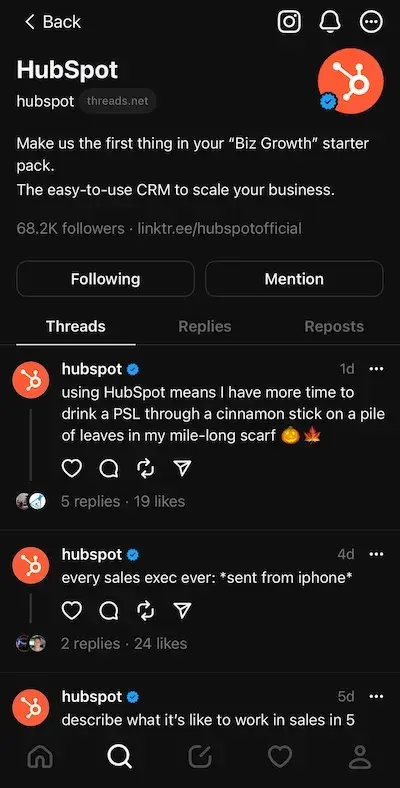
Threads
Launched by Meta in July 2023, Threads is one of the newest social media platforms on this list. Its arrival is timely due to the technical and cultural changes Twitter (now X) has faced since Elon Musk’s takeover in 2022. “I do think Threads has a lot of potential given it does operate a little bit similar to X,” says Young. “It feels a lot more buttoned up.”
Thanks to its integration with Instagram, Threads grew rapidly, reaching 100 million active users within 10 days of its launch.
Users can seamlessly transfer their Instagram profile information and followers to Threads, simplifying app adoption. Additionally, users can embed Thread posts into their Instagram Stories and profile bios, generating more interest in the app.
Lemon8
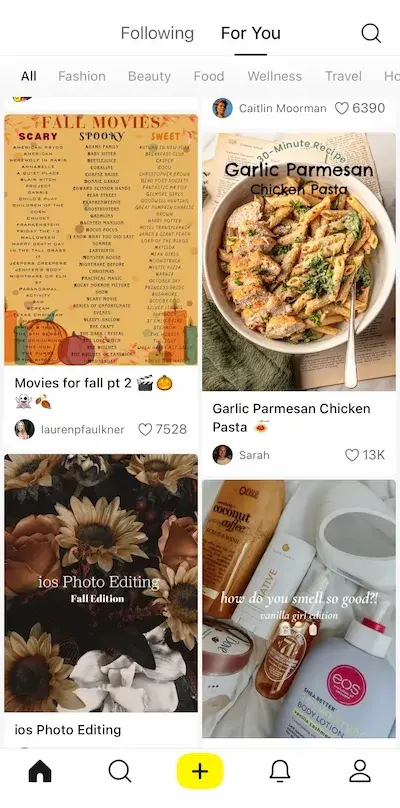
Lemon8 is a new social media platform owned by ByteDance (aka TikTok’s parent company). Though it was initially launched in Japan in 2020, it became accessible in the U.S. and U.K. in February 2023.
Lemon8 is often described as a combination of Pinterest and Instagram, since it’s a photo-sharing app where users can share and discover curated lifestyle content. Popular categories on the platform include fashion, beauty, and health and wellness.
Young is unsure about its longevity. “Lemon8 had a moment especially during the TikTok ban scare back in January but its long-term potential feels uncertain to me,” says Young. “I personally jumped on it and noticed how visually similar it is to Pinterest, which was interesting at first. But I haven’t seen the same stickiness or creator excitement that drives growth.”
Substack
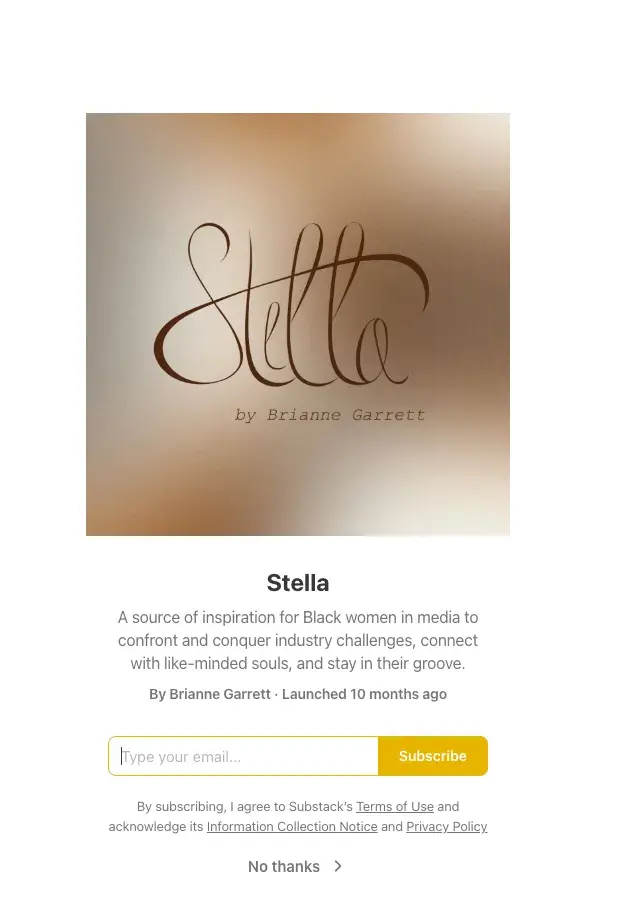
Substack is an online platform that enables writers, journalists, and content creators to publish and monetize their work through subscription-based newsletters. It provides an easy-to-use interface for writers to create and distribute their content directly to subscribers.
Substack also offers tools for managing subscriptions, collecting payments, and engaging with readers. The platform has gained popularity as a way for independent writers (like myself) to generate income and build a loyal audience without relying on traditional media outlets or advertising.
My Substack, Stella, is home to exclusive interviews from Black women in media and an engaged audience that can opt into a free subscription or a paid one for additional content behind a paywall.
Twitch
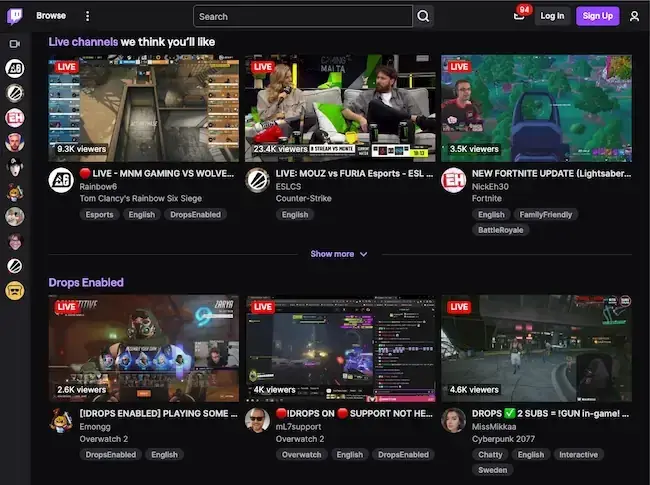
Twitch is a live streaming platform primarily used for streaming video games, eSports events, and other creative content. It allows users to watch live broadcasts of games being played by other players, as well as interact with the streamers and other viewers through chat.
“I’ve been particularly intrigued by Twitch,” says Young. “I’ve noticed more creators and influencers leveraging the platform for real-time engagement and some are generating significant income through subscriptions, donations, and partnerships.”
“I think there’s untapped potential here for major brands to get creative: partnering with streamers for organic product placements, having spokespersons do live demos or Q&As, or even hosting hybrid conferences with a Twitch livestream component,” Young concluded.
What platforms may be losing steam?
BeReal emerged in 2020 wanting to be the more real alternative to other apps like Instagram promoting the use of filters and editing. But it may not be sticking quite the way its creators initially planned: In 2023, worldwide downloads were at about 31.5 million, which decreased 60% year-over-year to 12.7 million in 2024.
That’s likely because data shows Gen Z’s media consumption habits are defining social media trends — and Gen Zers aren’t enthused by an app that offers very minimal opportunities to curate.
“I don’t think younger audiences are adapting to it as much,” says Brown. “It feels just a little too impulsive for Gen Z.”
How To Determine Which Social Media Platforms Are Worth the Investment
To determine which social media platforms are worth investing in, marketers consider a variety of factors:
- Audience reach
- Sales conversions
- Driving traffic to websites
When it comes to figuring what works best for your brand, consider a low-stakes approach to start. Brown is a big fan of using dummy accounts to tap into new platforms, understand their value, and assess if it’s worth a larger investment.
“When you start up a fresh account, it feeds you everything, because it‘s trying to gauge what you’re interested in. And this fresh content generally is super viral and has a ton of engagement, right? So the first kind of few days on that new account is just showing some of the best content out there.”
From there, you can determine what might (and might not) be a fit for your brand.
You also don’t have to explore all that’s out there all at once. “Start with mastering three,” says Young. “And then as you grow your team, and you grow the ability to manage all these different platforms, incorporate more. It can be overwhelming trying to keep up with every single platform.”
Should you follow the social media trends of 2025?
Consumer behavior changes quickly in the digital space, and businesses that are willing to adapt to social media trends are probably the ones that are going to see the most success.
For staying on top of the latest social media trends, I seek insight from active leaders in the social media marketing space, like Rachel Karten. Her Substack newsletter, Link in Bio, has more than 92K subscribers and breaks down social media trends, news, and strategies on a weekly basis.
Young also advises searching the archives of free platforms like YouTube University, where you’ll likely find the answer to any questions you might have around social media marketing.
Whatever your strategy, Brown emphasizes one important factor: “What‘s working best is content that’s super authentic,” she says. “But also leaning more into what I like to call ‘unselfish content.’ Ask yourself, ‘How can I always have the viewer in mind?’”
Not every trend will work to achieve your goals, but keeping the customer as your north star will ensure you stay on track.
Editor's note: This post was originally published in July 2019 and has been updated for comprehensiveness.
The State of Social Media in 2025
Explore the top trends in social media for brands to know and optimize your social strategy.
- AI Content Creation
- Community Building
- Social Media Shopping
- Social Vs. Search Engine
Download Free
All fields are required.
![Is Threads losing steam? Here’s what we know [new research]](https://53.fs1.hubspotusercontent-na1.net/hubfs/53/is-threads-losing-steam.png)


![The fastest growing social media platforms of 2025 [new data]](https://53.fs1.hubspotusercontent-na1.net/hubfs/53/fastest-growing-social-media-platforms.jpg)
![The Future of Social Media [Research]: What Marketers Need to Know in 2025](https://53.fs1.hubspotusercontent-na1.net/hubfs/53/Future%20of%20Social%20Media.jpg)
%20(1).webp)
-3.png)