
Generative engine optimization (GEO) is becoming an important part of search strategy as people use ChatGPT, Gemini, Perplexity, and other AI-powered experiences to research products, compare options, and answer questions. For marketers, the challenge is understanding when their brands appear in AI-generated answers, how those brands are described, and which sources influence those responses.

As an AI search visibility consultant and content strategist, I spend a lot of time studying how brands appear in AI-generated answers. One thing has become clear: GEO doesn’t replace SEO. It builds on many of the same foundations while introducing additional considerations around retrieval, citations, off-site brand presence, and measurement.
HubSpot hasn’t published a dedicated GEO study, so this guide draws on HubSpot’s broader AI search and marketing research, third-party case studies, platform documentation, and practical testing. I’ll explain what we know about GEO so far and how marketers can put that knowledge to work.
Table of Contents
- TL;DR: Generative Engine Optimization (GEO)
- What is generative engine optimization?
- GEO vs. SEO
- Why is GEO important?
- How does generative engine optimization work?
- How to Implement Generative SEO Strategies for Your Business
- Best Practices for Optimizing Content for Different AI Search Engines
- Common Mistakes to Avoid with Generative SEO
- Measurement and Tracking the Success of GEO Efforts
- Frequently Asked Questions About Generative Engine Optimization
- What’s next for GEO?

TL;DR: Generative Engine Optimization (GEO)
- TL;DR: Generative engine optimization (GEO) helps brands make their content discoverable, useful, and accurately represented in AI-generated answers.
- SEO and GEO: GEO complements traditional SEO. Crawlability, helpful content, and credible information remain important, while GEO also considers how AI systems retrieve, summarize, and cite sources.
- Off-site visibility: Reviews, industry coverage, directories, and other third-party sources can affect how AI systems describe a brand.
- Measure beyond citations: Relevant metrics include query coverage, citation rate, brand context accuracy, AI Share of Voice, and conversion quality.
- Start with research: Map relevant questions, publish authoritative answers, keep brand information accurate across the web, and track results consistently.
What is generative engine optimization?
Generative engine optimization (GEO) is the practice of making content easier for AI-powered search and answer systems to discover, understand, and use when responding to relevant questions.
Traditional SEO aims to help webpages appear in search results. GEO also considers whether information from those pages — and from other credible sources across the web — appears in AI-generated answers, whether the brand is represented accurately, and whether users receive links to supporting sources.
How to Use ChatGPT at Work
Discover the key to unlocking unparalleled productivity with this ultimate guide to revolutionizing your workflow.
- 100 ChatGPT Prompts
- Real-World Examples
- Productivity Hacks
- And More!
Download Free
All fields are required.
Form not available
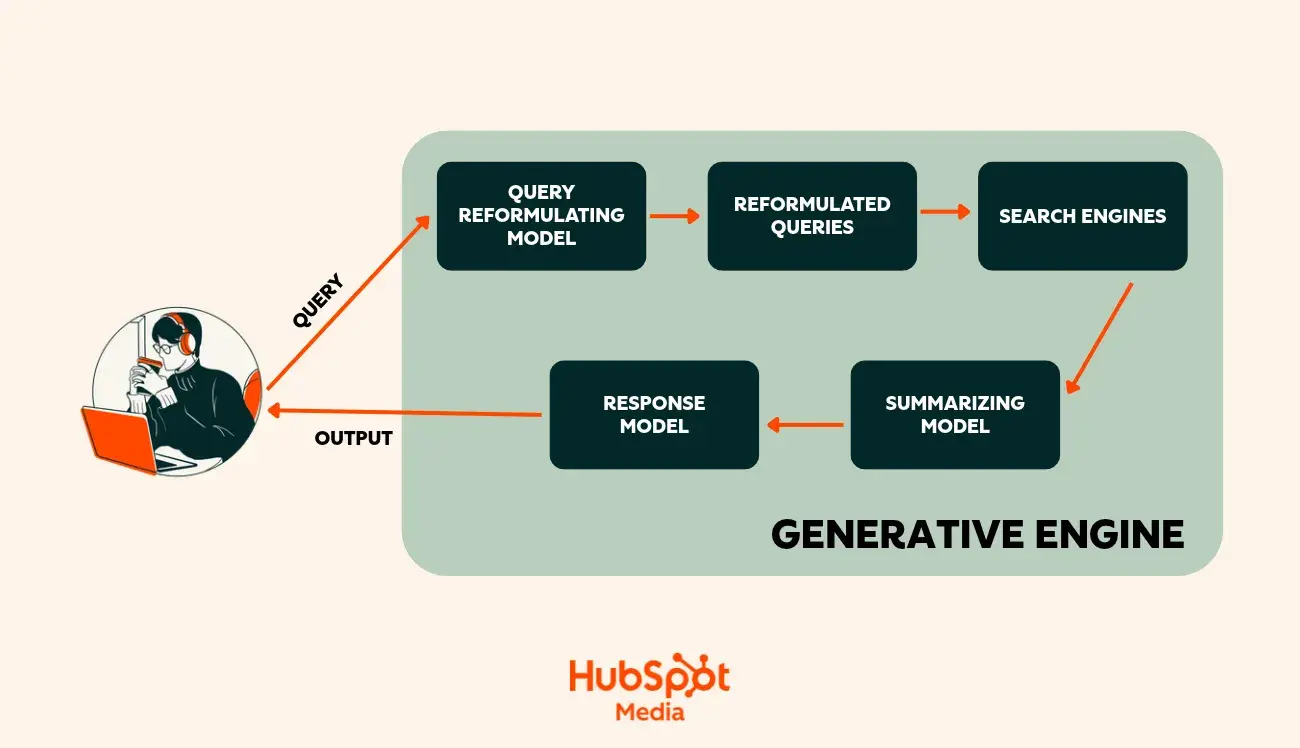
AI systems don’t all retrieve information the same way. Some answers draw on existing model knowledge, while search-enabled experiences can retrieve current information from external sources. A commonly studied retrieval-and-generation workflow involves:
- Interpreting a user’s question and its context.
- Reformulating or expanding the query when additional searches would help.
- Retrieving relevant information from available search or retrieval systems.
- Selecting and synthesizing information into a response.
- Displaying supporting citations or links when the platform and response support them.
The original GEO research paper illustrates this type of workflow. It doesn’t establish that every AI platform uses the same process or provides citations in every answer.
GEO vs. SEO
While generative SEO (GEO) and traditional SEO share foundational principles, they diverge in crucial ways. Understanding both similarities and differences helps teams optimize for all search environments.
How is GEO similar to SEO?
1. Both provide user-first content.
Both prioritize helpful, accurate information that directly answers user queries. Whether you’re searching on Google, Bing, ChatGPT, Perplexity, or something else entirely, what matters is accessing the information you need as quickly and easily as possible.
One reason Google is so successful is that it has mastered a complex (and ever-changing) algorithm that sorts through content and delivers the best possible result to the person searching. Results meet search intent, and users get what they want.
Why this matters for GEO: If the team is dedicated to providing the best possible content, they have a good chance of gaining visibility in generative AI search engines. These tools need to source the best content to keep users returning.
2. E-E-A-T signals matter for both GEO and SEO.
Experience, expertise, authoritativeness, and trustworthiness (E-E-A-T) are useful principles for evaluating content quality, but Google doesn’t use E-E-A-T as one standalone ranking factor. Helpful, credible information can also support GEO because AI search systems need reliable material to retrieve and summarize. However, appearing prominently in Google’s results doesn’t guarantee a recommendation from ChatGPT.
Here’s an example from my testing. In this Google search for “CRM,” HubSpot appears among the visible results. The screenshot illustrates the brand’s presence in traditional search at that moment, but rankings can change by location, timing, and other factors.

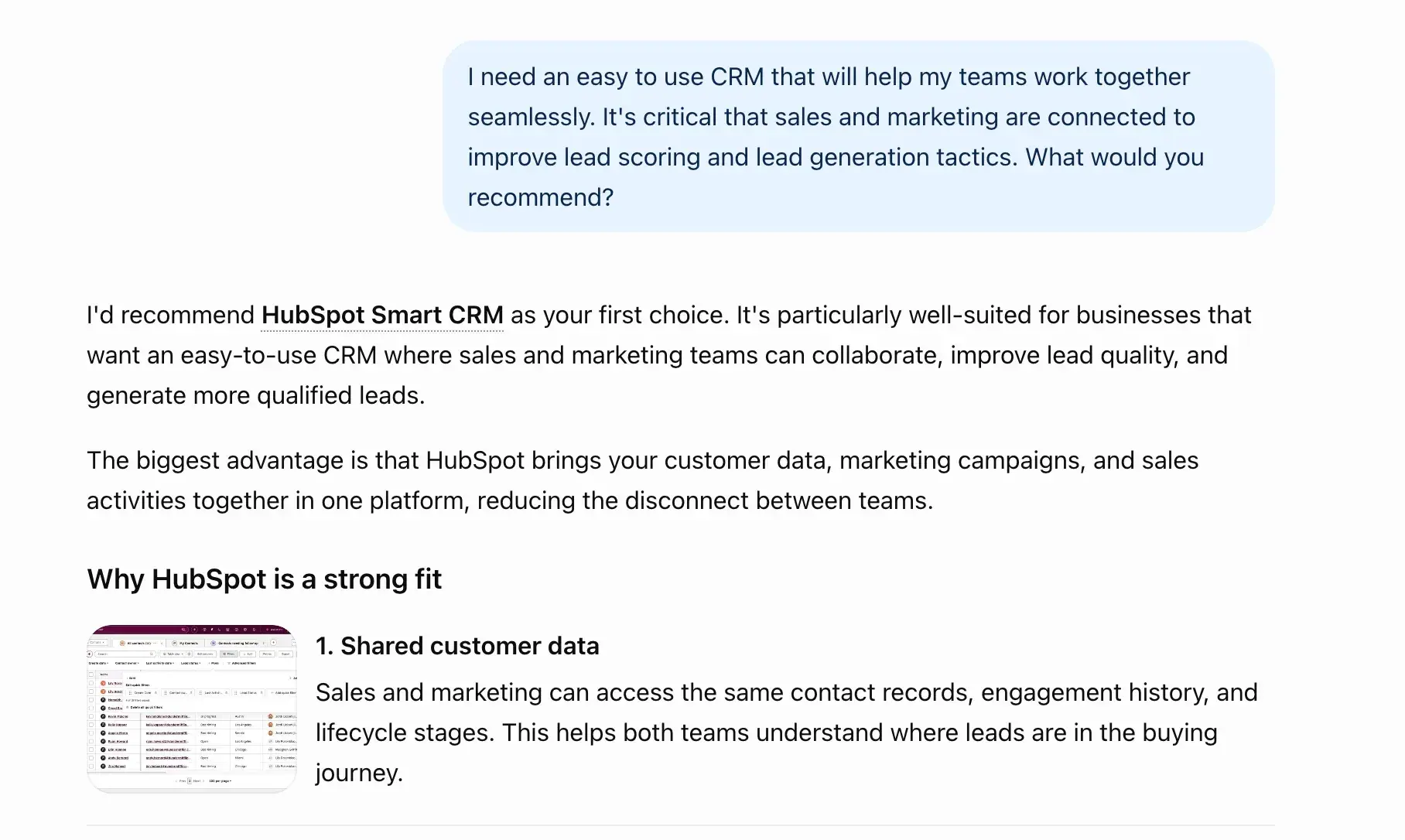
I also tested a CRM recommendation prompt in ChatGPT. HubSpot appeared first in that response, although different prompts, user requirements, and sessions can produce different recommendations.
3. Keywords still provide context.
While AI queries use more natural language, keywords help both traditional and AI engines understand content’s relevance. The difference lies in implementation, not importance.
Chris Long, VP of marketing at Go Fish Digital, has tested visibility in GEO, and his findings suggest that generative search engines pull clear snippets. Long found success using bullet points.
In a LinkedIn post, he said, “In the past 6 months, we’ve been doing a lot of testing around optimizing our brand for generative engine optimization. We’ve noticed how AI-driven search tends to pull in content that’s extremely structured via bulleted lists, structured headings, and general listicle-style articles.”
Why this matters for GEO: Explore page structure and seeing if it makes a difference.
Top tip: HubSpot’s free AI Search Grader provides a one-time snapshot of how ChatGPT, Gemini, and Perplexity characterize a brand. It evaluates five dimensions:
- Sentiment
- Presence quality
- Brand recognition
- Share of voice
- Market position
Use the results to establish an initial benchmark. The grader isn’t a page-by-page content scanner or an ongoing monitoring tool.
The video below demonstrates how it works.

4. Technical SEO supports discoverability.
Crawlable, accessible pages help search engines discover and index content that AI search experiences may retrieve. Fast-loading, mobile-friendly pages also support the visitor experience. These fundamentals matter, but they don’t guarantee that an AI platform will retrieve, cite, or mention a page.
How is GEO different from SEO?
GEO and SEO overlap, but they measure visibility in different search experiences. Traditional SEO emphasizes how webpages appear in search results and what visitors do after clicking. GEO adds the question of whether a brand or its information appears in AI-generated answers — including answers that don’t produce a website visit.
Key differences:
- Multiple platforms: ChatGPT, Gemini, Perplexity, and Google AI Overviews don’t necessarily retrieve or present information in the same way.
- Visibility without clicks: A brand can appear in an AI answer even when the response doesn’t link to the brand’s website.
- Off-site information: Industry coverage, reviews, and other independent sources can influence how a brand is described.
- Measurement: GEO requires testing defined sets of relevant questions and examining the generated answers, not just tracking traditional keyword positions.
How is GEO impacting SEO?
A 2024 survey of search professionals identified generative AI as a leading potential disruption to SEO, according to Statista. That concern doesn’t mean traditional SEO has stopped working. The effects vary by search intent, content type, and how well an AI-generated answer satisfies a user’s question.
Local search still depends on location.
“Local SEO remains largely unaffected. When searching for a plumber or a dentist, they still need results tied to maps, reviews, and real-world proximity,” says SEO expert Nick Baird.
Baird’s observation reflects the continuing importance of geographic relevance for local businesses. It shouldn’t be read as proof that AI search does not affect local discovery.
Informational searches may produce fewer clicks.
“Click-through rates are down in places where AI can summarize quickly. For websites that rely on traffic from listicles or how-to content, traffic is definitely thinner,” Baird explains.
An AI response can satisfy an informational query without a visit to the source. That makes organic clicks alone a less complete measure of whether a brand’s information is reaching people.
Content quality still matters.
“People still click through when they want depth or to verify that a source actually said what the AI is reporting. So while the volume of clicks may be down, it’s still important to have quality content on one’s website.”
Useful original information can give readers a reason to visit a site even when an AI response provides a summary.
AI referrals may convert differently.
Nate Tower, president at Perrill, reports seeing higher conversion rates from AI referrals despite lower overall conversion volume. That is a useful practitioner observation, but marketers should test the pattern against their own traffic and customer data.
For additional industry findings, explore these generative engine optimization statistics.
How to Use ChatGPT at Work
Discover the key to unlocking unparalleled productivity with this ultimate guide to revolutionizing your workflow.
- 100 ChatGPT Prompts
- Real-World Examples
- Productivity Hacks
- And More!
Download Free
All fields are required.
Form not available
Why is GEO important?
GEO matters because customers increasingly use AI-powered experiences alongside traditional search to research products, compare services, and make decisions.
The existing SEO market remains substantial. Mordor Intelligence estimated the global SEO services market at $83.98 billion in 2026. That vendor-reported market estimate demonstrates the scale of SEO services; it doesn’t, by itself, measure how much AI search has disrupted the industry.
Key Benefits of GEO
1. Visibility during research and comparison. AI search can introduce brands while users compare products, describe problems, or refine their requirements through follow-up questions.
2. Opportunities to establish useful source material. Publishing accurate explanations, original research, and firsthand expertise gives retrieval systems information that may help answer relevant questions.
3. Visibility across a growing channel. OpenAI reported in October 2026 that more than 1.2 billion people use ChatGPT weekly. That figure measures ChatGPT use, not the number of people using its search features specifically. Still, it demonstrates why marketers should understand how their brands appear in AI-powered experiences.
4. More complete brand representation. GEO encourages marketers to check whether AI systems describe their products, audience, and differentiators accurately, using information from both owned and third-party sources.
5. Better insight into the customer journey. By tracking citations, mentions, referrals, and conversions together, teams can examine how AI search contributes to discovery and business results.
What Early GEO Results Can Tell Us
Tower describes his experience with AI referrals this way: “Conversions, by percentage, from LLMs are higher. People chat with AI and see the software more as a friend, which is one reason why conversions from GEO are higher.”
Tower’s observation is a reason to investigate AI referral performance, not assume every business will see a higher conversion rate. AI users can compare options and ask follow-up questions within a single conversation, but their behavior depends on the task and platform.
Marketers should measure whether AI-generated answers mention their brands, whether the information is accurate, and whether resulting visitors become qualified leads or customers. Even when referral volumes are small, those findings can help teams decide where GEO deserves investment.
How does generative engine optimization work?
GEO helps marketers make relevant information discoverable and understandable across AI-powered search experiences. There is no universal set of ranking factors for ChatGPT, Perplexity, and Google AI Overviews. The practical starting point is to publish accurate, accessible content and understand how each platform retrieves and presents sources.
Core GEO principles:
- Clear structure: Use descriptive headings, direct answers, and lists or tables when they make information easier to understand.
- Credible evidence: Support important factual claims with original research, expert perspectives, and authoritative sources.
- Natural language: Answer the questions people actually ask, including comparisons and follow-up questions.
- Useful source material: Provide original information, examples, and explanations that remain meaningful when summarized.
- Consistent brand information: Keep descriptions of products, services, and differentiators accurate across owned and third-party sources.
Platform considerations:
- ChatGPT: Search-enabled responses may retrieve current web information. Brand visibility can depend on sources beyond the company’s own site.
- Perplexity: Visible citations make it particularly useful for investigating which sources support a generated answer.
- Google AI Overviews: Existing Google Search requirements remain the technical foundation. Google does not require special schema markup for inclusion in AI Overviews.
These considerations complement SEO best practices, including technical accessibility, relevant content, and clear site organization.
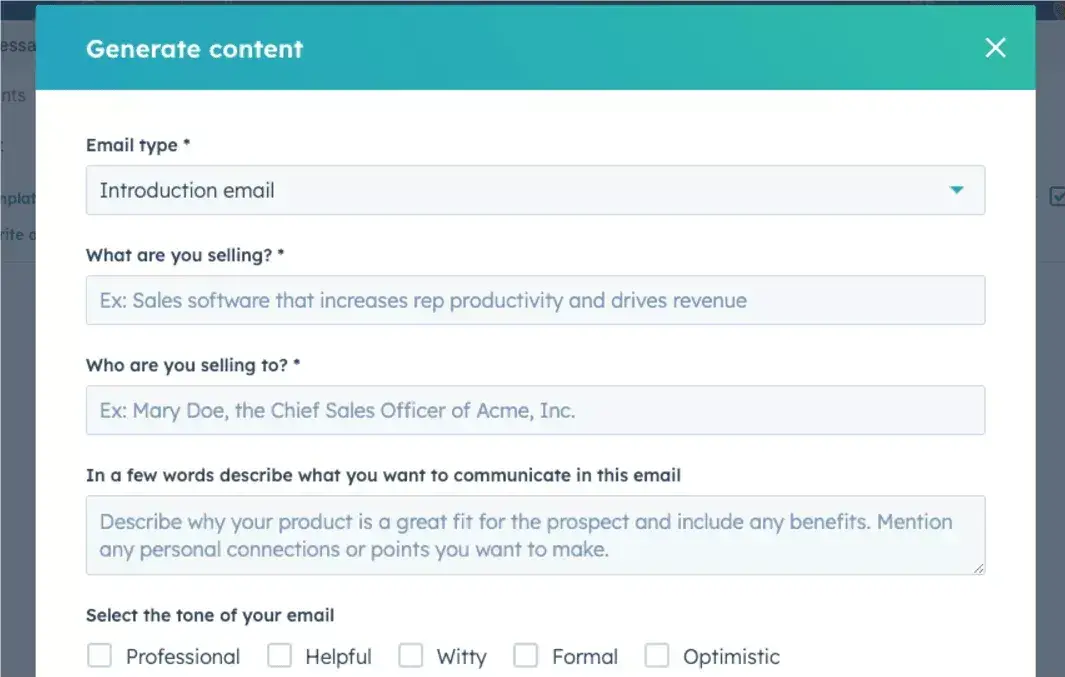
Marketers can also use HubSpot’s AI content writer to help draft and edit. Google doesn’t prohibit AI-assisted content simply because it used AI; its guidance focuses on whether the resulting content is helpful and complies with its spam policies.
How to Implement Generative SEO Strategies for Your Business
Implementing generative engine optimization requires looking beyond individual webpages. A strong GEO strategy considers how AI search systems retrieve information about a brand across owned and third-party sources, which queries surface that information, whether the content is useful enough to cite or synthesize, and how that visibility connects to business outcomes.
1. Manage your brand narrative.
Unlike traditional SEO, which focuses on ranking pages, GEO requires attention to a brand’s broader digital footprint. That means the way a brand is described on review sites, industry publications, directories, forums, and other external sources can influence how AI search systems understand and represent it.
Consistent information about what a company does, who it serves, and what differentiates it gives AI systems clearer signals when they retrieve and synthesize information about a brand.
Action steps:
- Audit current brand mentions across platforms
- Develop clear positioning statements for key products/services
- Create FAQ content addressing common queries
- Monitor how AI engines currently describe the brand
Example approach: Think about the bran’s unique value proposition:
- What specific problems do you solve?
- Who is your ideal customer?
- What makes your solution different?
Pro tip: Products are often recommended with a rationale tied to the user’s specific needs. Make those differentiators explicit on the site, but also check whether the broader web supports the same narrative.
2. Conduct AI-focused keyword and query research.
Traditional keyword research remains valuable, but GEO requires understanding the broader range of queries people use when interacting with AI search. Instead of searching a single keyword, users may describe a problem, ask for a recommendation, compare several options, add specific criteria, or refine an initial question through follow-up prompts.
For GEO, I recommend mapping the different questions and intents surrounding a topic rather than simply creating longer, conversational versions of existing keywords. This helps identify query coverage, or whether your content provides enough relevant information for your brand to surface across the different ways people might explore the topic.
Research process:
- Identify keywords that trigger AI Overviews in Google
- Analyze question-based and conversational queries related to the brand
- Map queries across different intents, such as informational, comparison, recommendation, and problem-solving
- Look for follow-up questions that could change or narrow the answer
- Use tools like AlsoAsked to understand related questions
Implementation strategy:
- Map each page to a primary topic and search intent, then cover relevant questions and closely related terms naturally.
- Develop topic clusters that address related questions and intents
- Target specific question patterns the audience asks
- Identify gaps where existing content doesn’t adequately answer important queries
- Create content that answers both the primary query and relevant follow-up questions naturally
3. Create comprehensive, authoritative content.
Strong GEO content gives AI search systems useful, specific information to retrieve and synthesize when answering relevant queries. But content doesn’t necessarily need to be cited to influence an AI-generated answer. Marketers can increase their content’s value by publishing information that adds something distinct to the conversation.
That means moving beyond surface-level coverage and creating resources that demonstrate expertise, answer real questions, and contain information worth referencing. Original research, expert insights, specific examples, clear definitions, and well-supported claims give AI systems substantive information to work with.
Content requirements:
- Demonstrate E-E-A-T: Include personal experience, showcase expertise, establish authority, build trust
- Cover topics thoroughly: Provide detailed information rather than surface-level overviews
- Include expert perspectives: Feature quotes from industry authorities and original insights
- Answer real user questions: Address actual queries the audience has, not just keyword targets
- Incorporate multimedia: Use infographics, videos, and images to enhance understanding
Quality indicators:
- Original research and data points
- Expert interviews and quotes
- Comprehensive topic coverage
- Clear, actionable advice
- Updated statistics and examples
How to Use ChatGPT at Work
Discover the key to unlocking unparalleled productivity with this ultimate guide to revolutionizing your workflow.
- 100 ChatGPT Prompts
- Real-World Examples
- Productivity Hacks
- And More!
Download Free
All fields are required.
Form not available
4. Structure content for clear extraction and understanding.
A clear content structure makes information easier for both people and machines to understand. For GEO, organize information so each passage provides enough context to be useful when retrieved or synthesized into an AI-generated answer. That doesn’t mean every page needs to become a collection of bullet points. The format should match the information being communicated.
Structural best practices:
- Clear heading hierarchy: Use one descriptive H1 for the page and organize supporting sections under appropriately nested subheadings.
- Direct answers: Answer the primary question early in a section before expanding with context or examples
- Scannable formatting: Use bullets, numbered steps, tables, or other structures when they make complex information easier to understand
- Self-contained passages: Give important statements enough context to remain meaningful if they’re retrieved independently from the rest of the page
- Logical flow: Organize information around the questions and information needs users are likely to have
Technical optimization:
- Use structured data when it accurately represents information already visible on the page
- Maintain crawlable, accessible pages so search and AI systems can retrieve the content
- Continue following technical SEO fundamentals that support content discovery and indexing
Pro tip: Structured data can provide machine-readable context about a page, but schema markup isn’t a special GEO requirement and doesn’t guarantee inclusion or citations in AI-generated answers. Use it where appropriate rather than adding markup solely for AI visibility.
5. Track and measure GEO performance.
GEO measurement requires looking beyond traditional rankings and organic traffic. Marketers need to track whether their brands appear across relevant AI search queries, how they’re represented, which sources are cited, and whether that visibility contributes to meaningful business outcomes.
Because AI-generated responses can vary by platform, query, and context, avoid treating an individual prompt or citation as proof of overall visibility. Instead, monitor performance across a consistent set of relevant queries over time.
Key metrics to track:
- Query coverage: How often a brand appears across the set of queries that matter to the audience
- AI citation frequency: How often content is cited in AI-generated responses
- Brand mention context: Whether AI engines mention a brand and how accurately they describe products/services
- Share of voice: A brand’s visibility compared with competitors across a defined query set
- Conversion quality: Whether visitors and leads originating from AI platforms contribute to meaningful business outcomes
Measurement tools and techniques:
- Use HubSpot’s free AI Search Grader for an initial assessment of how leading AI platforms describe the brand.
- Monitor citations and brand mentions across a defined set of relevant prompts in ChatGPT, Gemini, and Perplexity.
- Track AI referral traffic and compare its engagement, lead quality, and conversion performance with other acquisition channels.
- Repeat the same query set at regular intervals, recording the platform, date, wording, and result so comparisons remain meaningful.
SEO coach Liam Carnahan recommends: “I’ll go to Perplexity first and type in questions and prompts I imagine people might ask, using keywords I know my content is ranking for, to see how often it shows up in citations there.”
Best Practices for Optimizing Content for Different AI Search Engines
Each AI platform has unique characteristics that require tailored optimization approaches. Understanding these differences helps you create content that performs well across multiple generative engines.
ChatGPT Optimization
ChatGPT can use web search to retrieve current information when answering queries, which means visibility isn’t determined solely by the content on a brand’s website. And recent third-party research from Peec AI also suggests that ChatGPT is developing its own search infrastructure, called Labrador, rather than relying exclusively on external search providers.
However, because OpenAI hasn’t publicly documented Labrador or its exact architecture, marketers should treat these findings as an evolving view into how ChatGPT retrieves information rather than a fixed optimization playbook.
The larger takeaway is that optimizing for ChatGPT can’t be reduced to ranking well in a single traditional search engine. Brands need accessible, current content on their own sites alongside a broader web presence that gives ChatGPT useful information to retrieve, verify, and synthesize.
Key factors:
- Comprehensive coverage of relevant topics and queries
- Clear expertise and firsthand experience
- Accurate, current information
- Consistent brand positioning across owned and third-party sources
- Well-supported claims with links to authoritative sources
Content considerations:
- Answer specific questions clearly before adding supporting detail
- Include practical examples, original insights, and expert perspectives
- Make factual claims easy to verify through clear source attribution
- Keep important product, company, and author information accurate and consistent across the web
- Cover the range of queries and use cases through which someone might discover a brand
Pro tip: Don’t optimize only for getting a webpage cited. A brand can appear in a ChatGPT response even when its own website isn’t the cited source. Third-party coverage can provide additional context about what a company does, who it serves, and why it may be relevant to a particular query.
Perplexity Optimization
Perplexity makes sourcing particularly visible because its answers typically include citations that let users inspect the supporting sources. For marketers, that makes both citation presence and citation accuracy useful signals to monitor:
- Is your content being retrieved for relevant queries?
- Is Perplexity using it to support the claims you actually want associated with your brand?
Freshness can matter when a query calls for current information. In my own testing, I’ve seen Perplexity respond to content updates quickly. I updated a single article and monitored its AI Share of Voice for the same prompt over approximately 27 hours. The initial measurement was 25%. Two hours later, AI Share of Voice reached 41.67%, and the final measurement was 63.16%.
Those changes weren’t linear: the metric rose and fell throughout the experiment. Because I tested one page and one prompt, the results aren’t a universal benchmark or proof that updating content will produce similar gains. They do, however, show why marketers should measure AI visibility repeatedly rather than relying on one result.
Key factors:
- Citation-friendly content structure
- Source credibility and authority
- Recent, up-to-date information
- Clear, factual statements
Content preferences:
- Well-sourced claims with verifiable data
- Recent statistics and research findings
- Expert commentary and analysis
- Links to authoritative sources
Pro tip: I like to use Perplexity as a manual research tool for GEO. Testing a consistent set of relevant queries can show which sources are cited, where competitors appear, and whether different query variations surface different sources. Those individual tests aren’t a complete measurement system, but they can help marketers identify patterns and gaps to investigate.
Google AI Overviews Optimization
Google AI Overviews are part of Google Search, so traditional SEO fundamentals remain important for visibility. Pages need to be crawlable, indexable, and eligible to appear in Google Search before they can become useful sources within Google’s AI search experiences. However, a page doesn’t necessarily need to hold the top traditional organic position to appear as a supporting source in an AI Overview.
For marketers, that makes query coverage especially important. A single AI Overview can address several related questions or subtopics within one response, creating opportunities for pages that provide useful information about specific parts of the broader query.
Key factors:
- Strong technical SEO foundations that allow Google to crawl and index content
- Relevant, helpful content that addresses the query and related information needs
- Clear, accurate information that can stand on its own when surfaced within an AI-generated response
- Current information when freshness is relevant to the query
- Local relevance and accurate business information for location-sensitive searches
Content considerations:
- Continue following Google’s established SEO and content-quality guidance
- Answer specific questions clearly while providing enough context to support the answer
- Build coverage around related questions and subtopics rather than optimizing only for a single keyword
- Keep important facts, product information, and business details current
- Use structured data when appropriate to describe page content, but not as a special AI Overview optimization tactic
Pro tip: Google says there are no additional technical requirements or special schema markup needed to appear in AI Overviews beyond its existing Search requirements. Structured data can still help Google understand a page’s information, but adding schema doesn’t guarantee content will appear in an AI-generated response.
Common Mistakes to Avoid with Generative SEO
Understanding what not to do in GEO is as important as knowing best practices. These common mistakes can hurt visibility across AI platforms.
Content Mistakes
Content created for GEO can go wrong when marketers focus too heavily on making information “AI-friendly” instead of making it useful, specific, and trustworthy. The goal isn’t to write for an AI engine. It’s to publish information that answers relevant queries and gives AI systems reliable material to retrieve and synthesize.
In practice, that means avoiding:
- Keyword stuffing: Repeating target keywords unnaturally can make content less useful and readable without improving its relevance to the broader range of queries people use in AI search. Focus on answering the topic and related questions naturally instead.
- Thin content: Surface-level content may answer the basic query without providing the detail, examples, evidence, or original insight that makes a source valuable during retrieval and synthesis.
- Outdated information: Old statistics, obsolete product details, and outdated recommendations can make retrieved information inaccurate, especially for freshness-sensitive queries. Review and update content when the underlying information changes.
- Lack of structure: Dense or poorly organized content can make important information harder to understand and extract in context. Use descriptive headings, direct answers, and lists or tables when they genuinely improve clarity.
- Missing citations: Unsupported factual claims are harder for readers to verify and can weaken the content’s credibility. Attribute statistics, research, and other material claims to authoritative sources, preferably primary sources when available.
Technical Mistakes
Technical SEO still matters for GEO because content can’t contribute much to AI visibility if search and retrieval systems can’t reliably access it. The goal isn’t to implement a separate set of “AI technical SEO” requirements. Rather, maintain a strong technical foundation that makes content accessible and understandable.
In practice, that means avoiding:
- Treating schema markup as a GEO shortcut: Structured data can provide machine-readable context about a page, but it isn’t a special requirement for generative search visibility. Use relevant schema accurately rather than adding markup solely in an attempt to earn AI citations or mentions.
- Poor site performance: Slow or unreliable pages create a worse visitor experience and can undermine the same technical SEO foundation that supports content discovery and organic visibility.
- Mobile optimization neglect: Content that’s difficult to access or use on mobile creates problems for visitors and weakens overall search performance. Maintain responsive, accessible pages across devices.
- Broken internal linking: Missing or poorly planned internal links make related content harder to discover and can obscure the relationships between pages, topics, products, and other important information on a site.
Strategic Mistakes
GEO works best as an ongoing visibility strategy, not a collection of isolated content optimizations. Brands need to consider how traditional search, owned content, third-party sources, and AI search performance work together to shape how they’re discovered and represented.
In practice, that means avoiding:
- Focusing only on volume: Publishing more content doesn’t automatically create more AI search visibility. Prioritize content that fills meaningful query gaps, contributes original information, and strengthens existing topic coverage rather than increasing output for its own sake.
- Neglecting traditional SEO: GEO complements traditional SEO rather than replacing it. Strong organic visibility, crawlability, content quality, and other SEO fundamentals can support discovery across AI search experiences, particularly those built on or connected to traditional search infrastructure.
- Inconsistent brand messaging: Conflicting descriptions of products, audience, positioning, or expertise across the web creates confusion around what a brand does. Keep core brand information consistent across owned properties, while monitoring how the brand appears elsewhere.
- Ignoring off-site brand mentions: AI search systems can retrieve information from sources beyond a company’s own website. If marketers focus exclusively on owned content, they may miss inaccurate information, outdated descriptions, or gaps in third-party sources that shape a brand’s reputation and relevance.
- Not monitoring results: AI search visibility can change as content, competitors, retrieval systems, and generated responses change. Track a consistent set of relevant queries, citations, brand mentions, share of voice, and downstream outcomes to identify meaningful changes over time.
How to Use ChatGPT at Work
Discover the key to unlocking unparalleled productivity with this ultimate guide to revolutionizing your workflow.
- 100 ChatGPT Prompts
- Real-World Examples
- Productivity Hacks
- And More!
Download Free
All fields are required.
Form not available
Measurement and Tracking the Success of GEO Efforts
In its analysis of 17 months of clickstream data, Semrush reported substantial growth in ChatGPT referrals between January 2025 and January 2026. At the same time, Google remained an important source of destination traffic. These findings support a combined approach: AI search is becoming a meaningful discovery channel, but traditional search remains important.
As the future of GEO develops, marketers will need better ways to connect brand mentions, citations, and query coverage with actual customer outcomes.
GEO measurement should answer three questions: Does a brand appear in relevant AI-generated answers? Is the information about the brand accurate? And does that visibility contribute to business results?
No single metric captures the whole picture. I recommend tracking three core GEO KPIs: citation rate, brand context accuracy, and conversion quality. Query coverage and AI Share of Voice provide useful supporting context.
AI Citation Rate
AI citation rate measures how often a brand’s website appears as a cited source across a defined set of AI-generated responses.
To calculate it, select a relevant query set, run those queries consistently, and divide the number of responses that cite the domain by the total number of responses tested. Track the results separately by platform, topic, and intent.
For example, if a domain receives a visible citation in 12 of 40 tested responses, its citation rate for that test set is 30%.
Related metrics include:
- Citation frequency: The total number of citations received across the test set.
- Page-level citations: Which specific URLs receive citations.
- Query coverage: The percentage of relevant queries that produce a brand mention or citation.
Pro tip: A visible citation doesn’t reveal every source an AI system retrieved or used. Treat citation rate as a measure of displayed source presence, not a complete account of everything that influenced an answer.
Brand Context Accuracy
Brand context accuracy measures how correctly AI systems describe a company’s products, services, audience, and differentiators.
Create a short checklist of verified brand facts. Then review responses to a consistent set of prompts and record whether each relevant statement is accurate, incomplete, outdated, or incorrect.
Useful supporting metrics include:
- Brand mention rate: The share of tested responses that mention the brand.
- Query coverage: The percentage of relevant queries that surface the brand.
- AI Share of Voice: How frequently the brand appears compared with competitors across the same query set.
- Error frequency: How often responses contain incorrect information about the brand.
Pro tip: Measure what AI platforms say about a brand alongside how often they mention it. More mentions aren’t necessarily useful if those answers misrepresent the company’s products or customers.
Conversion Quality
Conversion quality measures what happens when visitors from AI search reach a website or enter a measurable customer journey.
Track AI referral traffic and compare its results with other acquisition channels. Relevant measures include:
- Engagement: Whether referred visitors explore relevant pages or complete meaningful actions.
- Lead generation: How many inquiries or form submissions originate from identifiable AI referrals.
- Conversion rate: The percentage of referred visitors who complete a defined conversion.
- Qualified pipeline: How many AI-referred leads become sales-qualified opportunities.
- Revenue: Closed revenue associated with identifiable AI referrals when attribution data is available.
Compare these figures over meaningful periods and avoid drawing broad conclusions from a handful of visits.
Pro tip: AI search may influence a purchase decision without generating a referral click. Website analytics therefore capture only part of its possible contribution. Evaluate conversion data alongside citations, mentions, and brand context.
HubSpot Tools for GEO Measurement
Different tools answer different GEO questions. Teams can combine an initial brand assessment, ongoing AI visibility monitoring, traditional SEO analysis, and customer reporting.
- AI Search Grader: Provides a free, one-time assessment of how ChatGPT, Gemini, and Perplexity characterize a brand across five dimensions. Start here to establish a baseline.
- HubSpot AEO: Supports ongoing monitoring of AI search visibility, including brand mentions, citations, prompts, and competitive performance.
- Marketing Hub SEO tools: Help teams investigate on-site SEO opportunities, organize topic coverage, and connect traditional search work with content performance.
- AI Search Sensor: Shows aggregate trends and volatility across AI answer engines. It provides market context, not a report of an individual brand’s traffic or visibility.
Teams can then use website analytics and CRM reporting to evaluate AI-referred engagement, leads, pipeline, and revenue where attribution is available.
For a broader comparison of execution and reporting options, see these generative engine optimization tools.
Frequently Asked Questions About Generative Engine Optimization
What’s next for GEO?
GEO complements traditional SEO, and current research suggests marketers need to understand both channels rather than choose one.
For now, the practical work is clear. Publish useful, authoritative information; make it accessible to search and retrieval systems; keep brand details accurate across the web; and measure whether AI visibility contributes to qualified traffic, leads, and revenue.
Editor’s note: This post was originally published in August 2024 and has been updated for comprehensiveness.
How to Use ChatGPT at Work
Discover the key to unlocking unparalleled productivity with this ultimate guide to revolutionizing your workflow.
- 100 ChatGPT Prompts
- Real-World Examples
- Productivity Hacks
- And More!
Download Free
All fields are required.
Form not available
AEO


