Getting the right traffic — visitors who actually need what you offer — is harder than it looks. Most marketing strategies fall short due to unclear strategy, fragmented tools, and weak measurement. This guide is built to address all three.
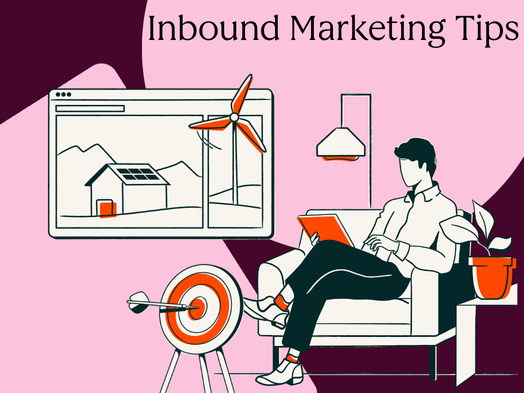
Inbound marketing focuses on attracting customers with helpful content and useful experiences rather than interruptive ads. Done well, inbound marketing builds trust before the first sales conversation by meeting buyers in the research phase, where they’re already looking for answers.
Below, you’ll find practical, expert-backed tips covering strategy, content, distribution, measurement, and getting started, whether you’re building from scratch or sharpening what’s already working.
![Download Now: Free State of Marketing Report [Updated for 2026]](https://no-cache.hubspot.com/cta/default/53/b0f73a5e-16e4-41fd-9511-8564efc560a7.png)
Table of Contents
- What Is Inbound Marketing? Understanding the Methodology
- Essential Inbound Marketing Strategies for 2026
- Proven Inbound Marketing Tactics From Industry Leaders
- How to Get Started With Inbound Marketing
- Frequently Asked Questions About Inbound Marketing
What Is Inbound Marketing? Understanding the Methodology
Inbound marketing includes attract, engage, and delight — three stages that move people from strangers to customers to active promoters. Outbound marketing relies on interruptive promotion such as ads, cold outreach, and broad campaigns.
Inbound earns attention by being genuinely useful, and every blog post, SEO page, or helpful email continues working long after it goes live.
The State of Marketing in 2026
HubSpot's Annual Marketing Trends Report
- AI in Marketing
- Branding and Growth
- Human-Led Creativity
- And More!
The Three Phases of Inbound Marketing
Attract: Draw in the Right Audience
SEO supports inbound marketing discoverability by ranking your content for terms that your ideal buyers are already searching for. Additional attract tactics include blog content and articles, topic clusters and pillar pages, and social media distribution.
The underlying principle: be the most helpful, credible answer to the questions your prospects are already asking.
Pro Tip: The most valuable search traffic often comes from specific, intent-rich queries a buyer types when they’re close to a decision — not just high-volume keywords.
Engage: Build Relationships Through Value
The Engage phase is where most inbound strategies either accelerate or stall. Email marketing nurtures leads after initial conversion by delivering relevant, timely content that moves prospects closer to a decision.
Marketing automation scales follow-up and personalization across the customer journey by triggering the right response based on behavior, not just time. CRM-driven follow-up uses contact data and interaction history to make every touchpoint feel informed and intentional.
Pro Tip: Segment your email list by behavior and lifecycle stage. A lead who downloaded a pricing guide needs a different follow-up than one who read a beginner’s blog post.
Delight: Turn Customers Into Promoters
Inbound marketing doesn’t stop at the sale. Delight tactics include proactive customer support, retention programs, feedback loops using surveys and NPS scores, and user-generated content that creates social proof.
A delighted customer renews and brings new customers with them, turning inbound from a lead-generation tactic into a self-reinforcing growth engine.
Pro Tip: Map your post-purchase touchpoints the same way you map your pre-purchase ones. A 30-day check-in email can be the difference between a one-time buyer and a loyal advocate.
Essential Inbound Marketing Strategies for 2026
Each strategy below is designed to attract qualified traffic, build trust over time, and move prospects toward a decision. For each, we cover why it matters, how to execute it, and which tools support it.
1. Answer Your Customers’ Questions Before They Ask
Content strategy should answer customer questions and pain points, including the uncomfortable ones around pricing, competitor comparisons, objections, and trade-offs. Most brands avoid this content because the answers feel risky.
But avoiding them only means your prospect finds the answers elsewhere.
How to implement it: Audit your sales team’s most frequently asked questions and build dedicated content around each one. Structure each piece to answer the question completely. Don’t bury the answer three scrolls down.
Refresh content regularly to keep answers accurate and rankings strong.
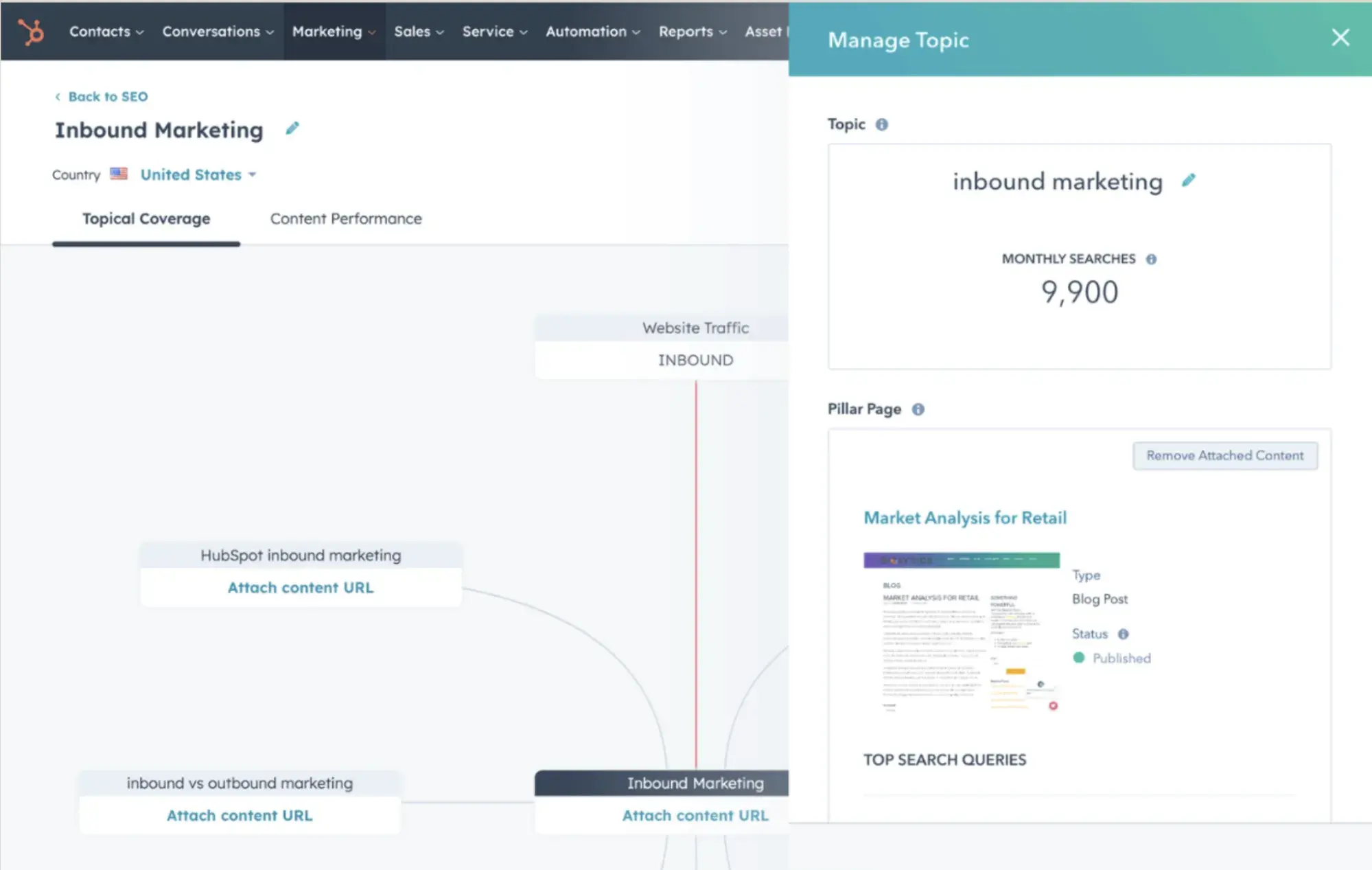
Tools: AnswerThePublic surfaces questions people are searching for on any topic. HubSpot SEO Tools identifies content gaps and tracks topic authority.
Pro Tip: If your sales team answers the same question on every discovery call, that question deserves its own blog post or FAQ page. Content that closes objections before the call shortens the buying cycle.
2. Consider How Answer Engine Optimization (AEO) Can Increase Brand Visibility
Search behavior is changing fast. A growing share of queries is now answered directly by AI tools like ChatGPT, Google’s AI Overviews, and Perplexity without the user ever having to click through to a website.
For inbound marketers who’ve built their strategy on organic search traffic, this is a meaningful disruption worth planning for now.
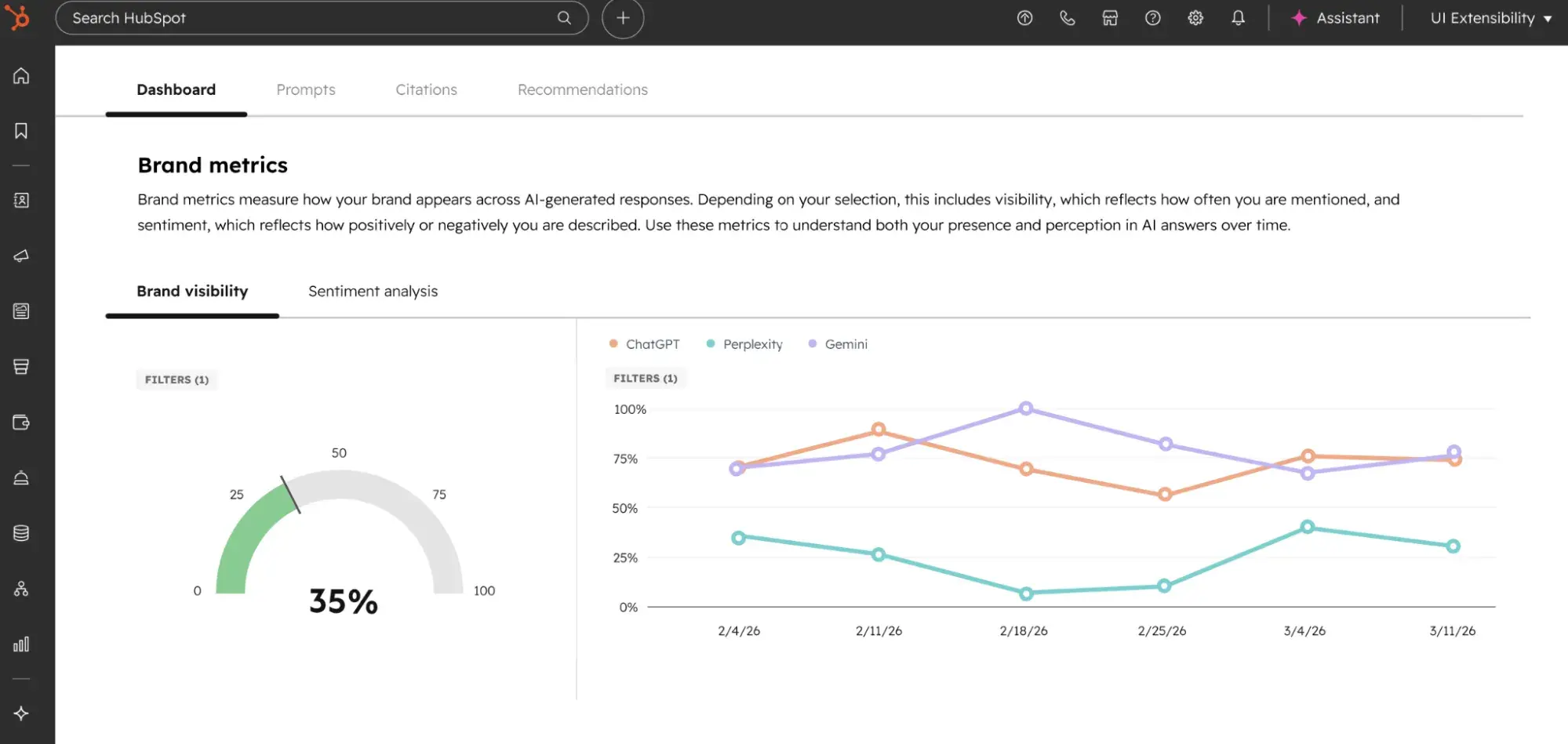
Answer Engine Optimization is the practice of structuring content so that AI-powered search tools surface your brand as a trusted source, even when no click occurs. Visibility in answer engines is becoming a new form of brand reach that operates alongside traditional SEO.
How to implement it:
- Write content that directly answers specific questions — lead with the answer, then add context
- Use structured data and schema markup to help search engines understand your content’s intent
- Optimize for featured snippets using clear definitions, numbered steps, or comparison tables
- Build brand authority through consistent publishing, backlinks, and expert attribution — answer engines favor sources they can corroborate
- Target conversational, long-tail queries that mirror how people naturally ask questions in AI tools
Tools: AEO Grader gives marketers a scored snapshot of how answer engines represent their brand today. It’s the fastest way to establish a baseline before building your AEO strategy.
HubSpot AEO lets you track how your brand shows up across answer engines over time, analyze competitors, and get prioritized recommendations to increase your visibility, so AEO performance is measured alongside your traditional SEO efforts.
Google Search Console monitors impressions and CTR to spot where AI Overviews may be intercepting your traffic.
Pro Tip: Don’t treat AEO as a replacement for SEO, but as a complement. High-quality, well-structured content that ranks well in traditional search also tends to perform well in AI-generated answers.
3. Use AI to Personalize the Content Experience
Marketing automation scales follow-up and personalization across the customer journey, and AI makes true personalization achievable at scale without requiring manual segmentation of every touchpoint.
A first-time visitor has completely different needs than a returning lead who’s visited your pricing page twice. Serving the same content to both slows conversion.
How to implement it: Use behavioral data — pages visited, emails opened, content downloaded — to trigger the right content at the right moment. Landing pages convert website visitors into leads more effectively when CTAs are personalized by funnel stage.
Tailor email sequences by persona and buying stage.
Use AI tools to generate content variations without manually building each one.
Tools: AI tools dynamically adjust website content, CTAs, and emails based on contact properties, lifecycle stage, and behavior. Breeze AI powers the entire HubSpot platform, helping marketing, sales, and service teams move faster with less manual work.
Your CRM is the foundation — personalization is only as good as the data behind it.
Pro Tip: Start with your highest-traffic pages and most active email sequences. Personalizing two or three high-leverage touchpoints outperforms personalizing everything halfway.
4. Build Topic Clusters Around Core Themes
Search engines now reward topical authority over sheer content volume. A topic cluster signals to search engines that your site is a comprehensive, trustworthy resource, not just a page that happens to mention a keyword.
How to implement it: Identify 5–10 core topics at the intersection of what your audience cares about and what your business is positioned to address. For each, create a pillar page. Every cluster article links back to the pillar.
Audit existing content before creating new pieces, because you may already have the building blocks of several clusters.
Tools: HubSpot’s Content Hub is built specifically for planning and managing topic clusters, mapping pillar and cluster relationships, and tracking performance by topic.
SEMrush or Ahrefs identifies keyword gaps within each core topic. Google Search Console identifies existing pages with topical authority worth building on.
Pro Tip: A pillar page should be the most useful starting point for a topic, but not necessarily the most exhaustive. Think of it as a guide that earns a bookmark rather than just a click.
5. Add Video to Every Stage of the Funnel
Video communicates tone, credibility, and personality faster than any other format. When used across the full funnel — awareness, consideration, and conversion — video accelerates trust-building in ways that text alone cannot.
How to implement it: At the awareness stage, publish short-form social videos (60–90 seconds) addressing a common pain point on YouTube Shorts, Instagram Reels, or TikTok. At the consideration stage, embed explainer videos, product walkthroughs, and customer stories in blog posts and email sequences.
At the conversion stage, use testimonial videos and demo recordings on pricing pages to address final objections.
Repurpose: one long-form video becomes a short clip, a blog embed, an email GIF, and a social post.
Tools: HubSpot’s Content Hub to manage and embed video content alongside your broader content strategy.
Pro Tip: Some of the highest-performing inbound videos are screen recordings or phone-filmed customer interviews. Authenticity often outperforms polish.
The State of Marketing in 2026
HubSpot's Annual Marketing Trends Report
- AI in Marketing
- Branding and Growth
- Human-Led Creativity
- And More!
Proven Inbound Marketing Tactics From Industry Leaders
5. Create a Content-First Culture
The best content ideas come from the people closest to your customers — sales reps, support staff, and founders who hear the same questions on repeat.
As Ian Hammond, former CEO of Upstream, explains: “By encouraging our team to document and share their processes and customer interactions, we’ve seen a significant increase in traffic. By transforming these authentic experiences into engaging content, we’re not just attracting an audience — we’re building a community around our brand.”
Implementation takeaway: Schedule a monthly 30-minute “content mining” session with sales and support. Ask one question: “What’s the most common question or objection you heard this month?” Each answer is a potential blog post, FAQ, or video topic.
Best for: Teams with strong customer-facing roles but a disconnected content process.
6. Master Multi-Channel Distribution
Creating great content is only half the job.
As Matt Freestone, Managing Director at Unmatched, explains: “Digital channels are saturated, and content gets washed away quickly. A multichannel approach that surrounds your target is essential.” For every core asset, aim to extract at least three derivative formats: a blog post becomes a LinkedIn carousel, an email section, and a short-form video script. A webinar becomes a blog recap, a highlight clip, and a downloadable guide.
Implementation takeaway: Add a distribution checklist to your publishing workflow. Define the three formats and channels each piece will live on before it goes live — not after.
Best for: Content teams that publish consistently but struggle to grow reach without increasing headcount.
7. Answer the Uncomfortable Questions
Content strategy should answer customer questions and pain points — even the ones your industry avoids.
As Dustin Brackett, CEO of HIVE Strategy, puts it: “The companies that will be successful with inbound are the ones that don’t just put out fluff content. You need to put out valuable content that educates your audience — even around topics your industry avoids.”
Prioritize content on pricing, competitor comparisons, self-qualification (“Is this right for me?”), and common objections.
Implementation takeaway: Pull your sales team’s top five objections and build one dedicated content piece for each. Link to them from relevant pages and share them with your sales team for follow-up.
Best for: B2B and considered-purchase brands where the buying cycle involves significant research.
8. Use LinkedIn Intentionally for B2B Reach
As Alissa Arford, former Head of HubSpot Marketing at The OBO Group, advises: “My #1 B2B inbound tip is to be active on LinkedIn — not just your company account, but your personal profile and company leaders’ profiles, as well.”
Post 3–4 times per week from the company page and 2–3 times per week from leadership profiles. Spend 10–15 minutes daily commenting meaningfully on posts from prospects and partners, which drives more visibility than posting alone.
Implementation takeaway: Build a shared LinkedIn content bank where marketing drafts posts for leadership to review, personalize, and publish. Reduce the friction between “someone should post this” and it actually going live.
Best for: B2B companies with strong leadership voices and longer sales cycles.
9. Set SMART Goals and Measure What Moves the Needle
Inbound marketing success is measured by traffic quality, conversion rate, lead quality, customer acquisition cost, and revenue.
As former Corentin Jacquemin, Digital Strategist at Digitaweb, explains: “The value of data cannot be underestimated — the more you collect usable, standardized information, the more effectively you’ll generate quality leads and revenue.”
Implementation takeaway: Build one inbound dashboard tracking one metric per funnel stage. Review weekly. If a metric isn’t moving, that’s the conversation — not the volume of content published.
Best for: Marketing teams that need to prove ROI to leadership or align more closely with sales.
How to Get Started With Inbound Marketing
Inbound marketing requires clarity, focus, and consistency. A small team that deeply understands its audience will consistently outperform a larger team publishing unfocused content at high volume.
Before writing a single piece of content, get three things clear: who you’re trying to reach, what problem you’re uniquely positioned to solve, and where your audience already goes for information.
1. Define Your Ideal Customer Profile
An Ideal Customer Profile (ICP) is a detailed description of the customer who gets the most value from what you offer. Vague audience definitions produce vague content. Your ICP should capture core pain points, information sources, preferred content formats, buying journey, and success indicators. Build it through direct customer interviews. Their language becomes your content strategy.
Implementation takeaway: Use HubSpot’s free Make My Persona tool to build and document your ICP in a format your whole team can align around.
Pro Tip: Build one ICP first. Start narrow, get traction, then expand.
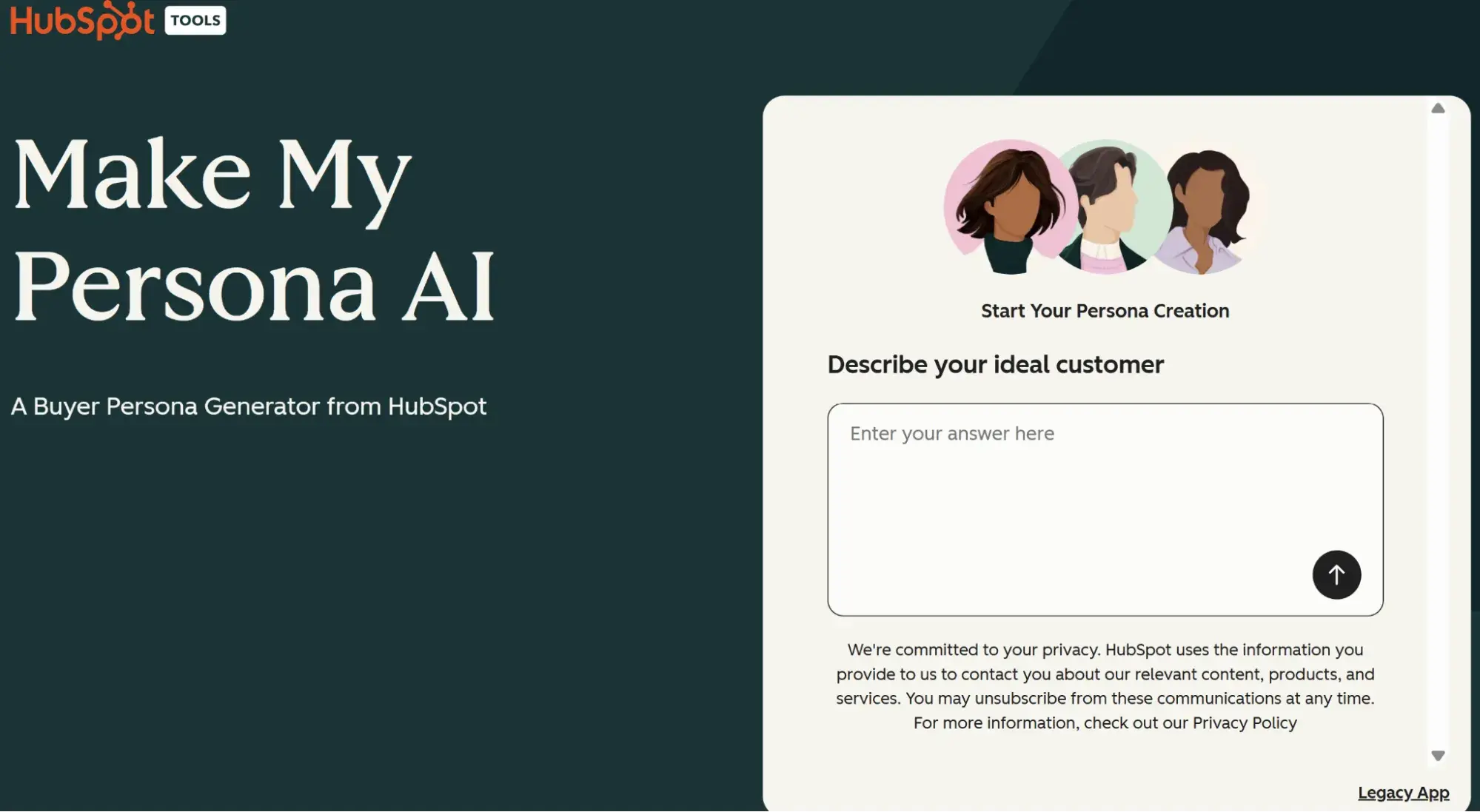
HubSpot’s free Make My Persona
2. Audit the Content You Already Have
Most businesses have more usable content than they realize — old blog posts, sales emails, FAQ documents, case studies, and slide decks that have never been repurposed. Refreshing and re-optimizing existing content is almost always faster and more cost-effective than creating from scratch.
Look for high-traffic, low-conversion pages; outdated but high-potential posts; underleveraged assets; and content gaps around pricing, comparisons, and objections.
Implementation takeaway: List your top 20–30 URLs with monthly traffic, conversion rate, and last updated date. Identify one action for each: refresh, repurpose, consolidate, or retire.
Pro Tip: A well-refreshed post with updated data and stronger SEO can double organic traffic within 60–90 days and often faster than a new post written from scratch.
3. Choose One Primary Channel First
Small businesses can succeed with focused inbound marketing built around one audience and a few high-intent channels. Channel mastery compounds. A team that goes deep on one acquisition channel will generate more pipeline than a team spread thin across five.
Implementation takeaway: Commit to one channel for 90 days before adding a second. Two blog posts a week you can sustain beats five you’ll abandon by week three.
4. Launch One Focused Campaign
The fastest way to generate early inbound traction is with a single campaign built around a single customer pain point and a single primary asset. Landing pages convert website visitors into leads when paired with a clear offer, a form, and a follow-up sequence.
Email marketing nurtures leads after initial conversion with timely, relevant content.
A simple 5-step workflow:
- Identify one acute pain point your ICP experiences
- Create one primary asset that addresses it — a guide, template, webinar, or detailed post
- Build a conversion path — landing page, form, thank-you page, follow-up email
- Promote across your primary channel
- Measure traffic, conversion rate, lead quality, and downstream pipeline
Implementation takeaway: Keep your first campaign deliberately small with one asset, one channel, one goal. Get the workflow right before scaling volume.
5. Set Up Basic Marketing Automation
Marketing automation scales follow-up and personalization across the customer journey. Without foundational automations in place, leads fall through the cracks and follow-up becomes inconsistent.
Set up four automations first:
- A welcome email sequence triggered by a subscription or download
- CRM-connected forms that automatically create or update contact records
- Automated lead follow-up triggered by high-intent actions like pricing page visits or demo requests
- Basic lead scoring that assigns point values to key behaviors so your team can prioritize outreach.
Implementation takeaway: Start with the welcome sequence because it’s the highest-leverage touchpoint in your inbound funnel. Get that right first, then build from there.
Tools: HubSpot’s free CRM and Marketing Hub includes forms, contact management, email automation, and basic lead scoring, all in a single, connected platform purpose-built for inbound teams at any stage.
Frequently Asked Questions About Inbound Marketing
What are some effective inbound marketing strategies?
Inbound marketing focuses on attracting customers with helpful content and useful experiences before asking for anything in return. Core tactics include SEO and topic clusters, blog content, email nurturing sequences, social media distribution, marketing automation, and conversion-focused landing pages.
The most successful programs start with one or two channels, build consistency, and expand from a position of proven traction.
How is inbound marketing different from outbound marketing?
Outbound marketing relies on interruptive promotion such as ads, cold outreach, and broad campaigns. Inbound marketing focuses on attracting customers with helpful content and useful experiences they actively seek out.
The key practical difference: outbound stops working when you stop spending, while inbound builds compounding assets that keep driving traffic and leads long after the initial investment.
How do you measure inbound marketing success?
Inbound marketing success is measured by traffic quality, conversion rate, lead quality, customer acquisition cost, and revenue. Key metrics include organic sessions and keyword rankings (Attract), lead conversion rate and email CTR (Engage), MQL-to-SQL rate and pipeline influenced (Convert), and CAC and inbound ROI (overall efficiency).
If you can only track one metric now, track your lead-to-customer conversion rate — it connects content performance directly to revenue.
What content types work best for inbound marketing?
Content strategy should answer customer questions and pain points in the formats your specific audience actually consumes. Blog posts and long-form guides, video, case studies, webinars, downloadable tools and templates, and email newsletters consistently perform across every funnel stage.
The bigger opportunity is in content systems — one webinar can become a blog post, a short-form video, an email sequence, and a social carousel.
How long does inbound marketing take to show results?
Expect early signals — initial rankings, list growth, first leads — around months three to six, and meaningful traction with measurable pipeline influence between months six and twelve. The compounding returns that make inbound cost-effective compared to paid channels typically kick in after month twelve.
The teams that see the best results commit long enough to let the strategy compound.
Can small businesses succeed with inbound marketing?
Small businesses can succeed with focused inbound marketing built around one audience and a few high-intent channels. A small team that deeply understands one specific customer can consistently outrank and outconvert brands with ten times the budget by being more specific and more helpful.
Focus on one ICP, publish consistently, and compete on depth and relevance rather than volume.
The State of Marketing in 2026
HubSpot's Annual Marketing Trends Report
- AI in Marketing
- Branding and Growth
- Human-Led Creativity
- And More!
Marketing Strategy

-Dec-04-2025-05-17-34-7864-PM.webp)




![The state of inclusive marketing in 2025 [new data + expert insight]](https://53.fs1.hubspotusercontent-na1.net/hubfs/53/inclusive-marketing-report.webp)
![How marketers are navigating a possible recession (and advice about what you should do during it) [new data]](https://53.fs1.hubspotusercontent-na1.net/hubfs/53/image12-May-27-2025-02-18-19-8390-AM.png)