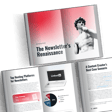
Add findings of our survey of 400+ newsletter experts and a handful of interviews, and I am sure of at least one thing for marketers: Email newsletter strategy isn’t going anywhere anytime soon.
If you want to start a newsletter, whether on behalf of a large business or your personal brand, I’ve created a comprehensive guide filled with data, expert advice, formats, and topic ideas. Let’s get started.
Table of Contents
- Executive Summary
- What is newsletter content strategy?
- How to Develop a Newsletter Content Strategy
- Newsletter Content Trends
- Newsletter Content Formats & Ideas
- FAQs About Newsletter Content Strategy
- Newsletter Strategy Checklist: Your 30-Day Launch Plan
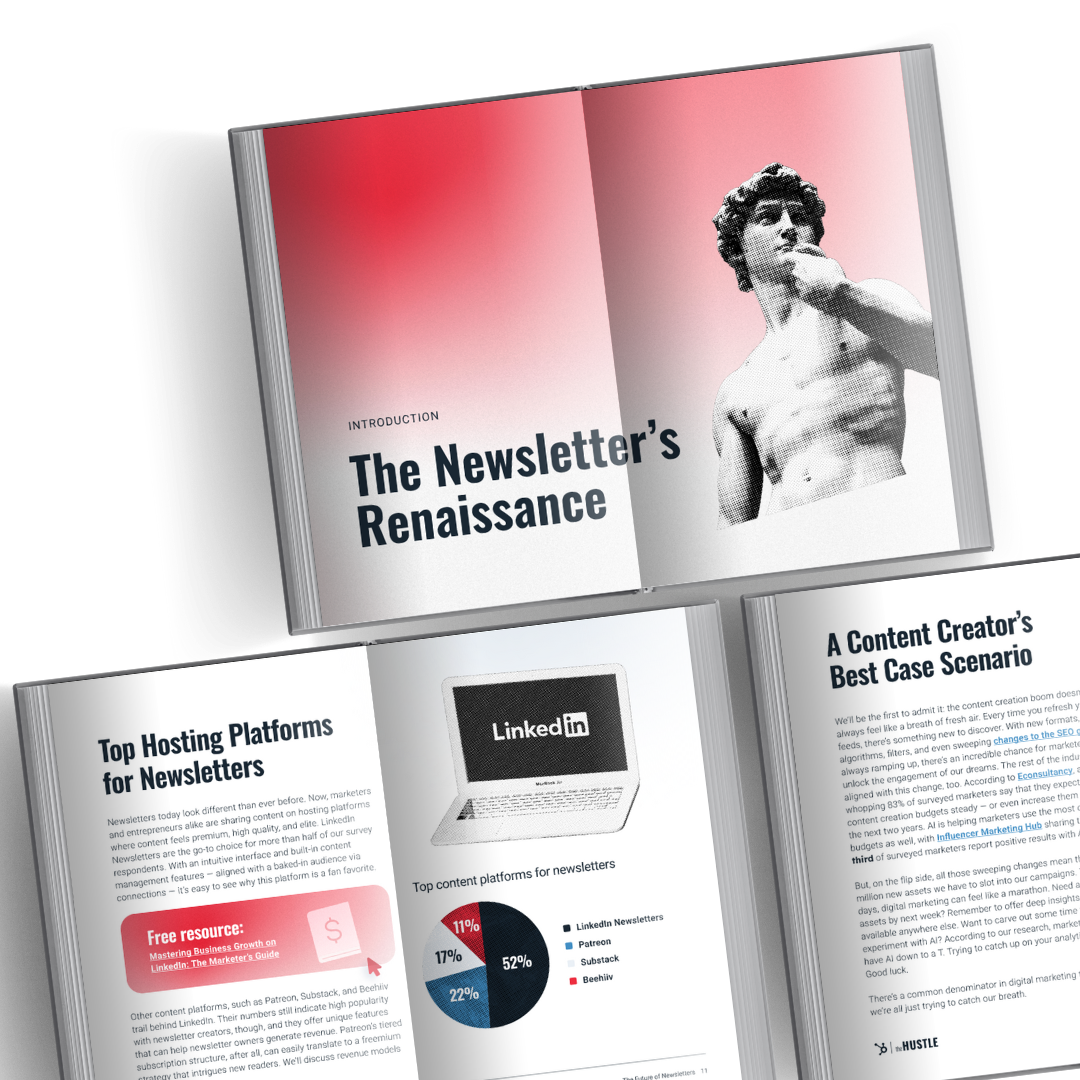
The Future of Newsletters
Your Guide to Building a Profitable Media Empire
- Learn the Basics
- Understand How to Monetize
- Build Your Content Strategy
- And More!
Download Free
All fields are required.
Executive Summary
An email newsletter strategy is a step-by-step plan for building, sending, and optimizing newsletters that engage subscribers and drive business results. Start by defining your goals and target audience. Then, choose the right platform, plan valuable content, and set a consistent schedule. Measure success using KPIs like open rate, click-through rate, and subscriber growth.
According to HubSpot research, newsletters that focus on delivering value inside the email — not just promoting products — see higher engagement and ROI. Ready to launch or improve your newsletter? Start with our proven framework and get started free with HubSpot's tools.
What is newsletter content strategy?
A newsletter content strategy is your roadmap for creating, distributing, and measuring email newsletters that build lasting relationships with subscribers. Unlike traditional email marketing campaigns that push for immediate conversions, an email newsletter strategy focuses on delivering consistent value that keeps your audience engaged over time, promoting loyalty.
If you have, or are planning to start, a B2B newsletter, devote some time to your content strategy. Yes, it will evolve and change over time as you figure out what hits with your audience, but a solid foundation based on industry benchmarks and data will set you up for newsletter success.
Newsletter vs. Email Marketing: Key Differences
B2B newsletters serve a very different purpose from email marketing or email promotions.
Think of the latter like more traditional marketing, where you’re alerting existing customers to sales or other events and trying to get them to click out of the email and complete an action — let’s say, make a purchase or fill out a form. They’re typically focused on a single topic and call-to-action and want you to act immediately.
Read: 22 Email Best Practices That I Live By as an Email Marketer
On the other hand, newsletters have less urgency. The value of newsletters is typically self-contained — that is, your audience can get something out of your B2B newsletter without having to click out.
That’s not to say that newsletters never have external links or be a part of a content marketing plan — but the really good ones will curate those links for their audience and balance them with valuable content.
Newsletters play the long game to earn a reader's click, while email newsletters go in for the hard sell.
Why Your Newsletter Needs a Dedicated Strategy
Considering newsletters are a long-term commitment, you can’t go into them haphazardly.
B2B newsletters are trust-building exercises that require prolonged nurturing and planning. Without a dedicated email newsletter strategy, you risk:
- Inconsistent publishing that erodes subscriber trust
- Content that drifts from reader needs to brand promotion
- Missing opportunities to measure what truly matters
To be successful, your newsletter marketing strategy must be reader-focused, not brand-focused. This means understanding your audience's challenges, curating content that addresses them, and maintaining a consistent voice that builds authority over time.
I’ll use HubSpot’s Masters in Marketing newsletter as a frequent example throughout this guide, since I’ve been working on it for a while now. (If you don’t subscribe, come join us! We have fun.)
How to Develop a Newsletter Content Strategy
- Identify your goal.
- Build a customer (or reader) profile.
- Identify your niche.
- Define your voice.
- Develop and enforce editorial and brand guidelines.
- Identify monetization strategies.
- Refine your format.
Newsletter subscribers are arguably your most valuable audience. Every subscriber has opted in to hearing from you. They’ve actively stated that they want you to stay in contact, demonstrating some level of trust in your expertise and/or your brand.
If you want to keep and grow that audience, you’ve got to meet and exceed their expectations for content that’s both enjoyable and useful.
Former HubSpotter and newsletter expert Brad Wolverton points out another benefit to newsletter subscribers. “You own the audience,” he says. “You control the message, but you can also learn a lot about that audience and how to cater to their needs.”
That feedback loop can inform other aspects of your marketing and content strategies.
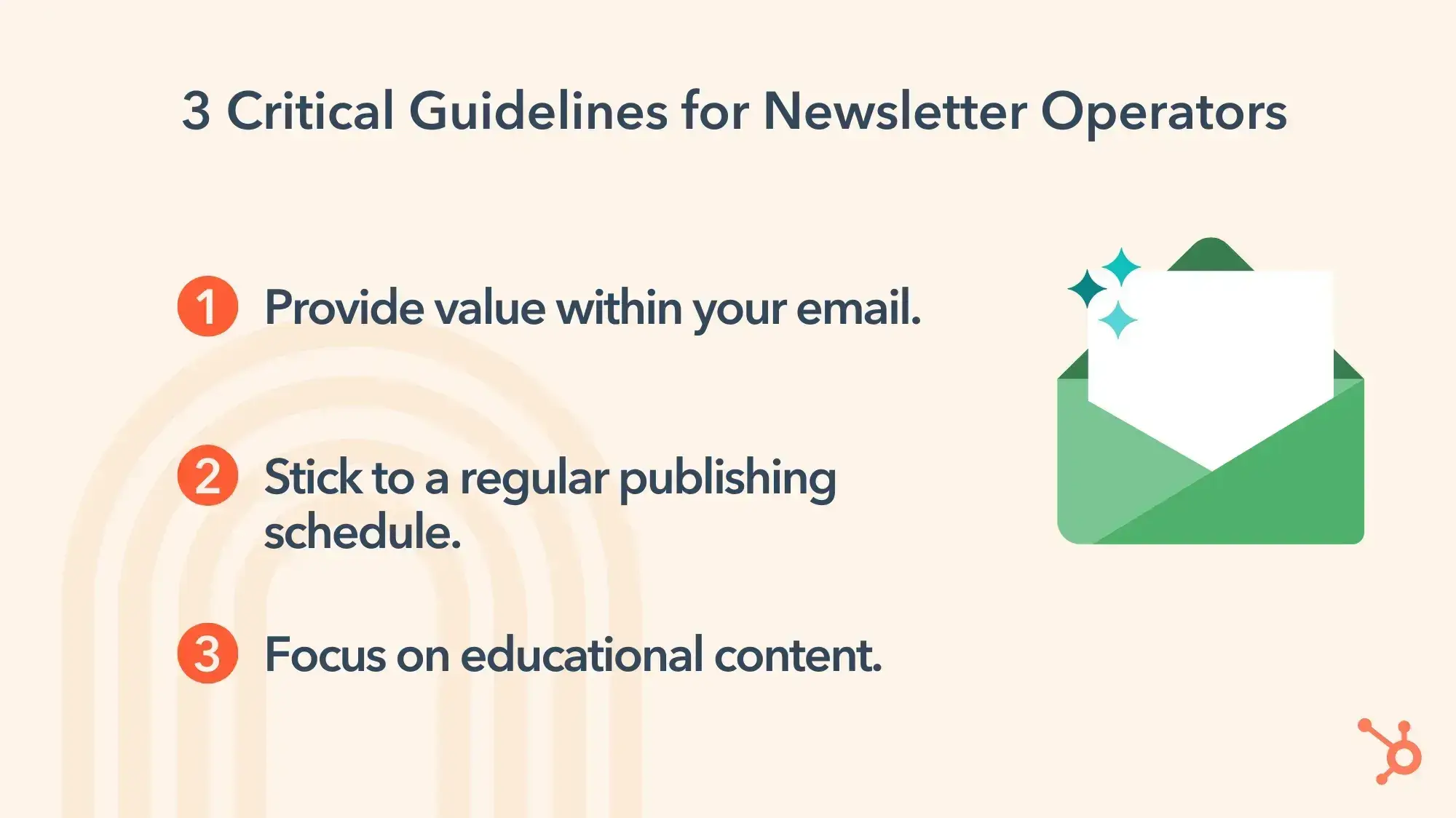
If you take nothing else away from this article, let it be these guidelines:
- Provide value within your email.
- Stick to a regular publishing schedule.
- Focus on educational content.
As you work through the outline below, be sure that you’ve identified and defined the roles of all stakeholders and provided space for discussion. (We love a responsibility matrix here at HubSpot; they’re incredibly useful during these discussions.)
Although you want to be confident in your answers to these questions, try to avoid rigidity. Newsletter trends come and go, audiences shift, even business objectives change. Revisiting and revising this outline post-newsletter launch isn’t a sign of failure, it’s a sign of adaptability.
1. Identify your goal.
Before starting a newsletter, you need to be clear on what you’re trying to achieve with it. Do you want to showcase your expertise? Do you want to drive traffic to your website? Do you want to nurture contacts through the buyer’s journey?
Being clear on your motivation will help you determine what content needs to be in your newsletter. Understanding your audience is also crucial to this.
2. Build a customer (or reader) profile.
When we were developing the content objectives for the Masters in Marketing newsletter, HubSpot senior director of marketing Kyle Denhoff said, “Most of HubSpot’s customers are small- and mid-sized businesses that won’t have big-brand advertising budgets.”
Denhoff explains that by talking to our customers and evaluating how our Marketing Blog performed, we determined that Masters in Marketing is speaking to digital marketers — “people who operate channels like websites, social media, email, SEO, and content marketing. And that helps us with editorial pillars and topic selection.”
“We decided to focus more on stories about social media marketing than national TV ad campaigns, for example. That’s just too expensive for our target customer.”
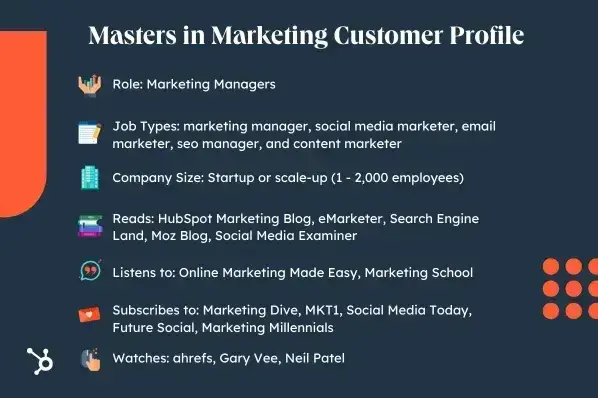
Denhoff also suggests looking at demographic data and media diet to develop your customer profile. Here’s what ours looked like for Masters in Marketing subscribers:
From here, you also want to get inside your reader’s head.
Know how you want your readers to feel.
This isn’t as mushy or subjective as it sounds at first glance. It’s simply understanding what your reader cares about and what they want to leave your newsletter feeling.
Do you want your readers to feel energized and ready to spring into action? Do they want to feel inspired and motivated? Do you want them to feel contemplative and introspective?
We want our Masters in Marketing readers to feel like what they do matters — marketers are often relegated to “sidekick” roles, and we wanted to build a newsletter that was empowering and energizing. When we research people to feature, we look for experts who can give our readers a “secret weapon” that helps them elevate their marketing.
As with users of HubSpot’s customer platform, we want our newsletter readers to be surprised and delighted. This is all central to our editorial approach; we’re specifically looking for marketers who are doing things differently.
3. Identify your niche.
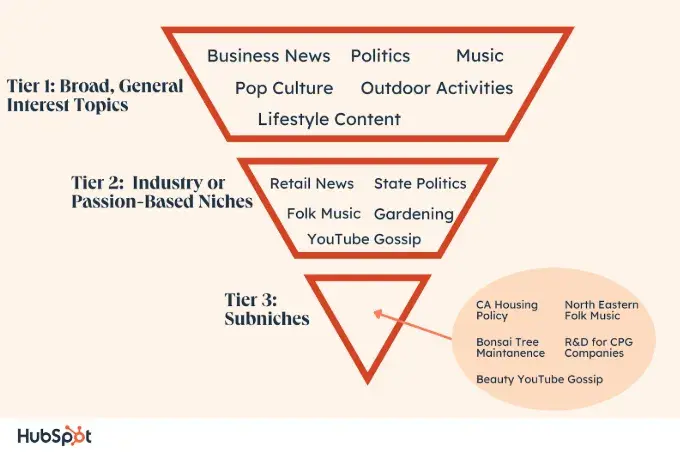
I love SWOT analyses because they help answer the question of where your newsletter fits in against the competition. What are your competitors doing well? What can you do better, or what can you do that they can’t?
As Morning Brew’s Alex Lieberman suggests, don’t be afraid to go super niche. Depending on your other goals and strategies, a small but focused subscriber base can be as, or even more, valuable than a large subscriber base with broad interests.
In an article I wrote on B2B newsletters, I found that the Ferrari Market Newsletter earns a reported $2 - $4 million in yearly revenue — with only about 5k subscribers.
If you have content offers, sponsorships, or other external links, how will that be balanced against the newsletter content itself? Recall that readers don’t want to click out of your email. So if you’re including links, they better be darn good ones.
4. Define your voice.
What are four words that describe your voice, and four words that describe what your voice isn’t? There are fun ways to approach brand personality exercises: If your newsletter drove a car, what kind would it be? If it were a meal, would it be fine dining or fast casual?
(Bonus tip: Duolingo’s style guide includes a section on brand personality, and it’s excellent for these types of questions.)
However you get there, I find that landing on a list of adjectives is the most useful. If your customer profile is 20-somethings, your voice might be youthful and irreverent. If you’re catering to C-suite executives, it might be more formal.
Masters in Marketing is personality-driven, and even though it packs a punch, we keep the format light and skimmable. We decided on a lesson-based format that delivers on both of those promises.
It’s also helpful to define what your newsletter isn’t. For instance, we decided that Masters in Marketing was not arrogant, presumptuous, repetitive, or boring. These guidelines are just as helpful, especially with multiple writers involved.
The Future of Newsletters
Your Guide to Building a Profitable Media Empire
- Learn the Basics
- Understand How to Monetize
- Build Your Content Strategy
- And More!
Download Free
All fields are required.
5. Develop and enforce editorial and brand guidelines.
What editorial or brand guidelines are in place, and how will those be implemented and enforced? You likely already have guidelines for your brand but consider whether the newsletter will translate those into a more personable voice, who will edit the newsletter, and other practical concerns.
This could even include logistics like what day(s) of the week you’ll send your newsletter.
In a HubSpot survey of nearly 400 marketing and advertising professionals between October 2023 and May 2024, emails sent on Mondays and Tuesdays performed the best.
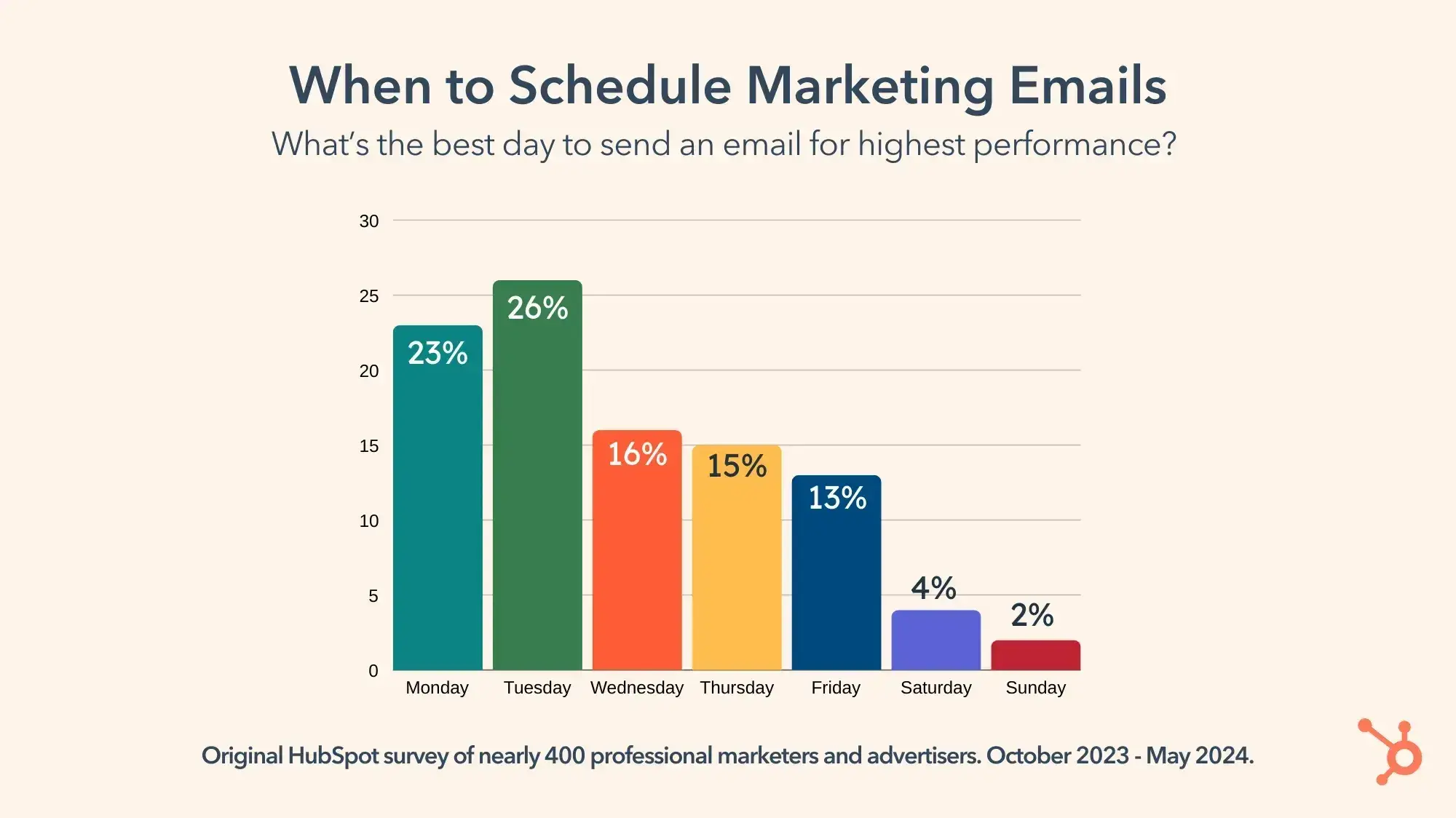
These are not absolutes. I once worked for an organization with many subscribers in a country where the workweek began on Sunday, which made Sunday one of our best-performing days for sending emails.
6. Identify monetization strategies.
How will your newsletter support existing business offerings? Will it be paid, freemium, and/or have ads or sponsorships? Will you promote it across other platforms?
Alexis Grant, who founded the newsletter They Got Acquired, told me that because she has an engaged, niche audience, she’s been very successful selling sponsorship space, even though her subscriber base is a relatively modest 7k+.
“When people think about media and content businesses, they’re often planning to monetize through advertising or sponsorships, which require having a massive audience to make it work.”
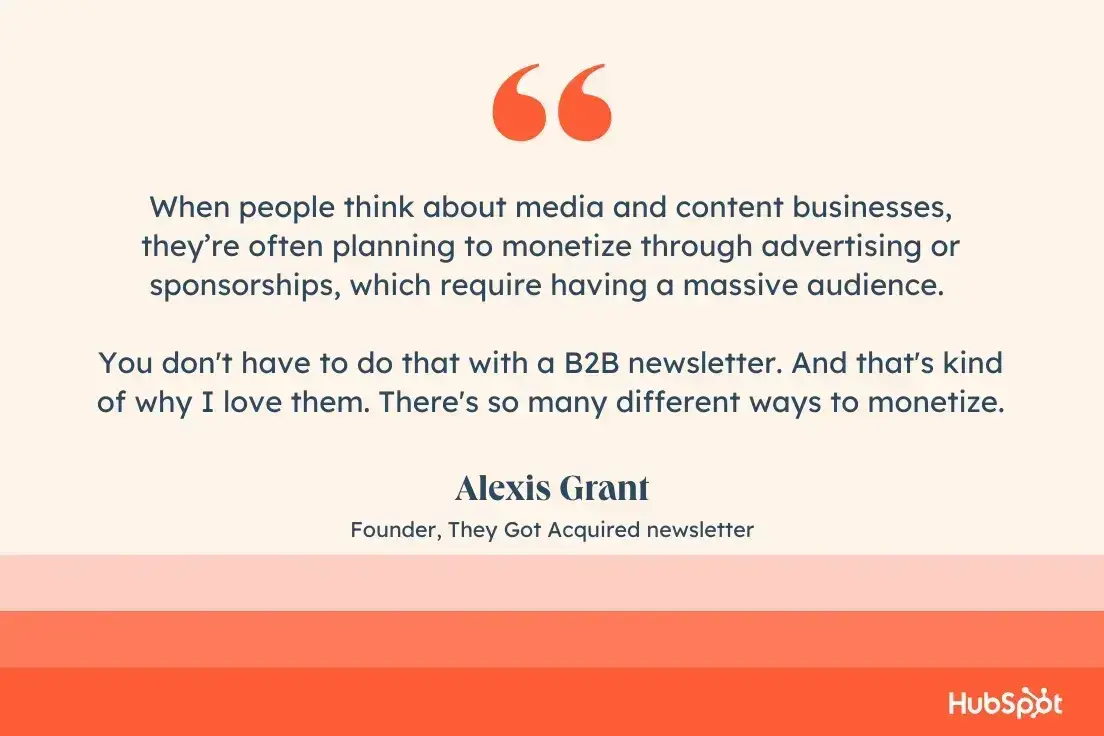
But newsletters are different, she says. “You don‘t have to do that with a B2B newsletter. And that’s kind of why I love them. There's so many different ways to monetize.”
7. Refine your format.
There isn’t one single correct way of organizing an email newsletter, but there are a few key building blocks, according to HubSpot’s Ultimate Guide to Email Newsletters:
- From Line. This includes both the “from” name you see in your inbox as well as the email address the newsletter is sent from.
- Subject Line and Preview Text. This is your best shot at hooking readers. Keep it short, natural, and start a story that your readers want the ending to.
- Eyebrow. The greeting before your main headline should draw people in. It also might reflect your main branding.
- Body Copy. The bulk of your email should be easy to read — think short sentences and paragraphs, bullet points and bolding, and a personality-driven tone.
- Images. Images can break up text, show off branding, grab readers’ attention, and even inspire them to share.
- Calls to Action / Linked Text. Rein it in! Too many links can overwhelm, so use them carefully and strategically. Links should always benefit your readers.
- Social Sharing. Make it easy for your readers to share with their friends and networks.
- Request for Feedback. Asking readers for feedback builds a stronger relationship with them, and it helps you build a stronger newsletter.
Pro tip: This anatomy lesson comes from the HubSpot pros who produced the excellent free ultimate guide to newsletters. It has a lot more details and examples on the nuts and bolts of newsletter writing.
Newsletter Content Trends
Based on the survey results and the subject-matter interviews I conducted, here are some trends in newsletter content strategy that we’re seeing:
1. Rise of Web-based Platforms
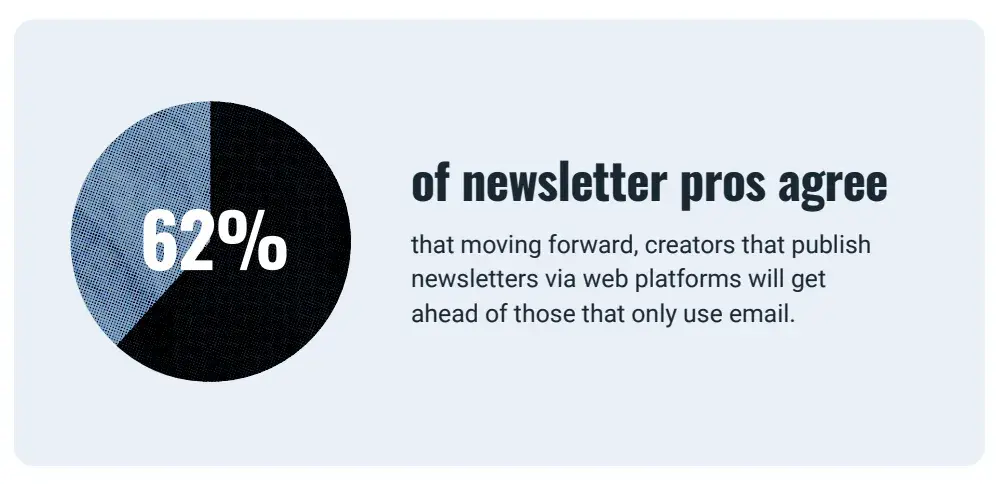
While our survey shows Gmail currently far outweighs any other newsletter channel in popularity (a whopping +120% higher than the second most popular channel), 62% of newsletter pros agree that, moving forward, newsletter creators who leverage web platforms to publish their content will get ahead of those who are only email inbox-based.
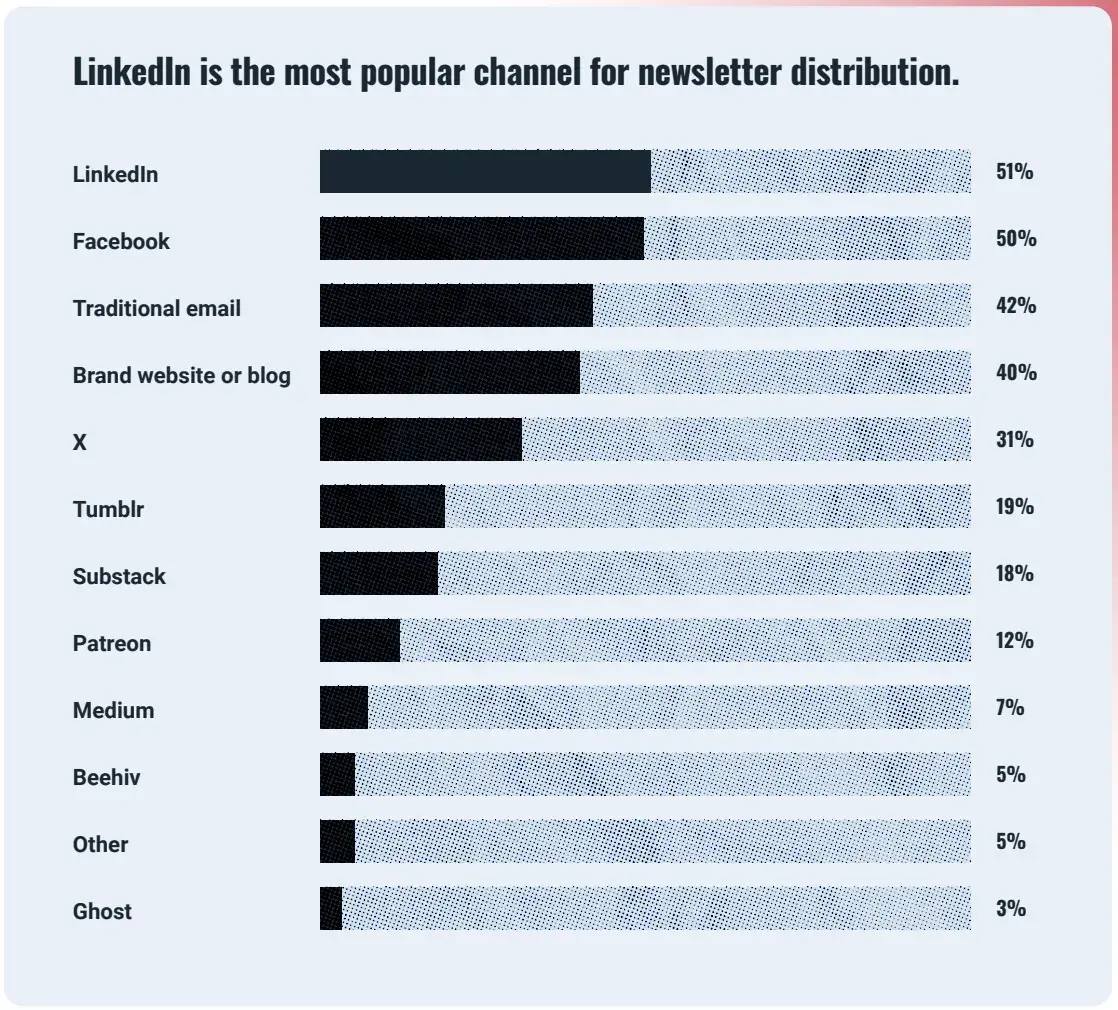
LinkedIn, in particular, shows considerable distribution promise.
2. Shift Toward Personalized Content
Remember that you’re writing for real people — other people like you. Your newsletter content needs to feel relevant and resonant.
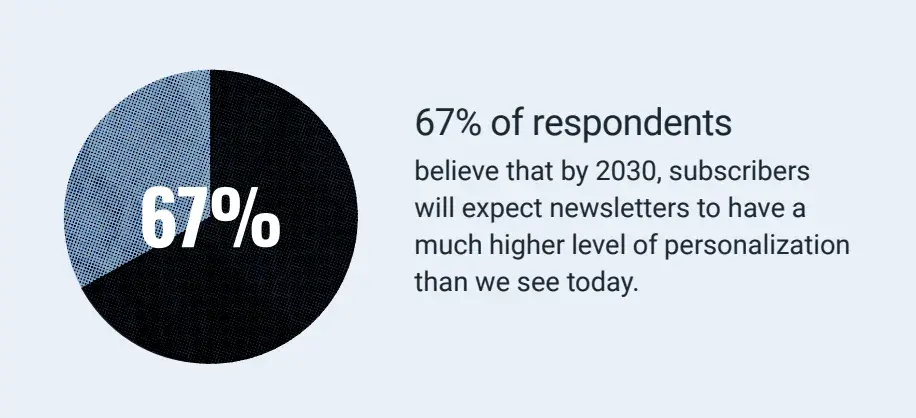
Our survey found that by 2030, 67% of marketers agree that subscribers will expect newsletters to have a much higher level of personalization than we see today.
In turn, nine in ten newsletter creators already actively cater their strategy to their most prominent subscriber demographics. Only 7% of the total respondent pool don’t do this.
3. Format Experimentation
One area where personalization can come into play is your newsletter format.
Survey respondents who “format my newsletters or experiment with new newsletter formats that align with how my core demographics prefer to consume content” saw the highest revenue from their efforts, ranging from $45,001 to $55,000.
But what formats are best exactly? When asked what formats drove the highest of five key metrics, here’s what we found:
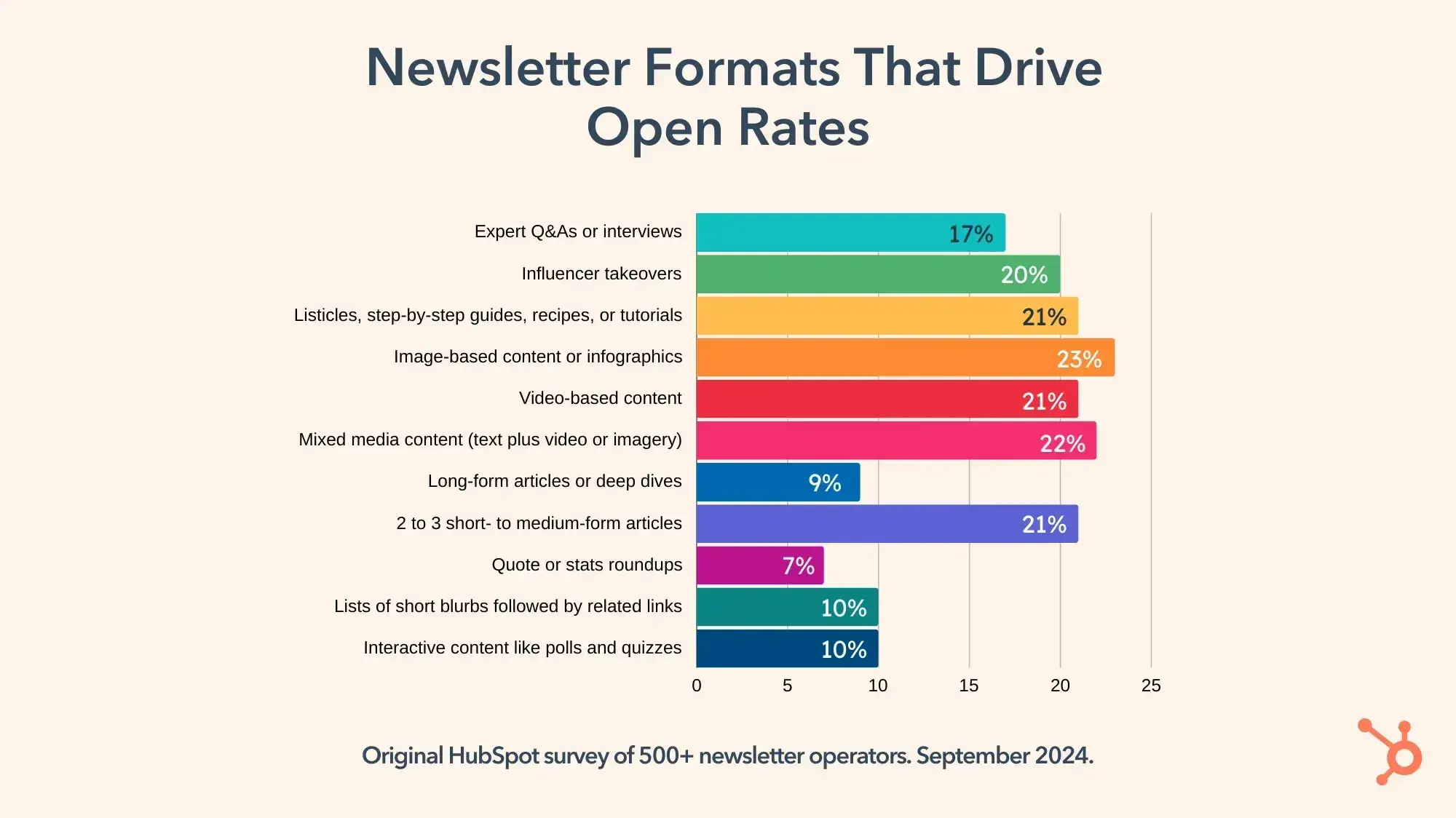
Two of the top-performing formats were expert Q&As or interviews and listicles (lucky for Master of Marketing), along with mixed media, step-by-step guides, recipes, or tutorials, and visual content.
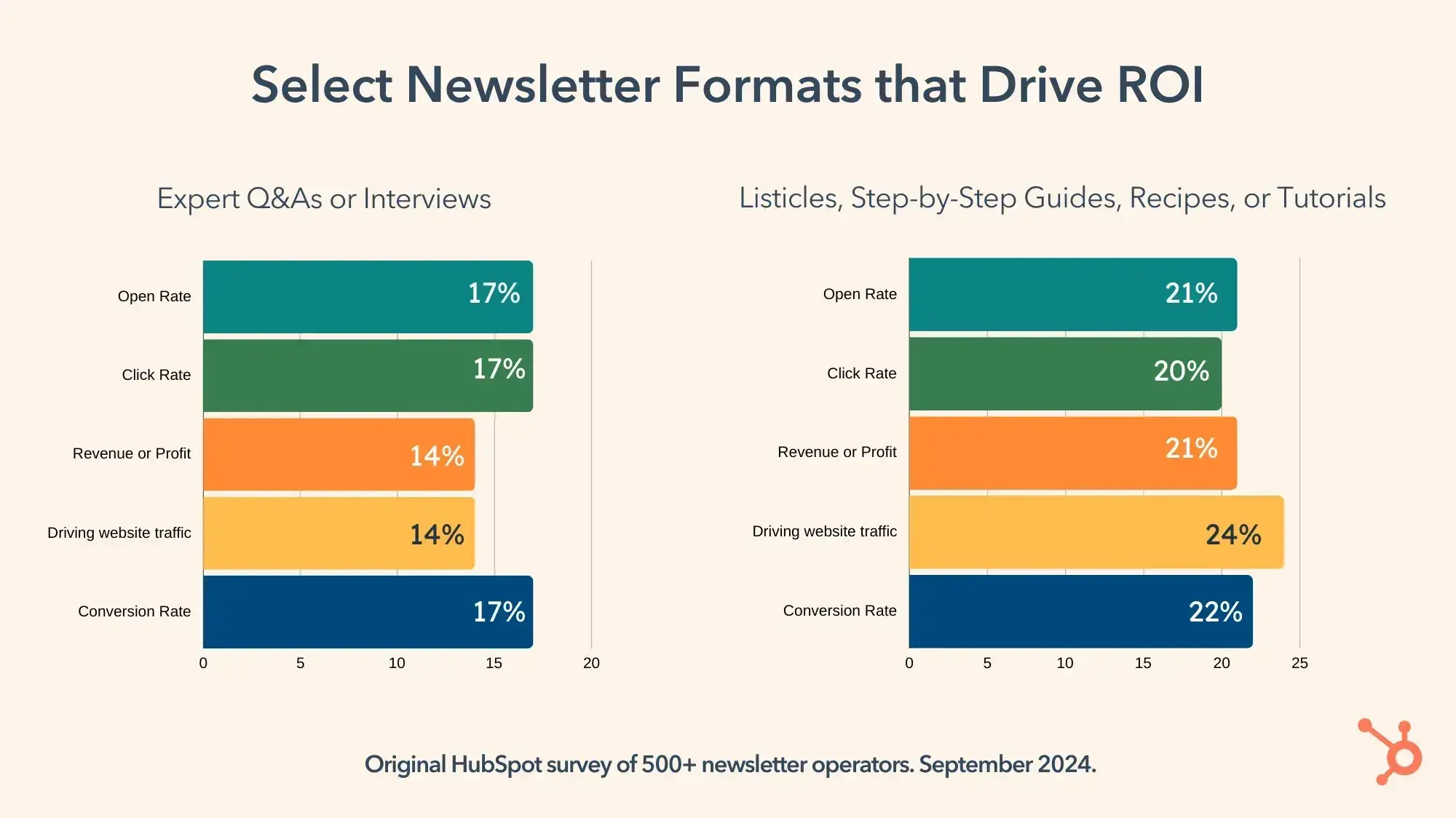
Now, that doesn’t mean you should abandon your great idea for a newsletter that curates long-form articles or deep dives. You know your audience best, and what they may enjoy may be different. Measure and adapt.
4. Creator-style, Personality-driven Content
Personality and expertise are why you sign up for newsletters like Anne Helen Peterson’s Culture Study or John Paul Brammer’s ¡Hola Papi! — They’re good writers with smart, critical takes on culture, and they’re fun to read. Take a page from their notebooks, even if you’re writing about car gaskets.
Our research shows personal opinions, tips, or hot takes on industry or topics of interest drive both the highest click rates and open rates in newsletters.
5. AI Assistance
In the age of AI, 64% of our survey respondents agree that newsletters will be generated by AI by 2030. That means quality, original, human-written newsletters will stand out from the crowd.
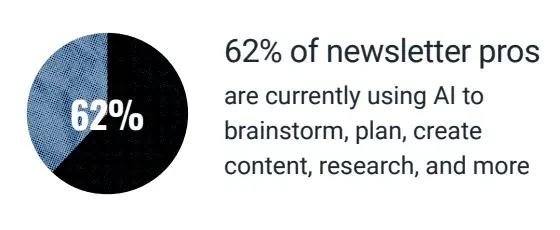
That’s not to say you shouldn’t be using AI at all, though. AI can also assist with personalization and segmentation. In fact, currently, 62% of pros are already using AI in their newsletter content strategy.
Even here at HubSpot, we saw an 82% increase in conversions using AI to personalize content.
6. Metrics Beyond Traditional Email Marketing
Click-through rates aren’t yet a KPI of the past, but marketers are recognizing the long-term value in metrics like:
- Subscriber growth and health
- Organic buzz and conversation
- Social media mentions
- Reader engagement and replies
The Future of Newsletters
Your Guide to Building a Profitable Media Empire
- Learn the Basics
- Understand How to Monetize
- Build Your Content Strategy
- And More!
Download Free
All fields are required.
Newsletter Content Formats & Ideas
1. Interview-based Content
Examples: Masters in Marketing (HubSpot), Lenny’s Newsletter (Lenny Rachitsky), Link in Bio (Rachel Karten)
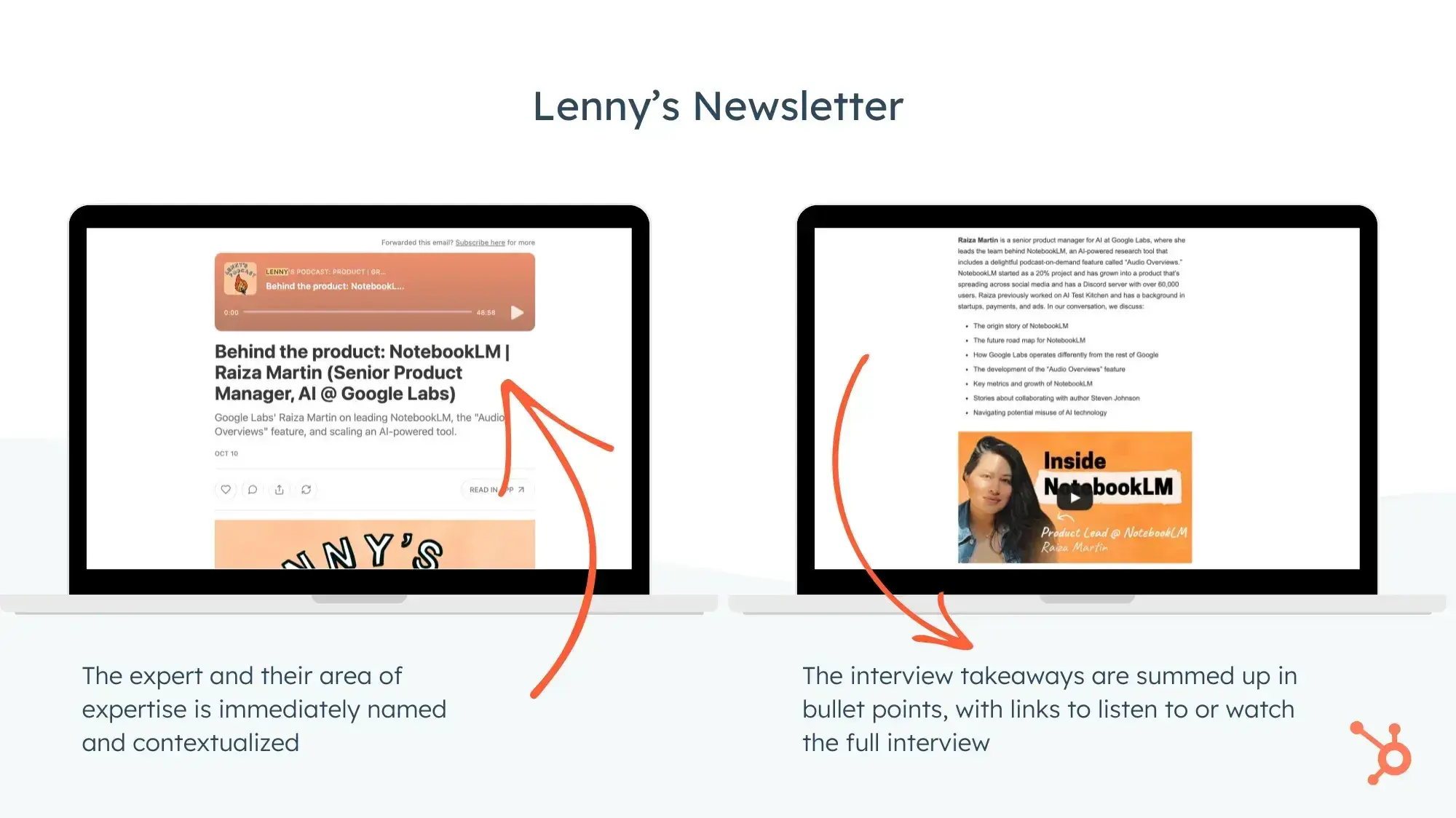
Lenny’s Newsletter, which features lots of expert interviews, immediately names and contextualizes each expert at the top of the email (see above).
There’s a link to listen to or watch the full interview, but there’s also a skimmable list of bulleted takeaways for easy reading.
Pro tip: Identifying, reaching out to, and interviewing experts can take quite a bit of time, so give yourself a long lead for interview-based content. On the plus side: If you’re the sole newsletter writer, interviews are a great way to bring in new perspectives, opinions, and ideas.
2. Expert Insights and Case Studies
Examples: Newsletter Examples (Brad Wolverton), After School (Casey Lewis), Really Good Emails (Matthew Smith)
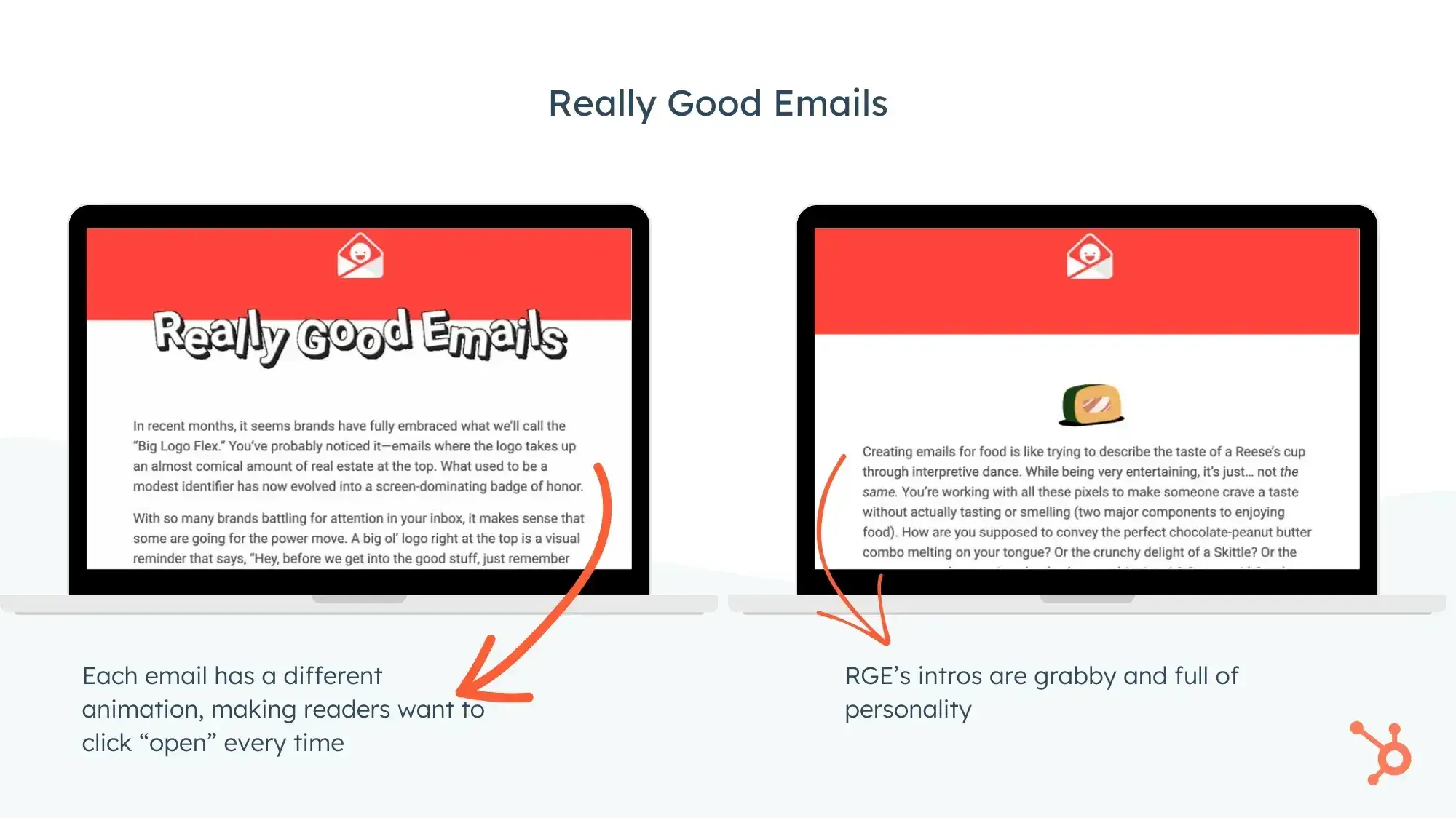
Really Good Emails is really good at two things: Sharing really good emails and making really good GIFs.
Aside from the focused case studies, CEO Matthew Smith & co. are enjoying themselves, and it shows — which keeps it on my subscription list.
The intros are grabby and full of personality, which gets readers excited about case studies, which have a (perhaps unearned) reputation as being a bit dry.
Pro tip: If you have niche expertise, this is your time to shine. The best newsletters in this category provide expertise and commentary that you really can’t get anywhere else.
3. Personal Stories and Behind-the-Scenes Updates
Examples: Kayleigh Moore’s newsletter, Craft Talk (Jami Attenberg)
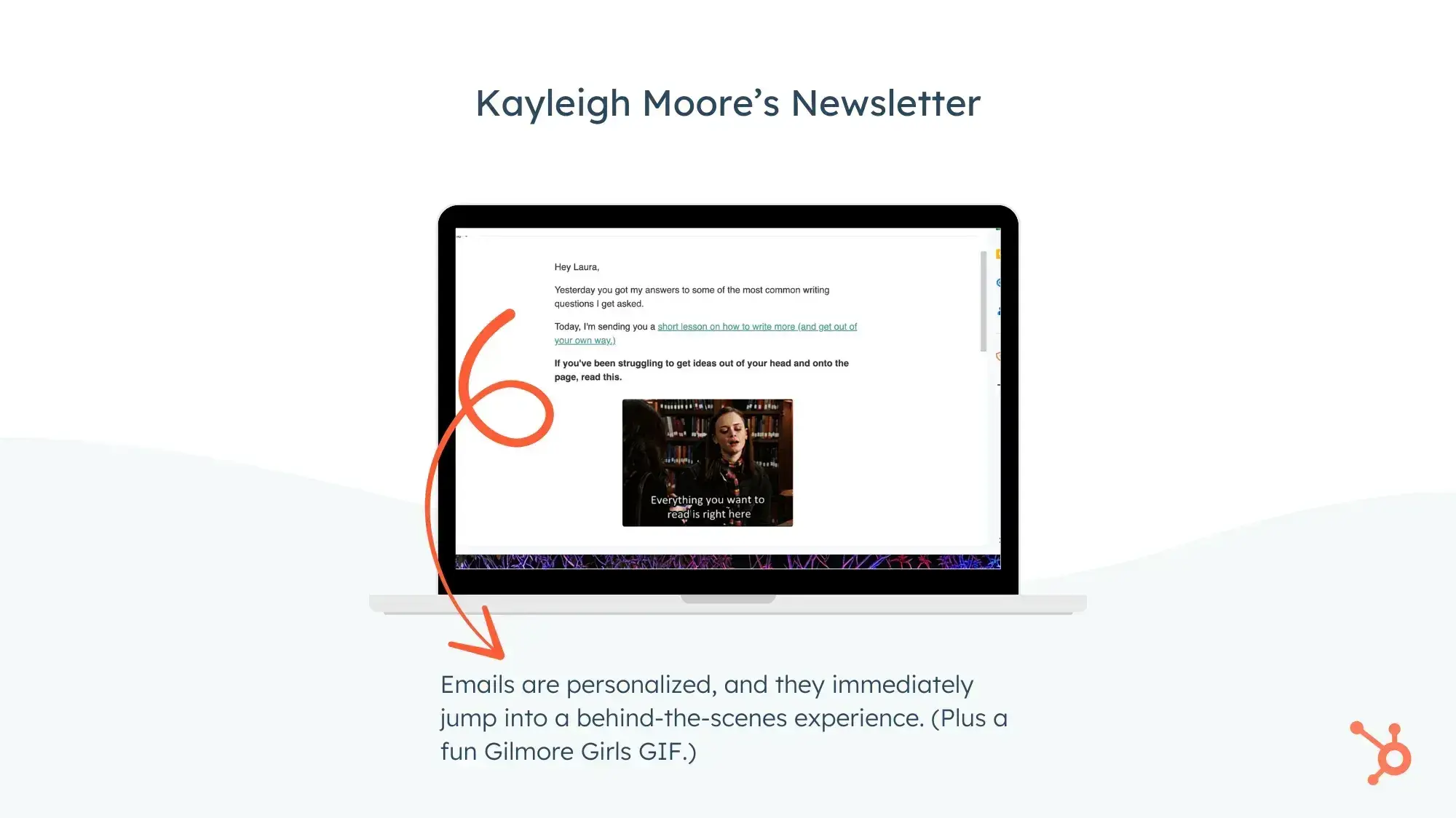
Kayleigh Moore’s newsletter, about all kinds of writing, starts with a personalized greeting. Moore then immediately launches into a behind-the-scenes experience — writing questions she gets asked — and promises a quick lesson just for you.
Pro tip: Even if the topics are outside your industry, I recommend subscribing to a few newsletters that indulge your own interests and hobbies, whether that’s pizza or pop culture or pottery. Regularly reading different writing styles on diverse topics will only make you a better newsletter writer.
4. Industry Trend Analysis
Example: ICYMI (Lia Haberman)
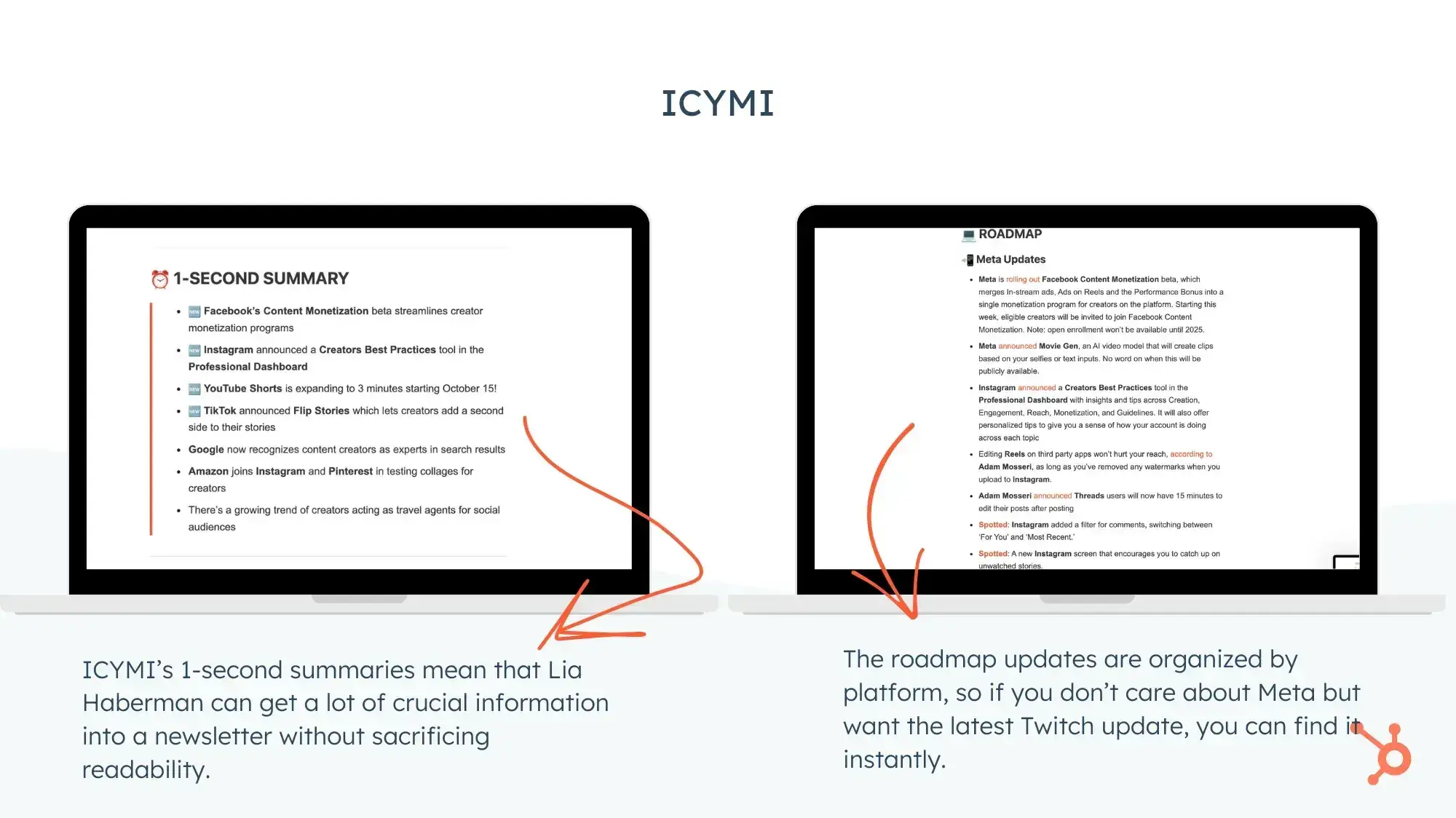
Lia Haberman, one of the experts I talked to for this article, does a particularly good job getting a lot of industry trend analysis and updates into one email.
Headings are clear and consistent from email to email, and she uses emoji, bullet points, and bold type to make sure her one-second summaries really do take one second to read.
Pro tip: Another category for the niche experts to strut their stuff, industry trend analysis has to be skimmable and fun to read. No matter how much you want to know about a particular industry, it’s unlikely you’ll have time for a deep dive on your morning commute.
5. Educational Content Tailored to Specific Audience Segments
Examples: They Got Acquired (Alexis Grant), The Freelancer’s Year (Lindy Alexander)
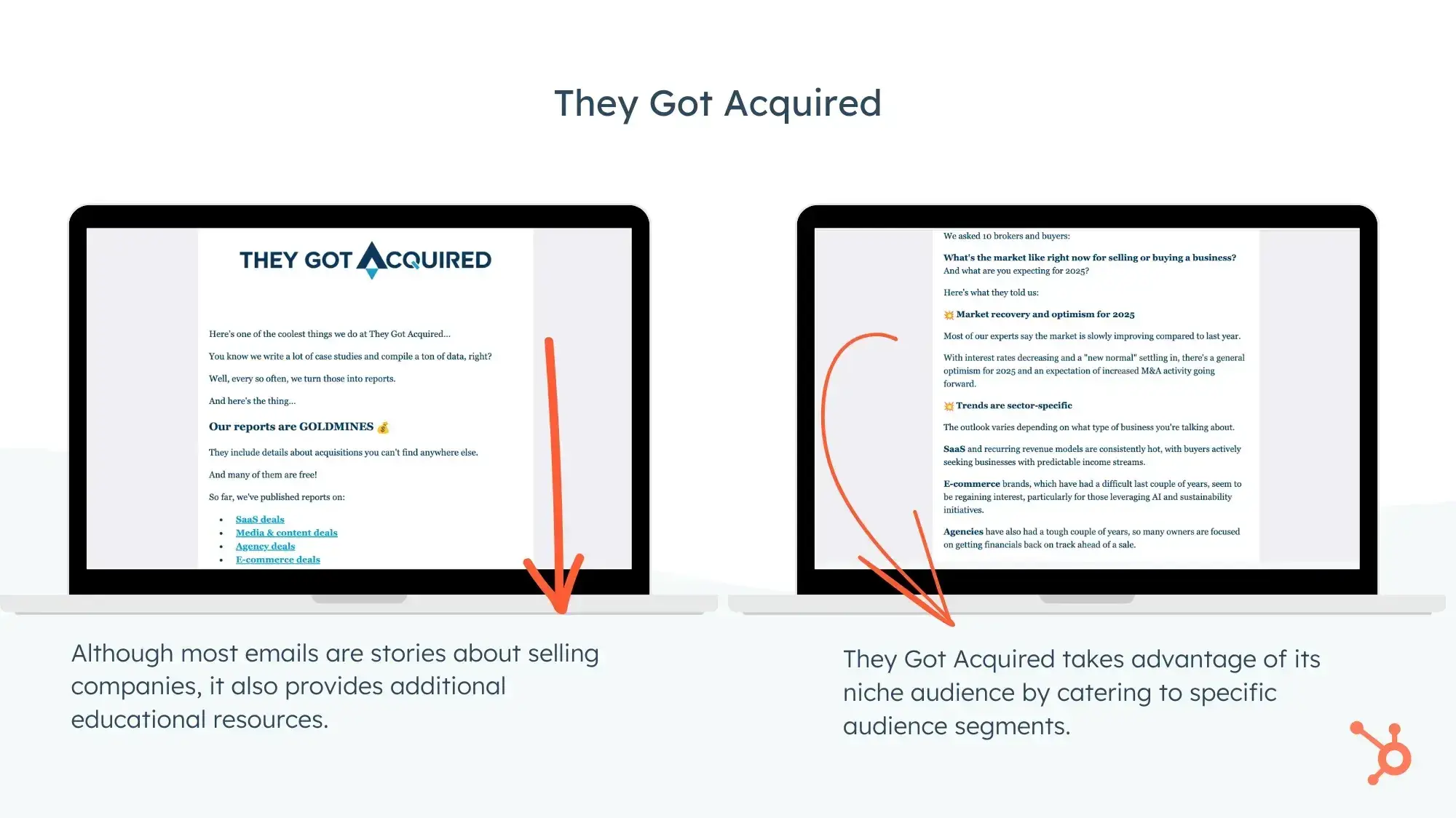
They Got Acquired founder Alexis Grant, who I also spoke with for this article, has a very specific focus: It “shares stories of companies that sell for $100,000 to $50 million, revealing insights that lead to life-changing exits.”
Having a captive niche audience means that even though Grant has a relatively small number of subscribers, they’re very valuable, both to her and to sponsors.
Pro tip: Alexis Grant uses an AI segmentation tool to make the most of her educational content. New subscribers are invited to take a survey that narrows down their demographics, and she can segment accordingly.
6. Actionable Resources (Reports, Guides)
Examples: SEOFOMO (Aleyda Solís), Work Life (Atlassian)
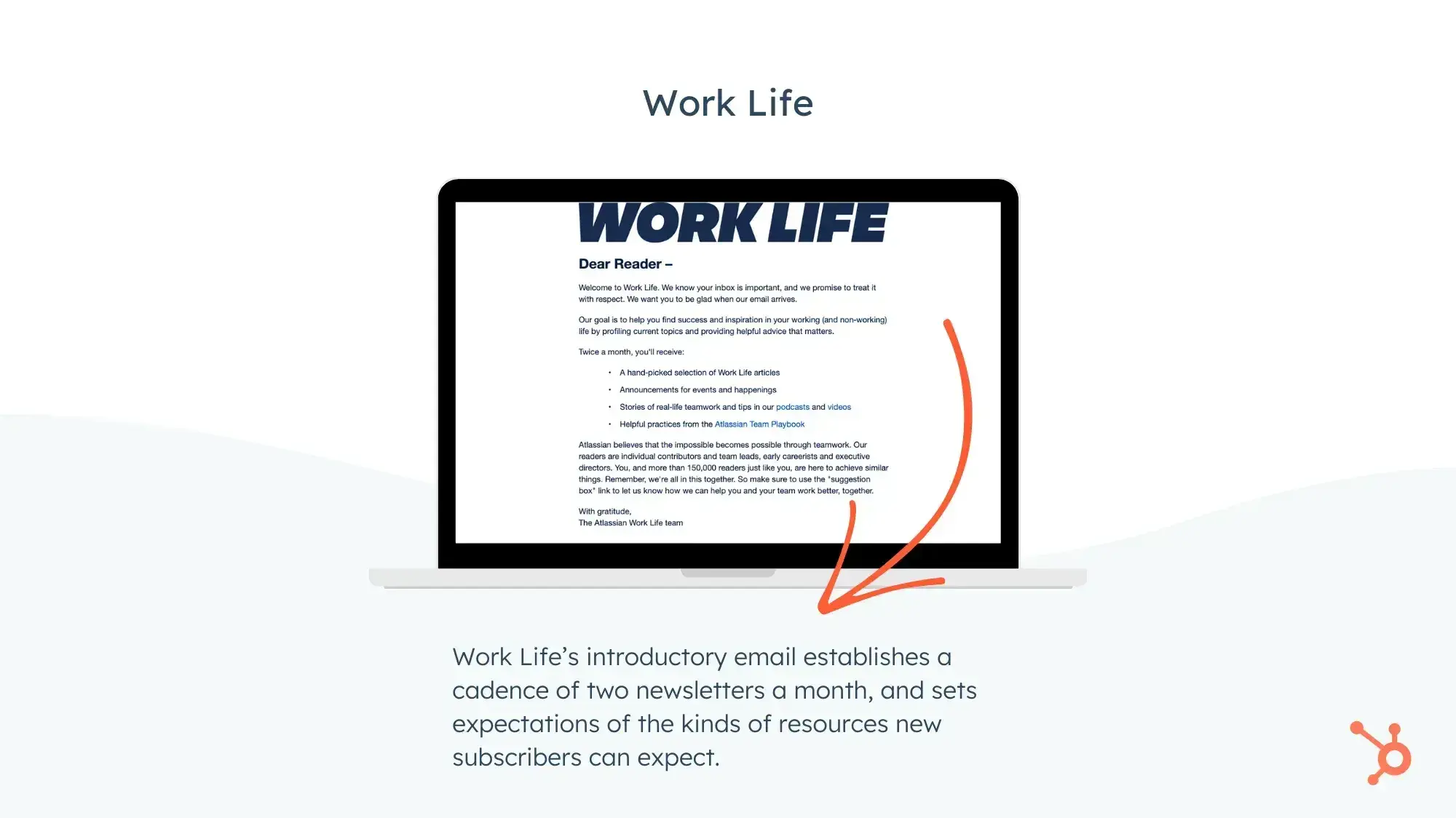
Atlassian, the makers of Trello, has a twice-monthly newsletter with announcements, tips for a more productive work life, and stories from its own playbook.
It’s a combination of several kinds of newsletters mentioned here, and that blend makes it more fun to read than just a report or guide.
Pro tip: These newsletters may be harder for a sole operator to maintain, particularly if you’re doing original research and/or creating robust reports or guides.
FAQs About Newsletter Content Strategy
How often should I send newsletters?
The ideal frequency depends on your audience’s expectations and your content capacity. A regular schedule (e.g., weekly or bi-weekly) helps build trust and consistency, whereas overly frequent sends risk fatigue. Use HubSpot’s Email Health Tool to monitor engagement trends and unsubscribe rates and adjust accordingly. According to survey data, emails sent on Mondays and Tuesdays performed best among 400+ marketing pros.
What’s a good open rate for newsletters?
A strong benchmark across industries is around 40-45% open rate, with open rates above 50% being exceptional for niche or highly engaged audiences. Keep in mind that opens don’t tell the whole story — clicks, conversions, and list health matter too.
HubSpot’s Email Analytics allow users to compare their results over time and segment for deeper insight.
How long should newsletters be?
Newsletters should be long enough to deliver meaningful value, but short enough to respect subscribers’ time. For example: a concise intro, 2-3 skimmable sections (with bullets or visuals) and one strong call to action is often ideal.
In HubSpot’s email editor, you can preview how the content displays across devices to ensure readability. The length will also depend on your format (e.g., interview-based vs. resource roundup) and audience preference.
Should I use free or paid newsletter platforms?
It depends on your scale, features required, and integration needs. Free platforms may suffice initially, but paid options often include segmentation, automation, CRM integration, advanced analytics and deliverability support.
Using HubSpot’s Email Marketing tool (which integrates with HubSpot CRM) can help centralize subscriber data and optimize performance as you scale with the help of automation and personalization.
How do I grow my newsletter subscriber list?
Growth begins with offering clear value, making subscription easy, and promoting across channels. Consider content upgrades or exclusive formats (interviews, behind-scenes) as lead magnets. Also, experiment with web-based platforms (not only email inbox) as your article notes, since 62% of newsletter pros see web publishing as a growth path.
Leverage HubSpot’s Forms and Pop-ups to capture opt-ins on your site, segment for interests, and deliver relevant follow-up.
What’s the difference between newsletters and email marketing?
Newsletters are periodic, content-rich communications that prioritize delivering value or insights to subscribers, often without a heavy sales focus. Email marketing (campaigns) is more promotion-oriented, with defined offers and calls-to-action, often aimed at conversions.
HubSpot’s Marketing Email tool allows you to tag and differentiate types (newsletter vs. promotional) to tailor content, timing, and measurement accordingly.
How do I measure newsletter ROI?
Go beyond open and click-through rates: measure subscriber growth/health, engagement (replies, forwards), conversion events and attribution to revenue (if applicable).
HubSpot’s Campaigns Tool can tie email performance to CRM deals/opportunities so you can see influence on pipeline. Industry data shows that open rates have risen (e.g., to ~39.6%) and that automated workflows outperform manual ones.
Can I automate my newsletter content?
Yes — and you should automate wisely. Automation saves time and allows for real-time delivery, personalization, and segmentation.
HubSpot’s Workflows tool allows you to automate content delivery (e.g., welcome sequence, segmentation based on interests) and integrate your newsletter send with CRM data to personalize content at scale. But ensure you maintain human voice and value focus — newsletters are about relationship building, not purely transactional behavior.
The Future of Newsletters
Your Guide to Building a Profitable Media Empire
- Learn the Basics
- Understand How to Monetize
- Build Your Content Strategy
- And More!
Download Free
All fields are required.
Newsletter Strategy Checklist: Your 30-Day Launch Plan
Now, ready to launch your newsletter? Use this checklist to build your email newsletter strategy:
Week 1: Foundation Setting
- Identify your goal and audience
- Define your newsletter's unique value proposition, voice, and niche.
- Research 5 competitor newsletters in your space
- Define your editorial guidelines (i.e. target sending frequency)
- Select your newsletter platform based on needs and budget
Week 2: Content Planning
- Create content templates for your different formats
- Test your formats in your email platform
Week 3: Technical Setup
- Configure your email platform (set up subscriber list, etc.)
- Set up basic automation (welcome series)
- Create subscription landing page
- Test workflow across email clients
Week 4: Launch Newsletter
- Write and schedule first newsletter
- Set up analytics tracking
- Create a promotion plan
- Establish your measurement dashboard
Ongoing Best Practices
Remember these newsletter best practices as you grow:
- Aim for consistency, not perfection — Regular publishing builds trust and helps you understand what your reader likes and dislikes
- Value lives in the email — Don't make readers click out for value (at least not regularly)
- Measure what matters — Track engagement (i.e. clicks, replies, new subscribers), not just opens
- Listen to your readers — Regular surveys improve content
- Test and iterate — What works for others might not work for you
Build your own newsletter content strategy.
Now that you’re armed with knowledge (and a lot of data), it’s DIY time.
Regardless of whether you choose HubSpot’s email tools or others, remember the three critical guidelines every newsletter expert I’ve spoken to has reiterated: Provide value within your email, stick to a regular publishing schedule, and focus on educational content.
Here’s one more: have fun writing it. Because if you’re enjoying it, chances are that your customers will, too.
Editor's note: This post was originally published in December 2024 and has been updated for comprehensiveness.
The Future of Newsletters
Your Guide to Building a Profitable Media Empire
- Learn the Basics
- Understand How to Monetize
- Build Your Content Strategy
- And More!
Download Free
All fields are required.
Email Newsletters
![HubSpot's 2025 State of Newsletters Report [data from 400+ newsletter pros]](https://53.fs1.hubspotusercontent-na1.net/hubfs/53/state-of-newsletters-1-20251030-4170182.webp)
.png)
![How to create an email newsletter [+ expert tips & checklist]](https://53.fs1.hubspotusercontent-na1.net/hubfs/53/email-marketing-newsletter-1-20260109-8909281.webp)
-Oct-10-2025-03-00-17-4988-PM.webp)
-2.webp)

.png)