

Venture capital CRM platforms help investment teams centralize deal flow, track founder and LP communications, and surface the relationship intelligence that drives sourcing, diligence, and fundraising decisions.

2025 marked the second-strongest year on record for U.S. venture capital, according to Silicon Valley Bank’s State of the Markets report. With AI/ML deals capturing 65.6% of U.S. VC deal value that year — $222 billion out of $339 billion — and as capital concentrates, scattered relationship data across spreadsheets and inboxes has become a competitive liability for investment teams.
This guide compares six of the best venture capital CRM platforms available in 2026 with a feature breakdown, side-by-side comparison chart, and a step-by-step framework for choosing the right solution for investment teams of any size.
Table of Contents
- What is a venture capital CRM?
- Venture Capital CRM Comparison Chart
- Best Venture Capital CRMs
- Benefits of Using a Venture Capital CRM
- 5 Important Features for a Venture Capital CRM
- How to Choose a Venture Capital CRM (Step-by-Step)
- Frequently Asked Questions about Venture Capital CRMs
- Meet HubSpot, your next top venture capital CRM.
What is a venture capital CRM?
A venture capital CRM is relationship management software designed for investment teams. It centralizes deal flow, manages communications across founders, limited partners (LPs), and co-investors, and captures relationship data that informs every stage of the investment lifecycle, from sourcing to close. Venture capital CRM software supports deal pipeline management, LP reporting, portfolio tracking, and relationship intelligence in a single platform.
Unlike a traditional sales CRM, a venture capital CRM is not built around leads, quotas, or revenue forecasting. Investment teams use it to track relationship strength, map introduction paths, and maintain long-term engagement with founders and LPs across fund cycles that can span years.
HubSpot’s highly configurable CRM allows VC teams to build custom pipelines, properties, and workflows that mirror their actual investment process rather than a generic sales motion.
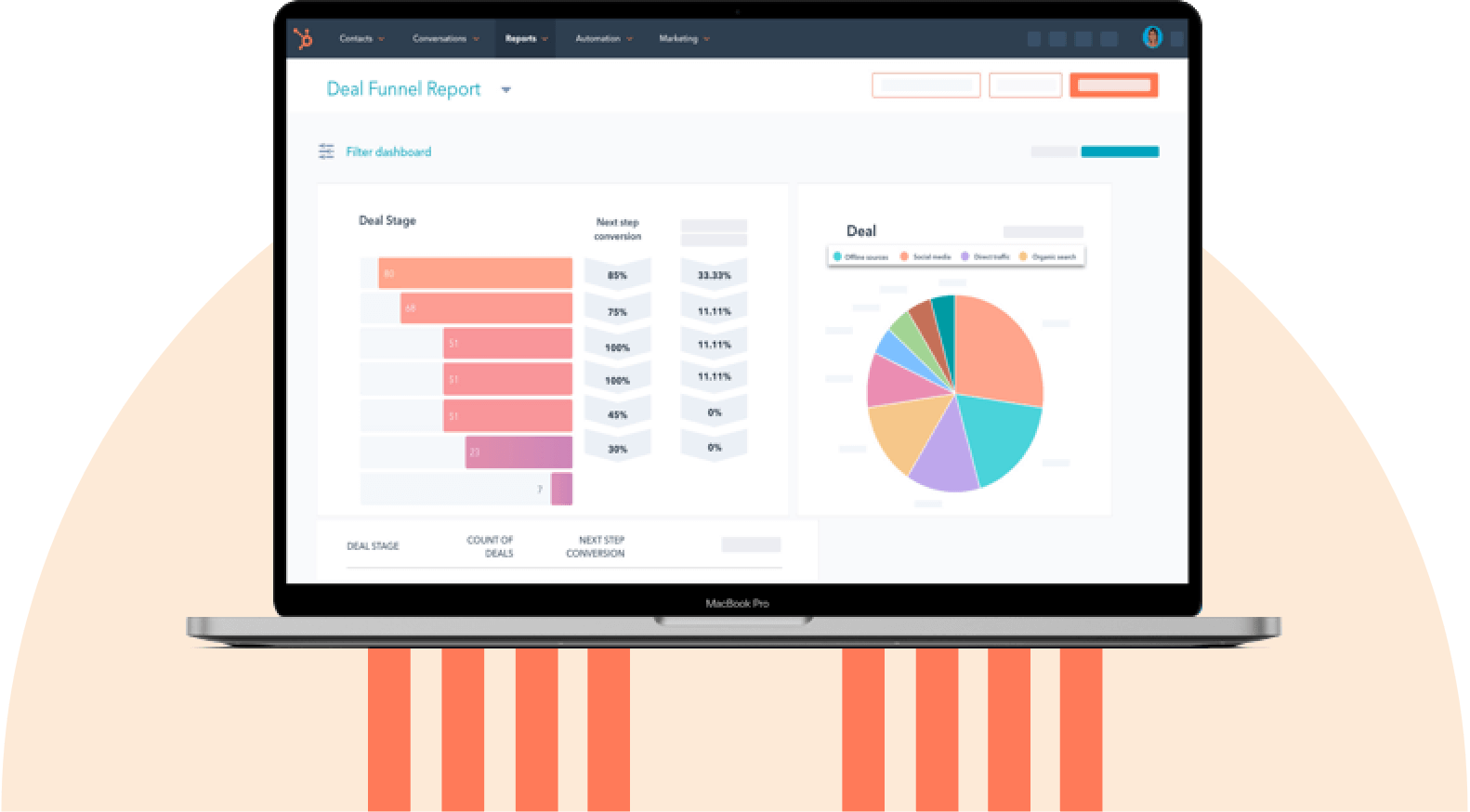
HubSpot's Free CRM Software
Free CRM Software & Tools for Your Whole Team
- Sales
- Marketing
- Operations
- Customer Service
How VC CRMs Differ from Traditional Sales CRMs
Sales CRMs optimize for leads, opportunities, and revenue forecasting, while venture capital CRMs optimize for relationships, introductions, and investment pipeline visibility. The distinction matters because VC teams that force their deal flow into a generic sales CRM often end up with incomplete data, low adoption, and reporting that doesn’t reflect how investment decisions actually get made.
The table below breaks down where the two diverge across goals, metrics, pipeline stages, and reporting.
Venture Capital CRM Comparison Chart
This chart compares HubSpot, Affinity, Zapflow, Intapp DealCloud, Attio, and Folk across the criteria that matter most to investment teams: relationship intelligence, deal flow pipeline flexibility, LP management, portfolio tracking, integrations, implementation time, and pricing. Each platform takes a different approach, from all-in-one configurable systems to lightweight tools built for lean teams.
Best Venture Capital CRMs
The six venture capital CRM platforms below range from investment-specific tools to highly configurable systems that VC teams can adapt to their exact workflows. Each entry includes a best-for designation, key features, verified pricing, and a “What we like” callout to help investment teams of any size quickly identify the right fit.
1. HubSpot Smart CRM

Best for: Venture capital firms seeking a single, customizable platform to manage relationships, deal flow, marketing, and investor relations.
HubSpot Smart CRM is a fully configurable relationship management platform that VC teams can tailor to their investment workflows — from custom deal pipeline stages that mirror sourcing, diligence, and IC review to contact properties that track founder backgrounds, investment thesis fit, and relationship history.
HubSpot’s integration library connects directly to tools VC teams already use, including PitchBook, ZoomInfo, and SourceScrub, keeping relationship data up to date without manual entry. HubSpot’s AI system works across the CRM to automate data capture, surface relationship insights, and help teams move faster from first contact to term sheet.

SeedLegals, which helps startups connect with investors, used HubSpot Smart CRM to help its customers raise £1.3 billion and saw a 20% increase in productivity after consolidating sales, marketing, and service tools into a single platform.
Price: Free CRM available. Paid plans start at $ 7/seat/month, billed annually. (details)
What we like: HubSpot’s combination of customizable pipelines, AI automation, and a 1,500+ app integration ecosystem makes it one of the most adaptable venture capital CRM platforms available, without the enterprise complexity or custom-quote pricing that can slow down smaller or emerging VC teams.
2. Affinity

Best for: Firms prioritizing automated relationship intelligence and warm introduction tracking.
Affinity is a purpose-built relationship intelligence CRM designed for venture capital, private equity, and investment banking teams. The platform automatically captures contact data, email activity, and calendar interactions — eliminating manual data entry and keeping relationship data current and accurate.
Affinity’s relationship intelligence engine analyzes communication patterns across the firm’s collective network to surface introduction paths, flag relationship strength, and identify the fastest route to a founder or co-investor through a warm connection.
Price: Contact Affinity for pricing.
What we like: Affinity’s intro path mapping is one of the most sophisticated relationship-intelligence features available in any venture capital CRM — particularly valuable for firms where warm introductions are the primary sourcing lever and network visibility among partners is a competitive advantage.
3. Zapflow

Best for: VC and private equity teams looking for a modular platform covering deal flow, investor relations, and portfolio management in one place.
Zapflow is an all-in-one investment management platform built specifically for venture capital, private equity, and family office teams. Its modular structure lets firms activate only the tools they need — deal flow management, LP portal, portfolio tracking, ESG reporting, or compliance — and expand as operations grow.
Zapflow charges per fund rather than per user, making it a cost-predictable option for growing teams. A dedicated LP portal provides investors with real-time updates, automated reporting, and a secure document vault, reducing the back-and-forth that typically slows investor relations.
Price: Contact Zapflow for pricing.
What we like: Zapflow’s modular setup makes it one of the more flexible and cost-transparent venture capital CRM options — particularly for firms that want dedicated LP portal functionality without paying for features they don’t use.
4. Intapp DealCloud

Best for: Large VC and private equity firms requiring enterprise-grade analytics, compliance tools, and structured deal workflows.
Intapp DealCloud is an enterprise deal and relationship intelligence platform built for private capital and investment banking firms. Prebuilt private capital data models, deep market intelligence integrations, and Intapp Assist AI help teams centralize deal flow, keep contact records current, and generate deal summaries without manual input. Compliance tools — including role-based permissions and audit trails — make it a strong fit for larger firms operating under strict regulatory requirements.
Price: Custom pricing based on firm size and the number of modules.
What we like: DealCloud’s prebuilt private capital data models and deep integrations with Preqin and PitchBook make it one of the most data-rich venture capital CRM options available — particularly for larger firms that need structured governance, compliance tracking, and IR-ready reporting in a single platform.
5. Attio

Best for: Early-stage and emerging VC teams wanting a modern, highly configurable CRM without enterprise complexity or cost.
Attio is an AI-native CRM built on a flexible relational data model that lets investment teams define custom objects, attributes, and relationship types to match their exact workflows. Rather than forcing deal flow into a predefined structure, Attio adapts to how a firm actually operates, making it a strong fit for VC teams that find traditional CRMs too rigid but aren’t ready for the implementation overhead of enterprise platforms like DealCloud.
Price: Free plan available. Paid plans start at $29/seat/month, billed annually. (details)
What we like: Attio’s combination of a flexible data model, clean Notion-like interface, and fast setup makes it one of the most accessible venture capital CRM options for emerging managers and early-stage teams who need structure without the complexity.
6. Folk

Best for: Small, agile VC teams wanting a lightweight, easy-to-adopt CRM for contact management and founder outreach.
Folk is a lightweight, collaborative CRM built for small teams that prioritize speed and simplicity over enterprise functionality. The FolkX Chrome extension lets teams capture contacts directly from LinkedIn and sync data from Gmail and Outlook without manual imports. Folk’s Magic Fields uses AI to automate tasks such as personalizing outreach and cleaning up contact records. For emerging VC managers tracking a lean network of founders, co-investors, and LPs, Folk keeps relationship data organized without the overhead of a more complex platform.
Price: 14-day free trial available. Plans start at $24/member/month, billed annually. (details)
What we like: Folk’s FolkX Chrome extension and LinkedIn-native contact capture make it one of the fastest venture capital CRM options to get up and running, particularly for solo GPs or small emerging-manager teams building their networks from scratch.
HubSpot's Free CRM Software
Free CRM Software & Tools for Your Whole Team
- Sales
- Marketing
- Operations
- Customer Service
Benefits of Using a Venture Capital CRM
Venture capital CRM software centralizes the relationship data, deal activity, and investor communications that investment teams need to source faster, report more clearly, and stay aligned across the firm. The benefits below reflect the operational improvements VC teams most commonly experience after implementing a highly configured CRM platform.
Centralized Relationship and Deal Data
A venture capital CRM centralizes founder, investor, and co-investor relationship data in a single platform, eliminating the fragmented spreadsheets, shared inboxes, and partner silos that create blind spots in deal execution.
When contact records, meeting notes, email history, and deal stage updates live in one system, every member of the investment team works from the same source of truth — reducing miscommunication and ensuring no relationship gets lost between partners. HubSpot Smart CRM unifies contact and deal data across the firm, giving teams a complete, shared view of every relationship and interaction.
Relationship Intelligence and Warm Introductions
Relationship intelligence enables investment teams to map connections between people and firms, identify warm introduction paths, and surface the network context needed to reach a founder or co-investor through a trusted connection.
Warm introductions reduce the time spent searching personal inboxes and spreadsheets for relationship context, and they improve response rates compared to cold outreach. HubSpot’s communication history and AI insights surface relationship signals that help teams identify the fastest path to a meeting.
Automated LP and Founder Communications
A venture capital CRM automates LP and founder communications through personalized email sequences, scheduled follow-ups, and triggered reminders — keeping investor relations consistent without adding manual overhead for the operations team. Consistent, timely communication builds LP trust and keeps founders engaged across deal cycles that can span months.
HubSpot’s email automation and sequence tools allow VC teams to maintain high-touch outreach at scale without sacrificing the personalization that relationship-driven investing requires.
Pipeline Visibility and Performance Reporting
Venture capital CRM software supports deal flow management from sourcing to close, giving partners and analysts real-time visibility into pipeline health, stage progression, and team activity across the full investment lifecycle.
Dashboards and automated reporting replace manual status updates, freeing partners to focus on decisions rather than data gathering. HubSpot Reporting pulls data from across the CRM to deliver customizable pipeline views and sourcing analytics that investment teams can share directly with stakeholders.
Reduced Manual Data Entry
A venture capital CRM reduces manual data entry by automatically capturing emails, calendar activity, and meeting notes — keeping contact records current without relying on team members to log interactions themselves.
Automated data capture directly addresses one of the most common reasons VC CRM adoption fails: teams stop updating the system when the manual burden is too high. HubSpot’s integrations with Gmail, Google Calendar, and tools like PitchBook and ZoomInfo keep relationship data accurate and complete with minimal effort from the team.
5 Important Features for a Venture Capital CRM
The five most important features for a venture capital CRM are automated relationship intelligence, flexible deal flow pipeline management, LP management and fundraising workflows, portfolio tracking, and automated data capture with integrations. These capabilities distinguish a well-configured venture capital CRM from a generic sales tool, and each of the following includes the evaluation criteria that investment teams should apply when comparing platforms.
Automated Relationship Mapping and Relationship Intelligence
Relationship intelligence maps connections between people and firms, enabling investment teams to identify warm introduction paths, measure relationship strength, and surface network context without manually searching inboxes or asking partners who knows whom. The most effective venture capital CRMs automatically capture email and calendar activity to build a real-time relationship graph across the entire firm — not just individual partners.
How to evaluate this feature: Look for second- and third-degree connection mapping, automated activity capture, and fast “who knows whom” search across the firm’s collective network. HubSpot’s contact timelines and AI surface communication history and relationship signals that help teams identify the fastest path to a founder or co-investor.
Deal Flow Management with Flexible Pipeline Management
Deal flow management tracks investment opportunities from inbound sourcing through initial screening, partner review, due diligence, investment committee review, term sheet, and close — with each stage reflecting the firm’s actual process rather than a generic sales cycle. Flexible pipeline management allows investment teams to customize deal stages, fields, and scoring criteria to match their investment thesis and governance requirements.
How to evaluate this feature: Look for customizable stage names and fields, ownership and next-step tracking at the deal level, and stalled-deal alerts that flag opportunities that have gone cold. HubSpot’s fully customizable deal pipelines let VC teams configure stages, properties, and automated reminders that mirror their exact investment process.
LP Management and Fundraising Workflows
LP management tracks investor pipeline, commitments, and communications across the full fundraising lifecycle — from initial LP targeting through capital calls, distributions, and ongoing investor relations reporting. A venture capital CRM stores this data in a separate, permission-controlled workflow that keeps sensitive fundraising information accessible only to the right team members.
How to evaluate this feature: Look for a dedicated fundraising pipeline, role-based data permissions, and IR-ready reporting that can be delivered directly to LPs. HubSpot supports LP management through custom pipelines, segmented contact lists, and automated email sequences, ensuring consistent investor communications throughout the fundraising cycle.
Portfolio Tracking and Value-Add Workflow Management
Portfolio tracking centralizes support requests, introductions, recruiting leads, and customer referrals for portfolio companies — giving platform and BD teams a single view of the value-add activity happening across the fund. Effective portfolio tracking connects company profiles to the relationship data already in the CRM, making it easier to route introductions and track outcomes without managing a separate system.
How to evaluate this feature: Look for custom portfolio company objects, the ability to track intros and recruiting leads at the company level, and reporting that surfaces value-add activity by fund or cohort. HubSpot’s custom objects and dashboards let VC teams build portfolio tracking workflows directly within the CRM, connecting portfolio company records to the contact and deal data already in the system.
Automated Data Capture, Integrations, and Data Portability
Automated data capture keeps CRM records up to date by syncing email, calendar, and third-party data sources without requiring manual input from the investment team. Integrations with market intelligence platforms like PitchBook, Preqin, and SourceScrub let firms enrich contact and company records with up-to-date firmographic data, while data portability lets teams export and migrate their relationship data if they change platforms.
How to evaluate this feature: Look for automatic deduplication, native integrations with the firm’s existing data sources, and flexible export options that protect the firm’s data ownership. HubSpot’s 1,500+ app integration ecosystem and native connections with PitchBook, ZoomInfo, and SourceScrub make it one of the most connected venture capital CRM platforms available.
How to Choose a Venture Capital CRM (Step-by-Step)
To choose a venture capital CRM, investment teams should map their core workflows, separate must-have features from nice-to-haves, evaluate implementation and adoption risk, pressure-test pricing at scale, and verify data portability. Firms that skip this and choose the wrong platform often end up with low adoption, incomplete data, and reporting that doesn’t reflect how deals are actually made. The five steps below expand on this framework for firms evaluating a CRM, regardless of size or growth stage.
Step 1: Map the firm’s core workflows before evaluating platforms.
Investment teams should document their end-to-end deal process — from how deals are sourced and screened to how investor relations are managed and how portfolio companies receive support.
Mapping these workflows surfaces the specific CRM capabilities the firm actually needs, rather than features that look impressive in a demo but go unused. Firms with complex LP reporting requirements will prioritize different features than early-stage funds focused primarily on deal sourcing and relationship tracking.
Step 2: Define must-have features and separate them from nice-to-haves.
A venture capital CRM should solve the firm’s most painful operational problems first — whether that’s relationship intelligence for warm introductions, a dedicated LP portal, customizable deal stages, or automated data capture.
Separating must-haves from nice-to-haves prevents firms from overpaying for functionality they won’t use and keeps the evaluation focused on platforms that actually fit the firm’s current stage. Emerging managers typically prioritize ease of adoption and cost transparency, while established firms with multiple funds may need more sophisticated LP management and compliance tools.
Step 3: Evaluate implementation time and adoption risk.
A venture capital CRM delivers value only if the investment team actually uses it, and low adoption is the most common reason VC CRM implementations fail. Investment teams should ask vendors for realistic implementation timelines, request references from firms of similar size and complexity, and assess whether the platform’s interface is intuitive enough for partners and analysts to adopt without significant training overhead.
HubSpot’s fast, modular setup reduces the risk that a lengthy implementation will derail adoption before the system has a chance to prove its value.
Step 4: Pressure-test pricing at scale.
Venture capital CRM pricing varies widely — from per-seat models that scale with headcount, to per-fund models that scale with AUM, to enterprise contracts that require custom quotes. Investment teams should evaluate the total cost of ownership over a two- to three-year horizon, factoring in user growth, integration costs, and any onboarding fees not included in the base price.
Platforms with a free tier or modular pricing, like HubSpot, let firms start small and expand as they grow, without committing to an enterprise contract before the platform proves its value.
Step 5: Verify data portability and long-term flexibility.
A venture capital CRM stores some of the firm’s most valuable assets — its relationship history, deal notes, and investor communications — and investment teams should verify that they can export and own that data if they ever need to change platforms.
Firms should also evaluate whether the CRM can scale with the firm’s evolving needs, adding new workflows, fund structures, or team members without requiring a full platform migration. HubSpot’s modular architecture and open API make it one of the most flexible venture capital CRM options for firms that expect their operations to evolve.
Frequently Asked Questions about Venture Capital CRMs
What makes a CRM “venture capital specific”?
A venture capital CRM is purpose-built or configured to support the workflows unique to investment teams — deal flow pipeline management, relationship intelligence, investor relations, and portfolio tracking — rather than the lead generation and revenue forecasting that general-purpose sales CRMs are designed around. The distinction matters because forcing VC workflows into a generic sales CRM typically results in missing fields, workarounds, and low adoption from partners who don’t see the tool reflecting how they actually work.
The most important markers of a VC-specific CRM are customizable deal stages that mirror the investment process, relationship intelligence that surfaces warm introduction paths, and dedicated LP management workflows with appropriate data permissions. Platforms like HubSpot can be configured to meet all of these requirements, while tools like Affinity and Zapflow build them in by default.
How long does VC CRM implementation typically take?
Venture capital CRM implementation timelines vary widely based on the platform, the firm’s existing data infrastructure, and the complexity of the workflows being configured. Lightweight platforms like Folk and Attio can be set up in days, while enterprise platforms like Intapp DealCloud typically require weeks to months of configuration, data migration, and team onboarding before going live.
The most common implementation risk is underestimating the time required to migrate existing relationship data from spreadsheets and shared inboxes into the new system. Firms that assign a dedicated operations lead to the implementation and run a structured pilot with a small team before firm-wide rollout consistently achieve faster time-to-value and higher long-term adoption rates.
What’s the ROI of a venture capital CRM?
The ROI of a venture capital CRM is most directly measured by improvements in deal-sourcing efficiency, LP communication consistency, and team alignment on pipeline status, rather than by traditional revenue metrics. Firms that centralize relationship data and automate manual workflows report faster sourcing-to-close timelines, fewer dropped follow-ups, and cleaner LP reporting that reduces the back-and-forth between the operations team and fund administrators.
For most VC firms, the clearest ROI signal is a single deal sourced through a warm introduction that the CRM helped surface — an outcome that would have been missed without centralized relationship intelligence.
How do we ensure team adoption?
Venture capital CRM adoption succeeds when the platform reduces friction for the people using it daily — partners, analysts, and operations staff — rather than adding another system they’re required to update. The most effective adoption strategies start with a narrow pilot focused on one high-value workflow, such as deal tracking or LP outreach, before expanding to the full feature set.
Firms should also prioritize platforms with automatic data capture — tools that log emails and calendar activity without requiring manual input — since manual logging is the most common reason investment teams abandon their CRM after the initial rollout. Selecting a platform with a clean, intuitive interface that mirrors tools the team already uses improves long-term adoption rates.
Should we build or buy a venture capital CRM?
Most venture capital firms should buy rather than build a CRM. Building a custom system requires substantial engineering resources, ongoing maintenance, and a dedicated product roadmap — overhead that most investment teams are not structured to support, and that distracts from the firm’s core focus of sourcing and executing investments.
The strongest argument for buying is the current market’s maturity. Platforms like HubSpot offer the configurability of a custom build at a fraction of the cost, with a robust integration ecosystem, active product development, and enterprise-grade security that would take years and considerable capital to replicate internally. Firms with genuinely unique workflow requirements that no existing platform can accommodate are the exception — and, even then, a heavily configured platform is typically a better starting point than a greenfield build.
Meet HubSpot, your next top venture capital CRM.
HubSpot Smart CRM is a fully configurable relationship management platform that venture capital firms can tailor to their exact investment workflows — from custom deal pipelines that mirror sourcing, diligence, and IC review to contact properties that track founder backgrounds, relationship histories, and investment thesis fit. Unlike VC tools that lock firms into a fixed data model, HubSpot’s modular architecture lets investment teams start small and expand as their operations grow, without migrating to a new platform as the firm scales.
Venture capital firms that need a CRM combining relationship intelligence, deal flow management, and investor relations — without the implementation overhead or opaque pricing of enterprise platforms — can get started with HubSpot for free.
Get started with HubSpot today.
Editor's note: This post was originally published in July 2025 and has been updated for comprehensiveness.
HubSpot's Free CRM Software
Free CRM Software & Tools for Your Whole Team
- Sales
- Marketing
- Operations
- Customer Service


-1.png)

%20(1).png)
