
The good news? Getting pricing strategy right acts as a powerful growth lever. While most businesses focus on acquisition, optimizing pricing can deliver immediate revenue gains with relatively little effort.
This article covers the different types of pricing strategies, how to make the right choice, and industry specific considerations. Let’s dive in.
Table of Contents
- How to Conduct a Pricing Analysis
- Types of Pricing Strategies
- Pricing Strategy Examples
- What is a pricing strategy?
- Price Elasticity of Demand
- Pricing Analysis
- Cost, Margin, & Markup in Pricing
- How to Choose the Right Pricing Strategy for Your Business
- Pricing Strategy Best Practices & Implementation Tips
- Industry-Specific Pricing Considerations
- Pricing Strategy FAQ
What is a pricing strategy?
Pricing strategy is defined as a method for setting product or service prices to achieve business goals. Business leaders need to do more than just covering the cost of goods. Creating a pricing strategy is about understanding the company’s market position, customer value perception, and business objectives.
Why Your Pricing Strategy Matters More Than You Think
Price is one of the first factors customers consider before making a purchase. Setting the right pricing strategy helps businesses make sales without turing customers away. Here’s why pricing strategy matters:
- Revenue growth. Small pricing optimizations can increase the team's revenue. Even a 1% price increase can significantly boost profit margins. Extra revenue flows directly to the bottom line without additional costs.
- Market positioning. Price signals quality and value to customers. Premium pricing can attract customers who associate higher prices with better quality. Price point places the product in a specific tier of the market and influences which competitors customers compare the business against.
- Competitive advantage. Strategic pricing can differentiate a business from competitors. Leaders might choose to undercut competitors to gain market share or price higher to position as the premium option. Value-based pricing that aligns with customer ROI can justify premium pricing even in crowded markets.
- Customer perception. Price anchors expectations about a brand. Customers form immediate assumptions about product quality, support level, and feature sophistication based on price. Consistent pricing strategy reinforces your brand identity.
Common Pricing Mistakes That Kill Profitability
Business leaders should carefully strategize before setting prices for their offerings. Here are common pitfalls that businesses should avoid:
- Cost-only thinking. Don’t base prices solely on costs and ignore customer value.
- Following competitors blindly. A business’ costs and value proposition differ from competitors. Prices should reflect that.
- Set-and-forget pricing. Markets change. Prices should also adapt to the market.
- Ignoring customer segments. Different customers value products differently. If a business’ customers feel like the prices are too high, they won’t buy.
Price Elasticity of Demand
Price elasticity of demand determines how a change in price affects consumer demand. If consumers still purchase a product despite a price increase, its demand is inelastic. Fuel is a good example. Someone relies on their car to get them from point A to point B, and the car needs fuel to run. Even when gas gets more expensive, they pay the price.
If price changes significantly impact purchasing decisions, demand is elastic. Consider streaming TV and movie services. More than half of consumers say they’ve canceled a streaming service due to price hikes .
Unitary elastic demand occurs when the percentage change in quantity demanded is exactly equal to the percentage change in price.
You can calculate price elasticity using this formula:
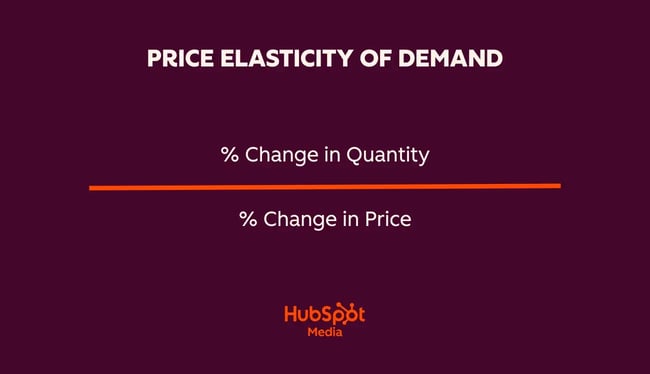
The concept of price elasticity helps businesses understand whether a product or service is sensitive to price fluctuations and to what degree.
Pricing Analysis
Pricing analysis is the process of evaluating a product’s current pricing strategy against market demand. The goal of a pricing analysis is to identify opportunities for pricing changes and improvements.
Business teams typically conduct a pricing analysis when considering new product ideas, developing positioning strategies, or running marketing tests. It’s recommended to run a price analysis once every year to evaluate pricing against market competitors and consumer expectations.

How to Conduct a Pricing Analysis
- 1. Determine the true cost of your product or service
- 2. Understand how your target market and customer base
- 3. Analyze competitor prices
- 4. Review any legal or ethical constraints to cost and price
1. Determine the true cost of your product or service
To calculate the true cost of a product or service, first calculate all expenses, including fixed and variable costs.
- Rental or lease payments, insurance, and property taxes are examples of fixed costs.
- Variable costs include materials, labor, and logistics.
Once costs are determined, subtract them from the price of your product or service.
.webp?width=650&height=374&name=pricing%20strategy%2c%20true%20cost%20=%20sales%20price%20%E2%80%93%20(fixed%20+%20variable%20costs).webp)
For example, if the sales price of your product is $10, your fixed costs are $5, and your variable costs are (currently) $3, your total cost is $2. This means you make $2 for every product sold. If, however, your fixed costs are $7 and your variable costs are $4, you’re losing a dollar on every sale.
2. Understand how your target market and customer base
Surveys, focus groups, or questionnaires can help determine how the market responds to the pricing model. Laeders get a glimpse into what the target customers value and how much they’re willing to pay for the value a product or service provides.
3. Analyze competitor prices
There are two types of competitors to consider when conducting a pricing analysis: direct and indirect.
- Direct competitors sell the exact same product that a business sells. These types of competitors are likely to compete on price, so they should be a priority to review in pricing analyses.
- Indirect competitors are those who sell alternative products that are comparable to what the business sells. If a customer is looking for a product but it’s out of stock or out of their price range, they may go to an indirect competitor to get a similar product.
Create a competitive analysis chart to visualize how pricing compares to competitors and identify any gaps or opportunities.
4. Review any legal or ethical constraints to cost and price
There’s a fine line between competing on price and falling into legal and ethical trouble. For example, leaders need to understand price-fixing and predatory pricing .
- Pricing fixing happens when multiple companies collaborate to set the price of identical items, in turn eliminating competition.
- Predatory pricing occurs when one company sets unrealistically low price points for products to corner the market.
- Both practices violate American antitrust laws.
Cost, Margin, & Markup in Pricing
Understanding the role of cost, margin, and markup is also essential when choosing a pricing strategy, especially if a business want pricing to be cost-based.
Cost
Cost refers to the fees you incur from manufacturing, sourcing, or creating the product you sell. They include materials, the cost of labor, fees paid to suppliers, and any losses incurred. Cost does not include overhead and operational expenses such as marketing, advertising, maintenance, or bills.
Margin
Margin, also called profit margin, is the difference between the selling price of a product and its cost, expressed as a percentage of the selling price. It shows the profitability of a product. There are two types of margins:
- Gross margin. This is calculated as (Sales Price – Cost of Goods Sold) / Sales Price x 100. It reflects the profitability before accounting for operating expenses.
- Net margin. This is calculated as (Net Profit / Sales Price) x 100. It includes all expenses, providing a more comprehensive view of profitability.

Consider a product sold for $120 that costs $70 to produce:
Gross Margin = (120 − 70) / 120 x 100 = 41.6%
To calculate net profit, subtract any additional expenses from your gross profit, such as operating costs or taxes. In the example above, our gross profit is $50 (120 - 70). If operating costs are $20 and taxes are $10, our net profit is $40. (70 - 20 -10). Now, we can calculate our net margin.
Net Margin = (40 / 120) x 100 = 33.3%
Markup
Markups refer to the additional amount a business charge for a product over the production and manufacturing fees. It allows teams to set prices that align with market expectations and your business goals.
For example, if a product costs $70 to produce and you sell it for $100, the markup is $30, or approximately 42.9% of the cost price.
To more easily determine projected revenues using different pricing strategies, use HubSpot's Free Pricing Calculator. The template offers nine different pricing strategies — including competition-based pricing, cost-plus pricing, and freemium pricing. The pricing calculator allows businesses to plug in their own numbers to see how each one would impact profit and revenue.
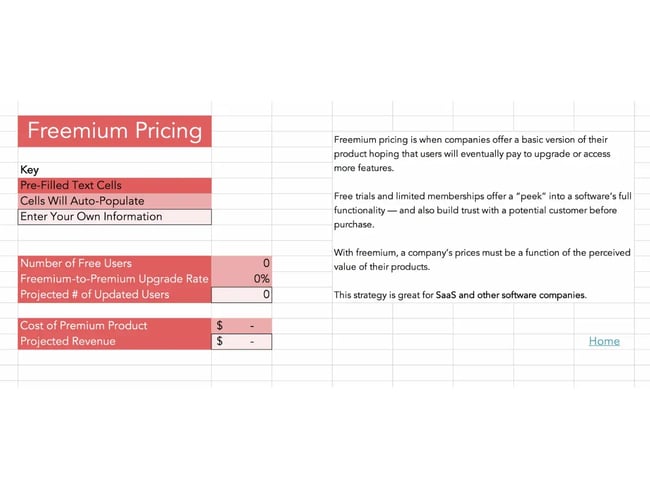
Now, let’s discuss some common pricing strategies. It’s important to note that these aren’t necessarily standalone strategies — many can be combined when setting prices for your products and services.
Types of Pricing Strategies
- Competition-Based Pricing
- Cost-Plus Pricing
- Dynamic Pricing
- High-Low Pricing
- Penetration Pricing
- Skimming Pricing
- Value-Based Pricing
- Psychological Pricing
- Geographic Pricing
- Freemium Pricing
- Premium Pricing
- Hourly Pricing
- Bundle Pricing
- Project-Based Pricing
- Subscription Pricing
1. Competition-Based Pricing Strategy
Competition-based pricing is also known as competitive pricing or competitor-based pricing. This pricing strategy focuses on a company‘s product or service’s existing market rate (or going rate). It doesn’t consider the cost of its product or consumer demand.
Instead, a competition-based pricing strategy uses the competitors’ prices as a benchmark. Businesses that compete in a highly saturated space may choose this strategy since a slight price difference may be the deciding factor for customers.
With competition-based pricing, teams can price products slightly below, the same, or slightly above competition.
For example, if a business sells marketing automation software, and the competitors’ prices range from $19.99 per month to $29.99 per month, the business could set their price at $18.99 on the low end, $30.99 on the high end, or $24.99 if they want to stay in the middle.
A great example of a competitive pricing model is Amazon. The company uses automated repricing tools that constantly monitor competitor prices and adjust their prices accordingly. This strategy ensures Amazon’s prices are always competitive, often making them the lowest-priced option in the market.
When to use: Use competition-based strategies to capture consumer attention in saturated markets.
Competition-Based Pricing Strategies in Marketing
Competitive pricing has helped Amazon attract price-sensitive customers and maintain its ecommerce dominance. Consumers seek the best value, which isn’t always the lowest price. Competitive pricing can help brands attract customers, especially if marketing teams can offer something unique like exceptional customer service, a generous return policy, or exclusive loyalty benefits.
|
Advantages |
Disadvantages |
|
|
2. Cost-Plus Pricing Strategy
Cost-plus pricing means adding a markup to the cost of goods to set the final price. Also known as markup pricing, a cost-plus pricing strategy focuses solely on the cost of producing a product or service or the cost of goods sold (COGS).
To apply the cost-plus method, add a fixed percentage to product production cost. The formula is:
.webp?width=650&height=374&name=pricing%20strategy%2c%20selling%20price%20=%20base%20price%20+%20(demand%20factor%20%C3%97%20base%20price).webp)
For example, let’s say you sell shoes. The total cost to produce one pair of shoes is $55. If you want to apply a 50% markup, the calculation would be:
- Selling Price = $55 × (1 + 0.50) = $55 × 1.50 = $82.50
Cost-plus pricing is typically used by retailers who sell physical products. This strategy isn’t the best fit for service-based or SaaS companies, as their products typically offer far greater value than the cost to create them.
When to use: Use cost-plus pricing when your competition is using the same model.
Cost-Plus Pricing Strategies in Marketing
For teams not using a cost-plus approach, focus on marketing the value of goods compared to competitors, not the price. For example, a product might include features or add-ons that other brands do not.
|
Advantages |
Disadvantages |
|
|
3. Dynamic Pricing Strategy
Dynamic pricing strategy is also known as surge pricing, demand pricing, or time-based pricing. It involves adjusting prices in real time based on factors such as market demand, competitor prices, and other external conditions. This flexible approach helps maximize revenue and maintain competitiveness.
Hotels, airlines, event venues, and utility companies use dynamic pricing by applying algorithms that consider competitor pricing, demand, and other relevant factors. These algorithms allow companies to shift prices to match what the customer is willing to pay at the exact moment they’re ready to make a purchase.
There is no single formula for dynamic pricing as it involves complex algorithms, but a basic version can be represented as:
-1.webp?width=650&height=374&name=pricing%20strategy%2c%20selling%20price%20=%20base%20price%20+%20(demand%20factor%20%C3%97%20base%20price)-1.webp)
Let’s say your product costs $20. Research shows that consumer demand is up 30%.
Selling Price = 20 + (0.30 x 20) = 20 + 6 = $26.
A great example of a company that uses a dynamic pricing model is Uber. During peak hours or high-demand situations (e.g., Friday nights, bad weather), Uber’s algorithms monitor the number of ride requests, and if the demand exceeds the supply of available drivers, it temporarily increases the ride prices.
When to use: Use dynamic pricing when your product or service is in high demand, and when there aren’t many viable competitors operating in the same space.
Dynamic Pricing Strategies in Marketing
Dynamic pricing can help keep marketing plans on track. Team can plan for promotions in advance and configure the pricing algorithm used to launch the promotion price at the perfect time. Leaders can even A/B test dynamic pricing in real time to maximize profits.
|
Advantages |
Disadvantages |
|
|
4. High-Low Pricing Strategy
A high-low pricing strategy starts with high product sales prices that fall when the product loses novelty or relevance. Discounts, clearance sections, and year-end sales are examples of high-low pricing in action, which is why this strategy may also be called a discount pricing.
High-low pricing approach aims to capture different segments of the market, starting with customers willing to pay a premium and later attracting more price-sensitive shoppers as the price drops.
High-low pricing is commonly used by retail firms that sell seasonal items or products that change often, such as clothing, decor, and furniture. For example, in 2023, Nike used the high-low pricing strategy for its Court Legacy sneaker. Initially, the shoe was sold at a high price to attract customers eager for the latest release.

As demand decreased and new models came out, Nike lowered the price through promotions and discounts. This strategy helped Nike manage inventory and attract a broader customer base, including price-sensitive shoppers who waited for discounts. Now, the shoe is no longer sold by Nike directly but can be found on reseller websites for a lower price.
When to use: Use high-low pricing for products with high initial demand, such as special editions or limited-time offers. As demand falls, lower the price accordingly.
High-Low Pricing Strategies in Marketing
To keep the foot traffic steady in stores year-round, a high-low pricing strategy can help. By evaluating the popularity of products during particular periods throughout the year, teams can leverage low pricing to increase sales during traditionally slow months.
|
Advantages |
Disadvantages |
|
|
5. Penetration Pricing Strategy
Penetration pricing involves setting a low initial price to quickly gain market share. Once the product gains traction, the price is gradually increased.
Penetration pricing works best for brand-new businesses looking for customers or for businesses that are breaking into an existing, competitive market. The goal is to entice customers away from competitors and build a substantial customer base, with the expectation that customers will remain loyal even after prices are increased.
However, penetration pricing isn’t sustainable in the long run. It’s typically applied for a short time. For example, when Disney+ launched its streaming service, it offered subscriptions at a lower price compared to competitors like Netflix and Amazon Prime. This initial low price attracted millions of subscribers quickly.
After building a strong subscriber base, Disney+ began increasing its subscription price in 2022. By early 2023, subscriber numbers began to drop, and have remained reliability stable since.
When to use: Use penetration pricing when a brand is just getting started. Conduct customer research to determine when to raise prices and by how much.
Penetration Pricing Strategies in Marketing
Penetration pricing, like freemium pricing, means businesses won't make money immediately. However, with a valuable product or service, teams can increase prices over time and grow. Focus on marketing the value of products, making price a secondary consideration.
|
Advantages |
Disadvantages |
|
|
6. Skimming Pricing Strategy
A skimming pricing strategy involves setting a high initial price for a new or innovative product to maximize revenue from early adopters. Over time, the price is gradually lowered to attract more price-sensitive customers.
Apple uses the skimming pricing strategy effectively. When they launch a new iPhone, it is priced at a premium to target customers willing to pay more for the latest technology and features.
As newer models are introduced and initial demand decreases, Apple gradually reduces the price of the previous model. This approach helps them maximize revenue from early adopters and then attract more price-sensitive customers over time.
A skimming pricing strategy helps recover sunk costs and sell products well beyond their novelty. It’s worth noting, however, that this strategy can also annoy consumers who bought at full price and attract competitors who recognize the “fake” pricing margin as prices are lowered.
When to use: Use skimming when there’s high demand for a product and when the type of product a business sells has proven value retention over time.
Skimming Pricing Strategies in Marketing
Skimming pricing works well for products with different life cycle lengths. For products with a short life cycle, teams can quickly maximize profits at the start. For those with longer life cycles, they can maintain higher prices for a longer period. This strategy allows businesses to manage marketing efforts effectively without constantly adjusting prices.
|
Advantages |
Disadvantages |
|
|
7. Value-Based Pricing Strategy
Value-based pricing sets prices based on customer perceived value rather than production cost or historical prices. This strategy aims to maximize revenue by aligning the price with the value customers place on the offering.
If used accurately, value-based pricing can boost customer sentiment and loyalty. It can also help prioritize customers in other facets of the business, like marketing and service.
Tesla uses a value-based pricing strategy for its electric vehicles (EVs). This pricing reflects the perceived value of their innovative technology, sustainability, and brand prestige.
For example, the Tesla Model S is priced higher than many other EVs and luxury cars due to its high performance and advanced features. Customers are willing to pay a premium for Tesla‘s cutting-edge technology and the brand’s reputation for innovation and environmental responsibility.
When to use: Use a value-based pricing strategy when you can clearly articulate what sets your product or service apart from the competition.
Value-Based Pricing Strategy in Marketing
When marketing to customers, focus on value to strengthen demand for products and services. Ensure pricing reflects what different audiences are willing to pay without using criteria that could cause issues.
|
Advantages |
Disadvantages |
|
|
8. Psychological Pricing Strategy
Psychological pricing targets human behavior to boost your sales. Consider the 9-digit effect . While a product that costs $99.99 is essentially $100, the one-cent change tricks our brains into thinking the price is significantly cheaper.
Another way to use psychological pricing would be to place a more expensive item directly next to (either in-store or online) the one a team is most focused on selling. Or offer a “buy one, get one 50% off (or free)” deal that makes customers feel the circumstances are too good to pass up.
One of my favorite methods is also the simplest: Changing the font, size, or color of product pricing information can help boost sales.
Psychological Pricing Strategy in Marketing
Psychological pricing requires a deep understanding of the target market to be effective. If customers value discounts and coupons, emphasize these in marketing to meet their desire to save money.
On the other hand, if quality is more important to the audience, the lowest price might not attract them. Pricing and marketing should align with what motivates customers to pay a certain price for a product.
When to use: Use this strategy in conjunction with any other strategy to improve overall sales.
|
Advantages |
Disadvantages |
|
|
9. Geographic Pricing Strategy
Geographic pricing strategy involves setting different prices for products or services based on the geographic location of the customer. This strategy may be used if a customer from another country is making a purchase or if there are disparities in factors like the economy or wages.
For example, Netflix uses geographic pricing to adjust subscription fees based on the region. A standard Netflix subscription costs $17.99 per month in the United States but ₹ $499 per month (about $5.71) in India to account for differences in purchasing power and local market competition.

When to use: Use this strategy when you sell the same product or service in multiple geographic markets.
Geographic Pricing Strategy in Marketing
Marketing a geographically priced product is easy with paid social media ads. Marketers can target specific zip codes, cities, or regions at a low cost with precise results. Even if customers travel or move, the pricing model stays consistent, helping manage marketing costs.
|
Advantages |
Disadvantages |
|
|
10. Freemium Pricing
A combination of the words “free” and “premium,” freemium pricing is when companies offer a basic version of their product, hoping that users will eventually pay to upgrade or access more features.
Freemium pricing is commonly used by SaaS and other software companies. They choose this model because free trials and limited memberships offer a peek into a software’s full functionality — and also build trust with a potential customer before purchase.
With freemium, a company’s prices must be a function of the perceived value of their products. For example, companies that offer a free version of their software can’t ask users to pay $100 to transition to the paid version. Prices must present a low barrier to entry and grow incrementally as customers are offered more features and benefits.
An example of a brand using this model is Dropbox. It attracts a large user base and builds brand awareness through its robust free tier. As users grow increasingly reliant on the service and need additional storage or features, their likelihood of upgrading to paid plans increases.
When to use: Use freemium pricing for services or as-a-service products that benefit from a “try before you buy” approach to creating customer interest.
Freemium Pricing in Marketing
Freemium pricing may not make businesses a lot of money on the initial acquisition of a customer, but it gives access to the customer, which is just as valuable. With access to their email inboxes, phone numbers, and any other contact information gathered in exchange for the free product, teams can nurture the customer into a brand-loyal advocate with a worthwhile LTV.
11. Premium Pricing
Premium pricing, also known as prestige pricing or luxury pricing, is a strategy where a product is priced higher than competitors to create an impression of superior quality and exclusivity.
Premium pricing leverages the perception that higher prices signify better quality. This draws in consumers who are willing to pay more. The strategy involves marketing the product as having limited availability or unique features that competitors cannot easily replicate.
Prestige pricing is a direct function of brand awareness and brand perception. Brands that apply this pricing method are known for providing value and status through their products — which is why they’re priced higher than other competitors.
For example, Rolex sets its prices much higher than other watchmakers. It relies on a strong reputation for exceptional craftsmanship and exclusivity. Rolex’s brand image and perceived quality attract customers who value prestige and superior workmanship.
When to use: Use a premium pricing model when products have the brand perception to back it up. In practice, this means carrying out in-depth consumer research before raising prices.
Premium Pricing in Marketing
Premium pricing is quite dependent upon the perception of the product within the market. There are a few ways to market a product in order to build a premium perception, including using influencers, controlling supply, and driving up demand.
12. Hourly Pricing
Hourly pricing, also known as rate-based pricing, is commonly used by consultants, freelancers, contractors, and other individuals or laborers who provide business services. Hourly pricing is essentially trading time for money. Some clients are hesitant to honor this pricing strategy, as it can reward labor instead of efficiency.
When to use: Use hourly pricing if you regularly take on short-term projects that let customers access your services on-demand.
Hourly Pricing in Marketing
For businesses that handle quick, high-volume projects, hourly pricing can incentivize customers to buy. Breaking down prices into hourly chunks allows customers to decide based on a lower price point, rather than needing to allocate a larger budget for an expensive project-based commitment.
13. Bundle Pricing
Bundle pricing is when you offer (or “bundle”) two or more complementary products or services together and sell them for a single price. You may choose to sell your bundled products or services only as part of a bundle or sell them as both components of bundles and individual products.
For example, Amazon frequently offers bundle deals where customers can buy related items together at a discount. Customers might buy a camera with accessories like lenses, tripods, and memory cards at a bundled price.
When to use: Use bundle pricing when selling products that are naturally used in tandem or by pairing products with additional services, such as warranties on electronic devices.
Bundle Pricing in Marketing
In my experience, marketing bundle deals can help you sell more products than you would otherwise sell individually. It’s a smart way to upsell and cross-sell your offerings in a way that is beneficial for the customer and your revenue goals.
14. Project-Based Pricing
Project-based pricing is the opposite of hourly pricing. The approach charges a flat fee per project instead of a direct exchange of money for time. It is also used by consultants, freelancers, contractors, and other individuals or laborers who provide business services.
Project-based pricing may be estimated based on the value of the project deliverables. Those who choose this pricing model may also create a flat fee from the estimated time of the project.
When to use: Use project-based pricing to help onboard customers who have fixed budgets but are unsure of total costs. The caveat? Make sure to have a clear scope of work before getting started.
Project-Based Pricing in Marketing
Highlighting the benefits of working with a business can make project-based pricing more attractive. Although the cost may be high, the one-time investment is worthwhile. Clients will appreciate knowing they can work with one team until the project is completed, rather than being limited by a set number of hours.
15. Subscription Pricing
Subscription pricing is a common pricing model at SaaS companies, online retailers, and even agencies that offer subscription packages for their services.
Whether a business offers flat-rate or tiered subscriptions, the benefits of this model are endless. For one, the business has monthly recurring revenue (MRR) and yearly recurring revenue. That makes it simpler to calculate profits on a monthly basis. It also often leads to higher customer lifetime values .
The one thing to be wary of when it comes to subscription pricing is the high potential for customer churn. People cancel subscriptions all the time, so it's essential to have a customer retention strategy in place to ensure clients keep their subscriptions active.
When to use: Use subscription pricing when selling services that are billed month-to-month or for products that customers need delivered on a recurring schedule.
Subscription Pricing in Marketing
When marketing subscription products, create buyer personas for each tier. That way, marketers and reps know which features appeal to each buyer. A general subscription that appeals to everyone won't pull in anyone.
Even Amazon, which offers flat-rate pricing for its Prime subscription, includes a membership for students. That allows them to market the original Prime more effectively by creating a sense of differentiation.
Pricing Strategy Examples
- Dynamic Pricing Strategy: Chicago Cubs
- Freemium Pricing Strategy: HubSpot
- Penetration Pricing Strategy: Netflix
- Premium Pricing: AWAY
- Competitive Pricing Strategy: Shopify
- Project-Based Pricing Strategy: White Label Agency
- Value-Based Pricing Strategy: INBOUND
- Bundle Pricing: Adobe Creative Cloud
- Geographic Pricing: Gasoline
- Subscription Pricing: Spotify
- Hourly Pricing: Upwork
- Psychological Pricing: Target
- Skimming Pricing: Sony PlayStation
- High-Low Pricing: Kohl’s
- Cost-Plus Pricing: Custom Home Builders
Pricing models can be hard to visualize. Below, we’ve pulled together a list of examples of pricing strategies as they’ve been applied to everyday situations or businesses.
1. Dynamic Pricing Strategy: Chicago Cubs

Finding tickets to a Cubs game is interesting because every time I check prices, they’ve fluctuated a bit from the last time. Purchasing tickets six weeks in advance is always a different process than purchasing them six days prior — and even more box pricing at the gate.
This is an example of dynamic pricing — pricing that varies based on market and customer demand. Prices for Cubs games are always more expensive on holidays, too, when more people are visiting the city and are likely to go to a game.
Best for: Time-sensitive events, sales, or promotions are great opportunities for implementing dynamic pricing.
2. Freemium Pricing Strategy: HubSpot

HubSpot is an example of freemium pricing at work. We offer a free version of the CRM for scaling businesses as well as paid plans for businesses using the CRM platform that need a wider range of features .
Moreover, within those marketing tools, HubSpot provides limited access to specific features. This type of pricing strategy allows customers to acquaint themselves with HubSpot and for HubSpot to establish trust with customers before asking them to pay for additional access.
What I like: Freemium pricing works super well for digital products because it gives customers a taste of the value you offer before committing.
3. Penetration Pricing Strategy: Netflix

Netflix is a classic example of penetration pricing: entering the market at a low price (remember when it was $7.99?) and increasing prices over time. Since I joined a couple of years ago, I’ve seen a few price increase notices come through my inbox.
Despite their increases, Netflix continues to retain — and gain — customers. Sure, Netflix only increases their subscription fee by $1 or $2 each time, but they do so consistently. Who knows what the fees will be in five or ten years?
Pro tip: If you go with penetration pricing, be sure to be transparent about when the lower pricing changes so customers don’t churn as soon as you up the price on them. Also, be sure the value you provide is worth the higher price to customers.
4. Premium Pricing: AWAY

There are lots of examples of premium pricing strategies … Rolex, Tesla, Nike — you name it. One that I thought of immediately was AWAY luggage .
Does luggage need to be almost $500? I’d say no, especially since I recently purchased a two-piece Samsonite set for one-third the cost. However, AWAY has still been very successful even though they charge a high price for their luggage.
This is because when you purchase AWAY, you’re purchasing an experience. The unique branding and the image AWAY portrays for customers make the value of the luggage match the purchase price.
Best for: Premium pricing is best for premium products or services, so be sure your value suits your price.
5. Competitive Pricing Strategy: Shopify

Shopify is an ecommerce platform that helps businesses manage their stores and sell their products online. Shopify — which integrates with HubSpot — has a competitive pricing strategy.
Shopify offers four versions of its product for customers to choose from, and it offers customizable and flexible features.
What I like: With these extensive options tailored to any ecommerce business's needs, the cost of Shopify is highly competitive and is often the same as or lower than other ecommerce platforms on the market today.
6. Project-Based Pricing Strategy: White Label Agency
Anyone who's been involved in building a website knows how complex and costly it can be. When I needed a new website for my business, I found that the project-based fees offered by White Label Agency were the easiest to manage.

This approach focuses on the value of the outcome (e.g., a fully functional, custom-designed website) rather than the time spent on individual tasks.
What I like: Project-based pricing allows White Label Agency to provide clear, upfront pricing to their clients, ensuring transparency and trust. This strategy helps them manage project scope effectively, focus on delivering high-quality work, and maintain profitability.
7. Value-Based Pricing Strategy: INBOUND

While INBOUND doesn't leave the ultimate ticket price up to its attendees, it does provide a range of tickets from which customers can choose. This allows you to choose what experience you want to have based on how they value the event.
INBOUND tickets change with time, however, meaning this pricing strategy could also be considered dynamic (like the Cubs example above). As the INBOUND event gets closer, tickets tend to rise in price.
What I like: The two ticket options — general admission and VIP — allow customers to choose the experience they are willing to pay for.
8. Bundle Pricing: Adobe Creative Cloud
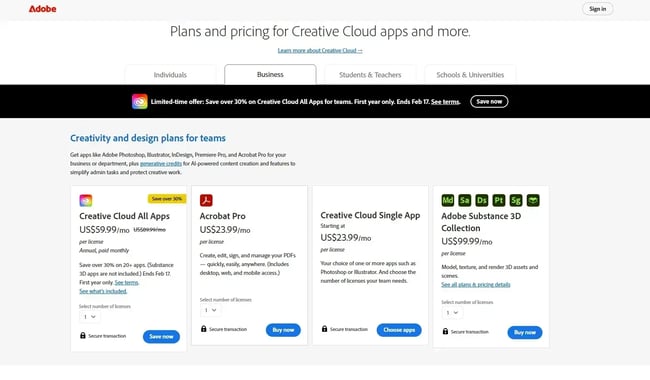
I like bundle pricing, especially for big projects. When building my website, I found Adobe Creative Cloud’s bundle pricing perfect. This strategy offers a suite of tools at a single price, making it more manageable and cost-effective.
Adobe Creative Cloud effectively combines multiple services into one package to enhance its value proposition and simplify purchasing decisions.
Best for: Businesses that offer a variety of related products/services can benefit from bundling to upsell and cross-sell their customers.
9. Geographic Pricing: Gasoline
Gasoline is notorious for having a wide range of prices around the world, but even within the United States, prices can vary by several dollars depending on the state you live in .
In California, for example, gas costs around $4.50 per gallon. Gas prices in Indiana, meanwhile, are just under $3.00 per gallon. State laws, environmental factors, and production costs all influence the price of gasoline, which causes this geographic disparity in price.
Pro tip: If you sell in multiple regions, be mindful of different factors that could affect the local markets and modify your prices accordingly.
10. Subscription Pricing: Spotify
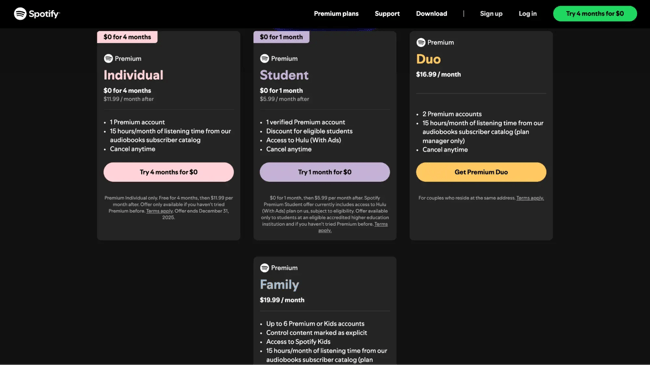
Spotify offers both free and paid plans, making it accessible to a wide range of users. And, like most subscription models, Spotify clearly targets specific buyer personas through its pricing plans.
The paid plans include options for individuals, duos, students, and families, with each one tailored for that persona. Additionally, each plan includes a free trial for a set amount of time.
Pro tip: When offering multiple tiers as part of your subscription model, each plan should be tailored to that buyer persona. Include different pricing and features that matches what that buyer needs and is willing to pay for.
11. Hourly Pricing Strategy: Upwork
Upwork is a freelance marketplace that connects businesses with independent professionals across various fields including web development, design, writing, and consulting. Upwork facilitates hourly pricing for freelancers who prefer to charge based on time spent on client projects.
Freelancers on Upwork set their own hourly rates, which can range from $10 per hour for entry-level work to $150+ per hour for specialized expertise. The platform tracks time through for the freelancer, providing transparency for both freelancers and clients.
Pro tip: Hourly pricing works well for projects with undefined scope or evolving requirements. With this model, clients benefit from setting maximum hour limits or milestones to control costs while freelancers gain predictable income for their time investment.
12. Psychological Pricing Strategy: Target
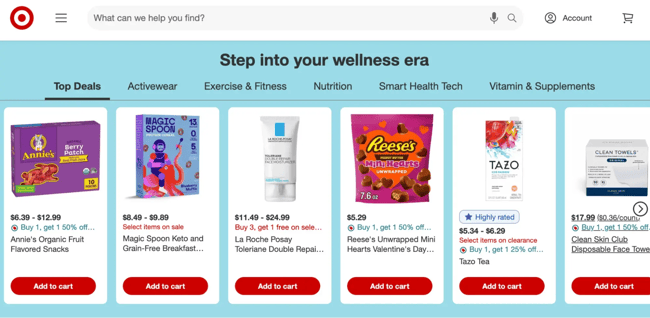
Target strategically employs psychological pricing across its stores and online by consistently pricing products at $9.99, $19.99, or $24.99 rather than rounding to even dollar amounts.
This pricing approach makes products appear less expensive than they actually are. Target also uses prestige pricing for its premium brands, pricing designer collaboration items at round numbers like $50 or $100 to convey quality and exclusivity.
Pro tip: Psychological pricing techniques like charm pricing (ending prices in .99) can increase sales by making prices feel lower to consumers. However, premium or luxury products often benefit from round number pricing, which signals quality and reduces the perception of discounting. The key is matching the pricing psychology to the brand positioning.
13. Skimming Pricing Strategy: Sony PlayStation
Sony uses price skimming for its PlayStation gaming consoles, launching new systems at premium prices before gradually reducing them over time. When the PlayStation 5 launched in 2020, Sony priced it at $499 for the standard edition.
This high initial price targets early adopters and gaming enthusiasts willing to pay a premium for the latest technology. As production costs decrease and competition intensifies, Sony progressively lowers prices to attract more price-sensitive customers, eventually reaching mainstream market segments.
Pro tip: Price skimming works best for innovative products with limited competition and strong brand loyalty. The strategy maximizes revenue from customers with high willingness to pay while the product is novel, then captures broader market share as prices decline. Companies should plan pricing tiers in advance and communicate value to justify premium launch prices.
14. High-Low Pricing Strategy: Kohl's
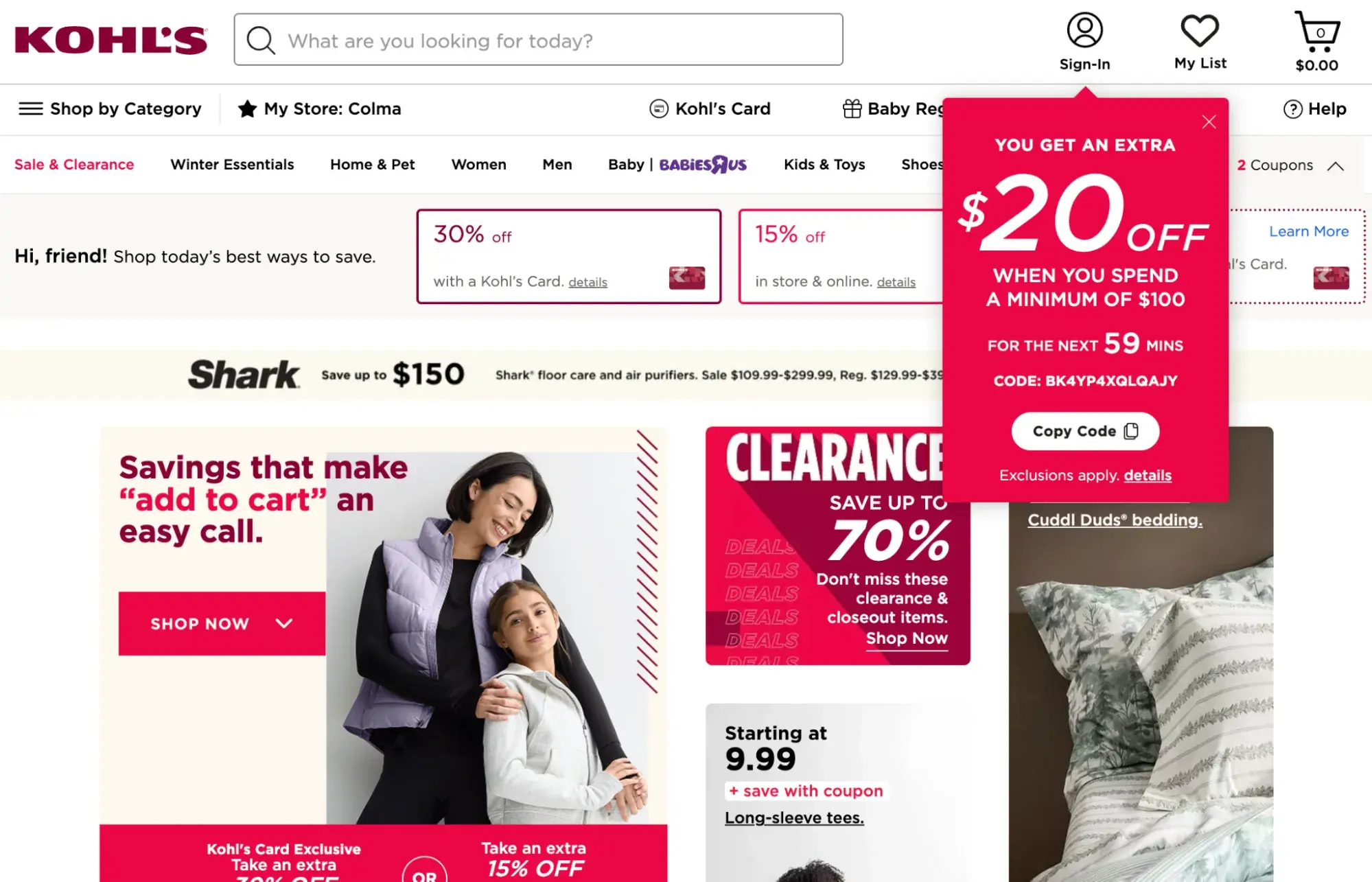
Kohl‘s sets regular prices at higher levels but customers rarely pay full price. The department store offers frequent sales, 20-30% off coupons, and Kohl’s Cash rewards that significantly reduce actual purchase prices.
This creates urgency and excitement around shopping occasions while maintaining perceived value through high reference prices.
Pro tip: High-low pricing drives store traffic during promotional periods and creates a “treasure hunt” shopping experience. However, frequent discounting can train customers to wait for sales, reducing full-price purchases. Retailers should balance promotional frequency with maintaining brand value and avoid over-discounting that erodes profit margins.
15. Cost-Plus Pricing Strategy: Custom Home Builders
Custom home builders typically use cost-plus pricing to ensure profitability while providing transparency to clients. Builders calculate the total cost of materials, labor, subcontractors, permits, and other expenses, then add a markup percentage (typically 10-20%) for profit and overhead.
For example, if a custom home costs $500,000 in direct costs (materials, labor, land development), a builder using a 15% markup would price the project at $575,000. This approach protects builders from unexpected cost increases while giving clients visibility into where their money is spent.
Pro tip: Cost-plus pricing provides predictability for businesses with variable input costs and works well in industries with transparent cost structures. However, it doesn't account for the value delivered to customers or market conditions. Businesses should regularly review markup percentages to ensure they remain competitive while covering all overhead expenses and delivering acceptable profit margins.
How to Choose the Right Pricing Strategy for Your Business
Step 1: Evaluate pricing potential.
To create a pricing strategy, start by understanding the product’s unique selling points (USPs). These are the features or benefits that make products stand out from competitors. Identifying and articulating these USPs helps in justifying a higher price point.
Next, gauge customer perception of USPs. Conduct surveys, focus groups, or interviews to learn how potential customers perceive the value of a product or service. Understand what features they value the most and how much they are willing to pay for them. This information is crucial in setting a price that aligns with customer expectations.
Finally, assess market demand. Use market research tools to analyze the demand for a product. Look at trends, market size, and growth potential. High demand can often support higher pricing, while lower demand might require competitive pricing to attract customers.
Step 2: Conduct research on target market and competitor pricing.
Research potential customers’ age, gender, income level, and other relevant characteristics. Understanding these characteristics helps tailor pricing to their preferences. Additionally, knowing what motivates customers and their buying behaviors can provide insights into how much they are willing to spend and what they value most in a product or service.
Once teams have enough data, divide the market into segments based on demographics, psychographics, and behaviors. This will help tailor pricing strategy to market needs.
Next, research competitor pricing. Understanding how competitors price their products helps teams make informed decisions to enhance competitiveness and profitability.
Leadersl have to decide between two main choices when they see the price difference for the same product or service:
- Beat the competitors’ prices. If a competitor is charging more for the same offering as a brand, then make the price more affordable.
- Beat the competitors’ value. A business can potentially price an offering higher than competitors if the value provided to the customer is greater.
To see the competition’s full product or service offering, conduct a full competitive analysis. Collect data on their pricing structures, including base prices, discounts, and special offers. Analyze the value they provide at these prices, such as product quality, customer service, and additional features. Compare this with the business’ offerings. This will help identify gaps or opportunities to differentiate pricing.
Step 3: Analyze historical data.
Analyzing historical data provides insights into past performance and helps predict future trends. Start by reviewing sales data to identify patterns, such as peak selling periods and successful price points.
Also, assess how market changes, like economic shifts or new competitors, have impacted sales. This historical perspective allows teams to make data-driven decisions, anticipate customer reactions, and adjust prices strategically.
Step 4: Choose a pricing strategy.
After carefully considering all the factors discussed, it's time to select the optimal pricing model for your business. The ideal strategy should:
- Accurately reflect the value you deliver to customers.
- Help achieve revenue goals.
- Maintain competitiveness in the market.
- Align with overall business strategy and positioning.
- Support long-term objectives.
A winning pricing strategy is all about balance. Focus too much on customer expectations and teams may under-price products. Go all-in on making a profit and they may miss the mark on keeping customers happy.
The ideal pricing strategy should help you achieve at least two of these objectives simultaneously:
- Increased profitability.
- Improved cash flow.
- Enhanced market penetration.
- Expanded market share.
- Increased lead conversion.
Step 5: Test and refine.
Remember that pricing is not a one-time decision. Stay flexible and be prepared to make adjustments as market conditions shift and customer perceptions change over time. Regularly review and refine it through continuous experimentation and A/B testing.
This will ensure pricing remains effective and aligned with both market conditions and customer expectations.
Quick Decision Guide
Choose Cost-Plus if:
- You're in a commodity market
- Competitors use similar pricing
- Margins are industry-standard
Choose Value-Based if:
- You have unique features
- Customers rave about results
- Price isn't the main objection
Choose Competitive if:
- You're entering a saturated market
- Products are interchangeable
- You need to build market share
Choose Dynamic if:
- Demand fluctuates significantly
- You have real-time data access
- Inventory is time-sensitive
Pricing Strategy Best Practices & Implementation Tips
Implementing an effective pricing strategy requires a systematic approach grounded in data and market reality. Organizations that follow best practices are better positioned to maximize profit while maintaining competitive positioning.
The following framework can help teams select the right pricing strategies that drive sustainable business growth.
Pricing Best Practices
Anchor pricing with market research.
Market research serves as the foundation for sound pricing decisions. Organizations should conduct quarterly competitive analyses, monitor industry benchmarks, and gather customer feedback through surveys and focus groups.
A data-driven approach ensures pricing aligns with market conditions while accounting for perceived value. Research should examine both direct competitors offering identical products and indirect competitors providing alternative solutions.
Segment customers based on value perception.
Not all customers perceive value identically, making segmentation essential for pricing optimization. Effective segmentation considers demographic factors, purchasing behaviors, and willingness to pay. Organizations can then tailor pricing tiers, packages, or discounts to match each segment's unique value perception.
“A B2B buyer and an SMB buyer may have wildly different willingness to pay,” says Karina Arteaga, CEO of Visible Global and former GTM Lead at Meta Reality Labs. “It's critical to segment pricing by use case, industry, maturity level and urgency.”
B2B companies often segment by company size or industry, while B2C organizations may focus on lifecycle stage or usage patterns.
Arteaga adds, “In B2C, segmentation has limits because of regulatory constraints, competitive fairness, legal rules, and operational complexity. B2C pricing must be simpler and more defensible, especially in retail or ecommerce environments where price changes must be consistent and compliant.”
Test before full-scale implementation.
Pricing changes carry significant risk, making pilot testing crucial before widespread rollout. A/B testing can help reduce implementation failures. Research from Harvard Business Review found that a significant amount of money is left on the table when pricing isn’t optimized.
Organizations should test new pricing with limited customer segments or in specific geographic markets first. This approach provides real-world data on customer response, conversion rates, and revenue impact without jeopardizing the entire customer base.
Digital platforms enable rapid testing through multivariate experiments, while physical retailers can implement regional pilots. Testing should run for a minimum of 30-60 days to capture sufficient data across various buying cycles.
Build flexibility into pricing models.
Market conditions evolve rapidly, requiring pricing strategies that can adapt without complete overhauls.
Flexible pricing models incorporate mechanisms for regular review and adjustment based on cost fluctuations, competitive moves, or demand shifts. This might include dynamic pricing algorithms for digital products, scheduled review periods for service contracts, or built-in escalation clauses tied to inflation indices. Flexibility prevents organizations from being locked into outdated pricing that erodes margins.
It’s especially important for pricing to remain flexible and iterative for new product categories, suggests Arteaga.
“When you’re launching something with little historical data, pricing is more art than science,” she says. “Early pricing in new categories should be treated as a hypothesis. It must evolve as you understand adoption patterns, cost curves, usage behaviour and willingness to pay.”
Arteaga notes that price changes in these categories are high-risk because you’re actively shaping consumer perception of value for your brand.
Communicate value, not just price.
Pricing effectiveness depends heavily on how value propositions are communicated to customers. Organizations should train sales teams to articulate specific benefits, quantify ROI, and differentiate offerings based on unique features rather than leading with price.
Marketing materials should highlight outcomes, case studies, and testimonials that demonstrate tangible results. For premium-priced products, this communication becomes even more critical, as customers need clear justification for paying more than competitive alternatives.
Implementation Timeline
Arteaga suggests pricing implementation timelines can take anywhere from eight to 12 weeks for most SMBs. Here’s the timeline breakdown:
- Research, segmentation, customer insight: two to three weeks
- Pricing model design (tiers, bundles, positioning): two to three weeks
- Internal alignment (sales, finance, CS) and enablement: two weeks
- Testing, rollout, messaging and objection training: two to four weeks
In enterprise environments, allow three to six months for the implementation process, suggests Arteaga.
“Longer cycles are normal for matrixed companies with complex product suites and multiple markets,” she says. “The blocker is rarely the pricing itself, it is internal alignment, legal approvals, tooling updates, revenue forecasting, and change management.”
Success Metrics to Track
Measuring pricing strategy effectiveness requires monitoring specific metrics that indicate both short-term performance and long-term health. Organizations should establish baselines before implementation and track these indicators continuously.
Revenue and Profit Margin
Revenue and profit margin serve as primary indicators of pricing effectiveness. Revenue measures the total income generated from sales, while profit margin shows the percentage of revenue retained after accounting for costs.
Organizations should track both gross margin (revenue minus cost of goods sold) and net margin (revenue minus all expenses) to understand profitability at different levels.
How to measure: Calculate gross margin as (Revenue - COGS) / Revenue × 100. Calculate net margin as (Net Income / Revenue) × 100.
Customer Acquisition Cost (CAC)
Customer Acquisition Cost represents the total expense of acquiring a new customer, including marketing, advertising, and sales costs. This metric directly relates to pricing strategy because pricing affects conversion rates and the efficiency of acquisition efforts.
Lower prices may increase conversion but reduce margin, while higher prices may decrease conversion but improve per-customer profitability.
How to measure: Calculate CAC by dividing total sales and marketing expenses by the number of new customers acquired in a given period:
- CAC = Total Sales & Marketing Costs / Number of New Customers.
Customer Lifetime Value (CLV)
Customer Lifetime Value estimates the total revenue a business can expect from a single customer throughout their relationship. Pricing strategies directly impact CLV by influencing initial purchase size, repurchase frequency, and customer retention. Premium pricing strategies often increase per-transaction value, while penetration pricing may drive higher volume over time.
How to measure: Calculate CLV using the following formula:
- CLV = (Average Purchase Value × Purchase Frequency) × Average Customer Lifespan.
For subscription businesses, use: CLV = Monthly Recurring Revenue per Customer / Monthly Churn Rate.
Price Elasticity
Price elasticity measures how demand changes in response to price adjustments. Understanding elasticity helps organizations predict customer behavior and optimize pricing for maximum revenue. Products with inelastic demand tolerate price increases without significant volume loss, while elastic products see substantial demand shifts with minor price changes.
How to measure: Calculate price elasticity using the formula: Elasticity = (% Change in Quantity Demanded) / (% Change in Price). Conduct this analysis by comparing sales volumes before and after price changes.
Competitive Win Rate
Competitive win rate tracks the percentage of sales opportunities won when competing directly against rival offerings. This metric indicates whether pricing positions the organization competitively while maintaining value perception. Declining win rates may signal pricing misalignment with market expectations.
How to measure: Calculate win rate by dividing the number of deals won by total opportunities where direct competition was identified: Win Rate = (Number of Wins / Total Competitive Opportunities) × 100.
Industry-Specific Pricing Considerations
Not every pricing strategy is applicable to every business. Some strategies are better suited for physical products, whereas others work best for SaaS companies. Here are examples of some common pricing models based on industry and business.
Retail & Ecommerce Pricing
Common strategies: Competitive, psychological, high-low
Key metrics: Gross margin, inventory turnover, price elasticity
Unlike digital products or services, physical products incur hard costs (like shipping, production, and storage) that can influence pricing. A product pricing strategy should consider these costs and set a price that maximizes profit, supports research and development, and stands up against competitors.
Best practice: Use dynamic pricing for online channels while maintaining price consistency in-store. Enforcing that consistency across thousands of SKUs and stores is where price management software typically replaces manual pricing rules.
Real-world example: Amazon adjusts prices on millions of products multiple times per day based on competitor pricing, demand patterns, and inventory levels. This dynamic approach has helped Amazon maintain its position as a price leader while protecting profit margins on high-demand products.
Pro tip: Cost-plus pricing, competitive pricing, prestige pricing, and value-based pricing work well for physical products.
SaaS & B2B Software Pricing
Common strategies: Value-based, tiered pricing, freemium
Key metrics: Monthly recurring revenue (MRR), customer acquisition cost (CAC)
Digital products, like software and online services, require a different approach to pricing because there’s no tangible offering or unit economics (production cost) involved. Instead, prices should reflect your brand, industry, and overall value of your product.
Best practice: Price based on usage metrics (seats, contacts, features) that align with customer value.
Real-world example: Slack uses a tiered pricing model based on active users and features, starting with a free version for individuals and small teams. As organizations grow and require advanced features like enterprise-grade security, compliance tools, and dedicated support, they naturally upgrade to higher tiers.
A value-based approach has allowed Slack to capture small startups, while scaling revenue as customers grow. Tis results in an average revenue per user that increases over time as companies expand their usage.
Pro tip: Competition-based pricing, freemium pricing, and value-based pricing are the best strategies for digital products.
Event Pricing Model
Common strategies: Competition-based, dynamic, and value-based
Key metrics: Cost per attendee (CPA), revenue per attendee (RPA)
Events can’t be accurately measured by production cost. Instead, event value is determined by the cost of marketing and organizing the event, along with the speakers, entertainers, networking, and the overall experience. As a result, the ticket prices should reflect all these factors.
Real-world example: The tech conference South by Southwest (SXSW) implements a sophisticated tiered pricing strategy that increases ticket prices as the event approaches. Early bird passes start at lower prices six to eight months before the conference, with prices rising in multiple stages.
Pricing passes based on time rewards committed attendees with discounts while maximizing revenue from last-minute buyers who demonstrate higher willingness to pay. SXSW also offers multiple pass types (Platinum, Interactive, Film, Music) at different price points to capture various audience segments.
Pro tip: Competition-based pricing, dynamic pricing, and value-based pricing work best for live events.
Professional Services Pricing
Common strategies: Value-based, hourly, project-based
Key metrics: Utilization rate, average project value, profit per partner
Business services can be hard to price due to their intangibility and lack of direct production cost. Much of the service value comes from the service provider’s ability to deliver and the assumed caliber of their work. Freelancers and contractors, in particular, must adhere to a services pricing strategy.
Best practice: Transition from hourly to value-based pricing as expertise grows.
Real-world example: McKinsey & Company uses value-based pricing and outcomes-based models for consulting engagements rather than hourly rates.
For a revenue optimization project, McKinsey might charge a percentage of the projected revenue increase or a fixed project fee based on the strategic value delivered. This approach aligns consultant incentives with client outcomes. Beyond that, the firm's pricing reflects the expertise of its consultants.
Pro tip: Hourly pricing, project-based pricing, and value-based pricing work best for professional services.
Education Pricing Model
Common strategies: Competitive, cost-based, and premium
Key metrics: Customer lifetime value (LTV), cost per student, churn rate
Education encompasses a wide range of costs that are important to consider depending on the level of education, private or public education, and education program/discipline.
Specific costs to consider in an education pricing strategy are tuition, scholarships, and additional fees (labs, books, housing, meals, etc.). Other important factors to note are competition among similar schools, demand (number of student applications), number and costs of professors/teachers, and attendance rates.
Real-world example: Arizona State University pioneered an innovative pricing model for its online programs in partnership with Starbucks. Through the Starbucks College Achievement Plan, eligible employees receive full tuition coverage for bachelor's degrees, while ASU absorbs the risk and receives payment based on course completion rather than enrollment.
The outcome-based pricing model incentivizes student success and has allowed ASU to scale its online programs dramatically while differentiating from competitors through its corporate partnership approach.
Pro tip: Competitive pricing, cost-based pricing, and premium pricing work well for education.
Real Estate Pricing Model
Common strategies: Competitive, dynamic, premium, and value-based
Key metrics: Year-over-year (YoY) price variance, market analysis
Real estate encompasses home value estimates, market competition, housing demand, and cost of living. There are other factors that play a role in real estate pricing models including potential bidding wars, housing estimates, and seasonal shifts in the real estate market.
Real-world example: Opendoor uses algorithmic pricing based on thousands of data points including recent comparable sales, property condition, local market trends, and seasonal demand patterns.
The company provides sellers with instant cash offers, while building in a margin for renovation costs and market risk. This data-driven approach allows Opendoor to price properties competitively for quick sales while maintaining profitability across its portfolio, even as it operates in fluctuating local markets.
Pro tip: Competitive pricing, dynamic pricing, premium pricing, and value-based pricing work best for real estate.
Manufacturing Pricing Model
Common strategies: Cost-plus, volume discounts, contract pricing
Key metrics: Gross margin, customer lifetime value, win rate
The manufacturing industry is complex. There are several moving parts, and the manufacturing pricing model is no different. Consider product evolution, demand, production cost, sale price, unit sales volume, and any other costs related to the process and product.
Best practice: Build in price escalation clauses for long-term contracts.
Real-world example: Tesla adjusts vehicle pricing based on production efficiency gains, raw material costs, and demand patterns. When battery costs decreased due to supply chain improvements and increased production scale, Tesla passed some savings to customers through price reductions on Model 3 and Model Y vehicles.
Conversely, during periods of high demand or increased material costs, Tesla raises prices accordingly. This flexible approach allows Tesla to maintain margins while responding to market conditions, though frequent price changes have occasionally created customer friction.
Pro tip: Competitive pricing, cost-plus pricing, and value-based pricing work well for manufacturing.
Pricing Strategy FAQ
1. What is pricing strategy with an example?
A pricing strategy is a method for determining the optimal price for a product or service based on factors like costs, competition, customer demand, and business goals.
2. What are the four types of pricing strategies?
The four main types of pricing strategies are:
- Cost-based pricing, setting prices based on production costs plus a markup (e.g., a manufacturer adding 20% to production costs).
- Competition-based pricing, setting prices based on what competitors charge (e.g., gas stations pricing similarly to nearby stations).
- Value-based pricing, setting prices based on perceived customer value (e.g., Apple charging premium prices for iPhones based on brand value).
- Dynamic pricing, adjusting prices based on real-time demand and market conditions (e.g., Uber surge pricing during peak hours).
3. How often should I review my pricing strategy?
Review pricing strategy at least annually, but certain situations require more frequent reviews. Industries with volatile costs or rapid competition changes need quarterly reviews. Major triggers for immediate review include significant cost changes, new competitor entries, product launches, economic shifts, or declining profit margins.
4. Can I use multiple pricing strategies?
Yes, most businesses use multiple pricing strategies simultaneously. A company might use value-based pricing for premium products, competitive pricing for standard offerings, and penetration pricing for new market entries. The key is ensuring strategies align with overall business objectives and don't confuse customers.
5. What's the difference between pricing strategy and pricing model?
A pricing strategy is the overall approach to setting prices based on business goals, market positioning, and competitive factors. A pricing model is the specific structure used to charge customers.
Get Your Pricing Strategy Right
It’s easy to get overwhelmed by the sheer number of pricing strategy factors and components. From competitors to production costs, customer demand to industry needs, profit margins to making a profit, the list is endless. Thankfully, teams don’t have to master everything all at once.
Instead, start small. Calculate COGS, determine the ideal profit margin, carry out some customer research, and determine what’s most important for the business. Equipped with this information, teams can find a pricing strategy that makes sense and drives revenue.
If there’s one thing I hope businesses take away from this piece, it’s that creating an effective pricing strategy is an iterative process. You probably won’t find the ideal price point right away. It might take a couple of tries (and lots of research), and that’s OK — slow and steady, not fast and reckless, takes the prize in pricing strategy.
.png)
Free Sales Pricing Strategy Calculator
Determine the best pricing strategy for your business with this free calculator and template.
- Cost-Plus Pricing
- Skimming Strategy
- Value-Based Pricing
- And More!
Download Free
All fields are required.
Form not available
Pricing Strategy



![Price Skimming: All You Need To Know [+ Pricing Calculator]](https://53.fs1.hubspotusercontent-na1.net/hubfs/53/price-skimming-strategy.jpg)

.jpg)
![B2B Pricing Models & Strategies [+ Pros and Cons of Each]](https://53.fs1.hubspotusercontent-na1.net/hubfs/53/b2b-pricing-models-and-strategies.jpg)