-Mar-14-2025-05-55-40-8841-PM.png?width=112&height=112&name=Featured%20Image%20(1)-Mar-14-2025-05-55-40-8841-PM.png)

Signing up for a credit-based AI platform is the easy part. Most organizations get through procurement, negotiate a contract, and roll out access to their teams — and then quietly discover that managing AI credit spend is a different job entirely.

Credit consumption doesn’t announce itself. It just quietly accumulates, sometimes catching you off guard. A workflow runs more often than expected. A new team starts using the platform. An agent gets deployed to a high-volume use case no one modeled during the pilot.
Three months later, the finance team has questions, and the person who owns the AI budget doesn’t have good answers.
This post is about preventing that. You may know how to build a defensible budget model and how to forecast consumption before rollout, but what happens when things don’t go according to plan? We’ll cover the controls, monitoring structures, and governance decisions that keep AI credit spend visible, manageable, and defensible as your organization scales.
Table of Contents
- Why Managing AI Credit Spend Matters
- The problem isn’t spending.
- How to Solve the AI Credit Governance Gap
- Managing AI credit spend successfully starts with measurement.
-Mar-14-2025-05-55-40-8841-PM.png?)
Free AI Agents Playbook
This practical guide reveals where to start, which applications deliver real value, and how to implement agents that transform workflows without replacing jobs.
- Marketing Workflow Automation
- Sales Acceleration System
- Operational Excellence
- Implementation Blueprint
Download Free
All fields are required.
Form not available
Why Managing AI Credit Spend Matters
Seat-based software is straightforward. A $10,000 contract for 50 seats costs exactly $10,000 per year, regardless of how often those seats log in. With usage-based AI pricing, however, spend can be a little more unpredictable. Costs scale with what the AI actually does and how much it’s used, meaning an organization that deploys AI successfully will, almost by definition, see its credit consumption grow.
That’s great, but without visibility into how and where that growth is happening, it’s impossible to distinguish productive scaling from runaway spend. This creates a gap between initial credit budgets and active consumption monitoring, but few organizations establish governance structures to manage it before rollout.
Zylo’s 2026 SaaS Management Index found that 78% of companies experienced unexpected charges tied to AI or consumption-based pricing in the past year, and 61% were forced to cut projects due to unplanned cost increases.
Business units now control 81% of SaaS spend, while IT directly manages just 15%. That means purchasing is outpacing oversight at exactly the moment when pricing models are becoming harder to forecast.
The governance gap isn’t theoretical. It’s real and playing out at scale right now.
But the problem isn’t spending.
The gap isn’t usually a spending problem. It’s a visibility problem. Teams that know where their credits are going can manage the spend. Teams that don’t are in for a surprise come invoice time.
There’s a second issue that compounds the first: ownership.
Credit spend in a multi-team environment tends to diffuse. Marketing runs the content agent. Sales runs the prospecting agent. Support runs the customer agent. Each team has a functional owner, but no one has a clear mandate over AI credit spend as a whole. The result is that no single person or team takes accountability for credit budgets, leading to unmonitored spending and surprise bills.
That diffusion problem will intensify as AI deployments scale. By 2028, Gartner predicts the average Fortune 500 enterprise will have more than 150,000 AI agents in use, up from fewer than 15 today.
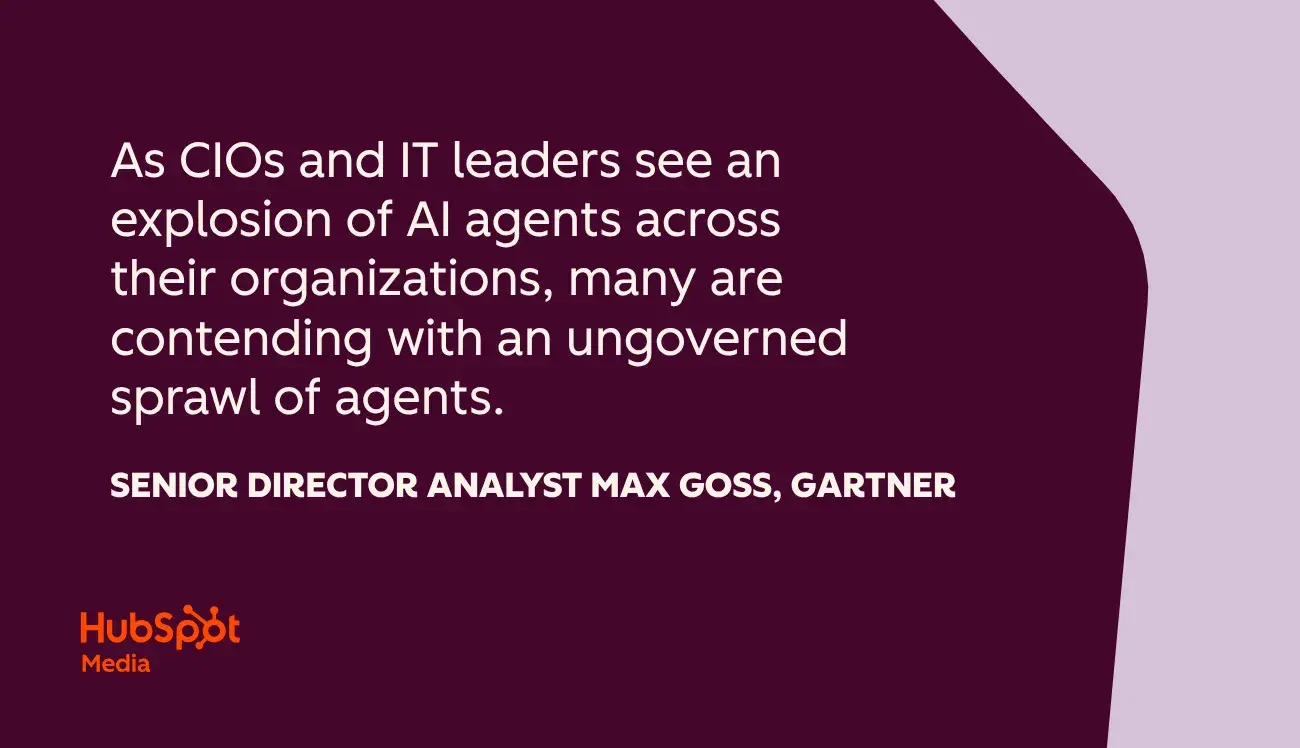
The same research found that only 13% of organizations believe they currently have the right governance in place. Gartner’s senior director analyst Max Goss put it plainly: “As CIOs and IT leaders see an explosion of AI agents across their organizations, many are contending with an ungoverned sprawl of agents.”
How to Solve the AI Credit Governance Gap
1. Set up spending controls.
Controls are the layer of the system that prevents overspend before it happens. They’re distinct from monitoring, which surfaces what has already occurred. Both matter, but controls are where you stop problems; monitoring is where you catch them early.
AI credit controls can look like:
- Feature-level credit limits
- Approval workflows
- Overage policies
Feature-level Credit Limits
Feature-level credit limits are the baseline governance layer available in most platforms that offer credit-based pricing.
Rather than waiting for total monthly consumption to hit a threshold, feature-level limits cap how many credits a given agent or workflow type can consume in a period. If your customer agent exhausts its limit, it pauses, rather than continuing to run and billing you for the overage.
In other words, it stops the spend before it happens. And this matters more than it sounds.
A single high-volume agent running uncapped can consume a disproportionate share of a monthly credit budget. For instance, a customer service agent handling 10,000 conversations a month can exhaust a 50,000-credit monthly budget on its own, before the sales or content agents have run a single task. Feature-level limits ensure that no single use case like this can take down the whole allocation.
As OpenAI’s June 2026 addition of enterprise spend controls to ChatGPT Enterprise demonstrated, even the largest AI vendors have recognized that their customers need these guardrails built into the platform, not bolted on after the fact.
Credit Approval Workflows
Approval workflows for high-credit tasks are worth building for edge cases and expansion requests. But what does this look like?
When a team wants to run a new agent, deploy to a new workflow, or increase usage volume significantly, routing that request through a lightweight approval process catches scope creep before it becomes a billing problem.
The goal isn’t micromanaging or creating red tape, but making sure someone with budget and project visibility confirms it’s ok that a new workflow goes live.
Pro tip: What makes guardrails work without throttling productive use is the specificity of the limit. A blanket cap on total monthly credits creates friction for every team simultaneously. Feature-level limits and approval gates for new deployments let established workflows run without interruption while adding a check on expansion.
Overage Policies
Overage policies deserve their own decision before go-live.
Do overages auto-approve and get billed? Do they escalate to a budget owner for manual sign-off? Do they pause the feature until someone actively enables additional credits?
Each of these has tradeoffs. Auto-approval keeps workflows running but removes the opportunity to catch a misconfiguration. Manual escalation adds friction and potential delays. Pausing at the limit is safe but can interrupt production use cases at bad times.
The right answer depends on how mature your usage is, how much tolerance your organization has for interruption, and how much trust you’ve established in your credit models. The wrong answer is to leave it undecided and let the platform choose for you.
Consider the options and have a plan in place before you start using your AI credit budget.
Free AI Agents Playbook
This practical guide reveals where to start, which applications deliver real value, and how to implement agents that transform workflows without replacing jobs.
- Marketing Workflow Automation
- Sales Acceleration System
- Operational Excellence
- Implementation Blueprint
Download Free
All fields are required.
Form not available
2. Monitor credit consumption with trackable metrics.
Controls prevent problems. Monitoring surfaces the ones that controls didn’t catch, and gives you the data to improve your controls over time. Effective monitoring relies heavily on trackable metrics.
The three most important AI usage metrics to track in terms of control:
Consumption Rate
Consumption rate tells you how fast you’re burning credits relative to your forecast. This is the number most organizations track and is most useful when paired with a timeline context. Burning 60% of your monthly budget in the first two weeks looks very different from burning 60% in the last two weeks of the same period.
Credit-based tools like HubSpot's marketing agents provide usage dashboards that enable teams to track credit consumption at the task and workflow level in real time.

Per-workflow Spend
Per-workflow spend tells you where the credits are going. Without workflow-level breakdowns, a high consumption rate is just a number. With them, you can see that one agent is consuming a disproportionate share, or that a specific task type is running more often than the pilot suggested it would. Workflow-level breakdowns enable teams to diagnose which agents or tasks are consuming a disproportionate share of credits.
Cost per Outcome
Cost per outcome is the metric that connects credit spend to value. Cost per AI-resolved ticket, cost per AI-assisted piece of content published, and cost per AI-enriched contact record are what turn a credit bill from a line item into an ROI conversation. Post five of this series covered this in detail, but it’s worth repeating.
McKinsey’s 2025 State of AI report found that only 39% of organizations can report enterprise-level financial impact from AI — a measurement gap that starts with the absence of cost-per-outcome tracking at the workflow level.
How often do you need to monitor AI credit spend?
The frequency of monitoring has as much impact on spend visibility as the selection of metrics. According to Flexera, complete IT asset visibility dropped to 36% in 2026, meaning most organizations entering renewal conversations lack an accurate picture of what they actually consumed.
Real-time dashboards give you a live view of consumption, which is useful for catching anomalies early. Most teams cannot sustain continuous real-time dashboard reviews due to resource constraints.
The more practical structure is to layer monitoring across three stages:
- Monthly reviews look at actual versus forecasted spend. Flag variances above 20% and trace them to specific workflows. This is also the moment to check whether any new deployments went live that weren’t in the original forecast.
- Quarterly reviews revisit base-case assumptions. Has adoption grown faster or slower than predicted? Are new teams requesting access? Are use cases evolving in ways that weren’t expected? Adjust the forecast forward, not just backward.
- Annual reviews rebuild the model from the ground up using the prior year’s actual data. This is also the natural moment to renegotiate contract terms based on demonstrated volume — something most organizations underutilize.
There are also several factors that should trigger an unscheduled review:
- Spend consistently running 30% or more below forecast may mean the platform is being underutilized, or that the budget was sized too conservatively.
- Spend frequently hitting contingency reserves suggests the base-case assumptions are too optimistic for current usage patterns.
- New teams requesting access signals growth that wasn’t in the original model. Budget expansion should happen proactively, not reactively.
- Cost per outcome improving is a signal to lean in — expand investment in the workflows showing the strongest returns, not just maintain current levels.
Free AI Agents Playbook
This practical guide reveals where to start, which applications deliver real value, and how to implement agents that transform workflows without replacing jobs.
- Marketing Workflow Automation
- Sales Acceleration System
- Operational Excellence
- Implementation Blueprint
Download Free
All fields are required.
Form not available
3. Build a governance framework.
Governance is the structure that makes controls and monitoring sustainable over time. Without governance frameworks, controls become inconsistently applied, and monitoring becomes reactive rather than proactive. Controls get bypassed when they’re inconvenient, and monitoring becomes a reactive exercise after something goes wrong rather than a proactive one.
Ownership is the foundation. Someone needs to be accountable for AI credit spend; not just a list of stakeholders, but a specific person or function with the mandate to track it, report on it, and make decisions when it deviates from plan.
Organizations that skip this step often pay for it later.
Over 70% of IT leaders believe business units are buying more cloud and SaaS than IT knows about, and 58% have already encountered issues due to unsanctioned SaaS usage, while a separate finding from Deloitte’s 2025 research adds that only one in five companies report a mature governance model for autonomous AI agents. T
The absence of ownership isn’t just a financial risk; it’s the reason most AI governance structures don’t hold up as usage scales.
Who should own your AI credit governance?
There’s no single right answer to who should govern your AI credit spend, but there are three common models, each with tradeoffs:
- Central ops or finance ownership works well when AI tools span multiple teams, and consistent cost controls are the priority. The upside is visibility and control. The downside is slower cycles, which can frustrate teams trying to move quickly on projects and new ideas.
- Functional ownership puts the head of marketing, VP of support, or equivalent in charge of the credit budget for their team. The upside is faster iteration within each function. The risk is fragmented visibility across functions and duplication of effort.
- Hybrid ownership gives a central budget holder responsibility for guardrails and approval thresholds, while functional leads manage day-to-day allocation within those limits. This is the most common model at mid-size to enterprise organizations, and tends to be the most durable as AI usage scales.
When is AI credit governance needed?
Organizations achieve accountability without bureaucracy by documenting governance decisions and approval thresholds before system go-live. Four things worth getting in writing before go-live:
- What spend level requires sign-off, and from whom? Defining approval thresholds in advance means the escalation path is clear when a team wants to expand usage.
- If a team is projected to exceed its allocation, who gets notified and how quickly? When escalation paths are not defined in advance, budget notifications typically go to whoever first discovers the overage rather than the appropriate decision maker.
- If one team underspends and another is over, what’s the process for shifting credits mid-cycle? Reallocation rules prevent both waste and artificial bottlenecks.
- Do overages get auto-approved, escalated, or paused? This decision (which should be covered in your controls) belongs in the governance framework so it’s enforced consistently rather than handled ad hoc.
Evolve management as your AI usage matures.
Early-stage AI deployments need more conservative controls and more frequent monitoring because the usage patterns aren’t well understood yet. As actual consumption data accumulates, controls can be calibrated more precisely and loosen up where the model has proven stable, while tightening where it hasn’t.
But remember: overly tight controls carry their own risk.
Gartner’s Max Goss noted that organizations that resort to blocking or restricting AI agent access often find that employees go around the controls and turn to shadow AI, data exposure, and security risks that are harder to manage than the original spend problem.
The goal of governance is to enable responsible use, not discourage it. But how do you know when your governance may be going too far? Here are two common signals to look out for:
- Adoption friction: Teams avoiding certain workflows or asking to bypass credit limits suggests controls are set too tight relative to the actual value those workflows deliver.
- Runaway spend: Consumption consistently exceeding forecast without a clear explanation suggests controls are too loose or monitoring cadence isn’t catching deviations early enough.
Neither is a failure. Both are data. The governance framework should include a regular process for acting on that data: adjusting limits, revisiting thresholds, and updating the model as you learn more about how your organization actually uses AI.
Managing AI credit spend successfully starts with measurement.
Most organizations treat consumption data as historical records rather than using it to forecast future spending trends and negotiate better renewal rates.
Usage patterns that have stabilized give you the evidence base to negotiate better rates at renewal, while workflows with improving cost-per-outcome metrics give you the business case for expanding capacity.
Successful organizations implement iterative processes that combine preventive controls, proactive monitoring, and clear ownership to continuously refine AI credit budgets based on actual consumption data.
This is the seventh post in our AI credit-based pricing series. Earlier posts covered:
- The buyer’s guide to credit-based AI pricing
- Why AI platforms are moving to credit-based pricing
- 5 critical questions to ask AI vendors
- How to compare credit models across vendors
- How to build a predictable cost model
- How to forecast AI credit consumption
Up next: setting up alerts, limits, and safeguards to avoid bill shock.
Free AI Agents Playbook
This practical guide reveals where to start, which applications deliver real value, and how to implement agents that transform workflows without replacing jobs.
- Marketing Workflow Automation
- Sales Acceleration System
- Operational Excellence
- Implementation Blueprint
Download Free
All fields are required.
Form not available
Artificial Intelligence