
Effective site architecture remains a top priority for search performance, with silo SEO serving as a foundational strategy for topical authority. By creating distinct vertical silos, website owners can signal clear topical relevance to search engines while streamlining the user journey.![Free Resource: Website Optimization Checklist [Download Now]](https://no-cache.hubspot.com/cta/default/53/00d9cc96-eff7-4cea-8ff3-583374c3dcd5.png)
According to HubSpot’s 2026 State of Marketing Report, the website, blog, and SEO are the #1 ROI-generating channels for marketers, with 27% naming them their top performers. SEO managers and web teams who want to keep that lead need modern silo SEO practices to support it.
HubSpot’s SEO Tools help SEO managers visualize topical clusters, validate internal linking audits, and map content hierarchies to support a unified silo strategy.
Table of Contents
- What is silo SEO?
- How does silo website structure work?
- Should you use silo SEO in 2026?
- Pros of Silo SEO
- Cons of Silo SEO
- How to Implement SEO Siloing on Your Website
- Frequently Asked Questions About Silo SEO
What is silo SEO?
Silo SEO is a technical and structural approach to website architecture that organizes content into isolated, topic-specific categories. This method mirrors a filing cabinet system where each drawer represents a broad parent topic, and the folders within contain child pages strictly related to that subject.
Parent and child pages are then connected with internal links to create a website silo architecture.
Internal linking helps search engines understand relationships between pages by passing link juice or equity down through the vertical hierarchy. To maximize link equity transfer, use contextual anchor text in the internal link strategy.
By grouping all related keywords and information into one branch of the site, SEO teams can:
- Prevent topic dilution.
- Improve crawlability.
- Position the site as an authoritative source for specific themes.
.png)
Free Website Optimization Checklist
This website optimization checklist will help you perfect your website's:
- Performance
- SEO
- Security
- Mobile Performance
Download Free
All fields are required.
Form not available
Silo SEO vs. Topic Clusters
Topic clusters connect a pillar page with supporting articles through internal links, while traditional silos rely on a rigid URL hierarchy. Both approaches build topical authority, but topic clusters are more flexible. The cluster model focuses on semantic relationships between pages rather than where they sit in the URL structure.
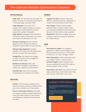
The table below compares how silo SEO and topic clusters differ in structure, linking strategy, and SEO priority.
Silo SEO vs. Content Hubs
Content hubs organize a main hub page and related cluster pages around one topic to serve as a comprehensive resource. A content hub is the practical implementation of a silo, meaning the actual set of pages where the siloed content lives. Siloing is the architectural strategy. A content hub is how that strategy takes shape on the site.
The table below outlines how silo SEO and content hubs differ in their goals, structures, and linking approaches.
How does silo website structure work?
A silo website structure organizes content into logical departments, so search engines can easily map the site’s topical coverage. Website silos rely on internal links to connect related pages. Internal linking helps users navigate to the next best page in their journey by providing clear, relevant paths within a specific category.
There are two types of SEO silo structure.
- Physical silo: A physical silo uses the URL structure itself to reinforce the content hierarchy, such as /services/web-design/. Search engine bots like Googlebot can easily understand page relationships from the directory structure alone, recognizing immediately that a subcategory like “waterproof-timberlands” belongs under a parent category like “boots.”
- Virtual silo: A virtual silo establishes hierarchy through internal linking rather than URL structure, connecting related pages while deliberately avoiding links to unrelated silos. This isolation ensures that the thematic weight of each category stays concentrated rather than spreading too thin across the domain.
Should you use silo SEO in 2026?
Yes, SEO teams should still use silo SEO in 2026, but in a more modern form. Structuring content into clear topical groups helps search engines like Google understand a site’s expertise and build topical authority, which remains a strong ranking signal. However, the old approach of rigid, isolated silos that prevent linking between topics is largely outdated because it can hurt user experience and limit helpful navigation.
Jonathan Kelly, an SEO and digital public relations specialist at Hyperlinks, doesn’t see silo SEO as the right priority anymore:
”Silo SEO is not something I would prioritize as a standalone strategy in 2026. What matters more now is building strong content clusters around your core topics, with clear internal linking and enough depth that both search engines and AI systems can understand what you actually have authority on,” he says.
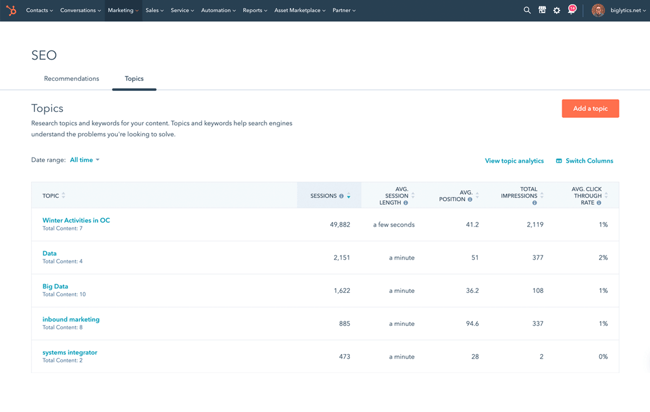
Today, the best practice is to organize content into thematic clusters with pillar pages and supporting articles, while allowing contextual cross-links when they help the reader. Modern SEO teams use HubSpot’s SEO Tools to view topic performance and act on it to strengthen topical authority.
Pros of Silo SEO
Implementing a silo structure provides significant advantages for both visibility and management.
Enhanced Topical Authority
By concentrating all relevant content in one area, a site demonstrates deep expertise. This structural density proves to search engines that the domain isn’t just touching on a topic superficially, but provides comprehensive resources that satisfy the user’s entire search intent.
Topical authority is also a factor driving visibility in AI search. Web teams can use the HubSpot AEO Grader to determine whether their web content effectively conveys the intended topic.
While siloing can enhance topical authority, Yıldırım Sertbaş, an SEO consultant, cautioned about properly linking related pages.
“The biggest mistake I see is people creating silos based on keyword volume rather than semantic relevance. A proper silo should be built around entities and subtopics that naturally belong together. If your supporting pages don’t link back to the pillar and to each other, you’re leaving topical authority signals on the table.”
Pro tip: A silo structure shouldn’t be a content prison. If a page in a Web Design silo naturally references a concept in a Content Marketing silo, link it. Check out this guide to learn how to optimize site structure.
Improved Crawl Efficiency
A pyramid site structure prioritizes top-level categories, then hubs, then supporting pages. This makes it easier for bots to discover new content.
Site structure matters because Googlebot operates with a limited crawl budget. If an important page — such as a product category page — sits five layers deep, it may not be crawled or indexed. Likewise, a large number of orphaned pages drags down overall search performance. For a full breakdown of crawlability best practices, see HubSpot’s crawlability checklist.
Reduced Keyword Cannibalization
Silos force content teams to assign specific keywords to specific “branches,” preventing two pages from fighting for the same search term. Sometimes, it’s not even obvious that cannibalization is happening because the keywords look different but mean the same thing.
This lack of clarity is often a symptom of scale. SEO specialist Winnie Yoong, who has navigated these issues for over a decade, notes that structure is often the first thing to break in large teams.
“In reality, keyword cannibalization often happens when multiple people are working on the same site without a clear SEO structure or ownership. I’ve seen this a lot in bigger content sites — over time, different writers and SEO specialists create overlapping articles without knowing what already exists.” Winnie explained.
Her tips?
“One practical thing I do is a quick site:domain.com + keyword search to see how many pages are targeting the same topic, then consolidate or merge where it makes sense.”
Defined User Journeys
Silo SEO creates a logical roadmap for both bots and humans. By grouping related content, content teams ensure that a reader who enters through a top-of-funnel article is naturally guided toward mid- and bottom-funnel resources within the same topic. Silo SEO improves the user experience (UX), which is important for modern search.
This isn’t just theoretical; restructuring a disorganized site can lead to immediate, measurable gains in user behavior. HubSpot’s SEO Tools provide data-driven recommendations that help web and content teams confidently restructure a site.
Krasen Slavov, a web developer with SEO experience, demonstrated how an organized site hierarchy can improve the customer experience and, consequently, conversion rates.
In this case study, Krasen worked with an e-commerce store that has a relatively flat site hierarchy. After an audit, he structured the site into several pillars. By linking related pages, the site experienced a 68% increase in organic traffic to category pages and a 19% lift in conversion rate from organic visitors.
Cons of Silo SEO
Despite the benefits, there are valid reasons to be cautious when implementing a rigid silo.
Maintenance Overhead
As a site grows, maintaining strict folder structures can become a technical nightmare. Deeply nested directories often lead to excessively long URLs and a rigid architecture that is difficult to reorganize. This “structural debt” can eventually stifle a site’s ability to pivot or expand into new content areas efficiently.
Cindy Lee, an experienced SEO and digital marketing consultant, shares how to overcome the predicament.
“Picking a flexible, shallow URL setup (e.g., /topic/subtopic/) right from the start is one of the smartest moves you can make for your website. This choice isn’t just about keeping things tidy — it’s about making sure your site can grow without headaches later.”
Pro tip: Use HubSpot’s SEO Tools to view automated recommendations across the entire site. This allows SEO teams to prioritize changes that will deliver the most impact.
Link Equity Bottleneck
If one silo is high-performing, it can be difficult to share that authority with a newer, weaker silo without breaking the strict silo rules.
The strict silo model has its skeptics. Jan-Willem Bobbink, an enterprise SEO consultant, pushed back on a hard-line interpretation:
“The strict silo model is more of a theoretical ideal than a practical rulebook, so don’t treat it as gospel. A well-placed contextual cross-silo link from a high-authority page to a strategically important page in a weaker silo won’t “break” anything; Google follows links, not your internal taxonomy.”
Pro tip: The key is to make those cross-links editorially relevant to the user rather than purely for equity distribution. The silo structure should serve as the primary architecture for topical clarity, with intentional “bridges” where it genuinely makes sense for the reader.
Over-Optimization Risks
Going too deep with URL subfolders (e.g., /cat/sub-cat/topic/sub-topic/page) can actually bury important content too far from the homepage. This is particularly true for websites with hundreds of thousands of pages. The deeper the URL structure, the higher the risk of orphan pages (those without any internal links) and the fewer backlinks, making it difficult for search engines to discover content outside a sitemap.
Despina Gavoyannis, founder at SEO Meets Design, offers this advice.
“When optimizing your silo’s URL structure, best practice is to keep it to a maximum of three folders deep. This is to help with discoverability and crawlability for SEO.”
HubSpot users can track visits to specific pages with HubSpot’s SEO Tools. A page with zero visits might be an orphan page, which content teams can link to a related topic hub or cluster.
How to Implement SEO Siloing on Your Website
A successful silo structure starts with clear topical architecture and requires consistent internal link management to maintain over time.
1. Identify your core topical pillars.
Start by determining the three to five broad topics a brand wants to be known for. These will serve as the parent pages for the silos.
2. Map out the keyword hierarchy.
For each pillar, conduct keyword research to find child topics. A pyramid site structure prioritizes top-level categories, then hubs, then supporting pages. Use HubSpot’s Content Hub to identify SEO suggestions and see which keywords are currently driving the most traffic.
3. Choose your siloing method.
Choose between a physical silo (URL-based) or a virtual silo (link-based). Virtual siloing is often better for established sites because it doesn’t require changing existing URLs and risking 404 errors.
4. Audit your internal linking.
Ensure that every subpage links back to its parent pillar. Internal linking helps search engines understand relationships between pages. A hub page should summarize the topic, route to subtopics, and include a clear next-step CTA.
Pro tip: Use HubSpot’s SEO tools to identify broken internal links. Update the link to the correct version to prevent link authority leaks.
5. Implement cross-silo gatekeeping.
SEO teams should monitor their internal link reports to keep silos distinct and avoid flat linking patterns where every page links to everything else. Keeping link equity contained within the relevant branch reinforces the topical authority of that specific silo.
Frequently Asked Questions About Silo SEO
Do I need strict silo walls to rank?
Strict siloing limits cross-topic links, but it is not a requirement for ranking. In fact, thematic grouping allows contextual cross-links when they help the reader. Modern SEO is about relevance, not just rigid architecture.
How many pages should be in a silo or hub?
A cluster page should address a single specific intent and link back to the hub page. Generally, a healthy silo includes one main pillar page and at least five to ten supporting cluster pages to establish initial authority.
Should I put categories in the URL path?
Including categories in the URL path provides a clear signal to both users and search engines about where the page lives. The cleanest setups stay at or below three levels deep.
Will cross-linking between hubs dilute topical authority?
Not if the link is contextually relevant. Linking from a “Digital Marketing” silo to a “Social Media” silo because the topics overlap actually strengthens the site’s overall semantic web.
How does silo SEO affect AI search visibility?
AI models look for structured data and clear relationships between facts. By using HubSpot’s Content Hub to create schema-ready content within a site’s silos, content teams make it easier for AI to cite that site as a primary source.
Future-proof your authority with modern silo SEO.
Silo SEO acts as a blueprint for how search engines and AI models perceive a site’s expertise. By organizing a site into logical, topically dense silos, SEO teams improve crawlability and ensure that every piece of content serves a specific purpose in the user journey.
HubSpot’s SEO Tools help SEO teams manage silo SEO at scale, providing the visibility needed to monitor topical clusters and keep internal link equity contained within the right sections of the site.
In my years of optimizing for various brands, I’ve found that the sites that win prioritize a clear, logical hierarchy over trendy hacks. Conversely, sites that build without strategic topical architecture often fail to gain traction in search.
Winning the AI search era starts with prioritizing topical authority and internal links.
Free Website Optimization Checklist
This website optimization checklist will help you perfect your website's:
- Performance
- SEO
- Security
- Mobile Performance
Download Free
All fields are required.
Form not available
Seo