

A logical sitemap structure is the roadmap search and answer engines use to crawl a website. An effective sitemap structure reduces crawl budget waste and speeds up the indexation of critical pages. On large sites, especially, search bots can stall or skip pages when they encounter disorganized or bloated XML files.
![→ Download Now: SEO Starter Pack [Free Kit]](https://no-cache.hubspot.com/cta/default/53/1d7211ac-7b1b-4405-b940-54b8acedb26e.png)
Adapting this structure for both traditional algorithms and large language models (LLMs) requires strict adherence to formatting protocols and indexation rules. SEO tools in Marketing Hub help marketing teams create, manage, and maintain sitemaps by scanning the site architecture to ensure only canonical, indexable URLs are submitted.
This guide details the specific XML protocols, structural best practices, and validation workflows required to build a sitemap optimized for crawl efficiency and answer engine visibility.
Table of Contents
- Key Takeaways
- What is sitemap structure?
- How to Create a Sitemap Structure that Crawlers and AI Bots Can Read
- Sitemap Structure Best Practices That Impact SEO
- Frequently Asked Questions About Sitemap Structure

Key Takeaways
- A sitemap's structure determines how efficiently search engines and AI bots discover, crawl, and index a site's most important pages.
- An XML sitemap should list only canonical, indexable URLs that return a 200 status, formatted as absolute URLs.
- Large sites split URLs across multiple sitemaps organized under a single sitemap index file, with a 50,000-URL and 50MB limit per file.
- Excluding redirects, noindex pages, blocked URLs, and parameter URLs keeps the sitemap clean and protects crawl budget.
-
The
tag is the one optional tag Google still uses; priority and changefreq are ignored.
What is sitemap structure?
Sitemap structure organizes XML sitemap files and their URLs for search engine discovery. This hierarchy dictates how individual URLs are grouped, formatted, and presented to crawlers, whether within a single file or a collection of files linked by a sitemap index.
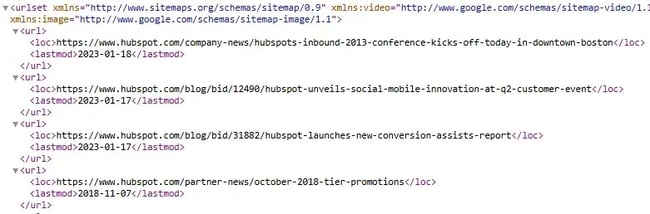
For Google, a single XML sitemap file is limited to 50,000 URLs and a maximum uncompressed file size of 50MB. Exceeding these thresholds requires segmenting the URLs across multiple sitemaps under a unified sitemap index.
A well-structured sitemap provides search engines with an explicit list of the paths a bot should follow, removing guesswork from crawling. It maps the site’s architecture to its destination URLs through:
- the root domain
- categorized subfolders
- formatting rules that define how each URL relates to the site structure
.png)
Complete SEO Starter Pack
An introductory kit to optimize your website for search.
- Increase your organic traffic.
- Plan your keyword strategy.
- Debunk SEO myths.
- Build a blog strategy.
Download Free
All fields are required.
Form not available
Sitemap Formats and Use Cases
Why is sitemap structure important for SEO and AEO?
A precise sitemap structure helps search engines find, crawl, and index essential pages efficiently. And yet, around 15% of websites are missing an XML sitemap altogether, according to SE Ranking’s 2025 data. Because search bots operate on a limited crawl budget, they prioritize which pages to visit, so for e-commerce sites with thousands of products, a well-structured sitemap keeps high-value pages from being overlooked.
Google discovers most well-linked pages on its own, but sitemaps remain the safety net for everything else. Gary Illyes, an analyst at Google, has described a page with zero internal or external links that ranked number one in search, which Google found only through the site’s sitemap. For that reason, SEO and web teams must prioritize sitemaps when optimizing site structure.
Developing a sitemap structure for AEO (Answer Engine Optimization) matters just as much. Generative AI models and answer engines rely on fast extraction of structured data to formulate responses. A clean sitemap feeds verified, authoritative URLs to these systems, which increases the odds of being cited in AI-generated answers. Because ChatGPT’s web search runs on Bing’s index, submitting your sitemap to Bing Webmaster Tools is one practical way to improve AEO visibility.
How to Create a Sitemap Structure that Crawlers and AI Bots Can Read
Building an architecture that serves both traditional crawlers and AI platforms takes a systematic approach. The steps below outline how to structure a sitemap for AEO and conventional SEO.
1. Choose the appropriate sitemap formats.
Websites require different sitemap formats for different audiences.
- An XML sitemap is built explicitly for search engine bots to parse URL data.
- An HTML sitemap is designed for human visitors, providing a clickable directory of site pages that also helps crawlers discover internal links.
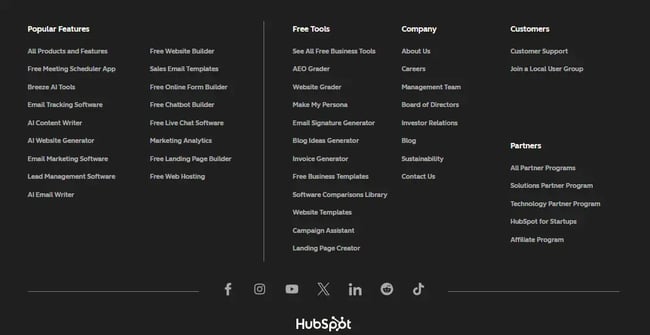
HubSpot’s footer navigation acts as a human-readable directory, giving visitors and crawlers an easy path to key pages.
Pro tip: Maintaining both XML and HTML sitemap formats ensures full crawl coverage. Bots often use the HTML version to find internal links buried deep in the site architecture.
2. Consolidate indexable URLs.
An XML sitemap lists canonical, indexable URLs. Exclude any URL not meant to appear in search results. A strict list of high-value pages keeps search engines from spending crawl budget on utility pages, internal search results, or thin content.
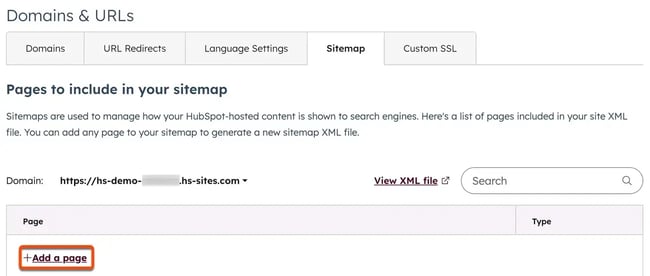
HubSpot’s Content Hub automatically adds live website pages and blog posts to your sitemap, so content teams can publish at scale and trust that those pages are discoverable. Landing pages are the exception and need to be added manually.
3. Format URLs correctly.
An XML sitemap uses absolute URLs. This means the complete web address must be included, starting with the protocol (e.g., https://www.example.com/page/) rather than a relative path (e.g., /page/). Consistency in the protocol (HTTP versus HTTPS) and the use of trailing slashes are mandatory for correct parsing.
Note: Your sitemap should never contain duplicates. Listing both HTTP/HTTPS or trailing slash variations effectively tells Google multiple URLs are canonical. This often leads to “Duplicate without user-selected canonical” in Search Console.
4. Segment sitemaps by media type.
For websites exceeding a few hundred pages, breaking the XML sitemap into smaller, categorized files is essential. Segmenting sitemaps by media type also helps with rich snippets and answer engine visibility: isolating URLs for images, videos, and recent news increases presence in visual search results, video carousels, and Google News.
5. Manage sitemap pages.
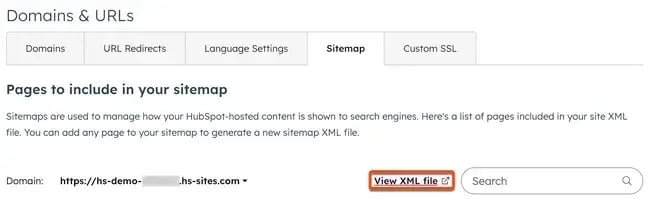
An XML sitemap should list canonical, indexable URLs exclusively. HubSpot’s Content Hub lets content teams review and edit which pages appear in the sitemap directly from the Domains & URLs settings, removing any that shouldn’t be indexed. Additionally, SEO tools in Marketing Hub scan the site for broken links and redirect issues, so a redirecting URL gets caught before it weakens the sitemap.
6. Build the sitemap index file.
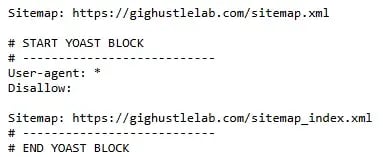
A sitemap index file acts as a table of contents for multiple XML sitemaps. When a site needs to split URLs across multiple files, the sitemap index consolidates them into a single primary link (e.g., sitemap_index.xml) for submission to search engines.
Many content management systems generate and update the sitemap automatically. HubSpot’s Content Hub, for instance, creates and maintains the sitemap as new content is published, eliminating the need to edit the XML by hand. For setups that require a standalone index file, a dedicated sitemap generator can build one.
Pro tip: List the XML sitemap URL in the robots.txt file to improve discoverability. This is because robots.txt is the first file that search engines look for when crawling a site.
7. Validate the sitemap.
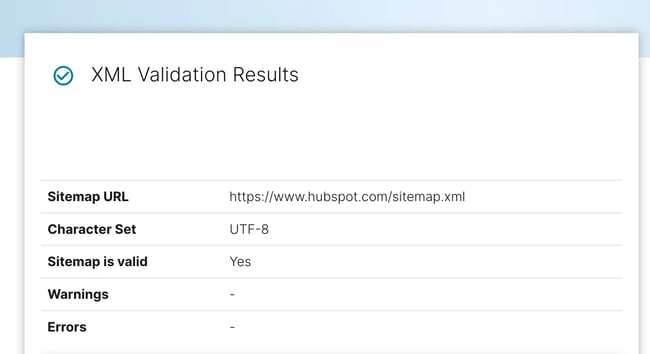
Before submission, test the sitemap syntax to confirm it’s free of broken tags, missing protocols, and formatting errors. Standard XML validation tools check that the structure follows protocol.
8. Submit sitemap to Google.
Submitting the sitemap to Google Search Console immediately alerts search algorithms to the site’s updated architecture. It bypasses the wait for organic discovery and formally requests a crawl. Once submitted, Search Console provides indexing reports that flag rejected URLs and coverage errors.
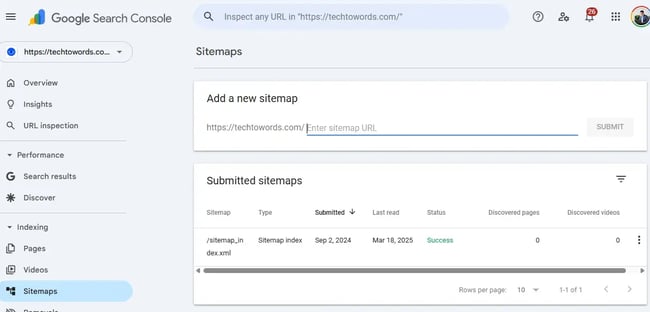
Note: If the site has more than 50,000 URLs or exceeds 50MB, split it into multiple sitemaps and use a sitemap index file.
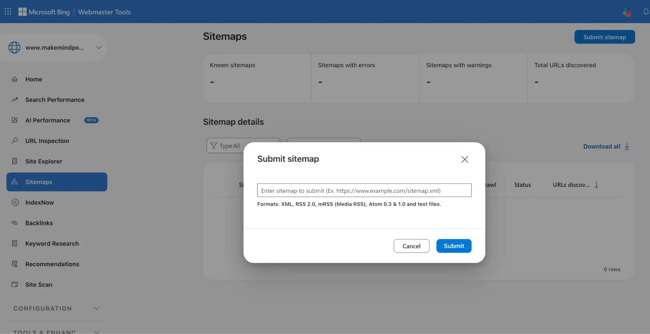
Beyond Google, submit the sitemap to Bing Webmaster Tools as well. This improves the odds that crawlers and answer engines discover the site across both platforms. It also matters for AEO: because ChatGPT’s search runs on Bing’s index, Bing submission is a direct lever for AI visibility.
Sitemap Structure Best Practices That Impact SEO
Applying specific rules to a sitemap gives search engines clear, unambiguous directives.
To help content teams optimize their sitemap structure, I asked Peter Rota, a technical SEO specialist with 15+ years of experience, for his best practices for sitemap optimization.
Align sitemap URLs with canonical tags.
A canonical URL represents the preferred version of a page for indexing. Search engines use this signal to consolidate ranking signals when similar content exists. An XML sitemap URL entry should match the page’s canonical URL. Mismatches between the sitemap and the canonical tag create conflicting signals, often leading to indexation failure.
HubSpot’s Content Hub sets a self-referencing canonical tag on new website pages and blog posts by default, which signals the preferred URL to search engines, while the sitemap lists the primary published version of each page.
To maintain data integrity, Peter recommends ensuring the lastmod date, published date, and JSON-LD schema all reflect the same date as the sitemap entry.
Manage multimedia sitemaps.
Web managers with many images on their sites should create a dedicated image XML sitemap to help search engines discover visual content. Recent documentation changes to a sitemap are worth noting, though.
According to Peter Rota, “Google has deprecated several image sitemap tags, including caption, geo_location, title, and license.”
Google has also deprecated several video sitemap tags: category, player_loc[@allow_embed], player_loc[@autoplay], gallery_loc, price[@all], and tvshow[@all].
Remove redirecting and blocked URLs.
A redirecting URL should be excluded from an XML sitemap. Sitemaps must only contain the final destination page returning a 200 OK status code. Similarly, a blocked URL should be excluded from an XML sitemap. Including URLs blocked by the robots.txt file forces crawlers to hit a dead end, wasting resources and generating errors in Google Search Console.
Purge noindex pages.
A noindex page should be excluded from an XML sitemap. The explicit purpose of an XML sitemap is to request indexation. Including pages tagged with a noindex directive sends conflicting signals to search engines, dilutes the sitemap’s reliability, and triggers Search Console warnings.
Peter Rota recommends avoiding paginated content in sitemaps to prevent the dilution of the crawl budget.
Exclude parameter URLs.
A parameter URL often creates duplicate versions of the same content. These are typically generated by session IDs, sorting filters, or tracking tags (e.g., ?sort=price). Including these in the sitemap bloats the file and forces search engines to crawl identical content multiple times, severely impacting crawl efficiency.
Peter Rota cautioned, “If you are using AI to help generate or manage your XML sitemap, make sure to verify it is actually correct.” That’s because automated scripts may inadvertently include these messy parameters or legacy tags.
Audit the sitemap regularly.
Regularly reviewing your XML sitemap keeps it accurate as the site evolves. Changes such as new pages, redirects, or updated canonical tags can introduce inconsistencies if they aren’t monitored. SEO tools within Marketing Hub help identify outdated, duplicate, or non-indexable URLs.
Don’t overlook the HTML sitemap.
An HTML sitemap provides a visual, clickable directory that reinforces a website’s information architecture. While XML sitemaps deliver raw URL data to search engine crawlers, an HTML sitemap distributes internal link equity across primary categories and sub-pages for human visitors and bots alike.
Frequently Asked Questions About Sitemap Structure
Do all sites need a sitemap?
While search engines can theoretically crawl very small, well-linked websites without one, a sitemap is universally recommended. It aids discovery, especially for isolated pages without internal links, and gives search engines a direct way to learn about updates right away.
How often should I update my XML sitemap?
An XML sitemap should update dynamically the moment new content is published, modified, or deleted. Most modern content management systems, including HubSpot’s Content Hub, automate sitemap updates. Manual sitemaps require updating and resubmission after any structural change to the website.
Should I include noindex or parameter URLs in my sitemap?
No. A parameter URL often creates duplicate versions of the same content, and a noindex page explicitly requests to be excluded from search results. Including either wastes crawl capacity and triggers reporting errors. The sitemap must strictly contain definitive, canonical, and indexable URLs with a 200 OK status.
Where should I host my sitemap and sitemap index?
Host the sitemap and the sitemap index file in the root directory of the website (e.g., https://www.example.com/sitemap.xml). This is the standard location search engine bots check first. The exact location should also be referenced at the bottom of the robots.txt file for seamless discovery.
Do changefreq and priority affect crawling?
The changefreq and priority tags in XML sitemaps are largely ignored by modern search engines like Google. Search algorithms now rely on their own historical crawl data and engagement metrics to determine how frequently a page changes and how important it is relative to the rest of the site.
Strengthen your AEO with a clean sitemap.
Mastering sitemap structure for SEO is a non-negotiable step toward sustained organic growth. By listing only canonical, indexable URLs and keeping the structure free of redirects and duplicates, websites can dramatically improve crawl efficiency.
This same architecture supports both traditional SEO and the rising demands of Answer Engine Optimization. Comprehensive platforms like SEO tools in Marketing Hub help automate and monitor the process, keeping technical SEO clean.
I can’t stress enough how much site optimization matters for AEO and SEO. I once audited a site that wasn’t getting indexed despite having a dozen published articles. The culprit was a missing sitemap. After we submitted one, the pages started ranking, and traffic climbed.
Complete SEO Starter Pack
An introductory kit to optimize your website for search.
- Increase your organic traffic.
- Plan your keyword strategy.
- Debunk SEO myths.
- Build a blog strategy.
Download Free
All fields are required.
Form not available
Technical SEO


![9 HTML SEO Tags That Impact Your Ranking [Cindy Krum's Tips]](https://53.fs1.hubspotusercontent-na1.net/hubfs/53/html-seo-1-20241119-1659249.webp)