
We’ve always been pretty hesitant to jump in head first with event sponsorship and attendance. Sure, there are some industry events we think rock: Dreamforce, SMX, Dublin Web Summit, LeWeb, and of course Inbound. But what usually happens with events? They end up over-hyped and under-delivering, chalk full of poor networking opportunities, generic content, and few opportunities to make meaningful connections with new leads and customers. That means a whole lot of time and money gets wasted. What a bummer.
Wouldn't it be nice, then, to be able to determine whether an event yields enough new business to justify the cost to participate in it? Absolutely. That's why we wanted to outline exactly how to track event ROI accurately so you can determine whether you should keep sending in that sponsorship and/or attendance check year after year. Let's get started.
How to Calculate the ROI of an Event or Trade Show
If you’re going to sponsor an event, the two core components your boss will ask about will be (or at least should be) ROI and tracking. Of course there are additional benefits of events such as thought leadership, networking, learning, branding ... but when there's a hefty sponsorship check involved, there needs to be a measurable, positive ROI that can be tracked.
How to Track Event ROI
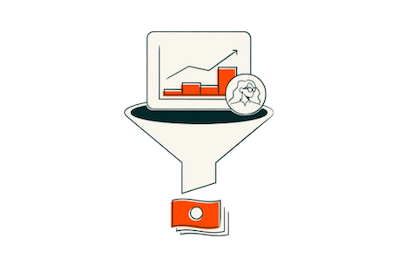
The best way to track ROI is using this formula:
(Gross Profit - Marketing Expenses) / Marketing Expenses
For instance, let's say we went to an event and our expenses were as follows:
So, did we have a positive ROI? At the moment, we wouldn't know, because our sales cycle isn't instantaneous -- it's a few weeks long. As such, it would take a few weeks before we could look back to determine whether the investment was worth it. But when that time comes, this is how we'll calculate it:
ROI = (Gross Profit - $100,000) / $100,000
Note that the gross profit number would consist only of deals that happened due to our attendance at the event, so they would not have happened if HubSpot had chosen not to show up. As long as your gross profit -- which for HubSpot specifically will be measured based on our LTV:CAC performance model -- is higher than your total investment, then you'll post a positive ROI. It will then be up to you to determine if the ROI is enough to justify continued involvement in the future.
How to Track Trade Show Lead Generation and Sales
Now that we know how much we spent on the event, we then need to determine what leads and sales were generated as a result of our participation. The best way for us to track this is to set up a naming convention for all leads generated due to that event. Using a CRM -- we use Salesforce because it integrates with HubSpot for a nice, closed-loop view of our sales and marketing activities -- we would enter every single lead generated at the event (via badge scanning, business cards, or email addresses collected) with an event tag. Because we've tagged them properly -- the tag can just be the name of the event you attended -- we can then set up weekly reports to monitor performance. As the leads begin to turn into new HubSpot customers, we’ll then be able to perform our ROI calculations.
Now, if the event just ended but you have a long sales cycle, it would take a little bit of time to calculate the exact ROI. But you could still run some predictive ROI calculations each month, and wait to perform the final analysis a few months down the road. After that, though, the team that attended the event should meet, review the numbers, and ultimately make a call on whether or not the participation was worth it based on the ROI calculations. Having this post-attendance meeting is essential for your company -- just be sure that the meeting happens after all leads and sales can be accounted for, and have adequately matured.
How do you determine whether your presence at a trade show or event was worth the cost?
Image credit: Images_of_Money


Jonathan Thompson 2:56 PM on September 28, 2012
Just wanted to say thank you. This was a simple and effective right up. I am a fan of revisiting the basics.
Ben Rees 4:22 PM on September 28, 2012
Great post. I just wrote a post about how we do this calculation at our company, Red Gate:
http://focusproductmarketing.com/2012/08/24/marketing-attribution/
- many think that it's impossible to calculate an ROI on trade shows, but I just don't agree with this. Sure you might say that "there will be deals that come through in a year's time, where this trade show influenced that deal", but you still need to be able to say "The trade show cost $100k, we made $150k, so that's good - or vice-versa". One thing you've perhaps missed out is the time and effort putting trade shows together back in the office - staff costs on trade shows should also, ideally be factored in and can be significant.
Jorge Franco 4:42 PM on September 28, 2012
Great post! It's been a pain for sales forces to say whether or not is worth to attend such trade shows. Thanks.
Mary Honan 6:34 PM on September 28, 2012
huge believer in effectively planning for an event and then scheduling what we call "post mortems" to review AND document the ROI as no one remembers from year to year. Thanks for posting.
Jean Martin 9:21 AM on September 29, 2012
Great article indeed but in calculating the ROI, I would prefer to use net earnings instead of gross profit. I feel this would provide a better picture of what the return is as many costs remains to be removed from gross profits and it over estimate the actual return. But I understand the principal being to determine if the event generated a loss or enough contribution to at least cover the expenses.
Tom Schwab 3:57 PM on September 29, 2012
Too often we try to justify trade shows with soft answers like we had a lot of good discussion, it helped our brand or we had to because all of the competitors were there. For a small business there is also a major Opportunity Cost: What else could we have been doing instead of traveling and attending the event.
When we actually did the hard calculations a few years ago we found we couldn't afford to attend the trade shows. Reviewing the previous 2 years, all shows had a negative ROI (excluding opportunity cost). Instead of wasting resources there we now focus on avenues that show the greatest ROI...and hope our competitors keeps funding the trade shows.
Ally Pelle 7:57 PM on September 30, 2012
This is super helpful. Most of the small business owners I speak to need resources like these, as simple as a formula, to help them calculate ROI and make smarter marketing decisions and investments. Templates, formulas and guides like these help these owners better understand their ROI and decide whether or not the leads and sales generated make sense.
Deborah Anderson 1:45 AM on October 01, 2012
Great article. While the ROI math, itself, may seem readily apparent, the process of using tools to help calculate the subsequent sales is very helpful.
Rick Roberge 9:23 AM on October 02, 2012
You showed how simple it is to calculate the ROI of a trade show. Great! However, the first mistake that companies make is not forecasting the ROI of the trade show. How many leads, introductions, business cards, demos at the tables, yada, yada, yada. You can't control the ROI unless you control the behavior that begins the path to the ROI.
True?