
For years, marketers have focused on appearing at the top of a search engine results page. While many customers still rely on traditional search, nearly 60% of Google queries end in zero clicks. More buyers are using answer engines like ChatGPT and Gemini to make purchasing decisions. Answer engine optimization allows brands to get found in these channels. ![Free AEO Grader: See Your Brand's Visibility in Answer Engines [Free Tool]](https://no-cache.hubspot.com/cta/default/53/d4233c10-60b6-46d7-9852-c71dde8507b6.png)
AEO allows products to appear frequently and accurately in AI-generated answers across ChatGPT, Gemini, and Perplexity. Some customers click on linked sources. Others remember products (especially when they appear regularly) when the time comes to buy.
But, AEO is not a replacement for SEO. In fact, many answer engines pull from content that already ranks well organically. Marketing Hub provides tools at the professional and enterprise levels. Here’s everything teams need to know about AEO.
Table of Contents
- What is answer engine optimization?
- AEO and SEO — Key Differences
- AEO and GEO — How Marketers Use Each Term
- AEO Tactics That Get You Cited
- Which answer engines should you optimize for?
- How to Build an AEO Plan That Works
- How to Measure and Report on AEO Success
- Frequently Asked Questions
What is answer engine optimization?
Answer Engine Optimization (AEO) is the practice of improving how often and accurately a brand appears in AI-generated answers. Citations and mentions build awareness so buyers know the brand when it’s time to make a purchase. Teams can improve AEO by creating content that gets cited in AI answer engines like ChatGPT, Perplexity, and Gemini.
A lot of what makes good SEO also makes good AEO, like well-structured content that answers real questions. Both require that brands be crystal clear about who they are, what they do, and how they connect to other entities in their industry. But, to improve AEO, teams need to think about how answer engines consume, understand, and cite information. Meaning some new considerations come into play.
Looking for a snapshot of how offerings appear in answer engines? HubSpot’s AEO Grader shows brands how they rank today.
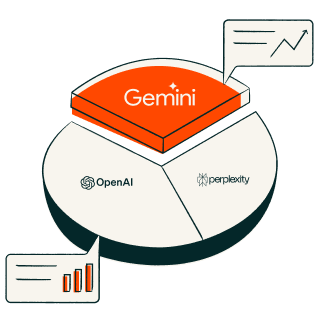
AEO Grader
Learn how leading answer engines like ChatGPT, Perplexity, and Gemini interpret your brand.
- Understand your competitive landscape
- Discover your brand perception in AI results
- Maximize performance with data-driven insights
- And more!
AEO and SEO — Key Differences
Remember: AEO isn’t here to replace SEO. They work together. While traditional SEO focuses on achieving high rankings in search engine results, AEO focuses on being the answer that answer engines pull from. The goal shifts from “get people to click” to “become the authoritative source that answer engines trust and reference.”
Marketing Hub includes both AEO and SEO tools. Professional and Enterprise teams can review suggestions for both in one HubSpot interface.
Below, we’ll discuss what makes each discipline unique.
What Matters Most for SEO
SEO is built on keywords, rankings, and architecture. Teams are thinking about search volume and keyword difficulty. The goal is to get pages to rank for the Google searches potential customers have.
SEO content covers a topic thoroughly — with pillar pages, topic clusters, and a clean site architecture that search engines can understand. That foundation helps teams appear in search results pages and offers AEO benefits.
What Matters Most for AEO
AEO shifts the question from “what keywords should we rank for” to “what would someone ask ChatGPT about this topic?” Answer engines prefer content that is direct. Posts clearly answer common questions under headings. Entity clarity matters too — the clearer a brand is about their offerings, the more confidently an answer engine can cite it.
Fewer posts are titled “10 tips for better email marketing.” More lead with questions, like “How do I improve my email open rates?”
Schema also plays a big role in AEO: FAQ, How-To, and Article schema give answer engines explicit signals about the information on a page.
When measuring, AEO teams look at how frequently their brand is mentioned and cited in AI, as well as the queries users search before a brand gets mentioned. HubSpot AEO can help marketers track these metrics and see where they need to improve.
The Priority Framework
For teams juggling both SEO and AEO, here’s a simple prioritization framework:
- Nail your core SEO first — content clusters, site structure, keyword targeting
- Map questions and create answer-focused content — especially for topics where AI is already answering questions
- Add schema and entity optimization — the technical polish that makes your content more citable
Think of it like building a house. You wouldn’t install smart home tech before you’ve framed the walls. The same logic applies here. Build your foundation first, then the AI-friendly upgrades.
AEO and GEO — How Marketers Use Each Term
Answer engine optimization is an emerging discipline and goes by many names in the industry. Marketers may use the term generative engine optimization (GEO). Some industry experts use GEO to refer to how AI generates responses based on prompts, and use AEO as a broader umbrella term. Here at HubSpot, we use AEO to describe all motions used to improve citations and mentions in answer engines.
AEO Tactics That Get You Cited
Structure content around questions, not just topics
AEO content should focus on answering user questions — the type that customers ask ChatGPT and Gemini to learn more about products. These questions can stretch beyond traditional keywords. Marketers will need to make content that captures queries specific to buyers’ company sizes, industries, and ideal customer personas.
Then, content writers need to answer questions quickly. Answer engines annex answers at the top of each section. Important information should not be buried or require scrolling to find. Use the question itself as an H2 or H3 header. Then, follow it immediately with a clear answer, and expand with context, examples, and supporting detail.
Implement schema markup across your content
Schema markup is the technical layer that helps answer engines understand not just what content says, but how it’s organized. Common schema types include:
- FAQ schema for content that answers common questions.
- How-To schema for process-driven or tutorial content.
- And Article schema, which gives context of long-form posts.
Strengthen your entity signals
Entity signals are the collection of consistent, credible information across a brand’s web presence. That information tells answer engines who a brand is, what it does, and how it connects to a given industry.
About pages, author bios, consistent contact information, and the quality of sites that link to a brand all improve that credibility. The clearer and more consistent a brand is mentioned across the internet, the more confidently an answer engine can be when referencing the brand.
Map and track the prompts that matter to the business
Marketers can’t improve AEO visibility if they don’t know which prompts potential buyers are asking. Prompt mapping involves identifying the specific questions audiences ask ChatGPT, Gemini, or Perplexity at different stages of their journey. That includes broad awareness questions to specific comparison prompts.
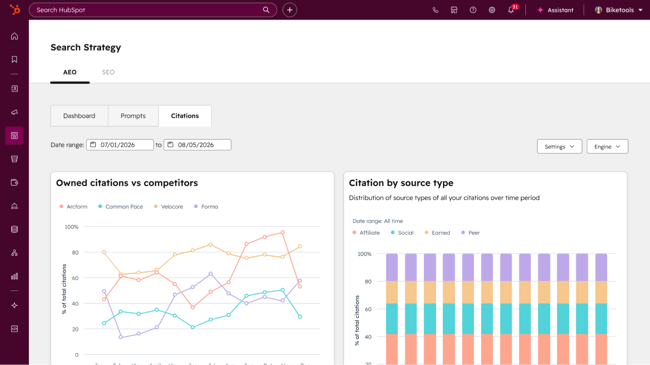
Once teams know which prompts matter, they can track citation rate on each one. From there, marketers see where competitors are showing up instead of their brand and can create content to fill the gaps. HubSpot AEO offers prompt tracking so teams can see which queries earn their brand citations and mentions in answer engines.
Which answer engines should you optimize for?
AEO provides an essential complement to traditional SEO, especially in a world where people are using answer engines to research products. Teams need to optimize for multiple answer engines. The good news? A lot of the optimization work overlaps.
However, teams need to understand what each major answer engine tends to favor to prioritize their efforts. Let‘s break down the big players and what each answer engine looks for.
ChatGPT (OpenAI)
What It Is: ChatGPT has become many users’ go-to answer engine. People can use the chat interface to look for information. The platform also has search functionality that browses the web in real-time and cites sources in conversational responses.
What It Favors: ChatGPT looks for credible, authoritative sources with clear entity signals. It tends to cite content that directly answers questions, comes from recognizable brands or domains, and includes proper attribution (citing other sources strengthens your own credibility).
Quick Checklist:
- Build strong entity alignment with clear about pages, author bios, and consistent branding
- Create content with direct, quotable answers to common questions
- Cite your own sources; showing you reference credible information builds trust
Google Gemini
What It Is: Google’s AI model powering AI Overviews — the AI-generated summaries that appear at the top of Google search results — as well as the standalone Gemini assistant.
What It Favors: Gemini pulls heavily from pages that already perform well organically, typically within the top 20 results for a given query. Google prioritizes authoritative, well-structured content with clear, extractable answers.
Quick Checklist:
- Ensure your target pages rank in the top 20 for relevant queries
- Use clear headers and concise answers that can be easily extracted
- Implement schema markup (especially FAQ and How-To schema)
Perplexity
What It Is: An answer engine that provides synthesized answers with inline citations, kind of like a research assistant.
What It Favors: Perplexity loves well-researched, comprehensive content that brings together multiple perspectives. It frequently cites academic sources, data-driven content, and articles that themselves include citations and sources. If your content looks like it was written by someone who did their homework, Perplexity is more likely to cite it.
Quick Checklist:
- Write well-researched, data-backed content (include stats, studies, examples)
- Use inline citations and link to credible sources within your content
- Structure information in clear, scannable sections with subheadings
Copilot
What It Is: Microsoft’s AI assistant built into Bing, Edge, and Windows, powered by GPT-4.
What It Favors: Copilot tends to handle navigational and transactional queries well. It pulls from Bing’s search index and favors content that clearly states what a product or service does, includes pricing or comparison information, and has strong brand signals.
Quick Checklist:
- Optimize for navigational and product-focused queries in your space
- Include clear product descriptions, features, and pricing where relevant
- Ensure your brand entity is well-established (consistent NAP, strong backlinks)
How to Build an AEO Plan That Works
Adding AEO to workflows takes some upfront effort, but the good news is marketers don’t need to overhaul everything overnight. Teams should start small, test what works, and scale from there. That means auditing where teams appear in answer engines, finding the gaps, and creating content to fill them.
Here’s a step-by-step plan you can actually run with your team, from discovery to publishing to measuring what’s working.
Step 1: Audit where you already show up (or don’t)
Before creating new content, figure out how the brand currently appears in answer engines. Test queries related to the business in ChatGPT, Perplexity, and Gemini. See if the company’s offerings appear in AI Overviews on Google. Where does the brand get cited? Where do competitors show up instead? Are answer engines pulling from outdated or inaccurate sources?
This audit gives teams a baseline and helps identify quick wins — like topics where there’s great content that’s not getting cited. Teams can use HubSpot AEO to see which prompts lead to citations. Looking for a free overview of performance? HubSpot AEO Grader offers a free, high-level snapshot.
Action Items:
- Create a list of 10-20 core questions your audience asks
- Test each question across Google AI Overviews, ChatGPT, and Perplexity
- Document which answer engines cite you (or don‘t) and what sources they’re pulling from instead
- Identify patterns. Ask: Are certain topics getting more AI coverage? Are competitors dominating specific question types?
Step 2: Map questions to your content clusters
Now that the team knows what answer engines are answering, they can map those questions back to the existing content strategy. Look at topic clusters and pillar pages. For each cluster, brainstorm the questions someone might ask an AI system at different stages (awareness, consideration, decision) of their journey.
For example, if you have a content cluster around email marketing, your questions might include:
- “What is email marketing?” (awareness)
- “How do I improve my email open rates?” (consideration)
- “What’s the best email marketing software for small businesses?” (decision)
The goal here is to create a question map that aligns with your existing content architecture. Instead of starting from scratch, you’re identifying which questions your current content answers (or should answer).
Action Items:
- For each major content cluster, list 5-10 questions your audience would ask AI
- Note which questions you already have content for and which are gaps
- Prioritize questions based on search volume, business relevance, and AI coverage (are answer engines already serving responses?)
- Create a content roadmap that fills gaps and strengthens existing answers
Step 3: Optimize or create answer-focused content
Teams can either create new content designed to be cited or optimize existing content. When creating content with answer engines in mind, consider the following:
- Clear, direct answers up front. Don’t bury the lede. Content should answer questions in the first paragraph. Answer engines pull from content that gets to the point quickly.
- Structured, scannable formatting. Use headers, bullet points, and short paragraphs. Break complex information into digestible chunks. Answer engines extract information more easily from well-organized content.
- Question-as-header formatting. Consider using the actual question as H2 or H3 headers, followed by a concise answer. This format makes it incredibly easy for answer engines to identify and extract the relevant answer.
- Include context and credibility signals. Don’t just state facts, back them up. Include data, cite sources, and reference studies. This builds trust with answer engines and makes content more citation-worthy.
Action Items:
- Start with 3-5 high-priority questions from your map
- Write or update content using the question-as-header format
- Ensure each answer is clear, concise, and appears early in the section
- Add supporting data, examples, or citations to strengthen credibility
- Keep paragraphs short and use formatting that’s easy to scan
Step 4: Add schema markup and entity signals
Once content is written (or rewritten), it’s time to add the technical layer that helps AI understand it. Add FAQ schema for question-and-answer sections. Use How-To schema for tutorials and step-by-step guides. Apply Article schema to blog posts. This structured data gives answer engines clear signals about what information the brand is providing.
Make sure brand entities are crystal clear across your site. Make sure to:
- Keep your NAP (Name, Address, Phone) consistent everywhere.
- Have a robust About page that explains who the company is and what it does.
- Include detailed author bios for content creators.
- Build authoritative backlinks from credible sources in the industry.
Action Items:
- Add FAQ schema to Q&A content
- Implement How-To schema on tutorials or process-driven posts
- Apply Article schema to blog posts and long-form content
- Audit your About page, author bios, and NAP consistency
- If entities are weak, create a plan to strengthen them over time (this isn’t a quick fix)
Step 5: Publish, promote, and let answer engines discover your content
The team has created great content and added the technical polish. Now marketers need to make sure answer engines actually find it. Here’s how:
- Get it indexed. Submit new or updated pages to Google Search Console. This speeds up the crawling and indexing process so AI Overviews can start pulling from content sooner.
- Promote the content. Share content on social media, in newsletters, and anywhere audiences hang out. The more signals of engagement and authority content has, the more likely answer engines are to trust and cite it.
- Build links. Quality backlinks still matter. They signal to answer engines that content is credible and authoritative. Reach out to industry publications, guest post on relevant sites, and look for natural link-building opportunities.
Action Items:
- Submit new/updated URLs to Google Search Console
- Share content across your owned channels (social, email, Slack communities)
- Identify 2-3 link-building opportunities for high-priority content
- Monitor crawl and indexing status to ensure answer engines can access your pages
Step 6: Measure what’s working (and what’s not)
When measuring AEO, teams can either test manually or use software like HubSpot AEO to report on performance. When testing manually, teams search target questions in different answer engines and see if the brand gets cited. Results are tracked in a spreadsheet and updated monthly (or weekly) to track changes.
Teams may also track branded search volume in Google Search Console and watch for changes in direct traffic patterns. If answer engines are citing a brand without linking directly to the site (hello, zero-click reality), marketers might see an uptick in branded searches or direct traffic.
Additionally, more tools are appearing on the market to measure answer engine visibility. HubSpot AEO is one offering teams can use to easily see citations and mentions for key prompts. Most tools, including HubSpot, score AEO performance and offer suggestions for improvement.
Action Items:
- Set up a monthly check-in to manually test priority questions in top answer engines
- Track branded search volume and direct traffic trends over time
- Monitor engagement metrics (time on page, pages per session, conversions) for AEO-optimized content
- If budget allows, test AEO-specific tracking tools
Step 7: Iterate and Scale
AEO isn‘t a one-and-done project. It’s an ongoing optimization strategy that evolves as answer engines change and your content library grows. Start with a small pilot of 5-10 high-priority questions. Test the process, see what works, and learn what doesn’t. After validating the approach, scale it across more topics and content clusters.
And remember: Answer engines are constantly evolving. What works today might shift tomorrow. Stay curious, keep testing, and adapt strategy as the landscape changes.
Action Items:
- Review your AEO performance monthly and identify what’s working
- Double down on content types and question formats that get cited most often
- Gradually expand your AEO efforts to additional content clusters
- Stay informed on AI system updates and adjust your strategy accordingly
How to Measure and Report on AEO Success
1. AI Citation Frequency
AI citation frequency is how often answer engines cite or reference content when answering relevant questions. HubSpot AEO can be used to track citations in important queries.
How to Track It: Create a list of priority questions (the ones the team has optimized content for) and test them monthly across target answer engines. Document whether content is cited, how it’s cited (direct quote, paraphrased summary, link), and where it appears in the response (primary source, supporting source, or buried in the footnotes).
Yes, it’s tedious. But it’s also the most direct way to measure whether your AEO efforts are working.
What Good Looks Like: The team sees an increase in citations month-over-month, especially in priority answer engines. Bonus points if the brand moves from “not cited at all” to “secondary source” to “primary citation” over time.
2. Share of Voice in AI Responses
Share of voice refers to how often a brand is cited compared to competitors when answer engines reply to prompts.
How to Track It: Take the list of priority questions and note which sources answer engines are citing. Calculate the brand’s share of voice by dividing the number of times the brand cited by the total number of citations across all sources.
For example, if ChatGPT answers 10 questions about email marketing and cites you 4 times, a competitor 3 times, and other sources 3 times, your share of voice is 40%.
What Good Looks Like: The brand’s share of voice is increasing over time, and it’s being cited as often (or more often) than key competitors. In crowded industries, even a 20-30% share of voice is a win.
3. Branded Search Volume
Branded search volume is the number of people searching for a brand name specifically, which can indicate increased awareness from AI citations.
How to Track It: Use Google Search Console to monitor branded search queries. Look for upward trends that correlate with AEO efforts, especially if the brand gets cited in answer engines that don’t always link back to the site.
When someone sees the brand name in a ChatGPT response or Perplexity citation, they might not click through immediately. But later, when they need a solution, they remember and search for the brand directly.
What Good Looks Like: Branded search volume increases over time, particularly after marketers start getting consistent citations in AI responses. Watch for spikes that align with specific AEO wins (like landing a primary citation in a high-traffic AI Overview).
4. Direct Traffic Growth
Direct traffic growth refers to visitors who come to a site by typing the URL directly or through bookmarks, often driven by brand recognition from AI citations.
How to Track It: Monitor direct traffic in Google Analytics (or whatever analytics platform the team uses). Look for sustained growth or unusual spikes that can’t be explained by campaigns or other marketing efforts. If answer engines are mentioning a brand but not always linking to it, direct traffic is one of the ways people find it afterward.
What Good Looks Like: Direct traffic grows steadily as answer engine visibility increases. Marketers might also see a shift in the quality of direct traffic, such as users who arrive directly from brand recognition tend to be more engaged and further along in their buyer journey.
5. Referral Traffic from Answer Engines (When Available)
Referral traffic refers to direct clicks from answer engines that do provide links, such as Perplexity, ChatGPT Search, or Google AI Overviews.
How to Track It: Check analytics referral traffic for sources like Perplexity, ChatGPT, and Gemini. Not all answer engines link back, but the ones that do can drive highly qualified traffic.
What Good Looks Like: Teams seeing consistent (even if small) referral traffic from answer engines, and those visitors engage well with the content. As AI search adoption grows, this metric will become increasingly important.
Frequently Asked Questions
How long does AEO take to show results?
Plan for three to six months to see meaningful results from AEO efforts. Answer engines need time to crawl, index, and begin citing optimized content. Building authority signals that don’t happen overnight. That said, teams might see early wins within four to six weeks for low-competition questions or if marketers are optimizing content that already ranks well organically.
Which schema types help most for AEO?
FAQ schema, How-To schema, and Article schema are the heavy hitters for AEO. FAQ schema is particularly effective because it directly maps questions to answers in a format answer engines love to extract. The How-To schema works well for process-driven content, and the Article schema helps AI understand the structure and context of long-form content.
How do I track AEO across different AI engines?
The most reliable method is manual testing. Create a spreadsheet with priority questions and check them monthly across Gemini, ChatGPT, and Perplexity. Log when and how the brand is cited. Teams can also use a tool like HubSpot AEO to track citations and mentions.
Does AEO replace SEO?
No, AEO complements SEO rather than replacing it. Many answer engines pull from content that already ranks well organically, so strong SEO fundamentals are actually a prerequisite for AEO success. Think of AEO as an evolution of SEO that optimizes for how answer engines consume and cite information, not a completely separate strategy.
How do I get leadership buy-in for AEO?
Lead with the risk of inaction. Show leadership examples of competitors or industry leaders being cited in AI responses. At the same time, if the brand is absent, tie it to business metrics they care about, such as branded search growth and market authority.
Frame AEO as a natural extension of existing SEO and content efforts rather than a net-new initiative, and start with a small pilot program to demonstrate ROI before asking for significant resources.
Start Building Your AEO Presence Now
The marketers who built SEO programs early didn’t do it all at once either. They started, stayed consistent, and compounded their advantage over time. AEO rewards the same approach. The brands showing up in AI answers today are building recognition that will be harder to displace as answer engine adoption grows.
Your buyers are already asking. Make sure you’re the answer.
HubSpot's AEO Grader
See how visible your brand is in AI-powered search engines.
- Analyze your brand for today’s AI search engines.
- Maximize your AI search performance.
- Assess your brand’s visibility and presence.
- Learn how you compare to competitors.
Aeo


![How HubSpot became the #1 CRM in AI search [A case study]](https://53.fs1.hubspotusercontent-na1.net/hubfs/53/How-HubSpot-became-the-%231-CRM-in-AI-search.png)