
Getting found online is harder than ever. Search results are more competitive, and users often find what they need without ever visiting a website. In such a tough landscape, marketers need to master SEO so their offerings actually rank.
![→ Download Now: SEO Starter Pack [Free Kit]](https://no-cache.hubspot.com/cta/default/53/1d7211ac-7b1b-4405-b940-54b8acedb26e.png)
For many businesses, this creates a major challenge: Even high-quality content can go unseen if it isn’t optimized for how search engines surface information. That’s why more marketers are rethinking their approach. According to HubSpot’s 2026 State of Marketing report, 40.6% of marketers plan to update their SEO strategy this year for changes in search.
SEO improves organic search visibility and helps brands appear in the moments that matter most. This article covers how SEO works, why it’s important, and best practices from experts.
Table of Contents
- 10 SEO Best Practices From Selected Industry Specialists
- What is SEO?
- How does SEO work?
- Three Core Components of a Strong SEO Strategy
- Types of SEO: On-Page, Off-Page, and Technical
- What’s the importance of SEO in 2026?
- How do search engines know how to rank a page?
- How long does SEO take to work?
- How to Monitor & Track SEO Results
- Should you outsource SEO or keep it in-house?
- Frequently Asked Questions About SEO
- SEO Resources and Training
What is SEO?
SEO stands for search engine optimization. It is the process of improving a website so it appears higher in search engine results when people look for topics related to a business. To improve their ranking, marketers create content that’s easy for search engines to understand and useful for users. Top results show up in search engine results pages (SERPs) for relevant queries.
The goal of SEO is to expand a company’s visibility in organic (non-paid) search results. When a site ranks higher, more people can find it. That leads to more visitors, customers, and revenue.
The three types of SEO are on-page SEO, off-page SEO, and technical SEO. For the best results, marketers and SEO professionals employ all three in tandem. The result is strong content that is easy for search engines to crawl, index, and rank.
- On-page SEO focuses on improving the content and elements on a website.
- Off-page SEO focuses on building a website’s credibility and authority through external signals.
- Technical SEO focuses on how a website is built and performs.
.png)
Complete SEO Starter Pack
An introductory kit to optimize your website for search.
- Increase your organic traffic.
- Plan your keyword strategy.
- Debunk SEO myths.
- Build a blog strategy.
Download Free
All fields are required.
Form not available
How does SEO work?
SEO works by improving a website so search engines can find, understand, and trust its content. Best practices include optimizing content, researching the keywords people are searching for, and earning links from other websites to build credibility. While some changes can have an impact once a page is crawled and indexed, SEO typically takes time — often months — to fully show results.
At a high level, SEO aligns websites with how search engines operate. Search engines perform three main activities:
- Search engines crawl web pages, meaning they scan the internet using bots to discover new and updated web pages.
- Search engines index discovered pages, which consists of storing and organizing the content they find so it can be retrieved later.
- Search engines rank indexed pages based on relevance and quality, deciding which pages to show first based on how helpful they are for a user’s search.
Two key goals of SEO are rankings and visibility.
Rankings
Rankings refer to where a specific page appears in search engine results for a given query. Positions typically start at the top of the page (including featured results) and continue downward, with each page occupying one position at a time. Rankings can change due to competition, content updates, and search engine algorithm changes.
While rankings are still an important part of SEO, they are no longer the only measure of success. With the rise of AI-powered search features and answer engines, users may get what they need without clicking on a traditional result.
Visibility
Visibility describes how often and how prominently a website appears in search results across many queries. A site with low visibility rarely appears for relevant searches. Meanwhile, a site with high visibility shows up frequently and in prominent positions.
Visibility has become especially important in today’s search landscape, where zero-click searches and AI-generated answers can reduce the need for users to visit a website. Even if users don’t click, appearing in featured snippets, knowledge panels, or AI answers can still build brand awareness and authority.
Together, rankings and visibility help achieve the core goals of SEO: driving relevant traffic and building long-term authority for the website.
Pro tip: Good SEO can also ensure better visibility in AI search. Learn more about answer engine optimization (AEO) and how it’s changing SEO. Teams can also see how their website is currently showing up in Marketing Hub Enterprise and Pro's AEO features.
HubSpot AEO is also available for teams that don't have a Marketing Hub subscription. Teams can track how they show up in AI across prompts, starting with a free tier and expanding to $50 a month.
Want a quick, free overview? Try AEO Grader.
Three Core Components of a Strong SEO Strategy
A strong SEO strategy ensures marketers’ efforts are focused, consistent, and aligned with how search engines actually work. Rather than relying on isolated tactics, a well-rounded approach helps a brand build a credible website that can be discovered. By combining technical setup, high-quality content, and a solid link strategy, marketers create a system that drives sustainable, long-term growth.
Technical Setup
Technical setup is the foundation of an entire SEO strategy. It ensures that search engines can efficiently crawl, index, and understand a website. If a site has broken links, slow load times, poor mobile usability, or confusing structure, even the best content may struggle to rank. A strong technical setup removes these barriers so search engines can evaluate a website’s pages properly.
When technical SEO is solid, marketers help search engines to process a site and offer users a smooth, frustration-free experience. Technical SEO components include:
- Optimizing site speed.
- Ensuring mobile-friendliness.
- Using secure connections (HTTPS).
- Creating a clean, logical site architecture. I
- XML sitemaps.
- robots.txt files.
- And structured data.
Content
Content is at the heart of SEO because it’s what users are actually searching for. Content can take many forms — including blog posts, videos, product pages, and listings. Search engines evaluate all content types when determining what to surface in results. High-quality content answers questions and provides value in a way that matches search intent.
Effective SEO content starts with keyword research to understand what the target audience is looking for. From there, effective pages go beyond keywords by delivering clear, helpful, and well-structured information.
Strong content also signals relevance and expertise to search engines. Marketers can rank by using clear headings, writing in-depth but easy-to-read explanations, and keeping information accurate. The more useful and trustworthy a site’s content is, the more likely it is to rank well and satisfy users once they land on the site.
Search engines analyze content to understand a page’s topic, structure, and depth, then match it to relevant queries. While depth is important, length alone is not a ranking factor. The goal is to fully address a topic without adding unnecessary or repetitive information.
Links
While content establishes relevance, links help search engines evaluate authority. Links help search engines determine how trustworthy a website is. When other reputable websites link to a site’s content (known as backlinks), they act as signals that the site is credible and worth ranking.
The quality of links matters far more than the quantity. Links from well-established, relevant sites carry significantly more weight. Search engines evaluate links based on the authority of the linking site and topical relevance.
In addition to external backlinks, internal linking also plays an important role. Linking between a site’s own pages helps search engines understand the site structure and discover more content. Internal links also guide users to related information, keeping them engaged longer. A strong link strategy — both internal and external — strengthens overall SEO performance.
HubSpot’s SEO Marketing Software provides SEO recommendations to optimize a site, plus helps marketers build an SEO strategy specific to their brand and website.
Featured Resource: The Complete SEO Starter Pack
Types of SEO: On-Page, Off-Page, and Technical
Each type of SEO plays a role in helping a website succeed in search: On-page SEO ensures content is relevant and well-optimized, Off-page SEO builds authority and trust, and technical SEO makes sure the site is accessible and performs well. Together, they form a complete approach that helps search engines discover and rank content effectively.
Pro tip: Savvy marketers think beyond traditional search. HubSpot’s AEO tool gives marketers a clear view of how their brand is showing up across every major answer engine — including AI platforms. With a comprehensive view, teams can build a strategy for improving their visibility and the tools to implement that strategy.
On-Page SEO
On-page SEO focuses on optimizing the content and elements directly on a website. This type of SEO plays a major role in user experience by making content clear and easy to navigate. Strong on-page SEO ensures that each page is aligned with search intent, structured properly, and optimized to rank for the right queries.
Search engines rely on context — not just exact keywords — to understand information. Marketers should use related terms and overall topic coverage to improve relevance. The most important factors of on-page SEO include:
- Title tags. The title tag is the clickable headline that appears in search engine results. It should clearly describe the page’s content and include the primary keyword. Well-written title tags improve both rankings and click-through rates.
- Headings. Headings (H1, H2, H3, etc.) structure content and make it easier for both users and search engines to understand. The H1 should define the main topic of the page, while subheadings break content into logical sections. Headings often include related keywords.
- Internal links. Internal links connect pages within the same website. They help search engines discover new content, understand site structure, and pass authority between pages.
- Alt text. Alt text (alternative text) describes images for search engines and screen readers. It helps improve accessibility and gives search engines more context about the page’s content. Including relevant keywords where appropriate can also support rankings in image search.
- Search-intent driven content. Content should match the reason behind a user’s search. Aligning content with intent increases the chances of ranking and ensures users find the information they need.
- Meta descriptions. Meta descriptions are short summaries that appear below the title in search results. While they are not a direct ranking factor, they influence whether users click on a result. A clear, compelling description can improve click-through rates.
- Keyword optimization. This involves naturally incorporating primary and secondary keywords throughout the page. Keywords should appear in headings, body text, and metadata. Proper use helps search engines understand relevance without overloading the content.
- Content quality and freshness. High-quality content should be accurate, helpful, and up-to-date. Search engines favor content that demonstrates expertise and provides real value. Regularly updating content can also help maintain or improve rankings over time.
Off-Page SEO
Off-page SEO focuses on actions taken outside of a website that improve its authority and visibility in search engines. While on-page and technical SEO help search engines understand content, off-page SEO helps prove that the content is tworth ranking. These external signals act as endorsements, showing search engines that others recognize a site as valuable.
The most important factors of off-page SEO include:
- Backlinks. Backlinks are links from other websites pointing to a brand’s content. They are one of the strongest ranking factors because they signal authority and trust. High-quality backlinks from reputable sites carry more weight than a large number of low-quality links.
- Brand mentions. Brand mentions occur when a business is referenced online, even without a direct link. Search engines (especially answer engines) use these mentions as signals of credibility and awareness, helping reinforce a brand’s authority in a given topic or industry.
- Reviews. Online reviews — especially on platforms like Google and other industry-specific directories — help build trust with both users and search engines. Positive reviews can improve local rankings and influence a potential customer’s decision to buy.
- Local citations. Local citations are mentions of a business’s name, address, and phone number (NAP) across directories and websites. Accurate citations help search engines verify business information and improve visibility in local search results.
- Digital public relations. Digital PR involves earning media coverage and press for a business. Brands win these mentions when they’re featured in articles, contribute expert insights, or launch campaigns that attract attention.
- Social signals. While not a direct ranking factor, engagement on social media — such as shares, likes, and comments — can increase content visibility and drive traffic. Exposure can lead to more backlinks and brand recognition over time.
- Influencer and partnership signals. Collaborating with influencers, creators, or industry partners can expand a brand’s reach. Partnerships generate high-quality mentions and links. That signals credibility and introduces a brand to new audiences.
Technical SEO
Technical SEO focuses on crawlability and site performance. Crawlability makes sure that Google can scan and index a website. Without strong crawlability, even high-quality content may never be discovered. Site performance refers to how fast, stable, and user-friendly a website is — especially across different devices. Strong performance signals to search engines that the site is high quality and worth ranking.
The most important factors of technical SEO for crawlability include:
- Website navigation and links. Search engines crawl sites by following links. Crawlers land on a page and use internal links to discover and analyze other content. A clear navigation structure and strong internal linking help search engines understand how pages relate to one another.
- URLs. URLs should be short, descriptive, and include the main keyword when possible. Clean URLs are easier for users to read and help search engines better understand the page topic.
- Dead links or broken redirects. A dead link sends a visitor to a nonexistent page. A broken redirect points to a resource that might no longer be there. Both provide a poor user experience and also prevent search engines from indexing the content.
- XML sitemap and robots.txt files. A sitemap is a file that lists all the important URLs on a site, helping search engines identify what to crawl. A robots.txt file tells search engines which pages or sections should not be crawled. Together, they help guide search engines.
- Duplicate content. Pages with identical or very similar content can confuse search engines, making it difficult to determine which version to rank. While not always penalized, excessive duplication can hurt performance.
- Schema. Schema (or structured data) is a type of code added to a website that helps search engines better understand the content on a page. It provides additional context — such as whether a page is a product, article, review, or event. When implemented correctly, schema can enable rich results, making listings more informative and increasing the chances of attracting clicks.
The most important factors of technical SEO for site performance include:
- Page speed. Search engines use the load time — the time it takes for a user to be able to read the page — as an indicator of quality. Many elements can affect speed, including image sizes, code efficiency, and server response time. Tools like Google’s PageSpeed Insights can help identify areas for improvement.
- Mobile usability. Mobile usability refers to how well a website functions and displays on mobile devices. Since most searches now happen on phones, search engines prioritize mobile-friendly websites when determining rankings. This includes responsive design, readable text, properly spaced buttons, and fast load times.
- Core Web Vitals. Core Web Vitals are a set of metrics that measure real-world user experience, including loading performance, interactivity, and visual stability. Optimizing these signals helps improve both user experience and search performance.
- Site security (HTTPS). Secure websites using HTTPS protect user data and build trust. Search engines use HTTPS as a ranking signal. Browsers may warn users when visiting non-secure sites, which can reduce traffic and engagement.
Why All Three Matter
Each type of SEO supports a different part of how search engines evaluate a website. When all three work together, they create a strong, balanced SEO strategy. Without technical SEO, content may not be discovered. Without on-page SEO, it may not be understood. And off-page SEO is essential for building trust. Combining all three ultimately leads to better visibility, higher rankings, and sustainable organic growth.
Featured Resource: HubSpot AEO Grader
What’s the importance of SEO in 2026?
Search behavior has fundamentally changed. Today’s buyers use search engines to get answers, compare options, and make decisions — often without ever clicking through to a page. With the rise of AI-generated answers and conversational search, users can research faster than ever before. In fact, Search Engine Land found that 60% of Google searches now end without a click, as users get the information they need directly from AI summaries or featured answers.
Shifts in search mean brands need to show up much earlier in the research journey. If a brand’s content isn’t visible when someone is first exploring a problem or asking a question, it may never be considered at all.
SEO makes early visibility possible — whether through traditional search results, featured snippets, or AI-generated responses. AI-powered summaries now appear in a significant share of queries, and their reach extends to billions of monthly users. Teams must maintain a strong SEO foundation while optimizing content for AI and zero-click search experiences (about 60% of all searches).
Marketers looking to understand their AI search visibility can use AEO features in Marketing Hub Pro and Enterprise. These tools allow teams to evaluate how their brand appears across answer engines and identify gaps in performance.
Modern search journeys are also less linear. A user might start with a broad question, refine it through follow-up queries, and evaluate options across multiple platforms — all before visiting a single website. In many cases, search engines and AI tools act as the primary interface between the user and information.
As a result, SEO is now about presence across the entire search experience. The benefits of SEO include helping brands:
- Show up early in the buying journey when users are defining problems and exploring solutions.
- Appear in AI-generated answers and summaries, not just traditional search listings.
- Build trust and authority through consistent visibility across multiple queries.
- Capture high-intent traffic from users actively looking for answers or solutions.
- Support long-term growth by compounding visibility over time, unlike paid channels.
Even as search evolves, the core value of SEO remains the same: It connects a brand with people who are actively looking for what it offers. The difference in 2026 is where and how those connections happen — and SEO is what ensures a brand is part of that experience.
HubSpot AEO Grader provides a free snapshot of how brands appears across ChatGPT, Perplexity, and Gemini — including a visibility score, sentiment analysis, competitive positioning, and recommendations.
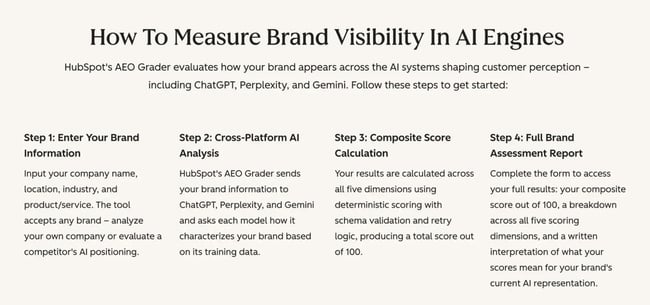
Check out how your brand is performing with HubSpot’s AEO Grader.
For teams looking to dive deeper, Marketing Hub Pro and Enterprise offer AEO features that show how frequently brands are cited by AI compared to competitors. Teams can also get suggestions for how they can improve their AI visibility.
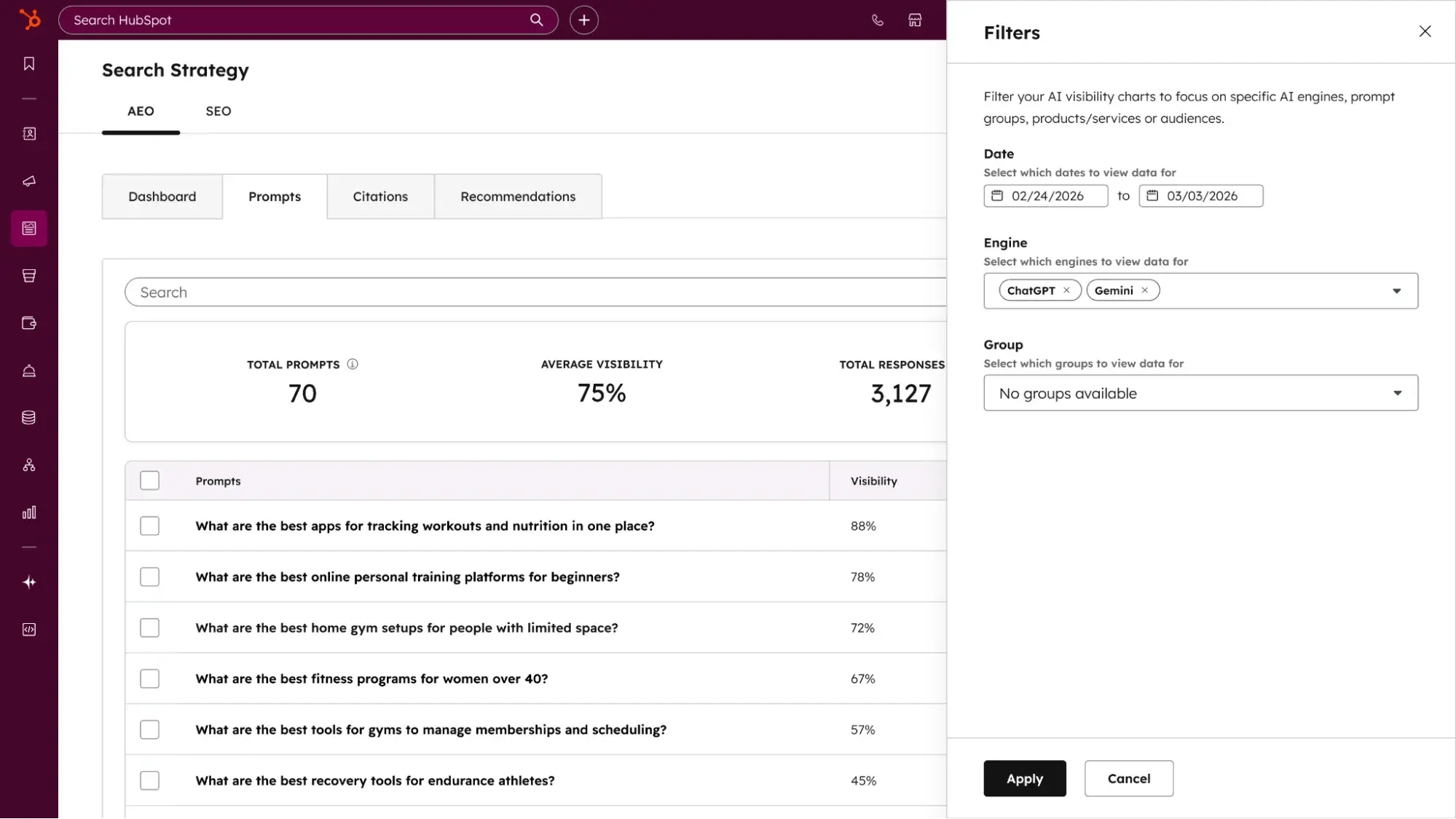
Those without a Marketing Hub subscription can use HubSpot AEO. This tool has a free tier and can be purchased for $50 a month for teams that want to track their performance for a greater number of prompts.
How do search engines know how to rank a page?
Search engines aim to provide users with the most relevant and useful answers. Every query triggers algorithms that evaluate and rank content based on relevance, authority, and quality, then display the most helpful results first.
To determine which pages to rank, search engines consider several key factors:
- Query intent. The meaning behind a search determines the type of content that will satisfy it. Understanding whether a user is seeking information, comparison, or purchase guidance influences which pages are prioritized.
- Content relevance. Algorithms assess how well page content matches the query, including topic alignment, keywords, and context.
- Content quality. Quality is measured using the E‑E‑A‑T framework — experience, expertise, authoritativeness, and trustworthiness — to surface content that is genuinely helpful.
- Site usability. Technical factors like page speed, mobile friendliness, accessibility, and overall user experience influence how easily content can be discovered.
- Contextual signals. Location, search history, and device type help tailor results to the individual user.
Search algorithms analyze all this information. While algorithms remain proprietary, Google’s focus on E-E-A-T gives us a peek under the hood. Following the E‑E‑A‑T framework is particularly important for standing out, especially as AI-generated content becomes more prevalent:
- Experience. Demonstrated firsthand experience with the topic.
- Expertise. Recognized subject-matter knowledge.
- Authoritativeness. A site’s recognition by others, such as high-quality backlinks.
- Trustworthiness. Accuracy, credibility, and up-to-date information.
As AI-generated answers and AI search assistants become a dominant part of the ecosystem, human expertise is increasingly important. AI can provide summaries and general answers, but it lacks the unique insight and judgment of human experts. Awareness of how AI presents information about a brand or industry — through tools like HubSpot AEO — can help guide content strategy and ensure accuracy in answer engine results.
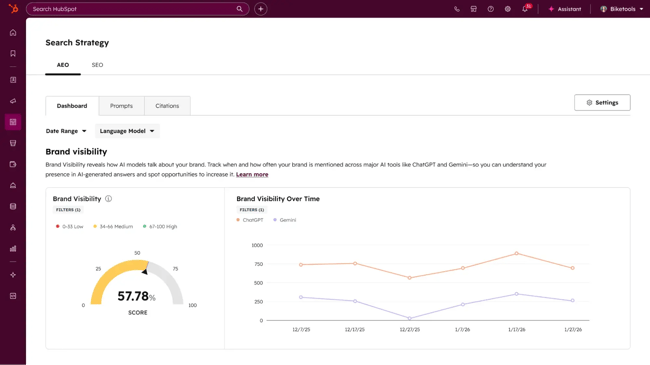
Although AI content and zero-click experiences are not direct ranking factors, they influence user behavior and content visibility, which in turn affects SEO outcomes. Actions like adding high-quality content and reinforcing E‑E‑A‑T signals continue to improve search visibility.
How long does SEO take to work?
SEO is not instant — but it’s also not always slow. The reality is that different SEO changes move at different speeds. Some updates can show impact within hours of being crawled and indexed, while others take weeks or months to influence rankings. Understanding these timelines helps set realistic expectations and prioritize the work that will move the needle fastest.
SEO Timeline: What to Expect
SEO works on a rolling timeline. Marketers may see small wins quickly, but meaningful, sustained growth typically takes several months of consistent effort. The most effective strategies balance quick wins with long-term investments.
Faster SEO Changes (Hours to a Few Weeks)
The following SEO improvements show early signals once search engines crawl and reprocess web pages:
- Title tag and meta description updates (a few hours to a few days). Updating title tags can quickly influence rankings and click-through rates after reindexing — especially for pages already ranking on page one or two.
- Internal linking improvements (a few days to two weeks). Adding or optimizing internal links helps search engines discover and prioritize pages faster, often leading to quicker visibility gains.
- Fixing minor technical issues (a few days to a few weeks). Resolving crawl errors, broken links, or indexing issues can lead to relatively fast improvements, particularly if those issues were blocking visibility.
- Content refreshes (one to three weeks). Updating existing content (improving clarity, adding depth, and aligning with search intent) can produce quicker gains than publishing brand-new pages.
Moderate SEO Changes (a Few Weeks to a Few Months)
Moderate changes require more time for search engines to evaluate quality and relevance:
- New content creation (one to three months). New pages need time to be crawled, indexed, and assessed against competing content before they begin ranking meaningfully.
- On-page optimization across multiple pages (one to two months). Scaling keyword optimization, headings, and structure across a site compounds over time but doesn’t produce instant results.
- Technical improvements affecting performance (one to three months). Changes like improving page speed, mobile usability, or Core Web Vitals can take time to influence rankings as search engines reassess site quality.
Slower SEO Changes (several months and beyond)Some SEO shifts are long-term investments that build sustainable growth, including:
- Authority and link building (three to six or more months). Earning high-quality backlinks and brand mentions takes time — and even longer for search engines to factor those signals into rankings.
- Building topical authority (three to six or more months). Publishing consistent, high-quality content around a subject helps establish expertise, but this compounds gradually.
- Competitive keyword rankings (three months to a year or more). Ranking for high-volume or competitive queries often requires sustained effort across content, links, and technical SEO.
How to Monitor & Track SEO Results
Technical setup, content, and links are critical to getting a website into the search results. Monitoring a brand’s efforts helps marketers improve their strategy further.
Measuring SEO success means tracking data about traffic, engagement, and links. Though most companies develop their own sets of SEO KPIs (key performance indicators), here are the most common ones:
- Organic traffic growth.
- Keyword rankings (split into branded and non-branded terms).
- Conversions from organic traffic.
- Average time on page and the bounce rate.
- Top landing pages attracting organic traffic.
- Number of indexed pages.
- Link growth (including new and lost links).
HubSpot SEO software helps teams monitor keyword performance, track impressions, and connect rankings directly to traffic — all from a unified dashboard. As a complement, HubSpot’s AEO tools allow teams to monitor how their content is interpreted by AI and uncover opportunities to improve visibility in zero-click results.
Should you outsource SEO or keep it in-house?
Whether an individual marketer works on SEO themselves, delegates it to another team member, or outsources it completely, teams need expert insights.
Doing SEO Yourself
SEO is a long-term play, and just like a muscle, marketers have to work at it consistently to see results. That can take a substantial amount of commitment. If the team doubts their capabilities, they should delegate the work.
Be honest with yourself — are you interested in learning SEO? Do you have time to learn the basics? Do you have the resources to bring in help if you redesign your website and accidentally deindex several pages?
If the answer to any of these questions is “no,” then you might not want to take on the responsibility of SEO yourself.
That said, learning about the process and becoming an SEO specialist makes a marketer well-equipped to create content. They’ll know exactly what matters most. And there is a wide variety of SEO tools out there that will help marketers throughout the process.
For example, HubSpot’s SEO Marketing Software includes tools that help marketers optimize their content and execute their SEO strategy. Users get a list of issues to fix, ranked based on importance, and detailed insight into why those issues matter to prepare for the future. Coupled with HubSpot AEO and Marketing Hub's AEO features, teams can track their brand visibility across major answer engines alongside traditional search to design a cohesive strategy.
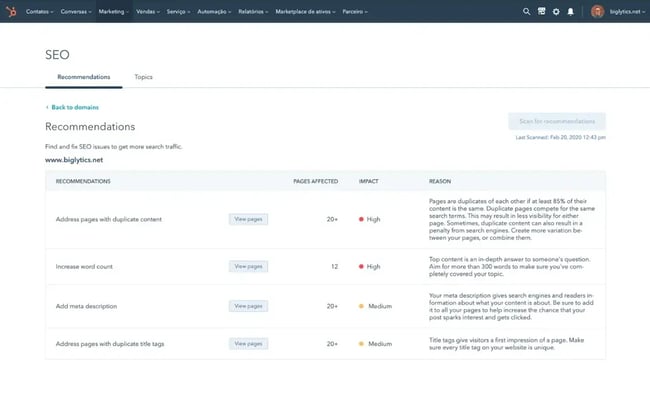
Get started with HubSpot’s SEO Marketing Software
Delegate SEO to a Team Member
For marketers that lack SEO expertise, it’s time to buddy up. The person in this role can report to the marketing team, development team, or even design team. SEO and search engine marketing strategy touch nearly every function of a business while maintaining a unique set of skills. The person delegated to SEO would contribute cross-functionally more often than not.
If you’re not quite sure about taking on SEO yourself, consider delegating the work to a team member. If there’s another marketer interested in growth marketing, development, or even web design, this would be a valuable skill to help grow their career.
I actually got my start in SEO while working as an office admin and building a personal website on the side. As I learned more about blogging and search optimization, I realized my employer wasn’t fully leveraging SEO, so I pitched the CEO on investing time and resources into it — aligning both business goals and my own interest in creative work. After getting approval, I dove into a Google Digital Garage SEO course, which ultimately set me on my SEO career path.
Aside from assigning tasks in-house, a marketing team could hire a full-time search engine optimization specialist if it has the budget.
Outsource SEO to an Agency
If no one on the marketing team has interest in SEO, the team’s at full capacity, and there’s no spare budget to fill a full-time SEO role, the best option is to outsource SEO to a reputable consultant.
A well-respected SEO consultant is highly skilled in bringing organic traffic, leads, and conversions to businesses. They do this day in and day out, so they won’t need the ramp-up time that a marketing team member would need in order to learn the basics.
A consultant can also be less expensive than hiring someone full-time for the role. But how much exactly does it cost to outsource SEO? That depends on the business size, but here is some idea:
- SEO can cost between $100 and $500 per month for teams who do it themselves with a keyword research tool.
- It can cost between $75 and $300 per hour for a consultant and up to $5,000 per month for a boutique agency.
- Hiring a full-service marketing agency can cost $10,000-$20,000.
Incurring SEO costs accounts for booth tools and people power. If paying for a tool, consultant, or marketing agency to help optimize web content, the bill can vary wildly with the depth of the contracted services.
10 SEO Best Practices From Selected Industry Specialists
- Remove unused code and make your site 55% faster for users.
- Focus on quality and search intent.
- Target leads and revenue — not just traffic.
- Don’t buy links. Earn them.
- Understand your target geographic area.
- Take a holistic approach.
- Look out for legitimacy in the data.
- Doing SEO yourself as a business owner: Find out if it’s the right call.
- Delegating SEO to a team member: Understand the person you’re training.
- Make your content visually rich and engaging.
1. Tech SEO: Remove unused code and make your site 55% faster for users.
I spoke with Liam Fallen, SEO consultant and founder of the MostlyMarketing Slack Community and LiamFallen.com. Fallen has 10 years of experience in SEO and has worked with companies like monday.com, Riverside.fm, and LeoVegas, focusing specifically on tech SEO.
Fallen shares his favorite tip for making a site faster for users by removing unused code. But first, he tells us why it matters.
“Removing unused code can improve performance, especially if you’re loading 5 MB and your users only need 2 MB for it to function. It can be tricky to remove, as you’ll need to test that it doesn’t break anything. But if done properly, you can see a noticeable difference in load times,” Fallen says.
To get started, Fallen walks through the complete step-by-step process below:
Best for: Fallen’s site speed tip is easy to do, making it beginner-friendly. That said, even more advanced SEOs shouldn’t sleep on this tech SEO best practice.
2. SEO Content: Focus on quality and search intent.
“There are a few very important things when it comes to creating great SEO content. I’ll focus on two,” says Ben Goodey, founder of Spicy Margarita Content and SEO podcast and case studies community, How the F*ck.
Content Quality
“People often look at the state of other content on Google and think, ‘Oh, great, mine doesn’t have to be interesting, unique, or spicy in any way.‘ But lowering your bar for quality when it comes to SEO is a big no in my book,” says Goodey.
Low-quality only guarantees a brand fits into the crowded market of bland content and don’t stand out to a reader, Goodey notes.
Goodey reminds us that, “The best content, whether distributed via search or not, is filled with value, your brand, personality, your experience, and opinions. Your challenge is to be informative AND unique.”
Meeting Search Intent
“Search intent is the reason behind the user’s search term, and if your content doesn’t match that reason, it’s very unlikely it will rank highly in Google,” says Goodey.
To give an example, imagine someone searching “best CRM software.” Their intent is likely to research CRM software provider options and make a reasoned choice. Relevant content should help them do this, probably by reviewing and listing several options.
Goodey adds, “If you instead wrote an article titled ‘Why a Best CRM Software Doesn’t Exist,’ you’re unlikely to rank well because while it’s an interesting angle, it doesn’t give the reader what they want.”
Pro tip: For an example like the one above, Goodey recommends covering those unique takes within your article rather than making them the entire angle of your piece.
HubSpot AEO helps content strategists benchmark their brand’s share of voice in AI search and refine their approach based on real-time insights.
3. Keyword Research: Target leads and revenue — not just traffic.
Samantha North, content strategy consultant and founder of Content Foundations and samanthanorth.com, shares her top four keyword research best practices below.
1. Leads and Revenue vs. Traffic
“Depending on your business model, leads/revenue matter more than mere traffic. The difference is all in the keyword. You should target commercial intent keywords to increase your leads or sales (even though they may have lower search volume),” explains North.
North recommends doing this early on in a content strategy. Doing so gives this business-critical content time to rank before a team starts targeting high-volume informational keywords.
North adds, “Traffic for traffic’s sake can be a misleading metric that won’t necessarily help your business’s bottom line.”
2. Reverse engineer your top competitors.
According to North, marketers can get a strong head start on their keyword research simply by reverse engineering a few of their top competitors. To do this, marketers can use a tool like Semrush or Ahrefs.
Here’s how: “Once you’ve got all their keywords, filter by the top 10 search positions, then use additional filters (such as ‘how to,’ or ‘best’) to narrow down promising keywords that you can use to create problem-solving guides or competitor comparison articles,” North says.
3. Match search intent.
Like Goodey, North reminds marketers that it’s vital to nail the correct search intent. Goodey points out, “If your content doesn’t match that reason [the intent behind the search], it’s very unlikely it will rank highly in Google.”
To match search intent, North says, “Always check the top 10 SERPs to understand the necessary angle for your target keyword. It might not be what you expect.”
4. Zero Volume Keywords
“Keyword research tools don’t usually give accurate search volume estimates, so don’t be afraid to target ‘zero volume keywords’ if they’re highly relevant to your target audience. You should always prioritize content that serves your audience first,” says North.
4. Link Building: Don’t buy links. Earn them.
Ranko Media’s Nick Rubright highlights the hazards of buying backlinks. That includes short-term results that don’t last, meaning little to no return on investment.
Instead, Rubright recommends earning links from websites your customers are reading. “This has been how I’ve approached link building for any website I’ve been able to sustainably grow,” says Rubright.
Rubright shares three best practices for link-building outreach — so marketers can earn links without paying for them.
Improve your prospecting.
“Lots of people who are newer to SEO perceive link building as something where you somehow scrape contact data from the internet, build a huge list of sites and contact info, and send spammy outreach emails asking for a link,” says Rubright.
According to Rubright, the problem is that poorly targeted prospecting will result in low or no responses.
“The link or guest post topics you’re pitching to the blogger or journalist don’t make sense for their audience,” Rubright says.
Aside from that, it can also permanently damage a domain’s email deliverability if your emails are getting marked as spam, which can lead to a lower success rate over time.
According to Rubright, a better approach is hand-picking prospects to make sure that what you’re pitching adds value to their page or website.
Pro tip: “You can still use email templates, but make sure that it makes sense for your prospect to get the email you’re sending,” Rubright says.
Consider your pitch.
“There are tons of ways to improve your email pitch, but a problem many link-building pitches have is that they don’t consider the blogger or journalist’s audience. They’ll blast out email templates with generic guest posting ideas in hopes of a response, playing the numbers game,” says Rubright.
Instead, Rubright advises that marketers customize their outreach email to the prospect they’re emailing.
Pro tip: “This doesn’t mean you can’t use templates, but maybe write a custom opening line commenting on a recent article you read, or spend time detailing why you’re pitching your link in a way that’s specific to their site. Specificity is the biggest factor in a pitch that improves response rates,” Rubright says.
Consider your story.
“The reality of link building is that when going white hat, it’s a lot like PR. If you’re running a guest posting campaign, for example, you need to pitch ideas that are going to resonate with the blogger or journalist on the other end of the email,” says Rubright.
Rubright explains that if marketers are running a digital PR campaign, journalists and bloggers need to like the story. They also need to think it’s compelling to their audience if they’re going to publish it and credit a brand with a backlink.
Pro tip: “In situations where you’re just pitching a link, I’ve found that explaining the ‘why’ behind your content asset is helpful in fulfilling this story element,” Rubright says.
Email Template Example for Link-Building Outreach
Here’s an email template Rubright uses when asking for a link to a content asset:
Hi [name]!
Just read your article about [topic]. [Comment.]
I’m emailing you today because I just finished writing a blog post about [topic] to help [audience] with [problem].
Here’s a link: [URL]
If you like it, do you think it would be worth mentioning in the section where you talked about [topic]?
Cheers,
Nick
5. Local SEO: Understand your target geographic area.
I spoke with Christopher Levy, director of growth at Marketing Six, about local SEO best practices. Levy has 10+ years of SEO experience and specializes in local.
He shares his insights from the perspective of an agency or freelancer working with a client, but these best practices can easily be applied to in-house SEO roles or work.
Administering a Google Business Profile (GBP)
“Administering a client’s GBP is an important skill set that a local SEO must learn. This includes optimizing the listing to be up-to-date and accurate, with relevant and compelling visuals. You can also share content, updates, and offers on a GBP,” says Levy.
He adds, “Soliciting and responding to reviews is another important role in managing a GBP that draws on skills needed for outreach.”
Pro tip: Levy recommends working with local clients on a strategy for soliciting customer reviews and appropriate responses to reviews and comments left on GBPs.
Keyword Research for Local SEO
“When performing keyword research for local SEO, it’s important to understand that most tools used by SEO report data like keyword difficulty and monthly search volume (or MSV) based on nationwide data, or worse — data from the geographic midpoint,” says Levy.
Levy explains that’s why it’s so important to use a keyword research tool that allows marketers to specify the geographic area they’re targeting.
“When you update these settings, you will likely see much different data, opening additional keyword strategies due to a lack of competitiveness within that geographic market,” he says.
According to Levy, client perceptions, particularly where the business owner is your point of contact, are crucial. That means SEO professionals must make sure they can see local search results similar to what their clients see.
Pro tip: If your client is in a different market than where you are located, Levy recommends working with an SEO tool that can generate SERPs in the client’s market. You can also use a Virtual Private Network (or VPN) to make it appear to Google that you are in the target market.
6. Monitoring and Tracking SEO Results: Take a holistic approach.
For the next two sections, I spoke with Zoe Ashbridge, the senior SEO strategist and co-founder at forank. (Bonus, she also writes for HubSpot!) She has nearly a decade of experience in digital marketing and SEO, and is the perfect person to address what is seo in digital marketing.
“It’s true that tracking SEO success can be difficult. Unlike PPC, you can’t point to a conversion and know exactly which search term drove it. However, there is a lot you can track,” says Ashbridge.
Ashbridge adds that what you track ultimately depends on your sales funnel. Still, the common metrics she tracks for SEO success include:
- Clicks and Impressions, Separate Brand, and Non-Brand Clicks. “This is very important. While SEO can do a lot with brand search, its primary role is bringing new users to the site through top and middle funnel content,” Ashbridge says.
- Performance of Pages Built for SEO That Don’t Pull In a Lot of Brand Search. You can do this by tracking revenue or conversions directly from pages created at SEO’s request using G4’s landing page report.
- Track Sales or Conversions From Users Who Also Viewed Content. To do this, Ashbridge uses G4’s segment overlap.
- Organic Revenue Sitewide. This is especially critical for ecommerce.
For service-based businesses, Ashbridge highly recommends that marketing and sales teams also track their leads internally.
“The goal is to credit SEO for its sales assists; if SEO brings traffic to the site, your retargeting campaign and email marketing might convert them. You can identify content that’s part of the buyer journey with the segment overlap,” says Ashbridge.
Final thoughts: “Tracking SEO’s efforts does require some awareness of marketing and how it works holistically. Although tracking SEO’s efforts is an imperfect system, it’s better than the alternative: blind faith!” Ashbridge says.
Marketing teams can leverage HubSpot AEO alongside traditional tools to validate whether their content is not just ranking, but also being surfaced in AI-generated answers.
7. Working With an SEO Agency: Look out for legitimacy in the data.
“Your SEO agency must be tuned in to your business and marketing objectives. Think about the initial engagement between you and your potential agency as an opportunity for the agency to hear your needs,” says Ashbridge. “Active listening and responses from the agency are an indicator that they’re offering tailored SEO strategy and solutions rather than out-the-box tactics.”
Ashbridge reminds us that a tailored solution brings longevity to marketing and will support the marketing landscape rather than just SEO. That means a good agency will use SEO’s efforts to bolster other marketing efforts.
Ashbridge adds, “For example, keyword research and conversion data will be shared between SEO and PPC, and what content users are looking for will be delivered before they search it via emails. An awareness of how SEO fits into the wider marketing landscape is a sign of marketing sophistication.”
A Word on Agency Case Studies
Agencies will undoubtedly demonstrate marketing success through case studies. But Ashbridge warns us to pay close attention to “legitimacy in the data.”
“Ideally, you’ll see (at least) screenshots from tools like Google Search Console or G4, as opposed to data only from reports created in Google Sheets. While there’s nothing wrong with the latter, unlike Google’s owned tools, they can be manipulated,” Ashbridge says.
Pro tip: Ashbridge recommends getting references in addition to case studies. “An SEO with a proven track record won’t have any issue connecting you to a solid reference to vouch for their work.”
8. Doing SEO yourself as a business owner: Find out if it’s the right call.
I spoke with Olga Zhukova, a freelance SEO specialist. Zhukova has experience consulting small business owners who either want to do SEO themselves or have already started doing it.
When to Do SEO Yourself
“So from my experience, when [business owners] have a small website, it’s totally possible to do SEO optimization themselves. Most likely, that would be on-page,” Zhukova says.
In that case, Zhukova recommends the following best practices:
- Take time and patience to learn about SEO and what to expect from your efforts.
- Optimize on-page elements step by step (at the same time, find free/inexpensive tools to use).
- Connect at least Google Search Console and understand basic reports.
When to Address an SEO Specialist
Zhukova adds, “As for when to address a specialist, there are several options when a consultation would be of use.” Such as:
- To check the optimization performed.
- To ask for a further strategy to follow.
- To figure out why the website is not getting any traffic (it might be a technical issue).
I asked Zhukova her thoughts about when it’s best to avoid a DIY approach entirely or bring in a specialist to help with some of the ‘doing’ rather than in a consultancy capacity.
When to Avoid a DIY SEO Approach Entirely
“You know, I’ve actually been thinking recently about when is the best time to hire a professional to do SEO. The bigger the site, the more ‘maintenance’ it might require,” says Zhukova.
Zhukova recommends that, if the owner doesn’t have enough time to work properly on content strategy and optimizing new pages but has a budget, they should hire a specialist.
If that;s the case, Zhukova would point out the following use cases:
- Before launching a website. A specialist can help a business owner plan out the structure and do basic SEO optimization. This would be great, especially when launching medium to large online stores. The reason is that it will give them a strong start.
- The owner does all on-page SEO (using plugins and apps or their own knowledge). However, there are a growing number of indexation issues in the GSC and very low traffic despite all the efforts — that’d be a good time for a professional audit.
- Website migrations/redesign. Zhukova warns that if a business owner migrates or redesigns their website structure without using SEO recommendations, it can lead to a significant loss in traffic.
9. Delegating SEO to a team member: Understand the person you’re training.
Last but by no means least, I spoke with Emma Russell, the founder of Oxford Comma Digital. Russell has a decade of experience helping start-ups and household name brands capitalize on and increase demand.
For context, I’ve worked with Russell personally. I was an in-house (and first-time) content manager, and Russell was the director of our SEO agency partner. Russell helped me swim rather than sink as I got to grips with SEO and team delegation. Further, I always admired the way she approached the agency-client working relationship.
How Not to Delegate
“Delegation is important — we all know that. It helps you do more SEO work that moves the needle, and it’s important to let the younger generation of SEOs learn by doing work that challenges them,” says Russell.
Russell notes that the fundamentals are often embedded in the basis of many consulting agencies’ revenue models. They bring on a client, give that client to a recent grad, who’s really good at figuring things out, and let them spend hour upon hour figuring out how to do the task.
Russell adds, “Alas, that’s what delegation has looked like for years, but it’s, thankfully, becoming ‘old school.’ At least in the SEO industry, good delegation looks decidedly different now.”
But what does “SEO delegation done right” look like?
Understand the person you’re delegating to.
Russell reiterates that this doesn’t just mean their skill levels in each area but also understanding them as people.
“Those grads I mentioned earlier probably thrive by being thrown in the deep end, but not everyone is like that. Some people have confidence issues, or imposter syndrome, or are dealing with things that are making challenges at work that much harder,” says Russell.
Russell recommends that step one is to figure out and understand how people like to learn. “Our objective is to let this person thrive, and this doesn’t look the same for everyone.”
Brief this person properly.
“‘Properly’ will depend on their skill level and their learning style. If you use a project management tool like Asana, Teamwork, or HubSpot, this can be made easier. But some people you’re delegating to will need to talk it through and ask questions,” says Russell.
Russell knows that taking the time to do this can be challenging, especially if you are extremely busy. Still, “It’s worth remembering that you’re delegating for a reason, and taking the time to get the brief stage right is completely worth it.”
Delegate to an in-house team (when you’re on the agency side).
“It’s worth noting that this delegation doesn’t always take place with people in the same company as yours. If you’re agency side, you’re often delegating to people within an in-house team who may have limited knowledge of SEO,” says Russell.
For this reason and many others, Russell explains that it’s worth putting serious effort into your communication skills and practicing conveying topics in a simple, non-reductionist way. Russell adds, “This will span from your documentation to your meeting communications.”
Allocate enough time.
To allow all of the above to happen, Russell advises that managers give people enough time for delegation and managing tasks properly.
Russell adds, “If you have a team member who delegates tasks to others and coaches them, they might not be a manager yet, but they need to have time to get this right. If you’re expecting them to be 100% on client work or projects, give it up. It’s not going to happen, and you’re overworking this person.”
10. Content Experience: Make your content visually rich and engaging.
Leigh McKenzie, head of growth at Backlinko and brand visibility expert at Semrush, shares his perspective on creating visually engaging content.
“Want to double your content’s engagement? Add more (like, way more) visual elements to your posts. I’m talking custom graphics, screenshots, tables, charts, callouts, lists, and videos,” says McKenzie.
McKenzie explains what made Brian Dean’s content on Backlinko stand out: an unwavering commitment to visuals.
“Brian’s original goal was simple yet ambitious: Create content so visually rich that readers could grasp the main points without reading the text,” McKenzie notes. “But it’s incredibly hard to replicate at scale.”
According to McKenzie, many writers are shocked when they learn about Backlinko’s dedication to visuals. “Your job is no longer just about writing. It’s about thinking like a producer and curator.”
McKenzie shares how Backlinko has cracked the code (or at least, very close to it) on scaling visual-rich content:
- Detailed guidelines on expectations and examples of visuals in content.
- Writers include placeholder visuals with clear instructions in their drafts.
- An in-house designer creates custom graphics based on writers’ requests.
- A dedicated publisher recreates screenshots and formats visuals before publishing.
- Prioritizing screenshots to “show, not tell” — adding authority to the content.
“I did an analysis. Backlinko averages 13-15 visual breaks per 1,000 words. That’s a visual break every 70 words or less,” McKenzie reveals.
McKenzie acknowledges that this approach is a lot of work and costly. However, he explains why it’s worth the effort:
- Visuals make content more accessible, engaging, and memorable.
- They serve as proof points, boosting your content’s credibility.
- It’s easier to repurpose content (like LinkedIn carousels).
- Visual-rich content is harder to replicate, creating a marketing moat.
- It allows readers to grasp the main points without reading every word.
“Next time you create content, ask: Could someone understand this without reading? Would a screenshot better illustrate this point?” McKenzie advises.
Best for: This visual-rich content strategy is ideal for businesses aiming to create standout content in competitive niches. It’s particularly effective for complex topics that benefit from visual explanations and for brands looking to establish a unique content identity.
Frequently Asked Questions About SEO
How much does SEO cost?
SEO costs can vary widely depending on how you approach it. If you handle SEO in-house using tools, costs may range from $100 to $500 per month. Hiring a consultant can cost between $75 and $300 per hour, while full-service agencies may charge several thousand dollars per month.
The right investment depends on the brand’s goals, competition, and how quickly you want to see results — but in most cases, SEO should be viewed as a long-term growth investment rather than a one-time expense.
Can I do SEO myself?
Yes, beginners can absolutely start doing SEO themselves, especially for smaller websites or basic optimization tasks like content creation, keyword research, and on-page improvements. However, SEO has a learning curve and requires ongoing effort. As your site grows or becomes more complex, you may need help with technical SEO, strategy, or link building. Many businesses start with a DIY approach and later bring in specialists as their needs expand.
Is SEO still worth it?
Yes — SEO is still one of the most valuable marketing strategies, especially in today’s search landscape. Even with the rise of AI-generated answers and zero-click searches, SEO helps brands show up early in the buying journey, build authority, and capture high-intent traffic. Unlike paid advertising, SEO compounds over time, meaning the work done today can continue driving traffic and leads in the future.
Businesses that want a clearer picture of their performance in answer engines can use HubSpot’s AEO and Marketing Hub’s AEO feature to get a quick, actionable assessment of their visibility.
What’s the most important SEO ranking factor?
There isn’t a single “most important” ranking factor. That said, high-quality content that matches search intent is often the foundation. Without relevant content, technical optimization and backlinks won’t have much impact. Strong SEO strategies balance all three: content (relevance), links (authority), and technical SEO (accessibility and performance).
How often should I update my SEO strategy?
SEO strategies should be reviewed at least quarterly and adjusted based on performance. However, updates don’t always mean major changes. Ongoing improvements like refreshing content, updating keywords, fixing technical issues, and monitoring rankings should happen continuously. Major shifts may be needed when search behavior changes, such as with new AI features or algorithm updates.
Does social media affect SEO?
Social media is not a direct ranking factor, but it can indirectly support SEO. Sharing content on social platforms increases visibility, which can lead to more traffic, backlinks, and brand awareness — all of which can positively influence search performance. In short, social media helps amplify your content, even if it doesn’t directly impact rankings.
What’s the biggest SEO mistake to avoid?
One of the biggest SEO mistakes is focusing on short-term tactics instead of long-term value. This includes things like keyword stuffing, buying low-quality backlinks, or creating content just to rank rather than to help users. These approaches can hurt performance over time. The most effective SEO strategies prioritize helpful, trustworthy content.
SEO Resources and Training
This guide is just a starting point for discovering SEO. But there’s much more to learn.
Here are online training resources to try next if someone on the marketing team wants to take on this skill:
SEO knowledge is also available from industry experts and their blogs. Here are some worth reading:
- SEMrush
- MOZ
- Yoast
- BrightLocal (local SEO advice)
- Search Engine Journal
- Search Engine Watch
- Search Engine Land
- SEO Chatter
- Bruce Clay Inc.
- WordLift Blog
Over to You
SEO today is about building consistent visibility across an increasingly complex search landscape. As search engines evolve with AI-generated answers and zero-click results, the brands that succeed have mastered the fundamentals. When these elements work together, SEO becomes a growth engine that connects your business with people looking for solutions.
Executing that strategy effectively requires the right tools and insights. Tools like HubSpot’s SEO Marketing Software streamline everything from content optimization to performance tracking. Then, HubSpot’s AEO tools give marketers visibility into how their brand appears in answer engines. Together, these resources help teams adapt their strategy to how search actually works today.
The opportunity with SEO is still as strong as ever. But, success now depends on consistency, adaptability, and a focus on delivering real value. Whether you’re just getting started or refining an existing strategy, the key is to keep building. Over time, those efforts compound into greater visibility and sustainable growth.
Complete SEO Starter Pack
An introductory kit to optimize your website for search.
- Increase your organic traffic.
- Plan your keyword strategy.
- Debunk SEO myths.
- Build a blog strategy.
Download Free
All fields are required.
Form not available
Seo

![SEO audits: How to conduct one that drives traffic growth [+ checklist]](https://53.fs1.hubspotusercontent-na1.net/hubfs/53/seo-audit-1-20251217-6006144.webp)
.png)


.png)