If you want to learn content marketing vs SEO from a practitioner who’s lived and breathed both for over a decade, you’re in the right place. But first, let me demonstrate the meaning of those two concepts by telling you the story of how I got started in this field and later became a staff writer for one of the greatest content marketing publications of all time, the HubSpot Blog (okay, sure, I’m biased).
Back in 2012, I started a personal travel blog on a road trip. Two years later, while writing about my experience living in Peru, I started getting messages from people around the world thanking me for solving problems they had while planning their South American trips. That is content marketing. How’d they find my content? When they Googled their questions, my blog posts appeared at the top of the results. That’s SEO.
![Download Now: Free State of Marketing Report [Updated for 2026]](https://no-cache.hubspot.com/cta/default/53/b0f73a5e-16e4-41fd-9511-8564efc560a7.png)
As a naive recent college grad, I didn't realize I was doing content marketing and SEO. I had accidentally stumbled into both by simply trying to be helpful. Eventually, my blog became a business that generated $5k/month before it was acquired. In this article, I'll share what I've learned about content marketing vs SEO, along with real-life examples and a strategy creation process.
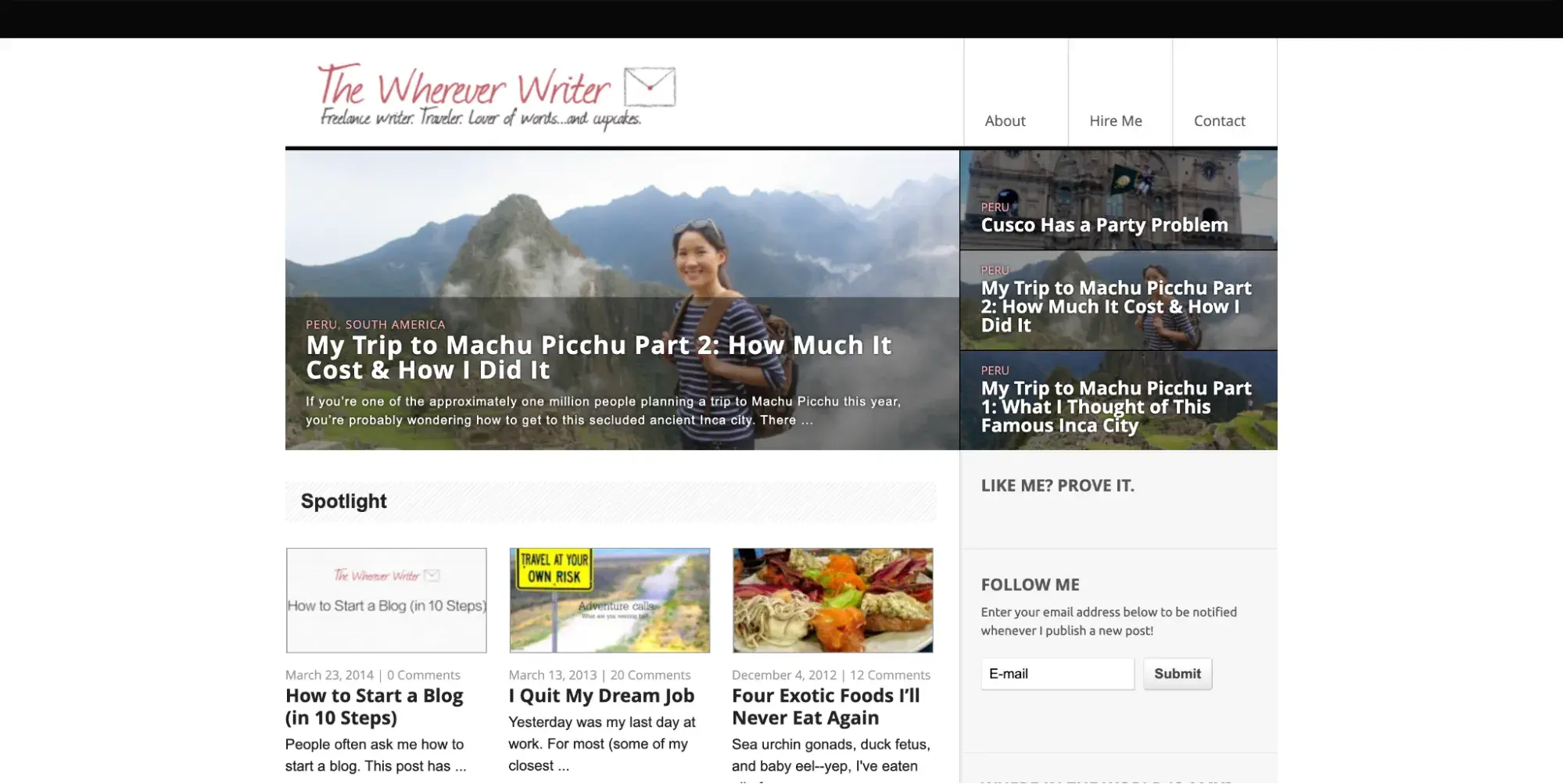
A screenshot of my travel blog from 2014, when I was writing about Machu Picchu and accidentally discovering content marketing and SEO
Table of Contents
- What Content Marketing Is (and Isn’t)
- What SEO Is (and Isn’t)
- Content Marketing vs SEO: Comparing Both
- Content Marketing vs SEO: Which do you need more for your site?
- Do you need both content marketing and SEO?
- How to Build a Combined SEO and Content Marketing Strategy
- Frequently Asked Questions About Content Marketing vs SEO
What Content Marketing Is (and Isn’t)
Content marketing is when a business consistently creates helpful content (blog posts, podcasts, newsletters, etc.) to attract potential customers, build trust with them, and eventually, get them to buy. It involves content that prospects actively seek out (inbound marketing) versus content that interrupts prospects’ attention (outbound marketing).
Content marketing differs from other forms of marketing because it is more of a long-term play and it establishes a connection with its audience over time, such as with a weekly newsletter. It is not a one-off campaign like a Super Bowl ad. When done right, content marketing feels less promotional and more genuine.
Content marketing is not:
- SEO. Search engine optimization (SEO) is one tactic of content marketing, but not all content marketing involves SEO. For example, a print magazine’s physical issue can’t be optimized for search since it’s an offline distribution channel.
- Sales. Sales is responsible for taking leads from marketing and closing deals, though content marketing can also lead directly to a purchase. Someone might read a buying guide on a SaaS company’s website and sign up for a subscription without ever talking to a rep. Either way, driving that immediate transaction isn’t content marketing’s primary purpose.
- Advertising. Most paid media, such as billboards, Instagram ads, and commercials, are not content marketing because they are outbound. However, there is some nuance here: Paid advertising can be an aspect of a content marketing campaign if, for example, a company decides to boost its Instagram post to get more views or pays for sponsored posts on an influencer’s blog to expand its reach.
- Public Relations (PR). Public relations is all about protecting a brand’s image, which might indirectly lead to more customers, but that’s not its primary, immediate goal. For example, a beauty brand’s PR team might publish content like a press release announcing its new annual sustainability goals, but it does that to promote positive public perception, not to directly drive sales.
- Affiliate marketing. Affiliate marketing is when someone tries to sell a third-party product to get commissions from the sale. Content marketing is when someone uses content to build relationships and eventually convert customers. Affiliate marketing is a monetization model that can use content marketing as a marketing method, but it doesn’t have to.
The State of Marketing in 2026
HubSpot's Annual Marketing Trends Report
- AI in Marketing
- Branding and Growth
- Human-Led Creativity
- And More!
What SEO Is (and Isn’t)
Search engine optimization (SEO) is the practice of creating and modifying content and websites to increase the chances of webpages ranking highly in search engines, mainly Google.
SEO has three categories:
- On-page SEO is everything you visibly do to the content on your site, including:
- Inserting primary and secondary keywords throughout an article
- Adding alt text to images
- Linking internally
- Off-page SEO is everything you do outside of your website to get it to rank, including:
- Getting backlinks
- Brand mentions
- Building reputation
- Guest blogging
- Technical SEO is the behind-the-scenes work that isn’t visible to website visitors, including:
- Compressing images
- Upgrading web hosting
- Inserting structured data like Schema markup
SEO is not:
- A short-term strategy. If you want instant results, pay for ads. Getting content to rank at the top of Google can take months to years. According to Ahrefs’s 2025 study of 1 million URLs, only 1.74% of newly published pages reach Google’s top 10 within a year — and the average page in position #1 is five years old.
- Just adding keywords. SEO is more than sprinkling target keywords throughout a blog post. The foundation of any good SEO begins with the technical aspects of the website, such as ensuring fast load times. It’s also critical to create quality content that matches search intent.
- Black hat SEO. Manipulative tactics like keyword stuffing, cloaking, or buying backlinks may have worked 20 years ago, but today they’ll hurt your chances of ever ranking.
Content Marketing vs SEO: Comparing Both
As you can see, content marketing and SEO are distinct practices that share overlap. To make it more concrete, check out this comparison table of content marketing vs SEO. Then, dive into the real-life examples below.
|
Content Marketing |
SEO |
|
|
Primary goal |
Attract and convert customers by building trust over time |
Drive qualified organic traffic from search engines |
|
Core question it answers |
“What should we create, for whom, and why?” |
“How do we help search engines understand, index, and rank this content?" |
|
Who typically owns it |
Content strategists, editors, brand marketers |
SEO specialists, technical marketers, growth teams |
|
Key tactics |
Blog posts, newsletters, podcasts, video, social media, webinars, case studies |
Keyword research, on-page optimization, technical audits, internal linking, link building |
|
Distribution channels |
Email, social, YouTube, print, syndication, community |
Google, Bing, AI search engines (ChatGPT, Perplexity) |
|
What success looks like |
Subscriber growth, engagement rate, content-assisted conversions, brand recall |
Keyword rankings, organic traffic, click-through rate, indexed pages |
|
Timeline to results |
Weeks to months (audience building compounds gradually) |
Often takes months to rank, though some technical or on-page wins can appear sooner |
|
What failure looks like |
Publishing consistently but no one engages, shares, returns, or converts |
Pages are not indexed, do not rank, target the wrong intent, or attract low-quality traffic |
|
Works without the other? |
Yes — a hit podcast or newsletter, for example, can thrive without SEO |
Partially. You can improve technical SEO, local SEO, product/category pages, and existing site architecture without a big content program, but SEO usually performs better when strong content exists. |
Content Marketing Example: Morning Brew
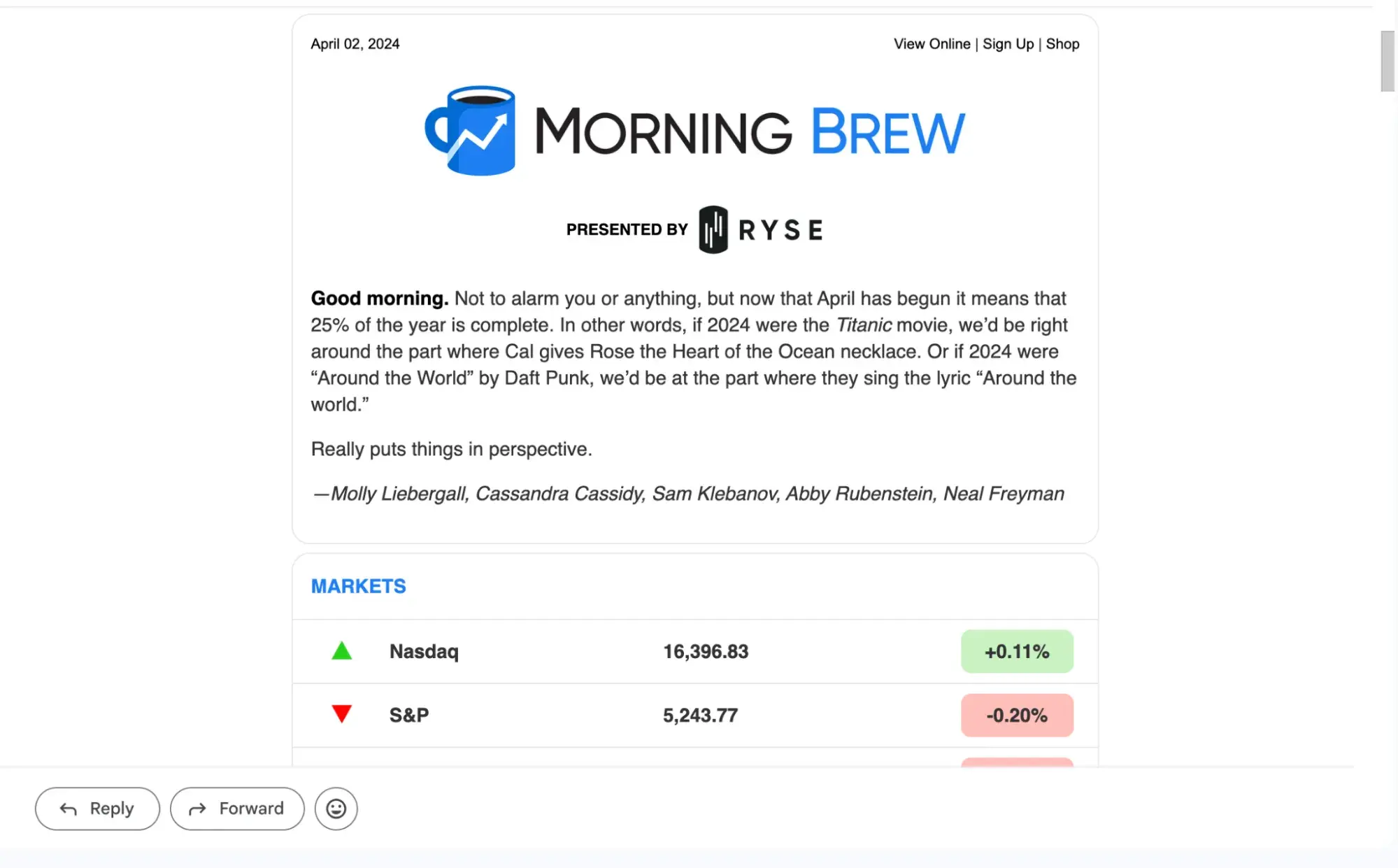
Morning Brew became a $75 million business and grew its subscriber base to over 4 million thanks to its witty daily email roundup of news. For three years, Morning Brew didn’t even do any paid acquisition. As co-founder Alex Lieberman writes, “Instead, we put all of our energy into perfecting the newsletter’s content, building organic referral loops, and deeply getting to know our readers.” That’s content marketing!
SEO Example: Speedtest.net
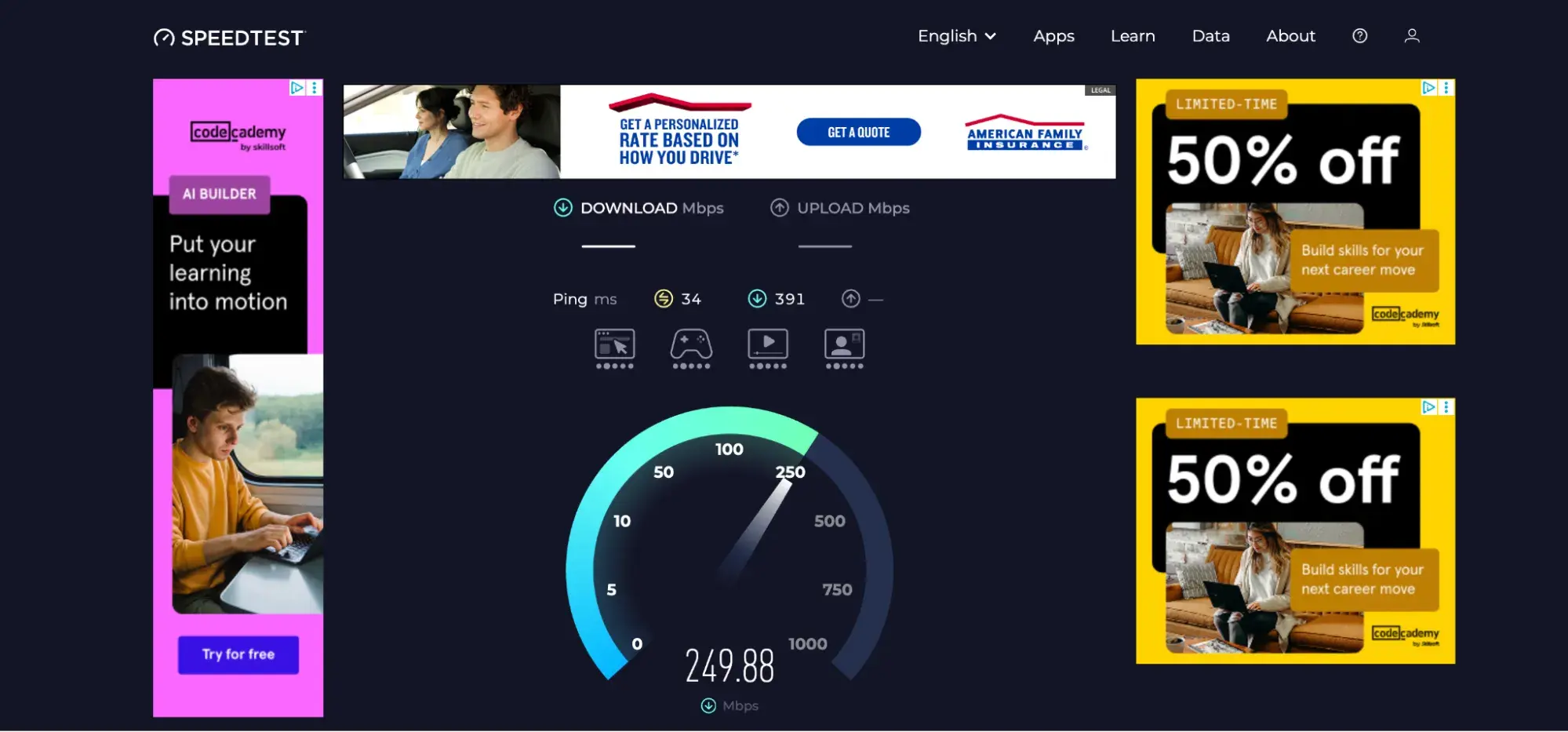
On the other hand, a primarily SEO example is Speedtest.net, a tool I’ve used many times to test my wifi connections. The way I found it? Googling “wifi speed test.” Aside from some guides, the site itself has minimal editorial content and no blog. It’s clear that it’s relying on people like me who are searching for a speed test in a search engine.
Content Marketing + SEO Example: Wirecutter
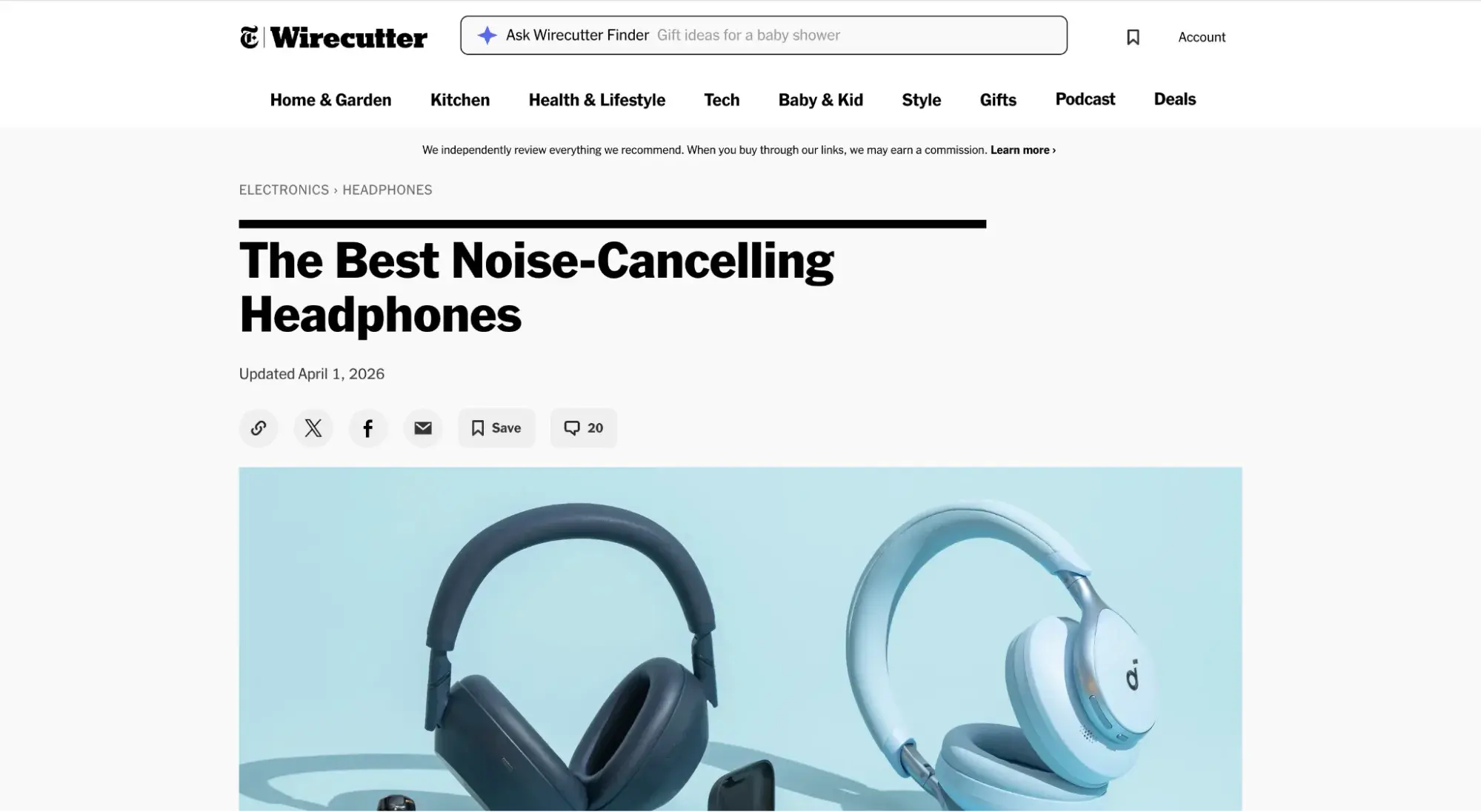
Wirecutter is a textbook example of content marketing and SEO working together successfully. The product review site, founded by Brian Lam in 2011 and acquired by The New York Times in 2016, built its reputation through solid content marketing: It became a trusted source for consumers by conducting meticulous, rigorous testing that ends in a single recommendation per category.
The SEO side is how most people (including me when I was trying to find the best dishwasher detergent) actually find those recommendations. Wirecutter’s guides have historically dominated “best [X]” results, ranking for millions of keywords as of May 2022.
Content Marketing vs SEO: Which do you need more for your site?
Whether you should prioritize SEO or content marketing depends on where your site is in its lifecycle, what distribution channels you already have, and what kind of audience relationship you’re trying to build. Here’s how to figure out which one needs more of your attention right now.
The State of Marketing in 2026
HubSpot's Annual Marketing Trends Report
- AI in Marketing
- Branding and Growth
- Human-Led Creativity
- And More!
You need content marketing more if:
- Your website is new and doesn’t have much content yet. SEO relies heavily on the steady, constant flow of fresh content. If you just launched your site, you don’t have that yet. Therefore, I’d recommend focusing on getting a content strategy in place before doing more in-depth SEO.
- You want to establish a relationship with customers and build trust. The beauty of content marketing is that it excels at building trust with your audience. Someone might be reading your newsletter for years, for example, before they buy your online course. Content marketing provides the rare opportunity to connect with your audience over a long period of time. This is critically important for personal brands or brands selling high-ticket items where the sales cycle tends to be longer.
- You already have a popular content distribution channel, such as a social media account or an email newsletter. This is the big one: You might not even need SEO if you, say, have a wildly popular Substack with 100k subscribers. Or a hit podcast with half a million downloads. Remember: SEO is a distribution channel. If you’ve already got a winning channel, then you could reasonably deprioritize SEO and focus on what’s already working.
You need SEO more if:
- You already have lots of online content. If you’ve been publishing articles weekly on your blog for two years but never tried blogging for SEO, it is time to think about SEO. So long as your content is genuinely helpful and high quality, you can go back and optimize it to rank better in search.
- You’re struggling to get organic traffic. Yes, even in 2026, organic traffic is valuable. In fact, HubSpot’s State of Marketing 2026 surveyed over 1,500 marketers and found that SEO/website/blog is still the number one channel for ROI, beating paid social, email marketing, and mobile messaging, among others.
- But even if you’re publishing quality content, you can’t expect Google to magically find it if you didn’t consider SEO while writing it.
- Your existing content distribution channels are waning. Whether existing digital channels are underperforming or your analog budget is drying up, SEO can be a high-yield strategy to help the right visitors find you.
Do you need both content marketing and SEO?
The relationship between content marketing and SEO is symbiotic so, yes, I recommend leveraging both at the same time to see the most success. While I pointed out earlier that in cases where you already have an existing popular channel (such as a hit Substack or podcast), you might not need SEO, SEO would still bolster existing success. Content marketing builds trust with your audience, but SEO helps that audience find you in the first place. That being said, SEO without content doesn’t have much to build on.
The SEO vs content marketing debate isn’t really a debate at all. The real question is: How do you combine content marketing and SEO? That’s what the next section will tackle.
How to Build a Combined SEO and Content Marketing Strategy
Step 1: Align on goals and ownership — including for AEO.
- What are you trying to accomplish with this strategy? (e.g., traffic, leads, brand authority)
- Who is it for? (ICP and personas)
- Who owns what?
Without agreeing on those three, chaos ensues. If SEO is chasing position one for keywords related to email marketing for a persona of a small business owner, but content marketing is separately pursuing a blog post series featuring enterprise customers to build brand authority upmarket, neither team is going to get as far as they could together.
Defining clear ownership in 2026 is tricky, too, thanks to answer engine optimization (AEO) — a relatively new discipline you cannot afford to ignore. Search Engine Land says that LLM referral traffic tripled in 2025, and SparkToro and Datos found that nearly 60% of Google searches end without the user clicking through to a website. What’s more, LLM-referred traffic converts 4.4x better than organic search visitors, at least among the 500+ digital marketing and SEO topics analyzed by Semrush.
So, who on your team should be responsible for AEO? Unless you have the resources to create a separate AEO role, it’s best to have an SEO lead AEO strategy and a content marketer lead its editorial implementation.
Here’s a real-world example: At Stripe, AEO sits within the Growth Marketing team as a parallel channel to SEO. Stripe’s AEO & GEO Marketing Manager listing describes the role as growing the AEO channel and improving the performance of both SEO and AEO programs, with content marketing as a cross-functional partner rather than a parent function.
Zooming out, Semrush’s analysis of 3,900 SEO job listings as of November 2025 concluded that AI search and AEO are increasingly becoming a part of an SEO’s job, and “getting ahead of that curve is a real differentiator.”
The State of Marketing in 2026
HubSpot's Annual Marketing Trends Report
- AI in Marketing
- Branding and Growth
- Human-Led Creativity
- And More!
Step 2: Define the topic clusters you want to own.
Topic clusters are groups of related content built around a strategic topic your brand wants to be known for. On your website, that usually means a pillar page covering the core topic and supporting cluster content that dives deeper into specific subtopics, questions, and use cases — all linking back to the pillar.
The traditional SEO model still applies, but in 2026, you need to define clusters through two lenses: the keywords you want to rank for in search and the prompts you want to be cited for in answer engines like ChatGPT, Perplexity, and Google’s AI Overviews. Keywords and prompts often overlap, but rarely surface the same results and answers.
For example, a CRM cluster might include:
- Pillar page: a comprehensive guide to CRM software
- Cluster page: “The 10 Best CRMs for Small Business” built to win the listicle SERP
- Additional cluster pages: “CRM implementation checklist,” “CRM vs. spreadsheets for small teams,” and so on
Each cluster page links back to the pillar with descriptive anchor text (e.g., “our complete CRM guide”).
Pro tip: Marketers on the Professional or Enterprise editions of Marketing Hub or Content Hub can use HubSpot’s SEO tools to create topic clusters, view monthly search volume and difficulty metrics, assign a pillar page to each topic, and connect supporting content around related subtopic keywords.
Now, the dual-lens part: The target keyword for that listicle is “best CRM for small business.” But the conversational version of the same buyer need (“What CRM should a five-person startup use?”) is how people increasingly talk to LLMs, and it’s more specific. A strong listicle accounts for both. To get cited, you need structural elements that answer engines can lift cleanly. Inside a listicle, the patterns that tend to work include:
- A “Best for” callout under each product (e.g., “Best for: 5-person startups that need a free starting tier”)
- A comparison table with an explicit “Best for” column
- An FAQ block at the bottom of the post, with the conversational prompt verbatim as the H3 and a direct, two-sentence answer underneath
If you’re only optimizing for the SERP, you’re leaving the AI citation layer on the table, and that’s increasingly where high-intent buyers turn when making their decisions.
Step 3: Run a content audit for organic search and AI visibility.
Now that you’ve got alignment between SEO and content marketing teams, and you know the topics you want to own, it’s time to see how existing content is currently meeting those goals (or not). A content audit is when you take stock of your website content and determine whether it’s meeting its SEO/AEO goals and what action to take on it next.
Look at the past year of data to get a good sense of whether each piece of content is hitting its SEO and AEO goals. For example, you might find that a pillar page you wrote for “best fitness apps” is unexpectedly ranking for the keyword “running training apps,” which might signal to you to add more details about that topic to the pillar page. Conversely, you might find that a page that was meant to drive traffic for the keyword “how to train for a marathon” isn’t ranking at all and might need to be updated, redirected, or deleted.
Here are the different aspects of a good content audit:
- Performance. Use a keyword research tool to pull performance data for your key pages, including organic traffic, ranking positions, and backlinks. I recommend using Ahrefs Site Explorer > Top Pages. This will give you a list of all the URLs on your site, plus the organic traffic, the number of keywords it’s ranking for, the top keyword, and the ranking position. You can even drill down into the exact list of keywords each URL is ranking for.
- Cannibalization. Find cases where multiple pages compete for the same keyword and dilute each other.
- Decay. Identify content that’s been losing traffic over the past 6-12 months and diagnose why — outdated info, thinned competition, SERP feature changes, etc.
- Indexability and duplication. Make sure every page you want to rank is crawlable and not duplicated across the site.
- AEO visibility. Audit how well the content is showing up in LLMs like ChatGPT, Gemini, and Perplexity. Use this free AEO Grader to get a baseline of your brand visibility score; you’ll want to see that grow over time.
Step 4: Prioritize specific opportunities by intent, funnel stage, and format.
The content audit will surface key content opportunities, whether that’s creating new content to show up in AI answers, updating an old blog post to rank better for a target keyword, or deleting irrelevant content that’s diluting your entity authority.
From there, tag content opportunities with three labels:
- Intent: informational, transactional, commercial, or navigational
- Funnel stage: TOFU, MOFU, or BOFU
- Format: listicle, product review, comparison post, video, etc.
For format, keep in mind the strengths and weaknesses of your brand and product. Certain products will lend themselves better to certain content marketing channels than others. A beauty brand like Glossier can do extremely well creating highly visual content like Instagram Reels.

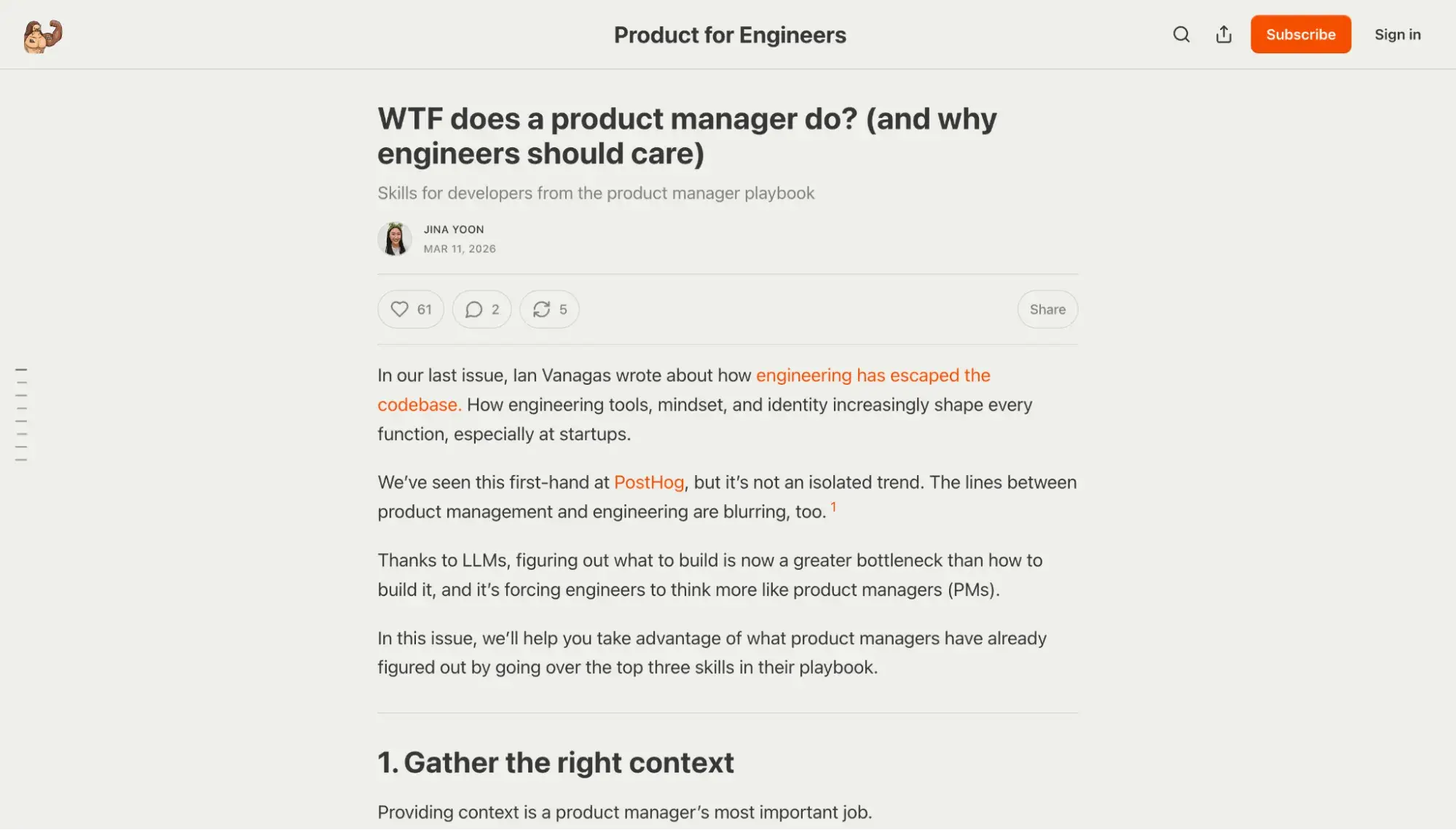
A software company like PostHog? That type of brand does better with text content, like its Product for Engineers newsletter.
These tags will help in the next step when you write the content brief.
Step 5: Build the editorial calendar and content briefs.
SEO/AEO and content teams will need to collaborate closely on the editorial calendar. Here’s the workflow I recommend:
- SEO leads keyword and prompt research and identifies entity authority gaps.
- SEO hands off targets with intent, funnel stage, and format tags from Step 4.
- Content turns those targets into content briefs, calendars, and assets: blog posts, videos, newsletters, microsites, etc.
- SEO reviews briefs for AEO formatting: clear answers, structured data, named expertise.
- The full team meets monthly to review performance and adjust.
Pro tip: When writing the briefs, include requirements for on-page optimization, internal linking, and visible expertise signals (recommended sources, original data, etc.). These are SEO aspects the writers need to be aware of and think about as they write — not something to be added after the fact.
The State of Marketing in 2026
HubSpot's Annual Marketing Trends Report
- AI in Marketing
- Branding and Growth
- Human-Led Creativity
- And More!
Step 6: Measure, refresh, and refine.
Both the SEO/AEO team and content team should have access to reporting dashboards. Once a month, the teams should meet and review key search metrics, including traffic, rankings, brand visibility score, and citations. Based on these meetings, update content and refine your combined content marketing/SEO strategy to continue working toward your shared goals.
Frequently Asked Questions About Content Marketing vs SEO
Is SEO part of content marketing?
Yes, SEO is a distribution strategy and overlaps with content marketing, although not every content marketing strategy uses SEO to get its content in front of people. In terms of organizational structure, SEO and content marketing are often separate departments that work closely together.
Which should I do first, content marketing or SEO?
If you’re searching “does SEO come first or content marketing,” the short answer is this: They should work together from the start. But there is some flexibility depending on your website’s stage. Here’s how I’d break it down:
- New site with no content yet: Lead with content strategy, but inform it with SEO and AEO research from the start. Identify your topic clusters, do keyword and prompt research up front, and bake those targets into your editorial plan from the first post. There’s no point doing keyword research in a vacuum if nothing’s going to be written against it for six months.
- Established site with existing content: Lead with an SEO and AEO audit (see Step 3 above). You almost certainly have pages that are underperforming, cannibalizing each other, or completely invisible to LLMs. Fix what’s already there before producing more.
- In every case: Technical SEO basics come first. Fast load times, mobile-friendliness, crawlability, and indexability matter most because, without them, your content won’t even rank in search engines or get cited by answer engines. While your site’s technical performance doesn’t have to be perfect to get started, your content and keyword strategies will underperform if, say, Google can’t render your pages.
Publishing content for a year and then “adding SEO later” might be fine for a hobby blogger, but it’s unwise for a serious business. Retrofitting keywords, internal links, and on-page structure to an existing library is slow, painful work, and it usually produces weaker results than building those signals in from the start.
How long does it take to see results from content marketing vs SEO?
Both content marketing and SEO take time to see ROI. However, SEO is notorious for taking longer. With content marketing, you can immediately get eyeballs on your content through email newsletters, social media, and the like, but it can be months before your SEO-optimized pages rank at the top of Google.
How should small teams split budget between content and SEO?
In my experience, content should get the bigger slice of external budget. That’s where freelancers and agencies can help you create quality content at scale — blog posts, videos, newsletters, etc. — and SEO is mostly a layer of strategy and tooling on top of that work, not a separate spend bucket of equal size. The exact ratio depends on context: lean harder into content if you’re starting from zero, and shift more toward SEO tooling and audits if you’re optimizing an existing library.
Here’s how I’d think about the line items at minimum:
Content costs:
- Writing (in-house, freelance, or your own time)
- Editorial and visual production (graphics, video, screenshots)
- Distribution platforms (email, social scheduling)
SEO costs:
- One paid keyword research tool. Keysearch is solid if you’re running a lean budget; Ahrefs is my pick if you can swing it.
- An AEO tool to track LLM visibility as more traffic shifts to answer engines.
- A one-time technical SEO audit from a freelancer if you’re inheriting a messy site.
If you’re operating on little to no external budget, then keep content creation in-house and spend first on foundational SEO help: a one-time technical audit and strategy engagement from a freelancer or agency, then implement the recommendations internally.
Do I still need content marketing and SEO if I run paid ads?
Yes, I recommend both content marketing and SEO if you run paid ads because they complement each other. Paid ads drive instant traffic, SEO drives long-term traffic, and content marketing builds the trust needed to convert that traffic into customers. Content marketing and SEO can also eventually save money by making you less reliant on paid acquisition.
Content Marketing vs SEO: The Power Couple You Need
It's been 14 years since I hit "publish" on my first travel blog post. I sold that website in 2019, but what remains with me are the lessons I learned from growing it to 100,000 monthly pageviews on the foundation of trust I built with my readers and the traffic driven largely by Google.
Though they're distinct disciplines, don't think of content marketing and SEO as separate. When combined, they can take your business on incredible journeys if you're strategic — and patient enough to stick around for the ride.
The State of Marketing in 2026
HubSpot's Annual Marketing Trends Report
- AI in Marketing
- Branding and Growth
- Human-Led Creativity
- And More!
Seo